
I'm a dreamer and maker, who believes in people. ♥ is my superpower, what's yours? Now circmodel.com youtube.com/@Beata-Mosor
Joined January 2014
- Tweets 3,524
- Following 989
- Followers 462
- Likes 39,524
384 Photos and videos




Beata Mosór retweeted

Jun 13
Not your weights, not your model.
Importance of decentralized intelligence and ownership over weights and compute has never been felt so sharply.
26
63
451
17,963
Beata Mosór retweeted

Jun 13
If, when you say regulation, you mean the dead and clammy hand of the commissar—the gentleman who has never in his life built a single thing, drafting rules to govern a thing he cannot define, to be enforced by men who cannot read them; if you mean the form in triplicate, the impact assessment upon the impact assessment, the compliance officer who breeds, in the warm dark of the org chart, further compliance officers unto the third and fourth generation; if you mean the moat—the deep cold moat that the giant digs around his own castle and christens, with a perfectly straight face, public safety—the drawbridge he hauls up behind himself the very instant he is across, lest any hungrier and hungrier man should follow; if you mean the precautionary principle, which, had it governed our grandfathers, would have banned the wheel pending further study of the hill, and left us yet shivering and raw in the mouth of the cave, blessing its excellent ventilation; if you mean the European disease—that magnificent open-air museum of a continent, which produces in our time precisely two things in great abundance, and they are regulation, and the eloquent and well-footnoted regret of cultivated men explaining at length why they have produced nothing else; if you mean the license required to think, the permission slip for honest arithmetic, the king’s wax stamp pressed upon the forehead of every new idea before it may draw its first breath; if you mean the agency dispatched, with trumpets, to slay a single dragon, which arrives at the cave, surveys the accommodations, and moves in—and spends the ensuing century laying eggs and devouring the very villagers it was sworn to defend; if you mean the startup that perishes not of the market’s honest verdict but of the filing fee, the genius decamping by the next tide to a freer and warmer shore; if you mean the law that arrives, faithful as the swallows, exactly one whole epoch too late—helmeted, plumed, and magnificently armed—to regulate the stagecoach—then certainly, my friends, I am against it.
But—but, my friends—if, when you say regulation, you mean instead the humble steel guardrail upon the mountain road at midnight, the very thing you curse on the easy days and bless on your knees the one night the fog comes down; if you mean the brakes—for it is the brakes, and not the engine alone, that permit a sane man to drive fast and yet arrive alive—and the buttress, without which no cathedral was ever flung so high, but only in spite of which, but because of which; if you mean the meat inspector, who is the single homely reason a man may eat a sausage in this republic without first composing his last will and testament; if you mean the firebreak cut clean through the forest before the dry season of the burning, the smallpox cordon, the buoy that marks the channel, the rule of the road that lets ten thousand strangers hurtle past one another in the dark at fearful speed and arrive, by its quiet grace, every one of them home; if you mean the honest scale and the true weight, the reason a pound is a pound and a dollar a dollar from Natchez to Nome; if you mean the firm and decent wall between the counterfeit voice and the widow’s bank account, between the deepfaked candidate and the ballot box on the eve of the vote, between the loosed and loveless machine and the schoolyard it neither knows nor pities; if you mean the simple plank of law that says the strong shall not, in the gray dawn, feed the weak quietly into the furnace and sell the rising smoke as progress; if you mean, in the end, the one slender thread of trust without which no citizen will ever dare to use the marvelous thing at all—for where there is no rule there is no trust, and where there is no trust there is no commerce, and a miracle that no man dares to touch is no miracle, but only a handsome and expensive ghost—then certainly I am for it.
This is my stand. I will not retreat from it. I will not compromise one inch of it.
346
769
5,482
488,198

Jun 13
🤯

At my direction, the United States Southern Command delivered a swift and lethal kinetic strike to successfully execute Niño Guerrero, the infamous leader of Tren De Aragua, one of the most bloodthirsty Terrorist Organizations on Planet Earth. Before I returned to office, Joe Biden opened our Southern Border to millions of Illegal Criminals, and allowed this foreign army to rape, maim, and murder American Citizens with total impunity. During my Campaign, I pledged to expel these monsters from our Country, and bring Justice to the families of those they slaughtered, including the precious 12-year-old Jocelyn Nungaray, 22-year-old Laken Reilly, and countless other beautiful souls. With this action, the United States Military has brought retribution for them, their families, and their loved ones. Early in my Administration, I delivered on my promise to designate Tren de Aragua as a Foreign Terrorist Organization, deport thousands of evil criminals, and wage war against the Cartels, who have long been waging war against our Citizens, while weak leaders left America helpless and defensive. This action was coordinated closely with our friends in Venezuela, with whom we are working very well. As a result, Tren de Aragua terrorists no longer have safe haven in Venezuela or anywhere else and, under my leadership, we will find these vicious murderers and drugs lords anytime, anyplace, and send them to the depths of hell where they belong. GOD BLESS AMERICA! President DONALD J. TRUMP
( TS: Jun 12 2026, 9:03 PM ET )
44

Beata Mosór retweeted

Jun 13
The US government, citing national security authorities, has issued an export control directive to suspend all access to Fable 5 and Mythos 5 by any foreign national, whether inside or outside the United States, including foreign national Anthropic employees.
The net effect of this order is that we must abruptly disable Fable 5 and Mythos 5 for all our customers to ensure compliance.
Access to all other Claude models is not affected.
We apologize for this disruption to our customers. We believe this is a misunderstanding and are working to restore access as soon as possible.
Read our full statement: anthropic.com/news/fable-myt…
12,412
25,701
87,533
88,346,140
Beata Mosór retweeted

Jun 11
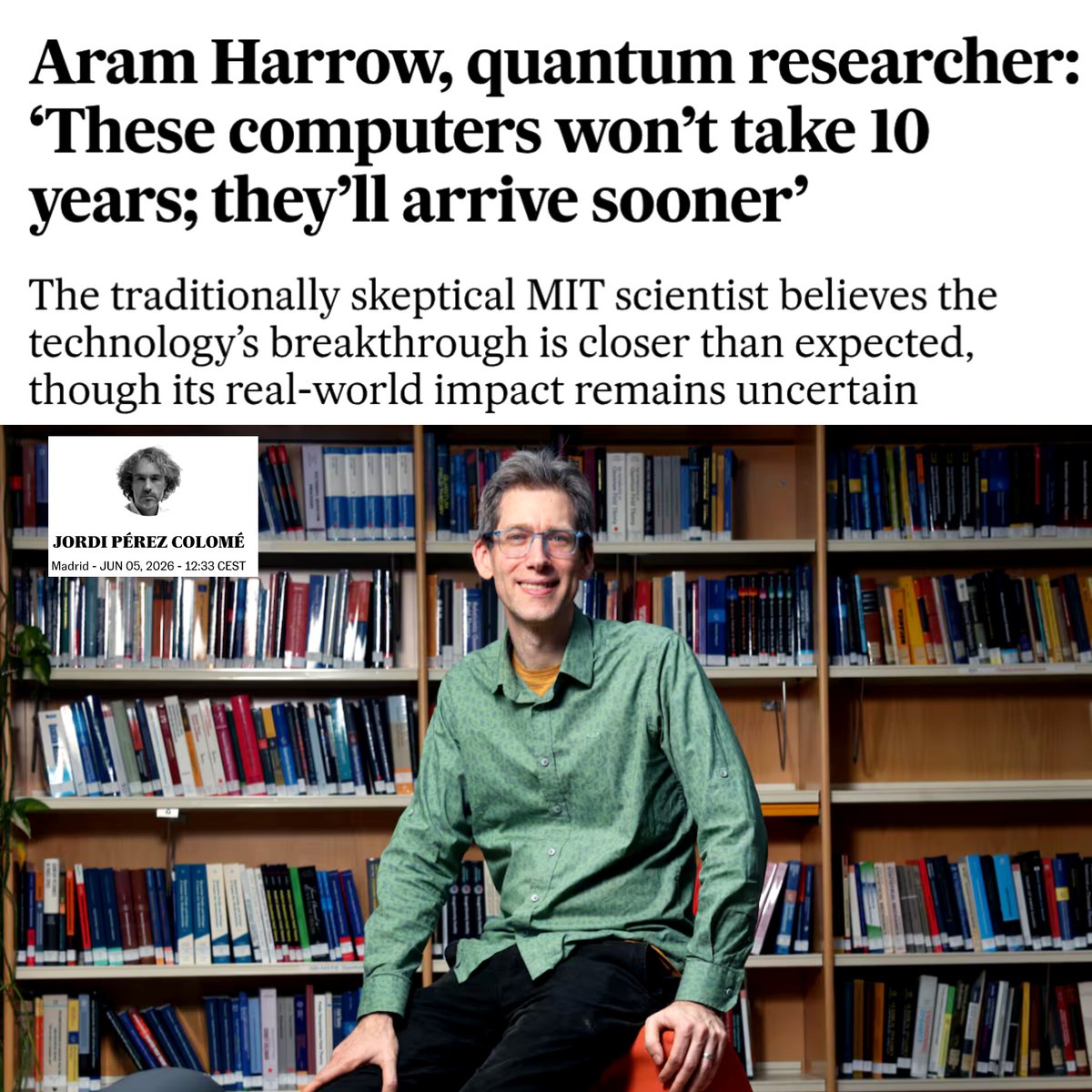
MIT quantum computing researcher Aram Harrow believes "interesting quantum computers" with thousands of qubits could arrive sooner than expected, not in 10-15 years as previously thought.
Harrow has spent 25 of his 46 years working in quantum computing.
He says these systems could enable powerful simulations of molecules and materials, while potentially breaking today's widely used encryption methods.
12
68
184
12,530
Beata Mosór retweeted

Jun 11
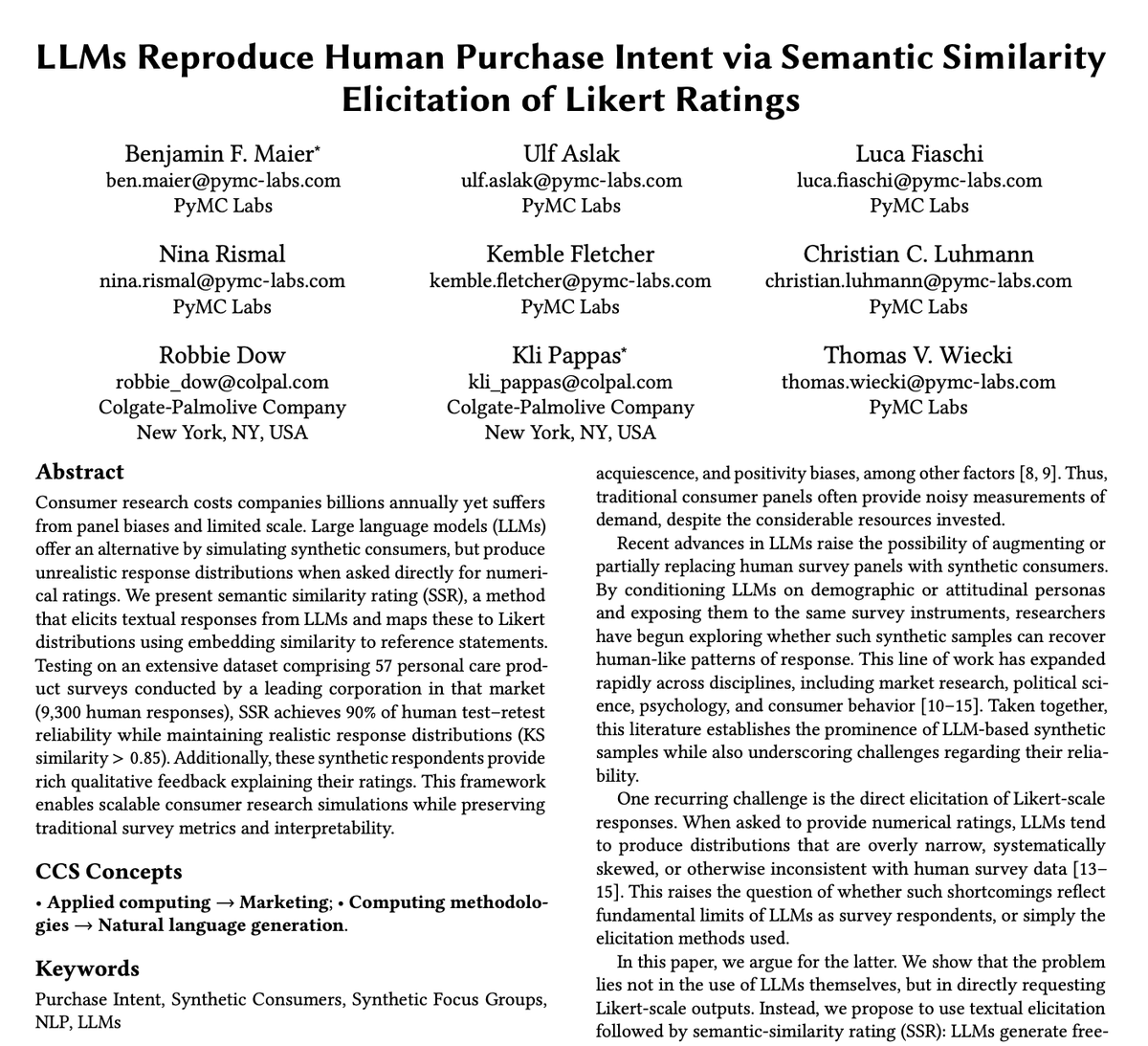
A toothpaste company has quietly killed the entire market research industry and nobody is talking about it.
Colgate published a paper showing you can predict real purchase intent at 90% accuracy by simply asking LLMs to roleplay customers.
And this is beyond insane.
If you ask an AI, "Rate this product from 1 to 5," it gives safe, middle-of-the-road garbage.
So researchers invented a method called Semantic Similarity Rating (SSR).
Instead of asking the AI for a number, they asked it to roleplay.
They gave the LLM a demographic profile. They showed it a product concept. And they asked it to write down its raw, unfiltered thoughts.
Then, they used a semantic model to translate those written thoughts into a numerical score.
The results are staggering.
Tested against 57 real corporate surveys and 9,300 actual human responses, the synthetic AI consumers matched real human buying behavior with 90% reliability.
They perfectly mirrored how different age brackets and income levels react to price changes.
And they provided detailed, qualitative feedback that was deeper and more critical than what actual humans wrote.
This destroys the economics of traditional market research.
You don't need to wait a month to see if a product will sell.
You can simulate 1,000 hyper-targeted customer interviews overnight.
You can A/B test pricing across every demographic instantly.
Community note
The 90% figure refers to the AI method achieving 90% of human test-retest reliability for purchase intent surveys, not 90% accuracy in predicting real purchases. It was tested on personal care products in categories LLMs know well. arxiv.org/abs/2510.08338
230
939
7,578
701,654
Jun 11
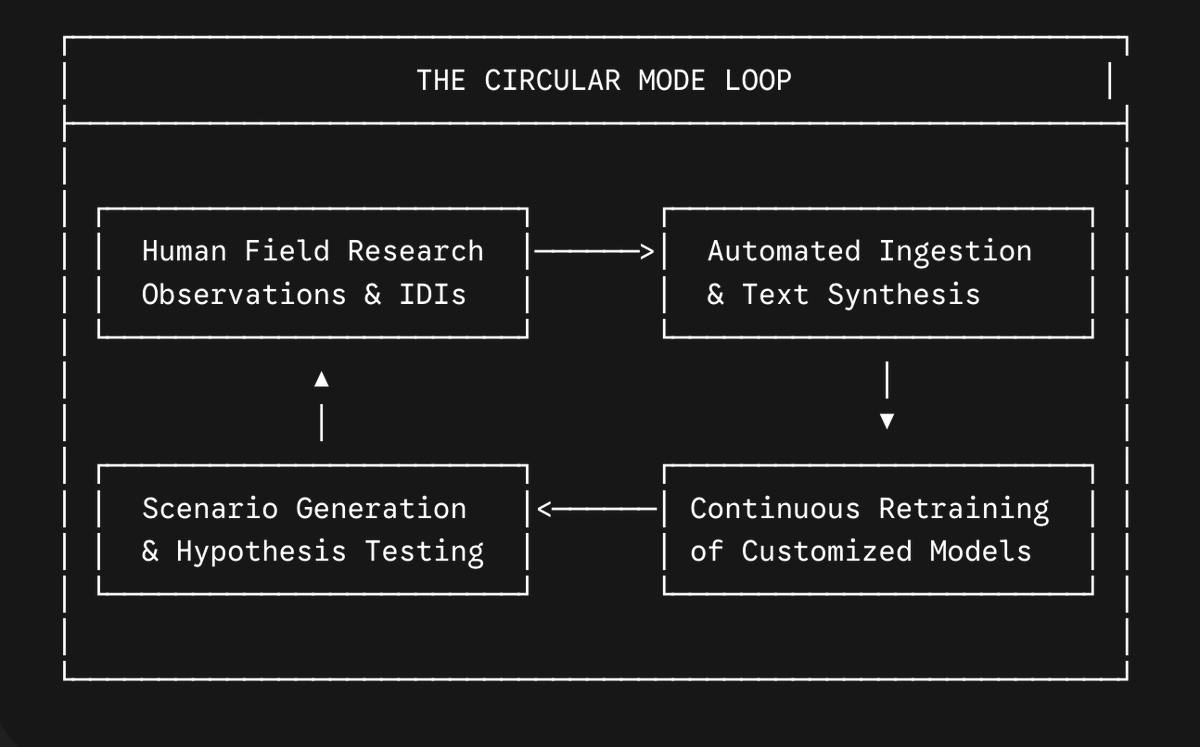
Traditional customer research is very often an operational bottleneck. To address this, I’ve developed an iterative workflow: Circular Mode Research Loop.
It bridges the gap between human fieldwork & AI models.
Want to bring this approach to your university or team? Let’s talk
29

Hej dziewczyny, mamy dla Was ciekawą propozycję od zaprzyjaźnionej Fundacji Mamo Pracuj.
Rusza druga edycja bezpłatnego programu Cyber Women, w którym uczestniczki mogą rozwinąć praktyczne kompetencje z cyberbezpieczeństwa i przygotować się do egzaminu CompTIA Security . Jako sekurak mieliśmy przyjemność prowadzić pierwszą edycję od strony merytorycznej i tak samo będzie w tej tej drugiej edycji programu;-)
W programie czeka na uczestniczki m.in.:
➡️ 48 godzin zaawansowanych szkoleń i laboratoriów praktycznych prowadzonych przez trenerów sekuraka,
➡️ przygotowanie do egzaminu CompTIA Security ,
➡️ możliwość zdobycia międzynarodowego certyfikatu — 25 uczestniczek otrzyma voucher na egzamin,
➡️ indywidualny mentoring 1:1,
➡️ rozwój branżowego języka angielskiego,
➡️ wspierająca społeczność kobiet, które chcą wejść lub mocniej rozwinąć się w cyberbezpieczeństwie.
Kogo organizator zaprasza do programu?
👉 osoby z wykształceniem lub wiedzą techniczną, która pozwoli w pełni skorzystać z programu,
👉 studentki kierunków związanych z technologiami / IT,
👉 kobiety pracujące w szeroko pojętej branży IT, np. QA, PM, analiza danych, wsparcie techniczne, administracja IT, które chcą wejść głębiej w cybersecurity.
Zapisy tutaj:
cyber-women.mamopracuj.pl
Projekt realizowany jest przez Fundację Mamo Pracuj, ale spokojnie — nie trzeba być mamą, żeby wziąć udział w projekcie 😉 Rekrutacja trwa do 12 czerwca.
Zapraszamy do zapisów!
1
6
29
4,452

Mira Murati says frontier AI should be built like a tandem bike:
"Having humans in the loop doesn't quite describe it because it sounds like a checkpoint where we're signing off something, and then you're good to go."
"It's more like creating systems that are not just autonomously advancing and leaving civilization behind, but are more like a tandem bike."
"When you're going up a hill, maybe whoever is stronger is pedaling harder. But both hands are on the wheel. That's quite important because that's a different system. It's a system designed for collaboration."
"It will increase the level of agency that people have, and also it will help us steer the research direction towards creating outputs that are more value-aligned."
@miramurati at Bloomberg Tech live with @emilychangtv
78
118
1,140
239,434
Beata Mosór retweeted

Jun 4
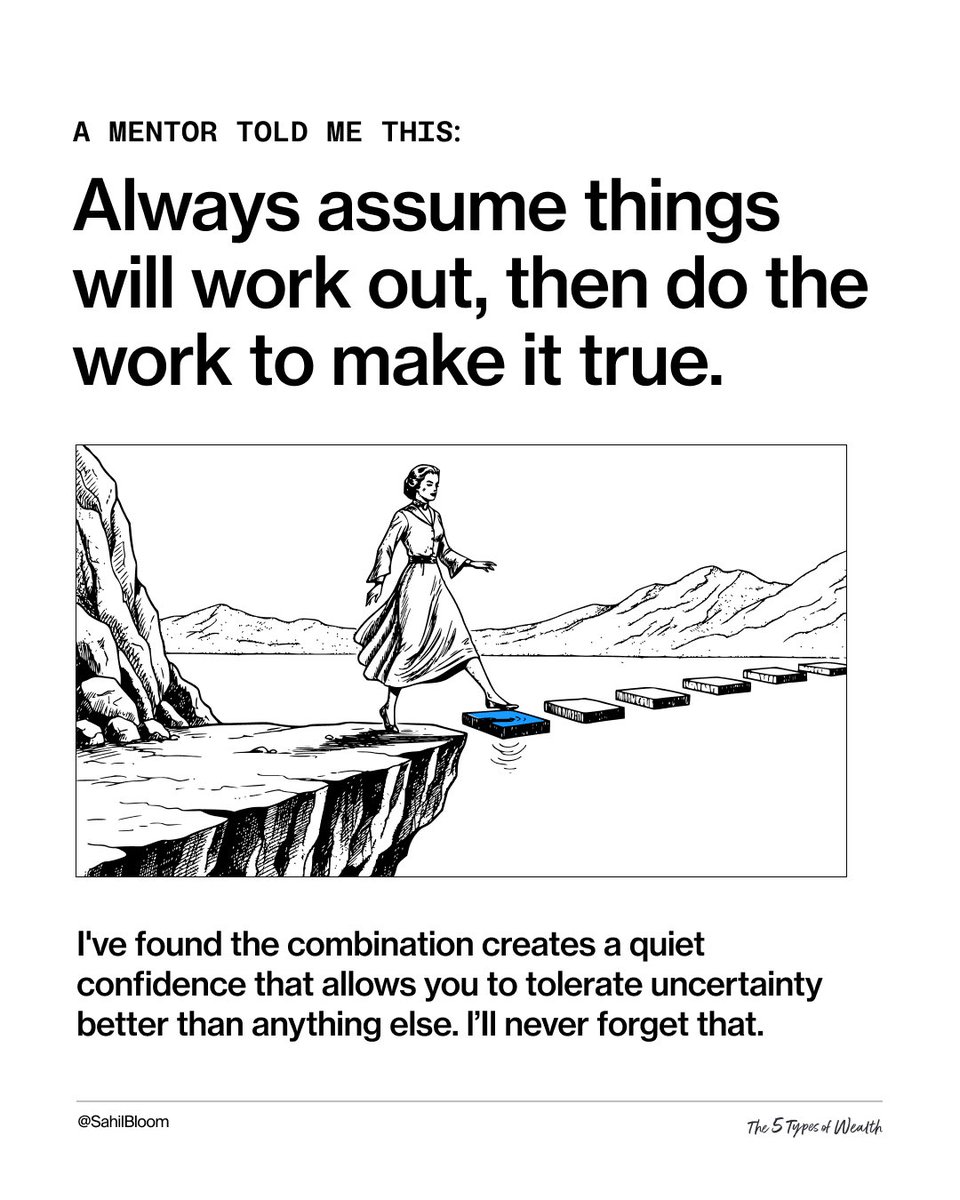
Everyone needs to hear this…
110
1,582
9,482
350,212

Jun 5
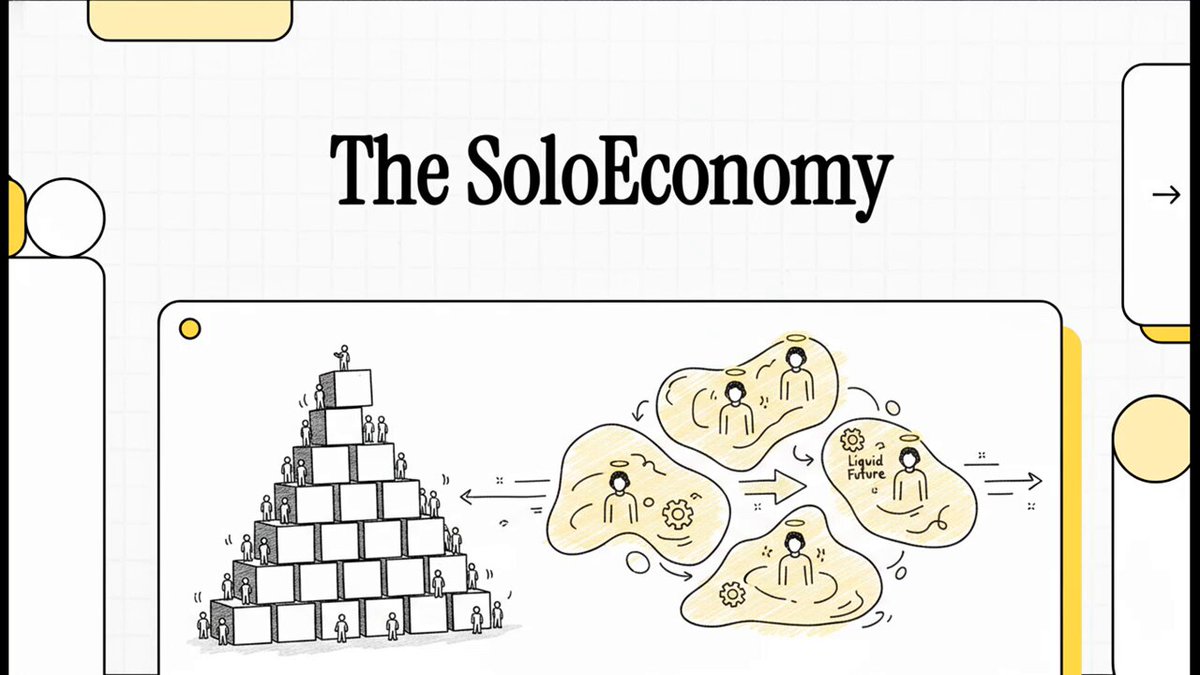
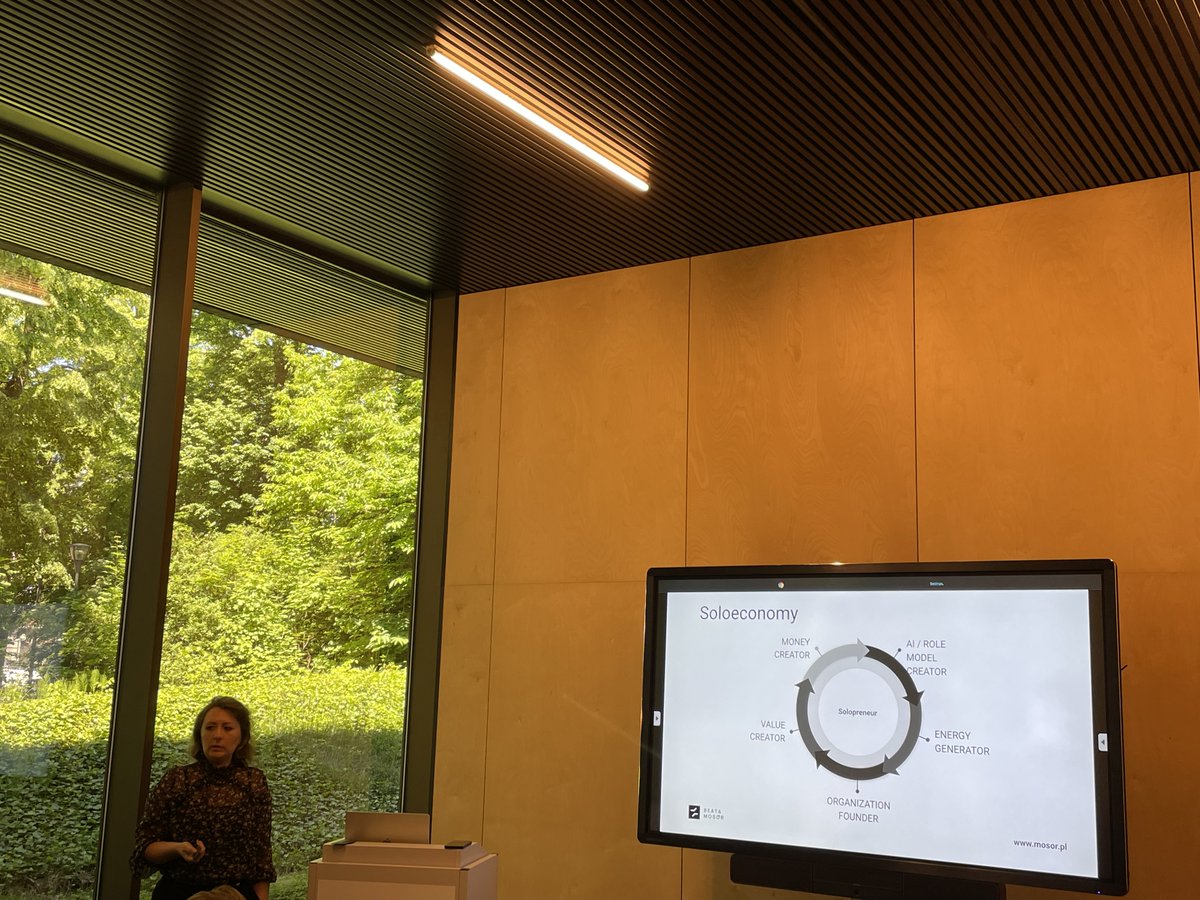
The SoloEconomy concept explained :)
For years, we’ve relied on four pillars to understand the economy:
Households,
Businesses,
Governments,
Countries.
As the disruption of the economic system changes market dynamics, I am proposing the 5th Pillar: Individual.
1
22
Beata Mosór retweeted

Odważna, może rewolucyjna decyzja rządu Javiera Mieli, który na wzór prawa o ograniczonej odpowiedzialności spółki z 1602 roku wprowadza ograniczoną odpowiedzialność dla przedsięwzięć opartych na sztucznej inteligencji w Argentynie. Dokładne przeciwieństwo drogi, jaką obrała Unia Europejska. – “…mój rząd przedłożył Kongresowi projekt specjalnych ram prawnych dla wdrażania sztucznej inteligencji. Opierają się one na trzech filarach. Po pierwsze, zobowiązanie do nieuregulowania sztucznej inteligencji, tak aby mogła być swobodnie rozwijana bez śmiertelnej ręki przedwczesnych i słabo zrozumiałych regulacji. Po drugie, stworzenie nowej kategorii podmiotów w argentyńskim prawie: korporacji nie-ludzkich. Są to podmioty obsługiwane przez agentów AI lub roboty. Tam, gdzie systemy te podejmują niezależne decyzje w nieprzewidywalnych środowiskach — co jest konieczne, jeśli mają być naprawdę użyteczne — ich działania wiążą się z realnym ryzykiem. Ograniczona odpowiedzialność nie jest dla takich podmiotów luksusem; jest warunkiem ich istnienia. Udziałowcy będą mogli być osobami fizycznymi, ale nie będzie to wymagane. Po trzecie, konkurencyjne otoczenie podatkowe. Korporacje te będą korzystać z niskiej stawki podatku od osób prawnych, a udziałowcy będą mogli wybrać prawo dotyczące ładu korporacyjnego, które im odpowiada”
Milei przypomina nam, że maszyna parowa uwolniła nas od fizycznych ograniczeń człowieka i ograniczona odpowiedzialność uwolniła jego kapitał od zbędnego ryzyka. Razem stworzyły dobrobyt nowoczesnego świata. Sztuczna inteligencja uwolni nas od ograniczeń ludzkiego umysłu, ale tylko wtedy, gdy pozwolimy jej działać. Jeśli Unia Europejska nie porzuci miłości do nad regulacji i biurokratycznego gorsetu, zamiast technologicznego hubu będziemy mieli świetnie udokumentowany, w pełni certyfikowany... skansen i przyjdzie dzień kiedy znowu z zazdrością będziemy patrzyli w stronę Argentyny.
ft.com/content/f93022fe-43f7…
13
21
79
6,510
Beata Mosór retweeted
May 31
Richard Sutton is of course a genius and a legend, and so self-recommending. My own view is that we didn’t have good definitions of either “novel” or “discovery” prior to AI, and so we will use AI to create many new things and never quite know what to call them.
May 31

A new and possibly controversial perspective:
In this video, I explain the sense in which generative AI trained by supervised learning is incapable of making novel discoveries.
youtu.be/K5LAFEjTlBA
The text of the speech:
AI Creativity and Discovery
Good day ladies and gentlemen. I regret that I am unable to be with you all today to engage in a back-and-forth discussion, but I am nevertheless pleased to be able to share with you, via this recording, some high-level thoughts about the current and future state of artificial intelligence, and in particular about AI’s relationship to science and mathematics, which is, as I understand it, the central focus of this meeting and of the SAIR Foundation.
I would like to start with an old joke; I am sure you have heard it before. It is the one about the researcher whose work is being evaluated, and the review comes back, and says “This work is both novel and good. Unfortunately, the parts that are good are not novel, and the parts that are novel are not good.”
My first point about AI is that this assessment applies exactly to large parts of AI as we know it today. Not all of today’s AI, but a large part of it. Pretty much all of what we mean by “Generative AI”---which includes large language models, and the images and video models, and even the new methods for learning world models. All of these AIs take large numbers of examples and produce a “model” which behaves similar to the examples, that is, which generates text like people, or images like artists or nature, and videos like we find on the internet. Don’t get me wrong, Generative AI can be extremely useful. No doubt about that. But the assessment of the joke still applies. These systems can produce output that is both novel and good, but not at the same time.
In many ways this is just absolutely not a problem. When we ask an AI for an answer from the internet, or to summarize a document, we don’t want it to be novel. We are happy if the quality of the answer, the goodness, comes from the source material—from the people who wrote the document or the articles on the internet. If the AI’s answer is novel it means it is going beyond the source material, adding something beyond it. This is what we call “hallucinations”. In most cases, we don’t like it when the AI makes something up, when it adds something novel.
One exception, of course, is when we are looking not for facts or reality, but for fiction and entertainment. We might ask for a bedtime story for a child, or an image based on existing images on the internet but which is nevertheless different and distinct from them. In these cases, it is never easy for us to know how creative the AI is actually being, as we do not know how close the AI’s story, poem, or image is to the source material. In a real practical sense we can not know this because the internet is too big, the possible sources that the AI may draw upon are too numerous.
When we ask for a fiction or novelty, the AI can give it to us because its processing is in part stochastic. Every decision can go multiple ways and will go different ways and produce a different trajectory every time. The trajectory can be random—and thus novel—or it can be based on the training data—and thus “good” because the training data is good, sourced from people or reality. Thus, the trajectory is either novel or good—based on randomness or based on data—but never both at the same time.
Really, I think it is okay if the output of Generative AI is never good and novel at the same time. For the researcher in the joke this is a devastating criticism, but for most things it is not, and for Generative AI it is not. Generative AI is meant to be a mimic. This is what supervised learning is for. Generative AI can be extremely useful, even when it just mimics, if it is faster, or cheaper, or smaller, or more customizable, or more copy-able, than the thing being mimicked. It is okay if Generative AI cannot be both novel and good at the same time. It is still a transformative technology.
But it is a limitation. And remember we are here to use AI for science and mathematics, and for these areas the assessment of the reviewer in the joke is devastating. For these areas we need true creativity and discovery. Generative AI—or Mimicking AI—will never get where us there. For these we need something more, and indeed we have something more in other parts of AI. We have many AI systems which can give us more. We have AlphaGo with its world-changing move 37, or AlphaZero with its brilliant original chess-playing style. We have GT-Sophy that drives simulated racecars better than any human. We have AlphaFold and AlphaProof and Claude-Code, which have brought true advances in science, mathematics, and programming. We have RL-Lyft which optimizes the assignment of cars to passengers in the ride-hailing business. All these systems have found things that are both novel and good. And, truth be told, some language models have been augmented in ways that make them more than Generative AI based on supervised learning.
All these systems have some additional features that make them capable of true creativity and true discovery. It is important for us to recognize what this is—and that it is not present in ordinary, garden-variety Generative AI. It is something that can not come from just supervised learning, from learning from examples. What is it? Well, it is a simple thing, a commonsense thing. It is not new. We have many names for it, but unfortunately none of them are very good names. I will call it Discovery. Basically, Discovery is just the idea of trying many things and seeing which of them work, then keeping those that worked the best. Evolution by natural selection works this way. The scientific method works this way. And just ordinary life and learning works this way. We try things and remember what works. What could be more obvious? In this behavioral case, psychology has two names for it— “instrumental learning” and “operant conditioning”—and in machine learning it is what we mean by “reinforcement learning”. We also see the idea of Discovery in planning and combinatorial search—anything that involves the idea of “generate and test”.
The essence of Discovery is to combine three steps:
1. Variation,
2. Evaluation, and
3. Selective retention.
Of course, I am not the first to say this. I am not the first to point out that this combination of steps is key to science, to evolution by natural selection, and to animal behavior. I think particularly of papers by Donald Campbell, by Daniel Dennett, and by Gary Cziko. What is new in my remarks is to directly relate the idea of Discovery to modern AI to help us see that it is not present in supervised learning or Generative AI—in particular, that Discovery is not present in backpropagation or gradient descent.
Let me say explicitly what is missing from Generative AI. As we have remarked, these systems do have a stochastic aspect, so they do generate a variety of trajectories and behavior. What is missing is the Evaluation step. The generator was pre-trained by supervised learning, leaving no way at runtime to Evaluate what it generates. And of course without Evaluation there can be no Selective retention, and thus no Discovery. The variation can bring novelty, but without evaluation there is no Discovery, and arguably, no creativity. That is, I would say that creativity requires that the new things generated be Evaluated. Without evaluation, and retention of the best, there is nothing created. The novelty flickers into existence but, if its value is unrecognized, it flickers away and is lost.
In many cases, Evaluation is done by people to make a discovery. As when we have Generative AI make many pictures for us, and then we pick the one that we like the best. The human AI system completes the discovery.
In many other cases, the Evaluation comes from a clear objective. Some moves lead to checkmate, some steps lead to a proof, some actions result in high reward, some genotypes make more copies, some theories explain the data better.
Some prefer the Variation step to be called Blind variation, where “blind” here means that it is uninformed, a shot in the dark. It does not need to be completely uninformed; a good scientist does not select theories to test at random. But neither can it be completely informed and determined. There must be some uncertainty about where the answer lies in order for there to be a discovery. In practice, the variation is partly informed and partly blind, but it is the blind part that corresponds to the discovery.
Now let us briefly go all the way to modern deep learning, to the backpropagation algorithm. At first it might seem that backpropagation is incapable of discovery because it is deterministic and thus incapable of variation. But this is not correct. The weight updates of backprop are deterministic, but the weights are initialized to small random values. The random initialization is often downplayed, but in fact it is a necessary form of variation; it must be done properly to get good performance. In backprop this Variation is done once, at network initialization, so its effect is temporary, and later the network may lose its ability to learn. This is the weakness of deep learning that is alleviated with a new algorithm that my group presented in Nature a couple of years ago. Our “continual backpropagation” made one small change: every so often a less-used neuron would be re-initialized to small random weights. This allows the variation to continue and plasticity to be retained.
Although there is much more to be said about Creativity and Discovery, this is the key point: they are more than supervised learning, more than pattern recognition, more than prediction, and more than world modeling. Those things are important, but they alone will not bring us to discovery. Discovery requires Evaluation from a person or from an explicit goal, and only in the latter case will we attain full autonomy.
So that is my call to arms. If we want the full power of AI scientists, then we should share the goals with them so they can create, evaluate, discover, and in these ways fully participate in achieving the goals. Let’s be bold! Let’s fully automate Creativity and Discovery!
66
48
648
152,796
Beata Mosór retweeted

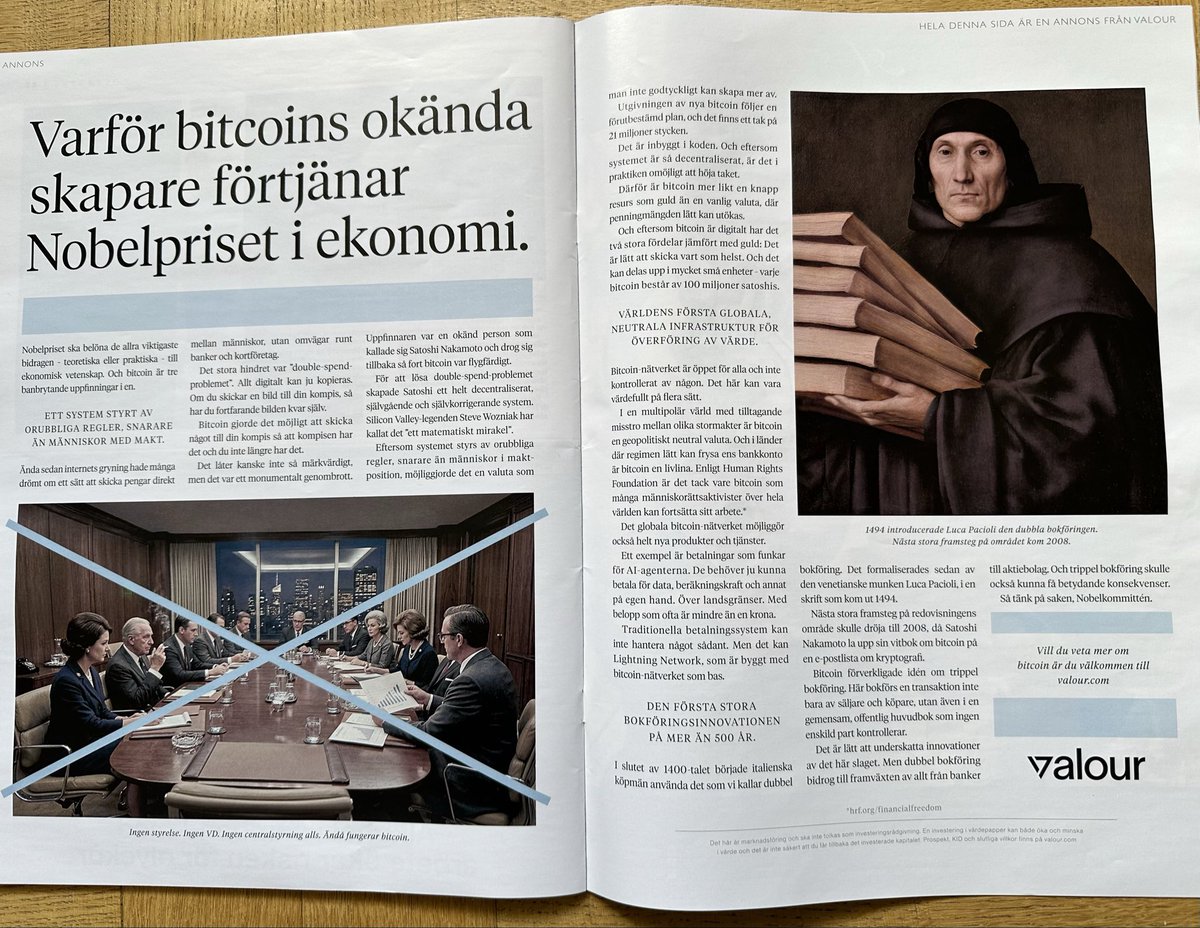
Satoshi Nakamoto should be considered for the Nobel Prize in Economic Sciences for the invention of Bitcoin, argues new campaign in Swedish magazine
33
62
293
30,103
Beata Mosór retweeted

Jun 1
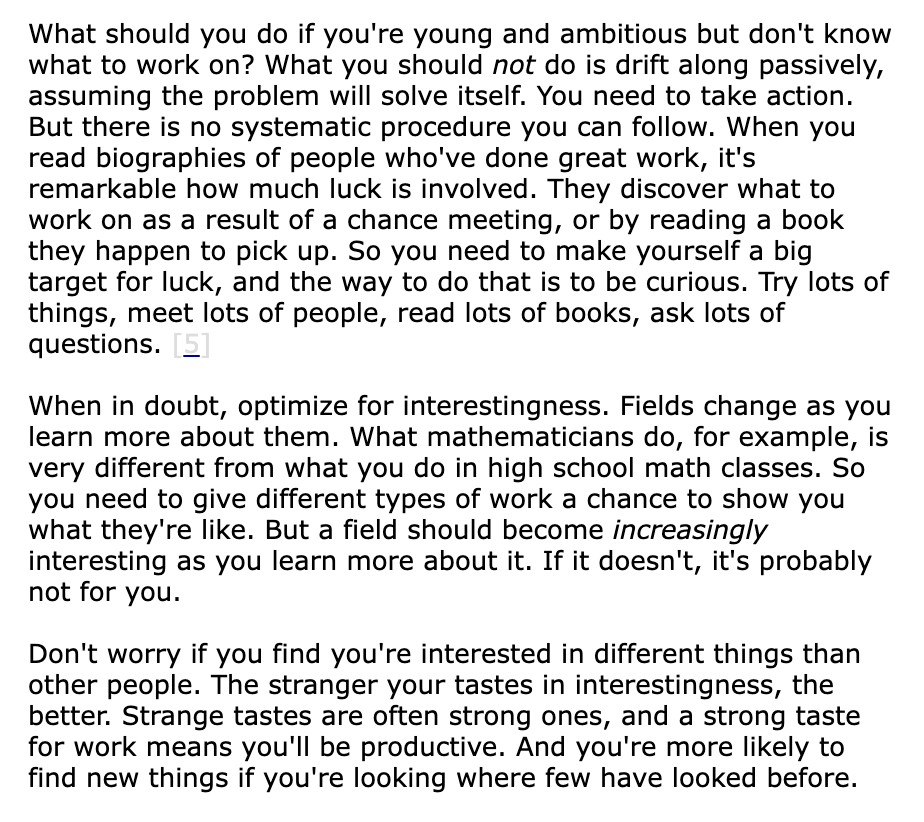
"You need to make yourself a big target for luck, and the way to do that is to be curious. Try lots of things, meet lots of people, read lots of books, ask lots of questions."
— Paul Graham, How to Do Great Work
paulgraham.com/greatwork.htm…
74
654
3,574
153,463