
Besample is a new data collection platform for researchers that provides access to thousands of respondents in 42 countries worldwide ✨ Backed by Techstars
Joined March 2023
- Tweets 204
- Following 119
- Followers 651
- Likes 79
142 Photos and videos

Jun 12
The ongoing war in Ukraine has exposed millions of people to chronic stress, uncertainty, displacement, and loss. Under such conditions, access to comprehensive psychological support is limited – but likely much needed.
How can we psychologically support people who are living through a full-scale war right now?
One approach involves brief psychological interventions designed to change how people interpret difficult experiences. Known as WISE (Wise Interventions to Shift Explanations), they help people reframe adversity, social challenges, or negative emotions in more adaptive ways, for example, focusing on personal strength and resilience. The WISE framework has shown promising results – but as usual, the data overwhelmingly comes from Western countries (Walton & Wilson, 2018).
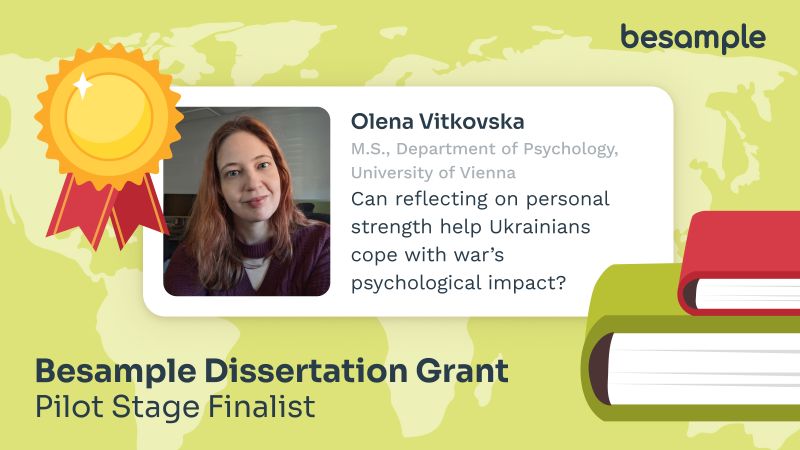
Ukraine’s cultural and social context has been underrepresented in psychological research, meaning standard Western models do not automatically apply. So the question is: can the same approach work in Ukraine? Can reflecting on personal strength help Ukrainians cope with the psychological impact of war?
These questions drive the research of Olena Vitkovska, a Ph.D. researcher at the University of Vienna (@univienna), working with Dr. Veronika Job and Dr. Christina Bauer (@ChristinaBauerA).
Olena shares:
“I’m originally from Ukraine and witnessed the invasion firsthand, waking up to the sound of explosions in my hometown of Kyiv on February 24, 2022. Since then, I moved to Vienna to study and conduct research, but many of my close family members remain in Ukraine. I’ve seen the toll the war continues to take on people, and I felt that if my research could help in any way, I should try.”
Olena developed a 15-minute online reframing intervention designed to enhance people’s psychological adaptation. Participants read quotes from other Ukrainians who shared their experiences overcoming challenges during the ongoing war. They are then prompted to reflect on their own growth experiences in a short writing exercise.
During the study, researchers measure:
– Trauma-coping self-efficacy: People's confidence in their ability to deal with adversity (Benight et al., 2015).
– Flourishing: A broader measure of psychological well-being, meaning, purpose, and positive functioning (Diener et al., 2010).
The study examines both immediate effects – and whether any benefits remain weeks later. Olena plans to follow up with participants after two weeks and one month to gain a clearer picture of how robust the intervention's effects are.
It remains a task for future research to understand the full magnitude of the psychological turmoil Ukrainians must overcome, and how it might change local society and culture. We are proud to support Olena’s project, which not only closes research gaps but also aims to support people during the devastating realities of war.
#PhDResearch #PhDGrant #CrossCulturalResearch #GlobalResearch #BesampleDissertationGrant #Besample
36
Jun 4
What is well-being?
In the West, the “gold standard” of well-being is individual happiness and life satisfaction. In public policy and global rankings (like the World Happiness Report), this complex concept is often measured with single-item life satisfaction measures, such as Cantril’s Ladder, where people are asked to rate their life from 0 to 10.
But do these measures actually capture what matters to people in a good life?
Research shows that well-being is multidimensional, involving health, meaning, autonomy, and personal growth (Ryff, 1989; Seligman, 2011; Linton et al., 2016; Ruggeri et al., 2020; VanderWeele & Johnson, 2025), as well as engagement, harmony, and social relationships (Nilsson et al., 2024; Vittersø & Teulings, 2025). Yet in practice it is usually measured using extremely short indicators.
Moreover, cross-cultural research shows that some aspects of well-being, such as maximizing individual happiness and autonomy, are in fact “WEIRD” ideals (Krys et al., 2024; Martela et al., 2025). In many non-Western contexts, harmony, family, social relationships, morality, and collective well-being can be more central (Uchida et al., 2004; Delle Fave et al., 2016).
Take Indonesia as an example. When measured using the one-item 0–10 Cantril’s Ladder, it ranks 89th in life satisfaction. However, when measured using a multidimensional index covering happiness, health, purpose, and relationships, it ranks 10th (Shiba et al., 2022).
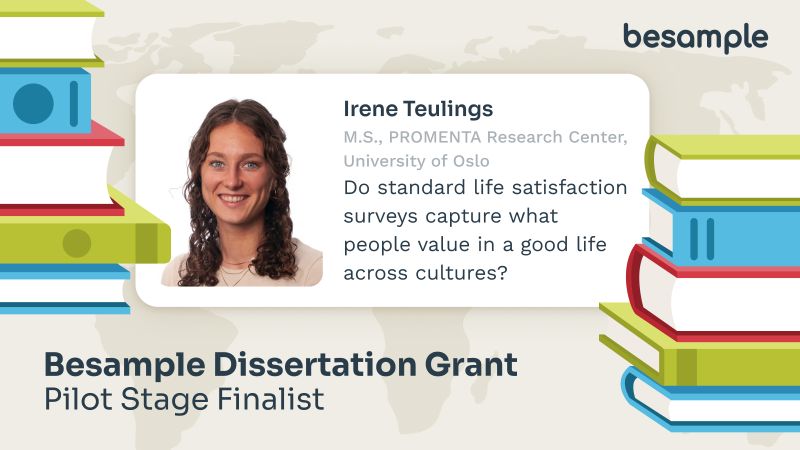
Irene Teulings (@TeulingsIrene) investigates this contradiction as part of her Ph.D. research at the University of Oslo (@UniOslo), working with a team of research advisors and collaborators: Espen Røysamb (@EspenRoysamb), Joar Vittersø, Ragnhild Bang Nes (@ragnhildbangnes), and Ludvig Daae Bjørndal (@ludvigdbj).
“I’ve had the privilege of meeting people from a wide variety of cultures around the world, and many describe a ‘good life’ in ways that are richer than simply being ‘satisfied’ or ‘happy’,” Irene shares. “This made me increasingly curious about whether our most widely used well-being measures truly reflect what people themselves care about.”
Irene compares the UK and Japan to test whether well-being domains carry different weights across cultural contexts. Participants report (1) overall life satisfaction and happiness, (2) experiences across 16 wellbeing domains (e.g., meaning, relationships, calmness, autonomy, health, engagement, prosociality), (3) their ideal levels, and (4) how important each domain is to them.
Irene then uses machine learning models to examine which domains best predict life satisfaction, whether these patterns align with people’s priorities, and how results vary across countries and measures.
Yet another fascinating project from the Besample Dissertation Grant 2026 cohort! We are looking forward to seeing what Irene discovers – and to a better understanding of what “well-being” means across cultures.
#PhDResearch #PhDGrant #CrossCulturalResearch #GlobalResearch #BesampleDissertationGrant #Besample
61
May 28
Would you want to know your coworker’s political views — or would you rather not?
If you’re unsure, this is not surprising. Finding out that you disagree politically with a colleague can change workplace relationships pretty drastically — especially if you live in a Western country. Research suggests that, in Western societies, political disagreements can reduce trust, collaboration, and willingness to openly share ideas (Bermiss & McDonald, 2018). Employees become more cautious around colleagues who are politically dissimilar; many self-censor to avoid interpersonal tension (Detert & Edmondson, 2011).
Political identity has become one of the strongest social divides in some Western societies. In the U.S., Democrats and Republicans report increasingly distrusting and avoiding each other socially. They express discomfort with cross-party friendships and even marriages (Iyengar et al., 2012; Finkel et al., 2020).
Tyler Salley, one of Besample’s Dissertation Grantees, once lost a friendship over political disagreement:
“During the 2016 U.S. election cycle, my good friend and I found ourselves on the opposite sides of the political spectrum. An increasingly charged political media climate began to affect how we saw each other. The conflict escalated when he expressed violent sentiments toward a political figure online. I confronted him, and our friendship abruptly ended when he cut me out of his life. I was left trying to understand how such a deep bond could fracture over politics. This led me to connect this experience to my training in organizational psychology and to wonder how similar dynamics might unfold in workplaces where people have to interact despite political differences”.
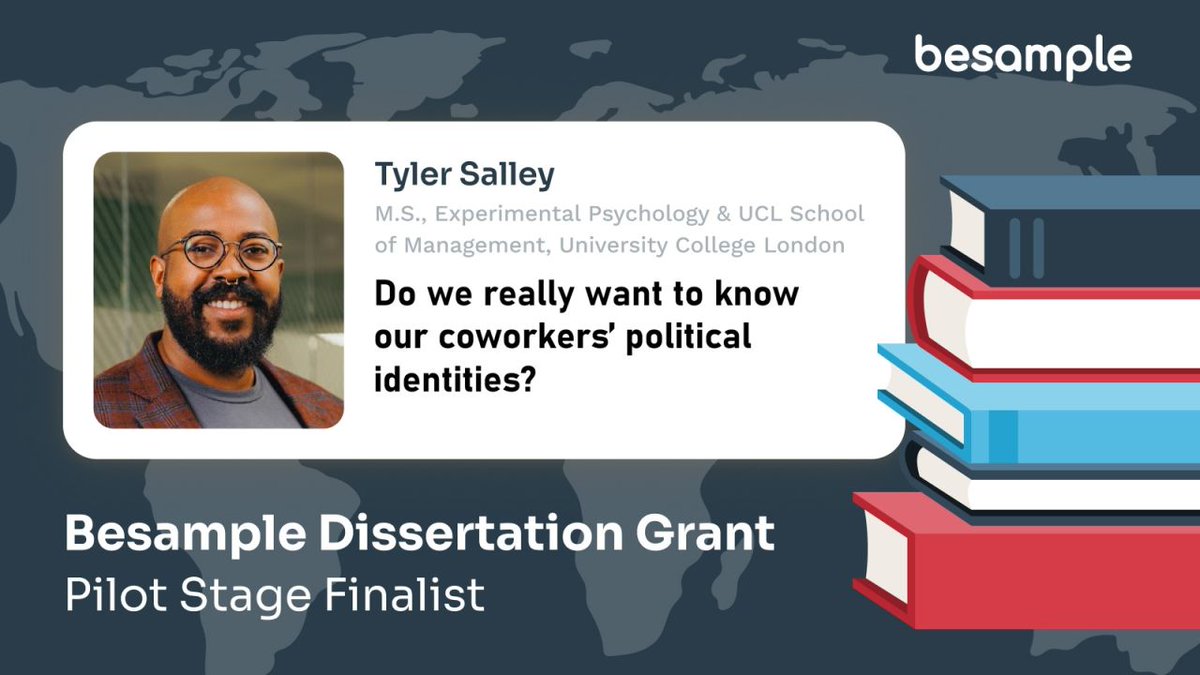
As painful as it was, this story inspired Tyler to dedicate his doctoral research to the effects of political divide. He works with Dr. Felix Danbold at @ucl, investigating how people navigate political identity at work. Basically, he asks: Do we really want to know what our coworkers identify with politically?
Tyler's research brings together theories of social identity and uncertainty reduction (Tajfel & Turner, 1979; Hogg, 2007), blending them with newer approaches which suggest that people sometimes actively avoid information when it may create emotional or social costs (Sharot & Sunstein, 2020; Ho et al., 2021).
Unlike mainstream research, Tyler is taking a global-first approach. While Western political identity maps onto a relatively familiar liberal-conservative spectrum (Bermiss & McDonald, 2018; Iyengar et al., 2019), in countries like Turkey, India, or Argentina, political conflict may center less on “left vs. right” and more on religion, nationalism, caste, or historical memory (Carothers & O'Donohue, 2019). Tyler’s research explores whether the same patterns hold beyond the West, where political and moral divisions look different.
Yet another exciting research project supported by the Besample Dissertation Grant – stay tuned for more!
#PhDResearch #PhDGrant #CrossCulturalResearch #GlobalResearch #BesampleDissertationGrant #Besample
42
May 21
Say you and your friend won $100 playing a game together. Your friend takes $30 and leaves you with $70.
Does that feel nice… or a little weird?
Many people in the West would say it feels unfair — even though they got the larger share (see Kahneman et al., 1986; Henrich et al., 2001). People in many non-Western societies (such as Kenya, Ecuador, Bolivia, and Fiji) would be more comfortable with unequal splits that favor themselves (e.g., Henrich et al., 2005).
Fairness is a global issue — from gender-based pay gaps (Blau & Kahn, 2003) to income inequality (Wagstaff & van Doorslaer, 2000), yet most research on it comes from the West and assumes that unfairness feels the same way everywhere.
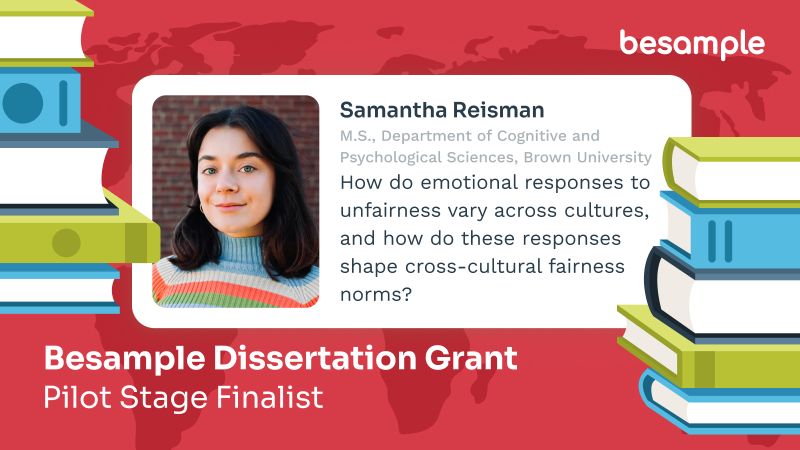
This gap in knowledge drives the research of Samantha Reisman (@ReismanSamantha), a Ph.D. student in cognitive science at Brown University (@BrownUniversity), working with Dr. Julia Marshall. But Samantha takes a fascinating developmental twist: instead of focusing only on adults, she studies how these cultural norms emerge in the first place — by comparing how children and adults respond to unfairness.
“Growing up in the U.S., I saw family and friends navigate the aftermath of hurricanes and floods. When neighbors offered help, they found it surprising and even uncomfortable to accept,” Samantha explains. “In communities abroad, I saw a different response: neighbors shared openly with each other, even when they themselves had very little, redistributing resources without the emotional weight that accompanies that type of exchange at home. That made me wonder: what if unfairness doesn’t carry the same emotional meaning everywhere?”
Indeed, research has established that children across cultures respond differently to unequal resource splits. In the US, Canada, and Uganda, children tend to dislike having more than others, while in India, Senegal, and Peru, kids often do not (Blake et al., 2015).
Samantha's question is what particular kinds of emotions children and adults across these cultures feel when observing unfairness.
To investigate this, she studies people in Brazil, Japan, Nigeria, Indonesia, and Mexico. These countries differ in how individualistic or collectivistic their cultures are — shaping expectations about how resources should be distributed (Vandello & Cohen, 1999). They also span different language families, where emotions themselves may be structured and interpreted differently (Jackson et al., 2019).
Participants will play a behavioral economics task known as the Dictator Game. But instead of deciding how to split resources, they will be on the receiving end — getting more, less, or an equal share. After each round, participants report their emotions in two ways: labels (guilt, jealousy, surprise, excitement) and valence arousal (Russell, 1980). Samantha will analyze cultural and developmental patterns in these emotional responses.
We’re excited to support Samantha with Besample Dissertation Grant and see what her research uncovers about fairness across cultures.
#PhDResearch #PhDGrant #CrossCulturalResearch #GlobalResearch #BesampleDissertationGrant #Besample
1
93
May 15
One of the most fascinating questions in psychology is this:
❓ How do we understand what other people are thinking?
Psychologists call this ability Theory of Mind — our capacity to infer other people’s thoughts, intentions, and perspectives (Premack & Woodruff, 1978). It’s what allows us to communicate, cooperate, avoid misunderstandings, and navigate social life.
Most Western research treats Theory of Mind as a relatively stable ability. Besides, classic findings suggest that people are somewhat egocentric by nature: we often default to our own perspective even when trying to understand others (Keysar et al., 2003; Epley et al., 2004).
❓But what if perspective-taking is more flexible than we are used to thinking?
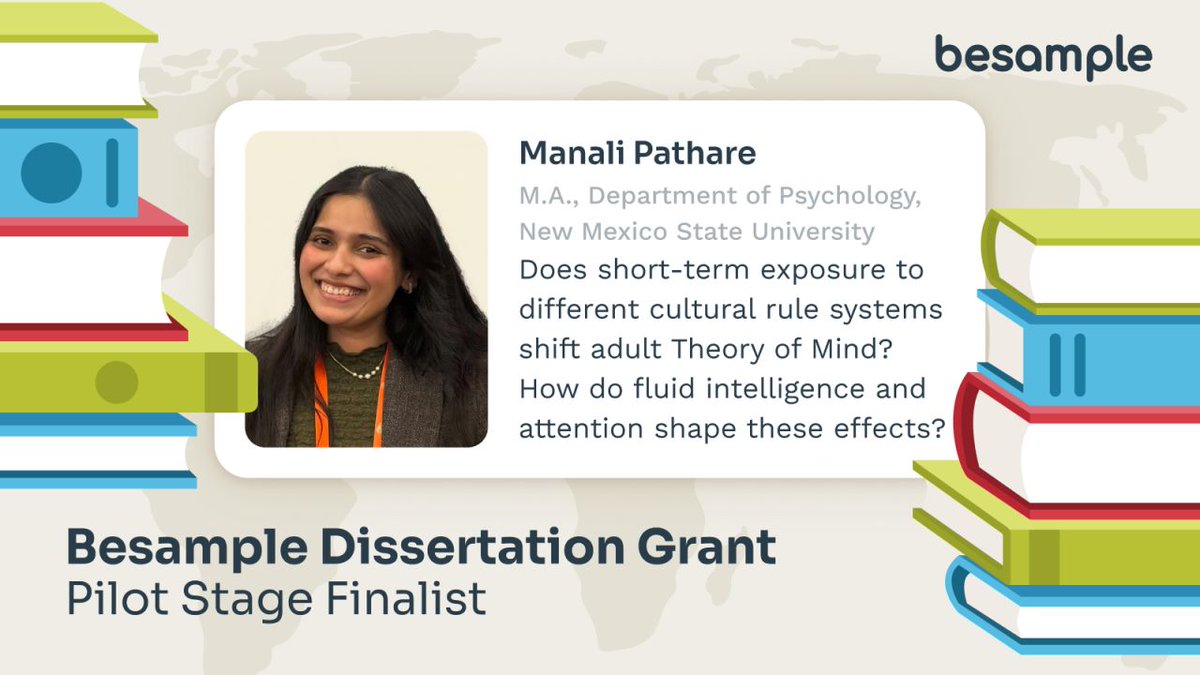
This is the question that inspired Manali Pathare, a PhD student working with Dr. Andrew Conway at New Mexico State University (@ASNMSU). Her idea is both simple and profound: what if the way we read the minds of other people can shift — depending on the cultural environment we are placed into.
Research from some non-WEIRD countries already hints at this possibility. Compared to Western populations, people in collectivist societies often show:
-> greater sensitivity to social relationships,
-> reduced egocentric bias in communications (Wu & Keysar, 2007),
-> different developmental trajectories of perspective-taking (Callaghan et al., 2005; Lecce & Hughes, 2010).
There is also evidence that even brief exposure to different cultural mindsets can shift attention and reasoning (Oyserman & Lee, 2008; Jiang & Sui, 2022).
But most studies have compared different people across cultures. Manali’s work asks an even more interesting question:
❓ Can the same person temporarily shift or adjust their theory of mind ability — simply by being exposed to a different cultural mindset?
In Manali's study, participants will be exposed to different “cultural rule systems” based on frameworks such as individualism vs. collectivism (Triandis, 1995; Singelis et al., 1995). They will then complete Theory of Mind tasks such as the Director Task (Dumontheil et al., 2012).
Manali is one of the finalists of the Besample Dissertation Grant, and I’m excited to follow where this research leads!
#PhDResearch #PhDGrant #CrossCulturalResearch #GlobalResearch #BesampleDissertationGrant #Besample
99
May 7
When state authorities check your ID or scan your belongings, does it make you feel safer?
If you live in a Western context, you will likely say yes: more security, less danger. What you may not realize is that it can be linked to the level of trust in government.
In the Western worlds, security checks are relatively contained — we pretty much only experience them at airports, when crossing borders, or at major events. But in some non-Western countries, checkpoints are part of everyday life — they can suddenly pop up in city centers or on ordinary roads. This changes how people experience state authority. While restrictive security measures can increase perceived safety, they can also reduce perceptions of fairness, economic well-being, and trust in government.
Research shows that security policies indeed involve trade-offs: measures intended to improve security also impose costs on civilians: by limiting movement, disrupting daily routines, and making rules seem arbitrary (Kalyvas, 2006; de Mesquita & Dickson, 2007; Kocher et al., 2011). Sometimes this affects whether people trust authorities or are willing to cooperate with them (Condra & Shapiro 2012; Shaver & Shapiro, 2021).
Decreased trust relates to something even bigger: do people see the state as legitimate — and are they willing to cooperate with it? This matters in multiple ways; one of them is that, in conflict settings, governments usually rely on civilians sharing information, following rules, and cooperating (Berman et al., 2011; Balcells, 2010; Carter, 2016). When trust or legitimacy weakens, such cooperation can break down.
So whether or not you impose additional security checkpoints is, in a way, a tradeoff between public security and public trust.
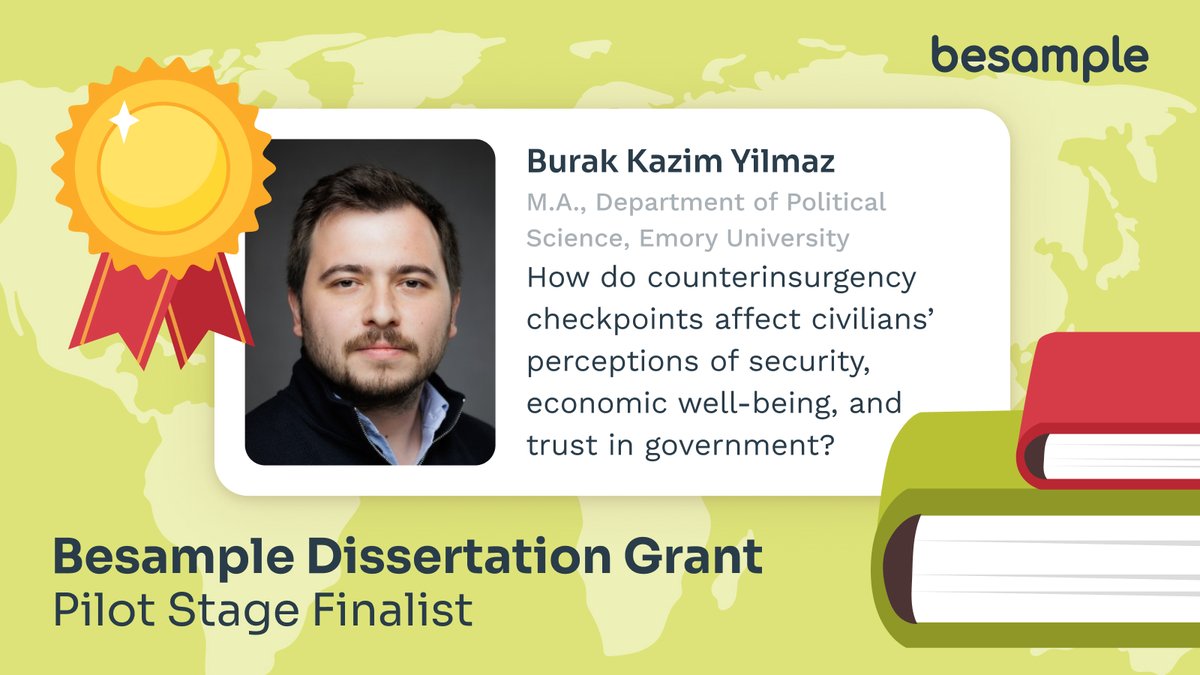
This tradeoff is the main focus of doctoral research for Burak Kazim Yılmaz, working with Dr. Danielle Jung (@daniellefjung) at Emory University (@EmoryUniversity): “I became interested in how security policies are experienced in daily life, not just as formal policy tools,” Burak explains. “Even when the intention is protection, the lived experience can be very different. For some people, checkpoints feel routine or even reassuring. For others, especially those who expect to be stopped more often, they can feel arbitrary or unfair.”
To study this, Burak runs a survey experiment in Turkey. Participants evaluate scenarios involving either counterterrorism checkpoints (where vehicles are stopped and identities checked) vs. routine inspections that involve oversight without restricting movement. They then report how these policies affect everyday life, including safety, economic activity, fairness, trust in authorities, and willingness to cooperate with the state. Burak then analyzes how the tradeoff between security and trust plays out for different types of checkpoints in a non-WEIRD context.
We are excited to support Burak's dissertation research and see what it uncovers!
#PhDResearch #PhDGrant #CrossCulturalResearch #GlobalResearch #BesampleDissertationGrant #Besample
62
May 4
📰 In a new Behavior Scientist (@behscientist) article, our founder Elena Brandt (@lenajbrandt) shares lessons we’ve learned at Besample over the past three years while supporting researchers in their studies across the globe 🌍
This experience has taught us that to overcome the WEIRD bias in science, it is not enough to merely sample more countries. For truly diverse and globally representative research, we need to unlearn the Western defaults embedded in our methods — and in our expectations about how research participants are supposed to think and behave.
We’re grateful to the Behavioral Scientist team, and especially to Editor-in-Chief Evan Nesterak, for their support in bringing this piece to life!
👉 Read the article here: behavioralscientist.org/help…
See what we’ve learned about study localization, data quality, demographics, financial and technical infrastructure — and feel free to share your own lessons from researching beyond the West in the comments.
#BehavioralScience #CrossCulturalResearch #GlobalResearch #Besample
80
Apr 30
Do people trust AI?
Global research shows a near fifty–fifty split: 54% of people are wary of trusting AI (Gillespie et al., 2025). At first glance, it doesn't tell us much. But take a closer look at different countries — and the picture changes.
In Finland, fewer than 35% see AI as trustworthy. In the US, it’s under 50%. In China, it’s over 75%. Why such a difference? The answer may lie in the nature of trust itself.
Trust is rarely just about whether someone is “good” or “bad.” It goes deeper — to whether we believe this someone (or something!) is capable of the right kinds of motivations at all.
This is the interest of research by Paul McKee (@PaulCMcKeePsych), working with Walter Sinnott-Armstrong at Duke University (@DukeU). The research grew out of his observation that people often react differently to human and AI decision-makers — even when they produce the same outcomes (Dietvorst et al., 2015). As Paul puts it: “In some cases, people trust AI systems because they are seen as objective and rule-based. In other cases, people distrust them because they seem to lack human judgment or moral understanding. Are people reacting to outcomes of decisions — or rather to the kinds of motivations they believe are behind them?”
So, the original question can be rephrased: do people believe that AI has the right moral motivations to be trusted?
Now, of course, most research on trust and moral judgment comes from Western populations, plus it rarely distinguishes between different kinds of motivations — for example, whether trust depends on believing that an agent pursues good outcomes or simply avoids harm. Across cultures, however, people differ in the moral principles that underlie trust — such as fairness, authority, or harm avoidance (Graham et al., 2016; Hofstede, 2009).
To gather a global perspective on AI trustworthiness, Paul is running a large cross-cultural project in the USA, the UK, Japan, India, Brazil, Kazakhstan, and Kenya. Research participants evaluate decision scenarios in areas such as healthcare, hiring, and criminal justice. In each scenario, they compare a human and an AI performing the same task and report what moral motivations they believe each agent is capable of — and how much they trust or distrust these agents.
By comparing responses across cultures and contexts, the study explores whether trust in AI fundamentally differs from trust in humans — and whether our judgments about AI reflect culturally specific assumptions about moral motivation that may not hold globally.
By the way, Paul C. McKee recently defended his dissertation, The Structure of Moral Motivation, which explores the neural and behavioral mechanisms behind moral judgment, implicit bias, and decision-making. Congratulations to Paul on this major milestone — we’re proud to support his continued research! 👏
#PhDResearch #PhDGrant #CrossCulturalResearch #GlobalResearch #BesampleDissertationGrant
1
1
332
Apr 23
Don’t be rigid. Being rigid is bad for you.
Or is it?
Rigidity — not changing your beliefs or behaviours in response to reality — is believed to be bad. Why? Because it is statistically linked to negative outcomes in goal regulation and well-being.
Flexibility seems more preferable. It is associated with better mental health, higher resilience, and even better physical health markers (Ong et al., 2024; Kashdan & Rottenberg, 2010; Wrosch et al., 2003).
But most of the existing evidence comes from WEIRD samples. What if there are situations or contexts where rigidity may actually help people live a better life?
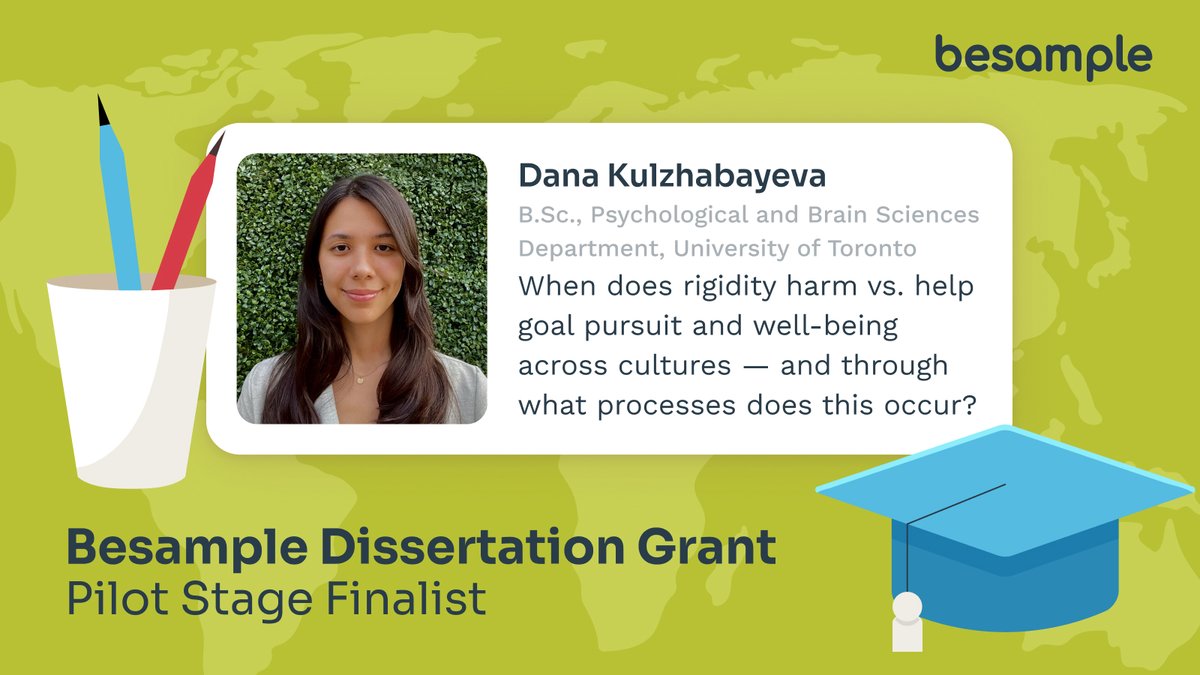
This is the question driving the research of Dana Kulzhabayeva (@DanaKulz), working with Dr. Norman Farb (@NormanFarb) at the University of Toronto Mississauga (@UofT). “I am a first-generation immigrant, and I grew up in a culture where people’s behaviour is shaped by social and cultural constraints,” Dana shares. “However, I didn’t experience all of those constraints in the same way. Some felt limiting, but others felt practical or even meaningful, because they reflected values like responsibility or care for others."
Indeed, in the West, rigidity is conceptualized as an internal constraint: a set of fixed beliefs about someone’s ability or emotion regulation that stand in the way of goal pursuit. For example: “I won’t be able to learn a new language, as I’m bad with foreign languages.” Western research shows that rigidity often leads to higher stress and poorer emotional regulation (Schroder et al., 2015; Lee et al., 2019).
But this view may be incomplete. In higher-constraint cultures, people’s choices are often shaped not only by personal beliefs but also by structural and social constraints. In these settings, some forms of behavioral rigidity, like adhering to social norms, can be beneficial: they help people avoid social costs (Gelfand et al., 2011), potentially reduce stress, and maintain access to social support.
Dana became curious about what ‘rigidity’ means and what separates maladaptive rigidity, which can negatively impact well-being, from potentially adaptive rigidity that reflects real-life constraints and shared values. In other words, when does rigidity harm vs. help goal pursuit and well-being across cultures?
Using quantitative survey methods, Dana examines how belief and behavioral rigidity relate to important life outcomes — such as perceived social support, emotional regulation, stress, well-being, and goal regulation in participants from Argentina, Brazil, India, Japan, Mexico, Turkey, and Ukraine.
Another fascinating project from the Besample Dissertation Grant cohort — we’re excited to support Dana in this work and look forward to her findings!
#PhDResearch #PhDGrant #CrossCulturalResearch #GlobalResearch #BesampleDissertationGrant
5
152
Apr 16
We have countless opportunities to help others — friends in crisis, local community needs, or even life-saving donations across the globe. But because no one can respond to every call for help, there’s a dilemma: Who should we help first?
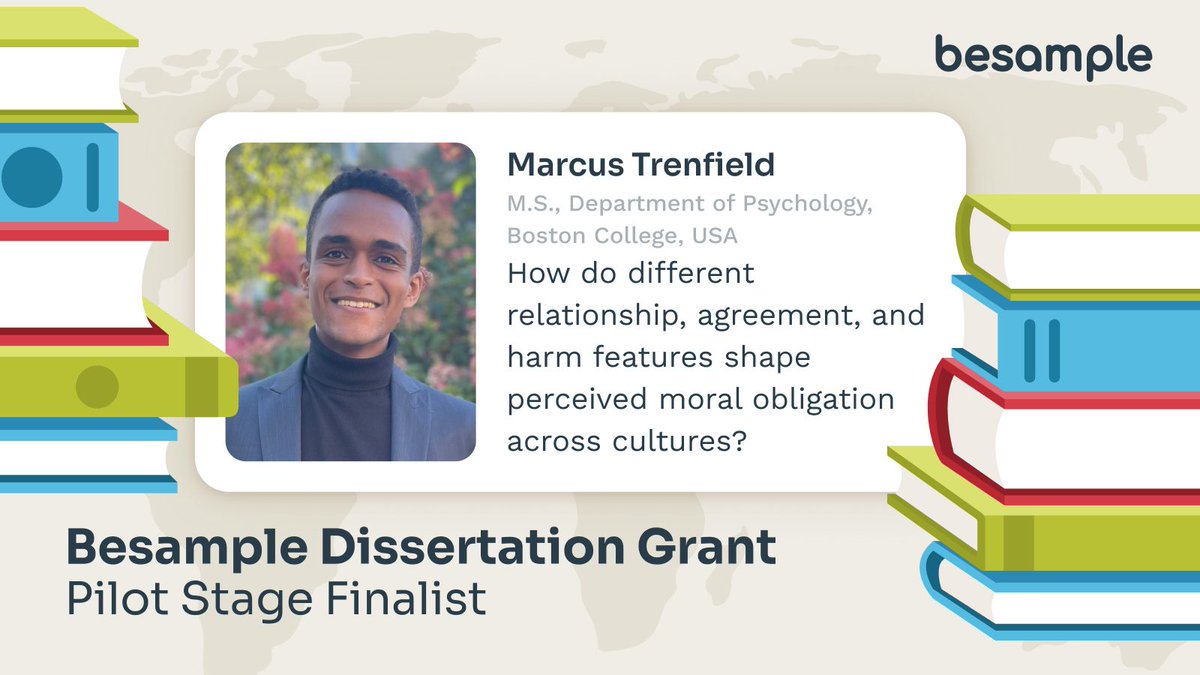
How do people prioritize competing moral obligations and how does this vary across cultures? This is the question driving Besample Dissertation Grant finalist Marcus Trenfield (@MarcusTrenfield), a doctoral researcher at the Department of Psychology at Boston College (@BostonCollege):
“I personally struggle with the overwhelming number of people I could help at any given moment, especially when I open social media,” Marcus shares. “I hope to discover ways to help people who feel this way be inspired to act, rather than paralyzed by the scope of need.”
Past research has identified several factors that drive people to help, and some of them appear robust across cultures. People feel more obligated to help those related to them (Curry et al., 2019; Madsen et al., 2007), those who have helped them in the past (Tomasello & Vaish, 2013; Trivers, 1971), and those who are particularly vulnerable to harm (Doğruyol et al., 2019; Haidt, 2007).
Yet when Marcus’s lab compared drivers of moral obligation in a U.S. sample, they found that the strongest sense of obligation didn’t come from these cross-cultural features of kinship or vulnerability. Instead, it came from prior agreements to help (Trenfield et al., in prep). This suggests that the most powerful drivers of moral obligation may depend on locally salient norms and expectations.
Together with his research advisor, Liane Young (@LianeLeeYoung), Marcus is moving beyond Western samples to study moral prioritization in Brazil and India. In these two major countries with collectivistic cultures (Pearson & Stephan, 1998; Chadda & Deb, 2013), where group well-being often takes priority over individual interests (Hofstede, 1980), the hierarchy of moral obligations may look different.
Marcus takes a culturally grounded, multi-stage approach. He first asks people in Brazil and India to describe real-life situations where they felt obligated to help, then systematically varies these scenarios to see which ones create the strongest sense of moral obligation. Finally, he compares these patterns across cultures to understand when moral obligations align — and when they diverge.
Understanding what drives people to help in cross-cultural contexts is critical — not just for individual kindness, but for addressing global challenges like climate change and pandemics that require coordinated prosocial behavior across countries and cultures. We are proud to support Marcus in this important work!
#PhDResearch #PhDGrant #CrossCulturalResearch #GlobalResearch #BesampleDissertationGrant
114
Apr 8
When someone close to you stops talking to you during a conflict, what do you think it means?
Human relationships, especially close ones, are complicated. We are deeply interdependent and rely on benefits and support from each other (Aktipis et al., 2018; Cosmides & Tooby, 2013; Holt-Lunstad et al., 2010). And when in such close relationships things don't go as planned, we often prefer not to engage in a direct conflict about it.
Why? Because open confrontation can be costly. It can damage relationships, escalate conflict, or harm reputations. So some people — especially those who are physically weaker or lack social power — often prefer something else. Instead of confronting their close ones, they withdraw.
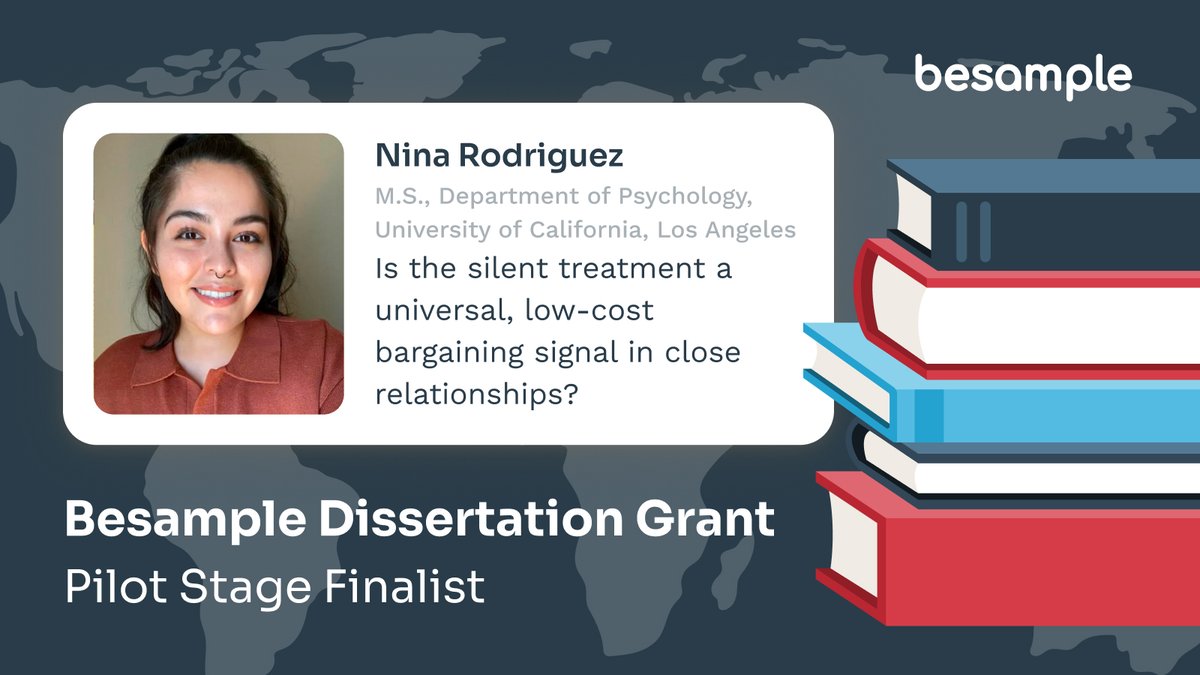
In psychology, this tactic is known as “silent treatment.” Research shows that in close relationships, it functions as a low-cost bargaining tactic. By withholding attention, communication, or emotional engagement people signal dissatisfaction and bargain for better treatment (Williams, 2002; Williams et al., 1998; Buss et al., 1987).
But is it actually a globally understood bargaining behavior? From specific emotions people are trying to expressed through silence and withdrawal (e.g., anger vs. sadness) to the triggers behind it (e.g., dissatisfaction with poor treatment), to the receiver’s responses to it (e.g., giving better treatment and support) — might cultures differ in what underlies such "silent treatment"?
These questions drive a fascinating line research conducted by Nina Rodriguez (@rodriguezNina_), a Ph.D. candidate in social psychology at @UCLA working with Dr. Jaimie Krems (@JaimieKrems). Nina's project asks: Is the silent treatment a cross-culturally recognizable bargaining behavior? Do people reliably interpret it as communicating dissatisfaction, hurt, or relational grievance — especially within established relationships?
Nina's current research has two goals. First, she aims to provide evidence that the silent treatment functions as a bargaining tactic — for example, to secure better treatment from others by withholding access to valued benefits. Second, she aims to compare it to another well-established bargaining tactic: the so-called ‘heated behaviors,’ such as yelling and aggression — and to assess whether the two tactics are perceived similarly.
Nina examines various aspects of silent treatment: emotions it conveys, who uses it and toward whom, and whether it is expected to secure better treatment for actors. To avoid Western bias, she is testing these questions in a pilot sample of 500 people living in Brazil.
Yet another fascinating project from this year’s Besample Dissertation Grant cohort. We are excited to support Nina in her dissertation research and look forward to her discoveries.
#PhDResearch #PhDGrant #CrossCulturalResearch #GlobalResearch #BesampleDissertationGrant
2
6
1,457
Mar 31
Why are some armed conflicts so well known (e.g., the Gaza War, the Russia-Ukraine War), while others go largely unnoticed online (e.g., the Sudanese Civil War and the Nagorno-Karabakh conflict)?
One factor is civilians' activity on social media. From messengers to social networking platforms, social media today is used by 5.17 billion people worldwide (DataReportal, 2026). It has become a powerful force in modern warfare, as it allows for direct contact between civilian victims, international audiences, and, at times, even official military channels. It also plays a role in the war itself: research suggests that combatants are attentive to international sentiment on social media and may adjust their communication and behavior in response to online audiences (Zeitzoff, 2017).
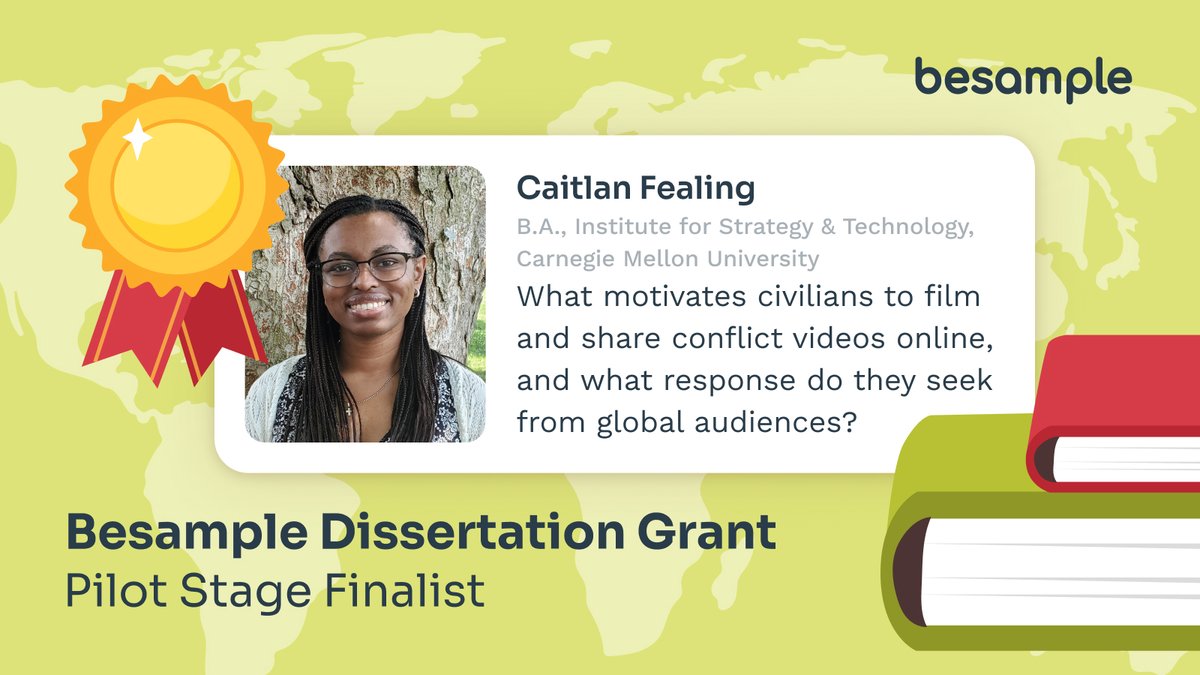
What remains less understood is human behavior on the ground. Why do some civilians film and share conflict-related events, while others do not? How do people in war zones make these decisions?
There is some emerging research on civilians’ social media behavior. For example, Gohdes and Steinert-Threlkeld (2025) show that civilians reduce online activism when their communities are conquered, likely due to fear of retribution. There may also be region-specific pressures, such as government censorship.
Nonetheless, some people choose to post videos of conflicts despite understanding the risks. So, what makes posting worth it?
Caitlan Fealing, a Ph.D. candidate at Carnegie Mellon University (@CarnegieMellon), together with her academic supervisors Dr. Dan Silverman (@gm_silverman) and Dr. Baruch Fischhoff, is studying the causes and consequences of civilian witnessing. She is interested in both the motivation of civilians to post — and the impact of their voices across high-salience conflicts that are frequently posted online and low-salience ones that receive little online attention.
Caitlan’s research uses a mixed-methods approach including survey experiments to better understand human decision-making regarding when or why to post, observational research to map trends of online civilian witnessing posts, and interviews to learn how leaders in related fields use these posts to inform their decisions.
Given the pervasiveness of social media, its powerful role as a primary source of information, and (sadly) the persistence of military conflicts in today's world, this is an important and timely research question. We’re proud to support Caitlan in exploring it!
#PhDResearch #PhDGrant #CrossCulturalResearch #GlobalResearch #BesampleDissertationGrant
2
1
159
Mar 25
When you slam a cabinet by accident, you say “oops.” If you do it out of frustration, you say “ugh.” In just one word, you’ve told the person next to you what was going on in your mind.
We do this constantly. Much of psychology studies how others infer our thoughts and emotions from our behavior, but there’s another side to this: when we are observed by others, we also actively shape how we are being understood. In small, almost invisible ways, we make our inner states legible to others.
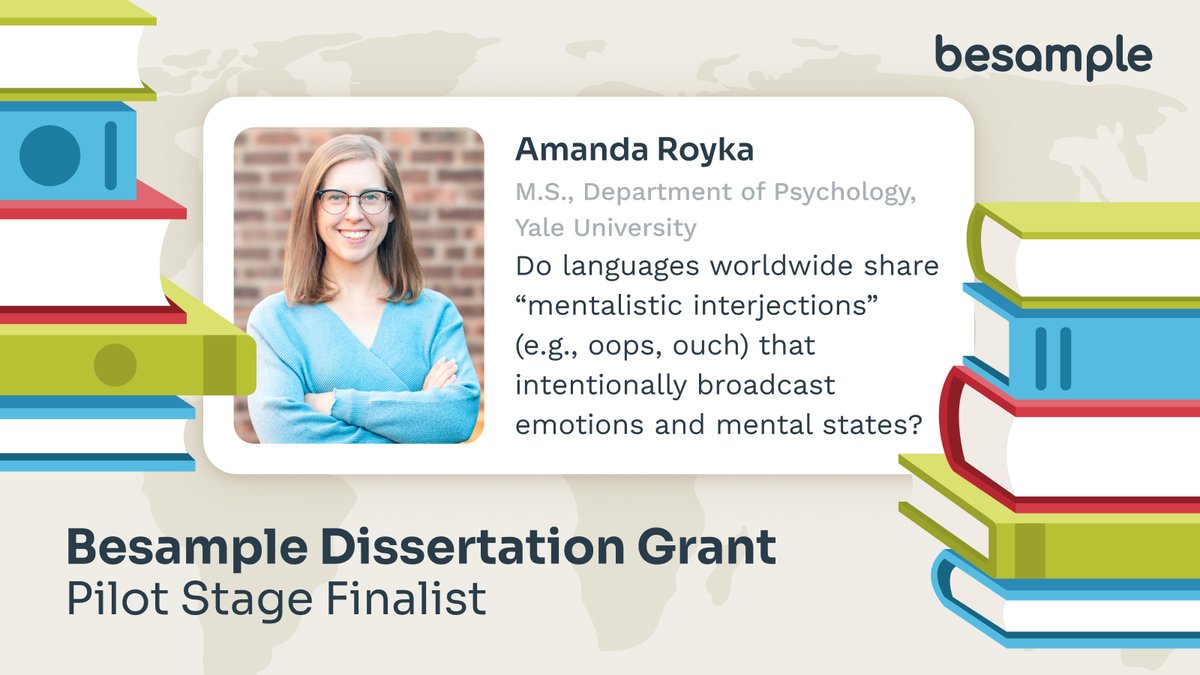
One of those ways is "mentalistic interjections" — words like “oops,” “ouch,” or “ugh.” They seem simple, but they carry rich information about our intentions and emotions — basically, they broadcast our mental states. They exist across many languages (Ameka, 1992; Dingemanse et al., 2013; Dingemanse, 2024). Some of them (like "oops") reveal what’s going on in our minds, while others (like “hi,” “thanks,” or “shhh”) manage social interaction. But we don’t actually know whether they serve the same functions everywhere — or whether different cultures rely on different signals to communicate what’s going on inside the mind.
This is the topic explored by one of our Besample Dissertation Grant finalists, Amanda Royka (@AmandaRoyka), a doctoral researcher at Yale University (@Yale) working with Dr. Julian Jara-Ettinger. Amanda asks: do languages around the world share the same kinds of mentalistic interjections? Are such interjections more consistent across languages than other types of interjections (e.g., phatic/interactional interjections)?
This is especially interesting because emotional expression itself varies across cultures (Matsumoto, 1990; Novin et al., 2009). Some societies encourage open displays of emotion; others emphasize restraint. Do interjections follow those same variation patterns — or do they offer a more universal channel for communicating internal states?
Amanda’s interest in this question is partly personal. She spent years in theater and improv, where actors deliberately adjust their behavior to make a character’s thoughts and emotions clear to an audience. Her work asks whether we do something similar in everyday life — subtly shaping our behavior to help others understand us.
Methodologically, she takes a usage-based approach inspired by linguistic anthropology. Instead of trying to define interjections abstractly (which turns out to be surprisingly difficult), participants across languages describe situations in which they would use them. Amanda then analyzes how these interjection-evoking situations compare across cultures.
What's cool is that it's a step toward a deeper evolutionary question: are there universal building blocks in how humans make their minds visible to each other? Or are they shaped by culture? Or both?
Another fascinating project from this year’s Besample Dissertation Grant cohort — and a reminder that sometimes small elements of language carry big psychological insights, especially when examined in a diverse cultural sample.
#PhDResearch #PhDGrant #CrossCulturalResearch #GlobalResearch #BesampleDissertationGrant
98
Mar 23
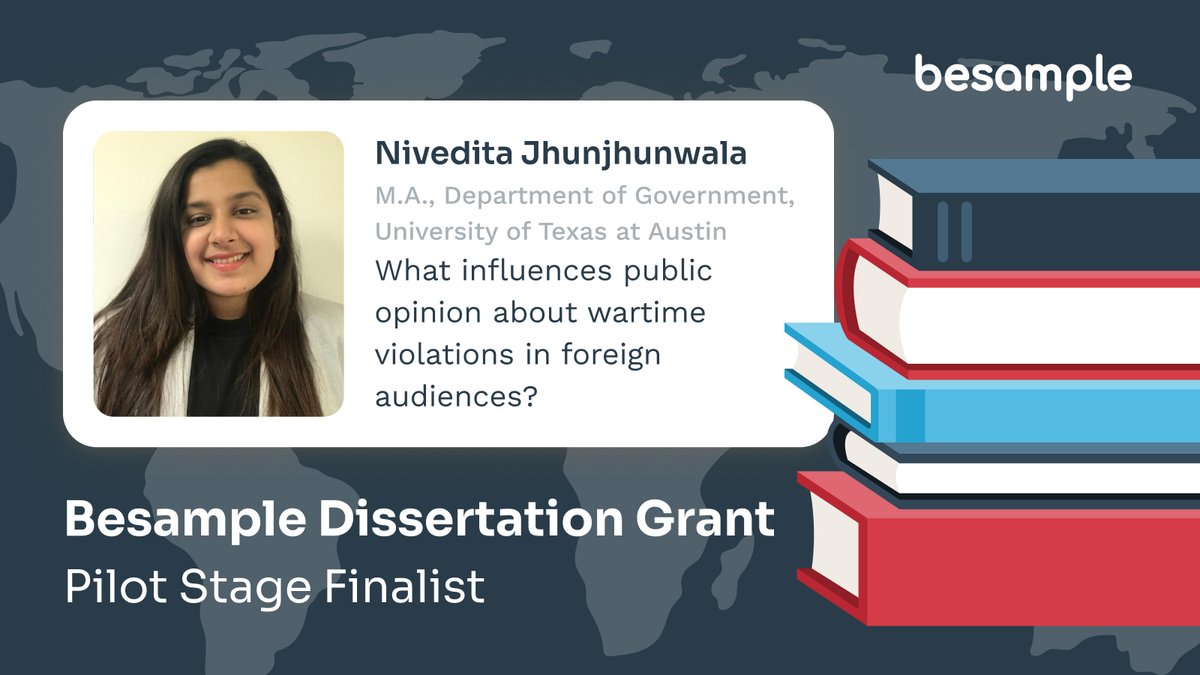
When civilians are harmed during war, moral judgment is obvious. It's bad and enraging, full stop. It doesn't matter who did it or where it happened. This is a violation of international law and thus is, in principle, universally condemned.
Or is it?
A large body of research (as always, based mostly on Western samples) indeed shows that wartime violations reduce public support for military action and carry reputational costs for aggressors (Eichenberg, 2005; Dill & Schubiger, 2021; Morse & Pratt, 2022). In the West, legality is expected to prevail (Nuñez-Mietz, 2018). But, as it turns out, these attitudes depend on how publics around the world interpret violations. And outside the West, the picture may look different.
Take India — the world’s largest democracy. During the Russia–Ukraine war, India abstained in multiple UN votes condemning Russia, despite what seemed like international consensus (UN, 2022). Public opinion about the war has also been more divided than in the U.S. or Europe (Pew, 2023). From a Western lens, this seems puzzling. But maybe we’re just asking the wrong question.
Besample Dissertation Grant finalist, Nivedita Jhunjhunwala (@NiveditaJhunjh2), is working at The University of Texas at Austin (@UTAustin) with Dr. Terrence Chapman, studying public opinion about wartime violations. Having grown up in India and trained in Western academia, Nivedita saw how differently conflicts are discussed across these environments. Western debates emphasize universal legal principles. Indian discussions often incorporate strategic autonomy, history, and skepticism toward selective enforcement.
So are humanitarian norms truly universal — or filtered through national identity and geopolitics?
To answer this, Nivedita is running a large-scale survey experiment in India. Participants evaluate conflict scenarios where she varies:
• type of violation (e.g., civilian harm vs. site destruction)
• countries involved
• whether the act is explicitly labeled illegal
This allows her to test whether moral condemnation reflects universal principles — or depends on who did what to whom. This is a question that may feel obvious until you realize we don’t actually know the answer beyond the West.
We're proud to support Nivedita in her dissertation research and look forward to seeing what she discovers!
#PhDResearch #PhDGrant #CrossCulturalResearch #GlobalResearch #BesampleDissertationGrant
1
77
Mar 19
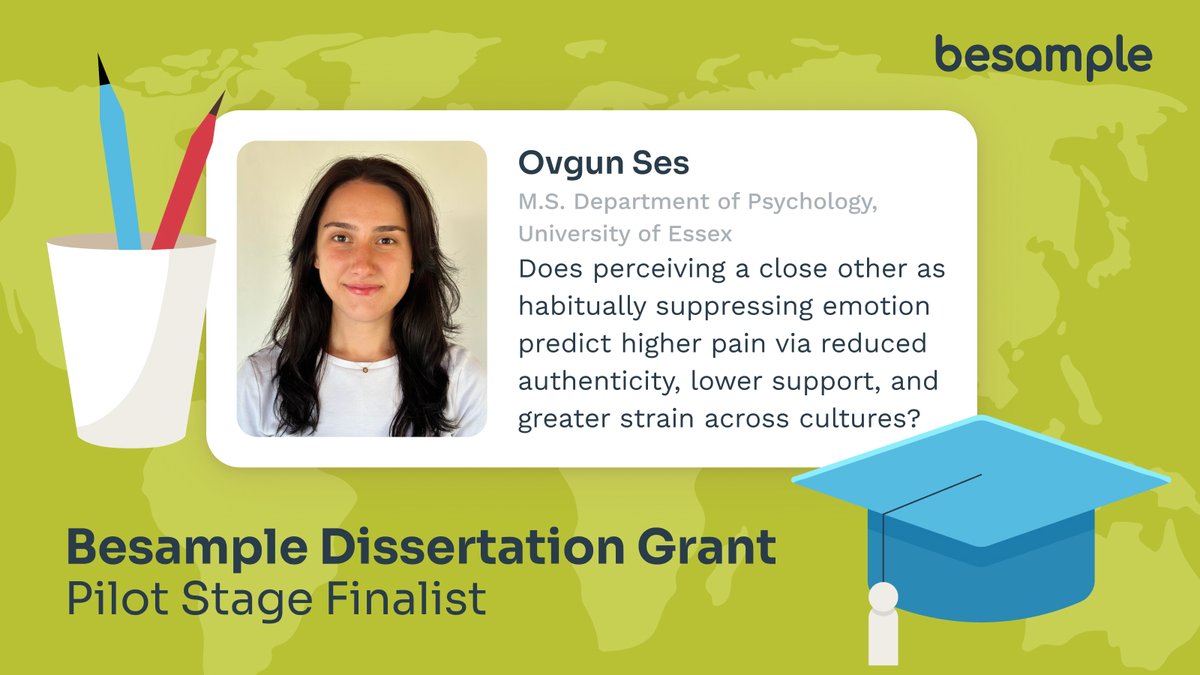
When someone we love is in pain, we can worry, feel sad, or even scared for them. But instead of showing those emotions, we may try to stay “strong,” hiding our feelings so we don’t burden them.
This may seem helpful or caring. But what if hiding those negative emotions actually makes their pain worse?
Psychological research shows that social support usually helps people cope with pain (Roberts et al., 2015). Yet growing evidence suggests that even well-intended support can sometimes backfire (Che et al., 2018). One possible reason is emotional suppression — when people hide their feelings while trying to be supportive.
Interacting with someone who suppresses their emotions can be stressful (Peters et al., 2016). People often perceive suppressors as less responsive, less authentic, and harder to connect with (e.g., Butler et al., 2003; Impett et al., 2014). Consistent with this, research in the UK shows that when people feel their partner hides emotions, they report greater relationship strain and — quite fascinatingly — more frequent physical pain (Ses & Lamarche, in preparation).
But here’s the twist: most research on emotional suppression comes from WEIRD societies, where expressing emotions is seen as authentic (Markus & Kitayama, 1991), and suppression can signal distance (Butler et al., 2007). Beyond the West, emotional restraint can mean something very different—respect, maturity, and social harmony (Matsumoto et al., 2008). What looks distant in one culture may look caring in another.
So what happens to relationships and physical health when suppression is culturally normative?
Ovgun Ses (@OvgunSs), a PhD student at the University of Essex (@Uni_of_Essex) working with Dr. Veronica Lamarche (@v_lamarche), is exploring exactly this question. She examines whether the UK pattern holds in cultures that value emotional restraint. When a close other is suppressive, do people feel poorer support and more frequent pain? Ovgun focuses on Türkiye and India to represent the collectivistic end of the global cultural continuum.
For Ovgun, this topic is also personal. “I’ve been fascinated by how close relationships shape something as physical as pain,” she says. “People genuinely want to help each other, but sometimes the very things we do to protect others have unintended consequences.”
Ovgun uses survey methods to measure perceived emotional suppression and test whether it relates to pain through reduced authenticity, lower support quality, and greater relational strain.
Around one in five adults worldwide lives with ongoing pain, many relying on close others to cope (Goldberg & McGee, 2011; Gong et al., 2024). Understanding when support helps and when it harms could improve how we make people's lives better across cultures.
We are proud to support this important work!
#PhDResearch #PhDGrant #CrossCulturalResearch #GlobalResearch #BesampleDissertationGrant
1
1
66
Mar 12
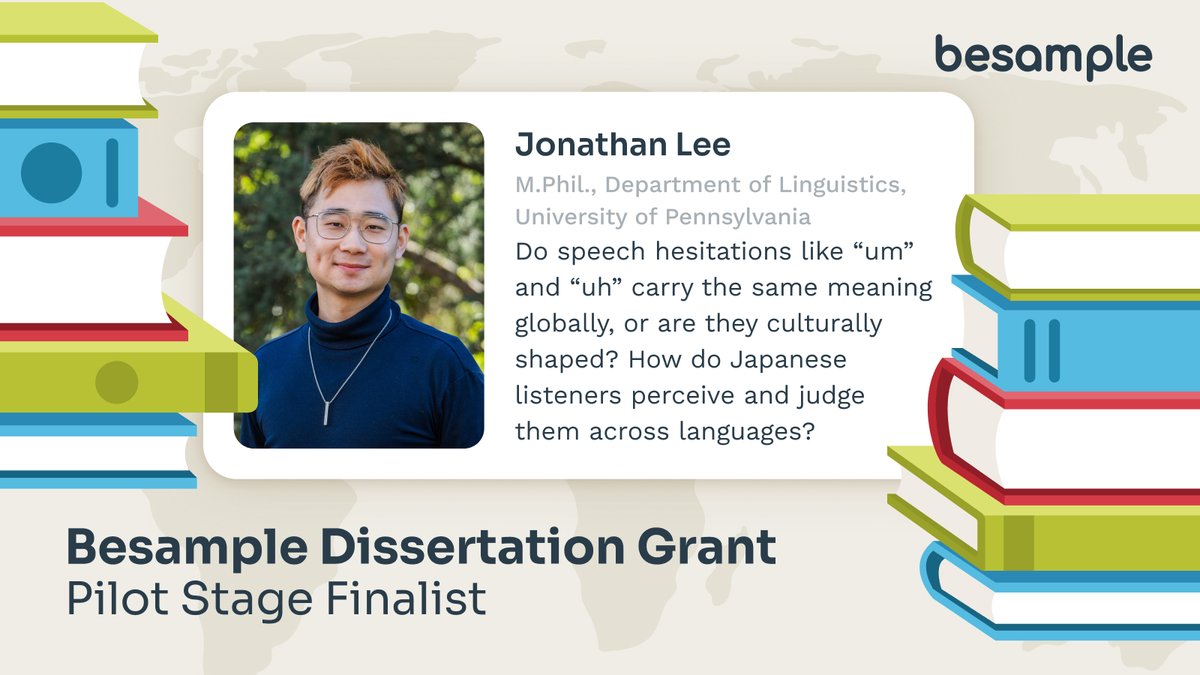
When you hear someone speak with a lot of "um", "uh", or pauses, do you think they’re a poor speaker?
If you answered yes, you’re not alone. Research shows that speakers who hesitate are often judged as less confident, less competent, and even less trustworthy (Charoenruk & Olson, 2018; Fox Tree, 2007; King et al., 2018; Loy et al., 2017).
But — as is so often the case in behavioral science — most of this research has been conducted on Western samples. So the natural question is: is this effect actually universal?
Beyond the West, the meaning of hesitation can look very different. In Japan, for example, silent pauses or saying "eto" (えっと, a common hesitation marker equivalent to "well...") can signal politeness and sincerity rather than incompetence (Cook, 1993; Nakane, 2006; Wang, 2011).
Japanese speakers may even carry these norms into English, using longer pauses than native English speakers (Yamada, 2002).
Jonathan Lee, a Besample dissertation grant finalist and graduate researcher at @Penn's Department of Linguistics, noticed these contrasts firsthand:
“At syntax classes, I noticed that the professor, a leading scholar and editor of one of the most important journals in the field, paused a lot before answering. Did I think she did not know the answer? Of course not. Rather than lowering my trust, those pauses made me feel that she was carefully choosing the most precise and accessible way to explain complex ideas.
At the same time, I noticed that politicians like Barack Obama and Joe Biden often produce pauses, while Donald Trump speaks a lot more fluently. Yet people interpret these speaking styles very differently depending on their own beliefs and expectations.”
Jonathan, together with his supervisor, Dr. Anna Papafragou, studies whether the meaning of speech hesitations is globally universal by testing how Japanese listeners interpret hesitation.
He combines experimental methods from psychology and linguistics in large-scale online studies, where participants listen to speech recordings and evaluate the speakers. For his dissertation, he will examine how Japanese listeners judge fluent vs. hesitant English speakers. Then, he will test whether they can detect hesitation in French, a language they don’t know. He will also measure various cognitive profiles to understand why some people are more sensitive to speech cues than others.
This research challenges one-size-fits-all notions of "good communication" and shows that speech must be understood in a way that is globally informed yet locally grounded. Proud to support this work!
#PhDResearch #PhDGrant #CrossCulturalResearch #GlobalResearch #BesampleDissertationGrant
87