
Apr 28
Our field of science has known about the “WEIRD problem” for over a decade, yet a new paper in American Psychologist by Dr. Alison Martingano and colleagues shows that, empirically, very little has changed. Most published data still comes from Western samples, and in many cases, we don’t even fully report who those samples are.
At Besample, our ambition is to change that equilibrium. One way we keep ourselves honest is by tracking what matters: publications powered by global data, not just U.S. samples. We treat it as a north star metric of our success as a team.
Recently, we’ve started to see something shift: more and more papers in top journals are not just including non-Western samples as an exception or afterthought, but they're building their core insights on data collected around the world, including populations in Africa, Asia, South America, and Eastern Europe.
We love this not just because it’s happening, but because of what it reveals. Insights change, patterns become richer, Western assumptions don't always hold.
I put together a short review of seven of our favorite papers written by our early adopters in the past two years - spanning journals like Nature Communications, Psychological Science, and JPSP. These are the kinds of findings that only emerge when research goes global.
If you’re working on changing the equilibrium in behavioral science, maybe your paper will be the next one on that list.
blog.besample.app/non-weird-…
3
16
1,885

Apr 8
When someone close to you stops talking to you during a conflict, what do you think it means?
Human relationships, especially close ones, are complicated. We are deeply interdependent and rely on benefits and support from each other (Aktipis et al., 2018; Cosmides & Tooby, 2013; Holt-Lunstad et al., 2010). And when in such close relationships things don't go as planned, we often prefer not to engage in a direct conflict about it.
Why? Because open confrontation can be costly. It can damage relationships, escalate conflict, or harm reputations. So some people — especially those who are physically weaker or lack social power — often prefer something else. Instead of confronting their close ones, they withdraw.
In psychology, this tactic is known as “silent treatment.” Research shows that in close relationships, it functions as a low-cost bargaining tactic. By withholding attention, communication, or emotional engagement people signal dissatisfaction and bargain for better treatment (Williams, 2002; Williams et al., 1998; Buss et al., 1987).
But is it actually a globally understood bargaining behavior? From specific emotions people are trying to expressed through silence and withdrawal (e.g., anger vs. sadness) to the triggers behind it (e.g., dissatisfaction with poor treatment), to the receiver’s responses to it (e.g., giving better treatment and support) — might cultures differ in what underlies such "silent treatment"?
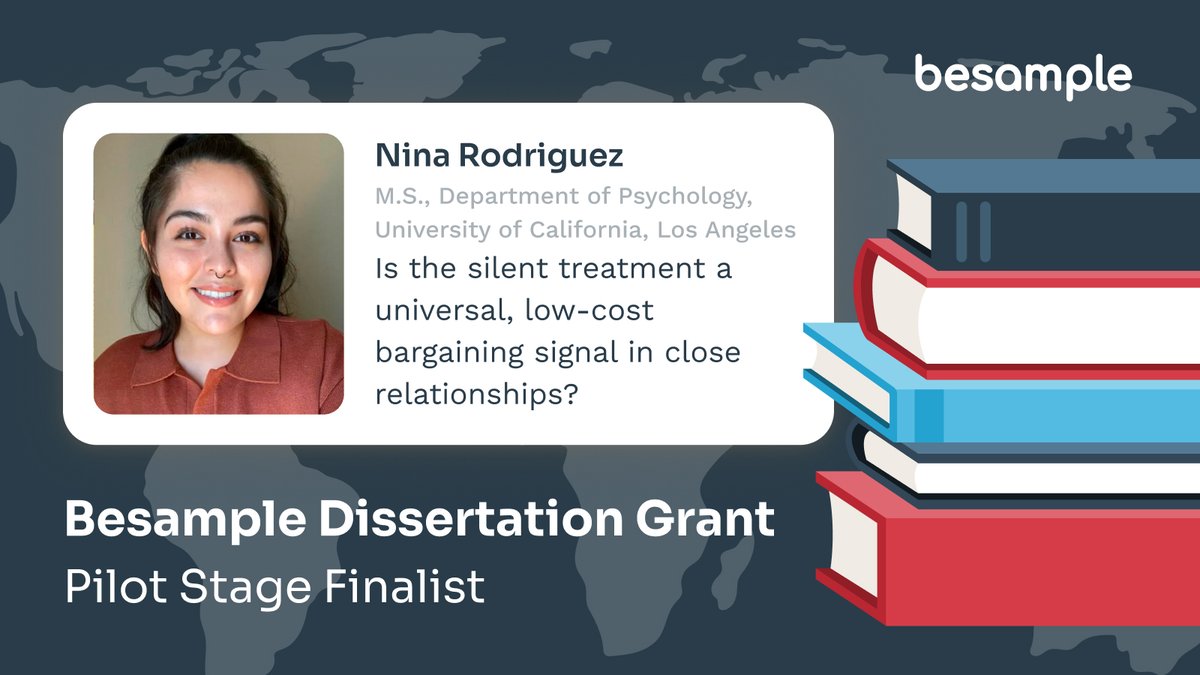
These questions drive a fascinating line research conducted by Nina Rodriguez (@rodriguezNina_), a Ph.D. candidate in social psychology at @UCLA working with Dr. Jaimie Krems (@JaimieKrems). Nina's project asks: Is the silent treatment a cross-culturally recognizable bargaining behavior? Do people reliably interpret it as communicating dissatisfaction, hurt, or relational grievance — especially within established relationships?
Nina's current research has two goals. First, she aims to provide evidence that the silent treatment functions as a bargaining tactic — for example, to secure better treatment from others by withholding access to valued benefits. Second, she aims to compare it to another well-established bargaining tactic: the so-called ‘heated behaviors,’ such as yelling and aggression — and to assess whether the two tactics are perceived similarly.
Nina examines various aspects of silent treatment: emotions it conveys, who uses it and toward whom, and whether it is expected to secure better treatment for actors. To avoid Western bias, she is testing these questions in a pilot sample of 500 people living in Brazil.
Yet another fascinating project from this year’s Besample Dissertation Grant cohort. We are excited to support Nina in her dissertation research and look forward to her discoveries.
#PhDResearch #PhDGrant #CrossCulturalResearch #GlobalResearch #BesampleDissertationGrant
2
6
1,457

Feb 6
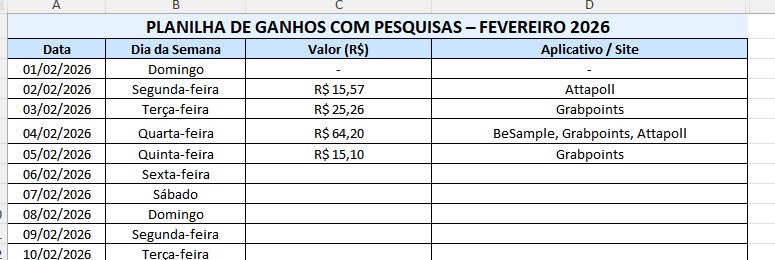
comecei a anotar meus ganhos e por onde, besample comecei no domingo e consegui um saque, tem tudo nos vídeos e grupo grátis da kamylla
23
2,275

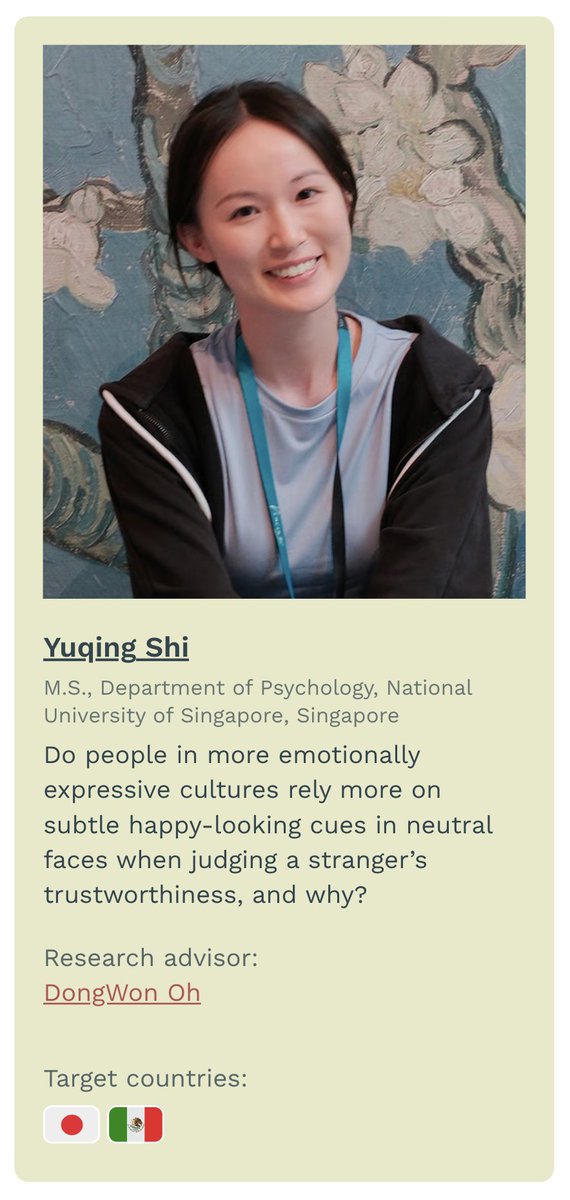
Big congratulations to Yuqing Shi @syuuqing, a PhD student of mine, on receiving the Besample Dissertation Grant! Really exciting work on cross-cultural face perception. Can’t wait to see where this goes. besample.app/dissertationgra…
2
4
352
Jan 30
🎉 Announcing the Pilot Stage Winners of the Besample Dissertation Grant!
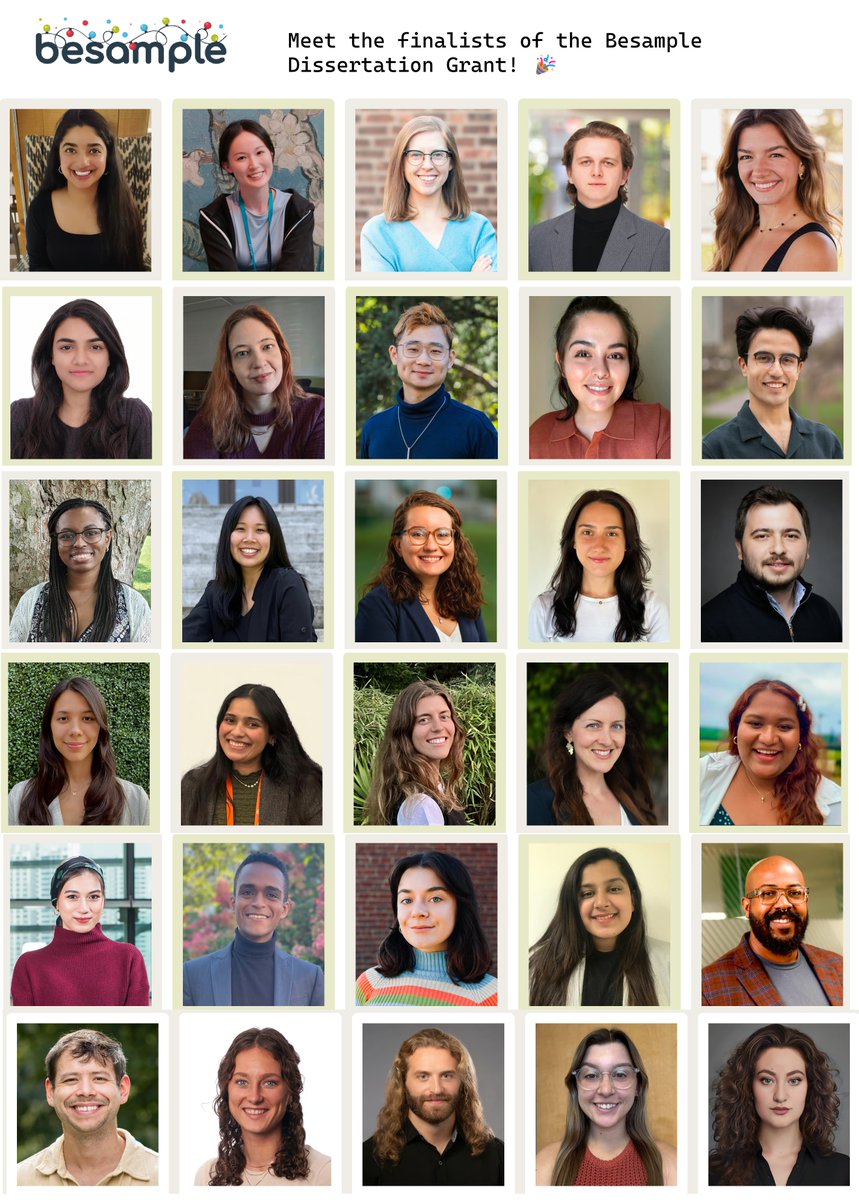
Today, we’re excited to announce the 25 finalists ( 5 special awardees) of the Besample Dissertation Grant. Meet this incredible group of young researchers here: besample.app/dissertationgra…
We received over 100 applications from Ph.D. students at leading universities worldwide. Selecting the winners was hard — the quality, rigor, and ambition of the proposals were impressive. What stood out most was not just the diversity of disciplines, but the determination to treat cross-cultural research as the new default.
Here’s a small glimpse into the kinds of questions these finalists are tackling across countries and contexts:
• Do speech disfluencies like “um” and “uh” function as universal social signals, or rather as culturally shaped cues?
• How do people living under wartime conditions adapt their daily mobility, expectations, and routines?
• How do residents in fragmented-authority cities decide when and how to make political claims?
• How do people across cultures experience and interpret silent treatment in close relationships?
• How do light exposure constraints shape sleep, mood, and health?
• Do global life satisfaction measures truly capture well-being gaps across domains and societies?
... and many more! These projects span psychology, political science, linguistics, planning, public health, and more — and they reflect a new generation of researchers asking bigger, more global questions.
See all projects at the finalists page which has links to students' personal pages: besample.app/dissertationgra…
Over the coming months, these finalists will collect pilot data across dozens of countries. Later this year, three projects will receive full dissertation funding.
👏 Huge congratulations to all finalists — and deep thanks to everyone who applied. You’re the new wave, and we’re proud to support you.
@anisha0singh | @syuuqing | @AmandaRoyka | Arsen Martyshchuk | @i_montini | Senna Singh | Olena Vitkovska | Jonathan Lee | @rodriguezNina_ | Dan-Mircea Mirea | @fealingc| Wicia Fang | Carla Garcia | @OvgunSs | @brkzmyilmaz | @DanaKulz | Manali Pathare | @FaustineCo76701 | AnnaLise Hoopes | @IreinThomas | Zahrah Alwi Alkaff | @MarcusTrenfield | @ReismanSamantha | @NiveditaJhunjh2 | Tyler Salley | Kristopher Nichols | @TeulingsIrene | Paul McKee | Kara Findlay | Krystina Boyd-Frenkel
2
7
359
23 Dec 2025
We’re halfway through the application window for the Besample Dissertation Grant (N=3,000). The applications have been amazing, and we can still take a few more. There’s time to apply before the final deadline on January 15.
We’re awarding over $10,000 in research funding to support ambitious behavioral science projects designed to break out of the familiar “WEIRD” bubble. If you know Ph.D. students in the behavioral sciences preparing for their dissertation, please encourage them to submit a research idea: lnkd.in/eDU4mD_6
So far, we’ve received 91 applications from students at leading universities worldwide. The range of questions they’re exploring is genuinely fascinating, including:
• how light exposure relates to sleep, mood, and well-being
• how capitalism shapes the self across cultures
• how people infer social status in everyday life
• why some individuals turn to AI rather than humans for emotional support
• whether empathy and self-compassion training can reduce ethnocentrism
• how mind-wandering helps regulate emotion
What’s most exciting is not just the diversity of topics, but the ambition to test these ideas across cultures, beyond the familiar “WEIRD” context.
Please consider sharing this opportunity with your network — early-career researchers especially need support in today’s funding environment.
📅 Final deadline: January 15
🚀 Apply here: lnkd.in/eDU4mD_6
Let’s make behavioral science truly global — one dissertation at a time 🎓
1
3
295
5 Dec 2025
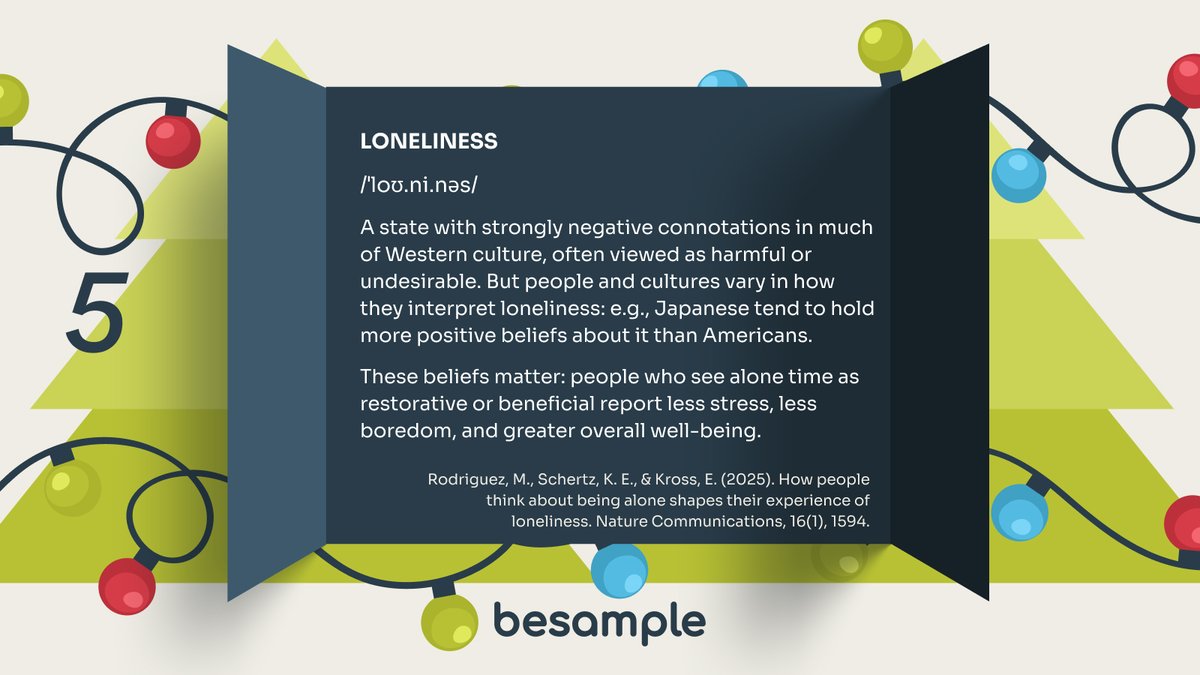
December 5: Loneliness
Today’s daily insight from beyond the West* is inspired by research from Micaela Rodriguez, Kathryn Schertz (@kate_schertz), and Ethan Kross (@ethan_kross), powered by data from Besample and other research platforms.
We tend to treat loneliness as universally negative — especially here in the West, where being alone is often framed as harmful or undesirable. But in their 2025 paper, Rodriguez, Schertz, and Kross show that both individuals and cultures differ dramatically in how they interpret solitude, and these differences can meaningfully shape emotional experience.
Across five studies — including media analysis, experiments, daily experience sampling, and a multinational survey across nine countries — the authors find that beliefs about solitude shape emotional outcomes. People who view being alone as restorative or beneficial feel less loneliness, less stress, and less boredom during time spent alone.
Moreover, these beliefs are culturally patterned. For example, Japanese participants hold more positive beliefs about being alone than Americans, and this mindset predicts more positive emotional outcomes. At the same time, the overall 'beliefs × solitude' pattern holds across continents.
The part about media framing is especially insightful. In the U.S., portrayals of being alone are overwhelmingly negative — the authors report a 10:1 ratio of negative to positive coverage. This reinforces the view of loneliness as a public-health crisis, when in reality, much of the experience is in the eyes of the beholder. Solitude itself isn’t inherently painful, but our interpretation of it can be.
A reminder for behavioral scientists: the same experience can feel pretty different depending on cultural meaning. Plus, this paper is a great example of identifying a real, robust effect that holds across many cultures — yet still shows meaningful variation.
The only way to know whether something is truly universal is to study it beyond the West. That’s exactly why we’re building Besample.
Join us and take your research beyond the WEIRD world: researcher.besample.app/?utm…
________
* This is Besample’s special Advent Calendar: 24 days, 24 insights from beyond the West, reminding behavioral scientists that the world is larger, more varied, and far less WEIRD than we tend to assume. Stay tuned!
#BehavioralScience #GlobalResearch #CrossCulturalResearch #AcademicChatter #AcademicTwitter #Besample
3
171

2 Dec 2025
To all PhD students and supervisors: consider applying for a Besample Dissertation Grant for financing cross-cultural data collection.
10 Nov 2025

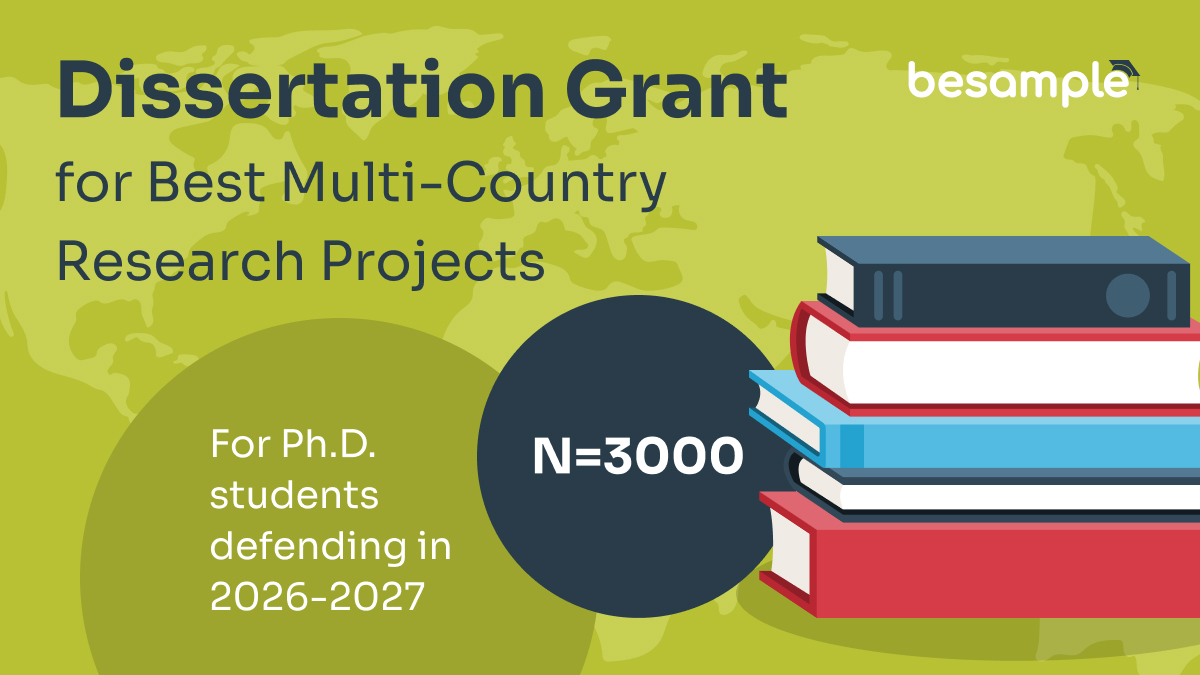
🚀 Announcing the Besample Dissertation Grant (N = 3,000)
When I was a grad student, I received a $1,000 university grant for my dissertation. It might not sound like much, but that small grant allowed me to collect pilot international data across 12 countries — data that helped me successfully defend my Ph.D., find a significant effect, and thus make the first step toward publishing an important research finding.
I know that a small push like this can make a big difference for young researchers, especially for the ones trying to take their work beyond the familiar world of #WEIRDsamples
I’m excited to give back to that same community through my own company. So:
🎓 The Besample Dissertation Grant is now open for applications!
We’re supporting the best multi-country research ideas in behavioral science through a two-stage competition:
🌍 Stage 1: Pilots (N = 500)
We will award pilot funding to 25 finalists, enabling them to test their research ideas and collect preliminary data that can also be used for dissertation proposals.
🧠 Stage 2: Main Studies (N = 3,000)
3 winners will receive full funding to collect large cross-country datasets for their dissertations, as well as translate and localize their studies — immediately supported by Besample’s infrastructure.
If you’re a Ph.D. student in psychology, economics, sociology, political science, communication, or any related field and you dream of testing your theory across cultures — this is your chance!
Let’s make behavioral science truly global, one dissertation at a time 🎓
Learn more and apply:
study.besample.app/jfe/form/…
1
2
352

19 Nov 2025
A great opportunity for PhDs looking to defend during the 26–27 cycle.
博士課程で26–27年度に学位審査を予定している方へ。
西洋中心を超えた研究を支援するBeSampleの助成金プログラム——国際パイロット(N=500)や本調査(N=3,000)までカバーされます。
18 Nov 2025

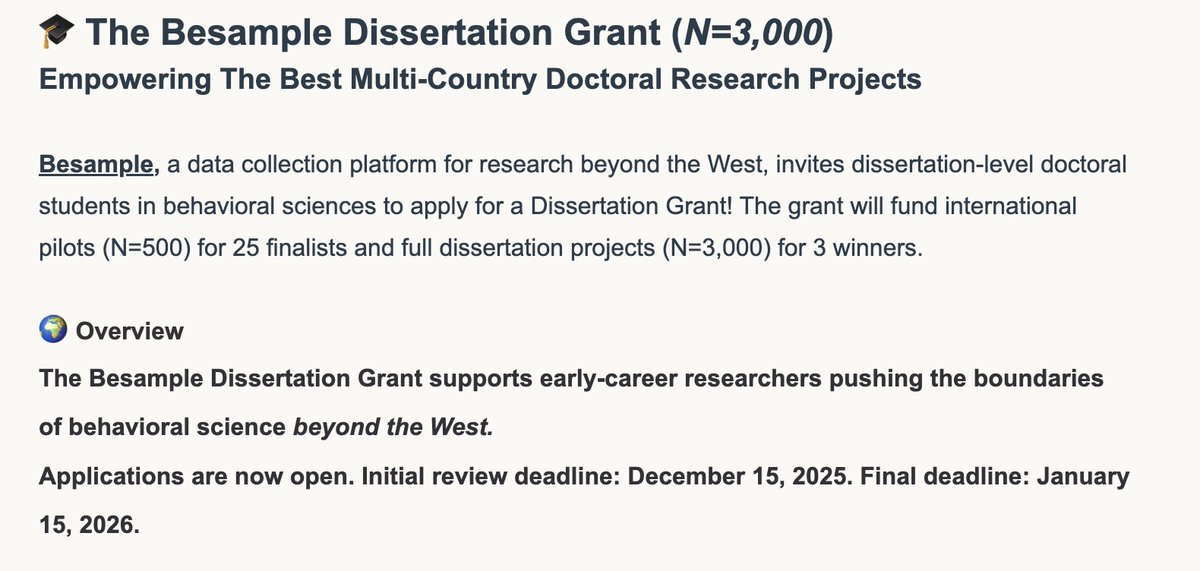
BeSample will fund your research! Cool funding opportunity for PhD students. study.besample.app/jfe/form/… @Besample_app
1
2
372

18 Nov 2025
BeSample will fund your research! Cool funding opportunity for PhD students. study.besample.app/jfe/form/… @Besample_app
1
15
36
6,768

17 Jul 2025
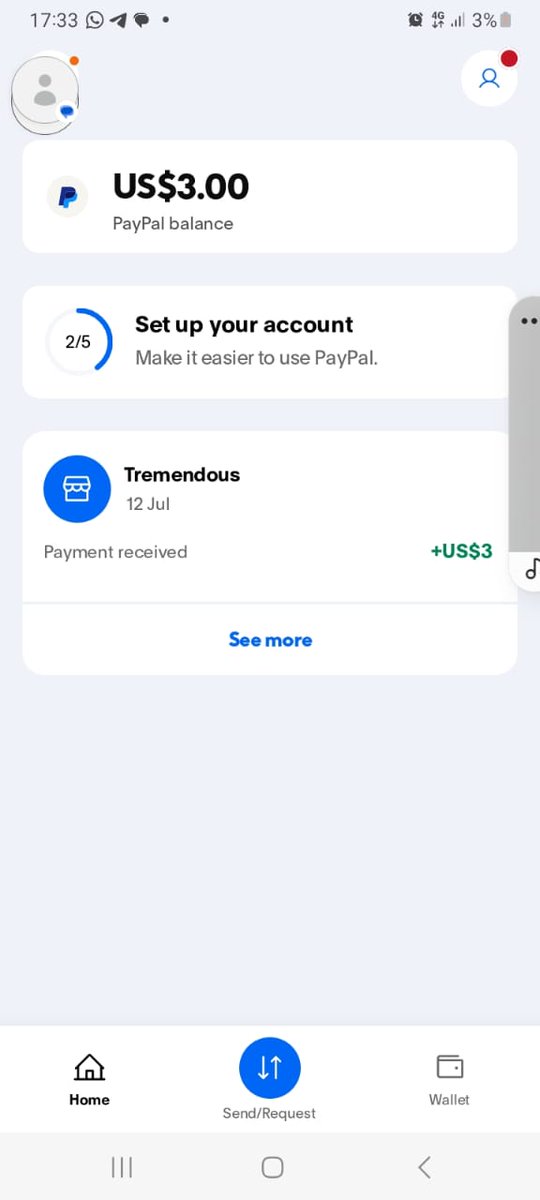
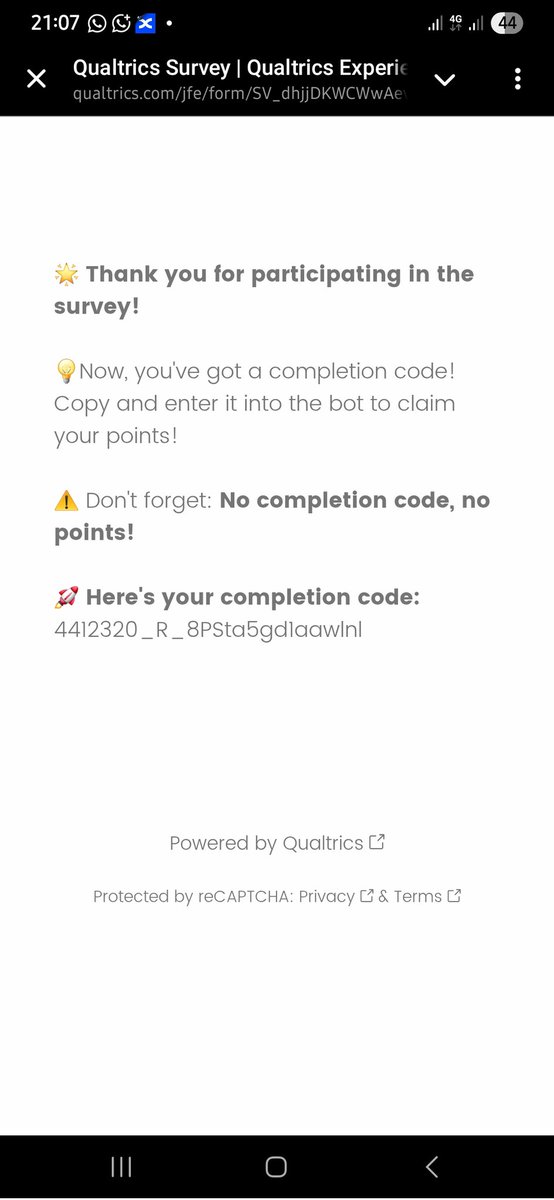
Kuna bot ya surveys pale tg ya survey ,inaitwa besample.
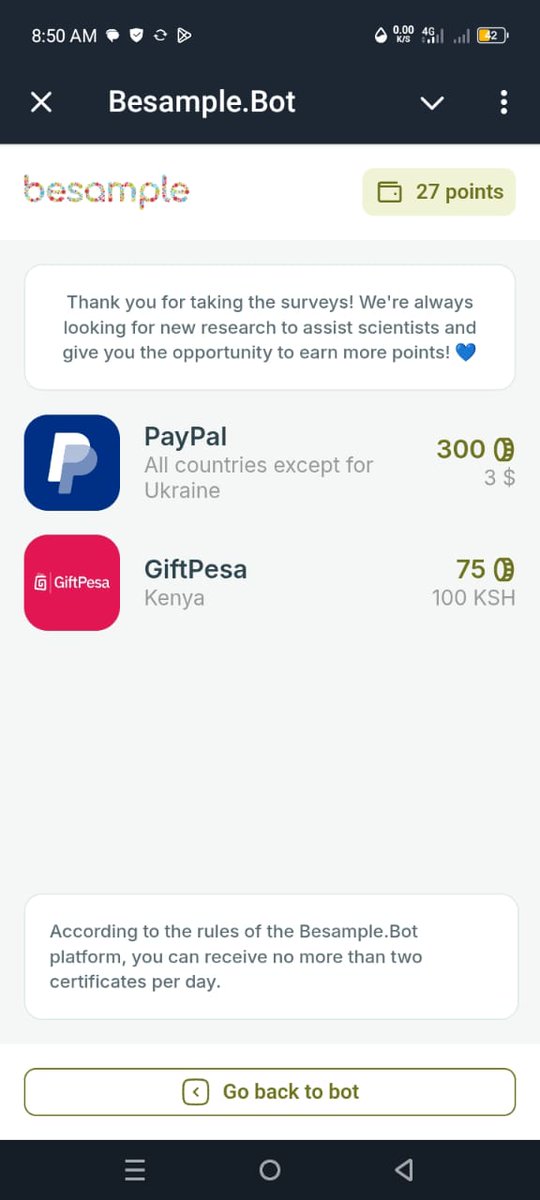
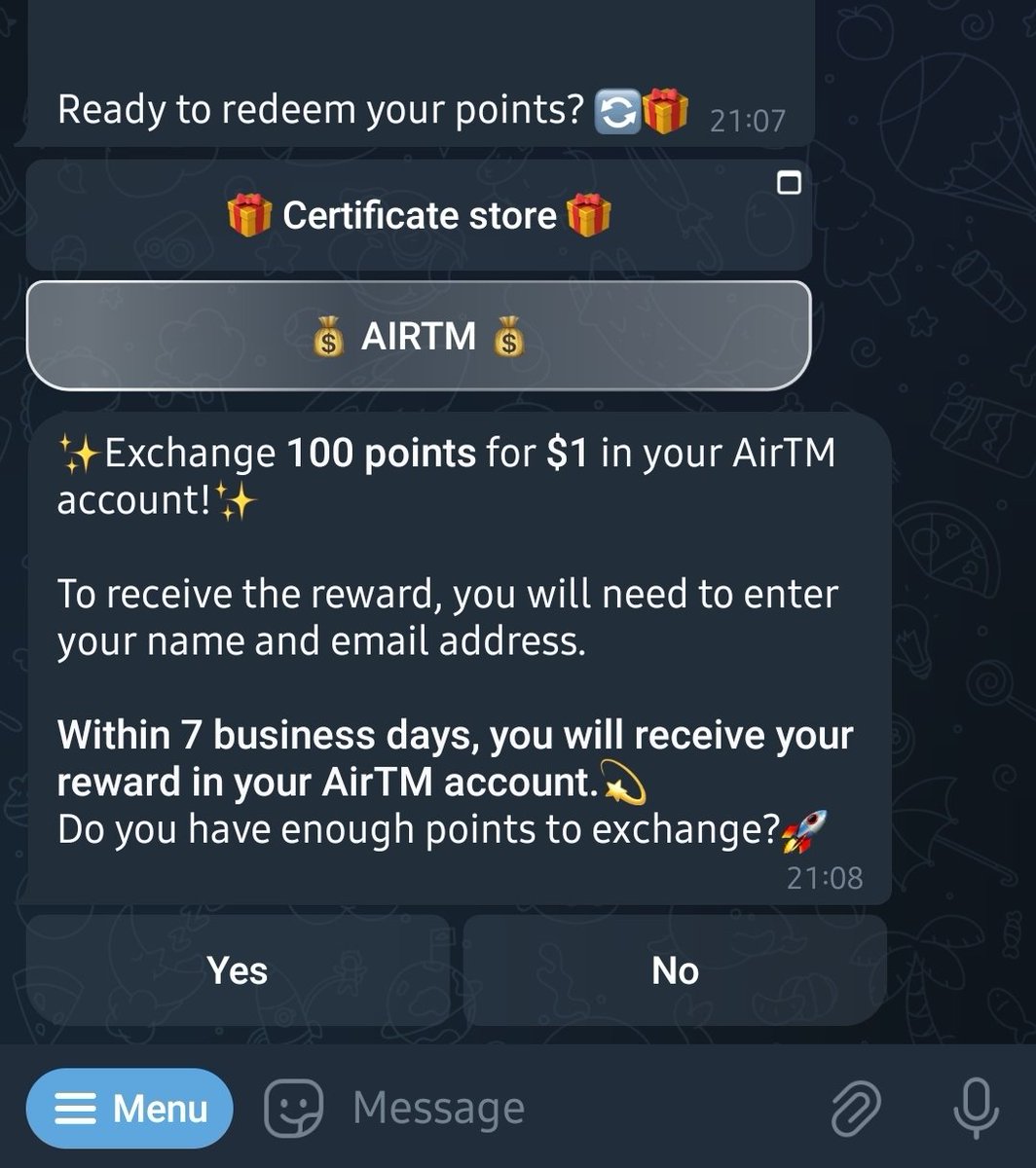
Take Simple and short surveys to earn,,,minimum you can earn per survey ni 30 points. 100points ni equal to 1usdt
t.me/Besample_bot?start=8fc1…
You can withdraw via airtm ukifika 100 points,or via PayPal 300 points
3
2
16
1,590
17 Jun 2025
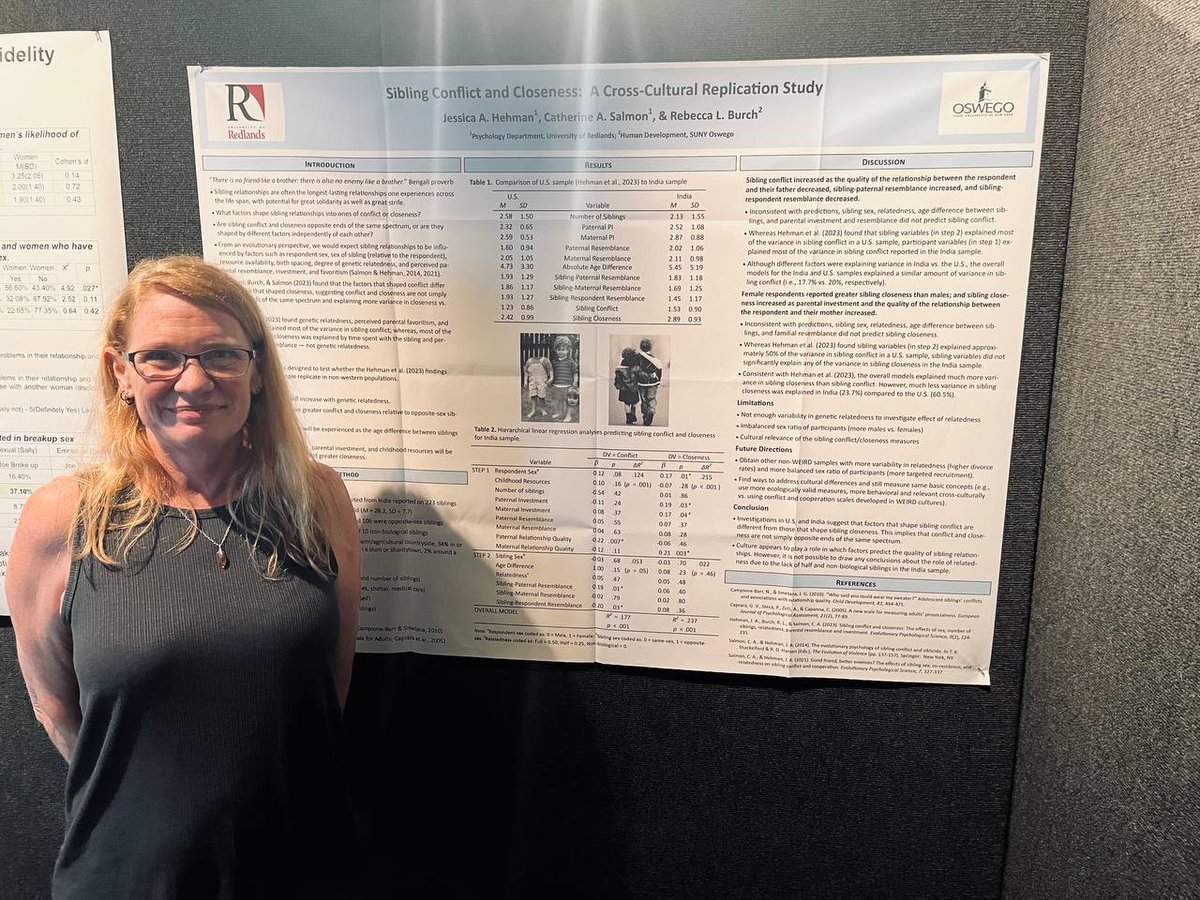
📸✨ Dr. Jessica Hehman is presenting her research on sibling conflict and closeness across cultures at NEEPS 2025!
Jessica, together with Catherine Salmon and Rebecca Burch, explored what shapes sibling relationships beyond the Western world. Using Besample, they reached out to participants in India to investigate whether the factors that influence sibling relationships in the U.S. — such as perceived parental favoritism, time spent together, and sibling similarity — would hold true in a different cultural context 🌍
Their findings suggest that culture plays a role in how sibling bonds are formed and maintained. In the U.S., sibling conflict was mainly linked to perceived parental favoritism, while closeness depended on shared traits like sibling resemblance, same-sex pairing, and time spent together. In India, conflict was more likely when the father–child relationship was weaker and when siblings were seen as more similar to their father and less similar to the participants. Closeness, in turn, was shaped by a stronger maternal bond and more perceived parental investment, but not familial resemblance.
Thanks to Jessica and the team for bringing this research to the spotlight at NEEPS! 🙌
#NEEPS2025 #CulturalPsychology #ComparativeResearch #PhDLife #Besample
1
1
4
370
10 Jun 2025
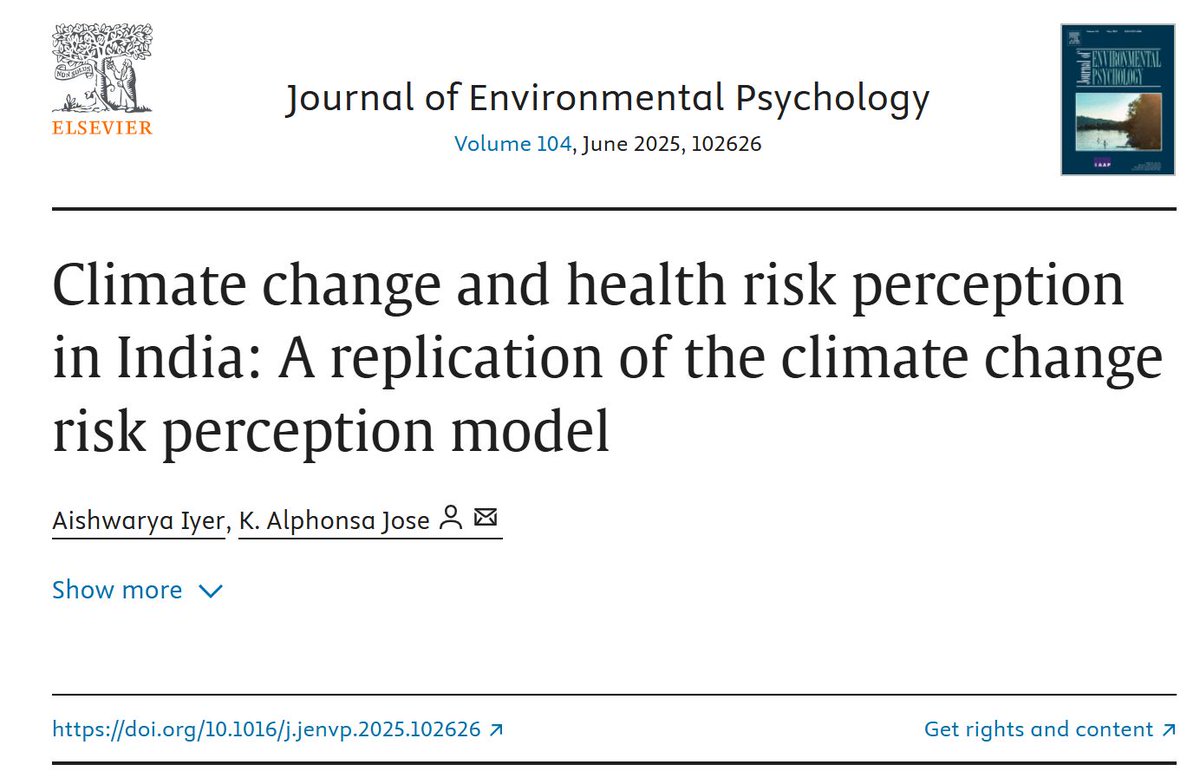
Congratulations to Aishwarya Iyer and Alphonsa Jose on their new article published in the Journal of Environmental Psychology! 👏
Using data collected through Besample, the study tests the Climate Change Risk Perception Model on an Indian sample to understand how people in India perceive risk brought about by climate change, comparing general risks vs. health-related risks. It concludes that the model works well for explaining general climate concern, but explains far less of how people perceive climate change as a health threat — whether climate can bring about things like heatstroke, disease, and pollution-related illness.
This research offers not only practical insight for improving climate communication locally, but also brings globally underrepresented voices into climate psychology. We're happy to have supported this meaningful work!
👉 Here's the full article: sciencedirect.com/science/ar…
#ClimateChange #EnvironmentalPsychology #AcademicChatter #PhDlife #AcademicTwitter #AcademicResearch #Besample
1
1
4
302
9 Jun 2025
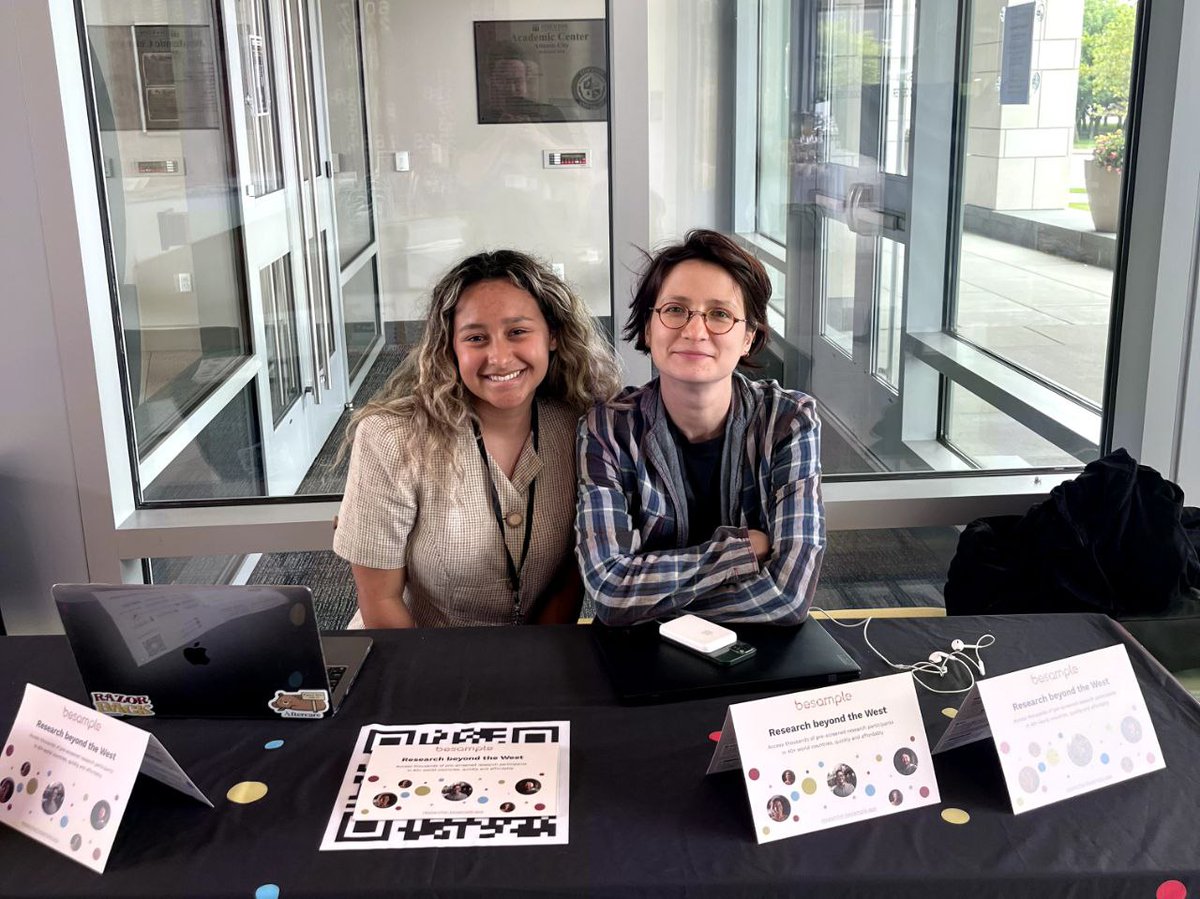
Our co-founder Tamila and community manager Brianna are attending the NEEPS (Northeastern Evolutionary Psychology Society) conference in Atlantic City, June 9–11 🎓
👋 If you’re attending too, come say hi — our table is right by the registration area!
We’re glad to be here at the invitation of @CatherineSalmon, President of the NEEPS Board. Along with Jessica Hehman and collaborators, she recently conducted a cross-cultural replication study on sibling conflict and closeness, using data collected through Besample. Visit the Noyes Arts Garage of Stockton University tomorrow to see the poster and chat with Jessica and Catherine!
#NEEPS2025 #PsychologyConference #BehavioralScience #PhDLife #CrossCulturalResearch #Besample
1
1
4
319
28 May 2025
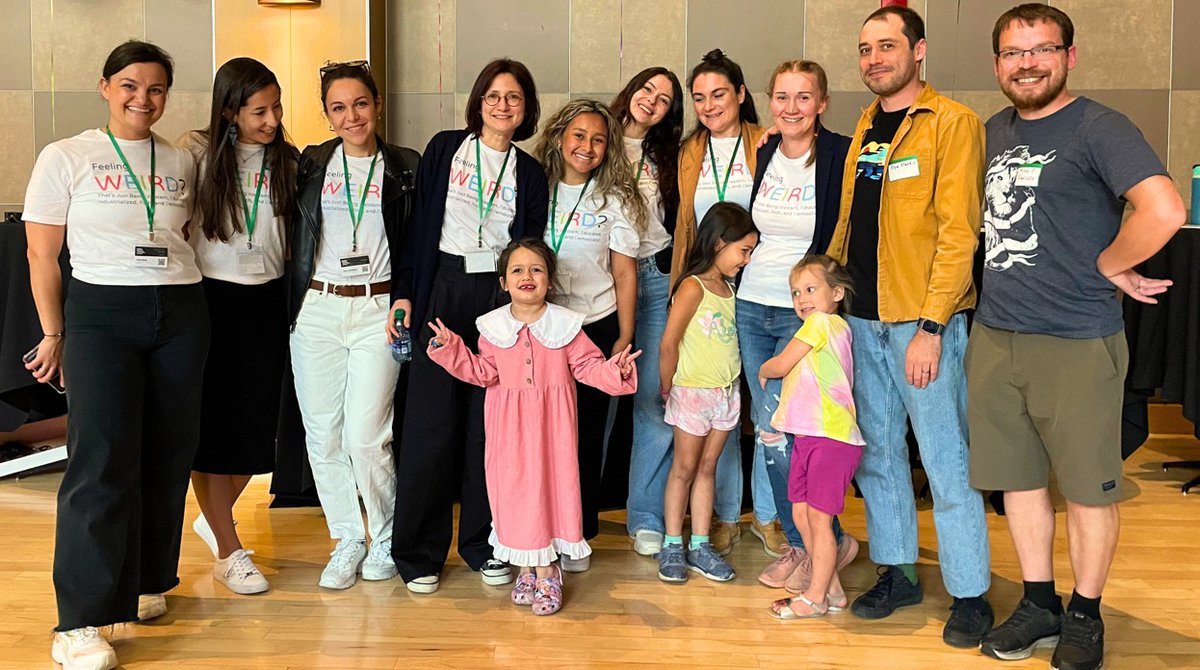
We’ve closed our pre-seed round, raising $1.1M! 🥳
We’re proud to be backed by mission-driven investors who believe in our vision. This round was led by Gutter Capital — founders themselves — who understand our challenges and support us on our journey to make science truly diverse and globally representative.
This funding allows us to double down on what matters most: researchers and research participants.
▫️ For researchers: expanded country coverage, smarter demographic targeting, new study formats, and rigorous quality controls.
▫️ For participants: flexible cash payments, smooth onboarding, a user-friendly interface, and fair rewards for attention and reliability.
Much of this is already in motion, and with our investors’ support, we’ll make it happen better and faster!
Read more: finance.yahoo.com/news/besam…
#startups #research #behavioralscience #femalefaunders #besample
1
1
2
447
14 May 2025
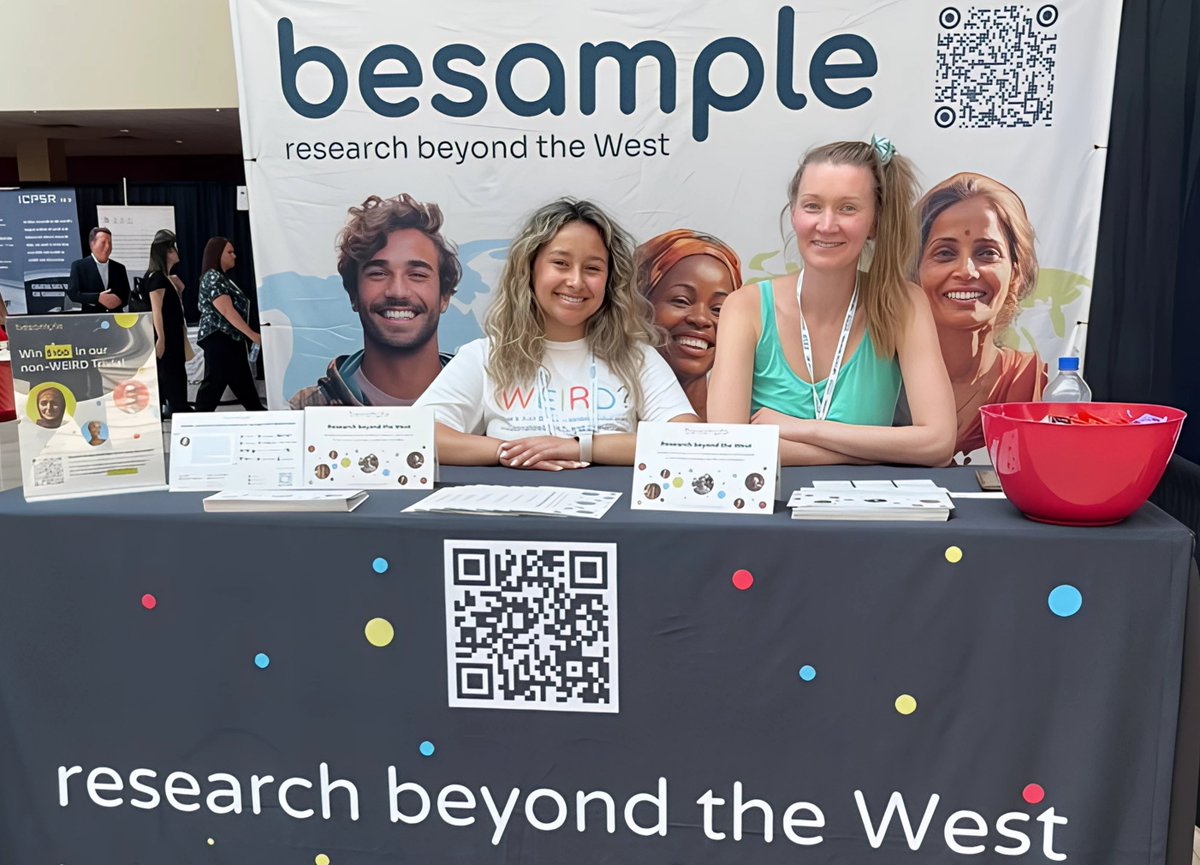
The Besample team is excited to participate in the @AAPOR conference for the first time!
🙌 Come visit us at booth 107 — our founder Elena and community manager Brianna are already there! We'd love to chat, hear about your research, and share our insights from non-Western respondents' data!
🎙 Join Elena's talk on May 15th, between 8:30 and 10:00 am in the Exhibit Hall — to learn more about how Besample is addressing the Western bias in research.
💰 Get Besample research credits! Earn $25 for attending non-WEIRD Trivia or win $100 for the right answers!
Let's explore together how globally inclusive research can deepen our understanding of public opinion!
#AAPOR2025 #AAPOR #AAPOR25 #PublicOpinion #SurveyResearch #AcademicChatter #PhDlife #AcademicTwitter #Besample
1
1
3
376
8 Apr 2025
🎓 Your contribution has made a real impact 🙌
Four early-career researchers have already collected their first international samples for free, totaling 1,200 respondents from India, Indonesia, Ukraine, Germany, Kenya, Ghana, and Brazil!
This became real thanks to your participation in our collaborative study with the Max Planck Institute for Human Development on research ethics and the use of deception in studies. For every completed survey response, Besample contributes $20 to support young scholars. This initiative helps them gain hands-on experience with international online data collection.
📝 If you haven’t taken the survey yet, there’s still a chance to support the future of ethical research and the next generation of scientists: mpib.qualtrics.com/jfe/form/…
#MaxPlanckInstitute #Besample #AcademicChatter #PhDlife #AcademicTwitter #ResearchGrants #ResearchEthics #AcademicResearch
1
2
258
21 Feb 2025
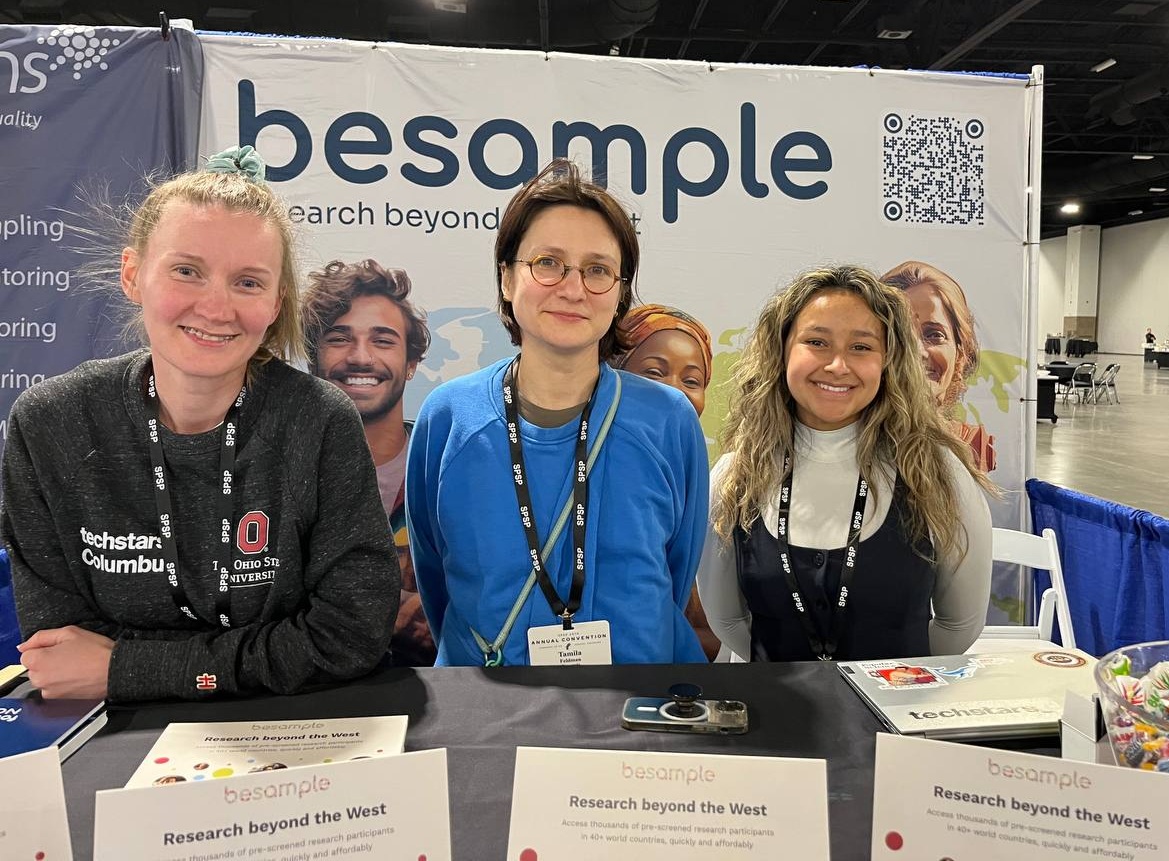
🔔 Besample at #SPSP2025 🔔
We’re attending SPSP for the third time and look forward to meeting you! Visit us at booth #12 to chat with Besample’s founders and other team members about your research and explore how we can support you with international sampling.
🎯 We’re also hosting a Trivia challenge—answer correctly and win $50 in research credits. See you there!
#SPSP #SocialPsychology #Besample
2
2
904
20 Dec 2024
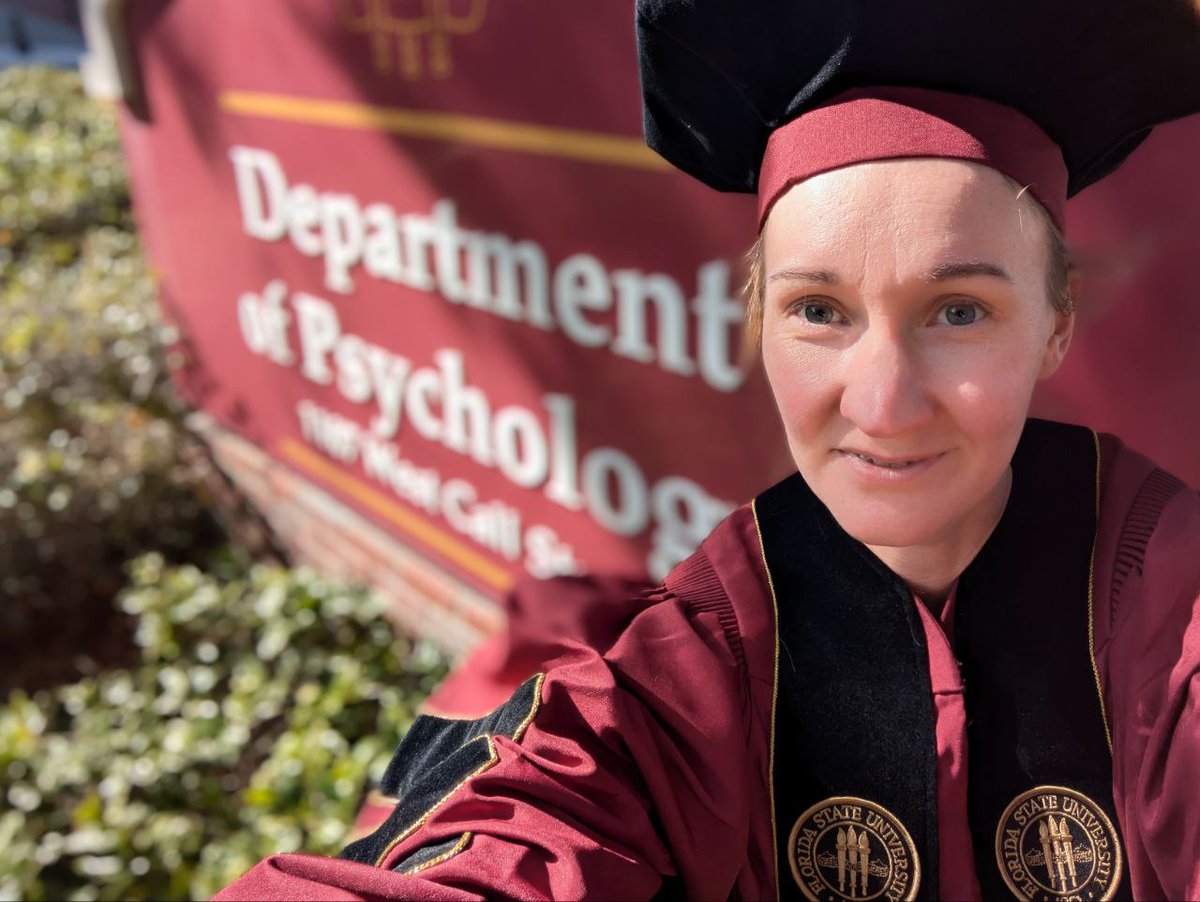
🎉 Besample Founder Gets a Ph.D. in Social Psychology 🎉
Elena Brandt just graduated from Florida State University’s doctoral program in social psychology.
Elena's journey started 11 years ago with a for-fun online course — and turned into a lifelong passion. While continuing her industrial career, she collected textbooks on social psychology, wrote Wikipedia articles about key figures in the field, and gave lectures to friends at home.
Inspired not only by the discipline but also by the vivid and integrative way it was taught in the U.S., Elena moved to America and joined a reputable doctoral program in social psychology at FSU. With her first research advisor, Paul Conway, she explored how perceptions of leaders are shaped by the way they make and communicate organizational decisions. She then joined Jon Maner’s evolutionary psychology lab, where she examined the effects of environmental risk on reproductive behaviors and beliefs. Leveraging public international data on multiple levels, Brandt and Maner discovered that local mortality rates robustly predict not only the age of first birth and number of children (BMC Public Health), but also attitudes and laws concerning abortions; the latter finding was published in prestigious Psychological Science.
Throughout her research journey, Elena discovered a pressing need for international samples in behavioral sciences. “From my first day in grad school, I saw a crippling North-American bias in how human behavior was approached and studied,” Elena says. “As an immigrant, I knew life outside the U.S. was very different, but those differences seemed to be left out of the scientific discourse.”
She then discovered the roots of the problem: collecting behavioral data beyond America was hardly possible for researchers: this could only happen through foreign collaborators or panel agencies; both methods were costly and slow. As part of Elena’s own research on human reproduction, she traveled to Africa and engaged with a local non-profit to talk to women living in slums. “It helped me gain a much deeper insight into what I was studying, but it was also clear that such effort was not something researchers could afford on a regular basis.”
Leveraging her background in tech, particularly in crowdsourced data collection, Elena founded Besample, a platform that empowers researchers to study populations beyond the West. Besample currently features 42 diverse countries, where data from vetted research participants can be collected within days to weeks. In her dissertational research, Elena used Besample to collect data on saving behaviors across 14 world societies. “I was able to assemble a large and diverse dataset for my dissertation within a few weeks. Without Besample, it would likely take me years,” says Elena.
Besample has seen significant traction among leading behavioral researchers in 2023-2024. After graduation, Elena is working on closing a venture funding deal for the company that will help grow Besample, add more countries, and deploy new features desired by behavioral researchers.
Congratulations, Dr. Brandt, on completing this stage, and best of luck on the exciting journey ahead! 🎓
7
259
5 Dec 2024
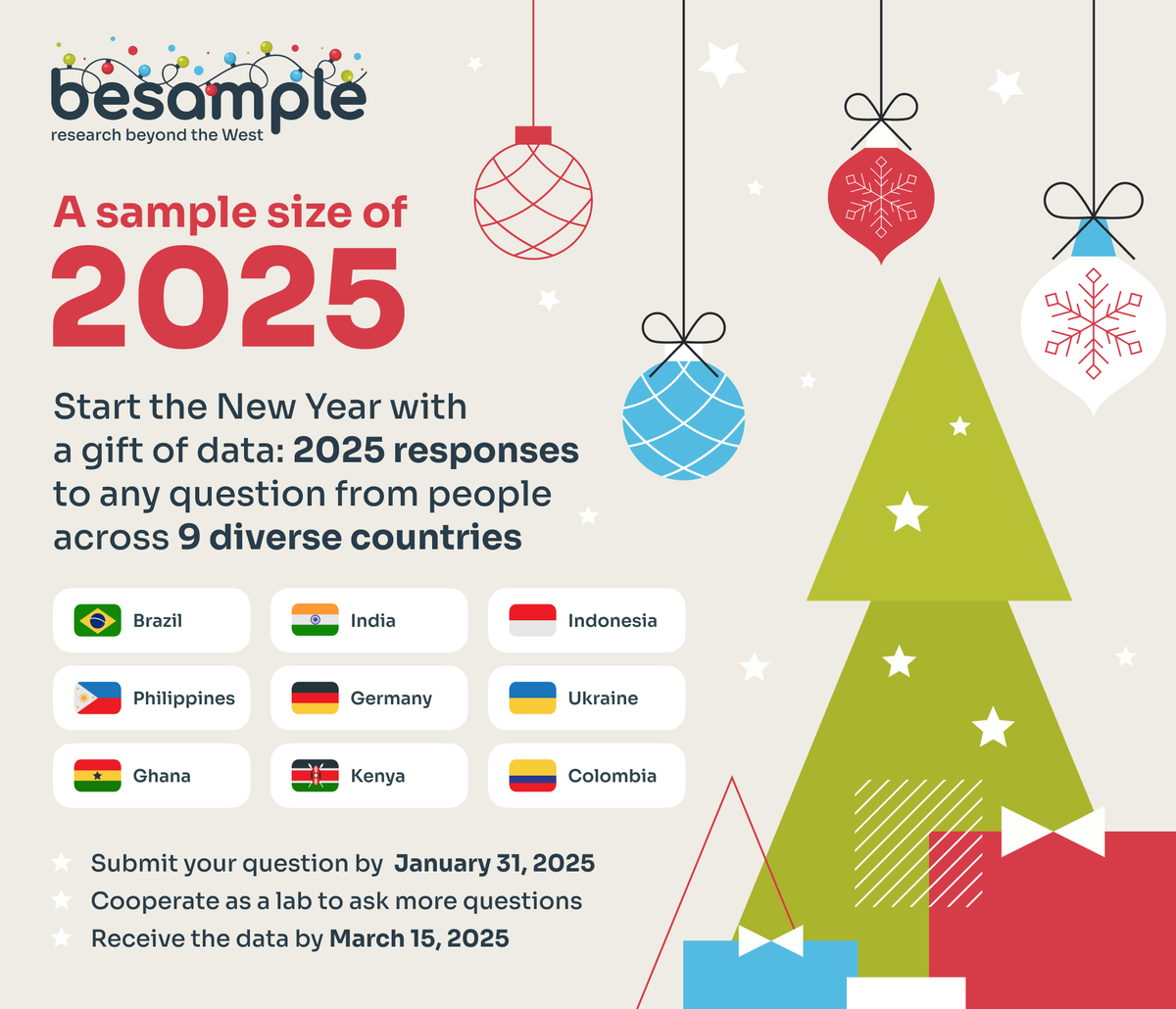
🎄 New Year Gift: 2025 Data Points from 9 Diverse Countries 🎄
Start the New Year with a gift of global data for you and your lab! Get a free sample of 2025 responses from nine countries featured on Besample:
Brazil • India • Indonesia
Philippines • Germany • Ukraine
Ghana • Kenya • Colombia
Submit a question by January 31; receive the data by March 15, 2025. Each researcher can submit one question, but you can collaborate with your lab to get more data. Learn more: bit.ly/NY_Gift
Share the gift—spread this post 🎁
#NewYearGift #SocialScienceData #ResearchParticipants #AcademicChatter #PhDlife #AcademicTwitter #AcademicLife #Besample
5
405