Founder of Prist Capital, ex @Firstround, @Stripe, @mixpanel, Bain, and @CleGuardians. Bears Fan 🏈, amateur golfer 🏌🏾♂️, pilot 🛩.
Joined August 2010
- Tweets 780
- Following 1,540
- Followers 6,979
- Likes 2,103
44 Photos and videos




Jun 11
So proud of Andrew Redd and team! Thanks for letting me be a small part of this from day 1.
Jun 11

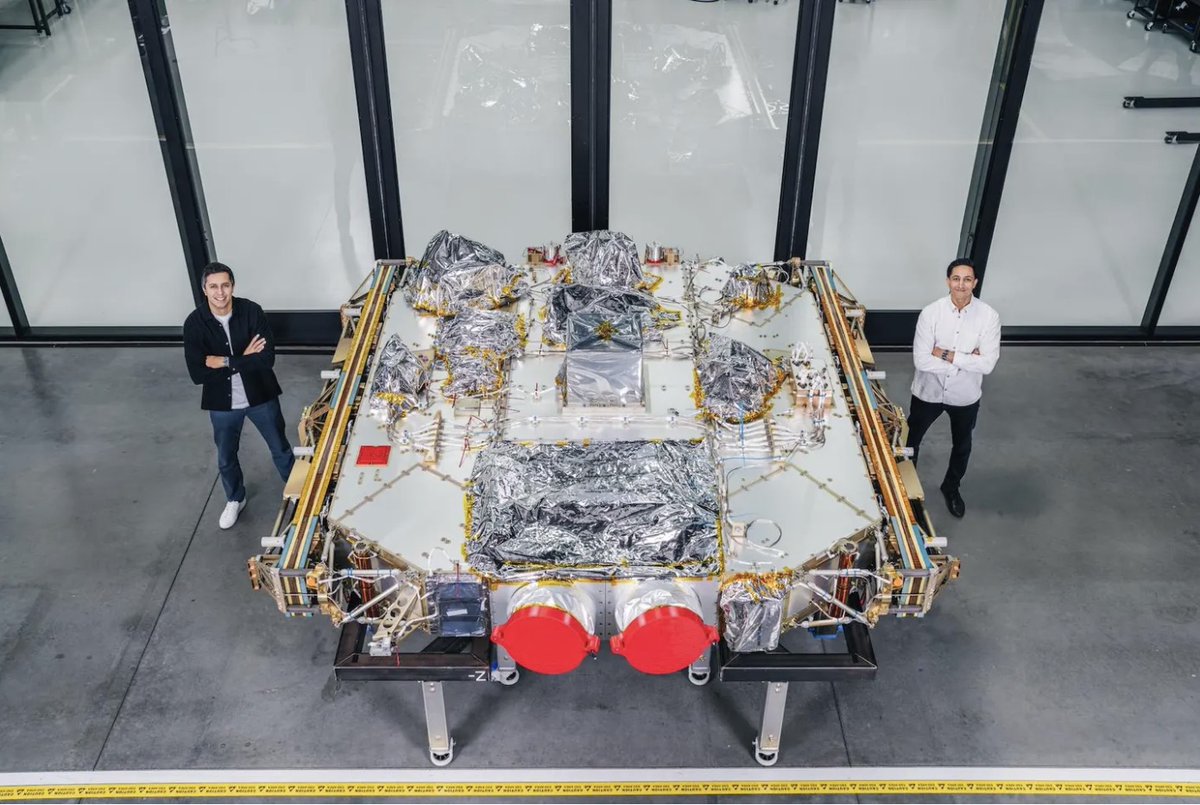
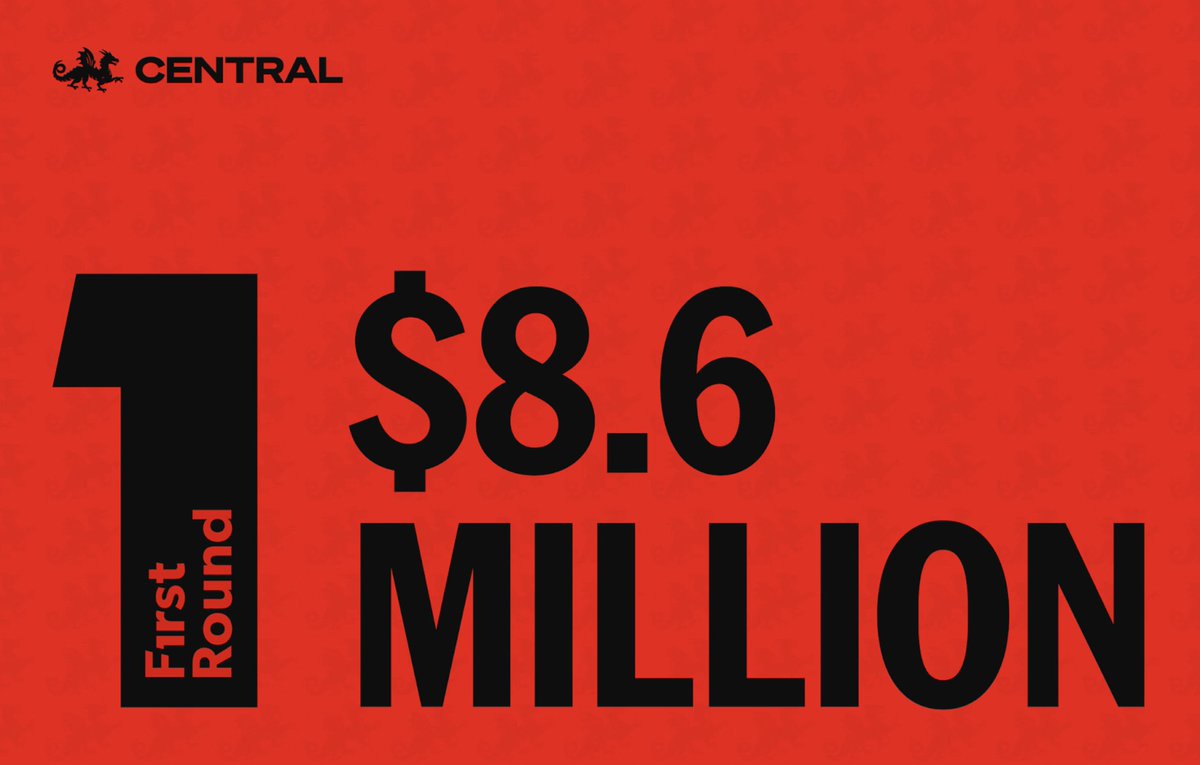
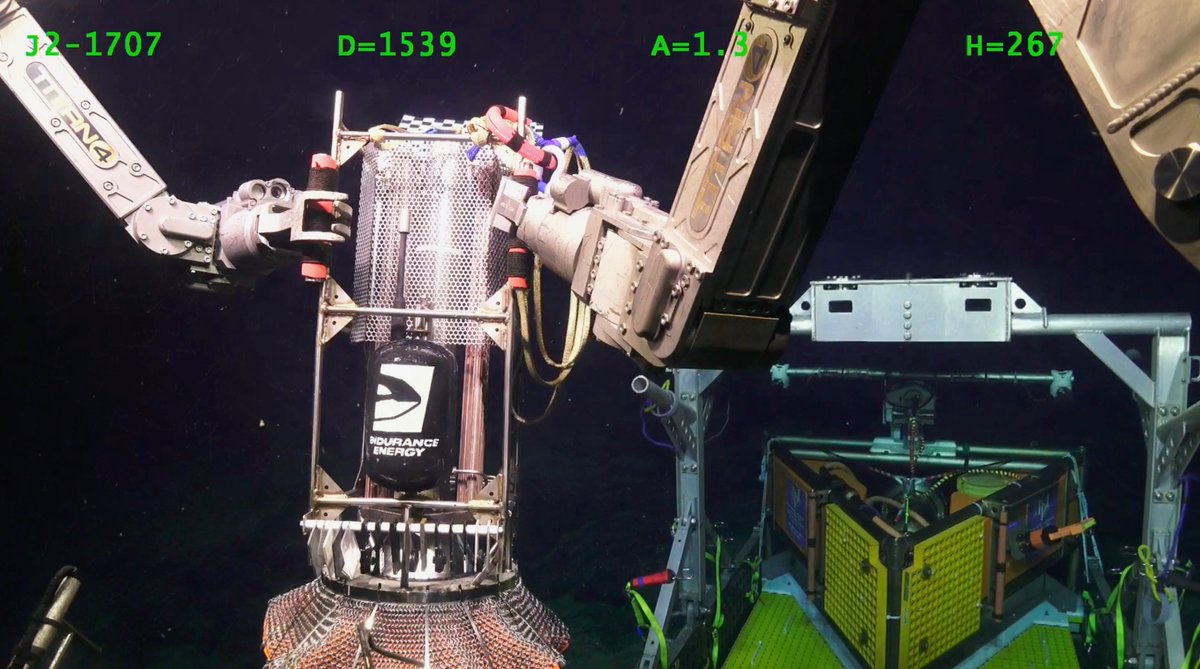
Endurance is proud to announce our $54M Series A, led by @foundersfund, to develop subsea geothermal energy. We're building mass-manufacturable and mass-deployable generators to access terawatts of low cost, clean, baseload power.

222
Meka Asonye retweeted

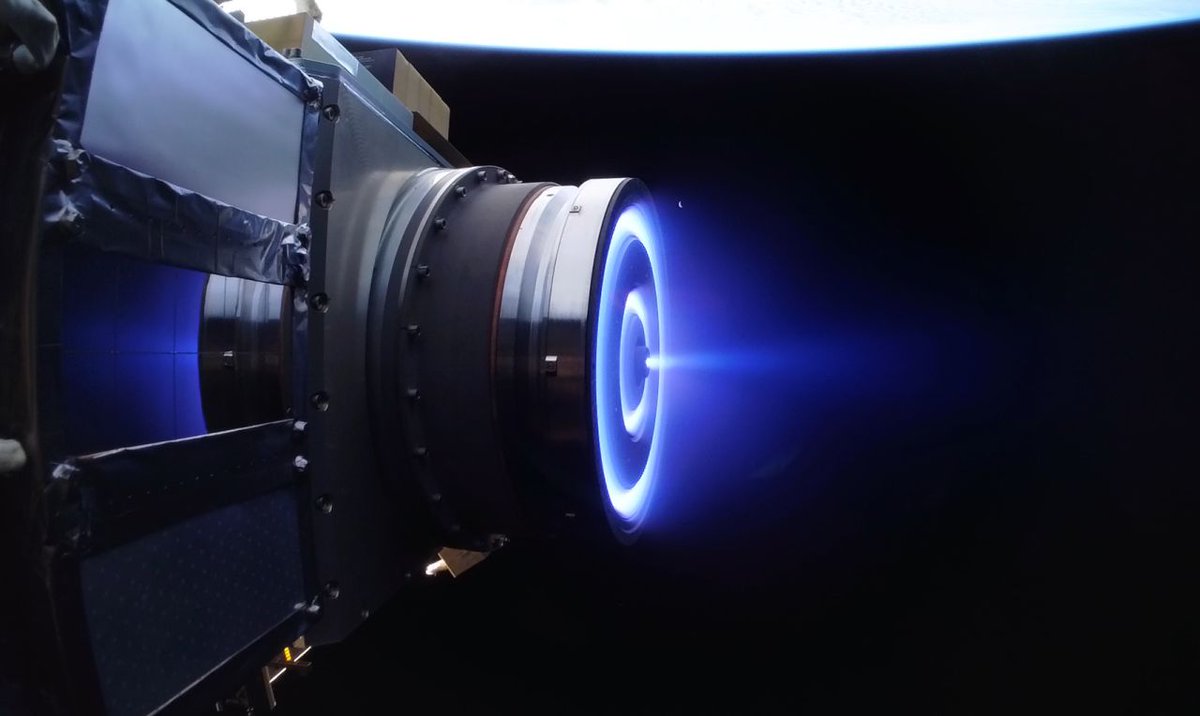
It’s official: K2 Space is operating the most powerful Hall thrusters currently flying in space. Just a few weeks after the launch of our first test mission, Gravitas, we’ve successfully fired both of our 20kW Hall thruster systems to achieve a new level of electric propulsion power never before seen on orbit for this type of system. We plan to continue raising and lowering our orbit as we gather more data on the thruster performance while continuing our mission in LEO.
This milestone is yet another validation of K2’s approach to building bigger, as more powerful thrusters will enable the MEO, GEO, and deep space missions of the future.
26
171
1,136
53,262
Meka Asonye retweeted

Apr 8
I'm very proud to share that the team @K2SpaceCo has achieved Tier 2 Mission Success for Gravitas!
Over the past week, we've:
• Powered on our payloads
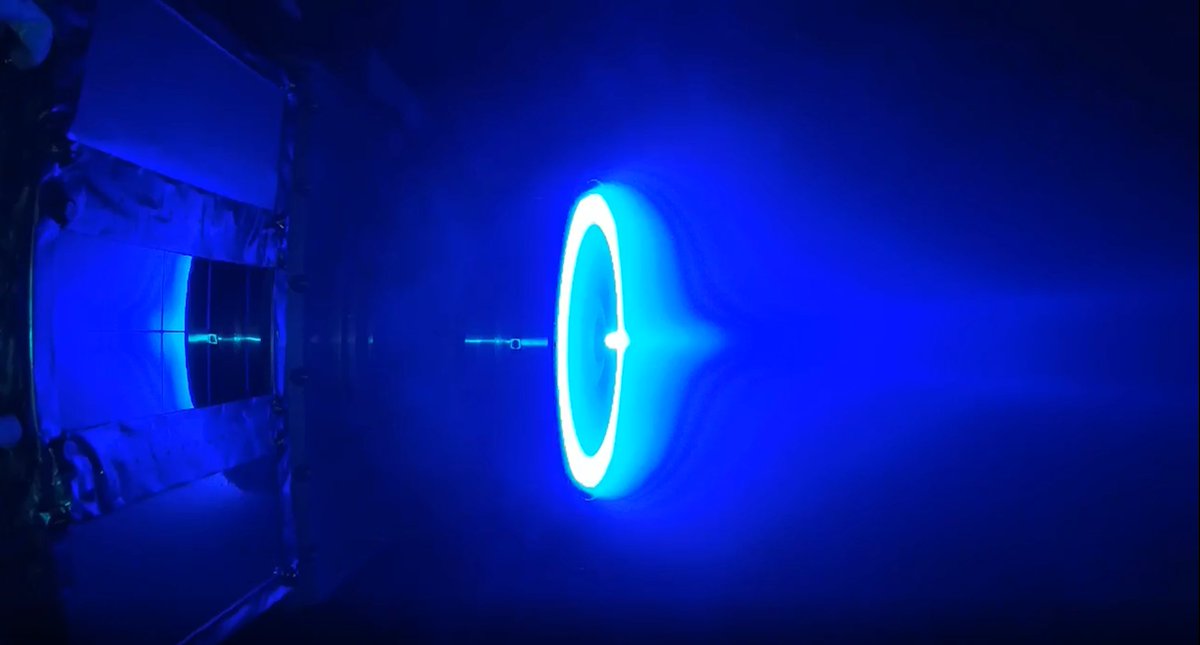
• Activated our high power propulsion system and fired the thruster
• Completed testing of our software system, including a software update
With all of the satellite bus systems demonstrated and checked out, we will be transitioning to sustaining operations for the rest of the mission.
This includes continuing our payload demonstrations while pushing the satellite bus systems to the limit to learn as much as possible for future missions.
(And yes, this photo is real. Our thruster firing on orbit.)
---
31
63
417
49,483
Meka Asonye retweeted

Mar 10
Solid-state batteries are changing naval warfare. And the threats they enable are far harder to detect.
A post recently went viral claiming Iran's "Azhdar" UUV patrols at 18–25 knots with 4-day endurance and 600 km range.
This appears to be false, but the post went viral because the narrative is true. UUVs are a growing threat and maritime, as demonstrated by this crisis, is more important than ever.
And the stakes are high. Iran has long held the Strait of Hormuz as a pressure point; roughly 20% of global oil supply flows through a 21-mile-wide chokepoint.
UUVs capable of covertly laying mines in those waters would further threaten naval assets and escalate the conflict.
UUVs are already being deployed by multiple nations. Today's lithium-powered vehicles cover hundreds of kilometers and patrol for days. Solid-state batteries at 400 Wh/kg, and climbing, mean that gets dramatically better, cheaper, and more scalable this decade.
Sensing underwater is categorically harder than any other domain.
cUAS has radars, cameras, RF, microwave. The electromagnetic spectrum works for you in air.
Water kills RF. Acoustics are the primary detection modality, and littoral environments add clutter and complexity that open-ocean legacy systems were never built for.
Those legacy systems were designed to find large submarines in deep water. Not swarms of small autonomous vehicles near ports, chokepoints, and critical infrastructure.
As UUVs get cheaper, faster, and more autonomous - sensing is the defining gap.
cUUV is going to be a massive market.
Interdiction starts with detection. And detection underwater is still largely unsolved.
4
12
2,357
Feb 12
Depending on which viral AI essay you agreed with on X this week, it’s already so over or we’re all playing a very expensive game of Farmville.
As with most things, the real answer is a lot more unsatisfying. It’s all still messy and probably lies somewhere in the middle.
While it does feel like things are shifting extremely quickly in a way that’s hard to dismiss, the hype is escalating every day. It’s impossible to tell where exactly we are on the curve.
What has been more interesting to me than the debate over which camp folks are in is just how much traction these pieces are getting. I think we’re all kind of desperate to make sense of how uneven things are, and are all caught up in this moment of trying to process the whiplash.
You’ll be scrolling through crazy OpenClaw workflows and mishaps that truly feel like scenes out of the future, but then skepticism starts to creep in about what’s true and what’s overengineered.
And then anytime you step outside the tech bubble you can get an instant reality check on how much wood there still is to chop to get to widespread adoption. (Even if it’s just seeing how differently the ChatGPT vs. Anthropic vs. Google Super Bowl AI ads landed for tech folks vs. normies.)
The gap between what people are posting about and what’s actually making a difference has never felt harder to figure out.
The main thing I’ve found to be helpful as a counterweight is trying to stay diligent on spending my time as an investor where I think it matters most vs. getting caught up in the wild swings. For the past few years now, that’s meant meeting with builders who are focused on solving hard, real-world problems.
To me that means taking on the biggest, most technically and operationally challenging issues in the physical world (aerospace, defense, robotics), or figuring out how to usefully inject AI into the painful, manual workflows in industries that actually make and move things.
Not only because this is what personally gets me more fired up but also because it feels like this is the general direction our world is headed in. More and more of the founders I’m meeting are reorienting their approach to problem hunting and building in this way.
@DideroAI is a great example here and is top of mind because they just shared their $30M Series A news today from @chemistry and @HeadlineVC.
They found a problem space most of us know virtually nothing about. Procurement teams at manufacturers and distributors are managing thousands of supplier interactions across email, spreadsheets and ERPs. The bulk of this stuff is still done manually, even though it’s only getting more and more complicated as companies try to diversify their supply chains across more countries.
When I led their seed in 2024, @tspencer15, @tcpetit, and @LPallhuber immediately felt like a team that was well-configured to the shape of the challenge here. They’ve been those people stuck in the mud of these workflows. (Between the 3 of them they’ve built companies, run procurement operations across countries, and dealt with the pain of trying to coordinate 100s of suppliers.)
Spaces like these, where the team has the deep domain context and the agents are correctly applied, are where AI can and already is making a near-term, not-theoretical difference.
In took less than a couple years, and Didero’s agents are now doing things like following up on 2K past due order line items that were sitting neglected, automating PO creation, and pulling info off physical bills of lading and getting it into the ERP so production doesn’t stall out waiting on someone to manually type it in.
None of those are paradigm-shifting on their own, but stack up these small, boring, concrete wins week after week, company to company (and assume they continue to improve in capability at an explosive rate), and pretty soon we’ll all be surprised by just how much wood has been chopped.
7
6
39
5,976
Feb 5
Working at @stripe with Jeanne was one of the highlights of my professional career. So fun to see it come full circle as she drops truth bombs on the @firstround pod
Feb 5

Today we’re launching our newest podcast, Executive Function. The question we’re trying to answer is: what is the difference between good and truly great scale up executives?
We’re beginning this journey by sitting down with Jeanne DeWitt Grosser, who’s currently the COO @vercel and previously spent almost 10 years @stripe, where her final role was Chief Business Officer.
So much of her perspective can be summed up in this observation: “Most executives have a playbook and won’t contextualize it. They over pattern match and lack the intellectual curiosity to figure out what’s different. They don’t actually get their hands dirty.”
Hope founders, execs, and future execs find as much value in this conversation as I did.
Timestamps:
(5:04) What keeps star talent from ascending to the top spot in a company
(19:59) How to balance being demanding and supportive as an executive
(22:47) Jeanne’s interview process for hiring executives
(29:04) The thread that ties together failed executives
(34:57) How Jeanne uses “driver trees” to determine metrics
(43:24) Why your executive peer set needs to be your first team
(57:16) How Stripe got 30 execs to operate as one team
(1:02:43) Why execs should be working themselves out of a job
(1:09:26) The performance review from @collision that sticks out in Jeanne’s mind
17
1,059
Meka Asonye retweeted
Feb 3
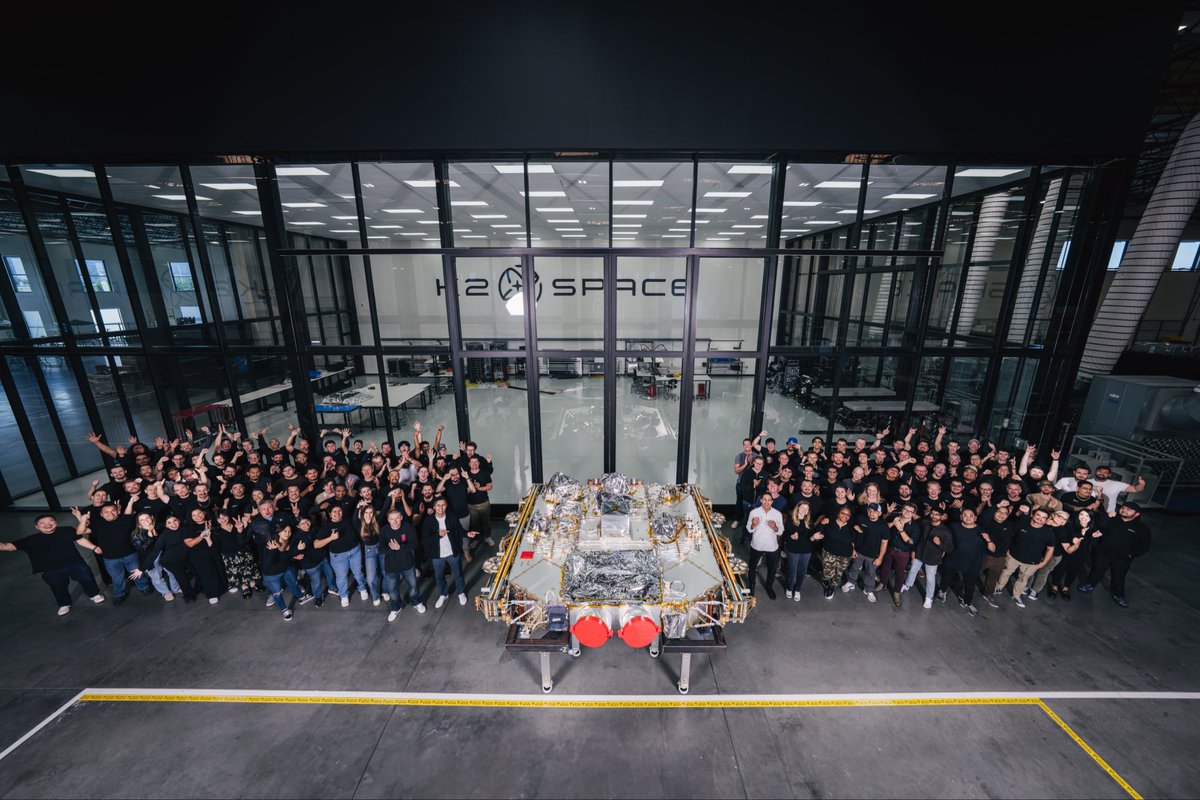
As the founder of a space company, I like to think I’m pretty optimistic - but even I underestimated the rate of acceleration we’ve seen over the last few months.
Almost four years ago, Neel and I started a company because we were excited about Starship. We saw the opportunity to build much bigger, much higher power satellites that could start humanity down the path towards being a Type 2 Kardashev civilization. We decided to call the company K2, we made our logo a Dyson sphere.
Four years later, the Kardashev scale is a mainstream concept - with the ambition to make humanity a K2 civilization being broadcast by one of the greatest engineers in the world. Concepts that I thought were 5 to 10 years out, like orbital data centers - are now foundational capabilities for what could be one of the most significant IPOs ever.
We’ve gone from people asking us “why would anyone need a 100kW satellite?” to people taking that number, asking their AI to put it into their orbital data center excel and having the lightbulbs go off.
It’s honestly the best time ever to be building in space, we are truly fortunate to be building K2 today.
For a big satellite company, we’re a small fish in a big big pond. We may end up being NPCs in a much bigger game - time will tell. All I know is I’m going to have the time of my life building alongside people I admire and respect.
So up next, launching the 20kW satellite in two months, learning a ton, continuing designs on the 100kW satellite, scaling up the factory and doing our small part to help progress humanity up the curve.
“K2 or you’re not even trying.”
73
181
2,494
146,156
Jan 30
Happy last closing day of the Fiscal Year SaaS sellers (to those who celebrate)! Good luck getting those commits across the finish line.
3
12
972
Jan 16
I've recently seen one too many examples where VCs forget that we WORK for the founders, not the other way around. We are in a client services business. Your reputation is all you have. One damning founder reference could kill your career. 👀
2
2
10
570
Jan 8
Come work with one of the best in the biz!
Jan 8

In 20 years of building @firstround, I’ve never hired for this specific role before.
I’m kicking off a search to hire an Investor who will work directly alongside me. They will share my obsession to meet with the highest potential founders as early as possible, often before they even have a clear “imagine if” yet.
Although the role itself is still being defined, my commitment is to work closely with this person to help them build the foundation of their investing career.
Here’s what’s probably true about you if you’re the right fit:
- You’re enthusiastic and obsessive. Following your curiosity has taken you down often weird and winding paths.
- You already know a lot of brilliant builders — and more importantly, they enjoy spending time with you. You have a unique ability to generate followership, likely because you give more than you take.
- You actually enjoy the work of building relationships from scratch: the cold emails, the endless events, the persistent follow-ups, the months of coffee chats. It requires relentless execution, and that excites you. You go about this work in an authentic way that isn’t conventional “networking.” If you’re looking for a role where the title does all the heavy lifting for you, this isn’t it.
- You don’t find it difficult to put unreasonable hours into your work because it doesn’t feel like work to you. You’d call yourself a “work enthusiast.”
- You’ve been immersed in the startup world long enough to have real context. What matters most is you’ve been close enough to startups to understand how they actually work and what great looks like.
- You obsess over markets, customers, and why some businesses work while others don’t, but you can also hang when a conversation goes deep into technical choices.
- You’re an exceptional communicator who tends to be more of a “simplifier” than a “complexifier.”
- We’ll work together incredibly closely, but you aren’t someone who needs to be managed. You learn best by watching, by doing, by asking well-calibrated questions — preferring to “take the wheel” instead of being a passenger. You’d rather shape a role than fill one.
If you want to spend your time with builders at the very beginning — and learn this craft of early-stage investing alongside someone who’s been at it for two decades and still thinks it’s the best job in the world — I’d love to meet you.
SF or NYC only, with long days and lots of travel in both directions. Apply below.
jobs.ashbyhq.com/firstround/…
1
4
482
Meka Asonye retweeted
17 Dec 2025
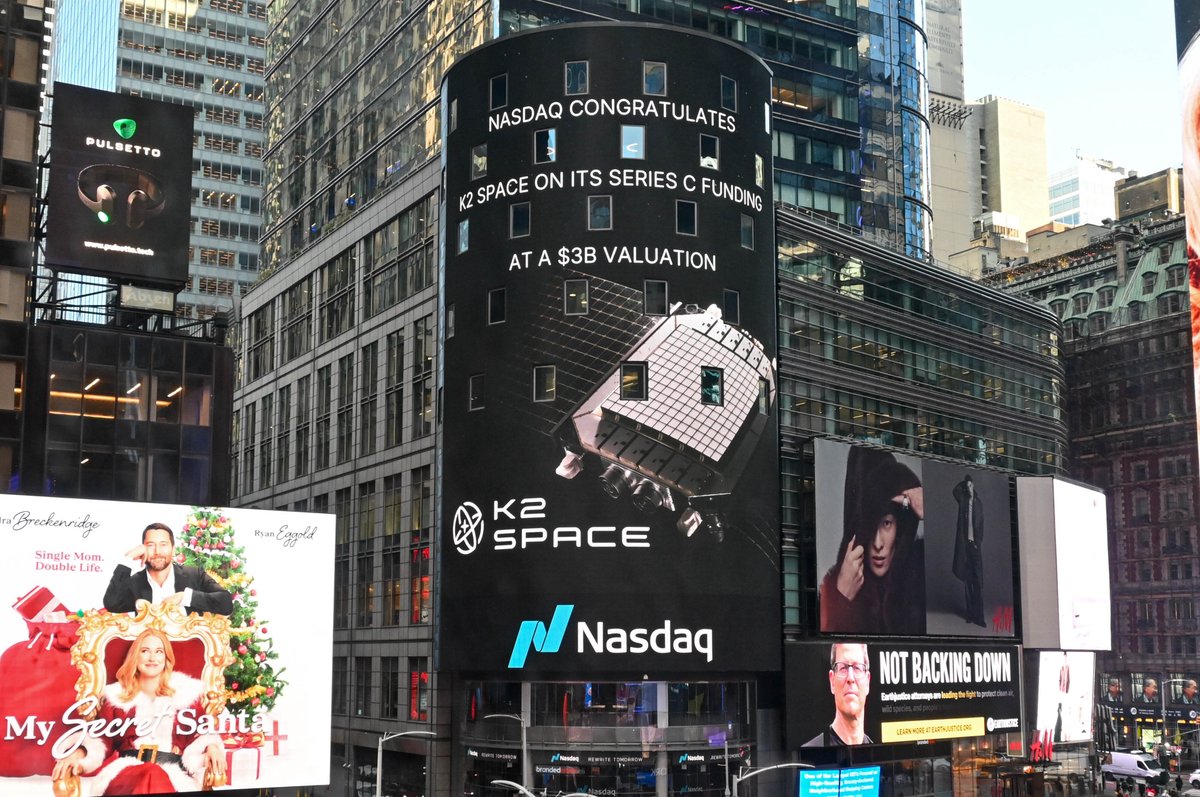
Once in a while, it is important to take a step back and appreciate how ridiculous life sometimes is. Seeing K2 show up in Times Square is one of those moments.
A big thanks to @Nasdaq and everyone who else who supported us @K2SpaceCo over the last week - the feedback has been incredible.
Now, back to work.
5
5
89
8,247
Meka Asonye retweeted
11 Dec 2025
Three and a half years ago, @neelkunjur and I decided to go from being Brothers, to being Co-Founders. Today, we’re excited to announce that @K2SpaceCo has raised a $250M Series C at a $3B valuation. This round comes on the heels of $500M in signed contracts across commercial and US Government customers.
Our Series C is being led by @Redpoint, with participation from @TRowePrice, Hedosophia, @AltimeterCap, @lightspeedvp, Alpine Space Ventures and many others.
We’re fortunate to be building at a unique time - launch vehicles are getting larger and the frequency of launch is increasing. When it comes to satellites, it’s now possible to Build Bigger, and we intend to be on the vanguard of doing just that.
Building Bigger allows us to deliver a step change in power (20kW today, 100kW tomorrow), reliability, and redundancy. Our satellites are designed to deliver the maximum amount of capability wherever that capability is needed (LEO, MEO, GEO, cislunar space and beyond).
Coming up next - 20kW satellite launch early 2026, three satellites launched early 2027, and many more to come after that as we scale up production in our 180k sq ft factory in Torrance, CA. We’re looking forward to sharing more on our progress over the coming months and years.
-
78
128
1,142
180,860
11 Dec 2025
Three years ago, @KaranKunjur and @NeelKunjur pitched me on the idea of building bigger. Today, @k2spaceco has a new $3B valuation (with a $250M Series C round), a business that’s humming (with over $500M in contracts this year), a huge factory where 80% of each satellite is built in-house (right here in the USA), and a massive upcoming Gravitas launch (T-080d as the countdown clock on their slick new website shows).
Couldn’t be more proud of all that this team pulled off in 2025. One of the highlights of my year was going down in person to watch the launch of their first mission flying hardware on SpaceX's Transporter-12.
2026 is going to be even bigger. LFG. 🚀
Great write up on all their progress today in Forbes below.
10
8
25
4,229
11 Dec 2025
5
186

Results are in:
• @varadh - angel investor
• @cyantist - Long Journey
• @vsodera - Supercharge
• @DStrachman - 1517
• @alanaagoyal - basecase
• @edsim, @etdurbin - Boldstart
• @darian314, @brackin, @thezbg - Gradient
• @jsngr - lil fund
• @MaxClaussen - SystemOne VC
• @jackmcclelland - Aforevc
• @yoheinakajima - Untapped VC
• @BigMekaStyle - First Round
• @AmberIllig - The Council Cap
• @mashadrokova - DayOne VC
• @lessin, @yrechtman - Slow
• @taylor_w_c - Abstraction Capital
• @jefielding - Everywhere VC
• @TurnerNovak - Banana Capital
• @calfonsorico - Cocoa VC
• @erica_wenger - Park Rangers Cap
• @andreasklinger - Prototype Cap
• @AstasiaMyers - Felicis
• @bryce - Indie VC
• @Markgher - MXV Capital
• @vedikaja_in - Weekend Fund
• @sarahcat21 - Amplify
• @hunterwalk - Homebrew
• @KatieS - Moxxie Ventures
• @kartiktalwar GP - a_capital
• @stevenl - SevenStars VC
• @reedmcbride - angel investor
• @S27G_ - angel investor
• @yanabana - angel investor
• @evancharles - angel investor
• @NealMintz1 - Wischoff VC
• @vaibhavbetter - Better Capital
• @mmccauley - Garage Capital
• @pgillian____ - Village Global
• @soleio - angel investor
• @ColinGardiner - Yonder Ventures
• @SVenkatachalam - Axiom
• @tgm - angel investor
• @JamesTamplin - HF0
• @ashleymayer - Coalition VC
• @sonyatweetybird - Sequoia
• @JamesBorow - angel investor

Who are the pre-seed / seed investors every founder should want on their cap table these days?
114
105
1,298
341,989
Meka Asonye retweeted

19 Nov 2025
What does it take to build not one, but multiple multibillion-dollar enterprise companies?
@jyotibansalsf has some of the clearest answers, starting with the foundation of any startup: product-market fit:
“My definition of product-market fit isn’t about whether we’ve sold the product. It’s about whether we’ve delivered the value we promised after the sale. For most enterprise software products, I’ve found a useful rule of thumb: if you’ve truly delivered value to 25 customers, you have strong product-market fit. Not just sold to 25 customers, but delivered on the results you promised. When you made the sale, you said, ‘Here’s the problem we’ll solve and the ROI you’ll get.’ Three or six months later, if those customers have actually realized that ROI and your product has been successfully implemented, that’s real product-market fit.”
In our conversation, we explore nearly every aspect of going from zero to one in the enterprise, from hiring your first salesperson to expanding into multiple products.
7
33
5,836
Meka Asonye retweeted
6 Nov 2025
“Welcome to Stedi. Everything is your fault now.” That's the phrase @zackkanter greets new hires with when they join @Stedi.
This embodies his approach to building, which is rooted in his experience scaling and selling an extremely profitable auto parts business. Stedi is the only programmable healthcare clearing house — and it took Zack four years to launch after throwing away every single line of code eight times.
This episode was a special one for me because Zack’s a close friend and someone I’ve learned a lot from over the years.
We cover a lot in this conversation:
- Why bootstrapping is overrated
- How he’s building a business he wants to run forever
- What software can learn from manufacturing and discount retail
And much more:
(01:24) Zack’s first business
(08:54) Why the first customer is tricky
(10:12) The downside of bootstrapping
(11:42) Why venture capital is like “going pro”
(14:20) The confusion between ownership vs. control
(16:08) Building a company you don’t want to leave
(20:46) Do things better than other people
(24:49) Stedi’s early years
(31:43) Physical vs. digital product-market fit
(34:41) How Stedi scaled decision-making
(40:08) Stedi’s journey to product-market fit
(45:22) Finding founder-approach fit
(50:42) “All software is a cascade of miracles”
(52:52) The surprising lessons from discount retail
(57:50) How the Toyota production system influences software
(1:01:31) What it means to be a high-agency person
(1:03:09) The core trait Zack looks for when hiring
(1:02:57) Maintaining conviction in unconventional practice
(1:14:19) When should you start to hire managers?
(1:17:42) “Reality has a surprising amount of detail”
9
8
57
77,628
21 Oct 2025
So proud of @benrollert and the @ComposerTrade team. Full stack AI trading is here and the product they've built is powerful. LFG! 🚀
21 Oct 2025

Trading idea: Easy. Execution: Nearly impossible.
You can't track every indicator and time every potential trade. So we spent 5 years building an AI to help do it for you.
Just describe your strategy in plain English. It helps you do the rest.
2
4
15
5,359