
🇺🇦 Biotech Strategy Blog provides commentary on #pharma #biotech new product development with focus on #oncology #ImmunoOnc #tcellrx (sub req'd)
Joined September 2013
- Tweets 1,684
- Following 1
- Followers 801
- Likes 1,428
59 Photos and videos









Biotech Strategy retweeted

Jun 4
Keeping a beady eye on the data. Time to apply the Feuerstein-Ratain rule to a clinical readout from #ASCO26 – a specific use case with a stark reminder:
tinyurl.com/mr2fbua2

1
1
7
1,497
Biotech Strategy retweeted
Jun 1
After listening to the updated HARMONi-6 readout at #ASCO26 many of the original issues are still holding up and may worsen over time...
22 Oct 2025

After seeing so many uncritical, rose-tinted views of the Akeso/Summit HARMONi-6 data in squamous NSCLC at #ESMO25, I decided to pen a clear and cogent bear thesis because all is not what it seems. Caveat lector!
tinyurl.com/27vrdvcy

4
17
5,534
Biotech Strategy retweeted
Jun 1
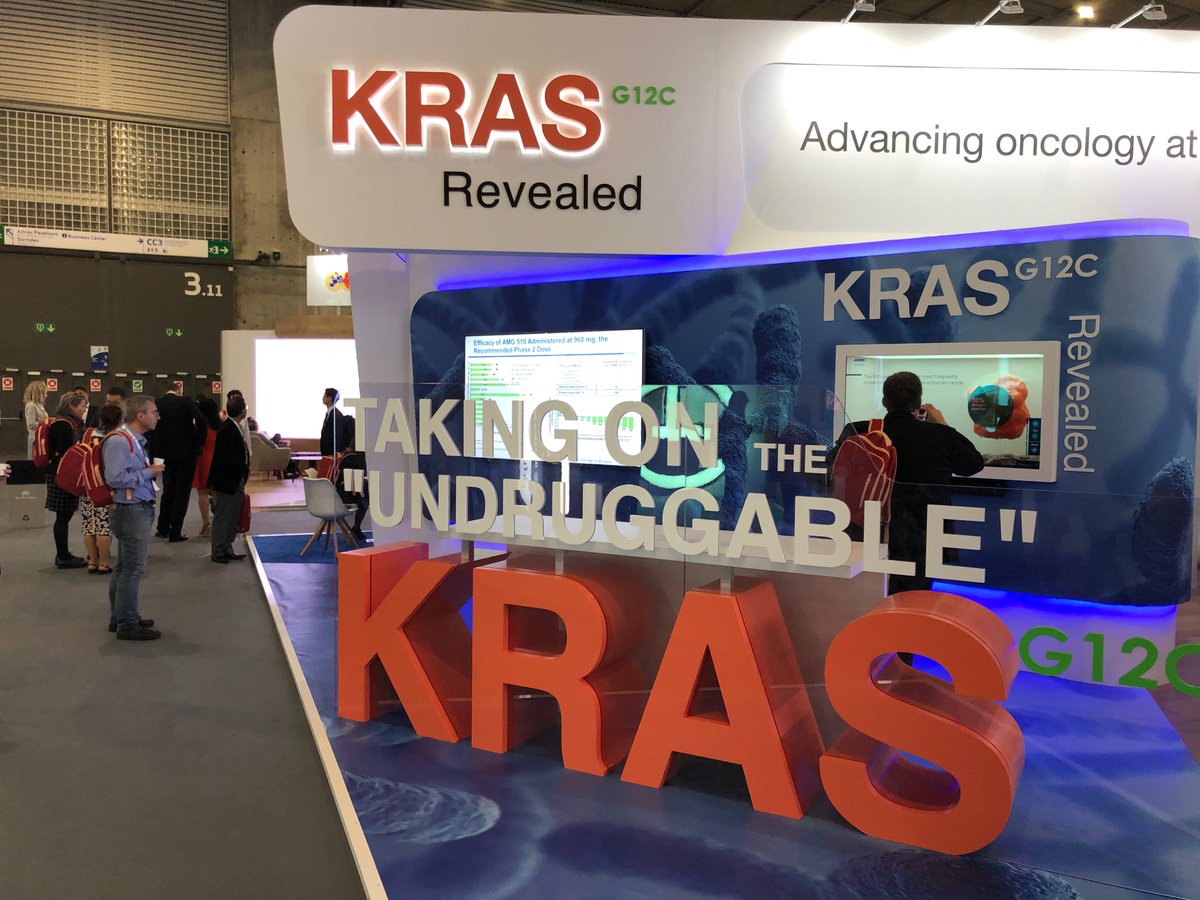
Time for some reviews of gems from the #ASCO26 poster halls. In the first example we explore how targeting resistance in a novel and tolerable fashion may be helpful in the KRAS niche:
tinyurl.com/9kdy6rnz

3
6
1,167
Biotech Strategy retweeted
May 31
Our latest review from #ASCO26 explores KRAS inhibitors and why potency doesn't equal durability:
tinyurl.com/yc2dxruy
All is not what it seems.
I still find it amazing what was one such an intractable target is now made druggable by a wide range of different inhibitors.

3
5
1,308
Biotech Strategy retweeted
May 30
Beyond the hype: some reflections on half a dozen key trials presented on Day 1 at #ASCO26... what the data actually shows, where it falls short, and what comes next:
tinyurl.com/3u8vm7fc

1
6
1,175
Biotech Strategy retweeted
May 28
Our final #ASCO26 Preview ahead of the meeting illustrates how an unexpected event can shoot a warning shot across competitors bows.
A great example of a cat amongst the pigeons! tinyurl.com/4kj85pak

2
5
1,075
Biotech Strategy retweeted
May 21
In the wake of the #ASCO26 data drop, we reflect on 20 key phase 3 trials which could make a significant impact. Some of these may make their competitors irrelevant if they change the standard of care:
tinyurl.com/nhz2nchf

3
10
1,355
Biotech Strategy retweeted
May 20
A short, if rather provocative BSB post where we ask if naked antibodies are back in fashion – and also explore a novel bispecific ADC too! What's not to like?
tinyurl.com/fsevm85a

1
8
1,586
Biotech Strategy retweeted
May 18
After the CAR-NK hype peaked in 2022 and several companies / products since went by the wayside, what's next in store for NK cells?
@EricVivier1 had some candid thoughts on this topic to share: tinyurl.com/8pd7dwwf

1
6
1,600
Biotech Strategy retweeted
May 13
Who's putting the boat out at #ASGCT26 when it comes to in vivo CAR-T cell therapies and what to watch out for.
Some surprises in store...
tinyurl.com/2zz9ypn5

1
2
9
2,142
Biotech Strategy retweeted

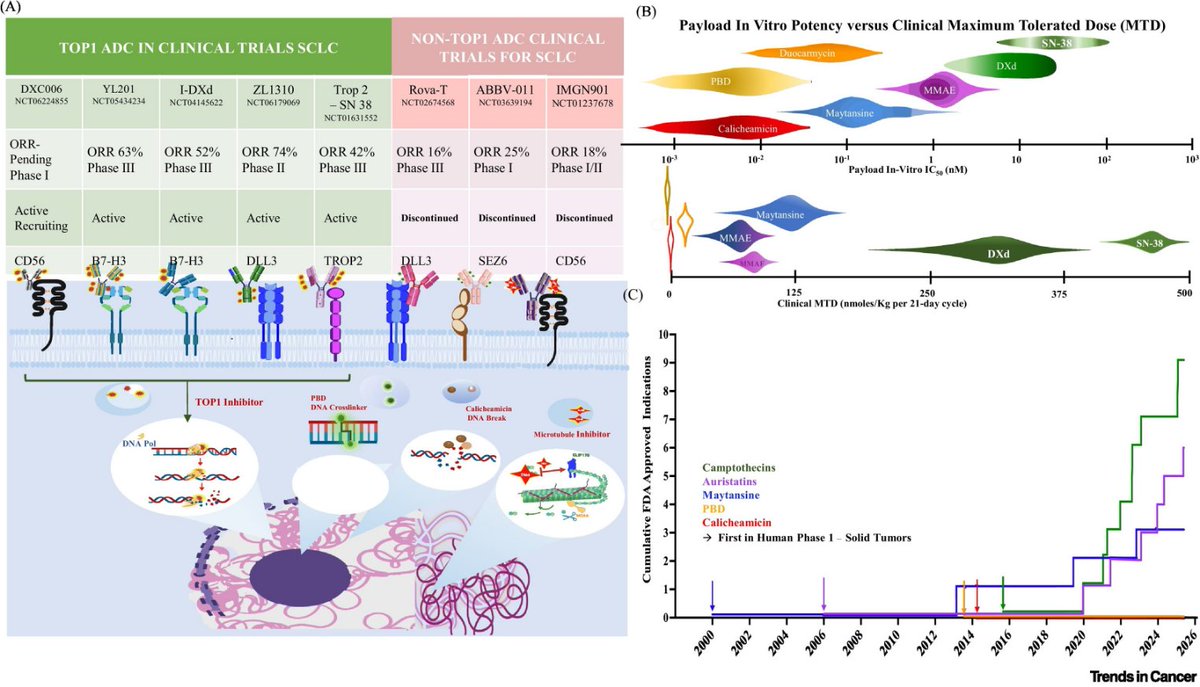
🔥Repurposing payloads: next generation of ADCs
🆙 @TrendsCancer
☑Most ADC programs on a narrow set of ultrapotent payloads
🎯Legacy cytotoxins (e.g., Deruxtecan) are being reengineered into effective ADCs
🎙Dr. Katherine Shatzer
@OncoAlert @Larvol
cell.com/trends/cancer/fullt…
2
17
41
5,489
Biotech Strategy retweeted

May 7
Daraxonrasib in PDAC now published in NEJM.
We have had press releases and presentations, but now a publication.
And yes, the data still look very real. 🧬
Pancreatic cancer is a RAS disease.
90% have activating RAS mutations.
G12D, G12V, G12R dominate.
And historically we have had essentially nothing direct to do about it (G12C inhibitors exist but they are a subpopulation).
Phase 1/2
Previously treated RAS-mutant PDAC
n=168
Oral RAS(ON) multi-selective inhibitor
Phase 3 dose: 300 mg daily
• ORR 35%
• mDoR 8.2 months
• mPFS 8.5 months
• mOS 13.1 months
As context; 2L chemo w/ PDAC has ORR <10% with OS ~5-7 months and significant side effects. So yes, this is huge.
Toxicity is real too:
• Any-grade TRAE 96%
• Grade ≥3 TRAE 30%
• Rash, diarrhea, nausea, mucositis, vomiting, fatigue
This is not a “write the script and see them in a month” drug.
Up-front oncoderm involvement is going to be critical. Rash needs to be anticipated, managed early, and dose modifications need to be normalized rather than viewed as failure.
BUT this is a absolute game-changer in pancreas cancer (and other KRAS driven diseases).
Importantly, this no longer exists in a phase 1/2 vacuum.
By press release, RASolute 302 met its primary and key secondary endpoints, with PFS and OS benefit versus standard chemotherapy. Full data still matter, but the confirmatory study appears to have confirmed the signal.
Terrible disease.
Great signal.
Real (but manageable) toxicity.
Practice-changing.
nejm.org/doi/full/10.1056/NE…
@OncoAlert @TheGutOncLab @Onco_Nexus
2
60
170
11,062

🧬 New paper out in @Nature! We used CRISPR to selectively kill cancer cells based on a single-letter mutation in their RNA. The story I want to highlight: KRAS — one of the most notorious drivers of human cancer. A short thread on what we found 🧵
16
99
520
99,990
Biotech Strategy retweeted

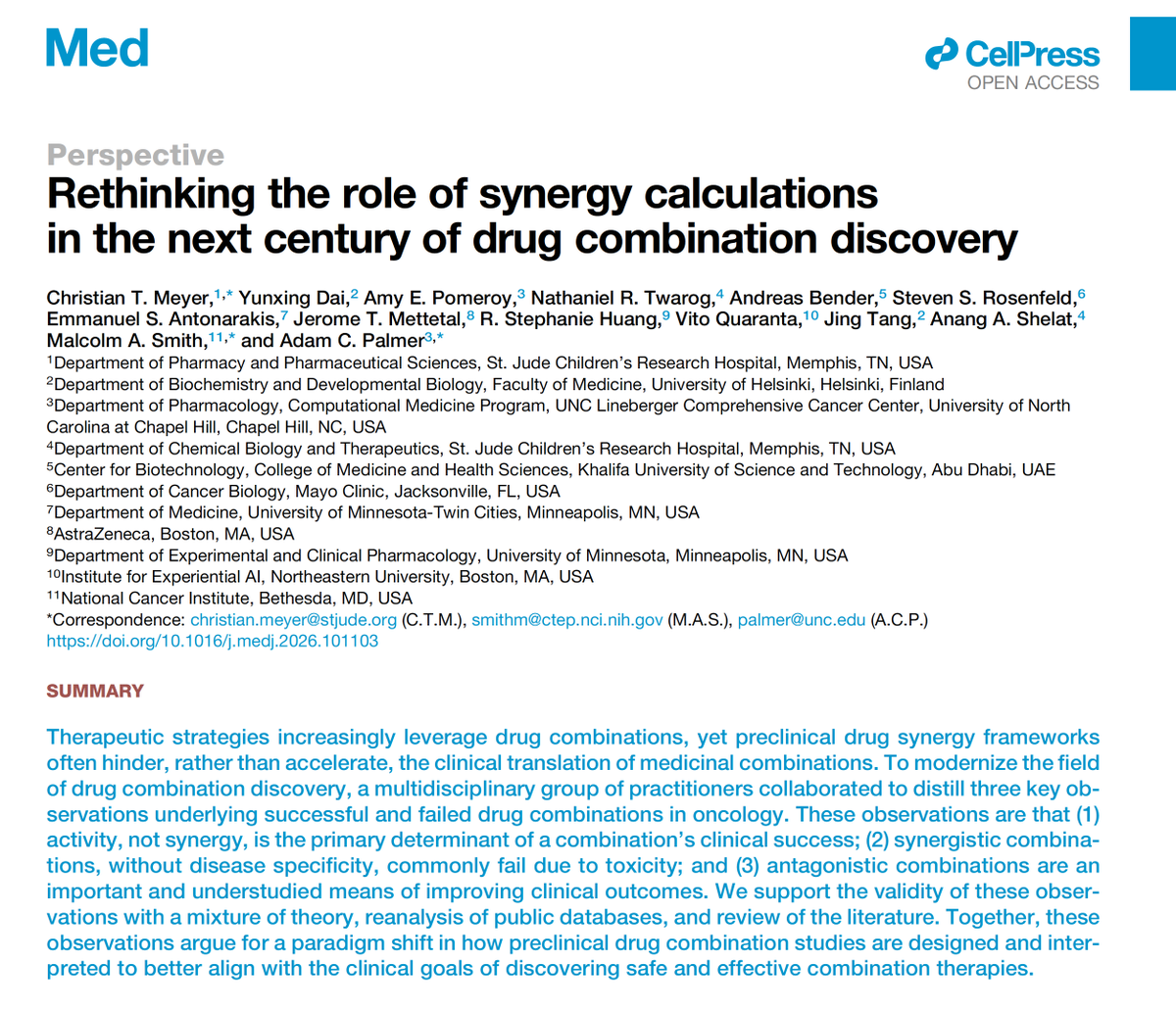
"Synergistic combinations, without disease specificity, commonly fail due to toxicity"
"Synergistic combinations should be assumed to also synergize in non-disease tissues"
Can't stress enough how this is so relevant for dual payload ADCs considering ADC disposition!!
1
16
78
5,246
Biotech Strategy retweeted
May 7
With a rapid fire raft of trial updates coming out of #esmobreast26, one thing stood out... targeted molecules are back in fashion and a few companies might be left holding the baby if their phase 3 trials have already started:
tinyurl.com/2s4h248n

2
7
3,237
Biotech Strategy retweeted
May 5
Pointed ironies in the SERD wars, plus ADC hype, and what really works in breast cancer...
How agents with no moat, no differentiation, and no clear advantage will struggle in a tough competitive market:
tinyurl.com/3sknvwzx

1
9
1,388
Biotech Strategy retweeted
Apr 30
FDA just pumped the brakes hard on AZN's camizestrant. While the SERD track is crowded and Roche is picking up speed, AZN's innovation may be derailed by regulatory conservatism: tinyurl.com/b3x4cyd7

1
2
12
1,513
Biotech Strategy retweeted
Apr 27
With the rise and rise of ADCs, T cell engagers have taken something of a back seat of late.
What if the bigger problem is some of them may be missing a key trick? Here we highlight some design features which might make a difference: tinyurl.com/3y76mpx6

3
3
13
4,126
Biotech Strategy retweeted
Apr 23
Amazingly I found a sculpture in San Diego which looks like crystal ribbon structures – highly appropriate for today's more sober look at the daraxonrasib data in PDAC:
tinyurl.com/2aedy7wx

1
2
11
1,723
Biotech Strategy retweeted

Apr 21
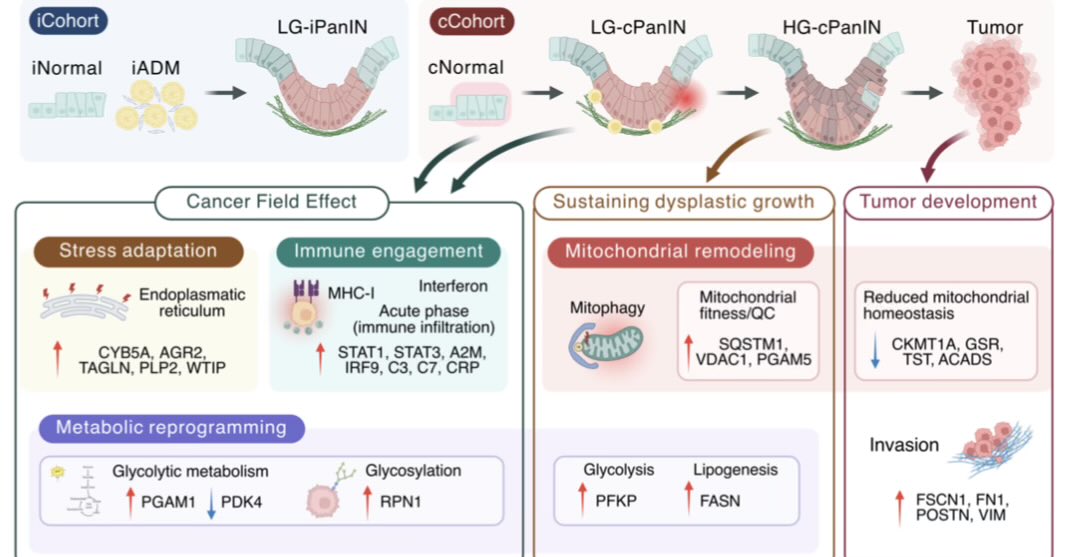
Our paper identifies pathways and proteins unique to #PancreaticCancer associated precancer lesions (cPanINs) versus incidental precancers (iPanINs).
Plus for the first time, proteomics of high grade PanIN lesions and acinar ductal metaplasia (ADM)!
#AACR26
1
12
54
2,809