
Genesis Block . Bitcoin . Tesla . AI . MSTR
Joined December 2009
- Tweets 8,969
- Following 2,461
- Followers 1,516
- Likes 1,630
2,334 Photos and videos
Pinned Tweet

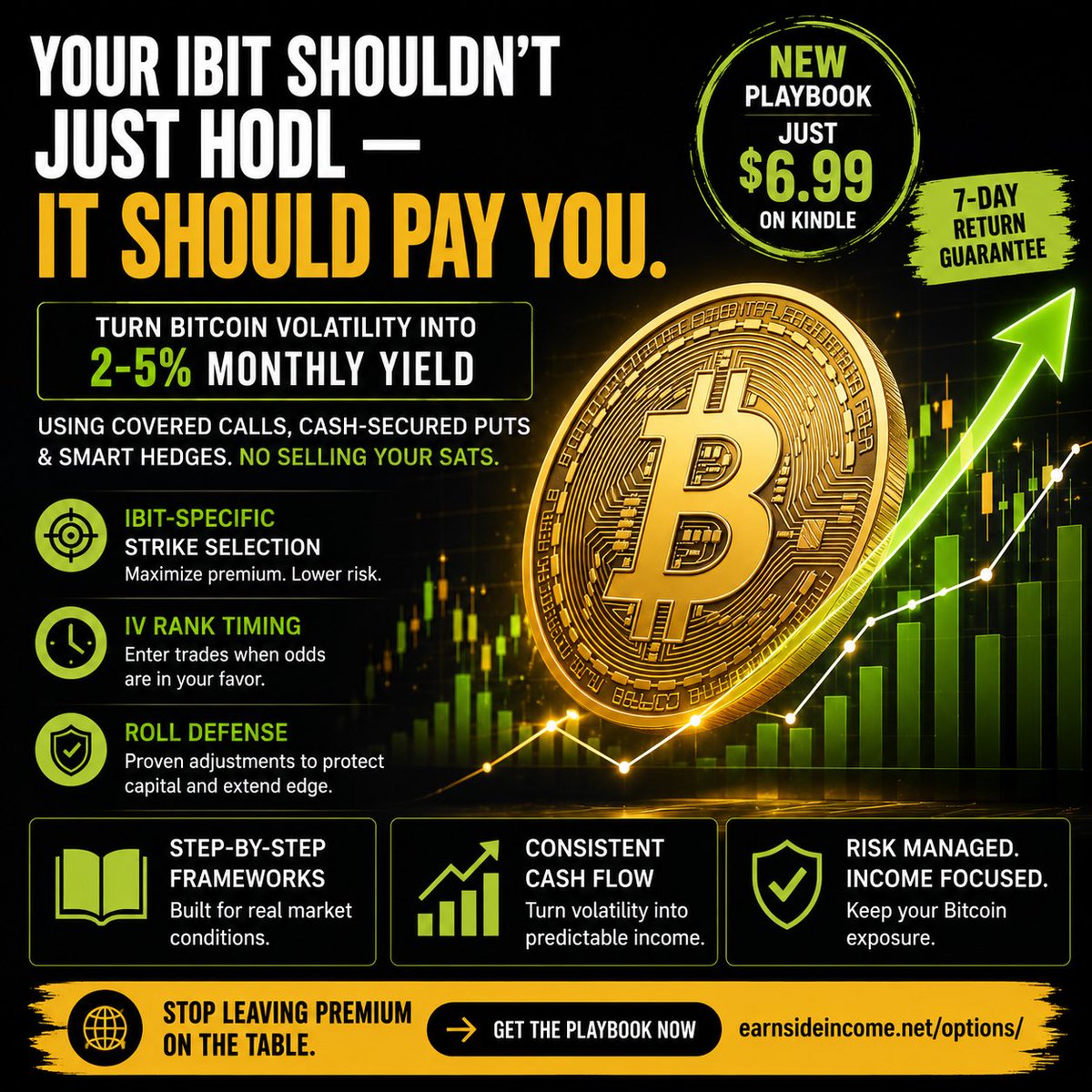
Your IBIT shouldn’t just HODL - it should generate cash flow.
Turn Bitcoin volatility into potential monthly income using:
✔ Covered calls
✔ Cash-secured puts
✔ Smart hedge structures
Learn the exact IBIT-focused frameworks:
📈 Strike selection
⚡ IV Rank timing
🛡 Roll defense strategies
No need to sell your Bitcoin exposure.
New playbook now available for just $6.99 on Kindle 7-day return guarantee 👇
EarnSideIncome Options Playbook: earnsideincome.net/options/
#Bitcoin #IBIT #OptionsTrading #PassiveIncome #Crypto #BTC #CoveredCalls #SideHustle
393
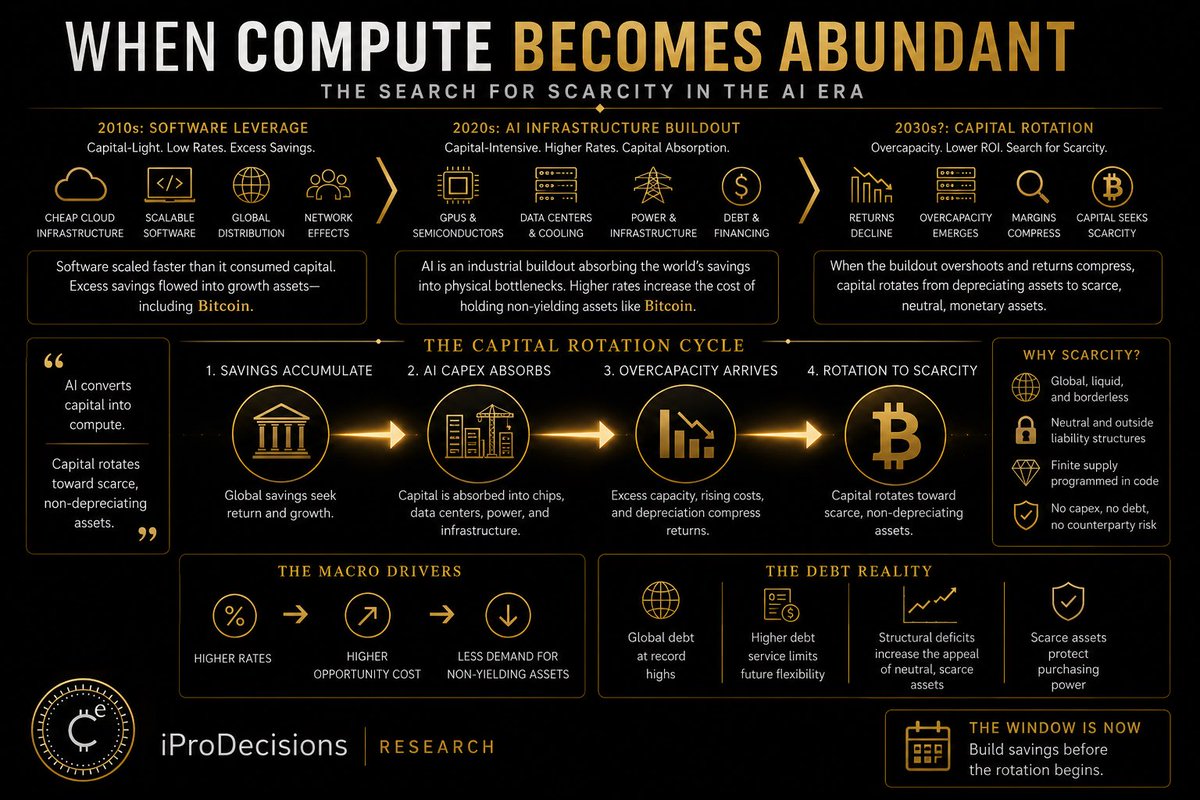
AI is consuming capital at an unprecedented scale.
Chips. Power. Data centers. Cooling. Infrastructure.
The software era created excess savings.
The AI era is absorbing those savings.
But every major infrastructure cycle follows a familiar path:
Scarcity → Investment → Overbuild → Excess Capacity
The biggest opportunities often emerge when the dominant narrative becomes crowded.
The question is not whether AI succeeds.
The question is where capital goes when compute becomes abundant.
Full research in the comments. #Bitcoin #ArtificialIntelligence #MacroStrategy
1
35
Everyone is talking about compute.
GPUs. Data centers. Models.
I think the bigger shift is happening elsewhere.
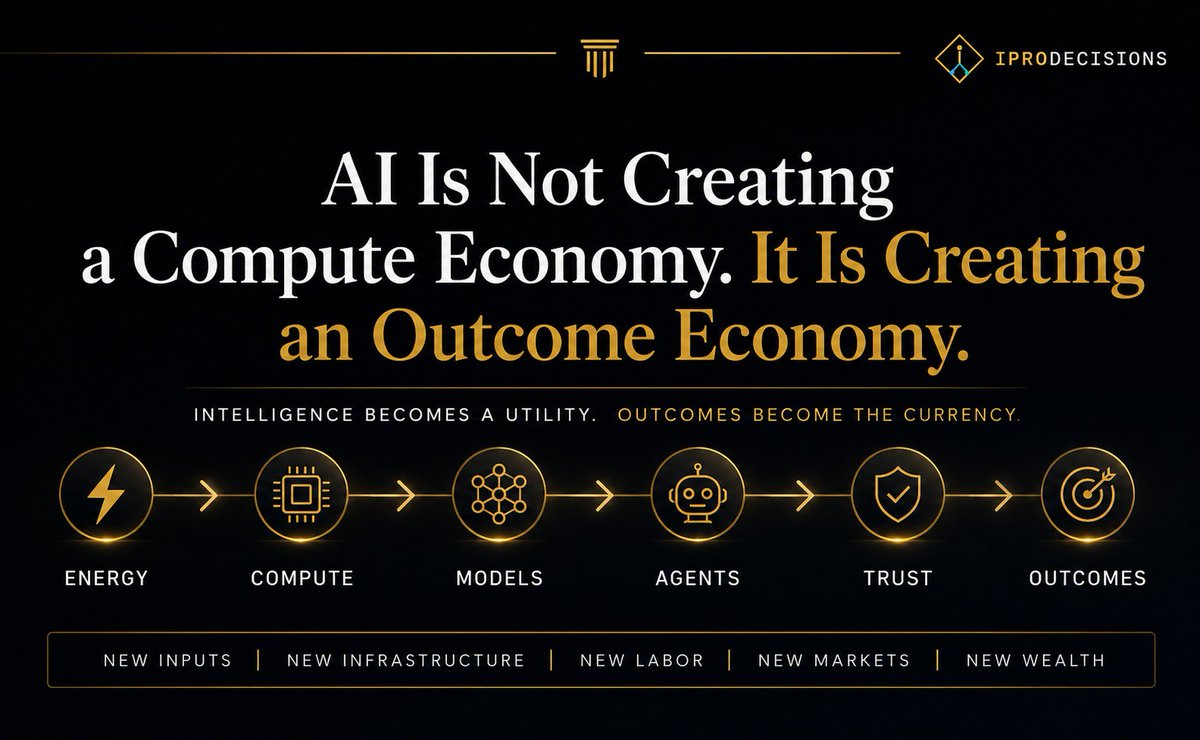
AI is not creating a compute economy.
It is creating an outcome economy.
For decades, businesses purchased:
→ Labor
→ Software
→ Licenses
→ Seats
The unit of value is changing.
From access to intelligence...
to the delivery of outcomes.
Businesses are beginning to purchase:
→ Research completed
→ Compliance reviewed
→ Claims processed
→ Contracts analyzed
→ Decisions accelerated
The AI value stack is evolving:
Energy → Compute → Models → Agents → Trust → Outcomes
Most investors focus on computing.
Most builders focus on models.
But trust is where a disproportionate share of enterprise value will accrue.
Why?
Because enterprises don't buy intelligence.
They buy trusted outcomes.
An agent that processes claims is interesting.
An agent that processes claims within regulatory guardrails, with audit trails, governance, and accountability, is purchasable.
That difference is where the margin lives.
The companies that combine AI with trust, governance, and execution may capture more value than many of the companies creating the underlying models.
Intelligence is becoming a utility.
Outcomes are becoming the currency.
Which layer of the AI value stack will capture the most value over the next decade?
#OutcomeEconomy #AgenticAI #EnterpriseAI #AIGovernance
67
Most investors focus on Bitcoin's declining returns.
I think they're watching the wrong metric.
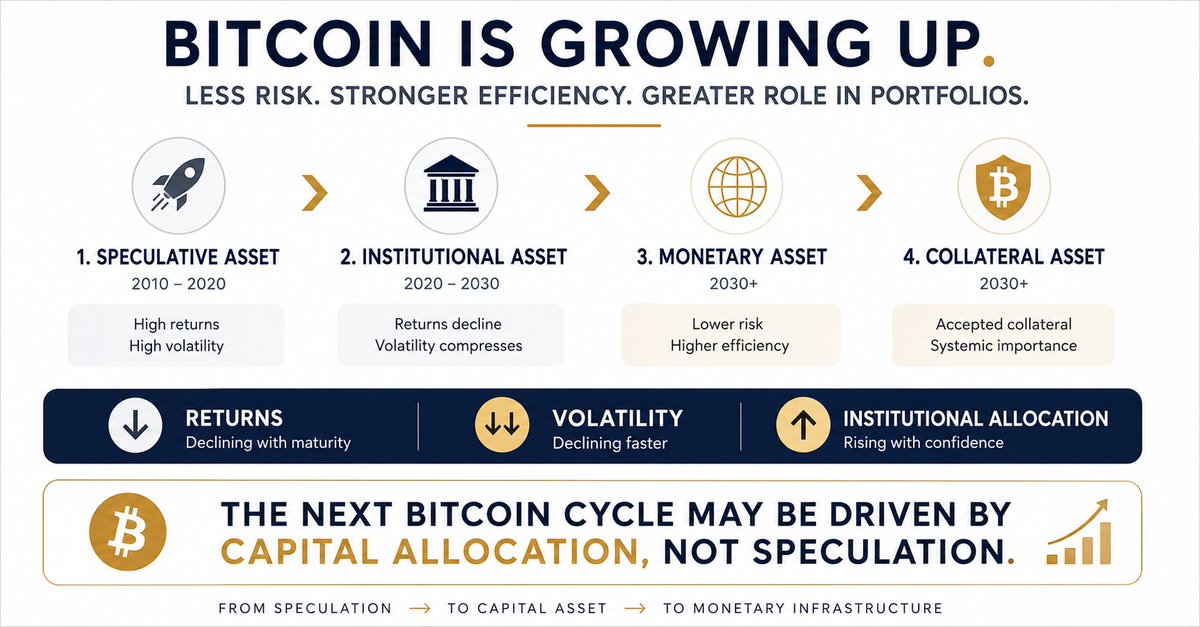
Bitcoin's expected returns have been falling for years.
But so has its volatility.
And that's where the story gets interesting.
As Bitcoin matures:
• Returns decline
• Volatility declines faster
• Institutional confidence increases
• Capital allocation expands
The implication is profound.
The next Bitcoin cycle may be driven less by speculation and more by portfolio construction.
The question is changing from:
"How high can Bitcoin go?"
to:
"How much Bitcoin should institutions hold?"
That's the transition from a speculative asset to a capital asset.
And eventually, perhaps, a collateral asset.
#Bitcoin #Crypto #DigitalAssets #InstitutionalInvesting #PortfolioManagement #AssetAllocation #WealthManagement #Macro #Investing #Blockchain
69
The market narrative says AI won.
The capital-flow data tells a more nuanced story.
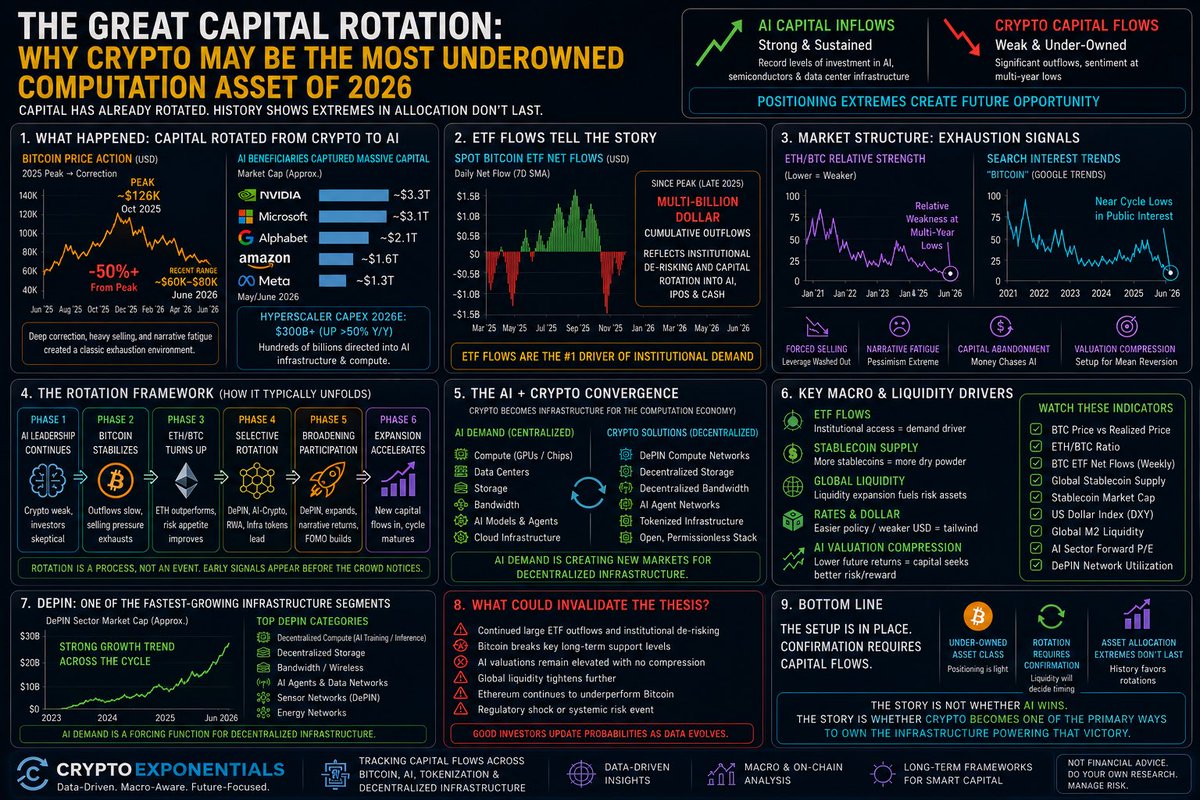
Over the past 18 months, capital concentrated aggressively into AI infrastructure, semiconductors, hyperscalers, and data centers. At the same time, crypto absorbed outflows, negative sentiment, and significant valuation compression.
Historically, periods of extreme capital concentration have created the conditions for future rotations.
The key question isn’t whether AI succeeds.
The key question is whether crypto becomes one of the primary ways to own the decentralized infrastructure powering the computation economy.
Bitcoin remains the barometer.
Ethereum remains the confirmation signal.
Liquidity remains the ultimate driver.
The setup is in place.
Capital flows will determine timing.
#Crypto #ArtificialIntelligence #DePIN @saylor
1
1
96
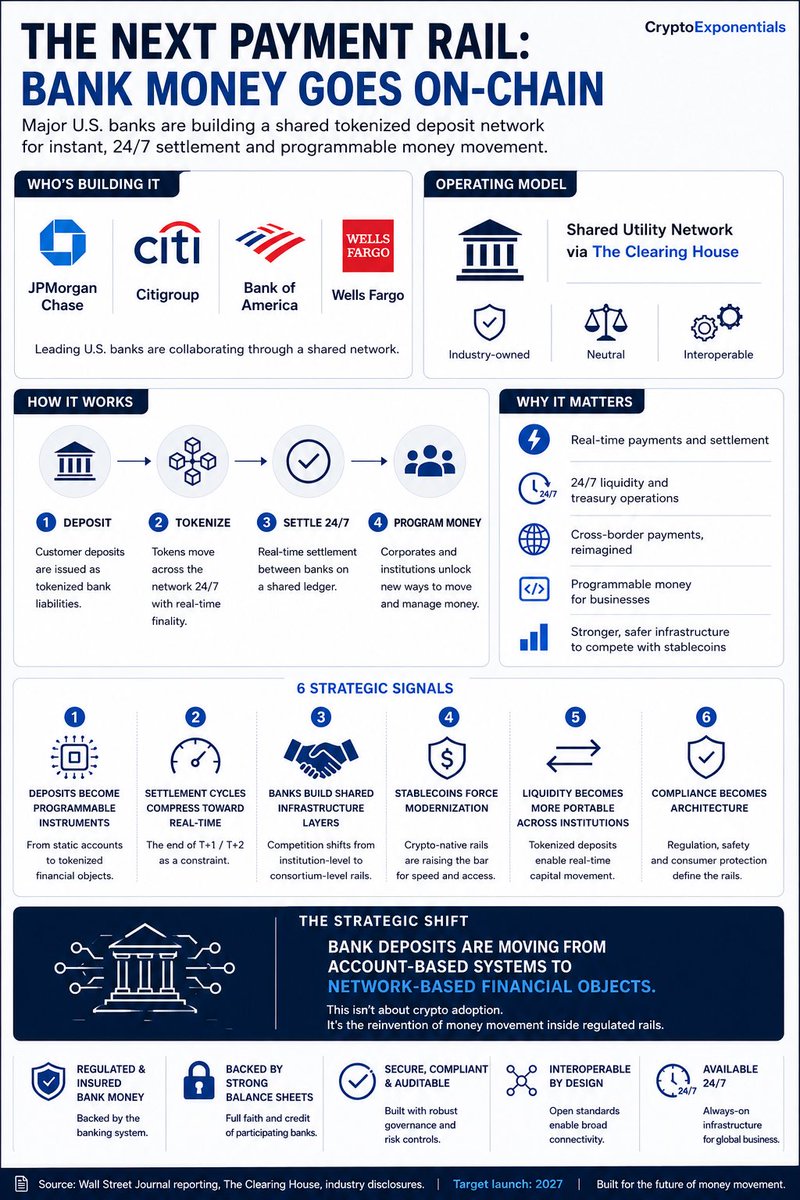
The story isn’t that banks are adopting crypto.
The story is that they are rebuilding money movement as programmable infrastructure while keeping it inside regulated banking rails.
JPMorgan, Citi, Bank of America, and Wells Fargo may be signaling one of the most important shifts in financial infrastructure since the emergence of digital payments.
The future of money may not be stablecoins versus banks.
It may be programmable bank money operating on modern settlement rails.
#Tokenization #DigitalAssets #BankingInnovation #FutureOfFinance #CapitalMarkets #FinTech #Payments #Blockchain
87
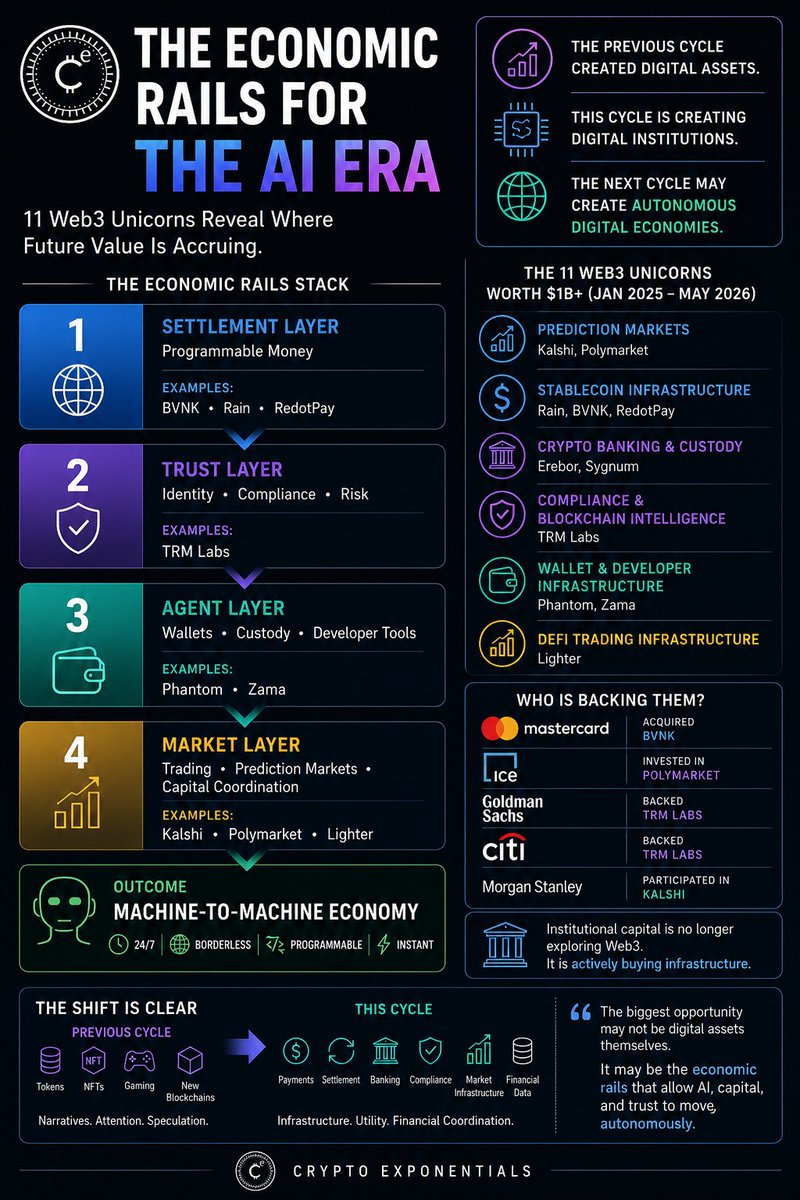
The market thinks these companies are Web3 unicorns.
I think they're something else.
When I analyzed the 11 Web3 companies that crossed a $1B valuation between 2025 and 2026, a pattern emerged:
The winners are no longer token issuers, NFT platforms, gaming projects, or new blockchains.
They're building the infrastructure layers that move:
• Money
• Trust
• Identity
• Compliance
• Market coordination
More importantly, they're building the foundations that autonomous AI agents will eventually rely on to transact, negotiate, settle, and coordinate value.
The previous cycle created digital assets.
This cycle is creating digital institutions.
The next cycle may create autonomous digital economies.
The biggest opportunity may not be digital assets themselves.
It may be the economic rails that allow AI, capital, and trust to move autonomously.
What's the most important infrastructure layer still missing?
#Web3 #AI #DigitalAssets
3
8
252
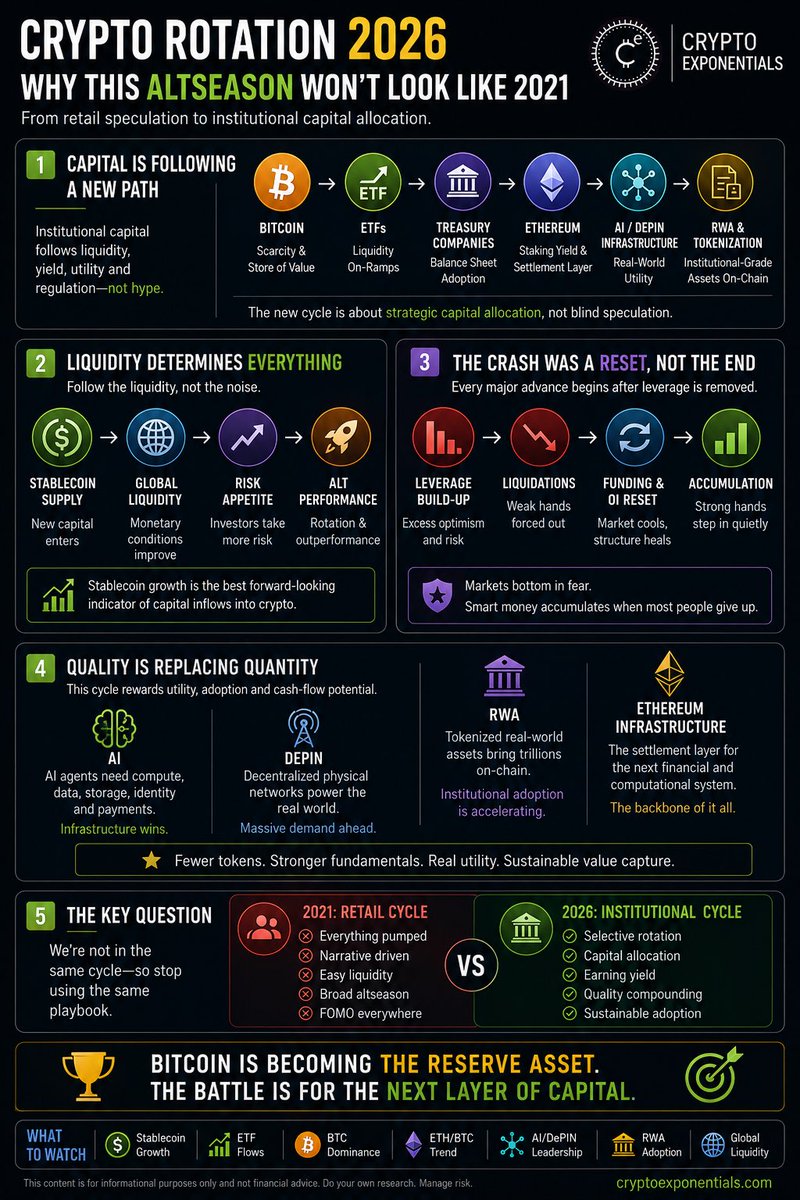
Most investors are waiting for Altseason.
I think they’re waiting for the wrong one.
The 2021 cycle was driven by retail liquidity, narrative momentum, and broad speculation.
The 2026 cycle is increasingly being shaped by a different force: institutional capital allocation.
The key question is no longer:
“When does everything pump?”
It’s:
“Where is durable capital actually flowing?”
Watch the signals that matter:
• Stablecoin growth
• ETF flows
• Bitcoin treasury adoption
• ETH/BTC structure
• AI & DePIN leadership
• Real-world asset tokenization
Bitcoin is becoming the reserve asset of the digital economy.
The next battle is for the layer of infrastructure, utility, and networks built on top of it.
The cycle may rhyme, but the capital is evolving.
What signal are you watching most closely right now? #Bitcoin #DigitalAssets #CryptoInvesting
1
1
2
496
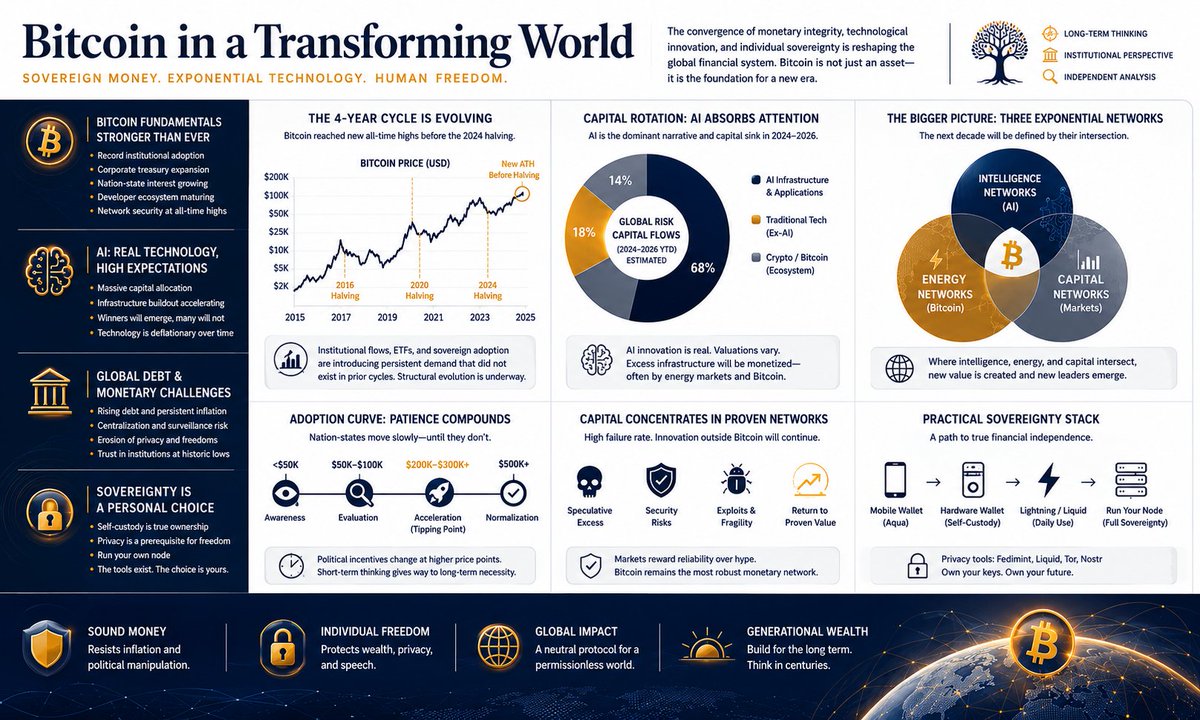
Bitcoin and AI are often framed as competing narratives.
I see something bigger.
AI is compressing the cost of intelligence.
Bitcoin is compressing the cost of trust.
The next decade may be defined by the convergence of three exponential networks:
• Intelligence Networks (AI)
• Energy Networks (Bitcoin)
• Capital Networks (Global Markets)
Where these networks intersect, new business models, new institutions, and new forms of value creation will emerge.
The question is no longer AI or Bitcoin.
It's how intelligence, energy, and capital combine to reshape the global economy.
#Bitcoin #ArtificialIntelligence #FutureOfFinance
Inspiration: @JeffBooth @Excellion
1
96
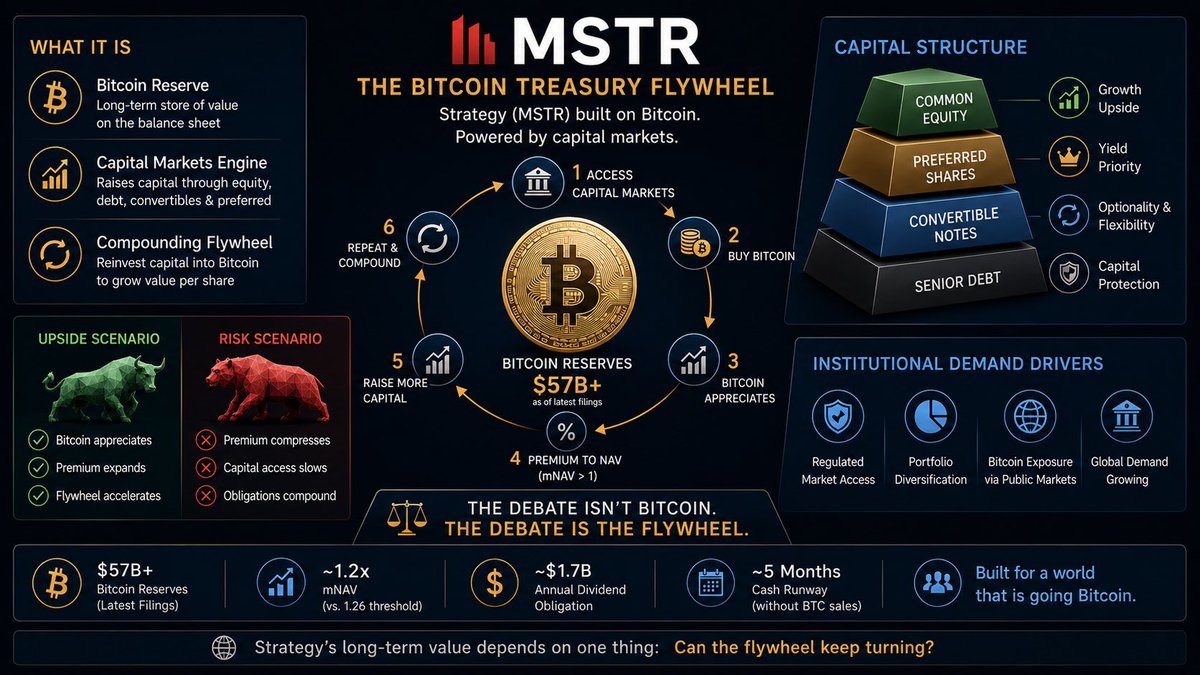
The debate around Strategy ($MSTR) is evolving.
It’s no longer just a Bitcoin story.
It’s a capital markets story.
Strategy has built a unique flywheel:
Capital → Bitcoin → Appreciation → Premium → More Capital
Supporters believe institutional demand, corporate Bitcoin adoption, and continued access to capital can keep the flywheel accelerating.
Critics argue that premium compression, growing obligations, and reliance on capital markets could eventually slow the machine.
The key question isn’t whether Bitcoin succeeds.
The key question is whether the flywheel keeps turning.
What do you think matters most over the next three years: Bitcoin price, mNAV, or capital market access?
#BitcoinTreasury #MSTR #CapitalMarkets
2,211
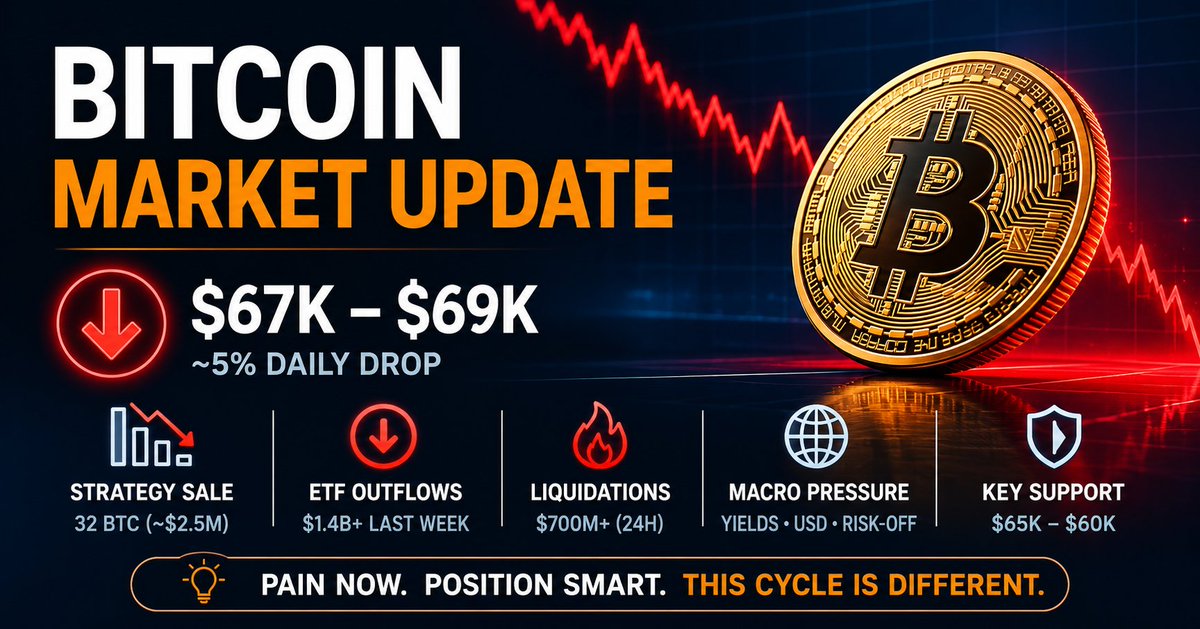
Bitcoin isn't facing a crisis of adoption.
It's facing a liquidity crisis.
ETF outflows, leverage unwinds, and risk-off positioning are driving today's sell-off. Meanwhile, the long-term adoption thesis remains intact: institutional ownership, corporate treasuries, and global integration continue to expand.
The key question isn't whether BTC can test $60K.
It's whether institutional demand resumes once the leverage is flushed.
Volatility is the price of admission.
#Bitcoin #BTC #DigitalAssets #InstitutionalInvesting #CryptoMarkets #Macro #ETFs #RiskManagement #Blockchain #AvArikAVentures
66
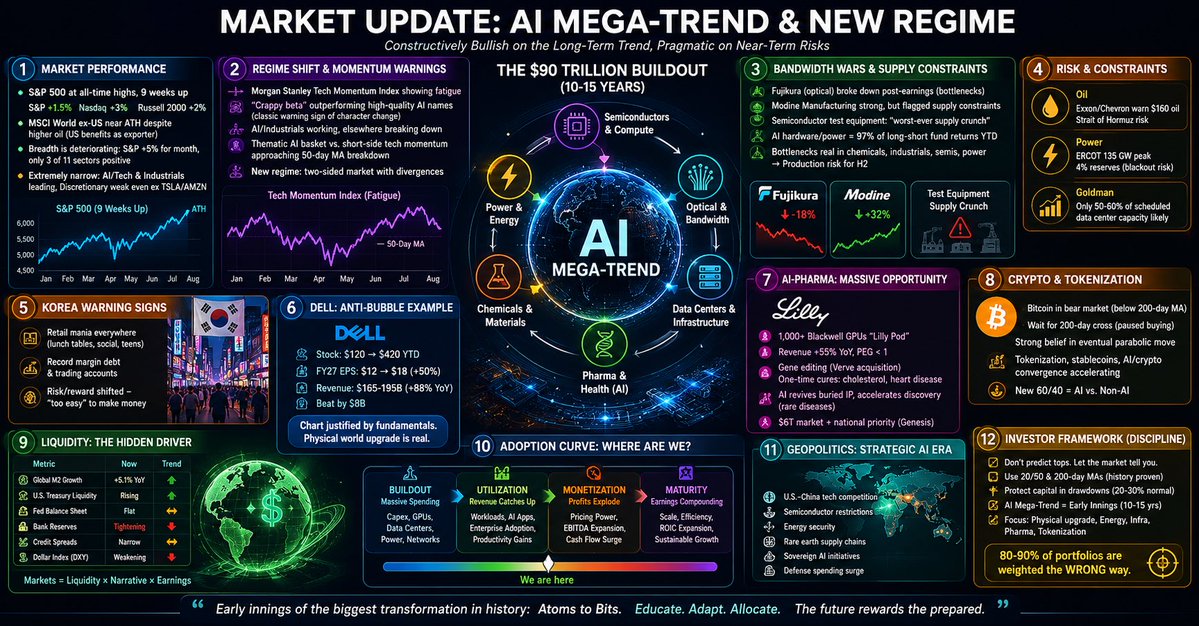
The market isn’t sending one signal.
It’s sending two.
On the surface: new highs, accelerating AI investment, and a multi-year infrastructure buildout.
Underneath: narrowing breadth, supply-chain bottlenecks, energy constraints, and growing divergence beneath the index.
The lesson isn’t to fight the trend.
It’s to understand where we are in the cycle.
The biggest opportunities may not be in the obvious AI winners—but in the companies supplying the power, bandwidth, semiconductors, cooling, chemicals, and infrastructure making the AI economy possible.
In every technological revolution, the bottlenecks become the winners.
Watch the buildout. Watch liquidity. Watch energy.
Everything else is noise.
#AI #Investing #MacroStrategy #ArtificialIntelligence #MarketOutlook #DigitalInfrastructure #Semiconductors #EnergyTransition #PortfolioManagement #FutureOfTechnology
67
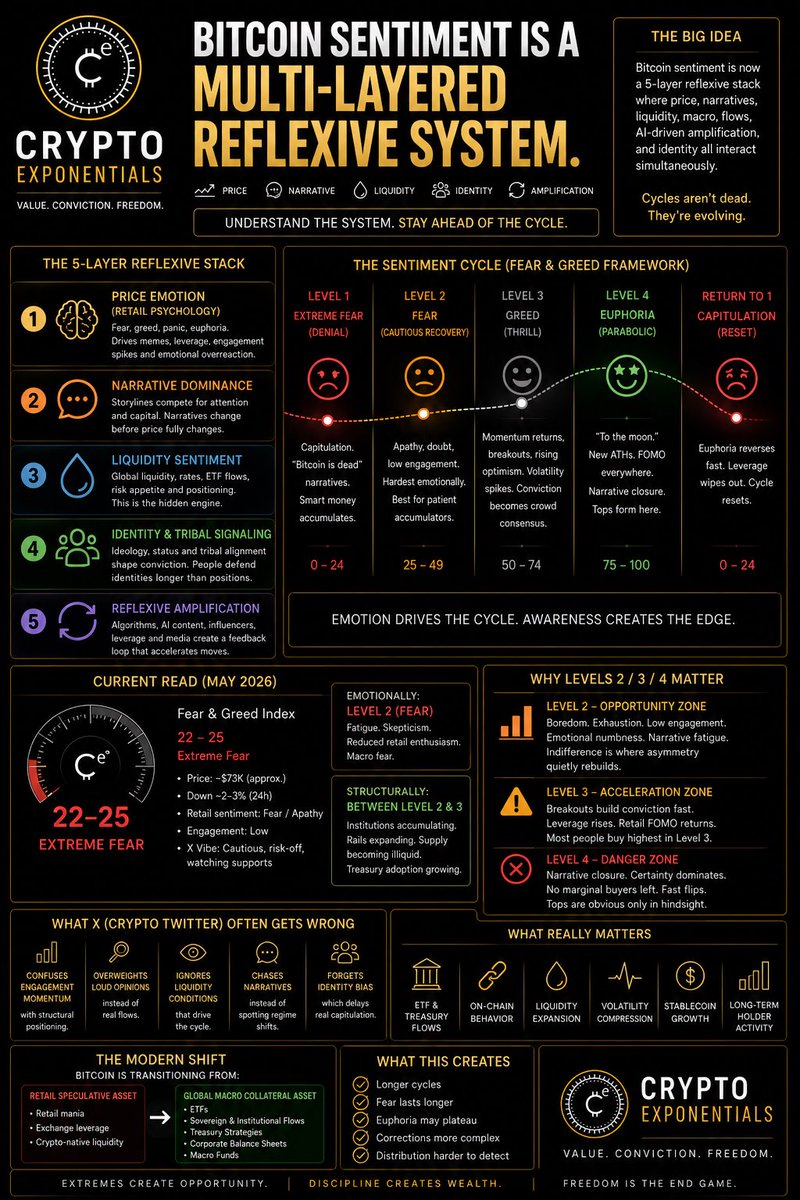
Bitcoin sentiment is no longer just Fear & Greed.
It has evolved into a multi-layered reflexive system where:
price, narratives, liquidity, identity, and amplification loops all interact simultaneously.
Most people watch candles.
Smart capital watches:
• liquidity
• positioning
• narrative shifts
• structural adoption
• reflexive behavior
The biggest opportunities usually emerge when sentiment is emotionally exhausted but structurally strengthening.
Extremes create opportunity.
Awareness creates the edge.
#Bitcoin #Crypto #Markets
81
Survey: Enterprise Developer Priorities
A partner of ours would like to survey individuals who are involved in evaluating, implementing, and overseeing software and infrastructure development strategies to understand organizational trends, investment priorities, and approaches. This is a short, anonymous survey that will take just a few minutes. The survey will close once we reach the required number of participants. Don't miss this opportunity to contribute - complete the survey today. If you qualify and complete this Survey you will be paid $35.00 for your time. The Survey should take about 15 minutes to complete.
app.maven.co/project/9109415…
63
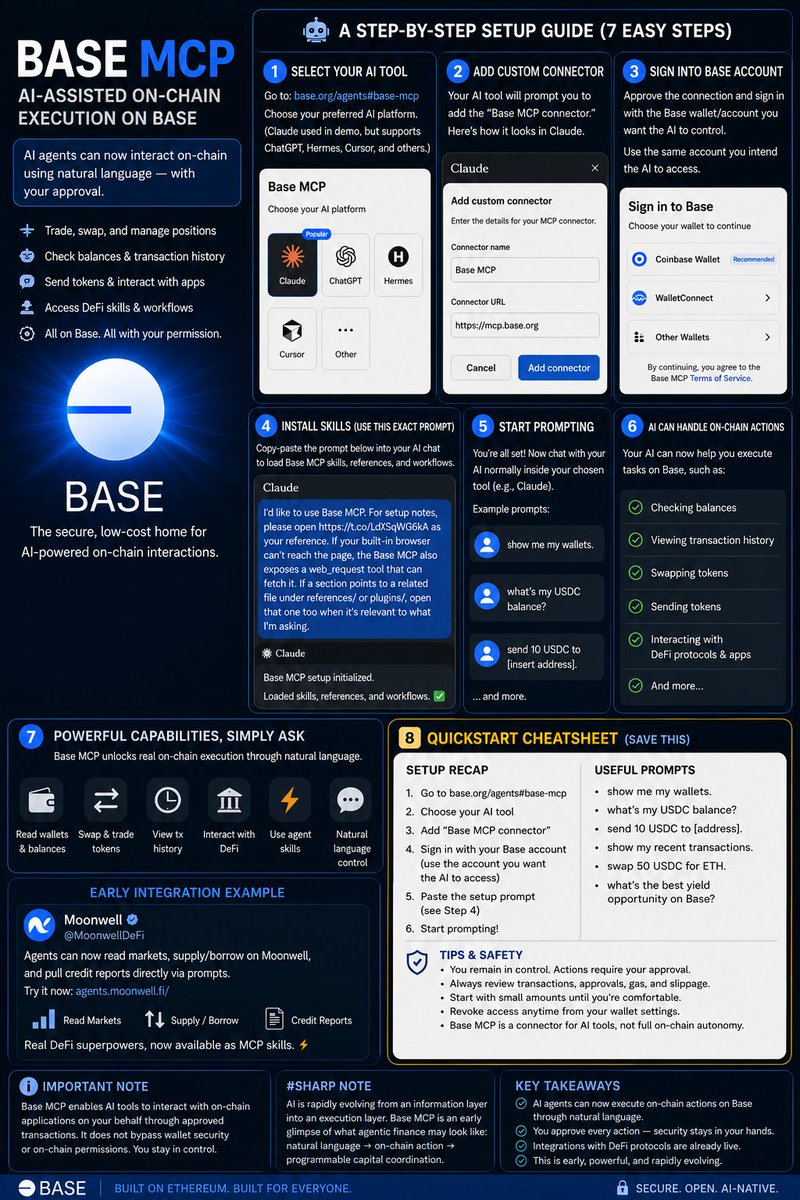
Crypto UX is entering a new phase.
From:
wallets dashboards manual execution
To:
intent-driven AI agents interacting directly with on-chain systems.
Base MCP is an early signal of where this is heading:
AI-assisted execution, programmable finance, and conversational DeFi workflows.
The real disruption is not AI analyzing markets.
It is AI becoming an execution layer for capital.
Still early.
Still experimental.
But directionally significant.
#AI #Crypto #Base #DeFi #AgenticAI #Blockchain #Web3 #Onchain #Ethereum #Coinbase
63
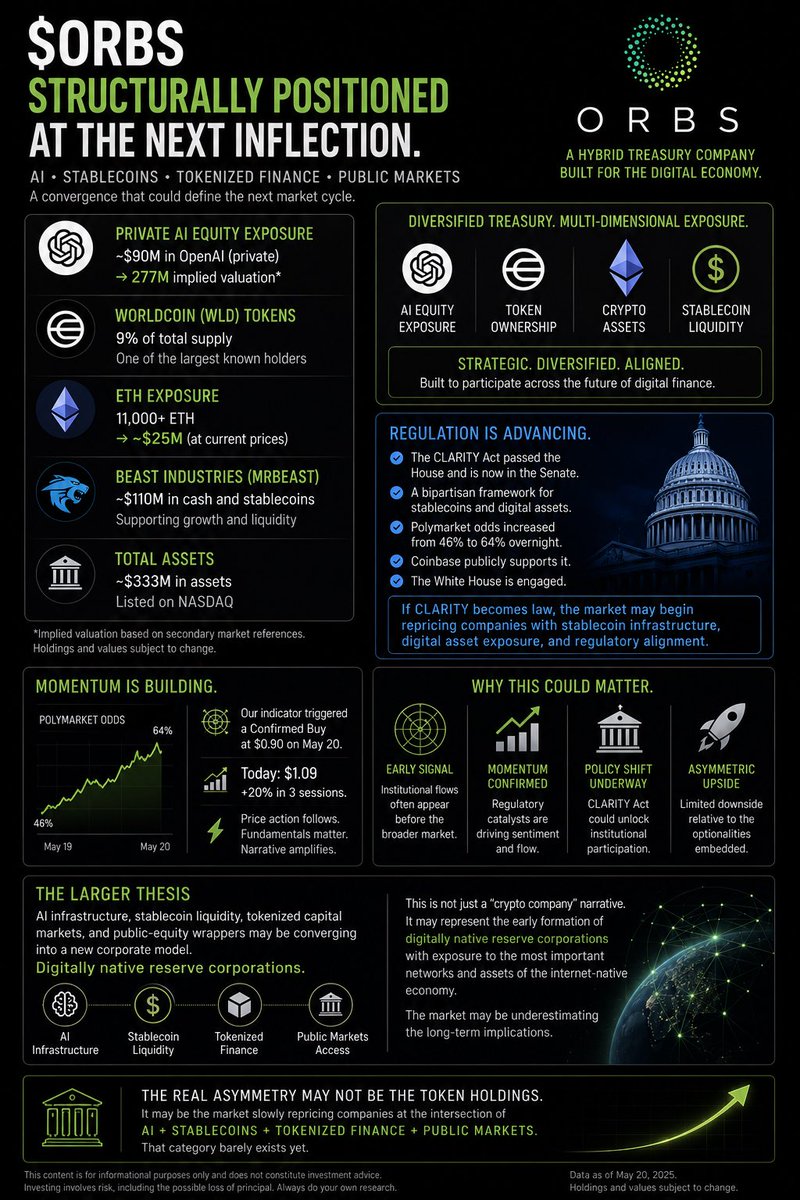
Markets may be underestimating the emergence of a new balance-sheet model.
AI exposure.
Stablecoin liquidity.
Tokenized finance.
Public-market wrappers.
What begins as a “crypto narrative” may evolve into digitally native reserve corporations positioned at the intersection of capital, compute, and programmable liquidity.
The larger story is not speculation.
It is structural convergence.
$ORBS @Iamhuman_ORBS
#DigitalAssets #Stablecoins #Tokenization
49
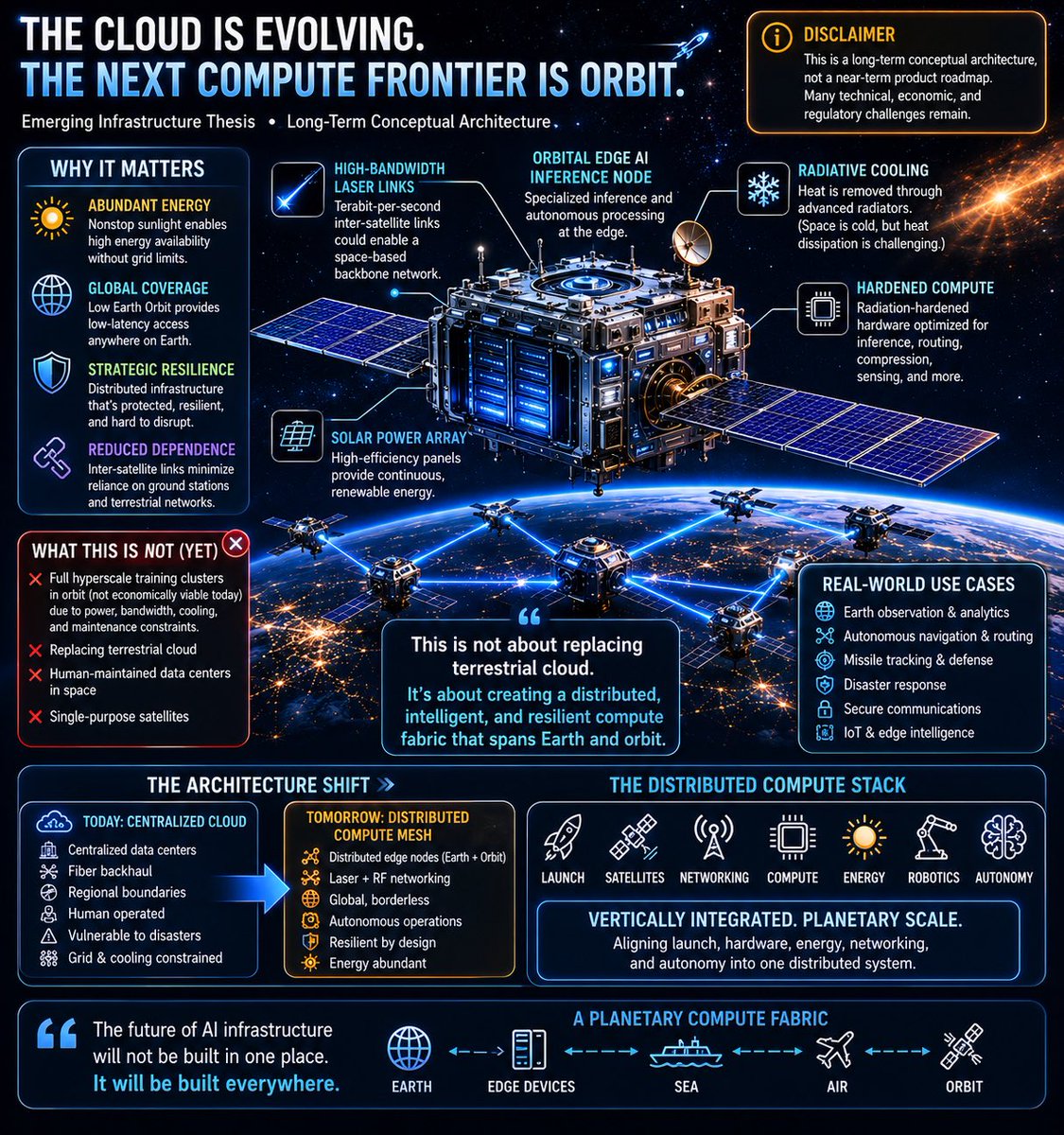
The cloud is no longer just software abstraction.
It is becoming physical, autonomous, energy-constrained infrastructure.
The next frontier may not be “data centers in space,” but distributed compute architectures spanning Earth, edge devices, satellites, and orbit.
What matters is not hype — but the architectural shift:
centralized cloud ➝ resilient compute mesh.
AI is increasingly colliding with the realities of:
• power generation
• cooling
• bandwidth
• latency
• sovereignty
• and infrastructure resilience.
Orbital compute will not replace terrestrial hyperscalers anytime soon. But specialized edge inference, autonomous processing, secure communications, and planetary-scale sensing networks are becoming strategically relevant.
The future AI stack may vertically integrate:
launch networking compute energy robotics autonomy.
This is less about “cloud in space”
and more about the emergence of planetary-scale infrastructure systems.
#AI #CloudComputing #SpaceTech #DistributedSystems #EdgeAI #Infrastructure #AutonomousSystems #Compute #FutureOfAI #Satellite #OrbitalComputing #DeepTech #Energy #Networking #SpaceEconomy
51
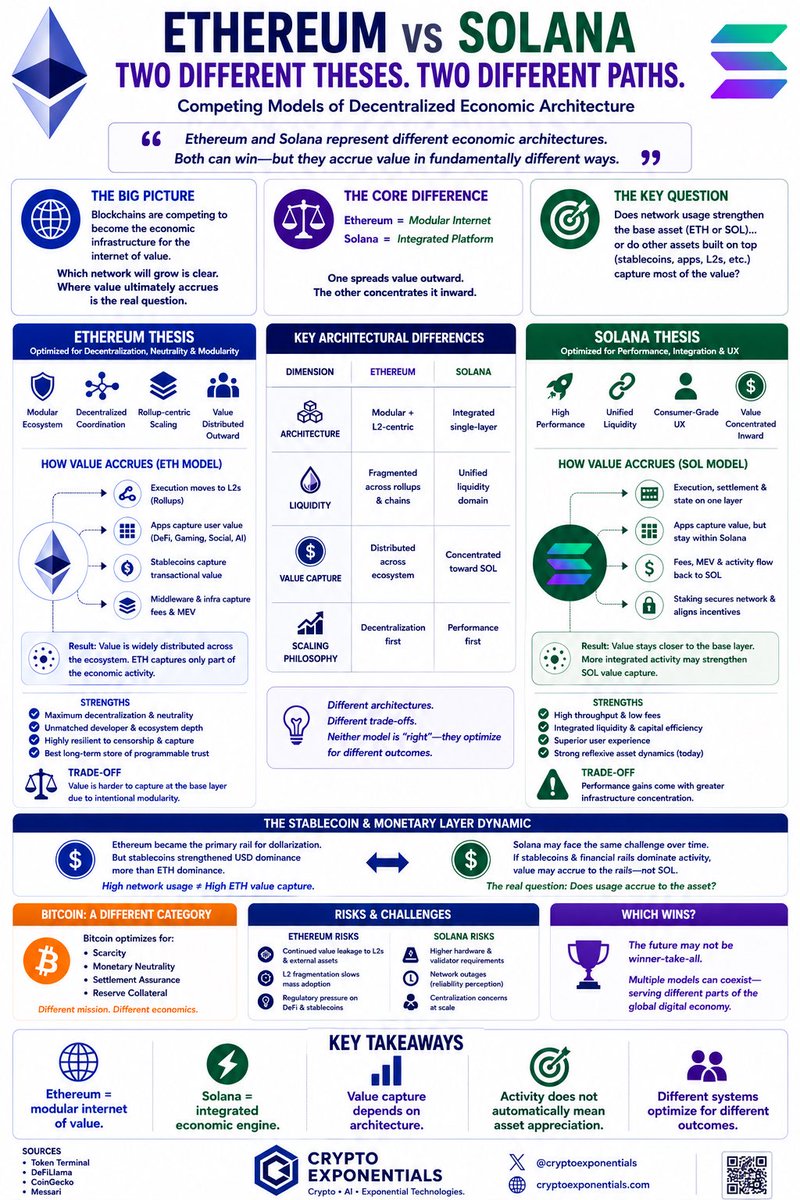
Ethereum and Solana may represent two fundamentally different models of decentralized economic architecture.
Ethereum optimizes for:
• modularity
• neutrality
• ecosystem abundance
Solana optimizes for:
• integration
• performance
• tighter economic coordination
But the deeper issue is not simply:
which network grows faster.
It is:
where economic value ultimately accrues across the stack.
That distinction matters because:
• network utility
• ecosystem growth
• transaction activity
do not automatically translate into:
base-asset value accretion.
Ethereum’s architecture distributes value outward:
• L2s
• stablecoins
• applications
• middleware
• tokenized assets
The ecosystem may grow enormously while ETH captures only part of the economic upside.
Solana’s architecture keeps:
• execution
• liquidity
• settlement
• and user activity
more tightly integrated around SOL, potentially strengthening direct asset-level value capture.
This may become one of the defining investment questions in crypto:
Can decentralized networks maximize ecosystem growth while simultaneously concentrating monetary value into the base asset?
As crypto matures, understanding the distinction between:
• network success
• ecosystem expansion
• and base-asset value accretion
may become one of the most important analytical frameworks in digital assets.
#Ethereum #Solana #Crypto #Blockchain #DigitalAssets #DeFi #Web3 #Investing #AI #CryptoResearch
61
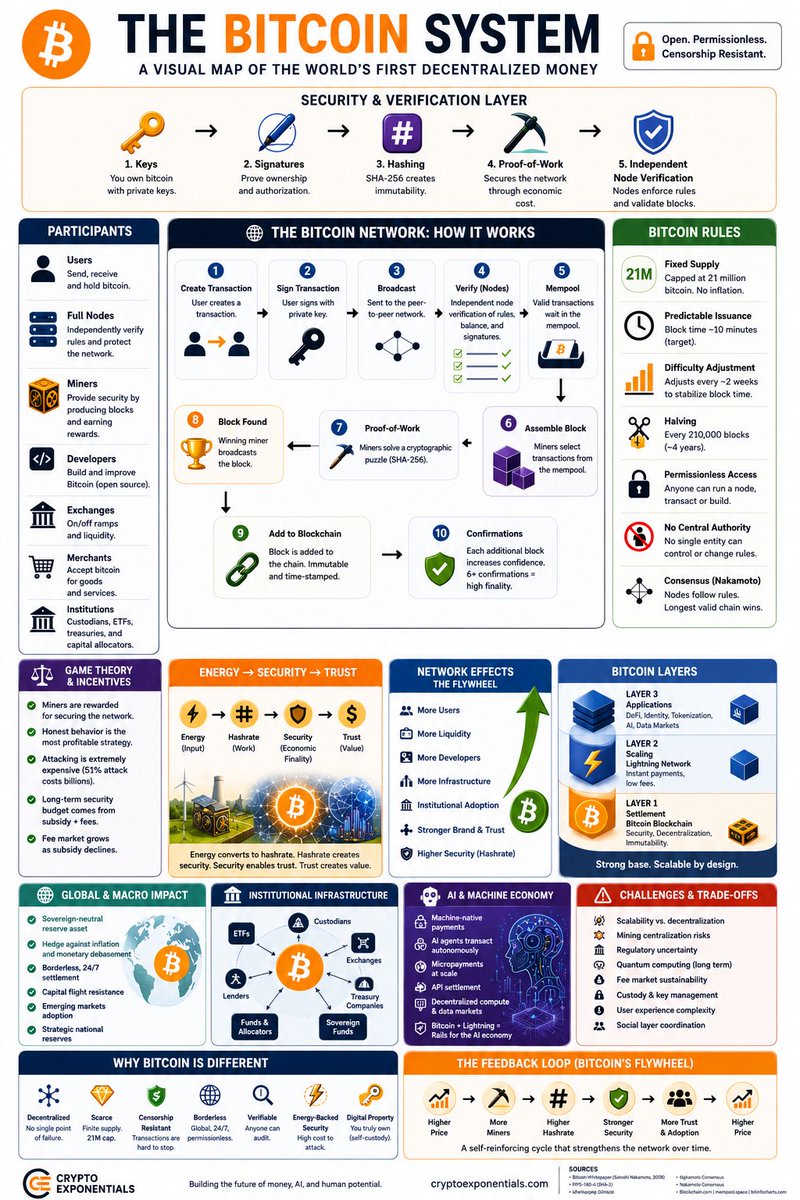
Bitcoin is not just digital money. It is a decentralized economic system combining cryptography, energy, incentives, network effects, and programmable settlement into one global monetary architecture.
The deeper innovation is not the blockchain itself - it is decentralized consensus without centralized trust.
Built a cleaner systems map of Bitcoin covering:
• Security & verification
• Proof-of-work economics
• Network effects flywheel
• Institutional infrastructure
• AI machine economy implications
• Bitcoin’s layered financial stack
The convergence of AI, energy, computation, and monetary networks is becoming one of the most important structural shifts of this decade.
#Bitcoin #AI #DigitalAssets
1
1
82