
Joined July 2021
- Tweets 5,107
- Following 636
- Followers 17,836
- Likes 2,857
929 Photos and videos


Jun 15
多智能体系统的发展正在从“单个 Agent 能力”转向“Agent 之间如何协作”。
当前多数 Agent 都具备独立完成任务的能力,但当研究、开发、交易、客服等多个 Agent 需要协同工作时,一个更现实的问题开始显现:记忆无法共享。
大多数 Agent 的上下文仍然被限制在单个应用、单个进程或单个平台内。当任务在不同 Agent 之间流转时,历史记录、决策过程和用户偏好往往无法同步,导致协作效率下降,甚至需要重新建立上下文。
共享内存正在成为多智能体基础设施的重要组成部分。通过去中心化、可验证且用户拥有的记忆层,不同 Agent 可以在统一状态下完成任务交接、协同决策和长期协作,同时保留数据所有权与可审计性。
随着 Agent Economy 持续发展,记忆层或许会像计算层和通信层一样,成为下一代 AI 基础设施不可或缺的一环。
#AI #AIAgents #Unibase

30
7,081
Jun 14
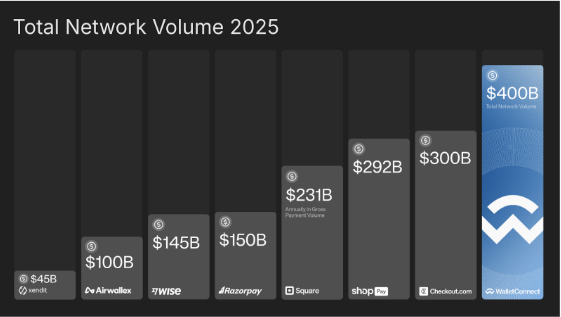
稳定币正在从加密交易工具逐步走向真实商业支付场景。随着链上支付规模持续增长,市场关注点也从“使用什么资产”转向“运行在哪条链、通过什么基础设施完成支付”。
Shopify 选择 Base 支持 USDC 支付,为链上商业提供了重要案例。凭借低成本和高效率,Base 正逐渐成为稳定币支付和商业结算的重要网络之一。
与此同时,AI Agent 支付需求也在快速增长。x402 标准让 Agent 能够直接完成 API、数据和服务购买,无需传统账户体系,推动机器间支付进入实际应用阶段。
在这一过程中,钱包连接层同样关键。WalletConnect Pay 已支持数百个钱包和多链生态,为商家、用户以及未来的 AI Agent 提供统一的链上支付入口。
#WalletConnect
Jun 8

It's official.
Stablecoins are considered "money."
But most payment infrastructure wasn't built for them.
@base is where onchain commerce is landing. WalletConnect Pay is the wallet layer underneath it, 500 million users, 700 wallets, every major chain, one integration.
12
30
8,123
Jun 13
稳定币是链上资本市场的重要起点,但并非终点。
过去几年,稳定币占据了绝大部分 RWA 市场规模,本质上反映的是基础设施成熟度,而非机构需求的全部。随着合规框架、机构级流动性和链上结算能力逐步完善,代币化资产正在从稳定币扩展至国债、私募信贷、股票、ETF 等更广泛的资产类别。
我们看到越来越多机构开始将代币化资产纳入实际金融流程:从代币化国债规模增长,到机构级抵押品和链上借贷场景落地,稳定币正逐步从价值存储工具演变为结算层,而更多生产性资产开始承载价值创造。
下一阶段竞争的核心,不再是谁率先完成资产代币化,而是谁能同时提供合规、流动性、结算和分发能力。随着现实资本持续进入链上市场,基础设施的重要性将进一步提升。
#Mantle #RWA

11
34
8,100
Jun 12
阿里巴巴最新旗舰模型 Qwen 3.7 Max 已接入 0G Private Compute,为 AI Agent 提供可验证的链上推理访问能力。
与传统 API 调用不同,0G 通过 TeeTLS 实现可验证路由,Agent 不再只是“相信”请求被发送到指定模型,而是能够验证请求确实到达了阿里云 Model Studio。对于涉及代码、数据和资产管理的自主 Agent,这种可验证性正在成为关键基础设施。
开发者无需调整现有架构,仅需将 API 端点切换至 0G Router,即可调用 Qwen 3.7 Max,并获得链上可验证的推理路径与签名证明。在保持 OpenAI 兼容接口的同时,为 Agent 工作流增加透明度和可审计性。
随着 Frontier 级模型与链上验证能力结合,AI Agent 正从“可用”走向“可信”。对于长期运行、无人值守的 Agent 而言,模型能力之外,推理过程是否可验证同样重要。
#0G #Qwen #AIAgent

31
7,610
Jun 11
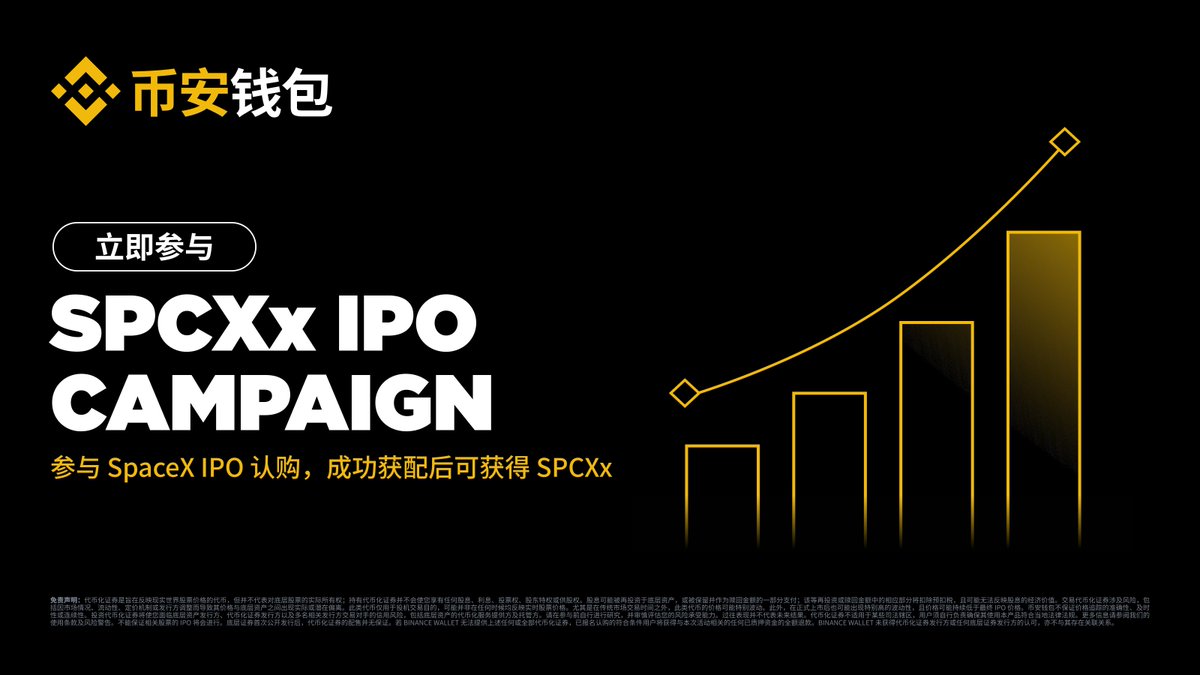
币安钱包正式推出 IPO Campaign,首个项目为 SpaceX 代币化证券 SPCXx。
符合条件的用户现可通过币安钱包提交认购申请,在 SpaceX 潜在 IPO 时获得 SPCXx 配售机会。成功获配后,用户将获得由 xStocks 提供的 SpaceX 代币化证券价格敞口。
本次认购支持 USDC 参与,最低认购金额为 100 USDC,指示性价格为 135 USDC/枚,对应隐含估值约 1.75 万亿美元。最终发行价格及配售结果将根据市场需求和发行安排确定。
代币化证券正逐步连接传统资本市场与链上金融市场,为用户提供更多元的资产参与方式。
#BinanceWallet #xStocks #SpaceX
Jun 11

🚀 参与 SPCXx IPO Campaign,申请认购 SpaceX 代币化证券的机会!
使用 USDC 参与认购,如成功获配,即可在您的币安钱包中获得 xStocks 的 SpaceX 代币化证券。
认购申请将于 6 月 12 日 12:00(UTC 8)截止。参与活动需满足 Alpha 分数要求。
👉 了解更多:binance.com/zh-CN/support/an…
条款与条件适用。活动资格及产品可用性可能因地区而异。
12
32
8,385
Jun 10
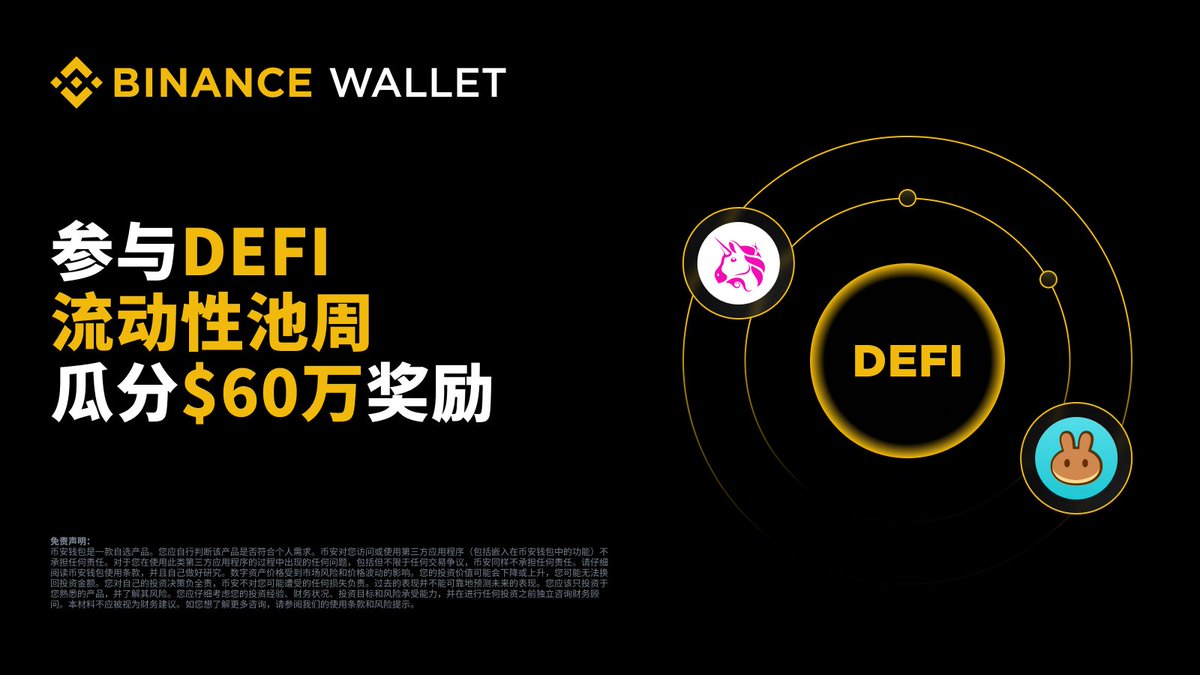
币安钱包 DeFi 季流动性池活动正式开启,总奖励池达 60 万美元,覆盖 PancakeSwap 与 Uniswap 两大协议,活动将持续 60 天。
用户通过币安钱包向指定 LP 池提供流动性后,可获得对应流动性头寸 NFT,并参与交易手续费加成奖励分配。奖励根据用户贡献的合格手续费占比计算,APR 数据每小时更新。
本次活动覆盖 BSC、Ethereum、Base、Arbitrum 等生态,包含 USDT-BNB、USDT-BTCB、ETH-USDC、BTCB-BNB 等多个主流交易对,活动将持续至 8 月 8 日。
#BinanceWallet #DeFi
Jun 9
💧 提供流动性,迎接更多手续费福利!
钱包DeFi季流动性池周来临,准备好迎接价值60万美元奖励了吗👀
活动时间:2026年6月10日早8点 至 2026年8月9日早7点59分 东八区时间
明日起,在 #币安钱包 DeFi向指定PancakeSwap或Uniswap活动池提供流动性到BNB、ETH、Base、Arbitrum链上,享受瓜分价值60万美元的加码手续费奖励,活动持续60天!
查看更多👇
binance.com/events/w3e-defi-…
11
1
7,475
Jun 9
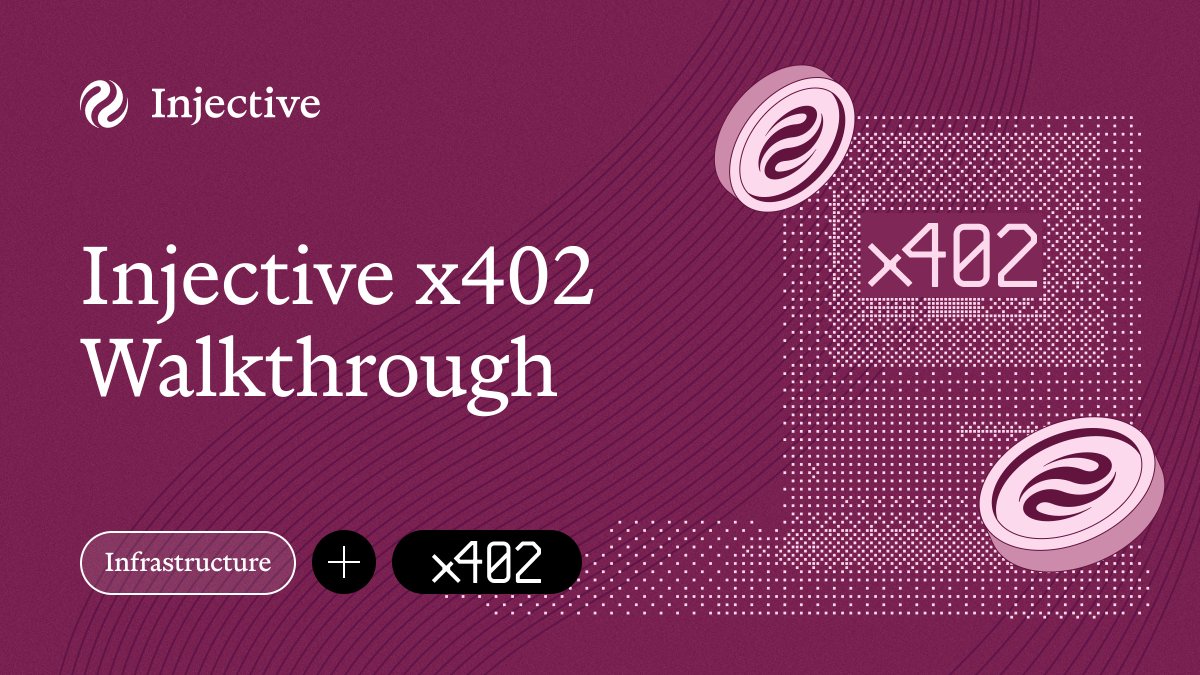
AI Agent 最大的限制之一,不是推理能力,而是支付能力。
x402 现已部署至 Injective 主网,让 Agent 可以直接在 HTTP 请求中完成支付与服务调用:无需注册账号、无需 API Key、无需订阅流程。
对于需要实时获取市场数据、模型推理结果或第三方服务的 Agent 来说,这意味着真正意义上的按需付费。Agent 持有 USDC,即可在请求发起时完成结算,并获得对应服务返回结果。
依托 Injective 的高速结算能力,x402 将链上支付嵌入到 API 调用流程中,为机器对机器(M2M)商业模式提供基础设施支持。从付费数据、微支付到 Agent 之间的自主协作,链上服务消费开始具备更低门槛和更好的可扩展性。
#Injective #AIAgent #x402
Jun 9

x402 is officially went live on Injective.
Now an AI agent can pay for what it needs the instant it needs it. No API keys. No accounts. No humans involved.
All payments settled with stablecoins onchain in under a second. Below is the walkthrough:
12
140
8,038
Jun 8
AI 代理正在从单点工具走向多代理协作,但一个被低估的问题正在浮现:记忆。
当代码代理、交易代理和日程代理同时运行时,真正的瓶颈往往不是模型能力,而是上下文无法持续保留与共享。每次切换环境、设备或模型,都可能意味着重新建立认知。
去中心化记忆正在成为下一代 Agent 基础设施的重要组成部分。它不仅提供持久存储和跨平台可移植性,还支持代理之间的互操作,以及可审计、可验证的历史记录。
随着 Agent 开始拥有长期身份、策略和执行历史,记忆本身也将成为一种可迁移、可积累价值的资产。未来的 Agent 经济,竞争的不只是模型,更是经验。
#AI #AIAgents #Unibase
Jun 8
1/
You're running 3 AI agents: one writes code, one trades, one manages your calendar.Every one of them is amnesiac — switch the context to another agent and you start over. The missing layer isn't a smarter model. It's memory that doesn't disappear.
2/
Local memory is fine for a private copilot.But the agent internet — long-running, cross-platform, with real identity and history — needs something else: decentralized memory.
Five reasons why 👇 🟦
3/1⃣ Persistence
Laptop dies, you switch devices, you switch models — local memory can vanish with it.Decentralized memory isn't bound to one machine. An agent's memory persists, long-term, no matter what breaks.
4/2⃣ Portability
Agents will run across laptop, phone, cloud, and on-chain services.Local memory is painful to migrate. Decentralized memory syncs across every environment by design — one identity, one memory, everywhere.
5/3⃣ Interoperability
Local memory is an island. The next phase of AI is agent ↔ agent: sharing context, calling each other's capabilities, handing off tasks.That needs an open memory network, not a private silo.
6/4⃣ Verifiability
In financial, trading, and autonomous-agent scenarios, history and reputation have to be trustworthy.Decentralized memory gives you a tamper-proof, auditable, verifiable record of what an agent actually did.
7/5⃣ Decentralized ≠ public
Decentralized doesn't mean exposed. Data stays encrypted, permissions stay under your control, disclosure is selective.You get ownership and verifiability without giving up privacy.
8/
The big one:
When an agent has users, a proven strategy, and a track record, its memory becomes an asset.Agents you can migrate, operate, even sell — instead of restarting a blank bot every time. (This is the BitAgent thesis.)
9/
Local memory → private copilots. Decentralized memory → an agent economy with persistent identity, portable experience, and verifiable history.Experience is what you'll buy. Experience lives in memory. 🟦
11
26
8,078
Jun 7
Aethir 正式推出 Aethir Mesh,为开发者和 AI Agent 提供统一的开源 LLM API 层。
通过单一 API 即可访问 DeepSeek V4、Kimi K2.6、GLM-5.1、MiniMax-M2.5、Qwen3.6-27B 等主流开源模型,无需管理多个供应商和复杂的 API 凭证。
对于 Aethir Claw 用户而言,Aethir Mesh 可直接集成至 Agent 配置,实现从 GPU 算力、Agent 托管到模型推理的一站式体验,进一步降低 AI Agent 的部署与运营门槛。
#Aethir
Jun 5

AI agents need reliable LLM access.
Aethir Mesh gives Aethir Claw users and anyone who need access to high-quality inference, direct API keys for top open-source models, including DeepSeek, Kimi, and more, running on Aethir GPU infra.
Here is what that means for your agents.
11
33
9,207
Jun 5
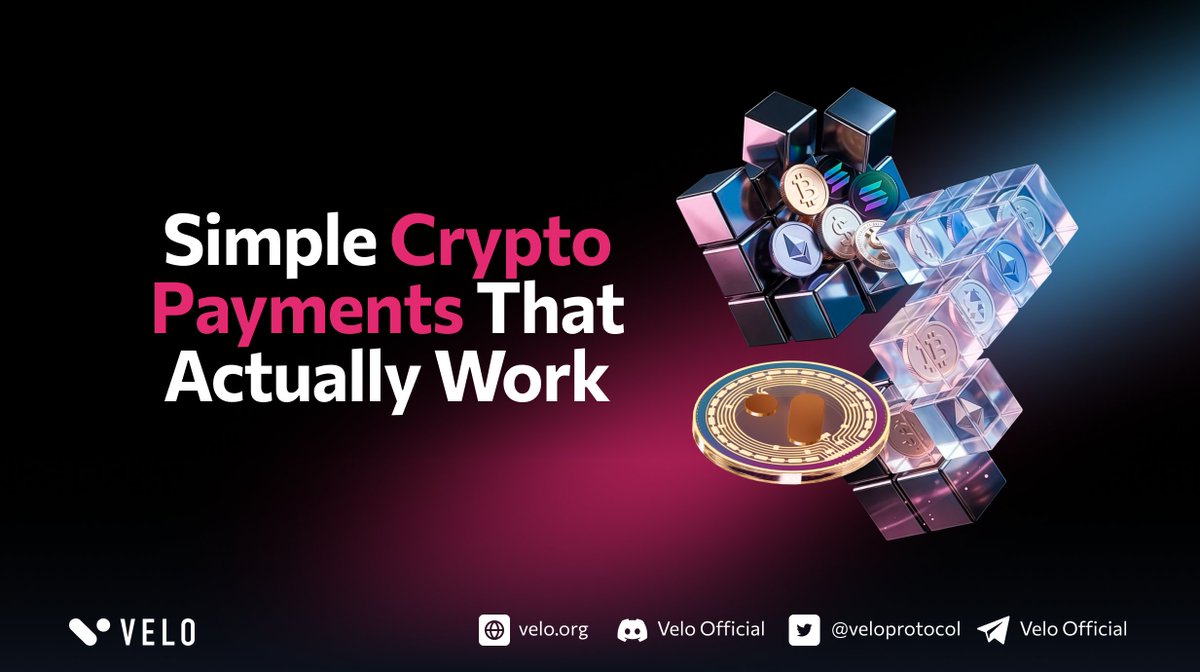
PayFi 正在从概念走向实际应用。
VELO 推出的 PayFi 方案,将持牌银行网络、区块链结算和智能合约结合在一起,让跨境支付、资金结算和流动性管理变得更加高效。
相比传统跨境支付流程,PayFi 能够实现更快的资金流转;相比纯链上支付方案,则进一步连接了现实世界金融基础设施。
作为生态中的核心工具代币,$VELO 可用于支付、结算、奖励分发以及流动性支持等场景,为现实世界支付和金融活动提供价值传递层。
随着 PayFi 赛道持续发展,链上金融与传统金融的融合正在进入新的阶段。
#VELO #PayFi #RWA
Jun 3

What is VELO PayFi?
It’s a brand-new global system that combines real licensed banking rails with crypto speed, smart contracts, and yield.
No more slow banks or risky crypto-only networks. VELO PayFi lets money move instantly across borders while actually earning rewards along the way.
VELO is becoming the PayFi utility token for real-world crypto payments, off-ramp, settlement, rewards, and liquidity.
Simple. Powerful. Built for real use.
13
35
7,476
Jun 4
AI Agent 与顶级大模型之间的连接方式,正在发生变化。
0G 已与阿里云 Qwen 达成合作,通过链上基础设施向 AI Agent 开放 Qwen 模型访问能力。开发者无需依赖传统 API 账户体系,即可通过 token 化机制调用 Qwen 推理能力。
这意味着 Agent 不仅能够直接获取领先大模型的智能支持,还能结合 0G 的可验证计算与数据层,实现推理、执行与验证的完整闭环。
随着 Qwen 等主流模型开始进入链上生态,AI Agent 的开发重点正从基础设施接入转向实际应用落地。智能由 Qwen 提供,信任由 0G 保障,Agent Economy 的底层能力正在进一步完善。
#0G #AIAgents
19
31
17,047
Jun 3
Injective Vulcan 主网升级提案现已开启投票。
本次升级围绕预言机、稳定币、RWA 与跨链基础设施进行了全面优化。全新预言机引擎将 gas 消耗降低 90%,同时引入 Pyth Pro 与 SEDA 数据源,为机构级市场和代币化资产提供更广泛、更精准的价格支持。
Vulcan 还新增统一预言机预编译,让 MultiVM 应用可直接访问链上价格数据;进一步推进原生 USDC 标准,优化稳定币发行流程,并为 Morpho 集成及更多链上信贷、借贷场景铺路。
从更低的桥接成本、更强的安全机制,到稳定币与 RWA 结算能力的持续完善,Injective 正朝着链上金融结算层的目标迈进。
#Injective #INJ #RWA
Jun 2
The Injective Vulcan Mainnet Upgrade proposal is now live for voting.
One chain bringing together stablecoins, tokenized RWAs, and the lowest fees in crypto.
The biggest step yet towards making Injective the settlement layer for all onchain finance.
A deep dive 🧵
14
28
8,146
Jun 2
Binance 正式将加密资产与美股交易整合到同一平台。
用户可直接使用 USDT、USDC、BNB、USD1 等资产购买美股和 ETF,系统会自动完成兑换与结算,无需额外出入金流程。
目前已支持超过 7000 只美股及 ETF,同时提供 24/5 交易时段、自动股息发放以及 Fully Paid Securities Lending 等功能,让股票、ETF 与加密资产能够在同一账户内统一管理。
传统金融与链上资产之间的边界正在持续被打破,全球投资者获取资产配置的方式也在发生变化。
#Binance #Stocks #ETF #USDT #USDC

Welcome to a new era.
Trade the brands you love.
Direct Stocks. ETFs. Available 24/5.
👉 binance.com/en/stocks-landin…
12
32
8,794
May 31
Consensus Miami 落下帷幕,0G 用一周时间持续输出对 Agent Economy 的思考与实践。
从 Agent Tooling Summit 上关于“万亿美元 Agent Economy”的主题演讲,到 House of AI 对 Agent 安全、责任归属与自主决策边界的讨论,再到多场围绕链上流动性、Agent Identity 和可验证计算的分享,核心叙事始终围绕一个方向展开:为 AI Agent 构建可验证、可协调、可扩展的基础设施。
值得关注的是,0G 已将 Aristotle、Agent ID、Sealed Inference 等关键组件逐步推向主网与实际应用场景,让 Agent 经济从概念讨论走向真实部署。
随着 AI Agent 与链上经济的融合加速,基础设施层的重要性正在被越来越多开发者、机构与生态参与者重新审视。
#0G #0GLabs #AIAgents
13
28
8,343
May 30
多代理 AI 的协作能力正在快速提升,但真正制约 Agent 网络规模化的,往往是记忆层。
当前大多数 Memory 系统仍围绕单一模型、单一应用设计。当多个 Agent、多个模型甚至不同组织之间需要共享上下文时,记忆容易出现割裂、重复构建和权限管理复杂等问题。
Unibase 正在尝试构建面向多代理场景的统一记忆基础设施:记忆存储于去中心化存储网络之上,并结合 DA 层实现可验证性;访问权限则通过钱包派生密钥管理,使不同 Agent 能够在用户授权下共享和调用同一份记忆数据。
统一记忆层、跨 Agent 互操作,以及用户真正拥有的数据控制权,正在成为 AI Agent 基础设施的重要方向。
#Unibase #AI #Agent
May 30
The hardest unsolved problem in multi-agent AI isn't coordination.
🧠🌸 It's memory.🌸🧠
Current memory infrastructure was designed around a single operator, a single model, a single trust boundary. The moment your pipeline involves Claude, OpenAI, Hermes, and OpenClaw — potentially across different organizations — those architectures collapse. Memory becomes fragmented, siloed, and operationally expensive to share.
Unibase is built for this reality from the ground up.
🟦 Memory is stored on Unibase Storage with a DA layer underneath, making it decentralized and verifiable — not dependent on any operator's uptime or honesty.
🟦 Access is governed by wallet-derived keys, so any agent can be granted read access without an admin handoff. The memory is user-owned end-to-end, and interoperable across the full agent stack.
One memory layer. Every agent. No permission negotiation.
Something is coming. ✦ 👀🧠
11
31
7,653
May 29
Aethir 与 Axe Compute 的合作,已经从“签署合同”正式进入“基础设施部署”阶段。
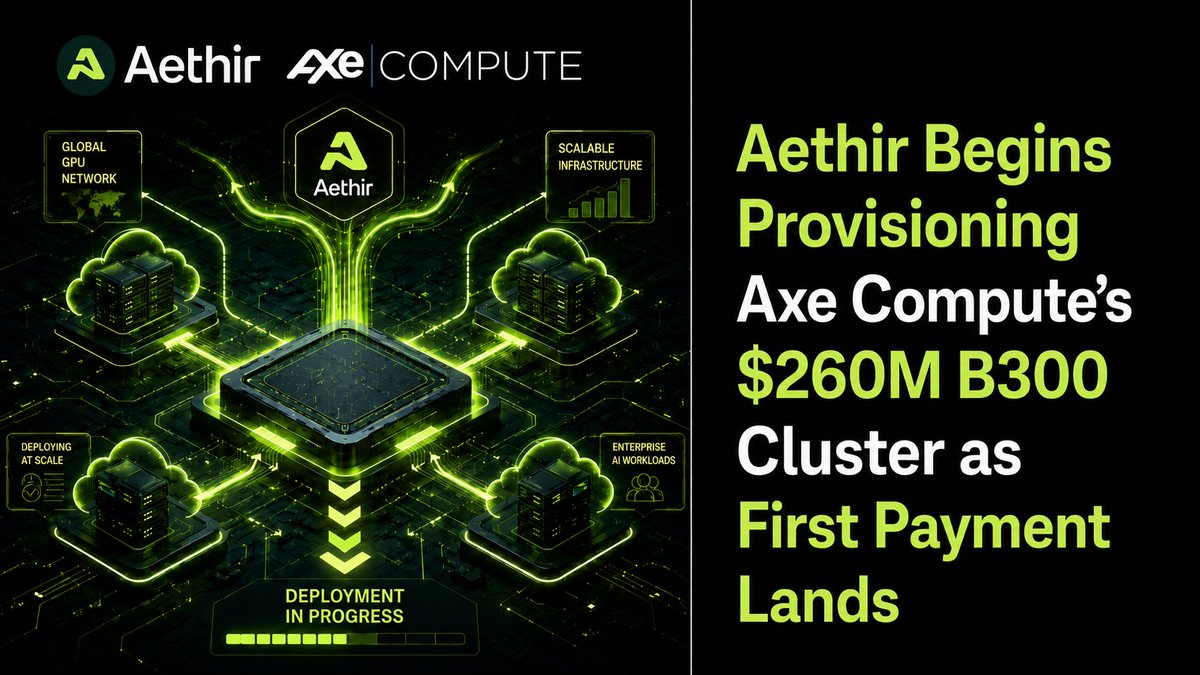
随着 Axe Compute(NASDAQ: AGPU)确认收到首笔 4300 万美元付款,Aethir 已开始为其配置 2304 张 NVIDIA B300 GPU 集群,对应此前公布的 2.6 亿美元企业级 AI 算力合同。
这意味着,这笔为期 36 个月、采用 take-or-pay 结构的 GPU 计算协议,已经从市场预期进入实际执行阶段。按照计划,完整 B300 集群将在 2026 年 Q3 上线,并在服务周期内带来持续性收入确认。
对于当前 AI Infra 市场而言,真正被验证的不只是 GPU 需求本身,而是全球分布式 GPU 云,开始具备承接大型企业级 AI 工作负载的能力。
#Aethir #AI #GPU #DePIN
May 28
The first payment is confirmed for Axe Compute’s landmark $260M compute deal, powered by Aethir.
$43 million confirmed payment signaling deployment is in motion.
Aethir is provisioning the 2,304 B300 cluster, while the go-live date is scheduled for Q3 2026.
$21M per quarter is expected in contracted revenue for this industry-shaping compute contract that proves how decentralized cloud computing can support large-scale enterprise AI deployment.
23
18
9,807
May 28
稳定币支付的监管环境,正在快速清晰化。MiCA 已在欧盟全面落地,GENIUS 法案持续推进,FATF 也进一步明确了稳定币适用旅行规则的要求。对于 neobank、数字钱包和 PSP 来说,重点已经从“能不能做稳定币支付”,转向“如何更快完成合规落地”。
包括合规稳定币支持、KYC/KYT、旅行规则、商户支付审计,以及多地区监管适配等,都开始成为基础能力。像 WalletConnect Pay 这类支付基础设施,也开始将筛查、合规与支付流程一起集成,降低平台接入与后续运营成本。
稳定币支付进入下一阶段后,比拼的已经不只是产品体验,而是合规执行效率。
#WalletConnect
16
30
7,454
May 27
链上 AI Agent 正在从概念阶段进入真实可执行阶段。
现在,用户已经可以直接通过全新平台,在几分钟内完成链上 AI Agent 的部署,并让 Agent 自动执行交易、路由与策略管理,实现更持续的链上收益运行。
相比传统量化或脚本工具,这类链上原生 Agent 更强调自主执行能力与链上协同效率,整个流程更加自动化,也更贴近 DeFi 实际使用场景。
AI Onchain 的结合正在从“辅助工具”走向“执行层基础设施”,而这一切,也只有在 Injective 这样的高性能链上环境中才有可能真正落地。
#Injective #AI #DeFi
May 25
We just launched a brand new site dedicated to help you launch onchain AI agents that allow you to earn on autopilot.
Build an onchain agent in minutes. Let it auto trade, route, and execute strategies while you sleep.
Only possible on Injective.
agents.injective.com/
12
35
7,551
May 26
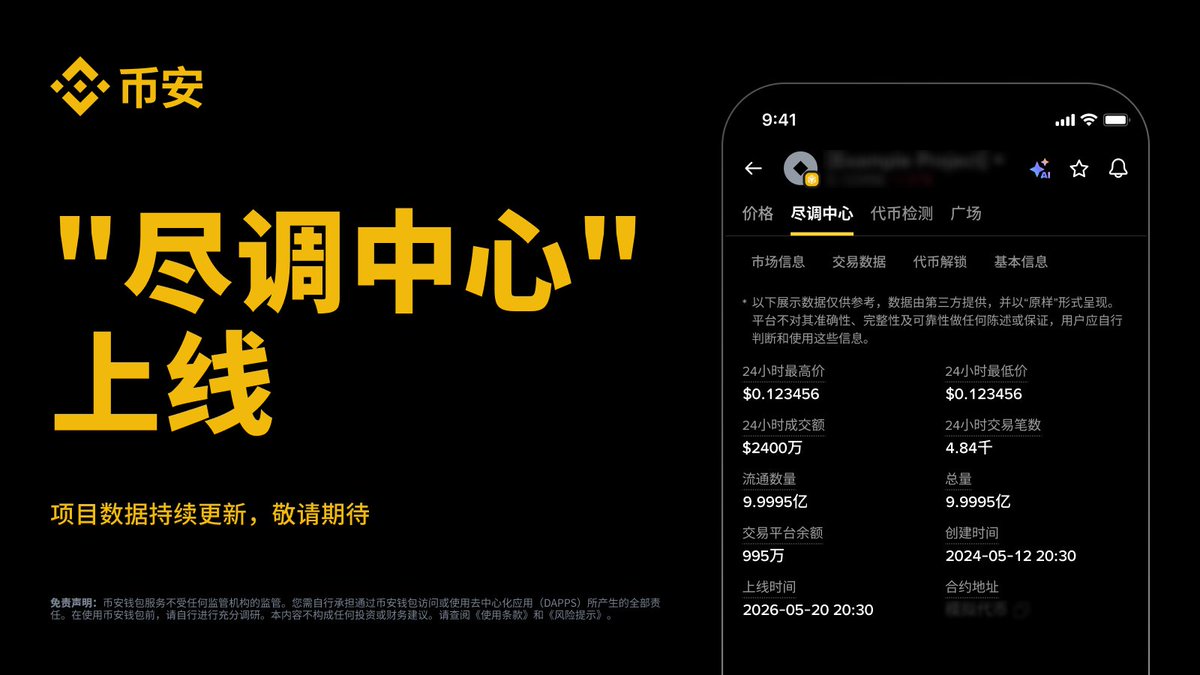
币安 Alpha 代币已经上线「尽调中心」。
现在可以更集中地查看项目的链上数据、供给结构、解锁信息、团队背景以及官方社媒入口,不用再反复切换不同网页和社群找信息。
对于 Alpha 项目来说,信息透明度一直是用户最关注的问题之一。
相比二手消息和情绪传播,更完整的公开数据,至少能让 DYOR 这件事变得更有效率。
透明化不会一步完成,但基础设施正在慢慢补齐。
「尽调中心」上线,也意味着 Alpha 项目的信息披露开始朝着更标准化的方向推进。
#Binance #BinanceAlpha
May 26
以前 DYOR:
打开 8 个网页,翻 3 个社群,看 5 条二手消息,最后还是一脸问号🥲
现在 DYOR:
🚀前往币安 Alpha 代币的「尽调中心」,快速查看项目的链上数据、供给结构、解锁信息、团队与社媒入口。
少一点信息黑箱,少一点二手消息;
多一点公开数据,多一点独立判断!
提升透明度不是一步到位,而是一场持续建设💪
尽调中心,推动 Alpha 项目信息透明化的第一步。
部分数据来源于 @DefiLlama 和 @RootDataCrypto
12
29
7,429