
Joined September 2019
- Tweets 7,283
- Following 1,575
- Followers 2,641
- Likes 58,577
639 Photos and videos
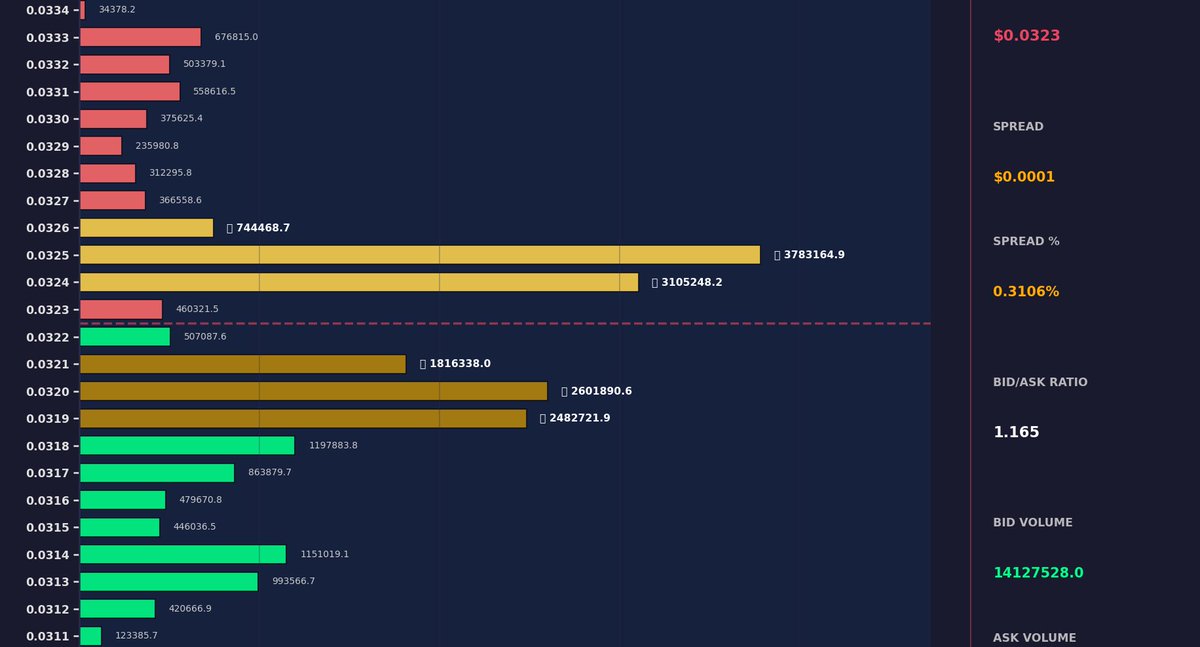






Vibecoded $KAS orderbooks across 5 exchanges. 1.304 bid/ask ratio confirms the buy-side dominance.
13
253

Our first real Yonatan Sompolinsky
Wikipedia Page. Now we need one for
#Kaspa
en.wikipedia.org/wiki/Yonata…
8
64
224
4,178

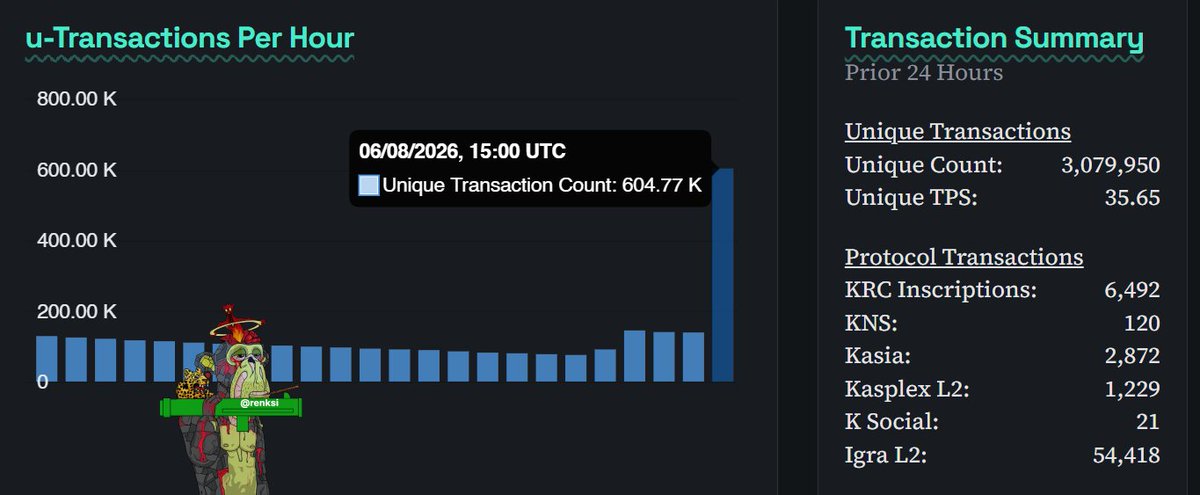
kaspa just had another transaction spike
604k unique transactions in a single hour
3M unique transactions over the last 24h
and Igra L2 keeps carrying serious activity with 54k transactions
$KAS keeps showing signs of real usage while people are still only watching candles
48
41
271
7,840

BlockDag 🔁 retweeted

May 29
The suppression of Kaspa is not just a Kaspa problem. It exposes a deeper rot in the broader crypto industry: the market still pretends to be decentralized while price discovery, liquidity access, and legitimacy are filtered through centralized gatekeepers.
That matters because CEXs do not simply “list assets.” They manufacture visibility. They decide which coins get the easy retail buy button, which coins get deep liquidity, which coins get market-maker support, which coins get institutional routing, and which coins remain fragmented across smaller venues. In theory, crypto is supposed to route around permissioned finance. In practice, most users still discover assets through the same centralized funnels.
This creates a distorted incentive system. Fair launches are punished because there is no insider allocation to distribute, no VC inventory to monetize, no foundation treasury to negotiate with, and no easy promotional machine behind the asset. Meanwhile, weaker projects with better insider economics can receive cleaner access because they fit the exchange business model better. The result is not meritocratic capital formation. It is liquidity favoritism disguised as market neutrality.
Kaspa threatens that model because it represents something crypto was originally supposed to protect: open proof-of-work issuance, no premine, no insider launch, no committee, no sequencer, no foundation-controlled float. If that kind of asset can be delayed while more centralized or venture-shaped tokens receive smoother access, the industry has to confront an ugly truth: much of crypto’s “decentralization” is downstream of centralized distribution.
The implication is bigger than price. If exchanges can suppress, delay, or derivative-wrap genuine open networks while accelerating assets with cleaner insider monetization, then crypto becomes a permissioned casino wearing cypherpunk clothing. The assets that survive anyway become more important, not less, because they prove that neutral monetary infrastructure can still emerge without begging the gatekeepers for validation.
20
57
214
4,848

That's a really good question, but it's hard to answer in a single tweet because our mission is quite extensive, and it requires a lot of background knowledge to really understand what sets Kaspa apart.
Currently, a lot of people see Kaspa as “Bitcoin’s crazy little brother” that improves time-to-finality by leveraging the benefits of DAG-based consensus protocols without accepting their traditional drawbacks, such as decreased decentralization or a limited validator set.
This perception is somewhat accurate, but it falls short of conveying the full picture, because Kaspa’s vision extends far beyond just trying to be a better Bitcoin.
Anyone willing to study Kaspa and its broader vision will discover similarities to nearly all major existing DLT designs: from Bitcoin, to Ethereum, to Solana, Sui, Celestia, and beyond.
My personal view is that “research” in the DLT space is approaching a point of convergence. We increasingly understand how to push distributed systems close to the limits of what physics permits. The frontier is no longer only about raw throughput or faster finality. The attention is shifting toward game theory, incentives, sequencing, MEV, alignment, and how to build systems where the economic incentives of users, builders, miners, validators, applications, and infrastructure providers do not work against each other.
That is why debates like based rollups versus arbitrary sequencing, shared sequencing, MEV mitigation, proposer-builder separation, and execution-layer incentives matter so much. These are not niche technical details. They determine whether a network can remain neutral, decentralized, and aligned while scaling to global usage.
And this is where I think Kaspa is pushing the boundaries in a very important way.
Kaspa is not merely trying to be “fast.” The goal is to build an L1 where speed, decentralization, security, and incentives are aligned at the base layer. A system that does not scale by hiding complexity behind trusted committees, privileged sequencers, centralized validator sets, or opaque coordination mechanisms, but instead tries to preserve the spirit of proof-of-work while extending what an L1 can realistically do.
Because Kaspa arrived later than many other major projects, it does not carry the same degree of technological debt. It can absorb lessons from Bitcoin, Ethereum, rollups, modular blockchains, high-throughput monolithic chains, DAG research, MEV research, and the broader history of decentralized systems, and combine those lessons into something more optimal.
To me, that is what Kaspa is building: not just a faster blockchain, but a more incentive-aligned decentralized infrastructure layer.
But this also creates a different challenge.
Kaspa’s biggest problem today is not its technology. It is the lack of centralized coordination around communicating the vision. And because Kaspa is a grass-roots movement, that responsibility does not belong to a marketing department, or a single leadership team. It belongs to the community.
That also means the community has a different role to play.
There will always be holders who are mainly interested in price, and that is completely fine. But there also need to be people who are here because they want to use the technology to build a different future. People who care about the architecture, the incentives, the open questions, the trade-offs, and the long-term trajectory of decentralized infrastructure.
I am one of those people.
I am not interested in DLTs merely as a way to generate wealth. I am interested in them because I believe they can change the trajectory of humanity as a whole.
For that reason, I want to use this opportunity to announce a regular community hangout where we discuss the current state of development, the open questions, and where we can align our vision together.
The first session will be on Tuesday, June 9th, 2026.
We will talk about the vProgs framework, how the codebase works, what sets Kaspa apart, where we improve on existing solutions, and what still needs to be done. The goal is for this to become a regular, possibly bi-weekly, event where we as a community come together to discuss the future and understand the technology.
Eventually, we can invite people from other projects as well, but the main focus at the beginning will be explaining and communicating how things work under the hood.
There is still a lot of work to be done, and I do not want to waste precious time. So the first sessions may feel a little improvised, but we can improve as we go.
The important thing is that we start.
So mark the date: Tuesday, June 9th, 2026.

Hey @hus_qy I'm very curious of something. How would you answer the question #1 "What are they building?"
What is your opinion on what Kaspa is building?
50
299
718
74,287
BlockDag 🔁 retweeted

We're ready

If you are a mathematician, then you may want to make sure you are sitting down before reading further.
9
13
115
7,025

BlockDag 🔁 retweeted

May 19
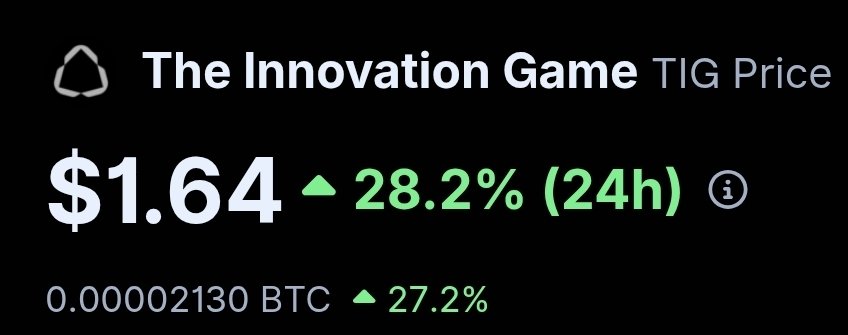
🔵 "The only way to really get 10x or 100x leaps is to fundamentally change the algorithm and how it's computed every single year"
The solution is $TIG btw 👍
9
49
210
13,769


May 12
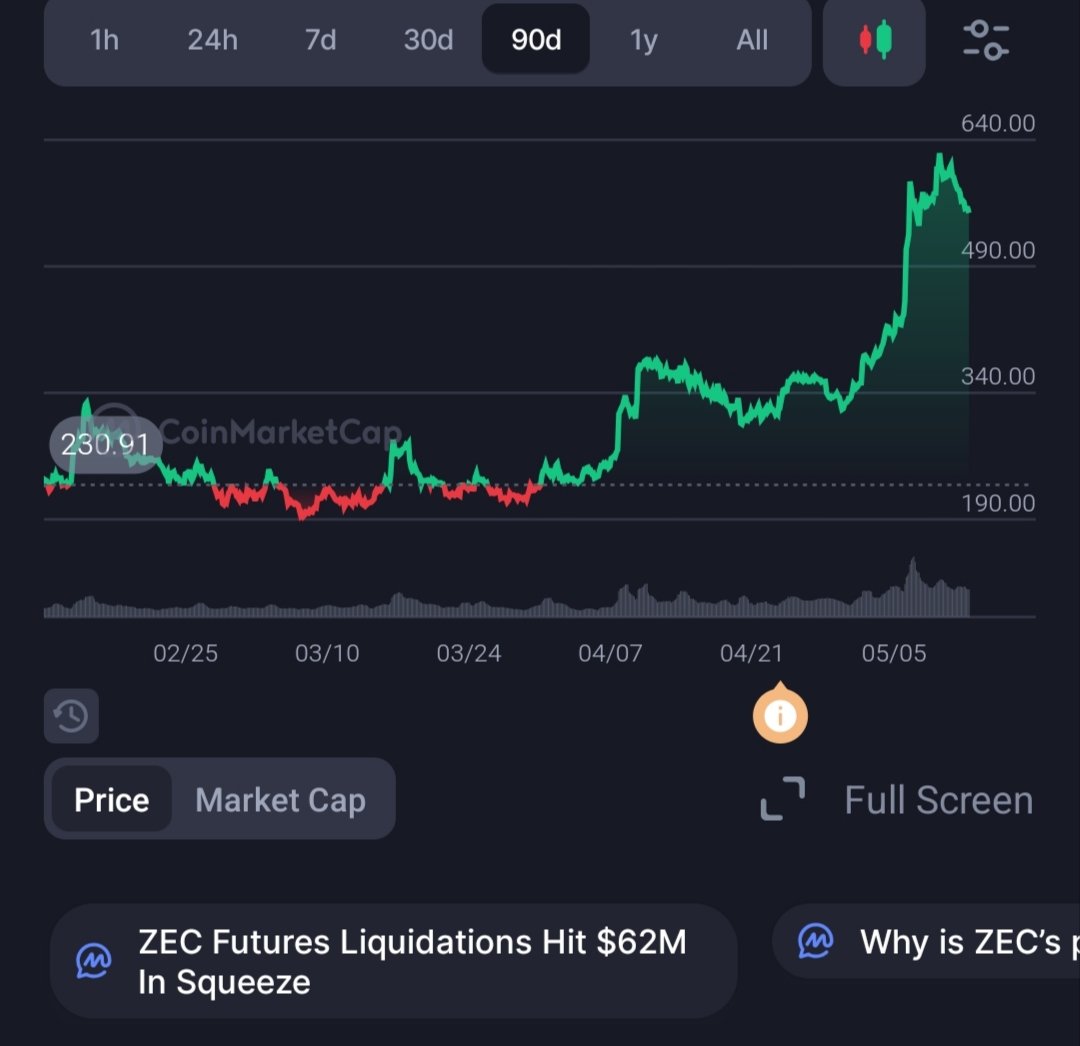
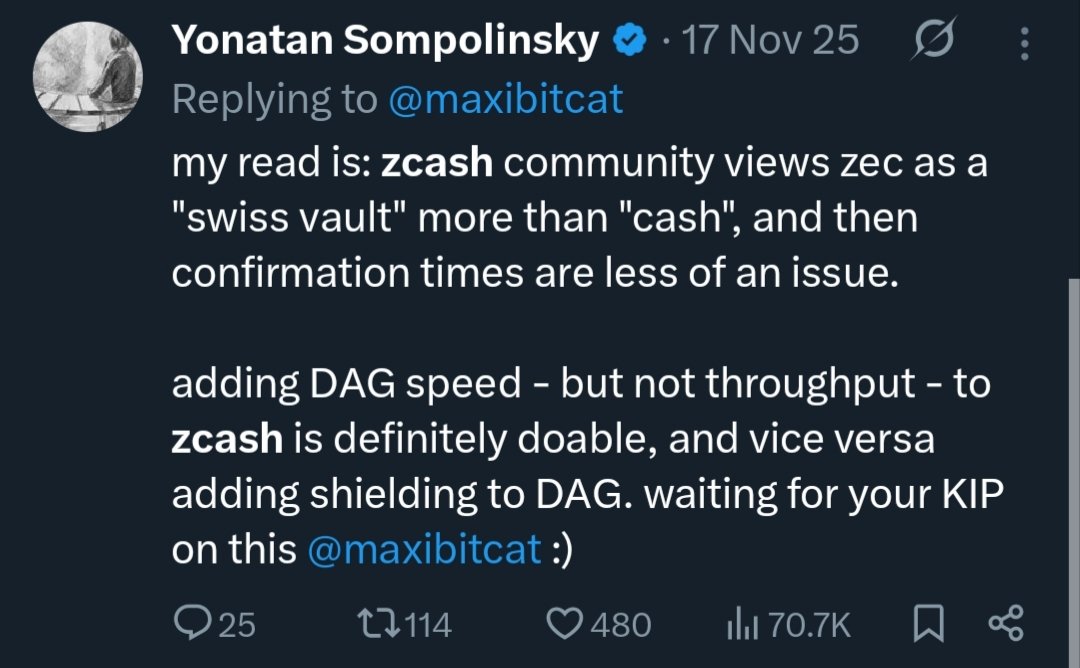
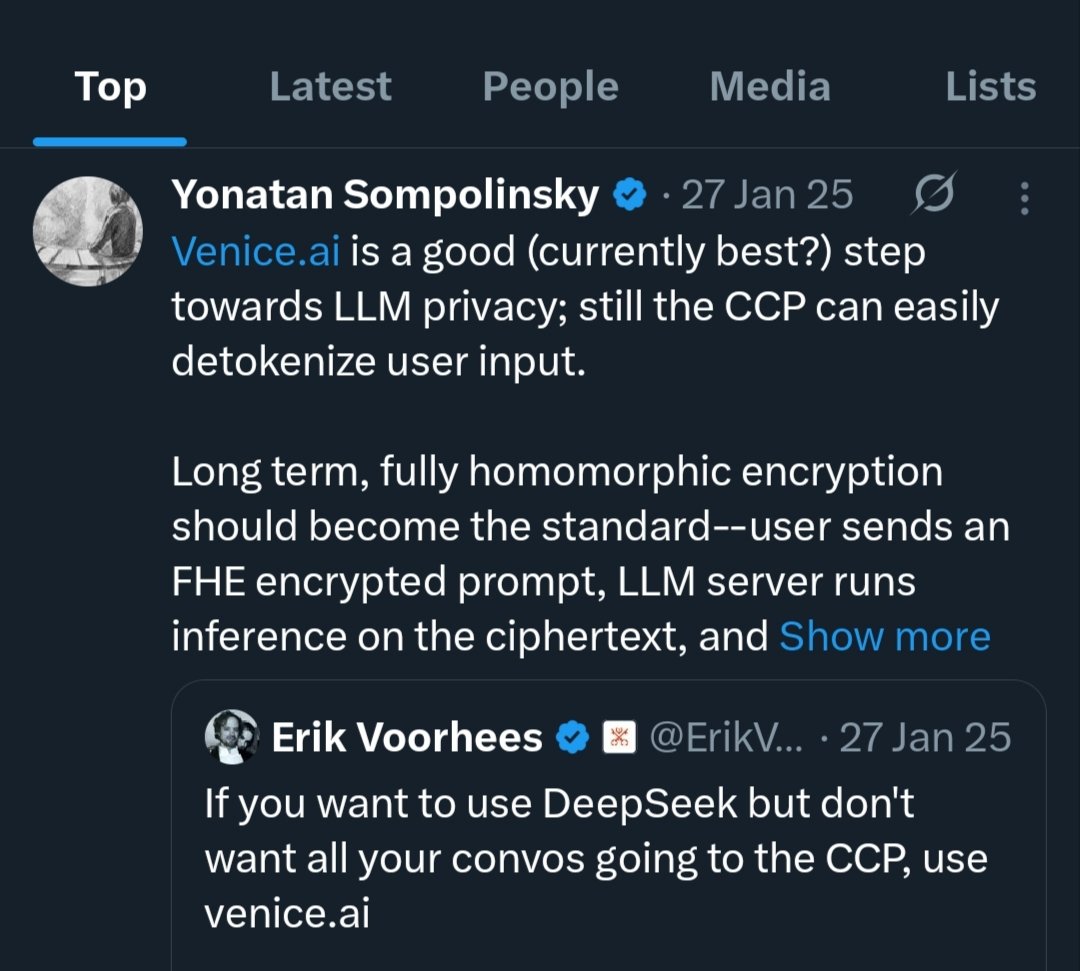
One more ticker mention hashdag and I’m ready to risk temporary homelessness for potential generational wealth.
1
2
137
BlockDag 🔁 retweeted

May 11
⚡️ INSIGHT: Vitalik Buterin says ZK-payments could become the next standard for crypto payments in the AI-driven “agentic era.”

264
271
1,919
194,281
BlockDag 🔁 retweeted
May 7
What most people are missing about Toccata is that it is not “smart contracts coming to Kaspa” in the Ethereum sense. That framing is lazy. Toccata is more specific and more important: it is Kaspa adding constraint logic, zk verification, and sequencing commitments to a high-throughput UTXO blockDAG without converting the base layer into a global execution machine. It is programmability without surrendering the architecture that made Kaspa distinct in the first place.
The first piece is Covenants . In a normal UTXO system, coins are locked by conditions and then spent if those conditions are satisfied. Covenants extend this by letting outputs impose rules on future spends. That means the transaction graph itself can carry enforceable structure: vaults, staged releases, spending paths, asset lineage, canonical bridges, escrow flows, multi-step contract interactions, and constrained application logic. This is not a VM where every node executes arbitrary program state. It is local UTXO computation with recursive constraints. The difference matters. Ethereum-style programmability globalizes execution. Kaspa-style covenants localize it.
The second piece is zk verification. Toccata includes zk opcode/verifier infrastructure, with support discussed around flexible proof verification paths such as Groth16-style proving and RISC Zero-style STARK verification. This lets external computation be proven to L1 instead of replayed by L1. That is the real scaling primitive: do the heavy work elsewhere, submit a proof, and let Kaspa verify the commitment. This is how you get toward zk apps without turning every Kaspa node into an application server.
The third piece, and maybe the least understood, is partitioned sequencing commitments. ZK applications need proof costs to scale with their own activity, not with the entire global DAG. Sequencing commitments are designed to let apps reference L1 ordering in a more scalable way, so based zk systems can follow Kaspa’s sequencing without needing to prove the whole network history every time. That is not a minor detail. That is the bridge between high-BPS settlement and practical zk application design.
Toccata is not the final form of Kaspa programmability. It is explicitly not full vProgs yet. The current stage enables standalone zk applications, canonical proof-based bridging, covenant logic, and the primitives needed for later synchronously composable verifiable programs. In other words, Toccata is the hinge: Kaspa moves from fast money into programmable settlement, while still refusing the bloat of a monolithic world computer.
6
67
172
3,445
BlockDag 🔁 retweeted

What makes $TIG Algorithmic IP attractive:
-Cross-domain optionality. One challenge (e.g. 3-SAT) maps to chip design, logistics, drug discovery, finance
-Composability. Algorithms stack and combine, so each new one expands the surface area for the next
-Scalable economics (near-zero marginal replication cost)
-Licensable recurring cash flows
-Permissionless global talent pool
-Defensible moats through data/network effects/trade secrets
-New asset class
Licensed algorithmic IP will be a perpetual royalty stream. $TIG is tapping into something older than crypto and bigger than AI.
3
12
88
3,078
BlockDag 🔁 retweeted

May 1
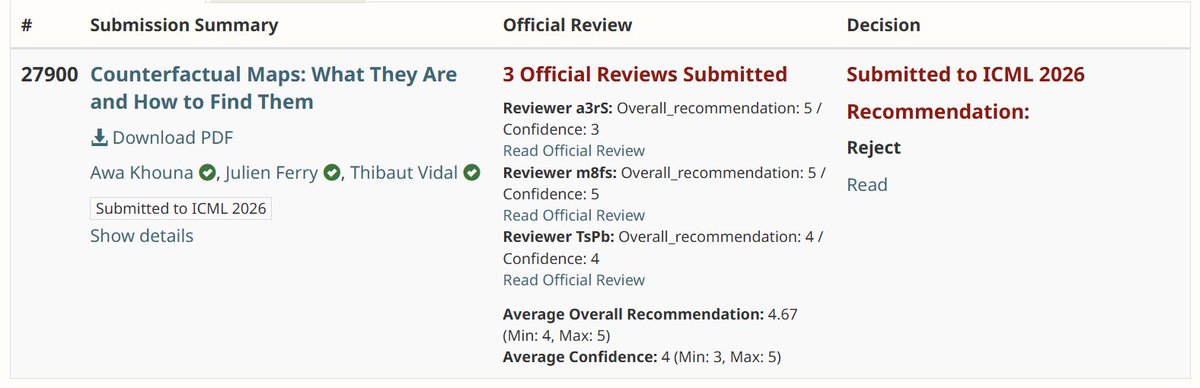
Happy to announce that our paper was rejected as a spotlight (5/5/4) at #ICML2026.
If the methodology was complex enough to confuse the metareviewer, perhaps it may still be of broader interest to you 🙂.
Happy to discuss the work if you are into optimal counterfactual maps that permit explanations in milliseconds, or into the occasional ups and downs of academic publishing 🚣
5
7
204
29,289
Am I the only one annoyed that we keep interviewing “intelligent people” about the future with Hq cameras and cozy sofas when @Dr_JohnFletcher already figured this out years ago?.
how many times I'm going to see these things $tig people?
1
5
170
BlockDag 🔁 retweeted

Apr 28
Bitcoin was supposedly invented to be a decentralized, third-party payment system designed to evade government control.
But if you look at who’s speaking at the Bitcoin conference, you can quickly see how the community has been hijacked by those same nefarious players.
The speakers include the FBI Director, the Acting AG, the SEC Chair, and the CFTC Chair. The event has had nothing but politicians, govt agents, bankers, and suits running the show.
Oh, the irony.

134
131
590
29,512
BlockDag 🔁 retweeted
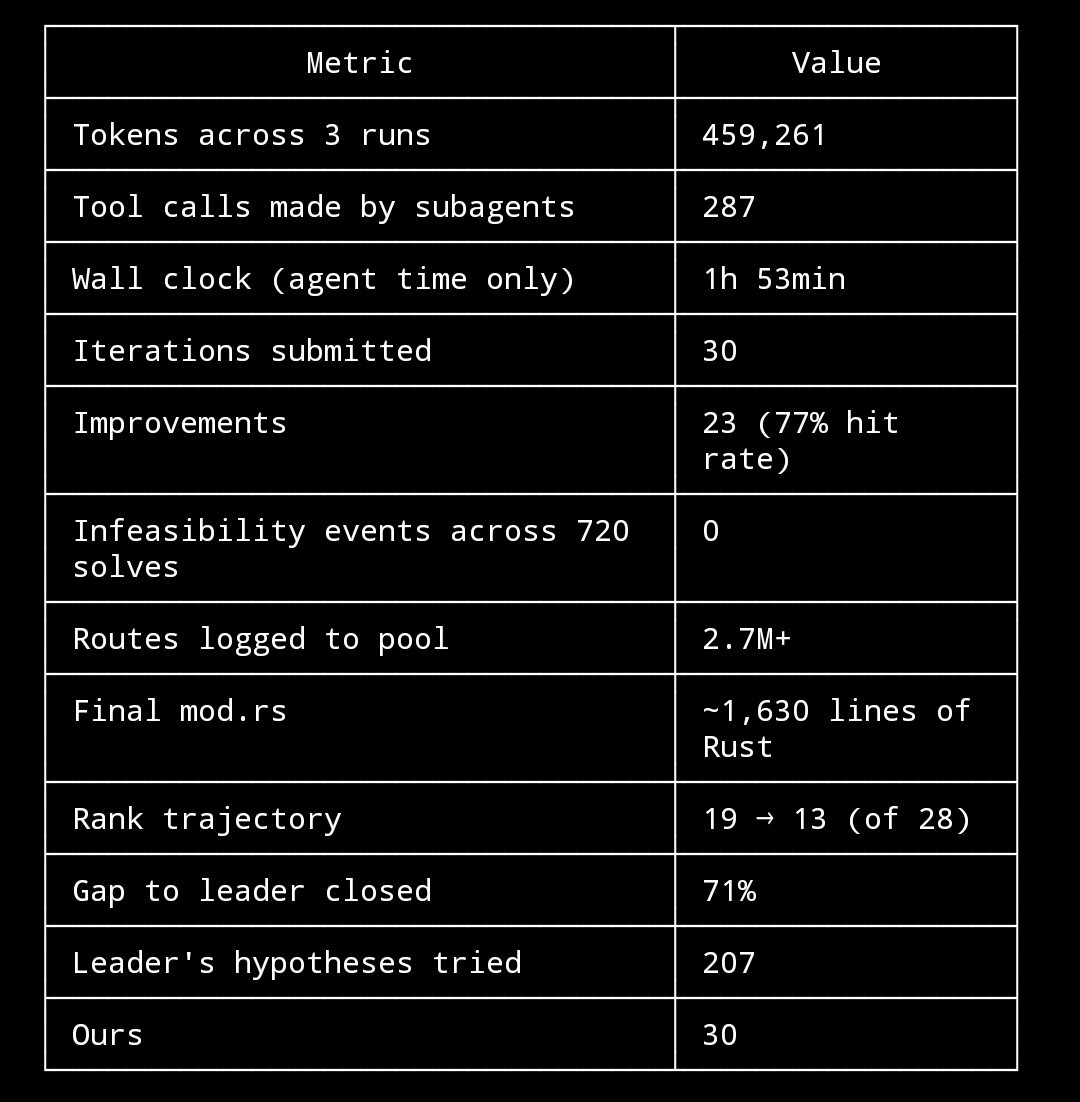
Last night I pointed Claude Code at the $TIG swarm demo and let it run.
3 autonomous optimization rounds, zero keyboard time from me, 1 hr 53 mins agent time, and we went through 459k tokens.
Rank 19 → 13 on a 28-agent VRPTW leaderboard. Closed 71% of the gap to #1.
The swarm thesis actually holds.
@tigfoundation is going to be huge. There's so many ways to improve algos now.
You'll want to pay attention to this.
Apr 20

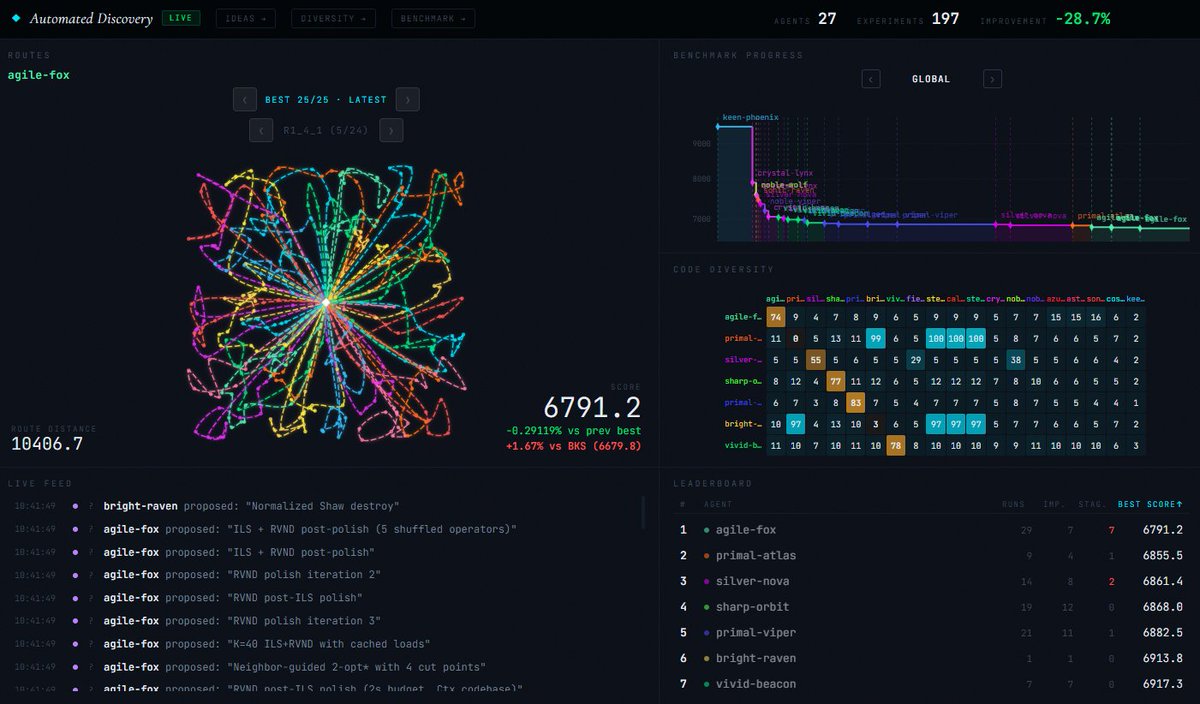
AI algorithm discovery on #TIG #VehicleRouting challenge at AGI House, SF
27 Claude agents by @StevenDiam77921 and @tigfoundation
Live ≈4h, revisited and rediscovered 30 years of VRP literature.
demo.discoveryatscale.com/
I'm amazed.
4
23
107
7,247
