
Pioneering wireless innovation since 2001. We design cutting-edge antennas, cables & IoT solutions for 5G, Wi-Fi 6, automotive & industrial use.
Joined July 2022
- Tweets 398
- Following 222
- Followers 83
- Likes 61
271 Photos and videos












Jun 11
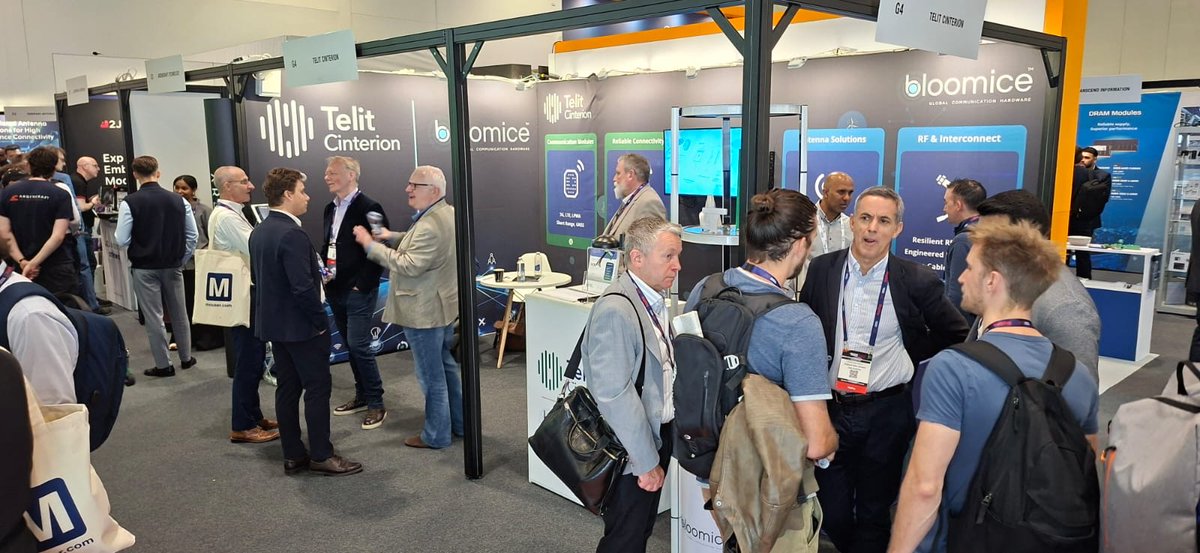
Day 2 at Hardware Pioneers Max 2026.
Visit Bloomice at Stand G4 to discuss antenna solutions for IoT, cellular, LPWAN and GNSS applications.
See you at Excel London
29
Jun 9
Excited to be partnering with @Telit at #HardwarePioneersMax.
We'll be showcasing how reliable antenna solutions and proven IoT connectivity can help support the next generation of connected products.
Visit us at Booth G4 to meet the team & discuss your connectivity challenges

We’re partnering with @BloomiceSL at #HardwarePioneersMax!
Join us at booth G4 on June 10-11 to see how we help accelerate connected products deployments with secure connectivity and proven IoT expertise.
Stop by to meet the team and explore what’s possible with Telit Cinterion.
hardwarepioneers.com/
#HPM26 #HardwarePioneersMax #IoT #TelitCinterion

13
Jun 2
Connectivity performance doesn't start with the module.
In many applications, antenna efficiency, placement & integration have a significant impact on real-world results.
We'll discuss this- Hardware Pioneers Max. London 10-11 Jun @HdwPioneers
1
14
May 27
Wireless technologies on show at @HdwPioneers have 1 thing in common: RF performance matters.
Form cellular connectivity & #GNSS positioning to #5G gateways multi-antenna systems, reliable wireless products start with the right antenna solution.
See you there- London 10-11 Jun
16
May 21
3 weeks to go until Hardware Pioneers Max.
We will be at Excel London 10–11 June, showcasing high-performance antenna solutions for 4G, 5G, LTE-M, NB-IoT, LPWAN &GNSS.
Building connected products? Come meet the team.
@HdwPioneers #IoT #WirelessConnectivity
16
Apr 27
Asset tracking is no longer the differentiator. It is the baseline. What matters now is how well it performs in real-world conditions.
Across industries, adoption is already widespread, with organisations relying on tracking systems to improve efficiency, visibility, and loss prevention. The market continues to grow at pace, with projections showing sustained double-digit expansion driven by demand for real-time data and operational control.
So, what is driving this continued momentum?
• Supply chain pressure- real-time visibility is now expected, not optional
• Operational efficiency- better utilisation, routing, and asset lifecycle control
• IoT expansion- more connected devices means more assets to manage
• Risk reduction- loss, theft, and downtime are no longer acceptable blind spots.
As expectations rise, performance at the hardware level becomes critical.
That is where solutions like the Bloomice REM SA/GNSS fit in. Compact, discreet, and reliable, it enables accurate positioning without adding complexity to device design.
Because better tracking does not start in software.
It starts at the signal.
Interested in how this applies to your application? Let’s have a conversation: enquiry@bloomice.com
11
Apr 24
Single vs Multiple Antennas.
Combining GNSS, LTE and Wi-Fi into a single antenna solution can reduce footprint, simplify integration and streamline installation. Fewer components, fewer mounting points, and a cleaner overall design.
That simplicity, however, comes with trade-offs. Isolation, placement, and signal interaction all need to be carefully managed to maintain consistent performance across each function.
Using multiple antennas can improve separation and support more stable performance. In compact devices, however, antenna performance is also influenced by factors such as the available ground plane, which can limit how effectively different elements operate when combined, adding another layer of complexity to the design.
In practice, these decisions are rarely made in isolation. A compact asset tracking device, a vehicle-mounted system, or an enclosed industrial unit will each present different constraints around space, materials and signal exposure.
There is no universal answer. The right approach depends on the application, environment, and performance expectations.
Making this decision early in the design process helps ensure reliable connectivity when it matters most. Understanding how these trade-offs play out in real-world applications is key to getting antenna performance right.
It starts with asking the questions that shape performance.
#GNSS #IoT #AssetTracking #Connectivity #RFDesign #EmbeddedSystems #AntennaDesign
9
Apr 22
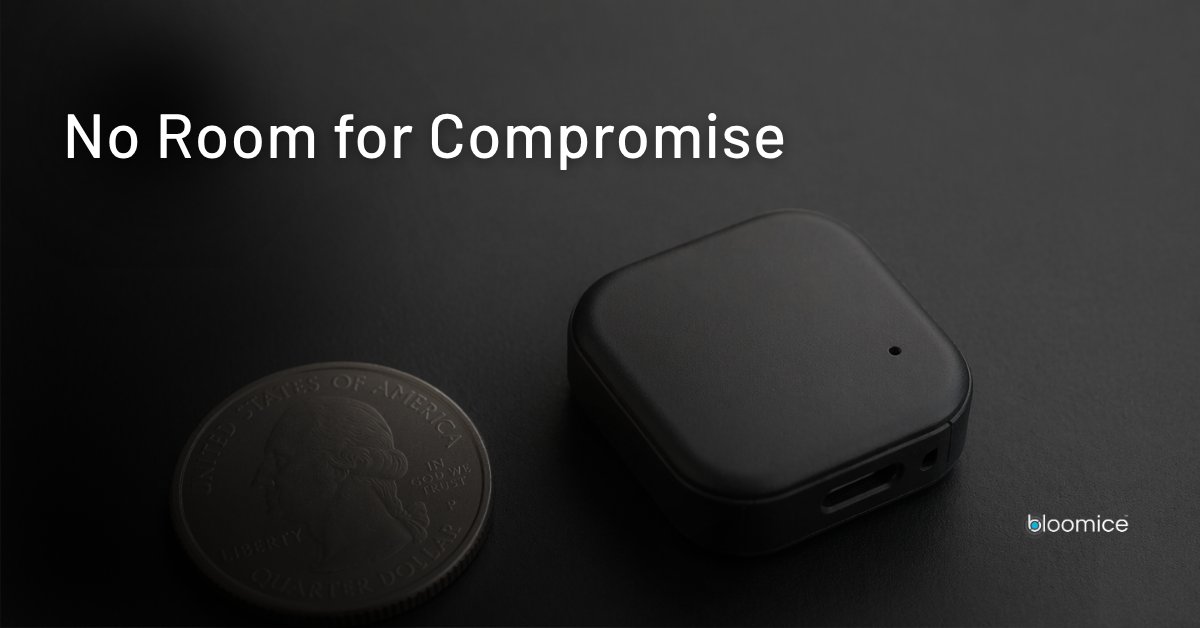
𝐂𝐨𝐦𝐩𝐚𝐜𝐭 𝐓𝐫𝐚𝐜𝐤𝐢𝐧𝐠 𝐃𝐞𝐯𝐢𝐜𝐞𝐬 𝐋𝐞𝐚𝐯𝐞 𝐍𝐨 𝐑𝐨𝐨𝐦 𝐟𝐨𝐫 𝐆𝐍𝐒𝐒 𝐂𝐨𝐦𝐩𝐫𝐨𝐦𝐢𝐬𝐞.
In space-constrained embedded designs, as asset tracking devices become smaller, maintaining reliable GNSS performance becomes more challenging. Limited space, tighter layouts, and embedded designs all place pressure on signal quality and consistency.
In these environments, antenna selection is not just a component choice. It directly influences how reliably a device can acquire and maintain a position fix.
Bloomice offers a range of compact GNSS antenna solutions designed for embedded integration in space-constrained tracking devices. With options that combine compact form factors, integrated amplification, and flexible connectivity, these solutions support consistent GNSS performance where it matters most.
Including compact patch designs such as the GNSSMOD-18-18-28, engineered for reliable GPS and GLONASS reception within constrained environments.
When space is limited, GNSS performance should not be.
Explore compact GNSS solutions for your next tracking design. bloomice.com/product-categor… Email: enquiry@bloomice.com
#AssetTracking #GNSS #EmbeddedSystems #AntennaDesign #IoTDevices #TrackingTechnology #Bloomice
10
Apr 20
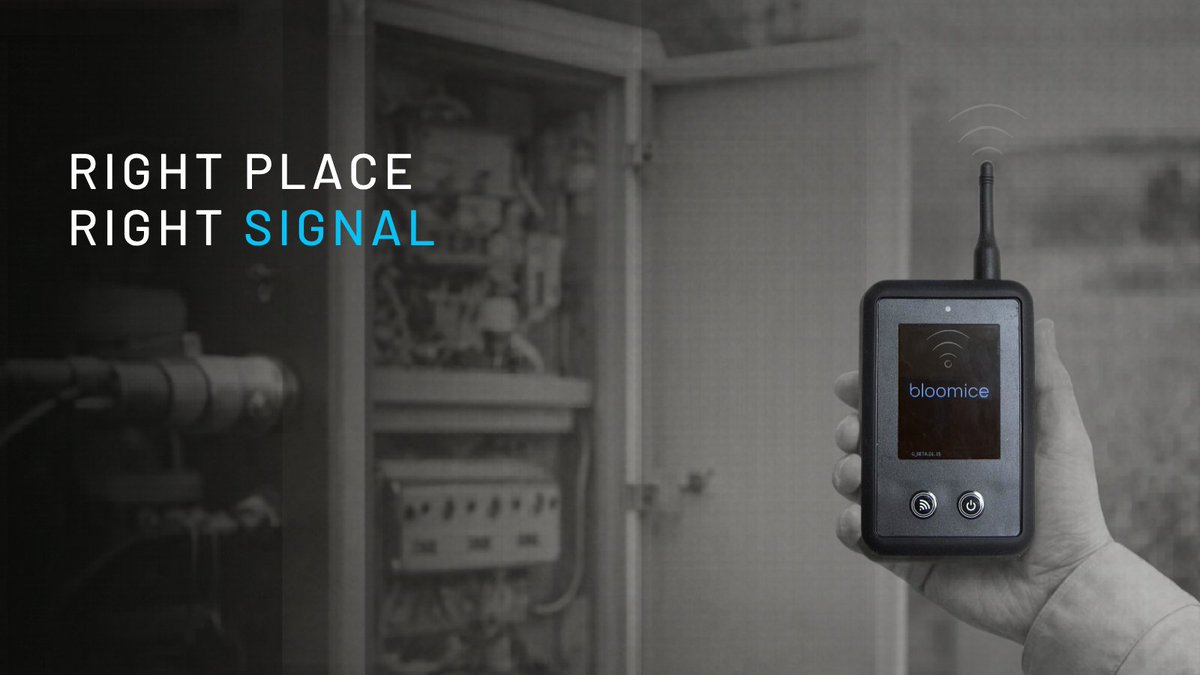
Antenna placement starts with signal.
When installing IoT devices, placing an antenna without confirming signal strength can lead to poor performance and unnecessary rework.
The Bloomice Signal Tester provides instant visibility of network signal strength, so technicians can make confident placement decisions on site.
No setup. No pairing. No delays.
Just accurate RF data when it matters most.
From smart metering to telematics and infrastructure deployments, getting placement right from the start leads to more reliable connectivity and smoother rollouts.
Find out more on our website: bloomice.com/product/bm-0303… or get in touch enquiry@bloomice.com.
#SignalTesting #IoTDeployment #AntennaPlacement #FieldEngineers #SmartUtilities #Bloomice
11
Apr 16
Mission-critical systems don’t get second chances
If your system fails once, it’s already too late.
In mission-critical and security systems, failure isn’t inconvenient. It’s unacceptable.
These environments demand:
• Always-on operation
• Consistent, predictable performance
• Zero tolerance for downtime
• Reliable connectivity in complex, real-world conditions
And yet, this is where many wireless systems struggle.
Interference. Poor antenna placement. Environmental constraints.
Small oversights become system-level risks.
Because in mission-critical deployments, performance isn’t defined in the lab.
It’s defined in the field. Over time. Under pressure.
Reliability is built at the antenna level, where real-world performance is won or lost in mission-critical systems.
𝐖𝐡𝐞𝐫𝐞 𝐡𝐚𝐯𝐞 𝐲𝐨𝐮 𝐬𝐞𝐞𝐧 “𝐚𝐥𝐦𝐨𝐬𝐭 𝐫𝐞𝐥𝐢𝐚𝐛𝐥𝐞” 𝐬𝐲𝐬𝐭𝐞𝐦𝐬 𝐟𝐚𝐢𝐥 𝐢𝐧 𝐭𝐡𝐞 𝐫𝐞𝐚𝐥 𝐰𝐨𝐫𝐥𝐝?
#MissionCritical #AntennaDesign #RFEngineering #WirelessConnectivity
#IoTInfrastructure #SystemReliability
12
Apr 16
Most antenna performance is shaped by things you don’t design for.
Materials like this.
They absorb, reflect, and detune in ways that don’t show up on a datasheet.
This is where real-world performance is decided.
#AntennaDesign #RFEngineering #WirelessPerformance #IoTDevices #EmbeddedSystems
13
Apr 10
The toughest IoT environment isn’t where you think.
Last month at Smart Cities Miami 2026, the buzz wasn’t just about flying cars. It was about wastewater epidemiology.
Cities are increasingly using sewer systems as real-time health dashboards, tracking disease outbreaks and chemical markers before they reach the general population.
But there’s a catch.
The sewer is one of the most challenging environments for wireless signals.
Concrete. Cast iron.
And constantly changing water levels.
Imagine a sensor installed in a sewer chamber before a storm.
Within minutes, water levels rise, and the environment shifts completely.
Signals degrade, enclosures are stressed, and conditions become unpredictable.
When the water recedes, the system doesn’t get a second installation chance. It either continues working or it doesn’t.
At Bloomice, we design IoT antennas for reliable operation in challenging, real-world environments. Our experience in water chambers and underground infrastructure means we understand the realities of moisture, enclosure constraints, and signal loss.
Because in environments like this, performance isn’t defined in the lab. It’s defined after rain, after flooding, and after everything settles.
In a smart city, a temporary flood shouldn’t mean a permanent failure.
Building IoT systems for challenging environments? Let’s make sure your antenna performance holds up in the real world.
#IoT #SmartCities #WirelessConnectivity #AntennaDesign #IoTDeployment #SmartInfrastructure #Utilities
16
Apr 9
Smart water systems are only as strong as their connectivity in the field.
As utilities scale connected infrastructure, the opportunity is clear
greater visibility, improved efficiency, and more responsive networks.
Unlocking that value depends on consistent, reliable connectivity across complex environments.
Underground installations
Dense infrastructure
Remote locations
These are the conditions where data becomes truly valuable.
A recent SWAN case study on smart water deployment highlights the scale and ambition of modern systems. At that scale, maintaining consistent communication becomes a key enabler of success.
At Bloomice, we focus on supporting this layer of performance.
Our NANO LTE and MARCO POLO LTE antennas are designed specifically for these conditions, with IP67 protection ensuring reliable performance across real-world deployments.
#SmartWater #WaterIndustry #IoT #IIoT #Connectivity #Wireless #AntennaDesign #LTE #Infrastructure #Engineering
9
Apr 7
Recent advances in GNSS, such as Galileo, are enabling higher positioning accuracy and improved signal availability.
Many modern systems now support multi-constellation positioning, combining #GPS, #GLONASS and #Galileo to improve performance.
But in practice, achieving that performance depends less on the constellation and more on how the antenna is designed and integrated.
In real-world deployments, signal conditions vary significantly. Urban environments, indoor use and device orientation all impact performance.
Antennas designed for multi-constellation use, such as the Bloomice MULTI J GNSS-39-49, support these signals, but their effectiveness still depends on placement, ground plane and surrounding materials.
That is where good antenna integration determines whether performance is consistent, or whether signal loss, delayed fixes and positioning errors start to appear in real-world use.
High-accuracy #GNSS is only valuable when it delivers consistent positioning in practice.
For new GNSS-enabled designs, early consideration of antenna integration can make a significant difference to achieving consistent positioning in real-world conditions.
18
Apr 1
When Your Fleet Loses Signal, Visibility Drops.
Across long routes, from rural service runs to distributed infrastructure networks, consistent connectivity becomes harder to maintain.
Loss of visibility can slow response times, impact coordination and reduce operational awareness in the field.
The Bloomice CASCO is designed for these conditions, combining LTE, Wi-Fi and GNSS into a single, rugged antenna to simplify deployment.
MIMO improves link stability and throughput in low-signal conditions, while integrated GNSS provides continuous positioning without the need for a separate antenna.
Built for constant movement, vibration and environmental exposure, it maintains consistent performance across varying temperatures, road conditions and installation environments.
For more details, visit our website: bloomice.com/product/casco-m…. Get in touch to discuss your application: enquiry@bloomice.com.
#FleetManagement #ConnectedFleet #IoTConnectivity #SmartInfrastructure #Telematics #GNSS #MIMO #WirelessCommunication
18
Mar 31
In many projects, early-stage design is treated as a formality.
A phase to define requirements, align stakeholders, and move quickly towards implementation.
But in wireless systems, this is often where the most important decisions are made.
At this stage, the focus is not just on selecting components.
It is about understanding how the system will behave in the real world.
This includes:
• Physical constraints, materials, and product layout
• How and where the device will be used
• Antenna placement and interaction with surrounding structures
• The impact of enclosures, coatings, and nearby components
• Potential interference from other circuitry
Because in practice, performance is rarely defined by simulation alone.
Small decisions made early, such as antenna location or material choice, can have a significant impact on efficiency, range, and reliability.
These effects are often only fully visible once a system is built.
Which is why they need to be anticipated upfront.
At Bloomice, this stage is where we spend the most time.
Aligning connectivity, antenna design, and real-world constraints early helps avoid costly redesigns later in the process.
It is not the most visible part of development.
But it is where the outcome is largely determined.
If you are working on a connected product or system, it is worth taking a closer look at what happens at this stage.
#SmartCities #IoT #Engineering #ProductDevelopment #Connectivity #AntennaDesign
14
Mar 31
We’re excited to announce that Bloomice will be exhibiting at Hardware Pioneers Max 2026, taking place 10–11 June in London, the UK’s leading event for IoT, connectivity, and embedded systems.
With expertise across cellular technologies from 2G to 5G, including NB-IoT and LTE-M, along with GNSS and industrial connectivity, we bring RF design at the core of every connected solution we develop.
If you’re attending @HdwPioneers , let’s connect. Whether you’re exploring IoT, M2M, or wireless connectivity, our team will be ready to discuss your challenges and find the right solution.
Come and say hello, we look forward to seeing you there.
#HardwarePioneersMax #IoT #RFDesign #EmbeddedSystems

34
Mar 26
Designing for Connectivity
Smart city systems rarely rely on a single connectivity approach.
In practice, different applications place very different demands on the network.
Some require long-range and low power, others need higher data rates or lower latency.
That is why many deployments combine technologies such as NB-IoT, LTE-M, RF mesh, LoRaWAN, and cellular.
The challenge is not just in choosing a technology.
It is in understanding how those choices will perform in the real environment, and how they fit together as the system scales.
This is where early-stage design becomes important.
Decisions made during feasibility and concept development often determine how reliable and adaptable the system will be later on.
At Bloomice, we focus on these early considerations.
Looking at connectivity, antenna performance, and system constraints together helps avoid costly redesigns down the line.
Smart city infrastructure is complex.
Getting the foundations right makes everything that follows easier.
If you are exploring a connected system, it is worth thinking about these decisions early. Contact us enquiry@bloomice.com

14
Mar 24
𝐑𝐅 𝐁𝐞𝐡𝐚𝐯𝐢𝐨𝐮𝐫 𝐢𝐧 𝐂𝐨𝐧𝐟𝐢𝐧𝐞𝐝 𝐒𝐩𝐚𝐜𝐞𝐬
Underground RF doesn’t behave the way most designs assume.
In free space, signal propagation is predictable.
In underground chambers, it isn’t.
Instead of clean radiation patterns, you’re dealing with:
- Reflection off chamber walls
- Absorption from moisture and surrounding materials
- Multipath interference in confined spaces
- De-tuning caused by enclosure proximity
The result?
Signal becomes inconsistent, unstable, and highly dependent on installation conditions.
This is where design assumptions are often tested.
They’re specified for performance in ideal environments, not the ones they are actually deployed in.
The MARCO POLO LTE antenna is engineered with these RF realities in mind:
• Omnidirectional behaviour suited to unpredictable signal paths
• Wideband coverage to handle variable network conditions
• Mechanical design that maintains performance in enclosed installations
Because underground, connectivity isn’t just about reaching the network.
It’s about maintaining a stable link in an environment working against you.
Explore more: bloomice.com/product/nano-lt…
Have a confined-space or underground deployment to solve? Contact us: enquiry@bloomice.com.
#RFDesign #WirelessEngineering #AntennaDesign #SmartWater
#IoTConnectivity

12
Mar 20
Flexible LTE connectivity starts with the right antenna.
The Bloomice DELGADO Series is a multi-format LTE antenna range designed for seamless integration across IoT and data communication environments.
Built for reliability and ease of deployment, the DELGADO Series combines robust ABS housings with precision FR4 PCB design, delivering consistent performance indoors and out.
The range includes:
• DELGADO – versatile self-adhesive LTE antenna
• DELGADO S – compact variant (698–2700 MHz)
• DELGADO WP – IP67 waterproof version
• DELGADO-PAD-173 – tri-position connector-mounted antenna
Designed to solve challenges such as limited installation space, harsh environments, and mounting constraints, the series supports applications from smart devices and asset tracking to industrial IoT and mobile terminals.
Email us at enquiry@bloomice.com to discuss the right DELGADO configuration for your application.
#LTE #IoTConnectivity #AntennaDesign #WirelessCommunication #IndustrialIoT #EmbeddedSystems #SmartInfrastructure
#ConnectivitySolutions

15