
GP at a16z & AI enthusiast. Investor in @cursor_ai, @inferact, @unconvAI, @character_ai, @replicate, @tabulario, and many others.
Joined April 2013
- Tweets 911
- Following 392
- Followers 7,759
- Likes 1,006
68 Photos and videos














Jun 12
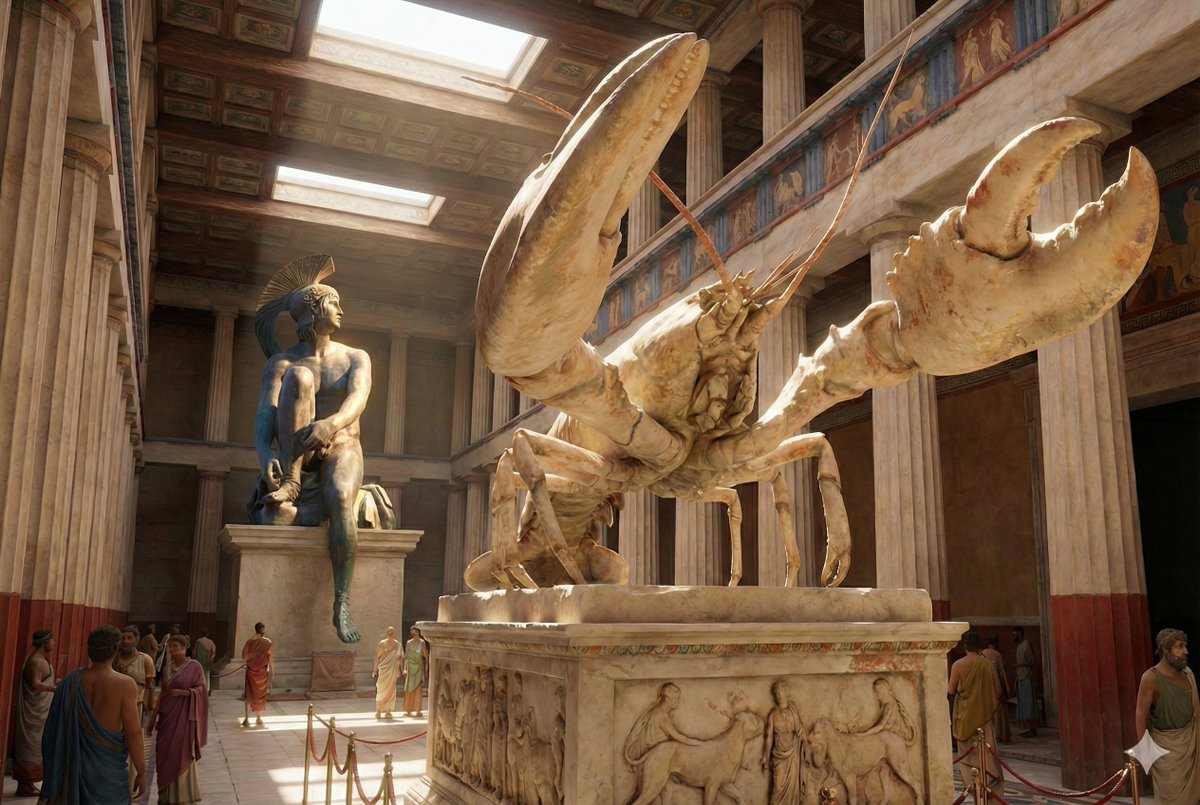
You need to build a lot of power plants, a lot of data centers, and a few special units. Plus your technical staff has some new jobs...
1
7
155
Jun 12
You can download the game here: github.com/matt-bornstein/ha…
The code is here: github.com/matt-bornstein/ha…
And gpt-5.5 and fable are dutifully working on a WASM port to run natively in browser :)
4
149
Matt Bornstein retweeted

Jun 9
롤러코스터를 타고 줌회의를 하면 눈치 챌까?
진짜 미친 콘텐츠넼ㅋㅋ
43
3,969
9,066
12,700,255
Matt Bornstein retweeted

Jun 10
Imagine building a computer and not allowing its use in CS research. Thats some dystopian shit.
43
116
2,170
90,340
Matt Bornstein retweeted

Jun 10
NEW: malware developers added nuclear & biological weapons text to to their spyware.
Goal? To trigger LLM safety refusals... so that their spyware wouldn't be analyzed by an AI security scanner.
Cleanest practical example I can think of for why over-indexing on first order safety alignment is risky.
When closed (and open) models ship with aggressive refusals, they will be sprinkled with second-order blindspots that attackers will discover...and exploit.
We are only in the earliest days of attackers leveraging these features, and it wouldn't surprise me if users systems that need to handle complex cybersecurity issues demand that models be less safety-blunted.
In the weeds: @SocketSecurity's post also shows why intention matters in how you design a malware analysis pipeline to avoid prompt manipulation.
H/T to colleagues that shared this with me socket.dev/blog/mini-shai-hu…

226
2,151
12,628
1,540,682
Jun 9
😂
Jun 9

Was using Fable 5 to write my world model training code.
Anthropic flagged it as frontier AI research.
The steering vector kicked in and it started implementing JEPA 🤨
2
387

Matt Bornstein retweeted

Jun 3
Introducing Ideogram 4.0: the best open image model in the world.
Think it. Make it. Own it.
Download the weights, fine-tune on your own data, and run it on your hardware. Live on every Ideogram plan and the API today.
411
869
8,201
2,156,101
Matt Bornstein retweeted

Jun 2
SF was over if not for OpenAI and Anthropic!
Before that, it was over if not for Stripe, Uber, Airbnb, Twitter, Salesforce, Visa, Gap... and if you go back a bir further - Levi's, Bank of California, Spreckels Sugar, Wells Fargo, Union Iron Works, Southern Pacific :)
The city gets “saved” by the next boom every time. After the gold rush, there was silver, railroads, shipping, banks, sugar, utilities, Pacific trade, defense, semis, PCs, biotech, enterprise software, the internet, social, mobile, SaaS, fintech, crypto, and AI.
I think that's just how it goes in this town.
Jun 2

It probably was over if it wasn’t for OpenAI / anthropic.
59
58
1,289
163,385

Matt Bornstein retweeted

Jun 1
I have found it, the Platonic form of every New York Times op-ed.

352
1,537
10,494
1,131,387

The Fivetran @getdbt merger is complete.
We’re building the data infrastructure for trusted AI agents — combining reliable data movement, governed transformation, and shared semantic context to help teams build with confidence in the agentic era 5tran.co/49zgqsP
4
9
1,621
Matt Bornstein retweeted

May 28
Okay, I gave Opus 4.8 max effort a shot against GPT 5.5 xhigh on a medium-ish scope ticket for work.
Both models run in latest version of @cursor_ai. 1 plan/execute session each.
Results:
Opus 4.8: 16.5M tokens, $17.26
GPT 5.5: 5.9M tokens, $5.57
5.5 still the goat.
65
88
2,475
268,319
May 26
this belongs in r/oddlysatisfying
May 24

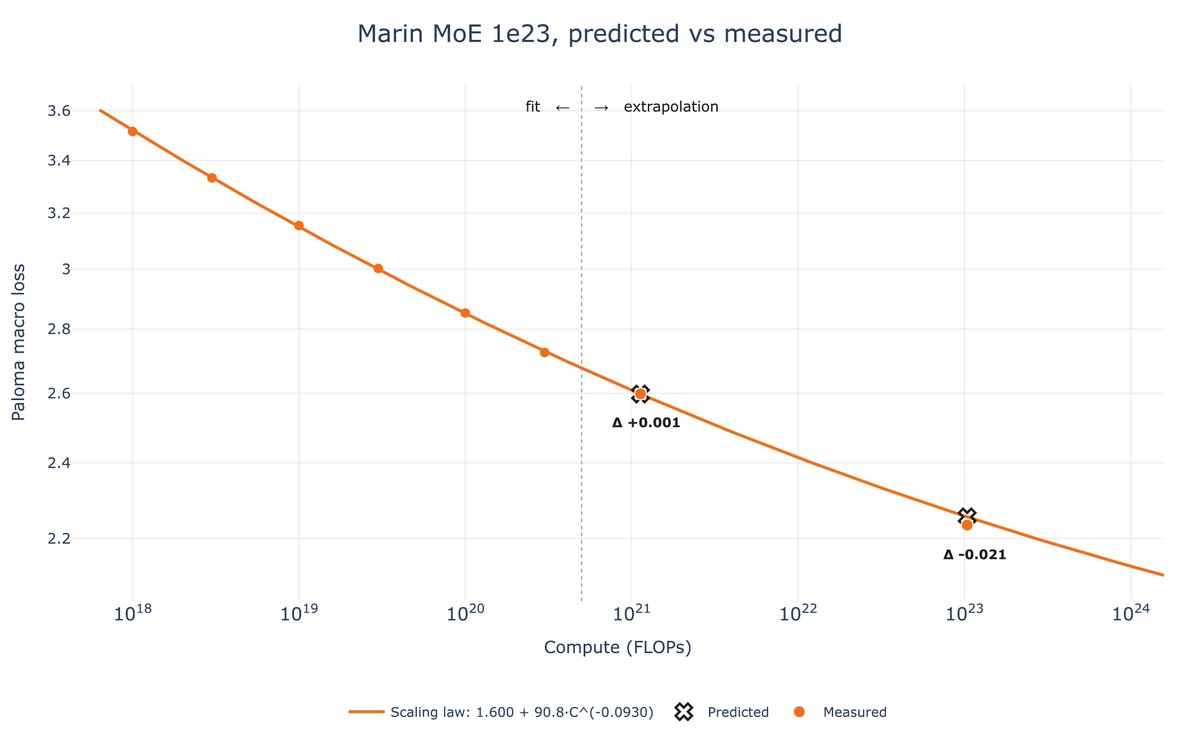
Not only do we want to train a good model, we want to know it'll be good before we even start training.
About a month ago, the Marin team launched a 129B (16B active) 1e23 FLOPs MoE run and preregistered a loss of 2.252. The run finished this past week and landed at 2.234.
x.com/percyliang/status/2044…
1
3
1,101
Matt Bornstein retweeted

May 21
Most real-world systems are dynamic.
So why do we still treat computation as static?
Our latest blog explores computation through motion using gyroscopes, rods, springs, and ordinary differential equations to perform handwritten digit classification.
A deep dive into:
• dynamical systems as compute
• differentiable ODE solvers
• physics-inspired machine learning
• emergent computation through interaction
Read here: unconv.ai/blog/machine-learn…
6
45
264
70,332
Matt Bornstein retweeted

May 21
I am thrilled to announce my return to a16z as a full-time General Partner. Having made a full recovery from cancer and navigated some of life’s most taxing personal hurdles, I am returning with a sharpened sense of purpose and a deep optimism for the future, both personally and professionally.
My time away reinforced that living to one's fullest capacity requires doing what you love with the people you trust. While I’ve continued to support my boards and founders, I’ve realized my greatest impact happens when I am 'all in.' I believe he current pace of innovation in infrastructure is unmatched, and I couldn't be happier to be back in the trenches with my colleagues and close friends on the a16z Infra team.
136
24
1,072
156,970
May 21
That really escalated!


4
980
May 20
interesting aspect of this work: it sounds like it was harder to verify the proof than to generate it. this is maybe a glimpse of what AI assisted work will look like in many fields. and a huge change in mathematics.

Today, we share a breakthrough on the planar unit distance problem, a famous open question first posed by Paul Erdős in 1946.
For nearly 80 years, mathematicians believed the best possible solutions looked roughly like square grids.
An OpenAI model has now disproved that belief, discovering an entirely new family of constructions that performs better.
This marks the first time AI has autonomously solved a prominent open problem central to a field of mathematics.
2
1
11
1,619