
founder diffusion.io, former co-founder & CTO @StrongDM
Joined June 2009
- Tweets 96
- Following 78
- Followers 351
- Likes 81
12 Photos and videos






Pinned Tweet
"You are here"
That's how you read the dot in the logo.
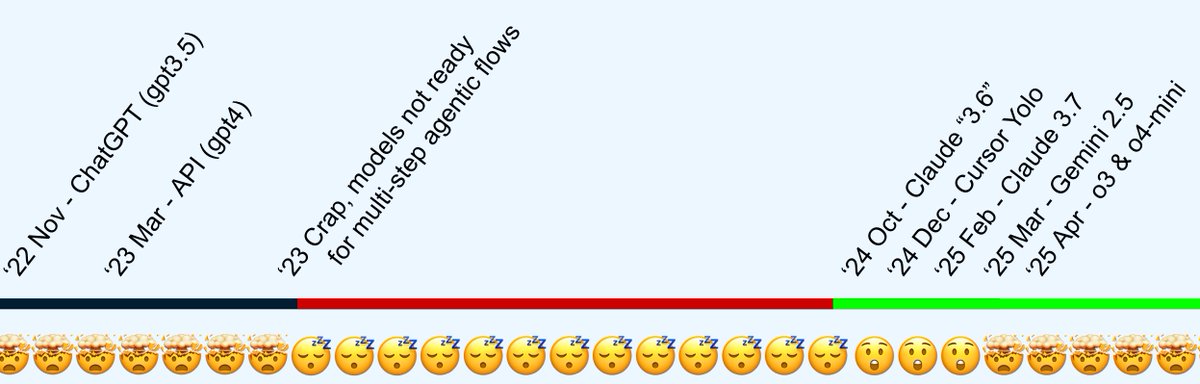
We're getting to the steep part now, all of us.
It's better if we ride the curve together.
Come visit me and the team at our first center, Diffusion Silicon Valley. Diffusion Europe and Diffusion India coming soon.
diffusion.io/blog/launch/
1
8
2,341
Justin McCarthy retweeted

OpenAI will have their answer soon enough. The main difference with fable is just that it is more determined to reach a goal. It's just a training tweak. Basically the just made /goal no longer a harness feature.
2
2
9
1,770
re: closing loops - @sdianahu has a really dense & correct explanation - re-watch it every morning until you're loop-pilled youtube.com/watch?v=EN7frwQI…

1
3
201
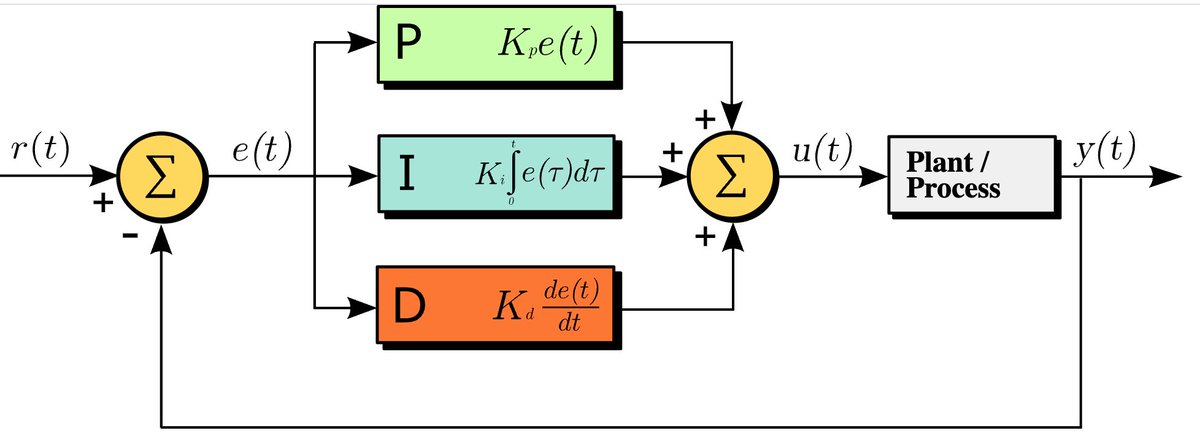
over the weekend I was asked if I had a control systems background; apparently I can't stop talking about self-stabilization through feedback :)
2
61
Justin McCarthy retweeted

Yes! From every.to/guides/compound-eng…
AI assistance doesn’t scale if every line requires human review. You need to trust the AI. Trust doesn’t mean blind faith. It means setting up guardrails such as tests, automatic review, and monitoring, that flag issues so that you don’t have to watch every step.
When you feel as if you can’t trust the output, don’t compensate by switching to manually reviewing the code. Add a system that makes that step trustworthy, such as creating a review agent that flags issues.

the thing about loops is that you need to build trust first. a low trust loop is just a waste of tokens. and if you don't apply engineering taste, the slop really compounds. but you can become a quality loop enjoyer too with pstack as a starting point: github.com/cursor/plugins/tr…
use these skills to write automations that automatically triage, repro, fix, and verify their own work while you touch grass. use them to prototype new ideas and refactor your code and trust that they'll do things the right way
3
7
42
5,424
Justin McCarthy retweeted

Jun 7
Here’s your monthly reminder that you shouldn’t be prompting coding agents anymore.
You should be designing loops that prompt your agents.
1,785
1,368
19,559
8,292,459

May 20
Nathan has dedicated himself to the intersection of AI and writing in many forms (Lex, Thoughtful etc). Another one, for the markdown moment
May 20

Introducing Roughdraft!
A new open source project designed to make collaboration with agents better.
The idea is to bring commenting and suggested changes to markdown (e.g. plan docs) in a nice interface.
Free, local, etc.
👉 roughdraft.md 👈
6
4
1,601
May 15
the constraints of phone coding are freeing. I’m thankful for large screens and multiple monitors at times, but also thankful for the work @ClaudeDevs and @OpenAIDevs have done to unlock this modality
5
98
Justin McCarthy retweeted

Feb 19
Sufficiently advanced agentic coding is essentially machine learning: the engineer sets up the optimization goal as well as some constraints on the search space (the spec and its tests), then an optimization process (coding agents) iterates until the goal is reached.
The result is a blackbox model (the generated codebase): an artifact that performs the task, that you deploy without ever inspecting its internal logic, just as we ignore individual weights in a neural network.
This implies that all classic issues encountered in ML will soon become problems for agentic coding: overfitting to the spec, Clever Hans shortcuts that don't generalize outside the tests, data leakage, concept drift, etc.
I would also ask: what will be the Keras of agentic coding? What will be the optimal set of high-level abstractions that allow humans to steer codebase 'training' with minimal cognitive overhead?
174
408
3,501
427,397
Feb 18
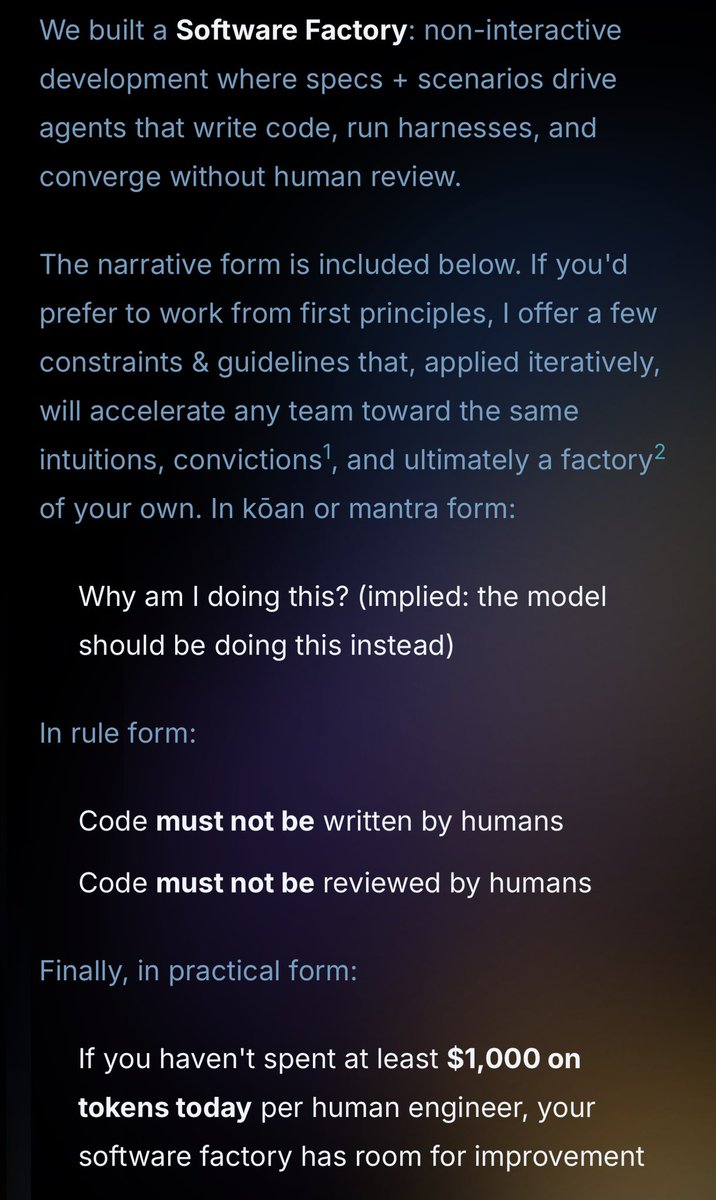
We've started saying "don't be a drinking bird" when we catch ourselves in interactive vs non-interactive mode factory.strongdm.ai/techniqu…
3
1
6
1,376
Feb 17
We're now helping others build factories. The first exercise is to build an Attractor. I just completed one in C. The code in src/llm really illustrates how small & straightforward a coding agent can be. github.com/jmccarthy/attract…
2
15
970
Justin McCarthy retweeted

Feb 7
A genuinely radical approach to software development with AI, without any human intervention. Even if this approach doesn’t work for many cases, I think we need more leapfrogging visions for how to redo processes with AI: factory.strongdm.ai/
See also: danshapiro.com/blog/2026/01/…
38
35
337
37,866
Our experience building a frontier Software Factory - factory.strongdm.ai/
3
5
25
7,017
Justin McCarthy retweeted

Feb 1
The power of MoltBot is getting people to update their biases and their world model. It's just the activation energy to cause the bit to flip in people's heads that we're in a takeoff.
All this is happening with ~500 pages of context window and static weights. Moltbook isn't technically more impressive than the coding work we're all doing already, but it's more of a performative art piece that captures people's attentions.
I'm maintaining that the last piece for true AGI is continual learning. The ability to distill context windows into permanent weight updates on the fly is going to cause all this to go absolutely exponential. We're so close.
22
7
156
12,629
Jan 23
our job is to illuminate the terrain. when the agent wakes up, it needs the correct path to be obvious. we don't have great control over the terrain, but we do control how it's lit - that's the engineering part of context engineering
1
1
258
Finally got over my confusion re radiators, now agree
Jan 9

I met today with the founder of Starcloud and I realized this is going to be one of the biggest engineering projects of our era. When you look at the tradeoffs, it seems inevitable that all the GPUs are going to live in space.
1
362

yes things are changing fast, but also I see companies (even faang) way behind the frontier for no reason.
you are guaranteed to lose if you fall behind.
the no unforced-errors ai leader playbook:
For your team:
- use coding agents. give all engineers their pick of harnesses, models, background agents: Claude code, Cursor, Devin, with closed/open models. Hearing Meta engineers are forced to use Llama 4. Opus 4.5 is the baseline now.
- give your agents tools to ALL dev tooling: Linear, GitHub, Datadog, Sentry, any Internal tooling. If agents are being held back because of lack of context that’s your fault.
- invest in your codebase specific agent docs. stop saying “doesn’t do X well”. If that’s an issue, try better prompting, agents.md, linting, and code rules. Tell it how you want things. Every manual edit you make is an opportunity for agent.md improvement
- invest in robust background agent infra - get a full development stack working on VM/sandboxes. yes it’s hard to set up but it will be worth it, your engineers can run multiple in parallel. Code review will be the bottleneck soon.
- figure out security issues. stop being risk averse and do what is needed to unblock access to tools.
in your product:
- always use the latest generation models in your features (move things off of last gen models asap, unless robust evals indicate otherwise). Requires changes every 1-2 weeks - eg: GitHub copilot mobile still offers code review with gpt 4.1 and Sonnet 3.5 @jaredpalmer. You are leaving money on the table by being on Sonnet 4, or gpt 4o
- Use embedding semantic search instead of fuzzy search. Any general embedding model will do better than Levenshtein / fuzzy heuristics.
- leave no form unfilled. use structured outputs and whatever context you have on the user to do a best-effort pre-fill
- allow unstructured inputs on all product surfaces - must accept freeform text and documents. Forms are dead.
- custom finetuning is dead. Stop wasting time on it. Frontier is moving too fast to invest 8 weeks into finetuning. Costs are dropping too quickly for price to matter. Better prompting will take you very far and this will only become more true as instruction following improves
- build evals to make quick model-upgrade decisions. they don’t need to be perfect but at least need to allow you to compare models relative to each other. most decisions become clear on a Pareto cost vs benchmark perf plot
- encourage all engineers to build with ai: build primitives to call models from all code bases / models: structured output, semantic similarity endpoints, sandbox code execution. etc
What else am I missing?
26 Dec 2025

I've never felt this much behind as a programmer. The profession is being dramatically refactored as the bits contributed by the programmer are increasingly sparse and between. I have a sense that I could be 10X more powerful if I just properly string together what has become available over the last ~year and a failure to claim the boost feels decidedly like skill issue. There's a new programmable layer of abstraction to master (in addition to the usual layers below) involving agents, subagents, their prompts, contexts, memory, modes, permissions, tools, plugins, skills, hooks, MCP, LSP, slash commands, workflows, IDE integrations, and a need to build an all-encompassing mental model for strengths and pitfalls of fundamentally stochastic, fallible, unintelligible and changing entities suddenly intermingled with what used to be good old fashioned engineering. Clearly some powerful alien tool was handed around except it comes with no manual and everyone has to figure out how to hold it and operate it, while the resulting magnitude 9 earthquake is rocking the profession. Roll up your sleeves to not fall behind.
164
413
5,206
1,285,642
Justin McCarthy retweeted

23 Dec 2025
To get the full benefit of AI agents you often need to change your underlying workflows, and keep up with a very fast moving AI space. Because of this, there are at least 2 entirely new categories of business models that will emerge around the software companies that build agents.
1. The services firm that implements AI agents in existing companies.
As enterprises look to deploy AI agents across all forms of work, it’s not possible for every company to figure out how to do this on their own.
Most companies don’t have the IT teams to deliver on this, so there will be entirely new system integrators that emerge to help companies redesign their workflows, implement the tech, drive the change management, and keep the AI agents up to date for the organization.
But what’s super interesting is that because AI agents span almost every single line of business, these will not just be the classic system integrators whose primary focus is on IT systems. The system integrators will have to be domain experts at many different types of job functions, from marketing and legal to healthcare and coding.
2. New agency or firm that forms from the ground up to take advantage of the leverage of agents.
Lots of companies will take too long to transform themselves with AI, so there will be an all new crop of companies that start from scratch the capture the gains. These services firms and agencies will use the technology themselves to offer cheaper, faster, or better quality of service to a broader range of clients than was possible before.
This will be the new law firm that uses AI to change the business model of, marketing agencies that can support high quality campaigns for smaller size companies, engineering shops that can take on bigger project work at a lower cost, and so on.
In all there are going to be lots of new forms of businesses that will emerge as a result of AI agents because of how different working with agents can be.
22 Dec 2025

This feels directionally right.
An agency comes in for a few weeks, maps how work actually flows, and installs claude skills/agents that handle reporting, follow-ups, checks, and coordination.
That replaces work spread across a few roles that might cost $250k–$400k a year.
The company pays once for the setup, keeps the system, and only brings the agency back when something needs tuning.
Of course agencies don’t go away since human judgment is always needed, but a growing share of what clients pay for shifts toward skills and agents that run inside the business.
I keep coming back to this idea and it keeps making more sense.
56
73
550
135,908
Justin McCarthy retweeted

20 Dec 2025
apptron is the only pure browser environment to run the complete go toolchain, capable of cross compiling to over 40 platforms
1
4
18
2,759
Justin McCarthy retweeted
19 Dec 2025
We will soon get to a point, as AI model progress continues, that almost any time something doesn’t work with an AI agent in a reasonably sized task, you will be able to point to a lack of the right information that the agent had access to.
This is why context engineering is the future. Basically you’re reverse engineering what an insanely smart human, would need to perform a particular task.
The caveat is this super smart person is an expert at almost any type of field of work, but one day they’re a lawyer at a Fortune 500 and the next day they’re an engineer at a startup. And they forget what they did between each task. And they can only keep track of one medium-sized thing at a time. Super fun challenge.
This means they need a ton of context - but not too much to get confused - about what they’re doing and why. So the job then is to try and build the system or set of systems necessary to deliver that data to the model as efficiently and quickly as possible.
This is why so much time is just going to straight into search and retrieval systems, heuristics for ranking information, system prompts, ways of keeping track of the work that’s being done to save context window space, and so on. One cool thing, though, is that unlike a person, this agent can process vastly more data at once, so all of a sudden you can apply more compute to the problem than would otherwise be helpful with people.
An insanely fun time right now to be building agents.
77
52
539
133,026