
USMC Vet | 🤖 Data & AI | 🌎Geospatial Tech | Civil Servant | Writer | Dad | Occasional Pro Cagefighter Views are mine alone.
Joined August 2011
- Tweets 5,617
- Following 486
- Followers 515
- Likes 5,706
552 Photos and videos









Pinned Tweet

17 Aug 2025
For the acquisition uninitiated, here are some additional points to consider:
1. Not all contracts are in FPDS. Especially big ticket, classified contracts, independent agencies, or acquisition savvy agencies that know what they’re doing and prefer to use their own system.
2. Ceiling represents capacity. Obligations represent planned spending. Expenditures are real spend. DOGE cuts and contract cancellations should translate to reduction in expenditures.
3. Deobligations happen all the time, especially throughout the life of the contract.
4. Reduction in ceiling, does in fact reduce unpoliced spending. It means if you need to buy, you have to make an effort to communicate what and why.
5. Program offices are incentivized toward bigger than needed ceiling to be agile and have headroom for unplanned needs. Sometimes this is abused, sometimes no.
6. It is much easier to max out small contracts instead of large ones. There are many more small contracts than big ones. This is not reflected in the %s below. It’s unclear what the distribution of small vs large contracts in the % maxed.
7. Some contracts are dead on arrival and will never be used. Sometimes this isn’t known until after award.
I’m not an acquisition expert, but do love this part of my job as it intersects with business politics (little p), and technology. I always try to do it right, for the best interest of my org, and for the good of the People.
At the same time, I have to make buy decisions NOW for what we might need 5 years from now. That’s not always easy regardless of how much scenario planning, roadmapping, and war gaming you do.
17 Aug 2025

A classic case of Fake News. This @politico article is misleading at best, and politically motivated at worst.
Politico claims that DOGE’s cost savings are somehow not real because DOGE is using a “faulty” methodology predicated on ceiling values. Politico argues that the ceiling “can far exceed what the government has actually committed to pay out.” Theoretically true, practically false: the government WILL likely max out to the ceiling!
In federal contracting, ceilings matter because they are almost always maxed out.
For example, an analysis of the last 3 years of FPDS data shows that:
-of the 5.3M awards at contract end in FY22, 97.64% were spent to the ceiling
-of the 5.4M awards at contract end in FY23, 97.84% were spent to the ceiling
-of the 5.4M awards at contract end in FY24, 98.12% were spent to the ceiling
We think there’s a pattern here that perhaps a more intrepid reporter might have uncovered. Ceiling minus obligations is true savings in government contracting, making the $20k credit card analogy lazy and trivializing the very real work of protecting taxpayer dollars by using cheap jabs like ‘time for lunch.’
This is also why lowering ceilings is real savings. It prevents unpoliced “drunken sailor” spending. For extra measure, DOGE reviews entries with agency partners and makes adjustments as reported. We don’t pad results; the math is conservative, and the savings are real.
If Politico is still struggling with 'why' ceiling is in fact the right way to measure savings and is not in fact “an accounting trick,” we invite them to personally guarantee a sample of government contracts for the full ceiling amount. That should clarify things.
We can agree on one thing, though: Congress needs to pass more rescission packages so that the unused funds go back to the Treasury instead of being spent by default.
3
2
876
GWOTVibesOnly retweeted
Jun 13
This feels a lot like when Rick Rubin said he paid the cops to shut down Beastie Boys shows to make a marketing spectacle.
1
6
704
Jun 12
Just wait until you realize gen AI outputs are all hallucinations. Some just happen to be right or useful.
Jun 12

Amazing: KPMG wrote a report describing the successful use of AI by businesses. But the case studies turned out to be AI hallucinations.
giftarticle.ft.com/giftartic…
32
Jun 10
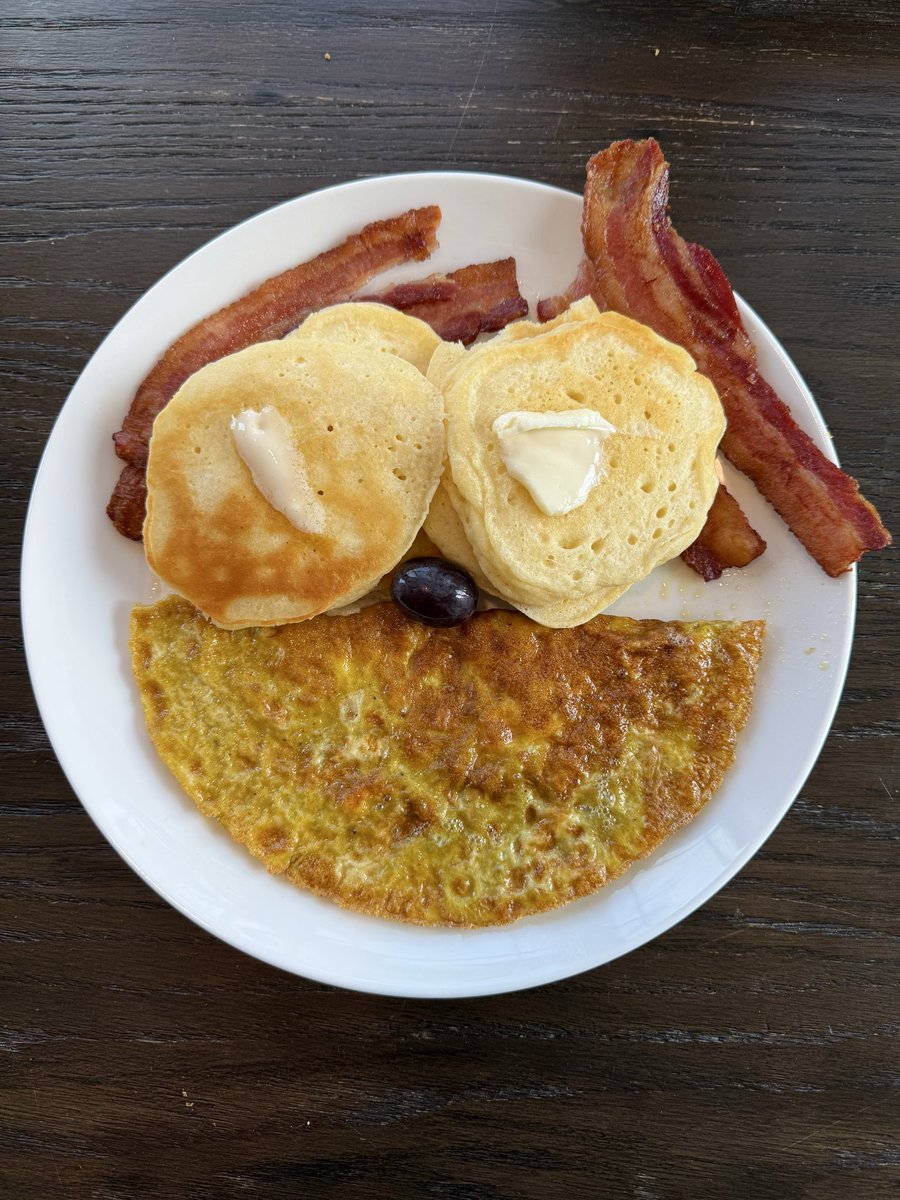
As a dad, there’s nothing that makes me happier than sharing breakfast for dinner with the fam.
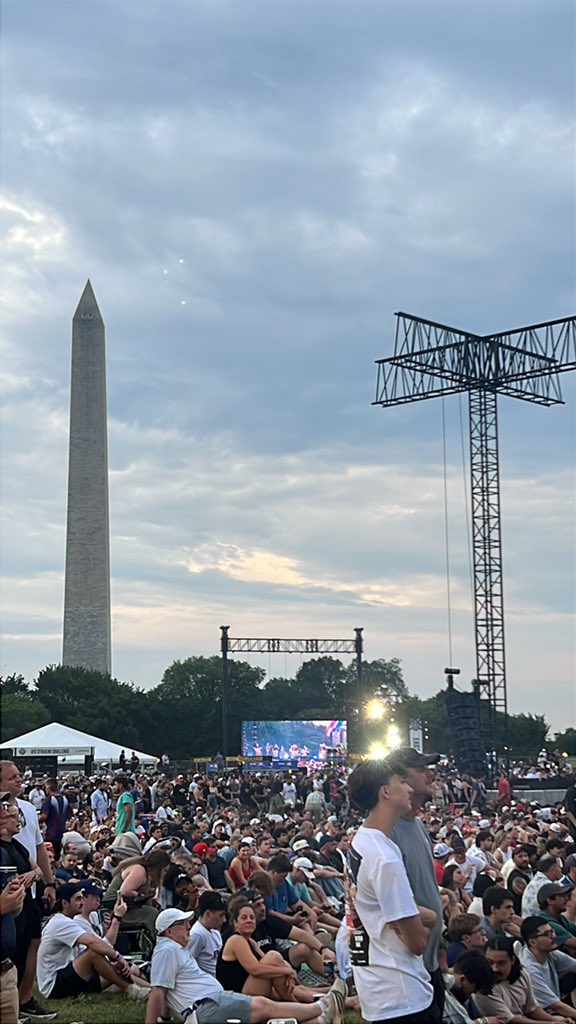
Also, there’s a solid chance I’m going to the UFC at the White House. As a former pro cage fighter, I’m stoked.
2
49
Jun 5
Who played this game and thought maybe Oda Nobunaga is in the right, here?
17
May 28
Request for startup. US LIDAR.

LiDAR may not be a household name, but the technology provides millimeter‑level data of America’s infrastructure. We cannot rely on Chinese LiDAR systems to examine our roads, and I’m glad my bill to protect America from this spy technology is included in @TransportGOP’s BUILD America 250 Act.
47
May 9
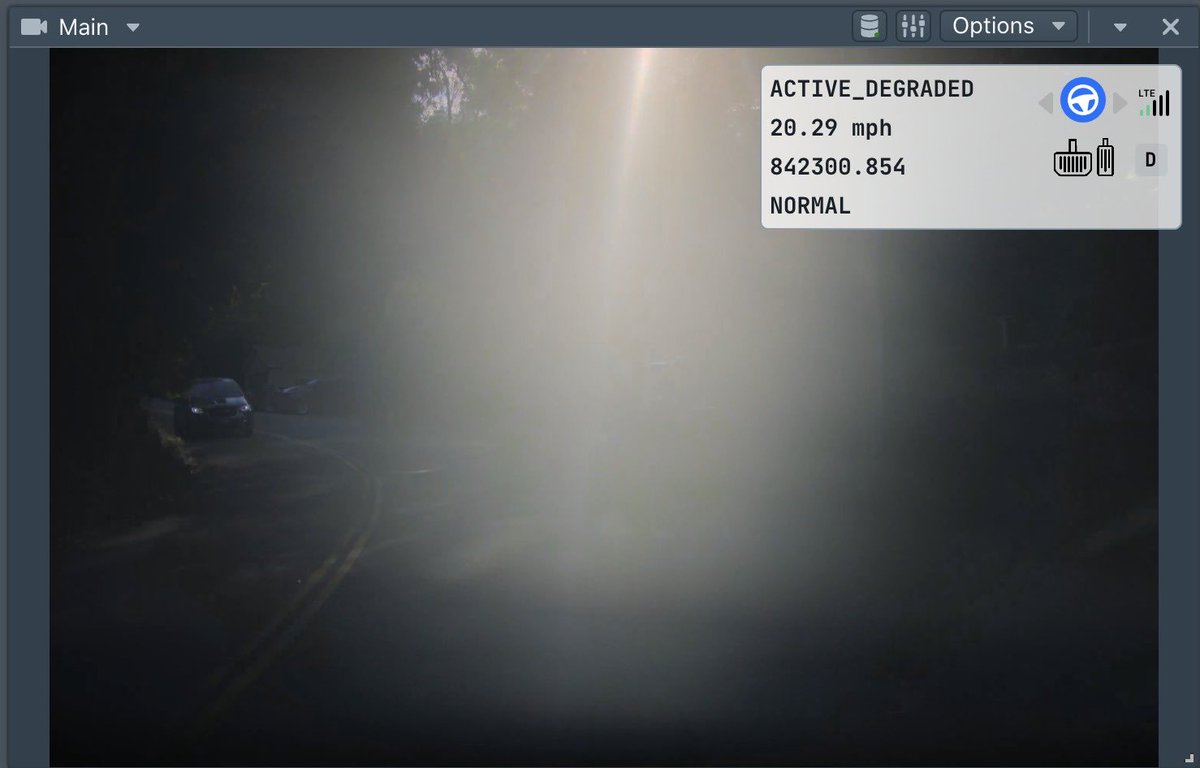
Human interpretability is the #1 false assumption.
I learned this looking at intelligent automation for computer vision use cases 10 years ago.

The human-perceived RGB is image 1 and the Tesla AI photon count reconstruction is image 2.
This is why Tesla FSD can see so well at night or through extreme glare.

88
May 5
I don’t see how this can be robust if I’m not in the network. Lol
May 4

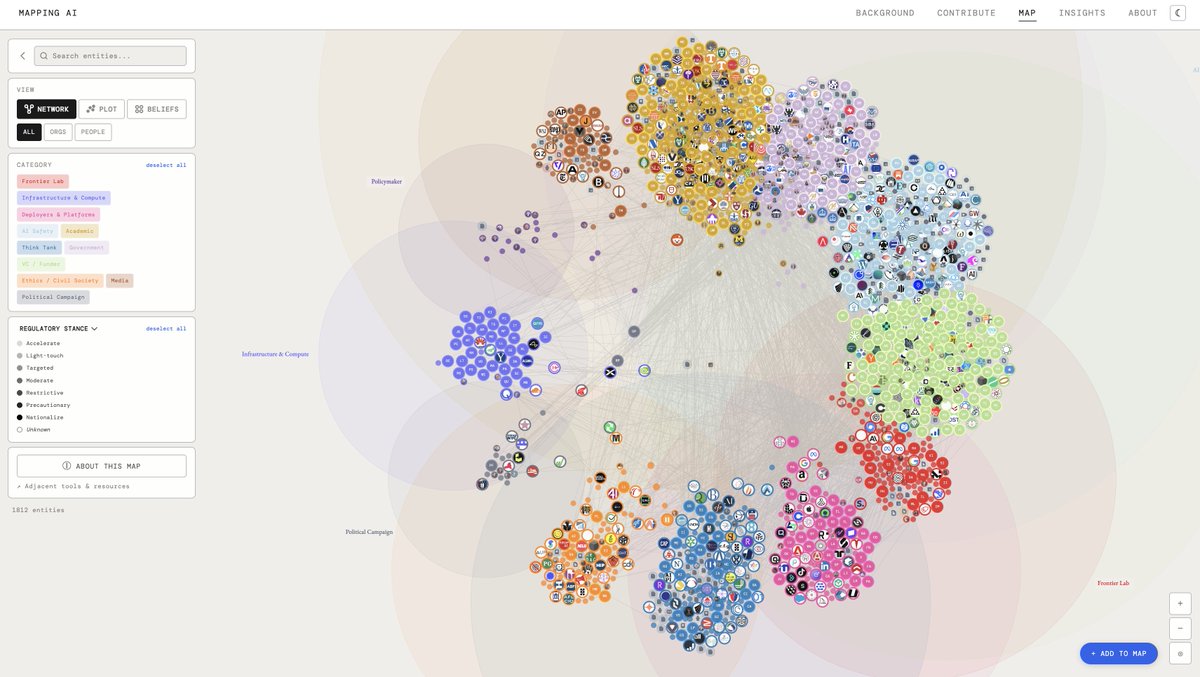
Who actually shapes AI policy in the U.S.?
We mapped 1,812 entities: 745 people, 918 organizations, 2,925 relationships. Frontier Labs, AI Safety orgs, Think Tanks, Government, VCs, and more.
mapping-ai.org
107
May 4
The end of an era. Gone are the days of opening a dbf in excel because you don’t have the rest of the shapefile bundle.
May 4

Shapefiles had a legendary run, but they’re no longer the modern GIS default due to multi-file bundles, 10-char field names, weak encoding/CRS metadata, size limits.
The path forward is cleaner: GeoPackage for durable local data, GeoJSON for the web, Parquet and FlatGeobuf for scale.
65
May 2
In the age of self reliance, I will never buy premade salad dressing or French onion soup in a restaurant again.
36
GWOTVibesOnly retweeted

Apr 30
"Why is your web map so slow?"
This is one of the worst things any geospatial developer can hear from a client.
You've spent tons of effort building a web application to their exact specifications based on a sophisticated analysis.
It worked great "on your machine" in local demos.
But now that you've deployed it? It's practically unusable.
I've been there. This was my motivation for developing {freestiler}, an R / Python framework for creating vector tiles.
Vector tiles solve the "slow web map" problem for large datasets, but they haven't always been the easiest to create.
freestiler can create PMTiles straight from your R / Python objects, @duckdb databases, or even shapefiles.
Host your tiles on @Cloudflare R2 and you'll have a low-cost vector tile solution ready to go. Use a Worker and make it even faster.
This is the exact stack that powers my "146 million US jobs" map.
I can confidently deploy web maps displaying millions of features now without worrying about performance lags.
Solving the "but it worked on my machine!" problem.
---
Check out the live web map: walker-data.com/freestiler/l…
And learn more about freestiler: walker-data.com/freestiler
8
22
244
14,495
Apr 25
Marque Ventures is doing it for fighting wars. Well done, @vc
Who is doing this for the financial sector?
1
2
110
Apr 17
Pure GWOT Vibes
Apr 17

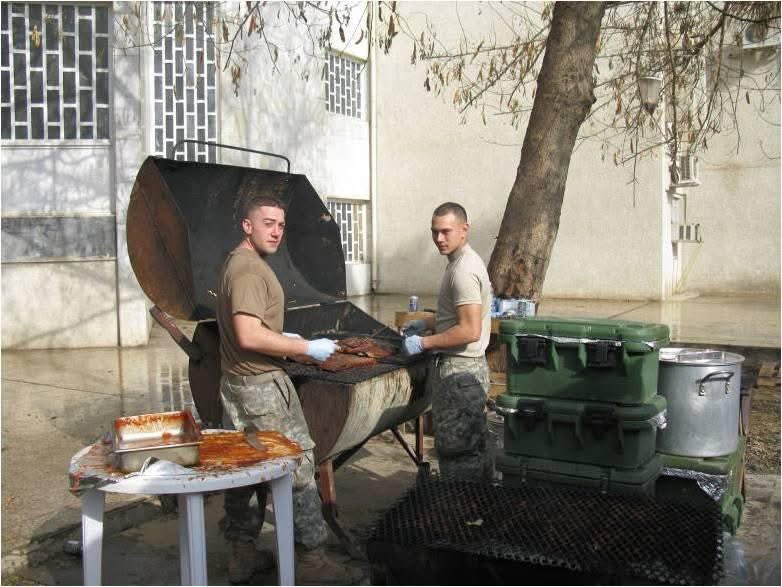
From the personal archives — Cooks from 2/82nd Airborne grilling on a modified 55 gallon oil drum during the 15-18 month surge deployments in Baghdad, Iraq
1
65
Apr 15
Here's a list of things I am using AI to research. Mainly because I lived through them and I want to make sure my memory aligns with historical facts.
1. OIF 2005-2008 era, particularly MNF-W... Fallujah, Ramadi, Al Asad, TQ.
2. Industrial consolidation of the counter-IED era: MRAPS and jammers, oh my.
3. <REDACTED CONTROVERSIAL TOPIC>
35
Apr 15
How close are we really to autonomous warfare?
Apr 14

Taking ground, holding ground, and controlling people/land/resources are different activities.
I'm hopeful and skeptical, but the great lie of the precise war is a common refrain. It was the shock and awe of Desert Storm, smart bombs of the early GWOT, SOF/CT of the mid-late GWOT, now drones and robots.
It's never as pretty as the press release.
70
Apr 15
Whatever happened to tech data policy in the federal government?
There was the Evidence Act. Chief Data Officers. Evaluation Officers.
Impact analysis.
The Federal Data Strategy. (As a private citizen, I submitted my personal thoughts as public comment in the Federal Register)
We were supposed to be laying the foundation for understanding government action (or inaction) and the impact created OVER TIME.
This is a non partisan issue. Government agencies across administrations endure… and they do STUFF. And that stuff has an IMPACT. and sometimes that impact isn’t apparent until a few years later.
And all that data about doing stuff and whatever happens after that is locked away, mostly not open or public, and not super well understood by civil servants who are heads down doing their job every day.
Understanding action and impact over time is important. This is an inherently governmental function. We need to bring it back.
It’s for the good of The People.
34
Apr 13
Cybersecurity Maturity Model Certification all over again.
This fits the “give away the problem, sell the solution” model.
Apr 13

The absolute last thing we need is SOC 2 for AI agents.
Unless you're AIUC, the for-profit startup that raised $15m and is pushing for this. For them it's great.

2
10
724
Apr 13
Once you see it, you can’t unsee it. Microservices, containers, agents. Hell, even password rotation fits.
25