
Climate scientist interested in theory of how atmospheres work, exoplanets. NASA GISS
Joined April 2013
- Tweets 23,953
- Following 900
- Followers 7,322
- Likes 7,094
991 Photos and videos
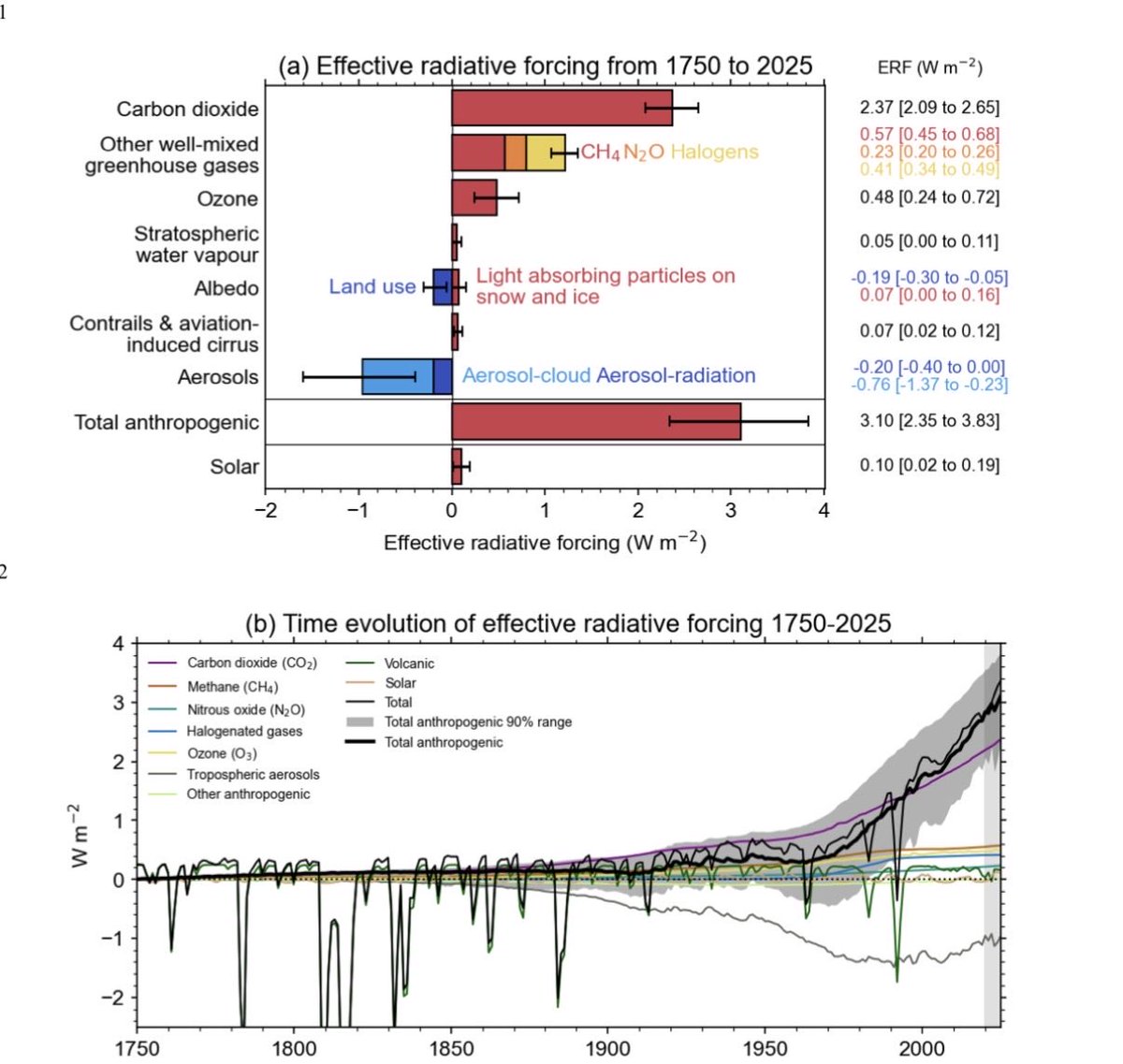
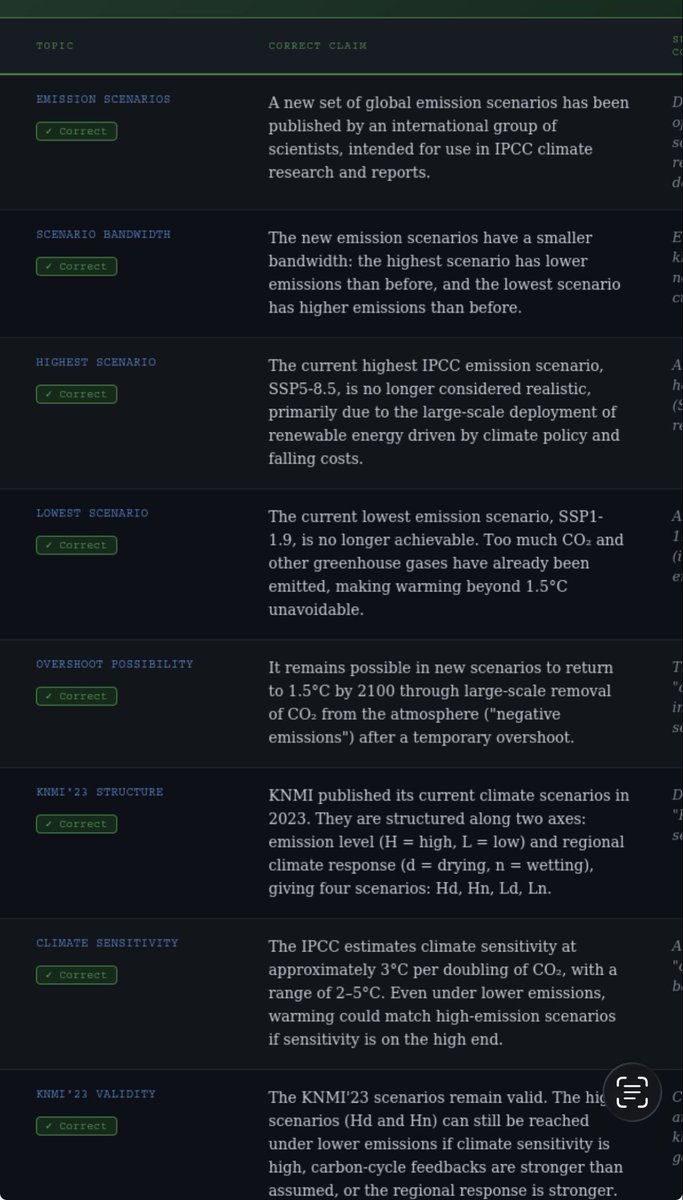

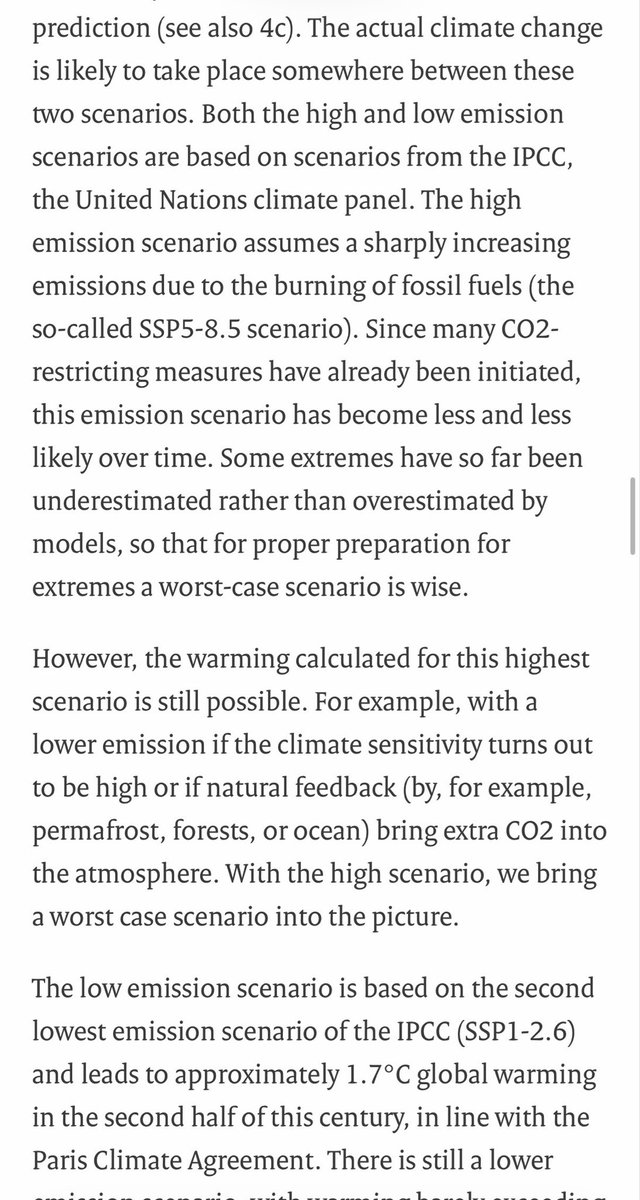
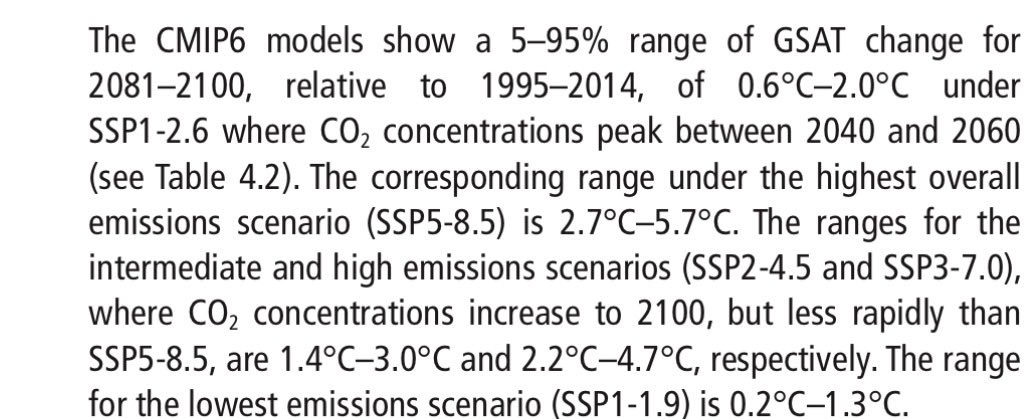
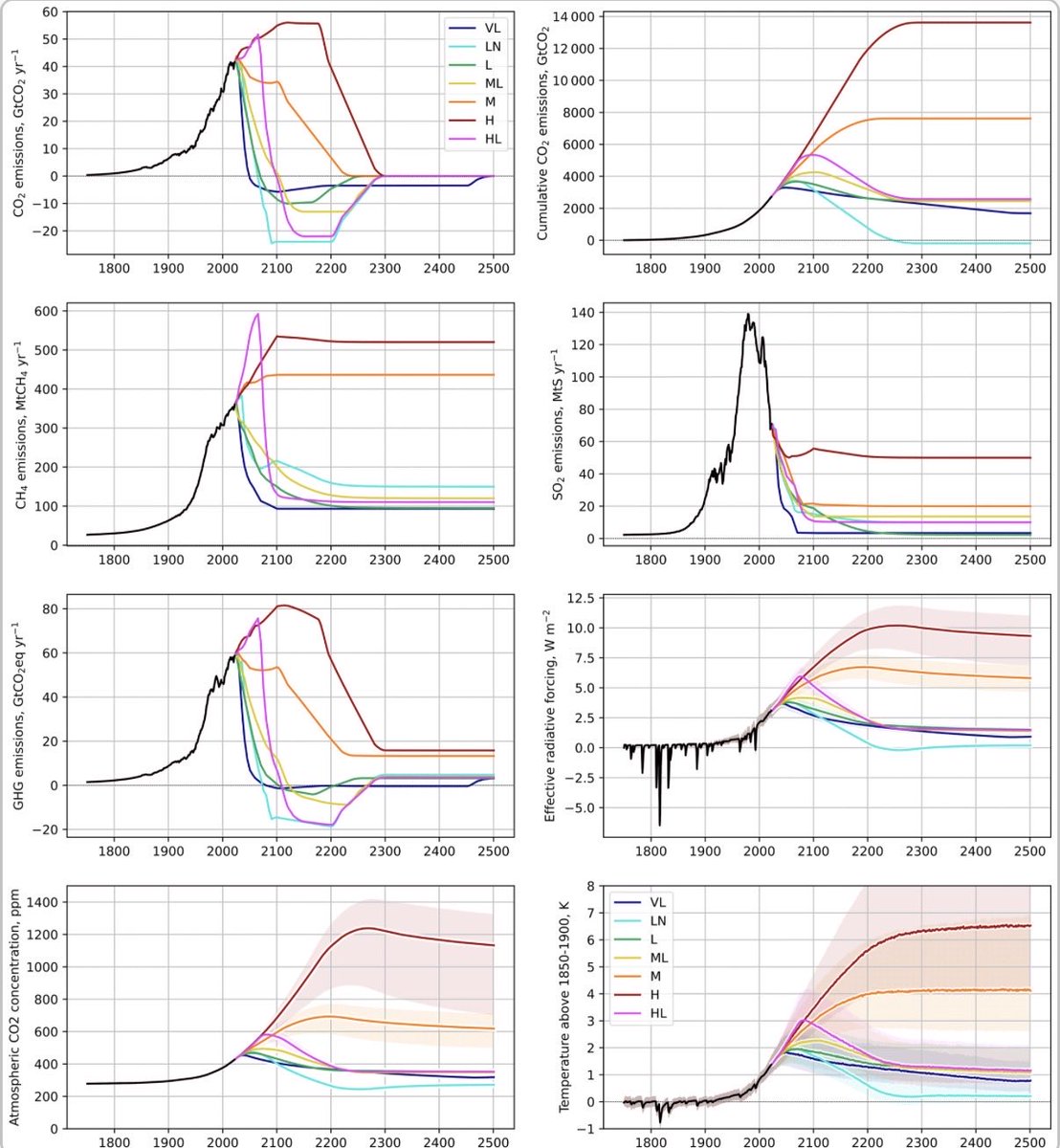
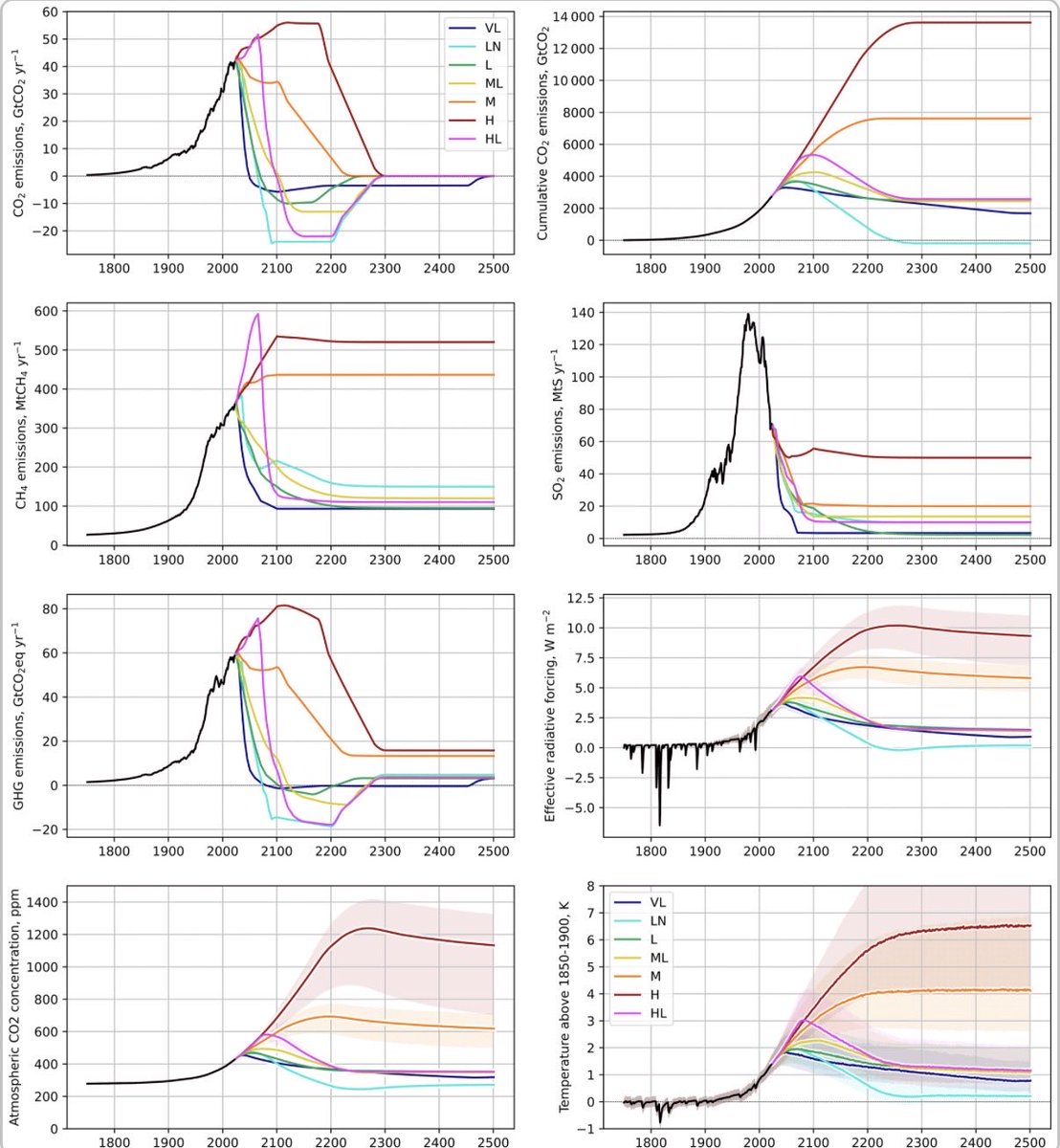
I don’t have strong opinions about how much money individuals should have, but elevating innovator to god status, with tremendous cultural and political leverage, is an enormous mistake. Especially as these are often some of the worst people.
ft.com/content/77affaa7-5da8…
4
1
14
358

Jun 12
I would trade all of these things for not having traitors, crackpots, and conspiracy theorists “chainsaw” their way through power, destroying scientific institutions, killing people, buying election, and propagandizing global communication. Elon is a net negative to the world.

“Let’s make sure we get no more PayPals, Teslas, SpaceXs, Neuralinks, Starlinks . . .” Just illiterate, destructive, sclerotic nonsense.
7
1
21
871
Jun 3
It’s not that an ice covered snowball planet can’t be breathable. Some O2 persisted during Earth’s Neoproterozoic snowball events. But the issue w long persistence of O2 on a snowball is reaction with reduced volcanic gases that can deplete O2 over just millions of years. 1/

As an ice planet, Hoth would have no breathable air
1
9
1,024
Jun 3
4/ of course you need some photosynthesis, but real snowballs are probably leaky…open leads, thin tropical ice, meltwater ponds, but in principle the O2 can be light or nutrient-limited. But there’s ways around this on Hoth…
1
2
155
Jun 3
5/5 if Hoth doesn’t have volcanism, that would help kill an O2 sink, although that kills any hope of deglaciation through CO2 buildup. Or Hoth can oscillate between snowballs or not, over millions of years, but still on shorter timescales for O2 to be drawn down to zero.
2
141
May 28
One of the few times where Roy Spencer is completely correct.
May 28

My latest blog post on Ned Nikilov's "theory" that solar energy plus air pressure are what determine planetary temperatures (no, pressure is largely irrelevant): drroyspencer.com/2026/05/pre…
3
3
26
1,244
Chris Colose retweeted

May 28
My view of AC in Europe is pretty simple. Government restrictions on AC use are dumb.
People who want it, and can afford it, should be allowed to install it.
Many familes won't want AC (too expensive, too little use), but that should be a personal decision, not a state one.
199
17
248
33,495
May 27
This post cosplays as insightful but is completely off base. Believe it or not, in attribution work, the point is that multiple suspects exist for a warming planet. It’s just that none of them work, except greenhouse gases.
When it comes to local record breaking events 1/

I spent a large part of yesterday trying to explain to people who supposedly are proponents of science what a "confounding variable" is.
Rather than say the same thing again today to about 100 people in about 100 different replies, I'm going to write it all in one place, here.
When scientists do science, in the form of an experiment or study, they will ultimately write it up in a standard report format containing the same sections:
Abstract
Introduction
Method
Results
Discussion
References
One of the most important aspects of the Discussion is a critical analysis of what was done. What went well, what could have been done better, what should be done next time. In particular, the authors attempt to identify if there are any "confounders" which may have influenced the results and rendered them invalid.
Let's take the example of a medicine in a clinical trial. We might, if we are ethical scientists, want to study whether a particular medicine causes adverse effects to those taking it before letting it loose in the wild. So we might recruit some people for a trial, and divide them into two groups. The first receives the actual medicine, the second receives a placebo. We might then monitor the recruits for a few months (or, preferably, a much longer period) on a daily basis and note any illnesses suffered in both groups.
We would then do a statistical analysis on the results from the two groups. If the results of that analysis showed that there was no statistical difference in the levels and types of illness suffered in the two groups, we might then conclude that no adverse effects were caused by the medicine. If, on the other hand, there was a significant difference between the two groups, that would point towards the need for further study and might lead us to conclude that the medicine was the cause of the difference.
The key thing here with our experimental design is that we want to make sure that the two groups in the study - the experimental group who receive the medicine and the control group who do not - are, in every other way, identical. Because if they're not, those differences might have caused the effect we observed, rather than the differences we created in our experiment.
What factors might make these two groups different?
1. Age differences. If one group was older, we might expect they might suffer more illness than the younger group.
2. Gender. Dependent on the medicine, males or females might be more affected. If the groups weren't balanced for gender, this might distort the reported illness results.
3. Health differences. If one group had poorer general health than the other at the beginning of the trial, we might expect them to report more illness during the trial.
These are all examples of "confounding variables". Factors which we did not control but which might influence the outcome and render our results invalid.
So in our experimental design we would want to make sure the experimental group and the control group are closely matched for age, gender and health status.
Which brings me onto climate change.
Climate scientists contend that Carbon Dioxide created by human activity in the industrial age is causing global atmospheric temperatures to increase.
As evidence, they point to an increase in global atmospheric temperatures over the last 200 years or so.
So far so good. Temperatures have, broadly, risen during that time. There are plenty of other things to criticise about this hypothesis and about climate "science" in general but that is for another time.
Yesterday we saw, all over the media, headlines about new record May temperatures of 35 degrees at Kew and Heathrow, and below the headlines was text saying that experts were saying this was another example of evidence of how the climate is warming.
Now I don't deny that it's been hot the last couple of days - where I am it has been around 32 degrees - so I don't doubt that the May record may have been broken somewhere in the country.
But the specific problem I have is with the temperatures at Heathrow and Kew, or indeed anywhere close to London or a big urban area being used as the evidence that the May record has been broken,or that they are evidence of atmospheric warming.
Why? Because of a confounding variable.
When we say a temperature record has been broken, we need to make sure we are comparing apples with apples. So not only do we need to compare temperatures that were measured in the same site using the same type of equipment in both instances - we need to make sure that the sites themselves have not changed.
We know that modern urban areas create a "heat island" effect. The expanses of heat-retaining materials like concrete, asphalt and cement retain heat during the day and release it slowly overnight, leading to higher daytime and nighttime temperatures. Added to which are the many buildings and vehicles in urban areas generating their own heat. All of this means that temperatures in, or close to, an urban area are typically several degrees warmer than in countryside some distance away.
Given the expansion and urbanisation of London over the last century, this effect will only have grown over time.
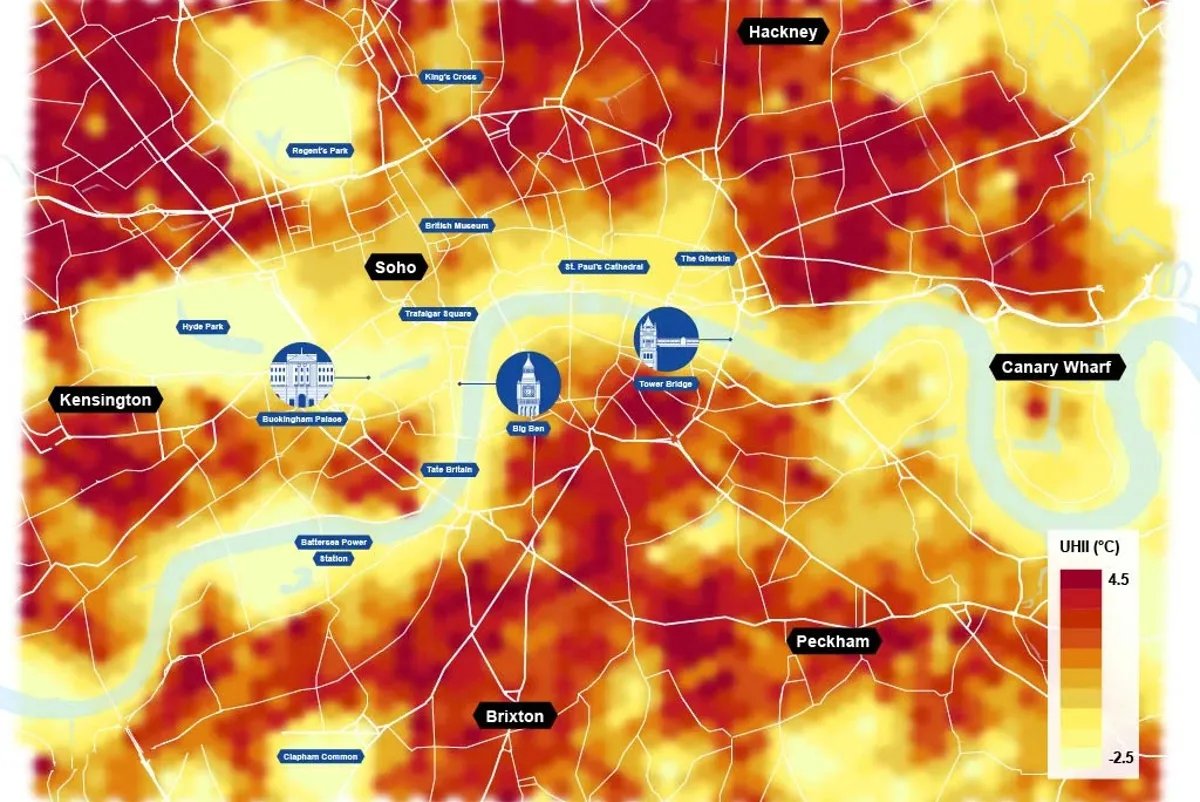
Arup measured this effect in London and concluded that temperatures there are often 4.5 degrees hotter than in the surrounding countryside (see first comment for link).
This effect obviously varies between different parts of London, as shown on the heat map, and reduces as you move away from central London, but even at Kew, the effect is estimated to cause temperatures to be 0.9 degrees higher than would be the case if Kew was sited in the countryside.
And Heathrow clearly creates its own heat island effect given the scale of the airport and the big expanses of heat absorbing materials there.
So if we are going to use temperatures measured in, or close to, London as evidence of atmospheric warming, we have a problem. We have a significant confounding variable. The warming caused by the heat island effect is going to add to any warming in the atmosphere, and give us an exaggerated result.
You can perhaps forgive tabloid newspapers for running headlines about this, just quoting the raw temperatures measured. They want to make money and it being very hot outside is a great news story. And urban areas becoming increasingly hot in summer is an issue in its own right.
But what is unforgiveable is people who claim to be scientists using these measurements as evidence of atmospheric warming, when there's such a glaring confounding variable influencing the data.
How would a proper scientist deal with this confounder?
Well, they might say "from now on, we will only use temperatures from rural weather stations which are not subject to urban heat island effects, and we will only declare records on the basis of those measurements"
And they might say "we will not use temperature measurements from areas subject to urban heat island effects as evidence of atmospheric warming".
But the Met Office and the climate science people aren't saying that. They're going with the artificially inflated temperatures. Because they have an agenda to push, a vast Net Zero industry to sustain, research grants to chase, and any evidence, however shonky, which backs up the global warming narrative is welcome.
This isn't science!
2
3
16
1,544
May 27
2/ “attribution” is a weird word to use because there’s always background meteorology at play, but climate change increases the frequency of exceeding various thresholds. Moving stations around, of course, needs to be accounted for in such reports.
1
8
313
May 27
3/ rather than Net Zero scamming (or whatever) the Met Office is well aware of biases that could affect temperature records and take these into account. As well, UHI affect individual stations, although that is still part of a “record” and the heat is widespread.
1
1
12
343
May 26
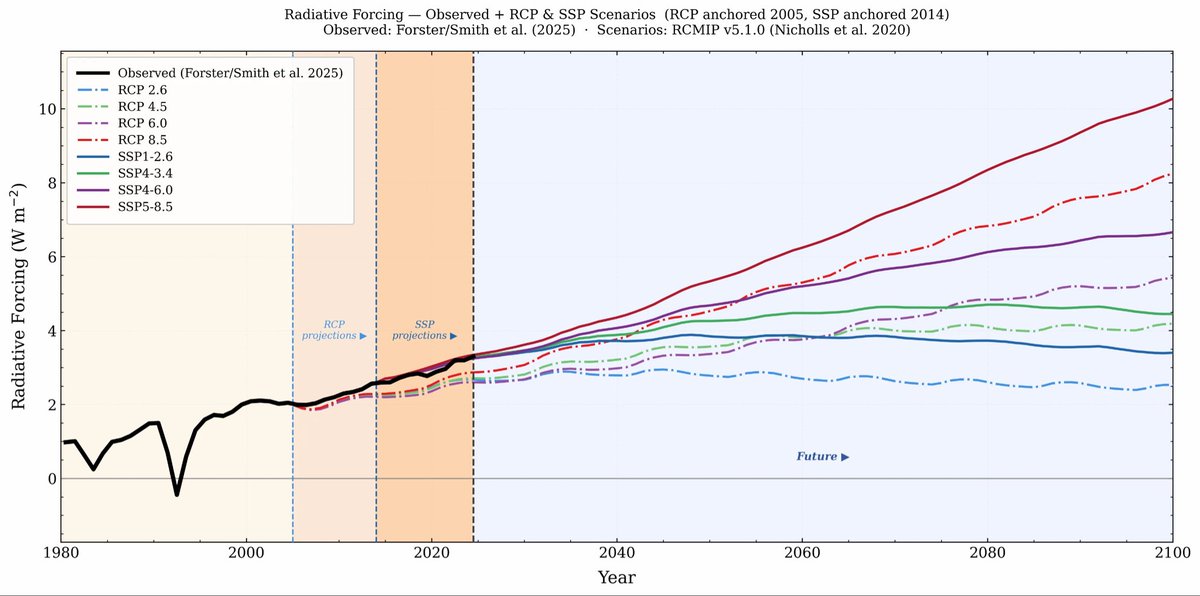
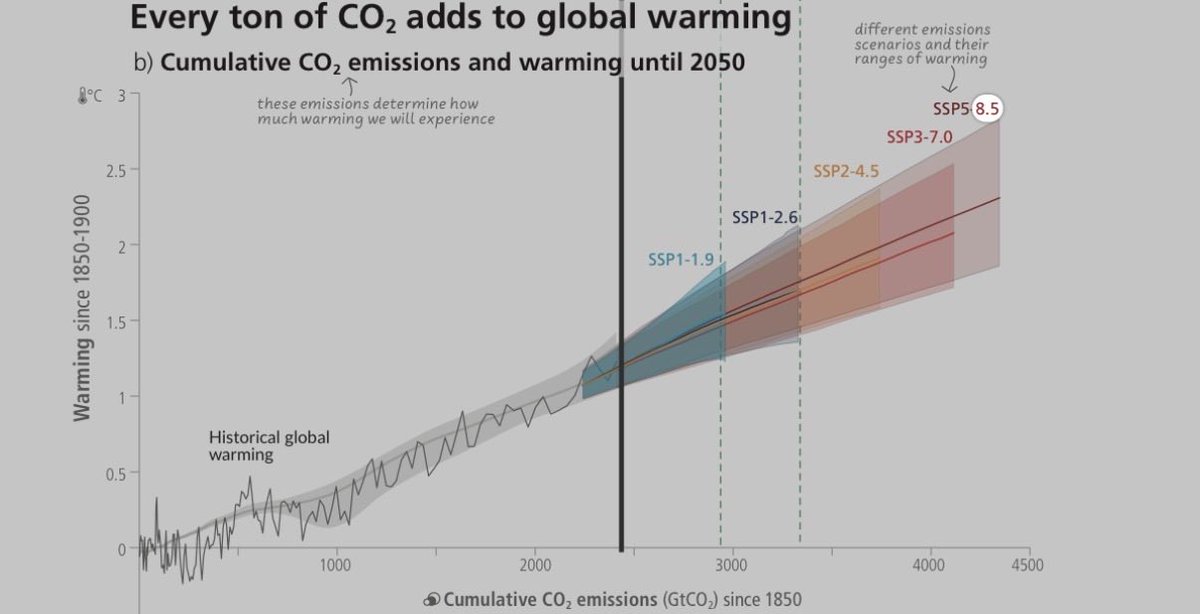
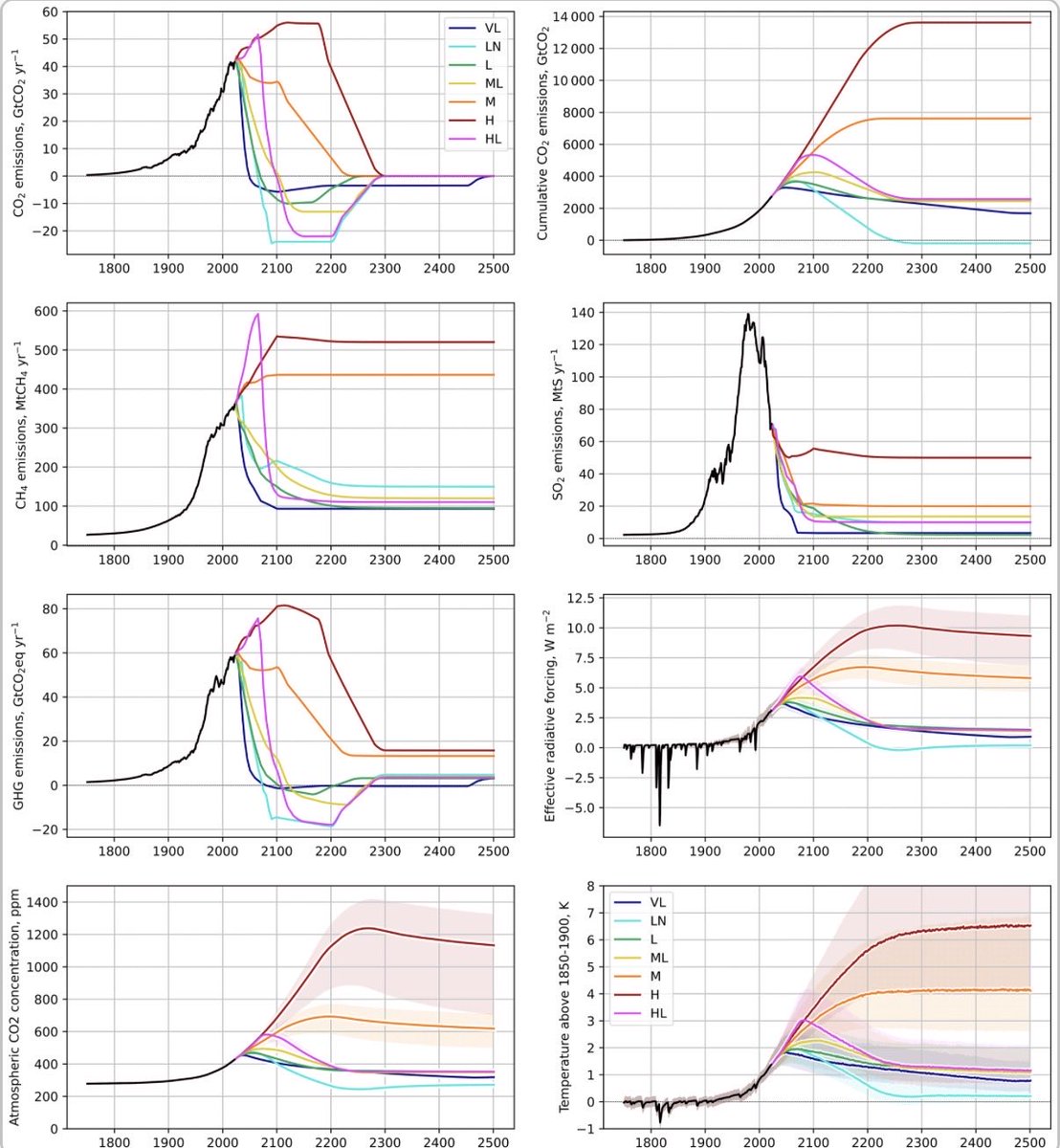
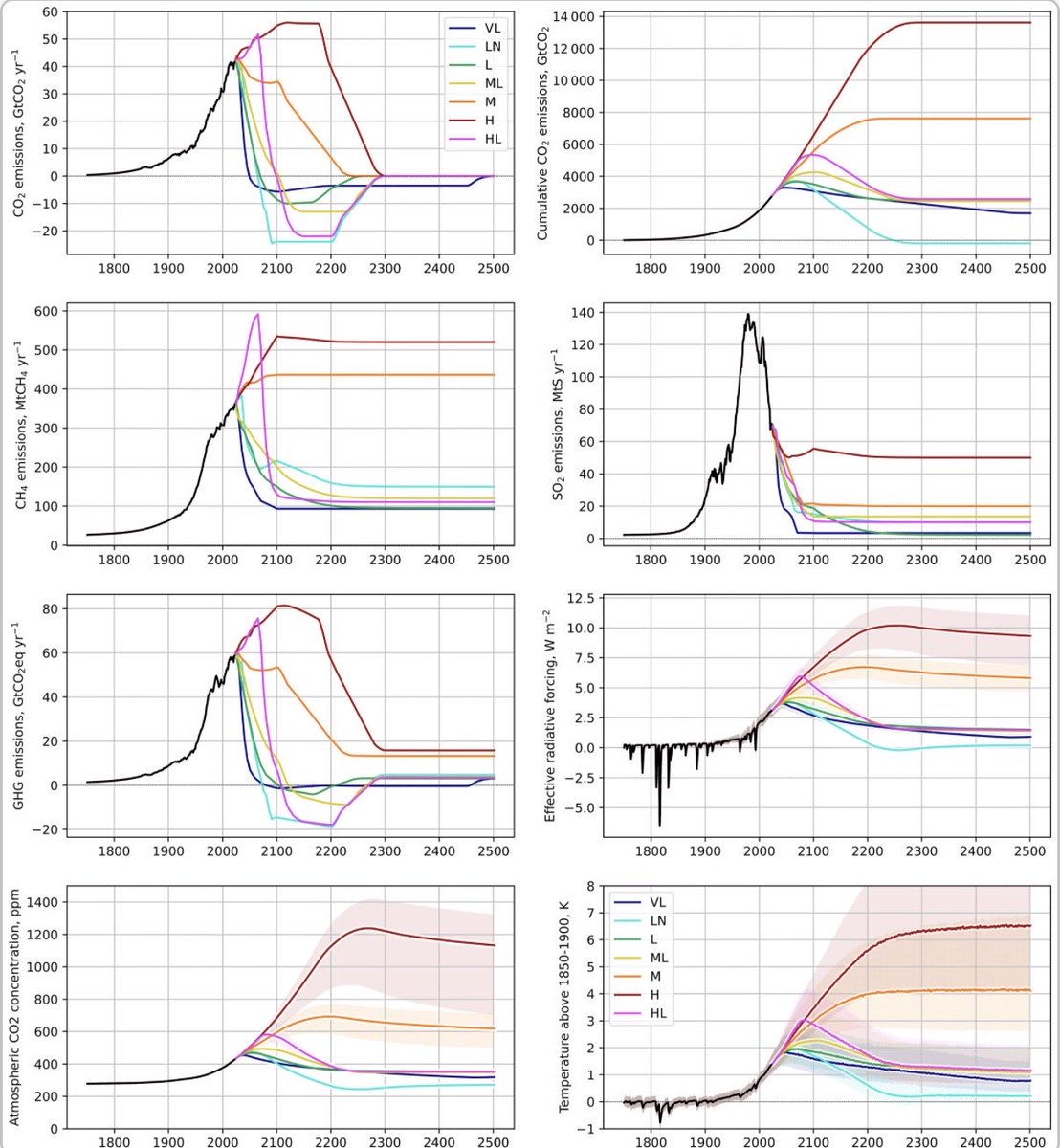
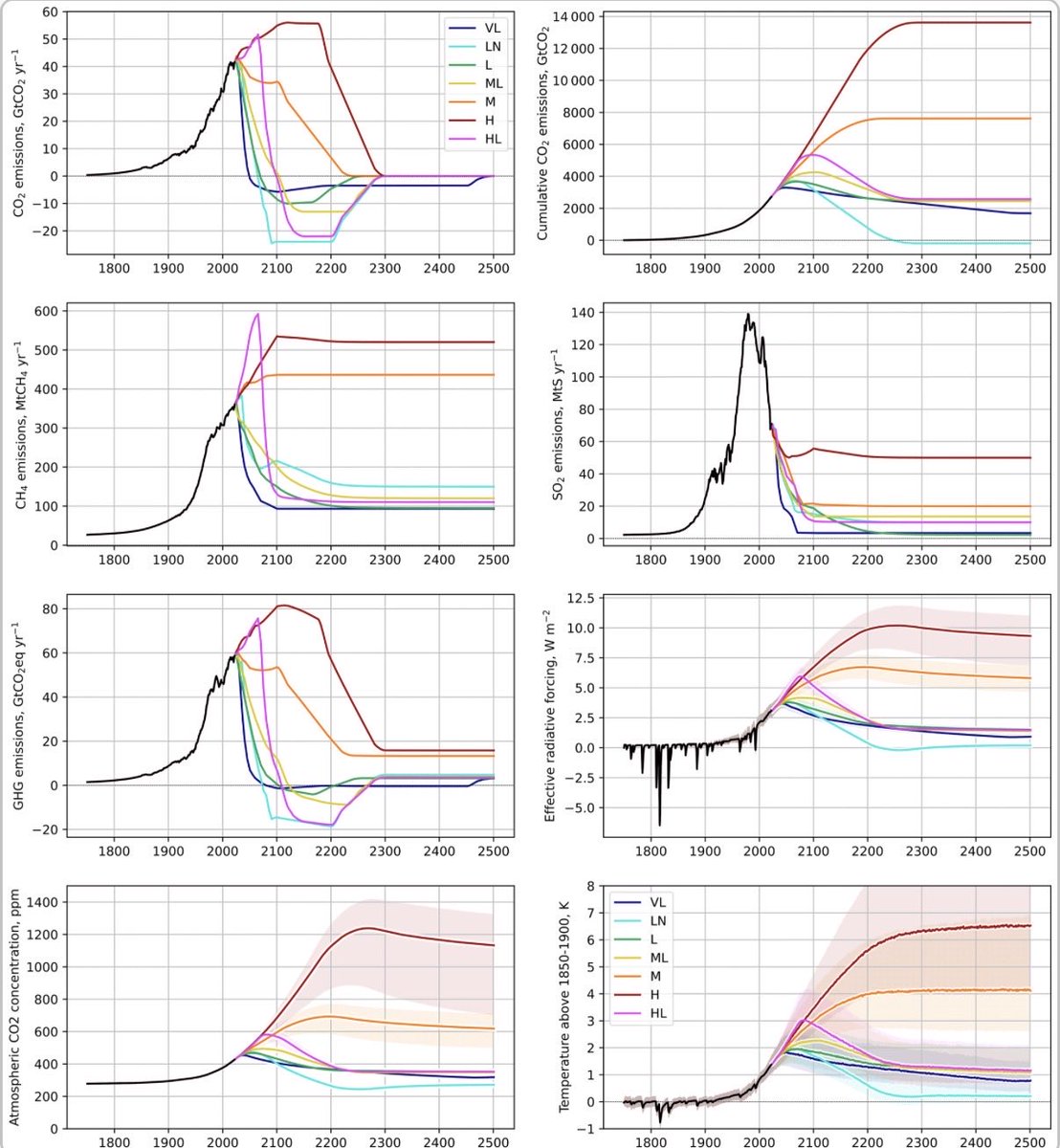
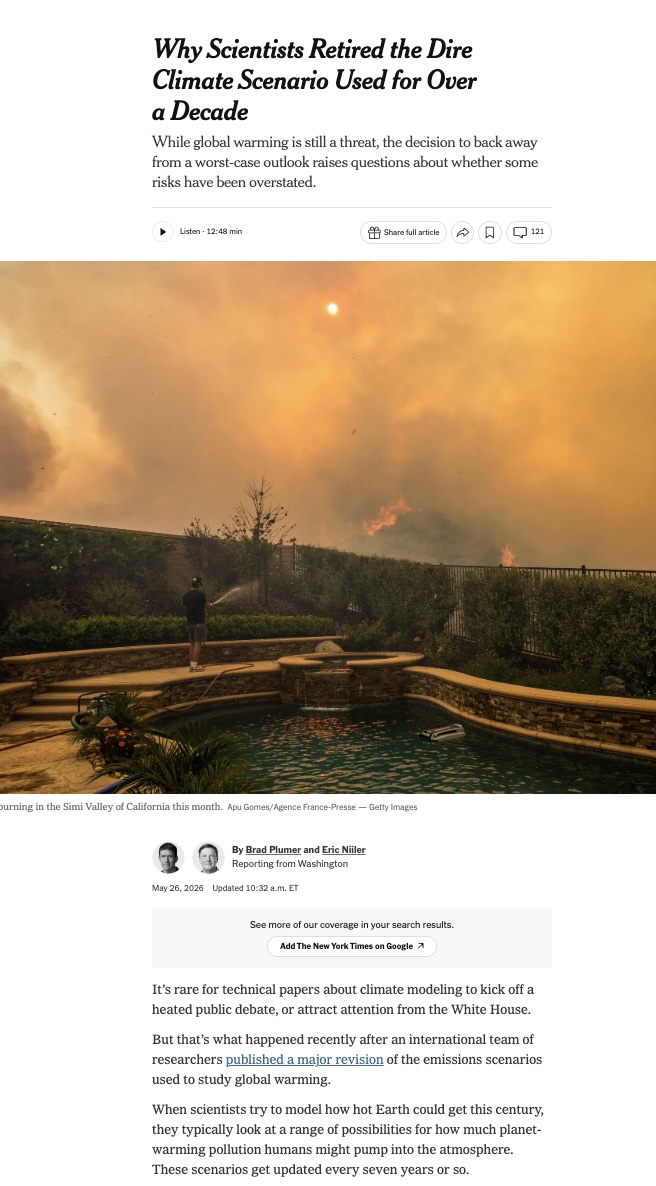
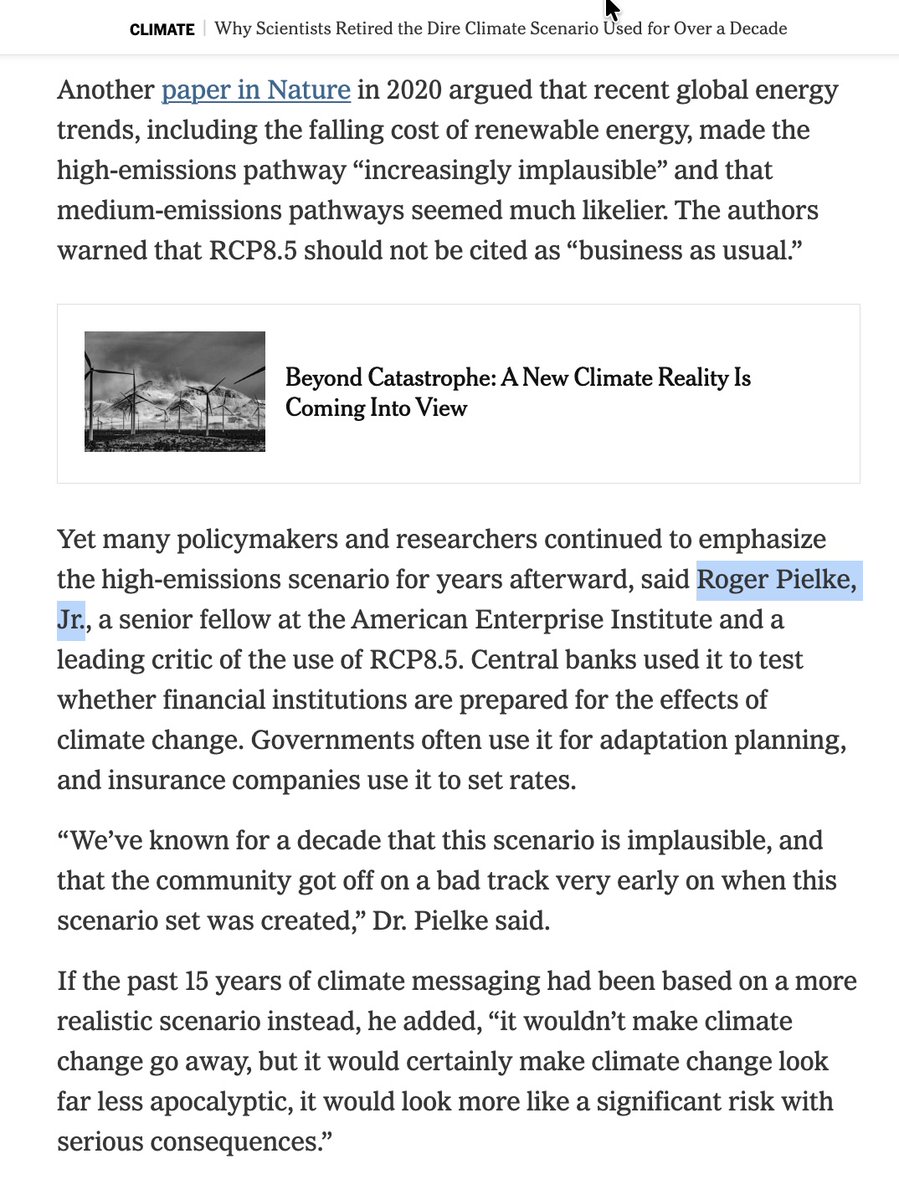
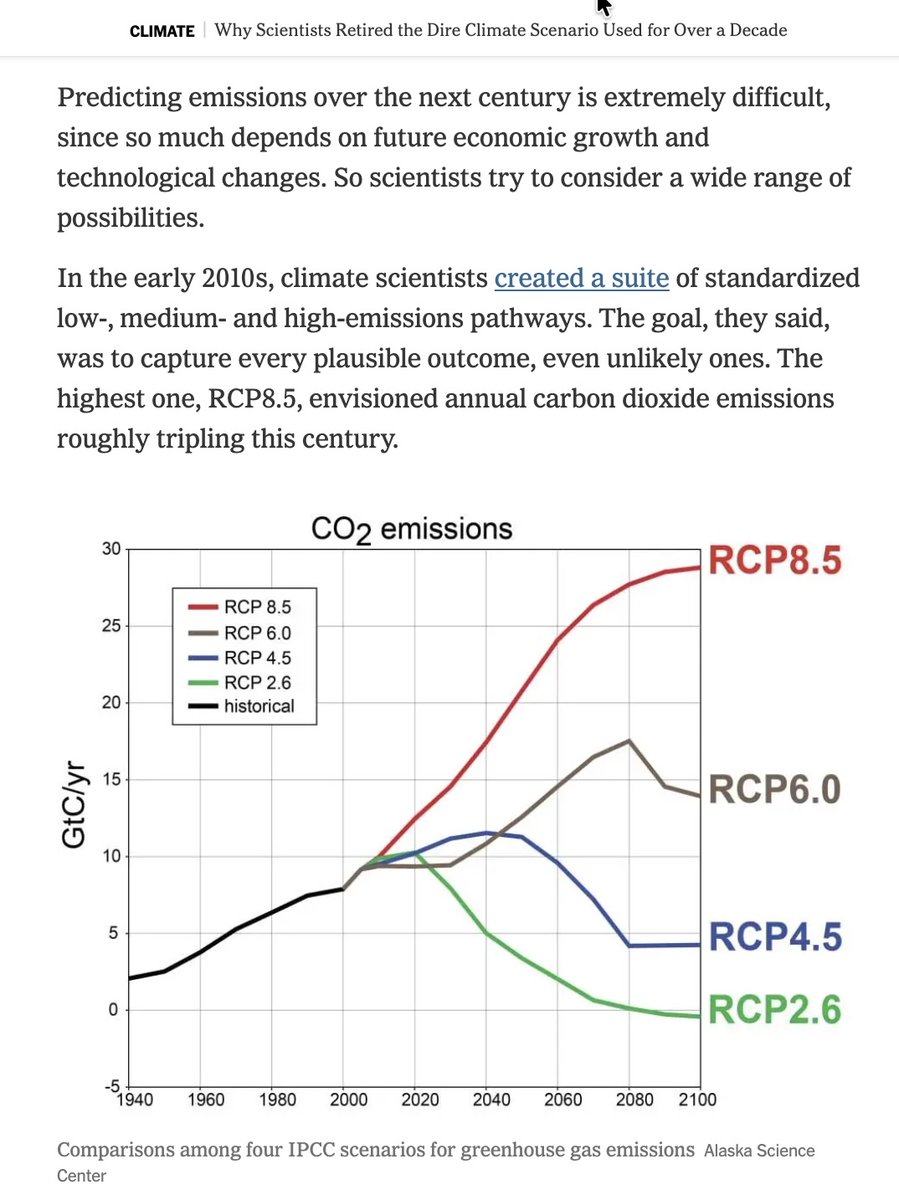
The piece by @bradplumer @eniiler is better than others, but still overstates the role of RCP8.5 in the broader MIP space ipcc.ch/report/ar6/wg1/chapt… and needs more reiteration that a bad specific socioeconomic storyline didn’t mean we can’t get to 8.5 W/m2, even if after 2100.
May 26

The @EENewsUpdates piece should be read along with the @bradplumer / @eniiler @nytclimate story on RIP RCP8.5, which shows that @RogerPielkeJr is no longer "He who shall not be named" by climate journalists. 1/2
2
1
3
679
May 26
A good lesson in why words like “(im)plausible” should be stripped from the current discourse.
May 26

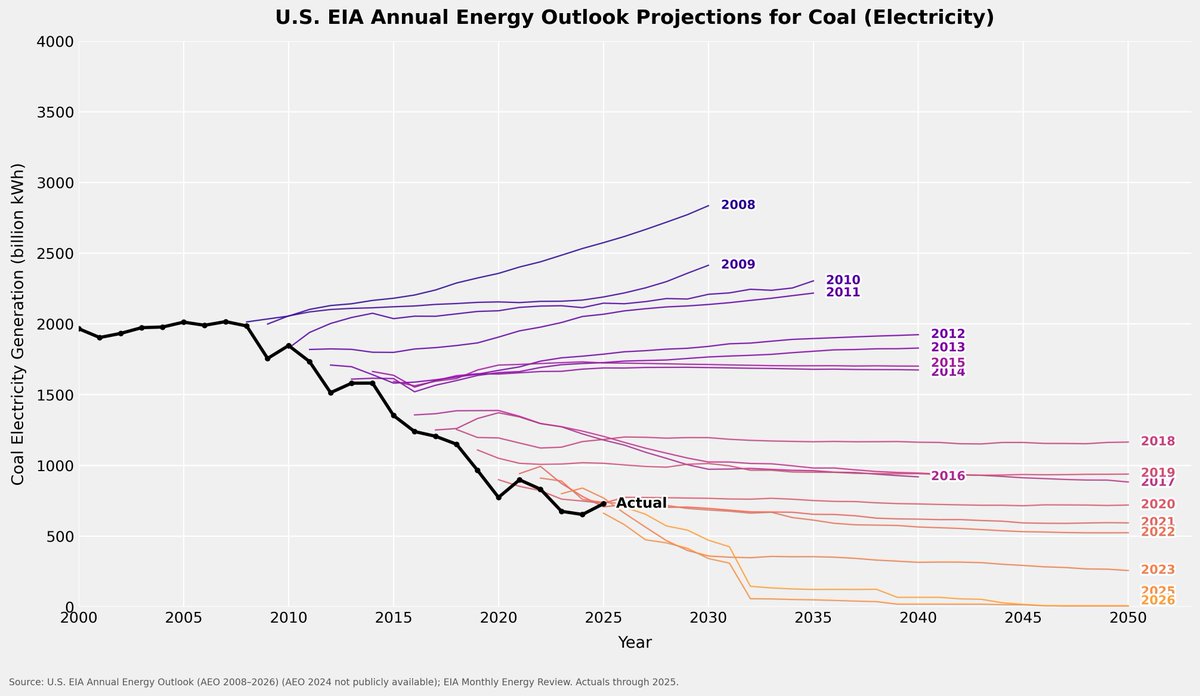
On The Climate Brink, I write about how hard it is to predict the future of our energy system. The failure of past predictions should make us hesitant to put too much faith in future predictions.
2
2
10
699

In response to recent misinformation about the use of scenarios in IPCC reports: the IPCC does not conduct its own research. The IPCC’s role is to assess the available scientific, peer-reviewed literature relevant to climate change: lnkd.in/eMTnfbyU
17
9
28
18,084
May 26
No, it’s not, but that’s not going to stop the “gotcha” hacks.
May 26

Is that so?
“[T]hat high-emissions scenario was always viewed as an unlikely outlier to help galvanize policymakers to reduce greenhouse gases.” eenews.net/articles/climate-…
2
7
500
Chris Colose retweeted

You're measuring adaptation, not hazard.
Climate deaths fell because we built early warning systems, evacuation networks, and emergency medicine, not because storms got weaker. CRED, whose data you use, has explicitly warned against this framing.
Polar bears recovered from the 1973 international hunting ban, not from a friendly Arctic. The 1960s baseline you cite wasn't a census; it was a guess. IUCN still lists them Vulnerable, and ice-dependent subpopulations are declining.
Global burned area fell because African savannas were converted to cropland. Forest burned area, the climate-relevant metric, has risen sharply. Canada 2023 set the all-time record.
Each of those numbers is a story about human capacity to cope with a worsening climate. Not evidence the climate isn't worsening.
Complacency is a worse policy adviser than panic.
May 26

An Inconvenient Truth for climate alarmists:
Al Gore’s dramatic climate warnings shaped a generation — but 20 years later, the data tell a very different story.
Climate-related deaths are down 97% over the past century, polar bears more than doubled since the 1960s, and global burned area has decreased by more than 25% over the past quarter century.
That's hardly a success of climate policy though: fossil fuels still provide 81% of world energy, emissions keep rising, and $16 trillion spent on green policies since Gore's movie came out hasn’t changed the trajectory.
A good reminder that panic is a terrible policy adviser.
newsweek.com/data-vs-drama-t…
35
67
294
10,067
May 25
All of the propaganda in recent weeks has already caused more confusion about the climate space than years of scenario users saying “business as usual.”
May 25

Experts exaggerated the truth in order to compel changes in mass social behavior, how unusual. (It's not unusual.)
8
2
17
3,317
Chris Colose retweeted

May 25
I've got to say that I'm really disappointed in the recent discourse surrounding the RCP8.5 scenario. The lack of context and understanding is something I expected from the usual suspects, but it's frustrating to see such bad takes from people and outlets who should know better.
17
49
280
35,334
May 24
No one is angry (in fact it’s good). The only story is a weird self-scripted narrative about the evils of climate science highly inorganic & manufactured propaganda efforts to overstate importance & wake up a “skeptic” movement that hasn’t had anything useful to say in 20 years
May 24
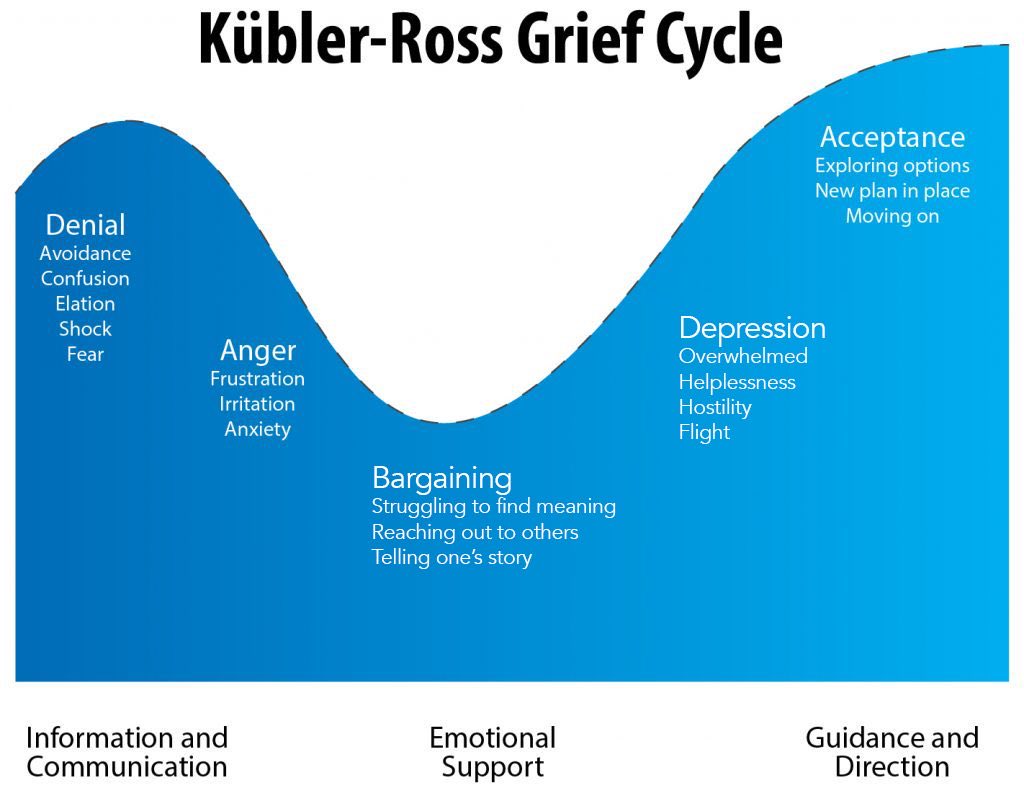
We are quickly moving into the anger phase over the loss of RCP8.5, SSP5-8.5 and SSP3-7.0
If you think that calling me names will help you to cope, please have at it 🤓
The sooner we get to acceptance the better
13
9
48
5,355