
1,374 Photos and videos








Jun 12
22 specialists? The more specialists you see, the less healthy you are. You know this in your own life, from your own medical care. Why is anyone pretending any different?
21
Jun 12
ICYMI: Michigan senators dramatically lower the bar for lifetime judicial nominees open.substack.com/pub/nomina…
30
Jun 11
Gobbledygook, marlarkey, gibberish, bafflegab: no matter which word you use, @SenPeterWelch is right: Traynor could not explain why it's OK for him to sign a letter saying Columbia U isn't conservative enough, but it's not OK for him to admit that Joe Biden won the 2020 election.
Jun 11

"Gobbledygook." That's @SenPeterWelch's word for what Judge Traynor did at his confirmation hearing instead of answering a straight question.
Traynor personally signed a letter calling Columbia University an "incubator of bigotry" — a political act, unprompted. But ask him who won the 2020 election? Suddenly that's too political to answer.
This is what a loyalty test looks like. Trump's crony judges won't tell the truth. They have no business with a lifetime seat on the federal bench.
49
Jun 11
Michigan senators dramatically lower the bar for lifetime judicial nominees open.substack.com/pub/nomina…
21
Celeste D retweeted

Jun 10
“We better return some blue slips for Trump's cronies or else we will lose the right to use blue slips” is not a convincing argument, @SenatorDurbin. judiciary.senate.gov/committ…
1
4
6
592
Celeste D retweeted
Jun 10
Senator Cornyn says Americans deserve judges who decide cases “irrespective of politics or popular opinion.”
Also Senator Cornyn: backing judicial nominees who won’t affirm the 2020 election results or the fact that our Capitol was attacked on January 6. judiciary.senate.gov/committ…
2
10
548
Celeste D retweeted

Jun 8
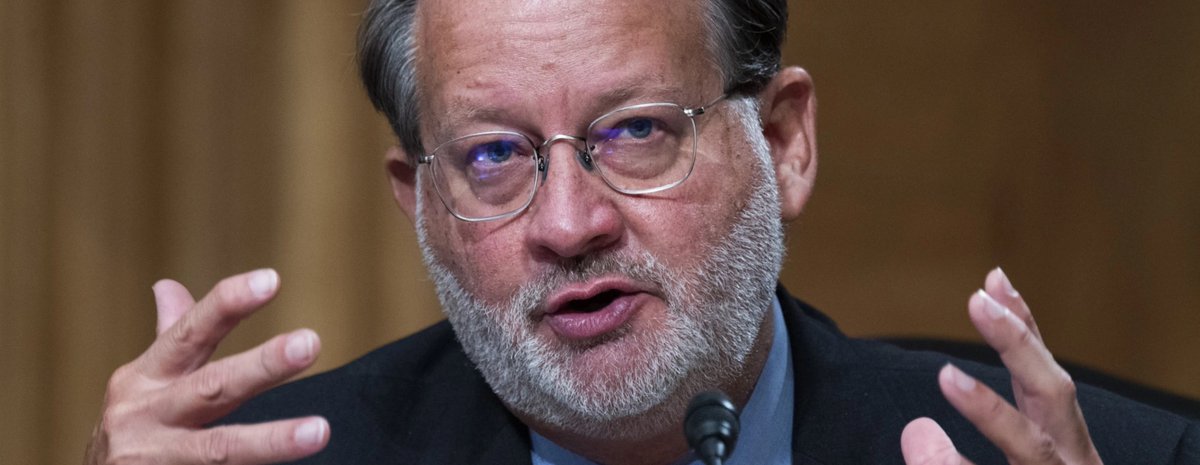
So far Trump has only nominated judges he knows will be loyal to HIM. It's a positive that Sen. Slotkin is engaging this problem (unlike Fetterman). But given Trump's recent meltdown over J6, we must assume this nominee will follow the previous 50 and demonstrate his support for Trump's big lies.

Bloomberg: Michigan’s Democratic US senators will let President Trump’s nominee for a federal trial court judgeship move forward, according to a joint statement.
Sens. Gary Peters and Elissa Slotkin returned blue slips, or signed off on, Mike Martin for an opening on the US District Court for the Eastern District of Michigan, the lawmakers said on Monday.
Link to article: news.bloomberglaw.com/us-law…
1
518
Celeste D retweeted
Trump Judge Ryan Nelson was charged with misdemeanor battery and malicious injury to property after an alleged parking lot confrontation that reportedly included challenging another man to a fight, throwing his sunglasses, and swiping at his phone.
Days after being charged, Judge Nelson authored an opinion backing Trump administration immigration policies that could send a man claiming political persecution back to India. Nelson, confirmed in 2018, has also been one of the judiciary's most aggressive defenders of Trump's efforts to expand executive power.
Trump’s crony judges receive lifetime appointments, regardless of their violent, erratic, unlawful behavior. Senators need to stop rubber stamping Trump’s judicial nominees – otherwise, more of these cronies will be in charge.
Loyalty is not a qualification to sit on the bench. Independence is. Let’s not allow any more Trump loyalists on the bench.
Source: Idaho State Journal
#NoCronyJudges
6
171
294
8,311
Celeste D retweeted
BREAKING: @SenatorSlotkin and @SenGaryPeters just returned blue slips for Trump judicial nominee Michael Martin, joining Fetterman as the only Senate Democrats to greenlight a Trump nominee this term.
Trump judicial nominees have refused to answer two basic questions: Who won the 2020 election? And what happened on January 6?
Senator Slotkin says Martin made a commitment to telling the truth about the 2020 election, J6, and whether Trump can legally run for a third term.
A lifetime seat on the federal bench shouldn't go to anyone who won't tell the truth about democracy. People are getting the message.
So we're watching. Not just for the right answer, but for whether those answers actually mean something when it counts.
The bar isn't "better than the rest." The bar is the truth, under oath, with consequences.
#NoCronyJudges

2
2
420
Celeste D retweeted
Trump won't let go of January 6th, but Senate Republicans can't afford it. Watch our President @joshorton share the numbers on what it means for battleground races on @MSNOWNews.
1
2
1
362
Celeste D retweeted

Jun 7
Including Susan Collins, Lisa Murkowski, Thom Tillis, Bill Cassidy. The so-called "moderates"
Jun 5

Here is every Senate Republican voting NO on an inspection of Delaney Hall's inhumane conditions.
135
2,815
6,078
119,288
The Supreme Court has left limited alternatives for protecting minority voting rights kuow.org/stories/the-supreme…
19
Celeste D retweeted
Jun 5
Of course cover and report on Platner and his past. But it can easily morph into a feeding frenzy. To do so while giving candidates like Paxton and Jon Husted a pass? No
8
28
162
3,782
Celeste D retweeted
Jun 5
It repeats an old and cringeworthy pattern of so much if the mainstream media: bend over backwards to show you have no liberal bias. Call it the Hillary emails syndrome. Myopic at best, a danger to our democracy for sure.
5
32
197
4,461
Celeste D retweeted
Jun 5
The intense media focus on Graham Platner is understandable. He is an unknown in a crucial Senate race with a lot of baggage. Less understandable is the lack of coverage of Ken Paxton, whose sins are far worse. That it is “old news” is no excuse. Most voters have no clue.
208
2,068
7,615
107,947
Celeste D retweeted

We shall remember all of those who fought for our freedom on the 6th June 1944.
Today we honour the bravery and sacrifice
of all those who took part in the D-Day landings.
Your courage will never be forgotten, for your courage helped shape the world we live in.
Thank you.
22
178
1,967
8,014
Celeste D retweeted

The shape of your pollinator garden matters more than its size.
Most native bees have small foraging ranges. Peer-reviewed research on solitary bees found female flight distances of just 73 to 121 meters from the nest. A small bee born in your neighbor's yard might not reliably reach a flower patch in the middle of your yard if there's a length of mowed grass between them.
What works is linear pollinator habitat. A strip along a fence line, a corridor along the driveway, or a narrow band of natives running the full length of the property is best.
A 2018 study in the journal Ecography found that the length of linear semi-natural habitat was the single strongest predictor of wild bee species richness and connectivity in agricultural landscapes. Bees track edges.
A 2-foot-wide strip running 50 feet does more ecological work than a 10x10 island in the middle of the lawn. The strip gives pollinators a route to follow, something that guides their movement across the landscape.
The effect multiplies when your neighbors do the same. A strip along your fence meets a strip along theirs, and so on.


34
751
3,317
60,719
Celeste D retweeted
We cannot afford to treat these nominations like business as usual.
Jun 5

Scoop on @SenFettermanPA here:
Fetterman is letting a Trump judicial pick move forward in PA, turned in blue slip on nom. First Dem to do so this Congress.
Progressive group @WeDemandJustice will run ads hitting Fetterman on move
@LauraEWeiss16 & me
punchbowl.news/archive/6526-…
6
13
1,444
Senator Welch gives a clear explanation of his planned vote on attorney general nominee Todd Blanche (it's a no for him) and why: AGs should work for the people, not for one person (i.e., Trump).

President Trump is nominating his personal lawyer to be the next Attorney General.
50
Celeste D retweeted
“This is the first opportunity for a Senate Democrat to actually stand up and stop a crony Trump judge from being seated with seated with a lifetime appointment,” Demand Justice president Josh Orton said. “Fetterman whiffed.” @BLaw: news.bloomberglaw.com/us-law…
1
11
19
779