
A technologist who is living in the future and building what's missing. "Buy the ticket, take the ride" - Hunter S. Thompson
Joined December 2007
- Tweets 9,009
- Following 1,235
- Followers 941
- Likes 2,896
631 Photos and videos









Pinned Tweet

30 Jul 2025
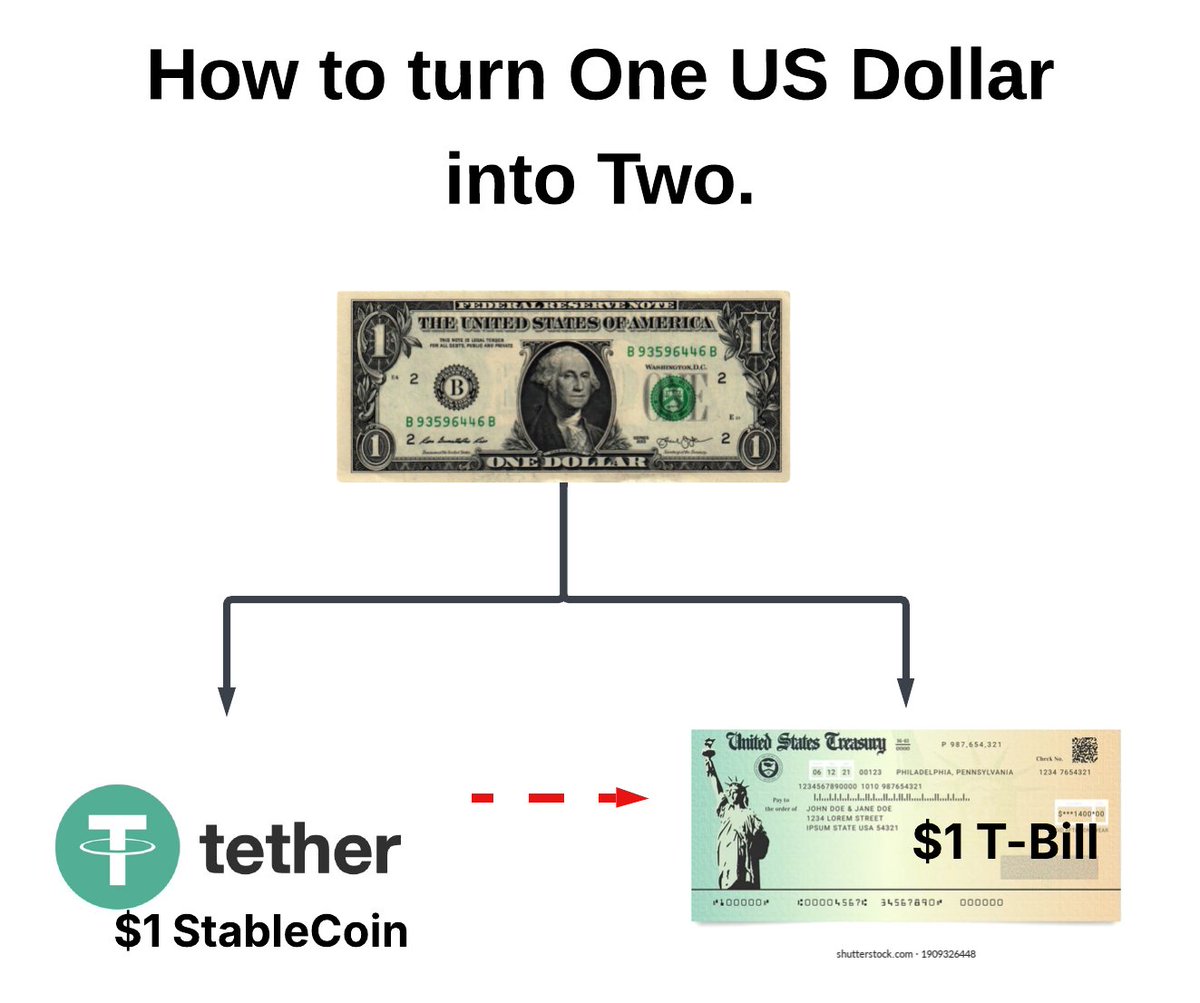
Tell me what I am missing here?
If I convert $1 USD to USDT (Tether), I then have a fungible digital $1 USD in my wallet I can spend, while Tether invest that same $1USD into a US Treasury Bill. Now there are two $1 notes in existence doing different things!
No wonder they passed the Genius Act.
It's essentially rehypothecation-lite — the same $1 USD is now performing two economic functions:
You, the user, have what feels like a liquid, spendable digital dollar in the form of USDT.
Tether, the issuer, has parked the real dollar into a yield-generating asset like a U.S. Treasury bill (or, in some cases, commercial paper or repo agreements).
@JeffBooth @LynAldenContact @GeorgeGammon @saylor @SimonDixonTwitt @LawrenceLepard @seanclarke911
#cryptocurrency #bitcoin #stablecoins #USTreasury
4
1
10
629
Ep 25 - Sean Mullaney - Founder & CEO of Seapoint foundersandfunding.com/sean-…
14
Bitcoin Construction Worker - B ₿ B🇦🇺⚡️🟠 retweeted

BREAKING_NEWS
VIDEO
🔥🔥🔥🔥🔥🔥🔥🔥🔥🚨🚨🚨🚨🚨🚨🚨🚨🚨
Anthony Albanese just dumped millions in investment properties — cashing out a portfolio worth around $5 million — right before his own government rams through toxic new taxes on negative gearing and the capital gains discount. This isn't leadership; it's the rankest hypocrisy and textbook insider trading by a Prime Minister who built his wealth on the very property perks he's now torching for everyone else. While everyday Aussies get screwed with higher taxes and wrecked aspirations, Albo quietly pockets his gains and moves on. Pure, self-serving corruption from a man who lectures the rest of us about 'fairness. Vote Pauline Hanson One Nation.
231
1,361
4,221
96,882
Bitcoin Construction Worker - B ₿ B🇦🇺⚡️🟠 retweeted

JUST IN: BLOOMBERG JUST SAID LIVE SPACEX HAS BEEN QUIETLY BUYING FOR #BITCOIN FOR YEARS WITHOUT EVER SELLING
THEY OWN $1,300,000,000 WORTH OF BTC
"IT IS A STRATEGIC RESERVE"
THE 1st $1 TRILLION BTC COMPANY 🔥
145
420
3,860
620,905
I have had my IDE running while being at a social event and thought of something and made excuses to leave and rushed home to run the code!
May 12

Marc Andreessen just coined a term that perfectly describes what's actually happening to programmers right now and it's the opposite of what the doomers predicted (Save this).
He calls them AI vampires.
Andreessen's says that programmers using Codex, Claude Code and AI coding tools are not being replaced but they're working harder than ever, sleeping less than ever, with massive bags under their eyes and they are completely euphoric.
What's remarkable is that the phenomenon extends far beyond professional engineers.
Andreessen described an a16z partner who had never written a single line of code in his career, who built an entire AI powered work system for himself and when asked if he'd ever looked at the underlying code, the answer was simply "hell no."
The data behind the anecdote is extraordinary.
Andreessen says the leading-edge programmers at a16z portfolio companies are now 20x more productive than they were a year ago, the most dramatic increase in programmer productivity in the history of the industry.
The METR May 2026 AI usage survey found technical workers self reporting a 1.4–2x change in work value from AI tools, with 75% of software engineers using AI for at least half their work.
The software engineer hiring rate is actually increasing up to 22.77% of new hires in 2025 from 19.32% in late 2023 and companies are now bidding more aggressively for senior engineers specifically because AI empowered engineers have a higher ROI than ever before.
The US economy added 115,000 jobs in April 2026 alone, beating the 62,000 consensus forecast precisely as AI adoption hit its highest level on record.
This is exactly what basic economics predicts and what almost no one who writes about AI and jobs bothers to say.
Classic marginal productivity theory says: when you increase the productivity of a worker, you don't diminish human work, you expand it.
The worker becomes more productive, gets paid more, does more, and more jobs are created in the process.
Andreessen's ATM analogy holds here because ATMs were supposed to eliminate bank tellers but instead, teller employment rose because lower operating costs let banks open more branches.
The no-code AI market has exploded from $4.3 billion in 2023 to $21.2 billion in 2026 not because programmers are being replaced, but because the universe of people who can now build software has expanded by orders of magnitude.
The blind spot, as Andreessen notes, is that productivity is now outrunning comprehension.
The a16z partner building AI systems he's never looked at the code for represents something genuinely new, software being summoned faster than it can be understood.
That's not necessarily dangerous but it does mean the verification, security, and governance layer of the AI development stack is more important now than it has ever been.
20
Bitcoin Construction Worker - B ₿ B🇦🇺⚡️🟠 retweeted

May 10
No More ₿ears
1,372
1,978
18,561
813,648

Cybertruck

Joe Rogan bet Elon Musk $1 that he could pierce the Cybertruck with his compound bow
The arrow literally exploded against the stainless steel exoskeleton… and barely scratched it 😂
6,948
18,849
177,992
60,858,647
Bitcoin Construction Worker - B ₿ B🇦🇺⚡️🟠 retweeted

Apr 19
Ben Roberts-Smith first statement since release. Fake News Channel 9 have comments turned off which is why I've uploaded it. #auspol #BenRobertsSmith #Australia
139
378
2,232
48,753
RT @SenatorAntic: In a few weeks, the Senate will vote on the ASIO Amendment Bill (No. 2)—and every Australian who values freedom under the…
1,461
Bitcoin Construction Worker - B ₿ B🇦🇺⚡️🟠 retweeted

Apr 10
This is gold….. a must watch
2020 @Albo criticising the government for not having 90 days fuel 🤣😆😆🤡
Jesus he has aged 20 years in the last 6.
284
1,273
4,749
200,559
I'll just leave this here.
gas.australiainstitute.org.a…
11

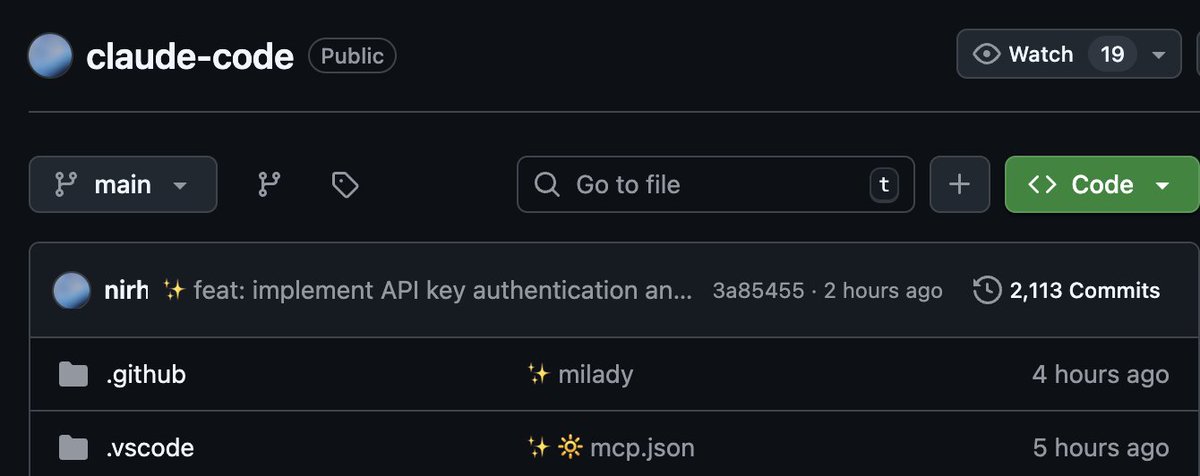
Unreal. The entire Claude Code source code just leaked
It reveals EVERY secret Anthropic has in store for Claude
I went through all 600,000 lines of code
Here's EVERYTHING juicy detail you need to know about how Claude Code is built and what is coming next:
419
271
3,101
1,017,306
Bitcoin Construction Worker - B ₿ B🇦🇺⚡️🟠 retweeted

Mar 4
Let me make this very clear: Big Banks (think JPMorgan Chase, Bank of America, Wells Fargo, etc.) are lobbying overtime to block Americans from getting higher yields on their savings—while trying to block any rewards or perks from being given to customers.
These banks, and others, pay rock-bottom rates on standard savings (often 0.01%–0.05% APY), even as the Fed pays them 4% or more. This massive spread fuels record profits, with almost none passed back to their customers / everyday depositors.
Today, the banks are desperately targeting crypto/stablecoins, where platforms plan to offer 4–5% yields or rewards. The ABA and other lobbyists are spending millions trying to ban or restrict those yields via bills like the Clarity Act, crying “fairness” and using words like "stability"—when it's really about protecting their low-rate monopoly and preventing deposit flight. This is anti-retail, anti-consumer, and straight-up anti-American.
Next time you see a big bank dropping billions on a shiny new Midtown Manhattan HQ, you know exactly where that money comes from: the non-existent interest rate they “pay” you!
Fortunately, the big banks are losing this fight as customers wake up to the games…
@worldlibertyfi
2,230
9,609
41,902
1,651,749

The entire SaaS industry is building software for a customer that is about to go extinct.
The human buyer.
Insight Partners co-founder Jerry Murdock just exposed the fatal architectural flaw in every incumbent tech company’s business model.
Your dashboards.
Your UI.
Your enterprise sales motion.
Your human-in-the-loop workflows.
All of it was engineered for a buyer that is disappearing in real time.
Murdock: “If you’re not making your software for autonomous agents today, you’re going to be challenged in the future. Maybe it’s six months, maybe a year, maybe 18 months, but you’re going to be severely challenged if you still think human beings are going to buy your software.”
Not disrupted.
Not pressured.
Structurally eliminated.
For two decades, software was built around the cognitive limits of human biology.
Dropdowns, dashboards, and notifications existed because the human brain needed them to navigate digital space.
An autonomous agent needs none of that.
It doesn’t browse your product page.
It doesn’t sit through your demo.
It doesn’t respond to your sales email.
It doesn’t care how clean your UI is.
It just executes.
The agentic era runs on machine-to-machine infrastructure.
Frictionless.
Autonomous.
No human in the loop.
No patience for friction you built for a species it replaced.
The window is six to eighteen months.
The builders who survive will tear out the entire human interface layer and replace it with pure, unthrottled infrastructure that agents can consume at full speed.
Everyone else will spend those eighteen months perfecting a dashboard that no one is ever going to log into again.
148
148
1,057
197,778

Open, AI FTW

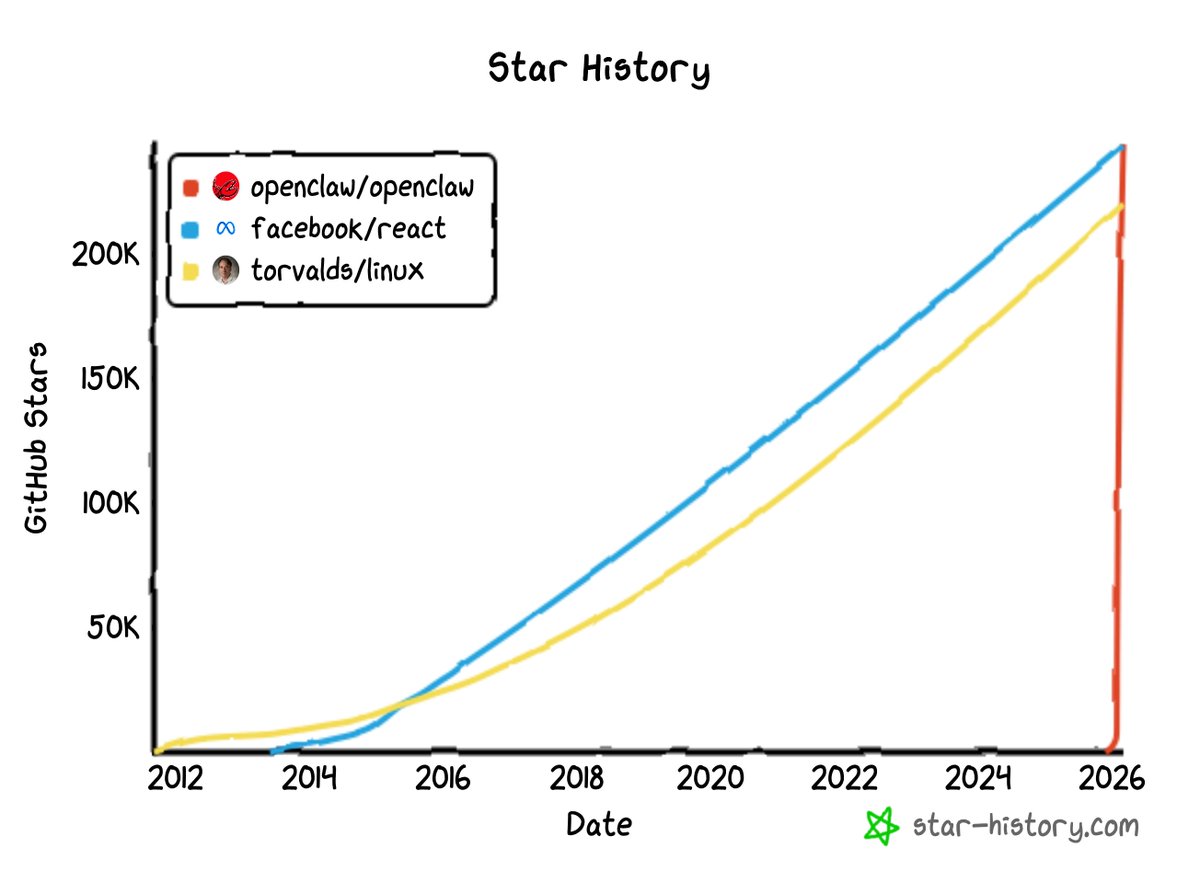
We just passed React on GitHub stars. 🦞
Let that sink in. A personal AI assistant built by a lobster-obsessed Austrian and an army of crustacean enthusiasts just outstarred the library that powers half the internet.
We shipped 90 changes today. They shipped a conference.
22
27
566
89,404
Have a great Australia Day!
@marchforaus #aussiepride #australiaday2026 #AustraliaDay #aussie #OneNation
1
42