Joined January 2021
- Tweets 4,658
- Following 298
- Followers 1,091
- Likes 9,033
1,141 Photos and videos










C₳P retweeted

Jun 13
Today I learned $1 Trillion in wealth is excessive but $40 Trillion in debt is totally cool… 💁♂️
210
2,673
29,651
369,650
C₳P retweeted

Apr 29
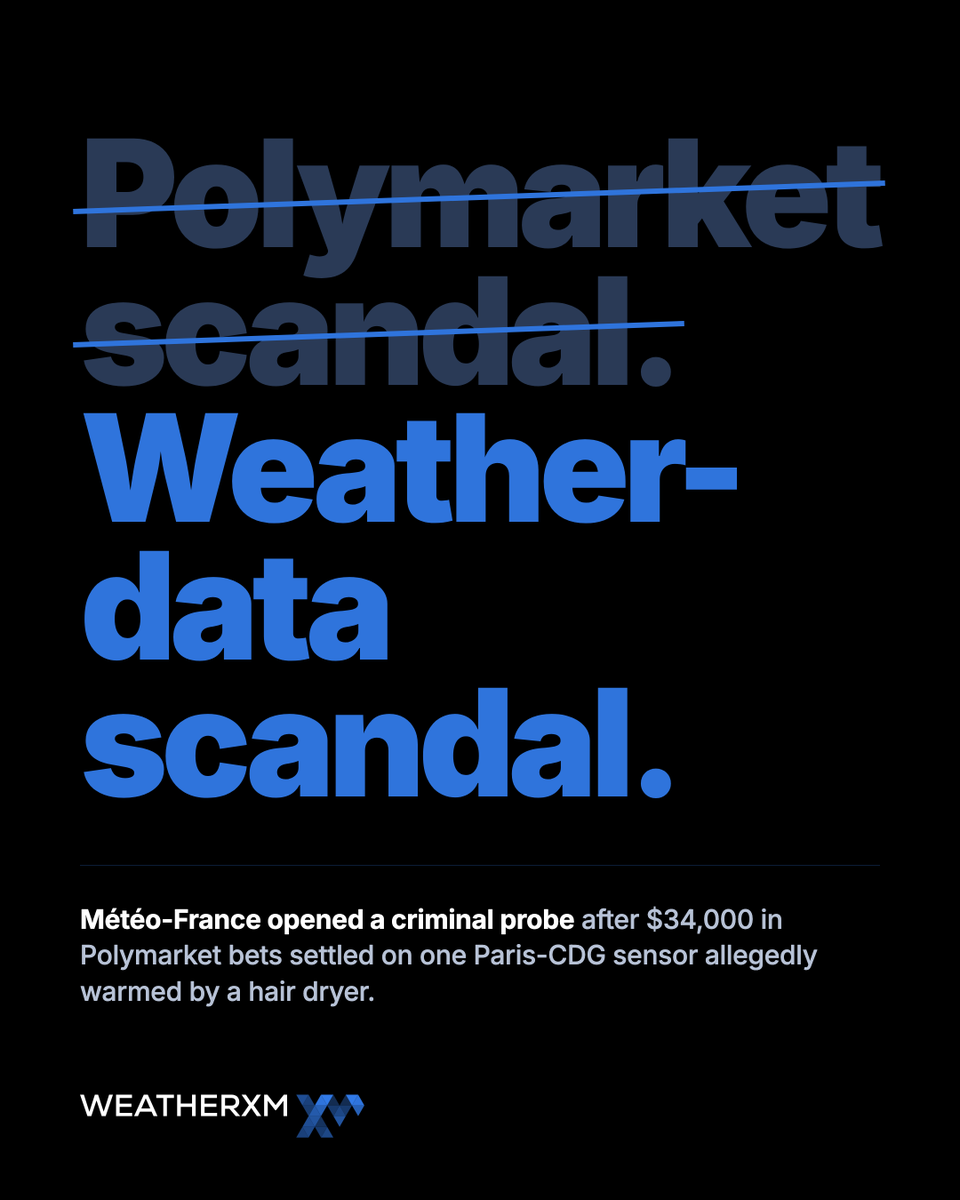
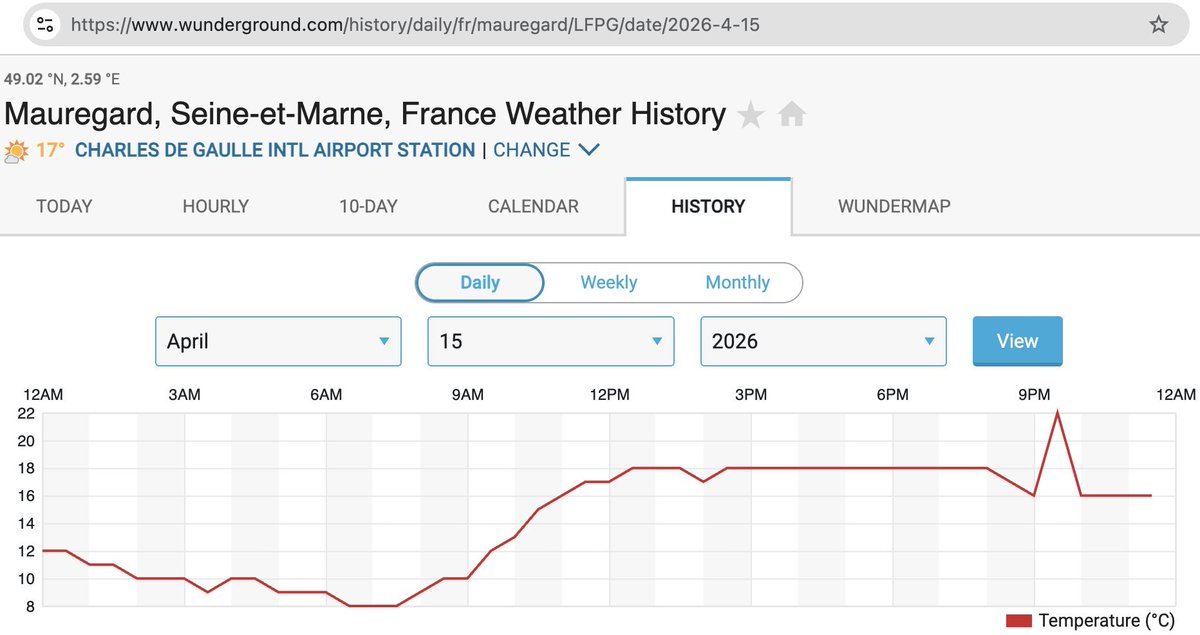
Last week Météo-France filed a criminal complaint. The target: whoever held a hair dryer to a weather sensor at Charles de Gaulle airport.
Twice in April, that sensor briefly read 22°C in an 18°C afternoon. Twice, a Polymarket user had wagered exactly these numbers. Payouts: $14,000 and $20,000. Polymarket switched its Paris settlement to Le Bourget and refused refunds. CNN, Le Monde, Reuters and Euronews all ran the story.
The hair dryer is the funny part. The architectural failure underneath is what nobody is talking about clearly enough.
This is not a Polymarket scandal. It is a weather-data scandal. The bets are how we found out.
One Météo-France sensor at Roissy was both the official Paris temperature and Polymarket's settlement source. No cryptographic signature. No real-time cross-check. Mains power, network connection, admin console accessible to staff. The trust model collapsed at every seam but until recently, no one had a financial reason to attack a thermometer.
The hair dryer is the lowest-cost version of this attack. As our CEO pointed out an insider with admin access at any met agency could alter data without ever touching a sensor. Hair dryers are loud. Database queries are not.
x.com/nikil511/status/204725…
Weather data has stopped being just a public good. It is now the settlement layer for an economy: parametric insurance, energy contracts, agricultural payouts, emergency response, prediction markets. The hair dryer exposed a $34,000 mistake. The same architecture moves decisions a thousand times that size.
This is the failure mode WeatherXM was built to remove.
Every reading is signed at source by a secure element on the device. A hair dryer can still warm a sensor but it cannot forge a signature.
We never settle anything important on a single station. 9,600 stations across 98 countries, in clusters and verifiable maths, never single points of trust.
Every reading is cross-checked against neighbouring stations and third-party data. Anomalies get flagged or discarded by our quality of data filters (QoD).
Our WiFi & Celular stations are energy autonomous, solar powered. No mains plug, super easy to deploy.
Our H2 station takes it one step further, using @helium IoT / LoRaWAN operates with decentralized wireless infrastructure that the community or customers can expand on demand to cover areas that lack celular coverage. Data is on decentralized file systems @IPFS @Filecoin @AkaveCloud and QoD based rewards are blockchain merkle-trees anyone can audit.
The fix is not to regulate prediction markets harder. It is to stop trusting infrastructure that was never designed for adversaries. Build the verification into the data itself and adopt decentralized, trusteless approaches in the traditional weather industry too, as it seems we are gonna need it more than ever in the comming future.
The world has changed.
The traditional weather data layer needs to change too!
Apr 23
This issue goes far beyond prediction markets.
Today’s forecasting systems depend on airport weather observations, yet much of that infrastructure was never designed for adversarial settings.
An insider in a meteorological organization (e.g. admin) could alter data to influence an outcome, without a hairdryer on a sensor, and probably without being detected.
We need to transition to forecasting systems backed by denser, lower-cost, and more resilient observation networks. That is exactly what we’re building at @WeatherXM robust, blockchain-enabled weather stations and verifiable weather data pipelines for the next generation of forecasting infrastructure.
3
16
1,726
C₳P retweeted

4 Nov 2025
The million dollar question:
What is happening crypto right now?
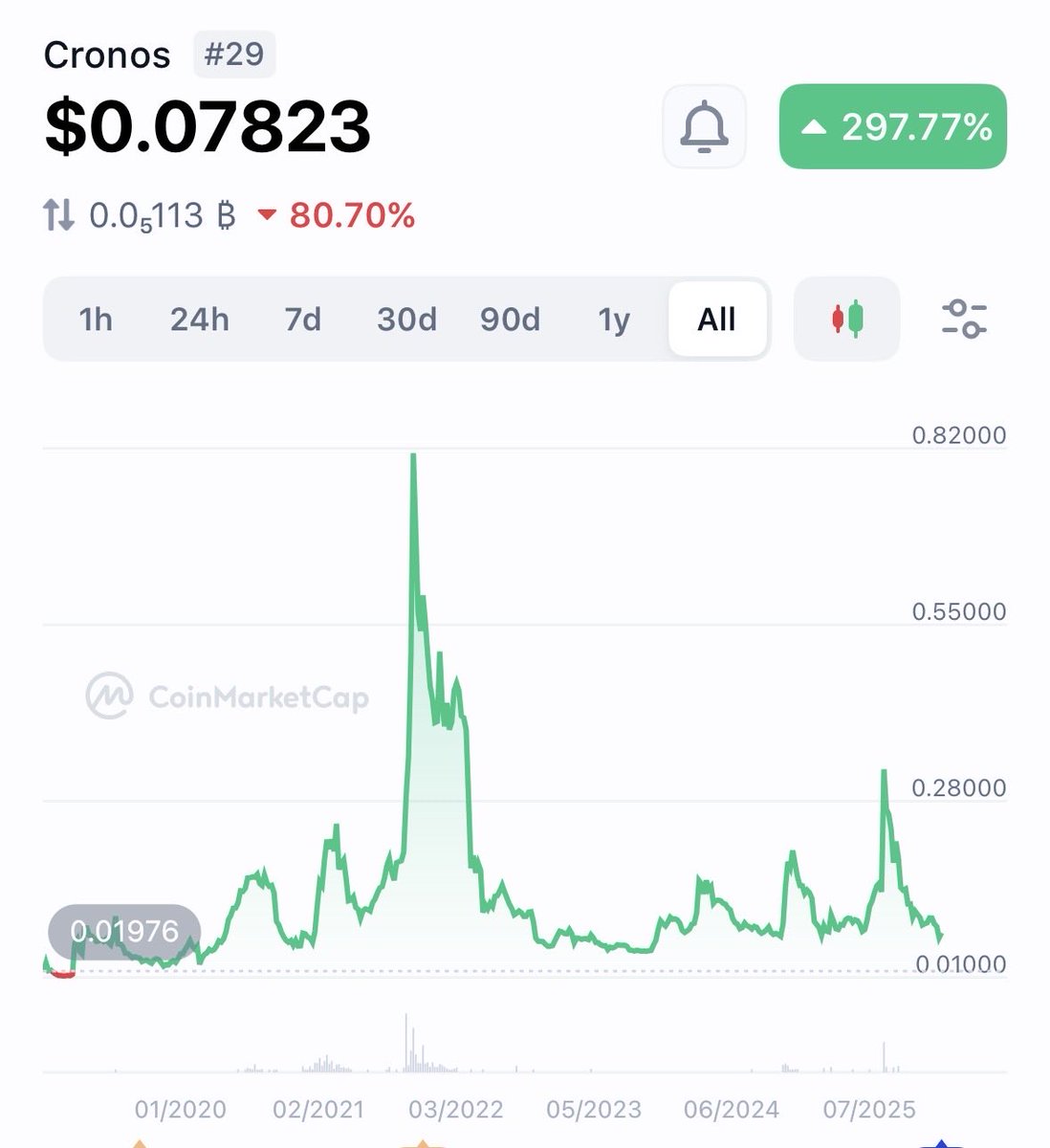
Crypto markets have now officially erased over -$1 TRILLION of market cap since October 6th.
But why?
The answer to this question seems to be more technical than fundamental.
That is, crypto adoption is still at record highs, de-regulation is in full swing, and technology is advancing rapidly.
However, leverage is at unprecedented levels which is amplifying moves in the market, such as the $20B liquidation seen on October 10th.
As a result, when uncertainty arises or technical momentum fades, downward swings are amplified.
300,000 traders are being liquidated PER DAY on average and the market has evolved into its most reactive form in history amid Trump posts and headlines.
The long-term thesis is stronger than ever, but the short-term picture points to larger swings in both directions.
Leverage is a wild "drug."
263
469
3,890
575,450

30 Oct 2025
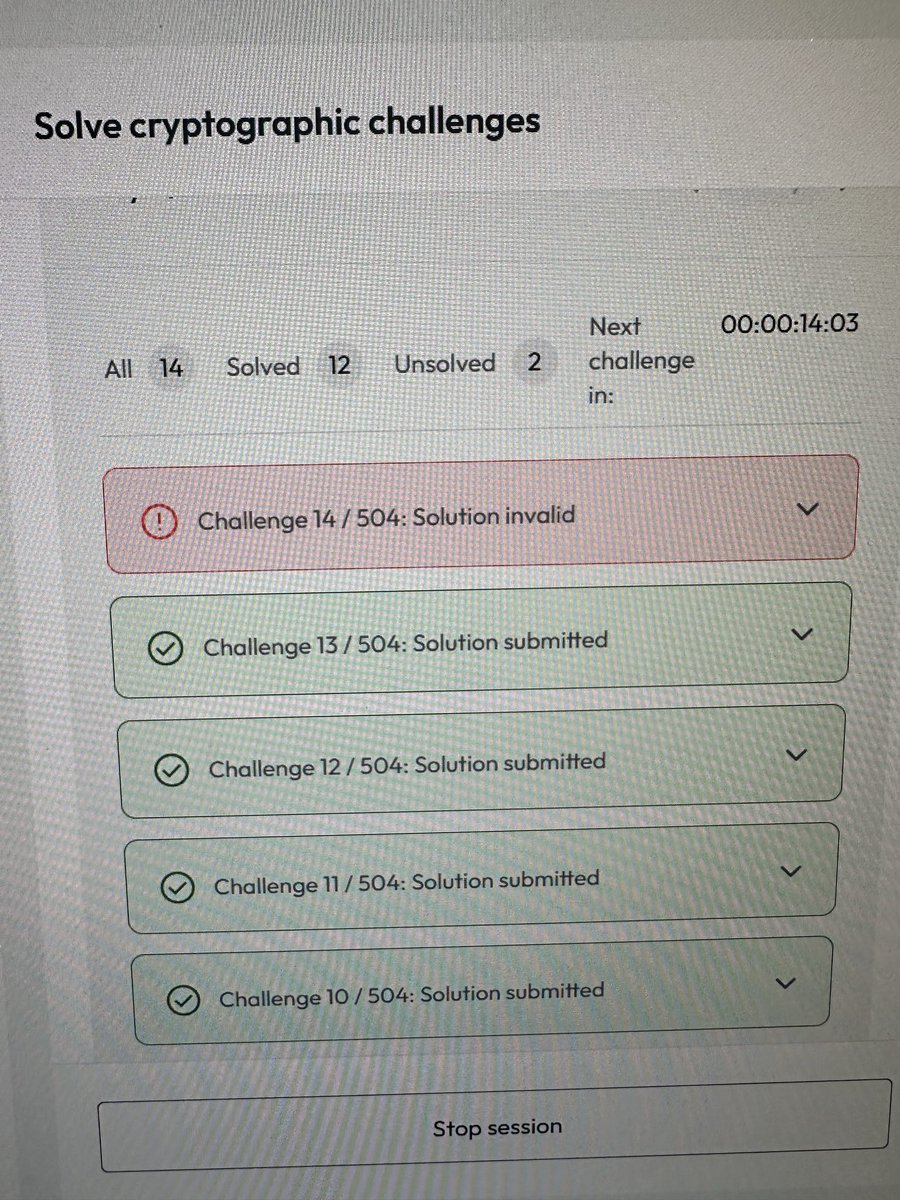
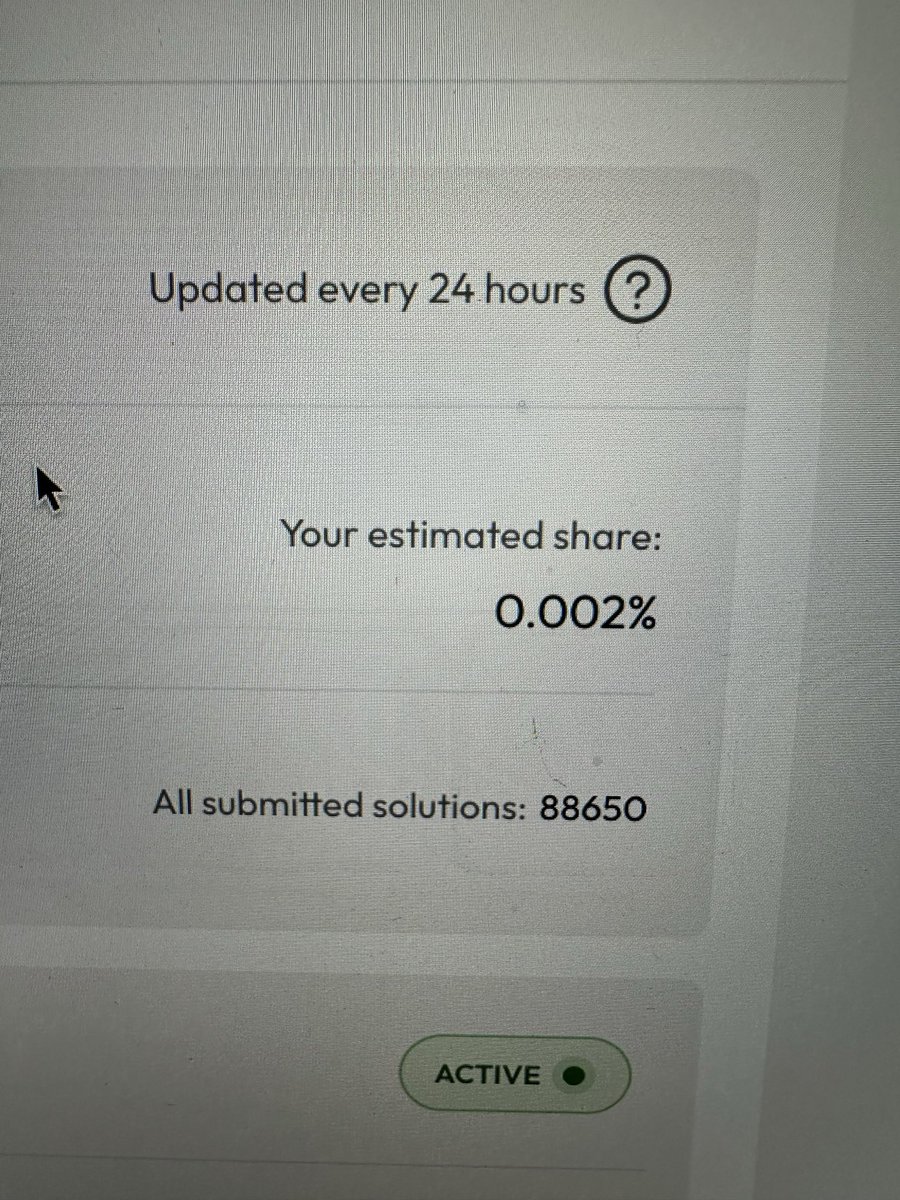
The @MidnightNtwrk scavenger mine went from 8000 solutions submitted in the first hour to 88,640 solutions submitted. 😳
15
4
94
6,684
30 Oct 2025
Is there a way to punish your computer when it fails to solve the challenge? 🤬
4
239
C₳P retweeted
28 Oct 2025
What if every weather decision you made lived inside your map?
@WeatherXM the world’s first decentralized weather network is now natively integrated with @Esri ArcGIS, the global standard for mapping and spatial analytics.
This partnership brings hyperlocal, verified weather data straight into the tools governments, utilities, and enterprises already rely on every day.
➤ Real-time weather layers inside ArcGIS dashboards and Living Atlas
➤ Ground-truth observations for better model validation
➤ Microclimate insights where decisions actually happen at street level
Because when weather, assets, and crews live on the same map, insight becomes action.
Read the full story below.

2
7
22
1,863

Yesterday, we dropped the Stuff Whitepaper v2 by @joshualeestone FTs on Cardano! 5M of them!
FACTS:
-You needed the Stuff Whitepaper v1 to qualify.
-Each v1 Whitepaper was worth 10,000 v2 Whitepapers.
-Why Fungible? Read it and find out why a big part of our future is Media Tokens.
-Then share some with your friends and get them hooked on web3!
If you wanted it @base :
The Base edition is available to be claimed for free: stuff.io/book/stuff-io-white…
6
18
98
11,285

REMINDER: HOTSPOT Giveaway! 👻
How to Enter:
- Tag a friend
- Like & RT
- Follow @helium & @heliumbuilders
*US only, 3 winners will be chosen! GA ends 10/31!

360
364
569
47,016
HELIUM HOTSPOT Giveaway!
How to Enter:
- Tag a friend
- Like & Retweet
- Follow @helium & @heliumbuilders
*US only, 3 winners will be chosen!

343
331
543
40,685
C₳P retweeted

8 Oct 2025
🌎 The wait is over.
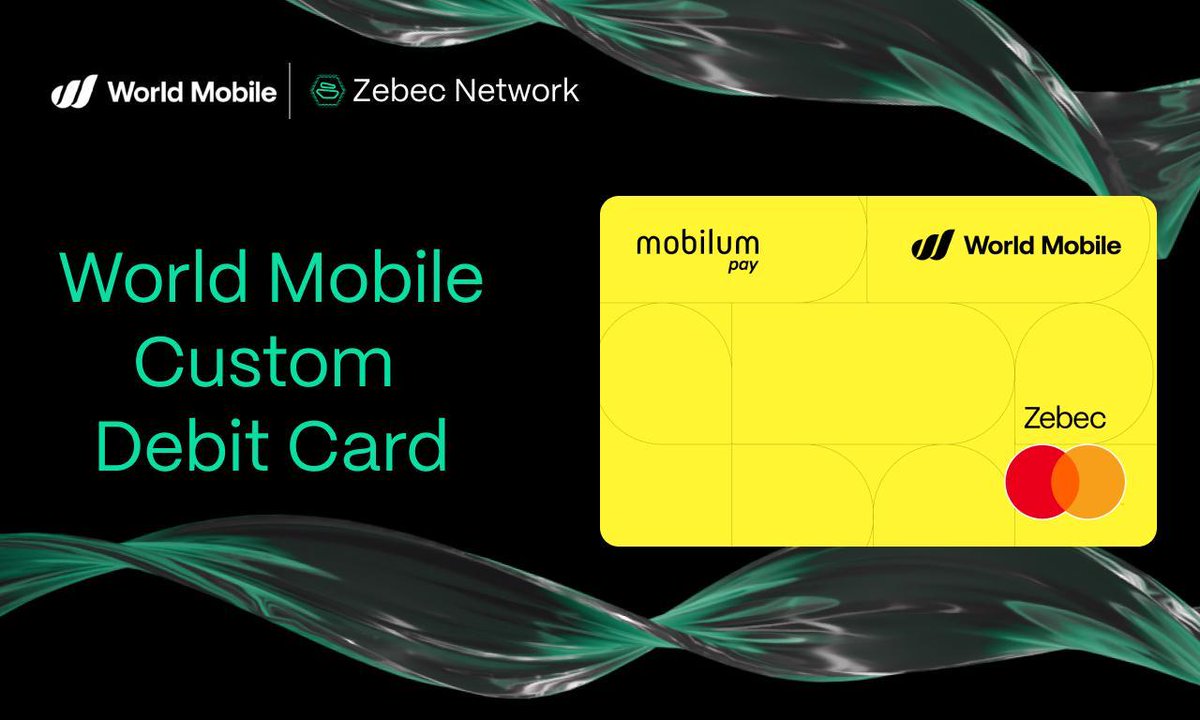
The @wmchain x Zebec Card is now live! 🚀
World Mobile community members can now get their own custom debit card — reloadable, limitless, and ready to use for everyday payments, including your World Mobile phone plan.
Stay tuned for upcoming news on the ZebecNET launch. 🔜
Get yours now: worldmobile.zebec.io
56
206
666
40,223
7 Oct 2025
Does anyone have any alpha on the @Minutes_Network airdrop to $WMTx holders?
Did it already happen?
13 Jun 2024

We are excited to be announcing our next Spaces on Wednesday June 19th at 2pm CET.
Micky Watkins, CEO of World Mobile will be joining us to discuss details surrounding the airdrop to WMT holders, Unity and further developments.
📅 Wednesday the 19th of June
⏰ 2pm CET
🔗 x.com/i/spaces/1OyJAWVekNqKb
8
3
28
2,242
C₳P retweeted

25 Sep 2025
🚨" [ $WMTx could be ] the lowest cap token IN HISTORY to have a public company holding it in their treasury " - @AltcoinDaily
Top #4 largest chain ◀️▶️ #355 by MC
Let that sink in!
Could the Wall Street rumour be true... ?
7
50
184
6,095
C₳P retweeted

18 Sep 2025
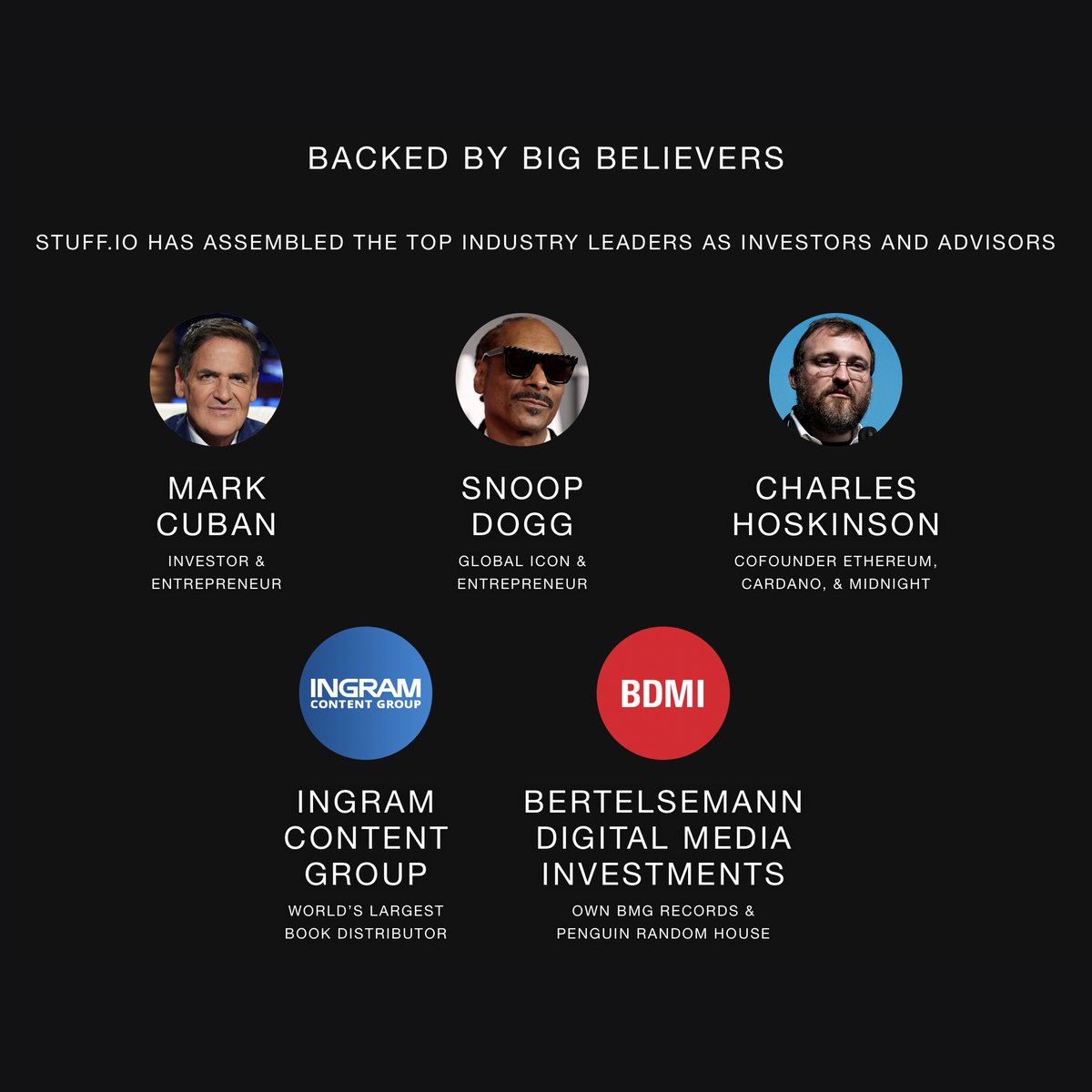
Thrilled to welcome @SnoopDogg to the @Stuff_io cap table & advisory board—joining legends @MCuban, @IOHK_Charles & @IngramContent. Press release first asset sale details coming soon. Thanks to @DeathRowRecords crew, our team, and our awesome community!
110
281
1,045
177,655
C₳P retweeted

15 Sep 2025
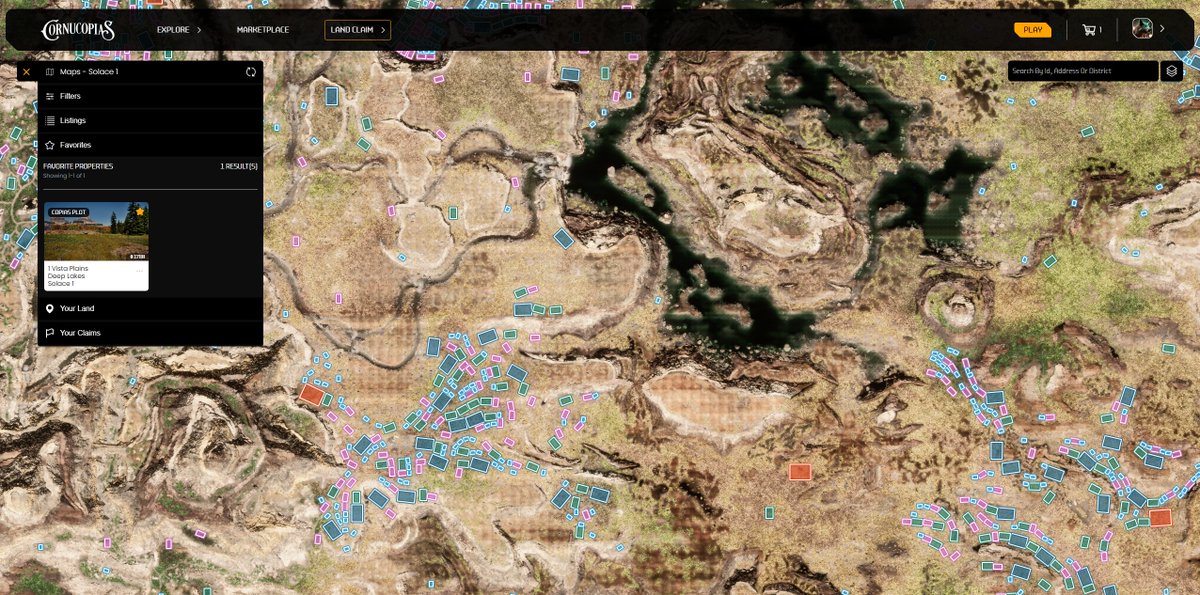
🛠️ URGENT - ATTENTION LAND PLOT HOLDERS! 🛠️
It is imperative to get in NOW and get your land plot favorites LOCKED IN. ⏰
cornucopias.io/game-maps
32
77
226
13,192
C₳P retweeted

12 Sep 2025
They call that utility. Sign up for @WorldMobileTeam other website at -
worldmobile.io/

8
10
83
4,952
C₳P retweeted
8 Sep 2025
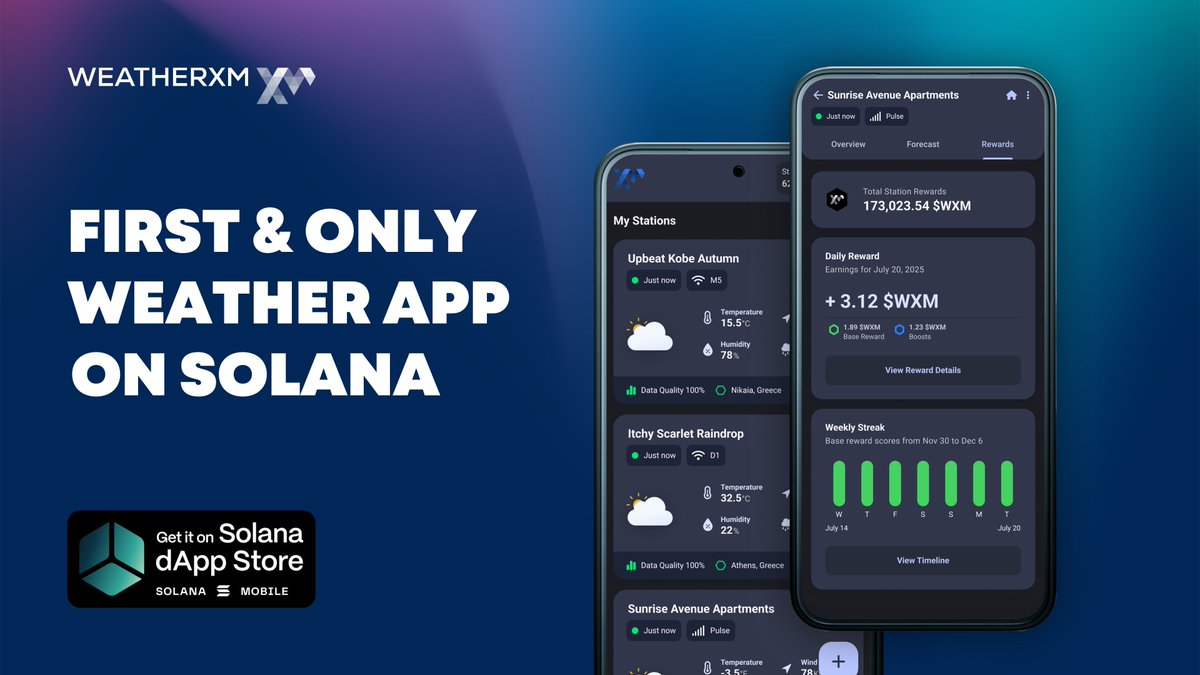
We’re LIVE on the @solanamobile dApp store!
To celebrate, we’re giving you 25% OFF all Weather Stations this month.
Use code 'depinsummer'
With your WeatherXM station you can:
→ Earn daily tokens
→ Power global weather data
→ Manage your station directly on @solana
Don’t miss out, limited time only!
6
2
29
1,194
C₳P retweeted

6 Sep 2025
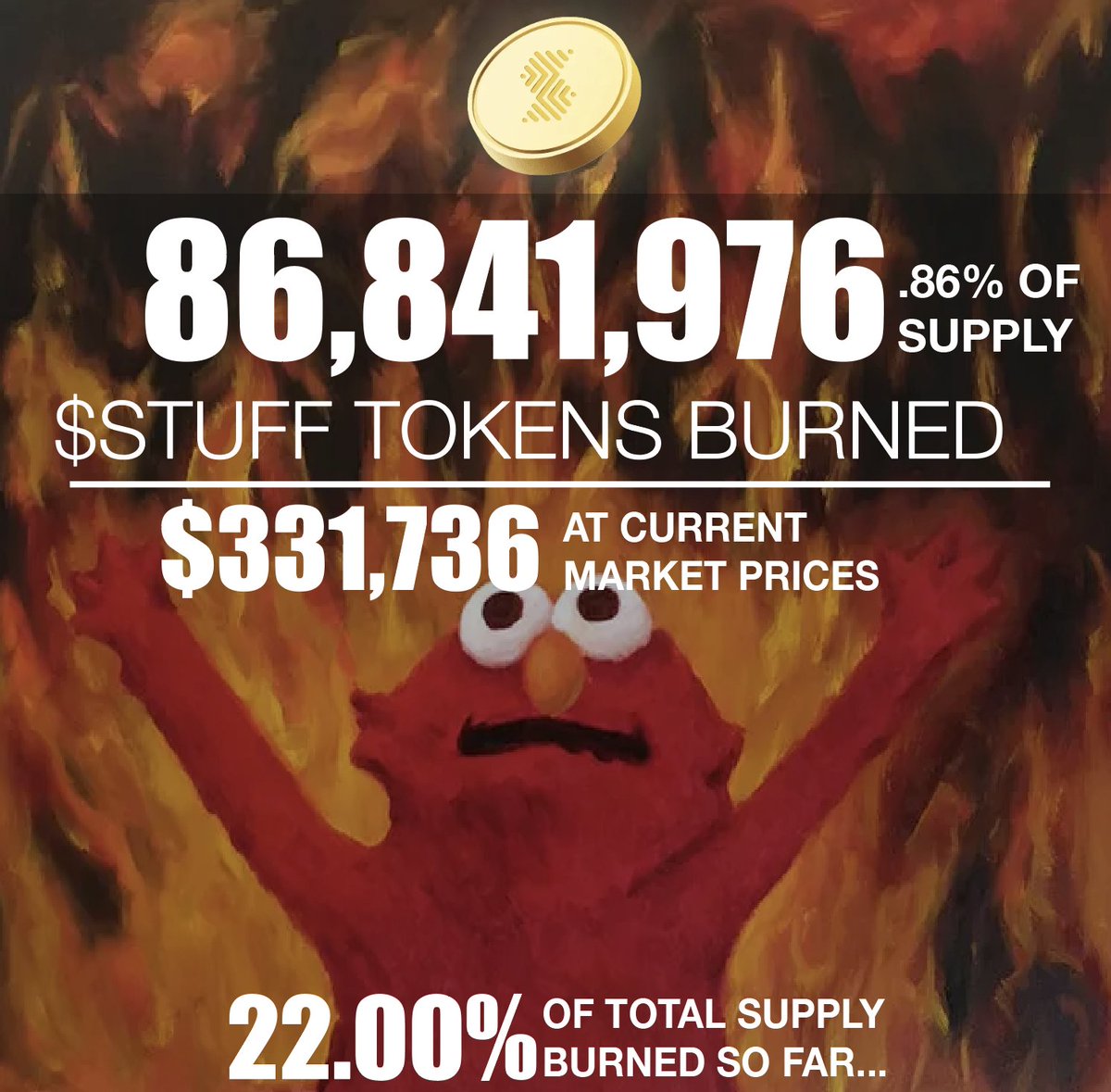
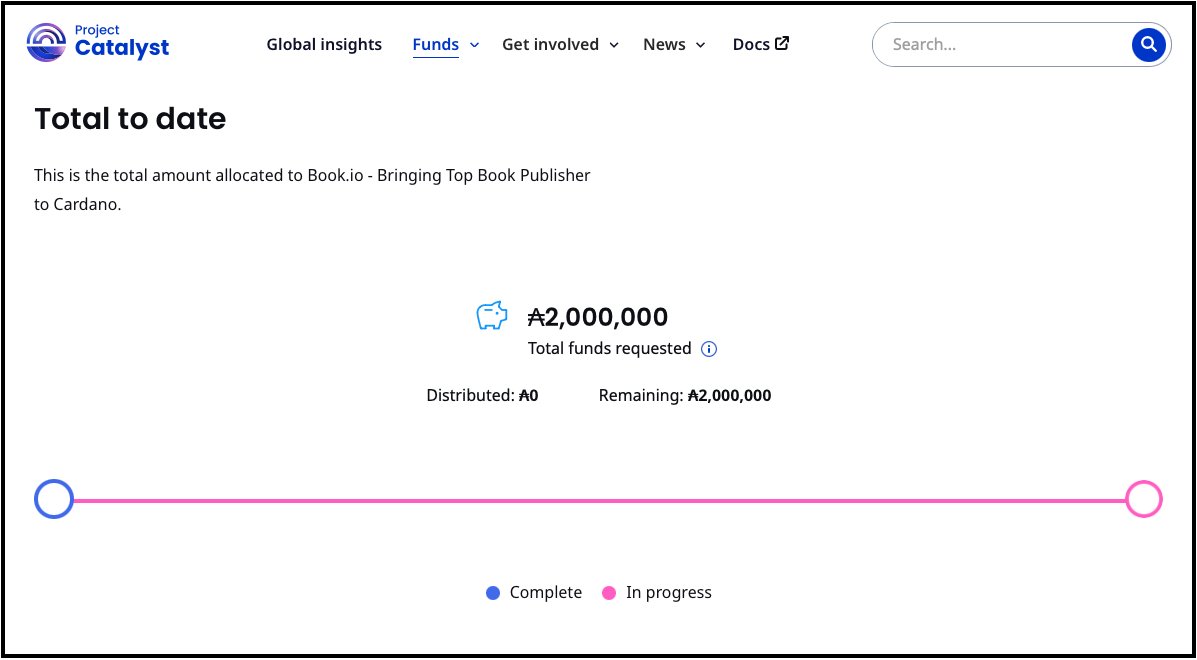
For everyone who forgot. @stuff_io is receiving 2,000,000 $ADA that will be used to bring 60,000 novels onto the blockchain. This will mark the arrival of one of the world’s largest publishing houses on #Cardano and one of the biggest news stories in the #crypto market.
OWN YOUR $STUFF
27
78
388
18,833
6 Sep 2025
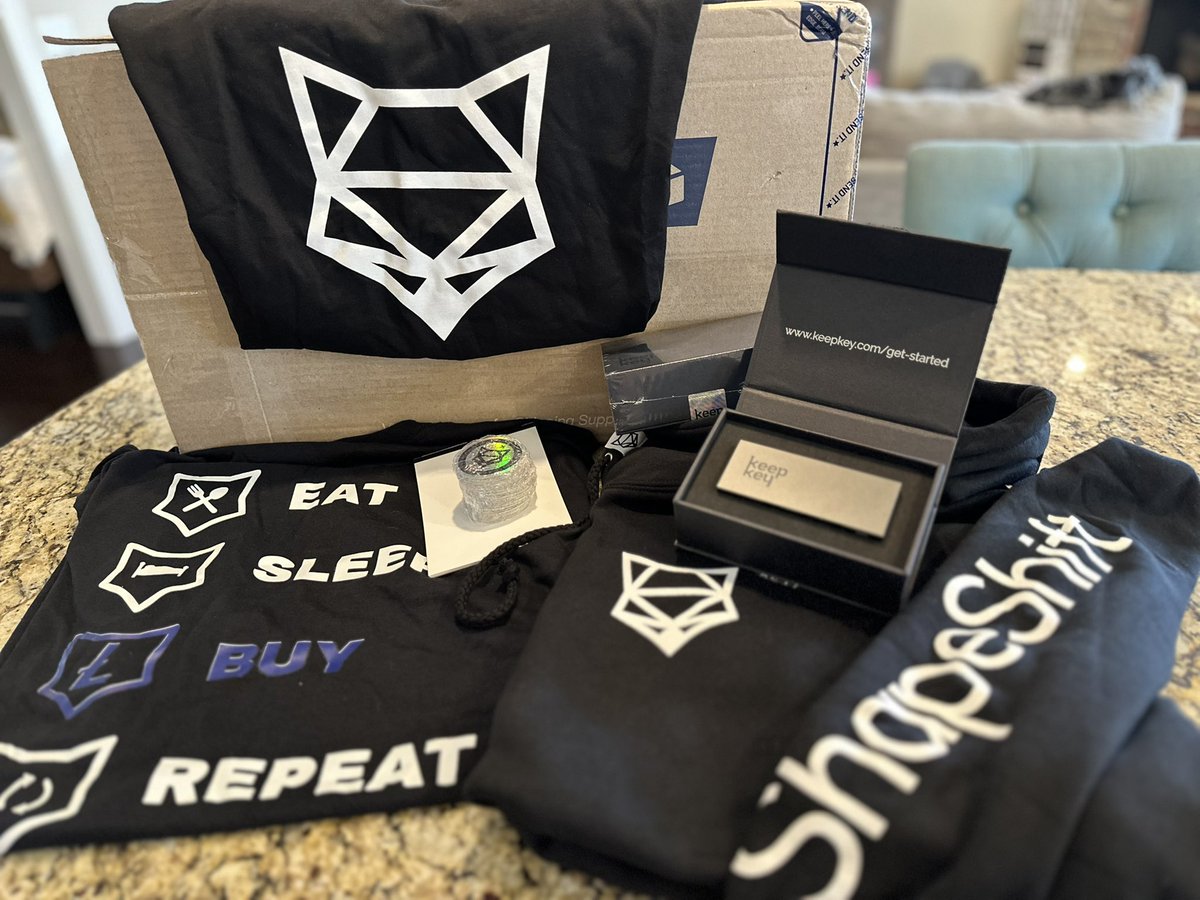
An incredible package came in from
@hpayne_writer head of marketing for @ShapeShift!!!! ARE YOU KIDDING ME!?
✅ 2x Shapeshift t-shirts
✅ 1x Shapeshift hoodie
✅ 2x Keep Keys from @cryptokeepkey
✅ 1 stack of stickers
✅ Thank You card
THANK YOU!!! 🙏🏽🙏🏽🙏🏽🙏🏽🙏🏽🙏🏽🙏🏽🙏🏽
I have worn my last Shapeshift shirt out so many times, I needed a re-fresh.
The one stop shop for control of your own keys, easy swaps, strong multi-chain support, no KYC, and community-driven development ⤵️
shapeshift.com
If you’re after a secure, intuitive, visually-clear, and affordable hardware wallet, KeepKey is an excellent choice ⤵️
keepkey.com
7
2
21
1,560
C₳P retweeted

3 Sep 2025
I need some help
(and yes, this is me officially frontrunning the @ShapeShift announcement on the 15th 🤷♂️)
I am relaunching @base support on ShapeShift and want to connect to dapps, builders, and creators in that ecosystem!
We have some SUPER cool tech that is being built out in that ecosystem that will be a significant quality of life improvement for anyone who is on that chain.
Anyone down to chat?
2
2
13
407