
Mailing Member of the Communist League of the People's Republic of Rome, Head of the Latte Division of the Atheist Society in the Great Song Empire
Joined December 2020
- Tweets 2,372
- Following 22
- Followers 48
- Likes 2,216
229 Photos and videos








Jun 12
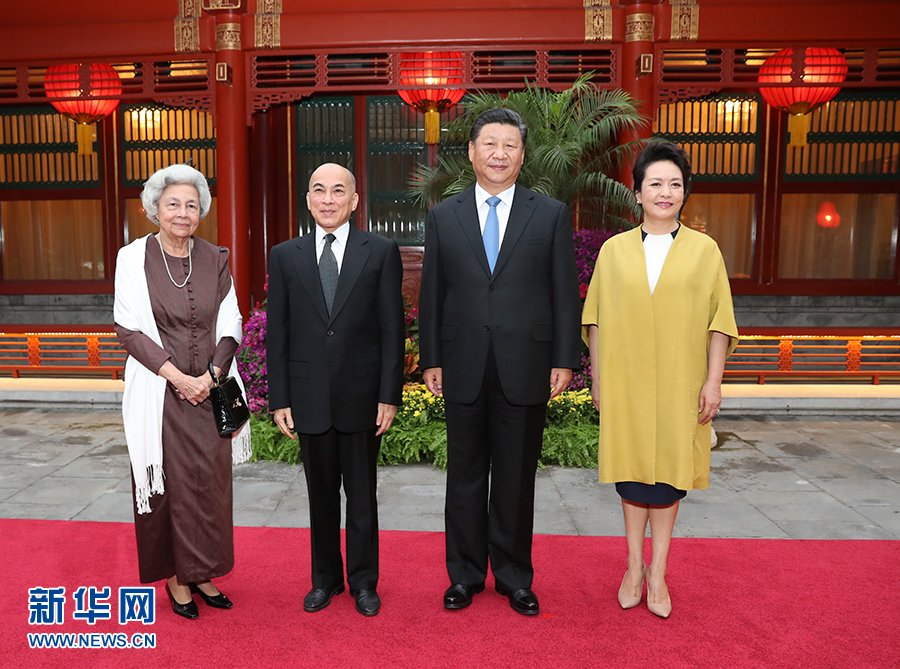
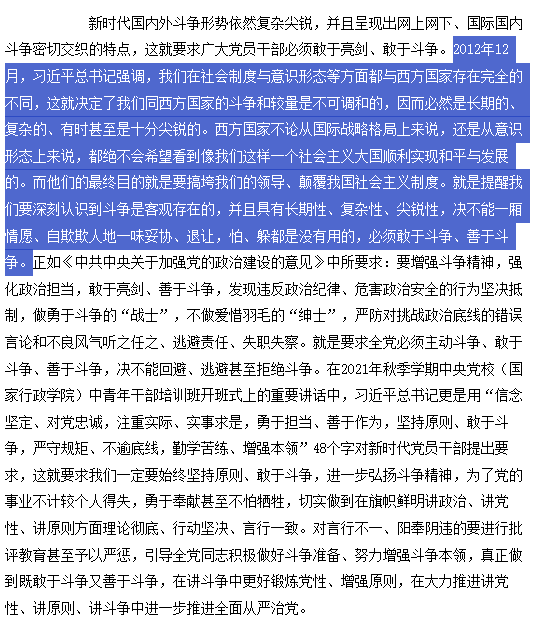
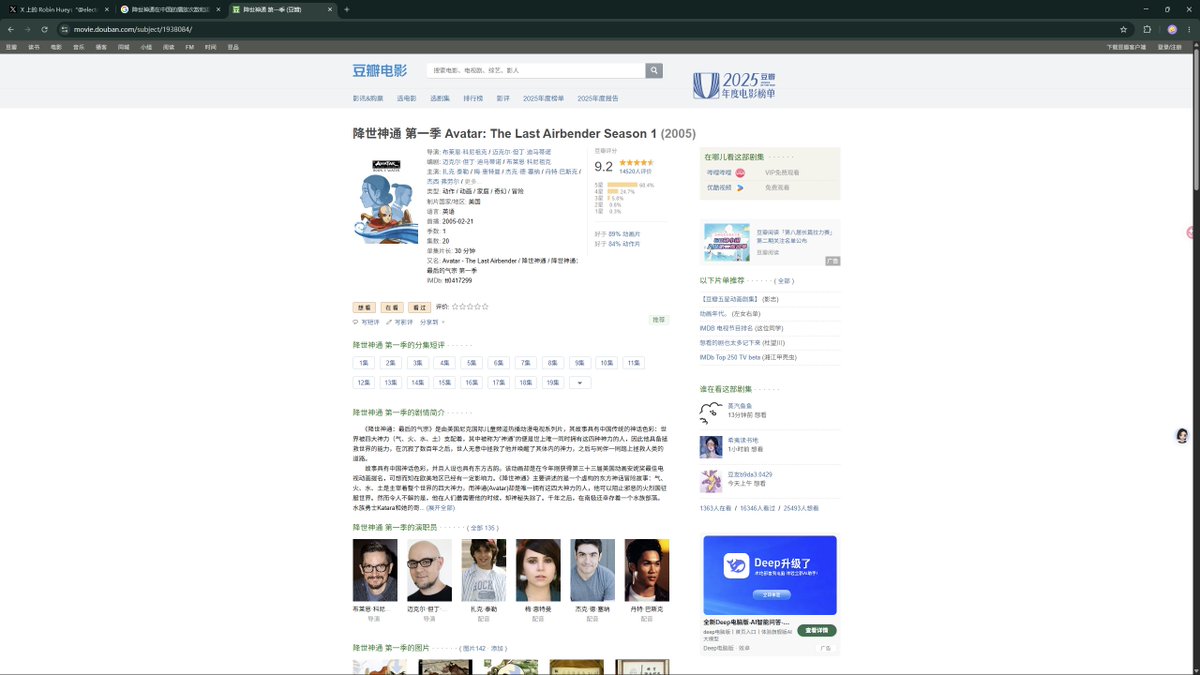
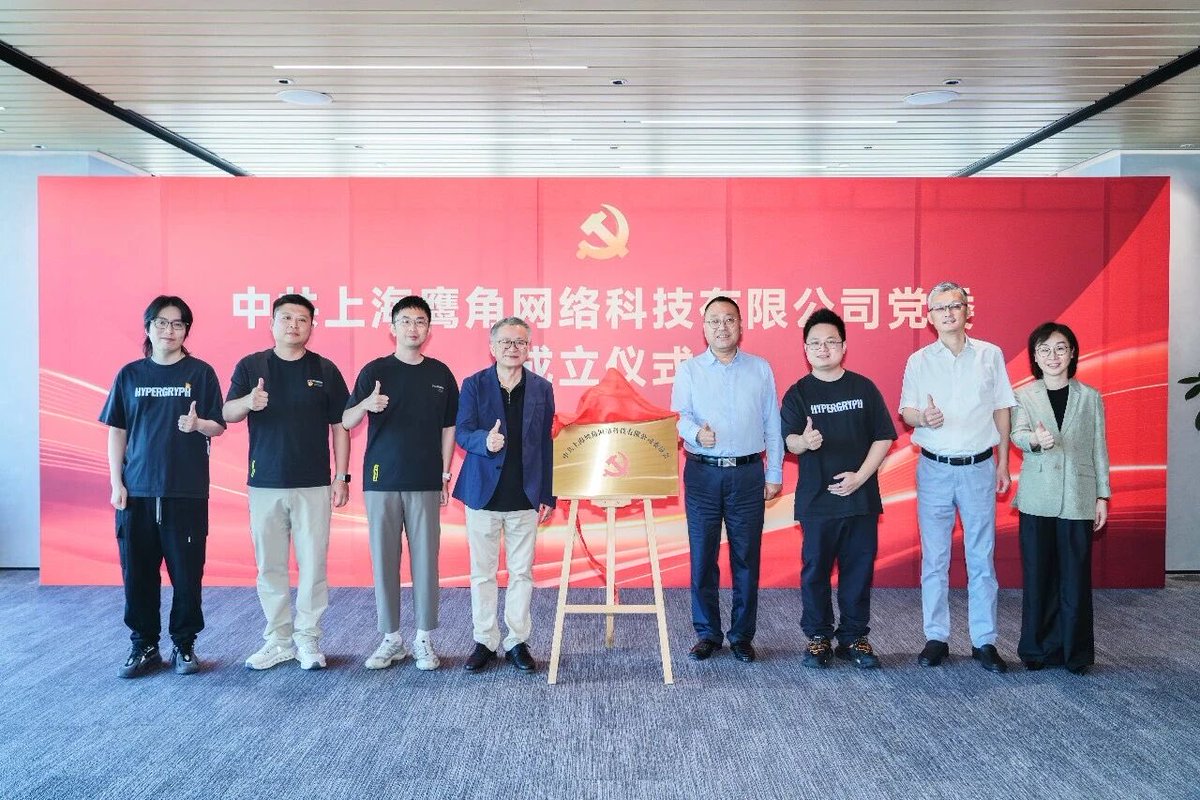
恭喜!中共鹰角网络委员会正式成立!2022年党员人群超过50人,开始筹备成立党总支部,2026年党员人数正式达到100人。海猫络合物任党委副书记。mp.weixin.qq.com/s/cjRmJBMz-…
#明日方舟ㅤ #Arknights #アークナイツ
156
螺螄粉安撫查訪使 retweeted

Jun 8
我并不支持,因为 A 起源于 B,所以 A 就永远属于 B,任何后来的发展都不算独立文化这一观点。
你这是典型的稻草人谬误,我压根就不支持这个。这也不是我的观点。
事实上就我所举的几个例子,韩服、泡菜以及K- K-Korean New Year。
我想要表达的是,我反感的是,一个文化起源于中国,但是韩国人用了,就声称这是韩国的文化,更进一步地否定说,这不是中国的文化。
我反对的是这个,我举的例子也举的是这个。你的回答有些扭曲了我的观点。
我不反对韩国人去使用这个文化,但是我反对他们去声称这个是他们自己的文化,并更进一步地声称中国没有这个文化。
事实上,如果不是韩国人总是在互联网上面出警,总是在 X 上面声称中国的汉服是韩国的,更进一步的是,在中国画师画韩、汉服的时候,直接大量的出警,大量的留言谩骂,说这是韩国的东西。
即便是有些韩国人说什么东亚要团结,阴戳戳地画了个图,也会非常恶心地给日本、韩国画上汉字的汉服,给中国换上满清的满服。
你认为这是可以接受的吗?
他用可以,但是他不能声称这是自己的,更不能更进一步地声称这不是中国的。

5
1
12
1,004
Jun 7
台北的政客们显然是习惯了X上网络骂战中常用的逻辑“只要北京生气了,就说明我做对了”。

If you understand this story, you’ve understood much there is to understand about geopolitics around Taiwan.
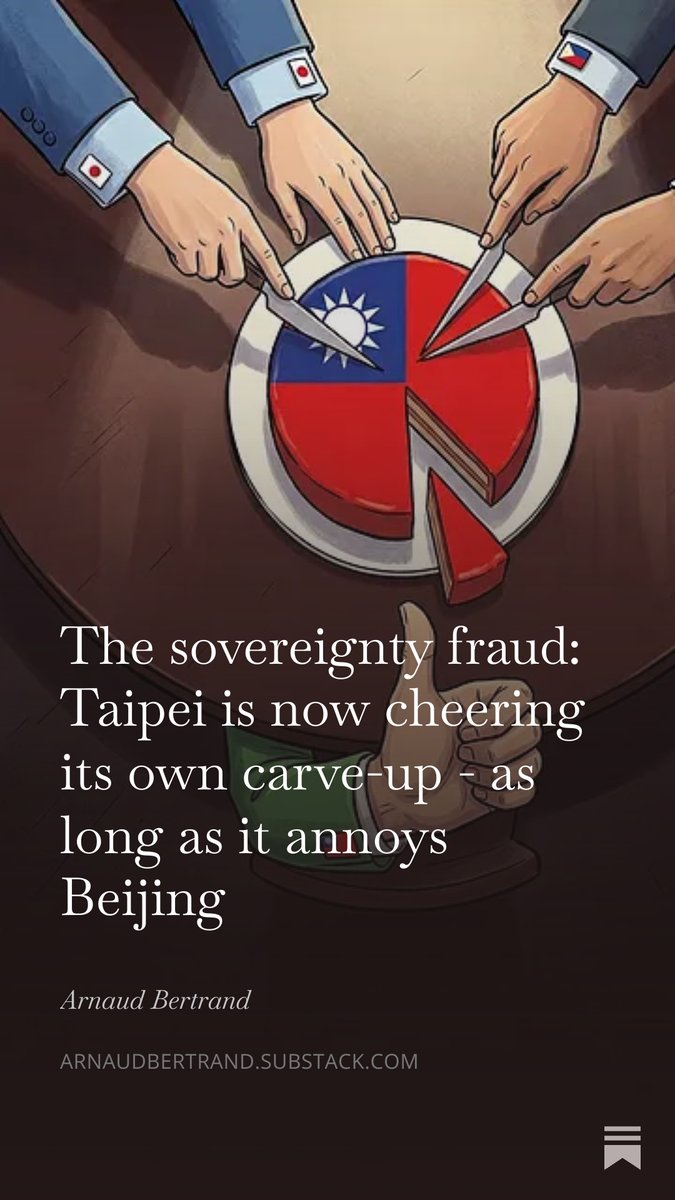
The current DPP government is quite literally cheering its own carve-up - as long as it annoys Beijing.
Here is what happened.
So recently, May 28th, Japanese PM Takaichi and Philippines President Marcos Jr. issued a joint statement (mofa.go.jp/files/101035755.p…) announcing they would open negotiations to delimit their overlapping EEZ and continental-shelf boundaries.
As a reminder, an EEZ - Exclusive Economic Zone - is the area extending 200 nautical miles from a country's coastline within which that country has exclusive rights to exploit all natural resources.
Small problem: their EEZs directly overlap with China's, both from Beijing’s standpoint and Taipei’s, as they are less than 200 nautical miles from Taiwan’s coastline.
In effect, what Japan and the Philippines are announcing here is that they're agreeing bilaterally - without Beijing or Taipei at the table - to split between themselves waters that belong, in part, to someone else.
Unsurprisingly, that didn't sit well with Beijing. They issued a statement the day after - 29th of May - where they "strongly deplore and firmly oppose the so-called maritime delimitation talks between Japan and the Philippines" (english.news.cn/20260529/bf5…).
Any rational person would have expected Taipei to issue a similar statement because, whatever you think of Beijing's claims, it's the EEZ around Taiwan we're speaking about here: surely they'd object to other countries carving up the resource rights off their coastline.
It's actually one thing Beijing and Taipei have aligned interests on: neither wants its maritime entitlements carved up by third parties.
As a reminder Taipei rejected the infamous 2016 Hague arbitration ruling on the South China Sea - siding with Beijing against Manila - for the same reasons: because the tribunal downgraded Taiping (Itu Aba), the largest feature in the Spratlys that Taipei occupies, from an “island” to a “rock,” which would have stripped it of its 200-nautical-mile EEZ.
In other words, defending their own EEZ is normally sacrosanct for Taipei.
Except... not this time. Taipei issued an angry statement, yes, but where the anger was entirely directed at Beijing. The statement (en.mofa.gov.tw/News_Content.…) explicitly “commend[ed] Japan and the Philippines for working to resolve maritime differences”, reserving its sharp language to China because it "has no right to comment on the territory and appertaining waters of the Republic of China (Taiwan)."
Think for a moment about what it says about Taipei’s current DPP independentist government: the party that claims to champion Taiwan's sovereignty literally celebrated, as its first instinct, two countries announcing they'd carve up Taiwan's maritime territory between themselves. All because Beijing opposed it.
This caused quite a stir in Taiwanese politics, with the KMT calling the statement “humiliating,” warning that cheering the talks without seeking a seat in negotiations over the overlapping EEZs could seriously hurt Taiwanese fishermen's livelihoods in the future (focustaiwan.tw/politics/2026…).
So much so that Taipei’s MOFA had to issue a new statement on June 2 specifying that the Japan-Philippines talks "should not impair our country's rights", with MOFA spokesperson Hsiao Kuang-wei finally acknowledging the delimitation waters “highly overlap” with Taipei's EEZ.
But then, confusingly, 2 days after - June 4 - Foreign Minister Lin Chia-lung undercut his own ministry’s correction entirely (cna.com.tw/news/aipl/2026060…). The Japan-Philippines talks, he explained, are “aimed at China” and therefore, fundamentally good - Taipei's EEZ being carved up in the process being, apparently, a minor detail.
China protesting the talks, he said, is “getting cause and effect backwards” and he branded “the handful distorting the issue and shifting the focus” - i.e. anyone pointing out that Taiwan's EEZ is being carved up - as “falling into a trap and letting China benefit.”
So the same ministry, within 48 hours, both (a) asked Tokyo and Manila to guard against a danger to Taiwan's EEZ, and (b) declared that danger nonexistent and smeared anyone naming it as a Beijing stooge. Go figure 🤷
But this is actually just one part of a much bigger story - one about colonial nostalgia, about the three competing visions at play for Taiwan, and about why the West champions the one party in Taiwan that does NOT actually defend sovereignty and democracy.
I wrote it all up here: open.substack.com/pub/arnaud…
1
133




螺螄粉安撫查訪使 retweeted

May 26
这里头唯一一个来自你中的可能是那个机器人
13
5
317
33,882
螺螄粉安撫查訪使 retweeted

May 27
大したことじゃないと思います。ただたまたま不吉とされる数字だっただけです。私たちの方では「4」と「7」の数字を比較的忌み嫌う習慣があり、特に広東一帯では7に敏感で、広東の他の地域はわかりませんが、


14
6
50
9,823
Feb 14
The best answer.
This is probably the single feature that makes China most unique as a civilization in human history: it is pretty much the only one where religion never had a say in political affairs.
We often wrongly believe that China's secularism came with Communism but this couldn't be more wrong. The roots are far, far more ancient than this.
Think about any other civilization - India, Persia, ancient Egypt, European civilization, the Incas: they all had a priestly class that held considerable political power. China? Never.
Never, ever? Actually China, in its very early history, had a brush with theocracy during the Shang dynasty in the 2nd millennium BC. And it is precisely this episode - or rather what came afterwards - that decisively de-linked religion from government affairs.
How so? Because around 1046 BC, the Zhou overthrew the Shang and immediately faced a big problem of legitimacy. The Shang had claimed to rule because Heaven had chosen them. If that were true, then the Zhou had just committed the ultimate act of sacrilege. How do you justify going against God’s will?
The answer the Duke of Zhou (who can thus be credited as the - perhaps unwitting - inventor of secularism) came up with was essentially to say that Heaven's mandate is not a birthright but a contract - conditional on the virtue of the ruler and good governance.
It might not sound like much but this idea completely changed the whole equation: suddenly the legitimacy of power didn’t rest on God’s will but on man’s moral judgement, on whether the ruler had virtue (德, Dé) and governed well. Which meant that, ultimately, the people - as opposed to a God - became the arbiter of whether a ruler is legitimate.
If there is one single decision that most shaped China's destiny as a civilization, it's probably this one. And, as I explain in my latest article, it ultimately shaped all of us in profound ways: through a chain of events involving Jesuit missionaries, Voltaire, and what French Enlightenment thinkers called "l'argument chinois" ("the Chinese argument"), it is this very idea that ended up secularizing Europe too and drove the Enlightenment movement.
That's the topic of my latest article: the origins of China's secularism, how it shaped three thousand years of Chinese civilization, and why - far from being a belief in nothing or an absence of belief as it's all too often depicted - it's on the contrary a faith in humanity itself.
Read it all here: open.substack.com/pub/arnaud…

152
Jan 10
恩和民族乡户籍人口2631人(2018年末),乡里面只有一半是俄族或华俄混血,也就是一千人不到。
行行好,一千个俄罗斯人,你让他们说俄语,他们都嫌麻烦。
Jan 9

内蒙古恩和是中国的俄罗斯族民族乡,这里到处是白桦树、西伯利亚风格木屋和伏特加,但在族群融合的政策背景下,恩和人已与祖先的语言、传统和东正教信仰失去了联系。
cn.nytimes.com/china/2026010…
1
3
682
螺螄粉安撫查訪使 retweeted

Jan 2
The short answer is: yes, the cycle can break.
But not in the way Hollywood trained us to expect.
It will not be one great clash.
It will not be Russia or China riding in as saviors.
It will be something slower, uglier, more boring, and more irreversible.
Let me break it into pieces.
1. No one is coming to "save" us.
First, we have to kill the savior fantasy.
Russia, China, Iran, the BRICS, whoever, they are not charities.
They are states with their own interests, traumas, and limits.
China does not want a direct war with the U.S. over Palestine or Lebanon.
Russia does not want a direct war with NATO over Gaza.
Iran does not want full-scale war that could tear it apart internally.
They push at the edges:
Energy deals. Arms to resistance movements. Diplomatic cover. De-dollarization. Infrastructure.
They are trying to weaken the empire without triggering Armageddon.
So if we are waiting for a clean "counter-empire" to knock Washington and Tel Aviv off the board in one move, we will wait forever.
There is no "good empire" coming.
There is only the possibility of a world where no single empire can do what the U.S. and Israel are doing now with total impunity.
That is the real horizon.
2. What actually keeps this cycle going?
U.S.-Israeli impunity rests on three pillars:
1. Material power
Dollar system, SWIFT, control over shipping lanes, tech, patents, credit, sanctions, supply chains.
2. Military architecture
Bases everywhere, forward deployments, nuclear umbrellas, missile defense, and the training and arming of regional client regimes.
3. Narrative control
Western media, platforms, Hollywood, think tanks, NGOs, "experts" who turn massacres into "security dilemmas" and colonization into "conflict."
You do not break the cycle with vibes or Twitter outrage.
You break it by eroding these three pillars until the cost of empire is higher than the benefits.
That is already happening. Slowly.
3. Where Russia, China, and others actually matter.
They cannot topple the U.S. and Israel in one gesture.
But they can, and already do, make the machine less absolute.
A few examples of how, in principle:
Economic exits:
Every oil contract not denominated in dollars, every payment system that bypasses SWIFT, every port, rail link, and fiber cable that does not run through U.S.-controlled chokepoints makes sanctions weaker as a weapon.
Arms and deterrence:
When countries under siege can access air defenses, rockets, drones, and cheap asymmetric tools, occupation becomes expensive.
That does not liberate the world.
But it makes extermination harder and "easy wars" rarer.
Institutional alternatives:
Regional banks, courts, and security arrangements outside U.S. control mean that if Washington calls you a "terrorist" or freezes your assets, you still have somewhere to breathe.
Symbolic breaks:
When big states refuse to join sanctions, refuse to parrot Western narratives, and publicly call Gaza a genocide, the U.S. loses its favorite weapon: the illusion that it is "the international community."
None of this is glamorous.
It is not a cinematic liberation.
It is the slow process of turning an empire from a god into a large, dangerous country that other large, dangerous countries can say no to.
4. What will not break the cycle:
A single election in America.
A new "deal" with Israel.
A UN resolution.
A heroic speech from a Western politician.
These things can reduce suffering at the margins.
They do not change the underlying hardware.
As long as the dollar, the bases, and the narrative machine stay as they are, any "restraint" is a tactical pause, not a transformation.
5. Where we actually come in?
The answer is uncomfortable: part of the work is theirs (states), and part of the work is ours (societies).
States outside the empire’s core have to:
Build deep South-South economic links so sanctions hurt less.
Invest in real industrial capacity, not just exporting raw materials.
Create media, universities, and cultural circuits that don’t beg Western approval.
Coordinate politically so that when one is attacked, others cannot be quietly picked off or bribed away.
Societies, including inside the U.S. and Europe, have to:
Refuse the story that their "security" requires someone else’s open-air prison.
Turn public opinion into a threat to empire, not a lubricant.
Make it politically expensive to arm genocide and call it "self-defense."
Keep historical memory alive so every new atrocity cannot be sold as an exception.
The cycle of imperialism breaks when:
The empire cannot pay for it as easily,
Its soldiers no longer want to fight for it,
Its own population no longer believes the script,
And the rest of the world has enough alternative networks that saying "no" is survivable.
We are not there yet.
But the direction of travel is not what Washington thinks it is.
6. So is there "any chance"?
Yes.
The chance is not a miracle event.
It is a curve.
U.S. and Israeli power are still enormous.
But the fear they generate now comes with a visible counter-current:
Refusals. Boycotts. Leaks. Alternative alliances. Economic workarounds. New media ecosystems.
Empires do not fall the day they become evil.
They fall the day the cost of staying in character becomes higher than they can bear.
Financially. Militarily. Psychologically.
Our job is not to predict the exact moment.
Our job is to push that curve.
To starve their narratives of legitimacy.
To support every real alternative that loosens their grip.
To understand that "multipolarity" is not about loving Russia or China or anyone else, but about making it impossible for any one axis to do what the U.S. and Israel are doing now and still call it order.
So no, my friend, I don’t believe in a clean rescue by some rival empire.
I believe in a long, uneven, already-begun process where the ability to bomb, starve, and colonize with zero consequence shrinks year by year.
That is how the cycle breaks.
Not with a trumpet.
But with a thousand cracks that one day suddenly look like a broken wall.

I always love your analysis Sony. I have to ask though, is there any chance of breaking this cycle of imperialism by the US and Israel: whether by Russia, China or other contenders as you called them? And how if I may add?
❤️
134
966
2,246
110,203


螺螄粉安撫查訪使 retweeted

19 Nov 2025
Regarding the Russia/China non-veto regarding Gaza peace plan, it is very consistent with the way Russia and China operate diplomatically.
Russia (Putin I believe) has even said, for example, that Russia would recognize Kosovo IF SERBIA DID. Russia would also not object to Kosovo joining the UN if Serbia did not object.
If Serbia one day elects a government that wants to recognize Kosovo, who is Russia (or China) to stand in the way. China has not said this explicitly, but I think China too would do the same.
That is the way it should be.
I am sure US would veto any peace plan for Gaza had Russia or China proposed it, even if Israel elected a government that would agree to it.
That is not the way it should be.
Besides, if Russia/China vetoed the US peace plan, then they'd own Gaza war. I know people hope Russia and China would send their militaries and bomb Israel, but that is both not going to happen, and shouldn't happen, and not for my love of Israel.
Problem with the US Empire isn't that it is the US Empire but what it does. If another empire is going to replace them doing the same thing, that doesn't fix anything.
All nations should take this into consideration. Don't expect Russia or China to come to save you on an aircraft carrier. If you want a savior on an aircraft carrier, then that is the US for you. Then also expect to be the US's bitch. Maybe some nations prefer this, and that is fine too, but then don't complain you are the US's bitch.
This and other examples also show China Russia aren't interested in spreading their "system" and "will" onto others, which is something that US Empire propagandist keep saying trying to tell you that if the US is replaced by China Russia it will be the same thing, so better a US Empire than a China Russia Empire because democracy and freedom. It won't be the same thing.
Of course, as it is becoming obvious, it is not clear that many in the so-called pro-"Multipolarity" camp actually honestly believe or understand what Multipolarity, sovereignty and national responsibility means.
It's a similar malaise that exists in the Western so-called democracies. Voters don't like a government so they elect a different set of characters who do a few things differently but do not change things fundamentally. And so nothing fundamentally changes. And then the voters elect a new set of characters, who again do more-less the same, just packaged differently. Decades and lifetimes go by. And then they complain nothing changed. Of course it didn't because you never voted for a different system: you just voted for the people who said (said!) they would funnel a few more of the (dwindling) proceeds of the system to you instead of to your neighbor. And it is dwindling because it is fundamentally a corrupt system.
11
39
236
16,184
19 Nov 2025
Estonians, Ukrainians, Taiwanese, Japanese—everyone was saying, "Don't mess with me, or I'll unleash the Americans to bite you!"
18 Nov 2025

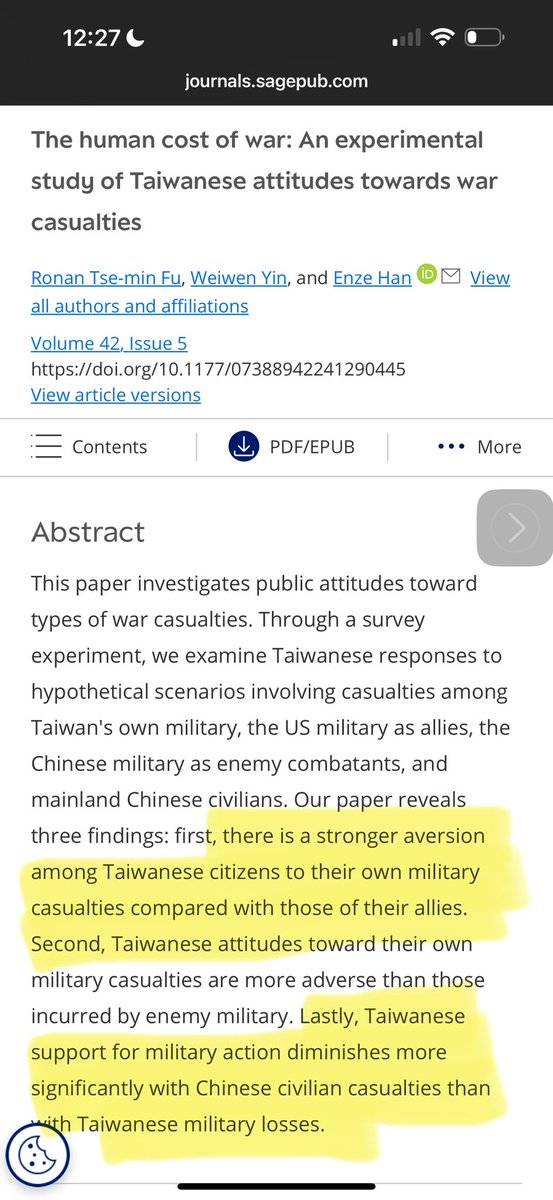
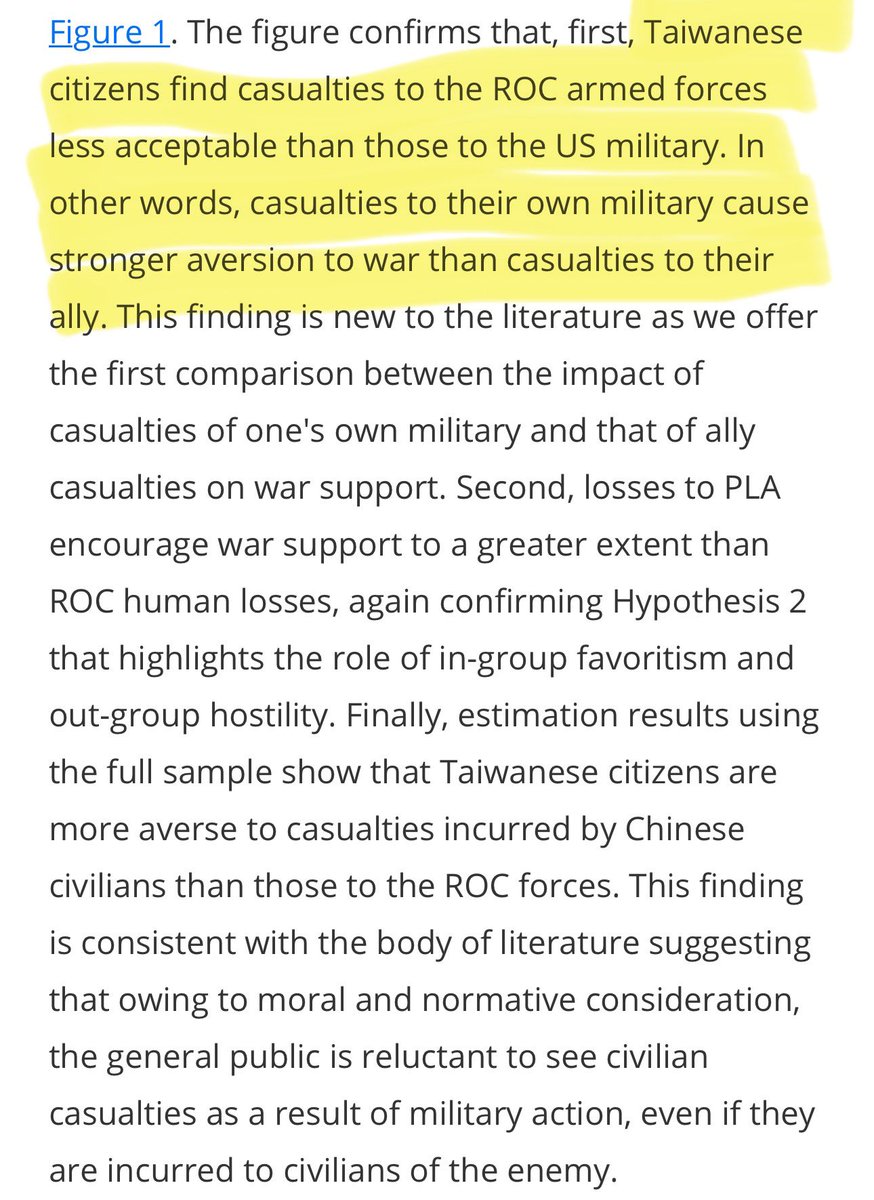
Like I was telling you all along, to the extent the Taiwanese are nationalistic they expect American boys to die for it.
Researchers found that Taiwanese are more tolerant of high wartime casualties when its Americans dying vs the ROC army. That’s right. You expected us to be the Asiatic Ukrainians didn’t you? Nope! We are the anti-Ukrainians. Dying for freedom is YOUR job, Americans.
Here’s the more hilarious part: the study found even civilian CHINESE casualty caused more aversion to war than either ROC or American military casualty. (The study didn’t ask about Taiwanese civilian casualty, but I’m gonna guess the aversion it causes is going to be through the roof.)
Killing PLA is good. Dead Americans? Sacrifice we’re willing to make. Dead ROC? Ehhh tolerable up to a point. Dead PRC civilians? Civilian deaths, even PRC, are less tolerable than ROC deaths.
Seems like the message is: we are in support of dying for freedom, as long as it’s not one of ours.
206
17 Nov 2025
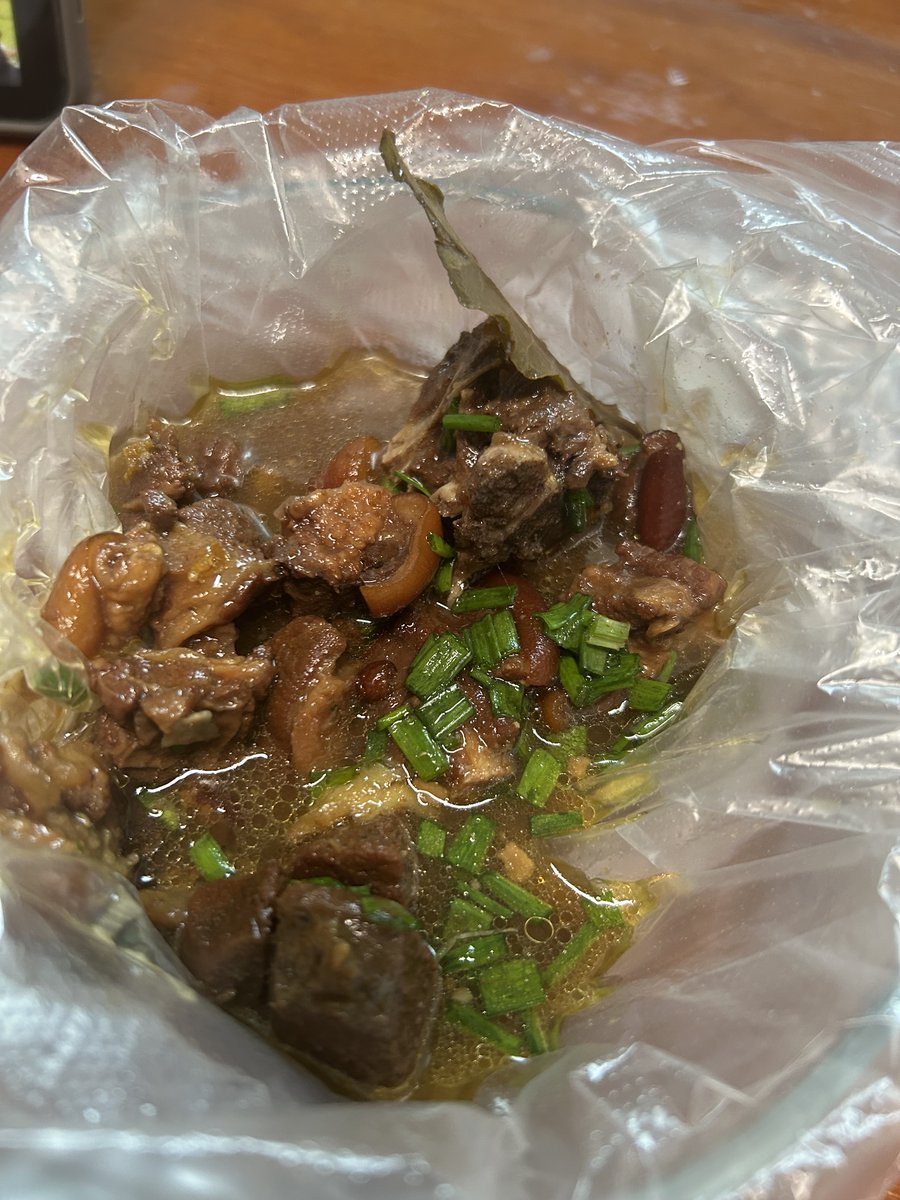
Last night, the side dish for my luosifen was dog meat, which cost 60 yuan per kilogram. It was very expensive, but delicious and chewy.
127
螺螄粉安撫查訪使 retweeted

16 Nov 2025
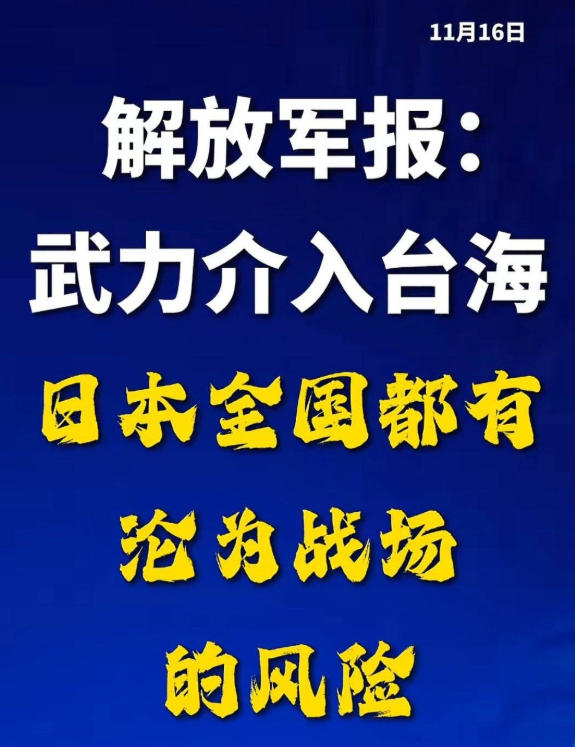
中国の主流民意は「もし日本極右本当に戦争を引き起こなら大々的な戦争を歓迎し、戦場を日本全国に選ぶべきだ」という考え方で、この機会を利用して、米軍を日本から完全に追い出すと主張しています。本日の『解放軍報』もまさにこのような見出しで報じています。興味があれば、自分で検索してください。
3
2
48
1,685
螺螄粉安撫查訪使 retweeted

13 Nov 2025
1945年10月25日,日本代表在台北中山堂签字投降。日本曾对台湾实行殖民统治,犯下罄竹难书的罪行,根本没有资格在台湾问题上说三道四。
319
168
1,103
341,399
16 Nov 2025
Trump is accelerating this process.
16 Nov 2025

People know my view about the future China-Japan relationship, but I don't think it is practical for China to make something big yet. Chinese still need to wait for the following things:
1. Japan needs further decline.
Japan still has a population of 100 million, the third largest GDP in the world, and some military strength. But the good news is that Japan is in the right direction. The last pillar of its economy, the automobile, is being defeated by China's EV. They are all behind in AI, robots, new energy and other future industries, even in such backward industries as the Internet and mobile phones. Japanese are now very old both psychologically and physically, no innovation, no development, and no future.
2. The United States needs to withdraw from Asia.
The United States and Japan are still in a military alliance. Based on the current balance of power, I think the United States will gradually reluctantly give up on Taiwan, and they may even agree to China beating up their Japanese dog, but not too much, they will not give up on Japan, the biggest bridgehead for Americans in Asia. But the decline of the United States is so evident, as their domestic problems increasingly trouble Americans, who I believe will eventually withdraw from East Asia just like the British withdrew from South Asia.
3. China's military and technology need further development.
China currently does not have enough aircraft carriers and amphibious landing ships. Laser technology as a means of intercepting missiles is beginning to be applied, but it is not yet mature enough. The sixth generation aircraft has not yet entered service....... Japan and the United States are developing military at a much slower pace than China. Over time, the military gap between China and Japan will become so large that they will despair.
4. China could find ways to sanction Japan.
Before that day arrives, China needs to continuously weaken Japan's overall power through market deny, exports control of rare earths and other key materials, technology blockades, restrictions on Chinese tourism to Japan........ If China isn't creative enough on this, learn from Americans. At the same time, the Chinese military should regard Japan as a bigger Taiwan and continuously conduct military exercises, aircraft detours, warship displays, coast guard patrols, and other activities around it.
If China, Japan, and the United States continue to move forward for 10-20 years according to the current curve trajectory, everything will be ready by then.
83
螺螄粉安撫查訪使 retweeted

12 Nov 2025
The US Federal Reserve did a study where their thesis is that China's GDP growth numbers are accurate.
federalreserve.gov/econres/n…
2
1
7
231