
Joined November 2020
- Tweets 10,050
- Following 180
- Followers 691
- Likes 19,889
3,424 Photos and videos








Pinned Tweet

24 Jun 2024
Dear Catholic Converts!
First and foremost, WELCOME. HOME!
The below post prompted me to reply to him, but I wanted to quote it with my same thoughts to share for ALL!
The one MAJOR thing missing from his post is Vocation or calling. We are NOT called to just sit in the pews, pray the Rosary, listen to Catholic Apologetics, or read the Bible or church fathers or other self centered acts.
We can relate all of Sin to selfishness and that is the wall Jesus was trying to tear down! Want to know what you can do? Be in service to your local Parish! Here are some ideas...
Join the choir.
If you're a woman, join the CCW.
If you're a man, join the Knights of Columbus.
Have a knack for decorating, join Arts and Environment.
Join the Ushers.
Become a Eucharistic Minister that goes to the Hospitals.
Become a Catechist and teach the Faith. (We have certified curriculum so you don't need to be a 10 year Theologian!)
There is so much you can do for the Catholic church, but it starta with you going to your Pastor and saying FOUR words!
"How can I help?"
Repost and spread.
#CatholicTwitter
#CatholicX
22 Jun 2024

The Catholic Convert Starter Pack:
Bible → Daily
Prayer → Daily
Mass → Weekly
Rosary → Nightly
Confession → Bi-weekly
Penance → Meat-free Fridays
Books → Baltimore CC, Intro to the Devout Life
Podcasts → Tim Gordon, AB & Dr Taylor Marshall
What would you add...?
5
2
47
7,479
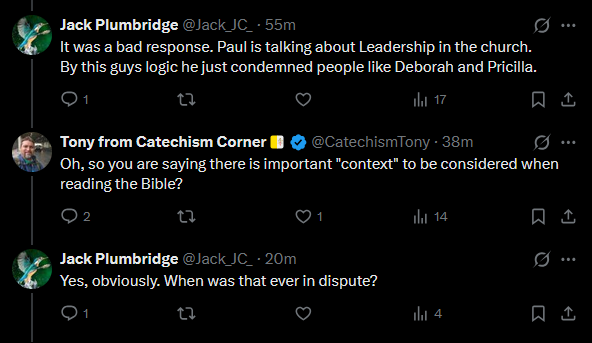
Blocked me because I threw his words back at him...
Funny, how it is hard to see our own reflection in the mirror, but easy for us to randomly troll...
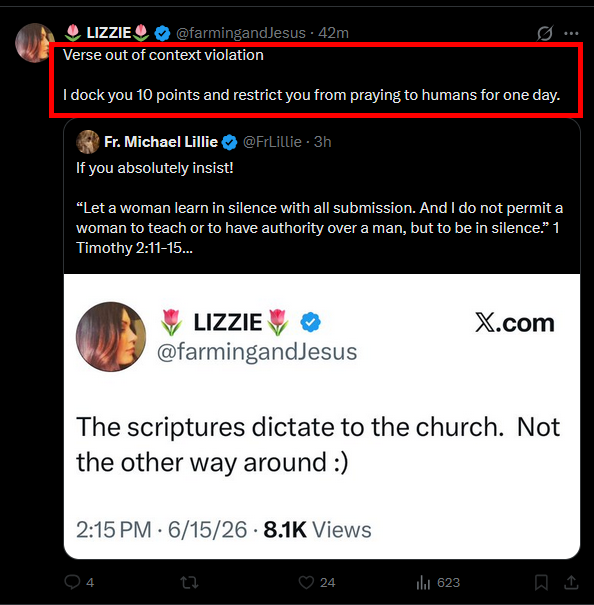
Hence why Matthew 7:1-5 is key. Did this Father in the original post make a cut at @farmingandJesus? Of course... Could he have been more Loving? Of course...
But it is funny how one side tells us to be charitable, but when they are called out on their own evils, they get offended.
I prefer civilized conversation from real people who can be reasonable. I am muting this person now anyway since I reserve "blocking" for absolute evil like p*rnographic or demon led accounts coming into my stream.
x.com/Jack_JC_/status/206696…

I see you refused correction yet again, instead opting to respond with a post that makes no sense.
4
Tony from Catechism Corner🇻🇦 retweeted

The history is more complicated than “Catholics had 73 books and Protestants removed 7.”
Those books were not added by the Catholic Church, but they also were not universally accepted as Scripture in the early church.
Jerome, who translated the Vulgate in the late 4th century, distinguished between the Hebrew canon and books like Tobit, Judith, Wisdom, Sirach, and Maccabees. He considered them useful for reading and edification but did not originally regard them as equal to Scripture in the same sense as the Hebrew books.
Because of this, many medieval Bibles and traditions treated them somewhat differently. They were often included, but their status was debated.
Even after the Reformation, Martin Luther did not remove these books entirely. His 1534 German Bible kept them in a separate section called Apocrypha with the note that they were “books which are not held equal to Holy Scripture, but are useful and good to read.”
The decisive moment came at the Council of Trent in 1546, where Rome formally and dogmatically defined the 73-book canon in response to the Reformation.
So historically:
• Catholics did not “add” these books in the 1500s.
• Protestants did not originally “remove” them either.
• The status of these books had been debated for centuries.
• Trent was the first time the Roman Church made the wider canon a binding dogmatic definition.
The real history is not “Catholics added books” or “Protestants removed books.” It is that Christians debated the status of these books for well over a thousand years before those lines hardened during the Reformation.
2
1
3
52
Even though I like to watch the World Cup final games, this is funny.😂

1
13
Learn how to use Lectio Divina and you will suddenly become Catholic. 😉
Here is a link for the basics:
bustedhalo.com/ministry-reso…
Jun 14

So, does the RCC have the "corner of the market", as it were, on understanding scripture? Is the RCC perfect in all their understanding of scripture? Where's the objective means of understanding scripture & what does that look like?
1
19
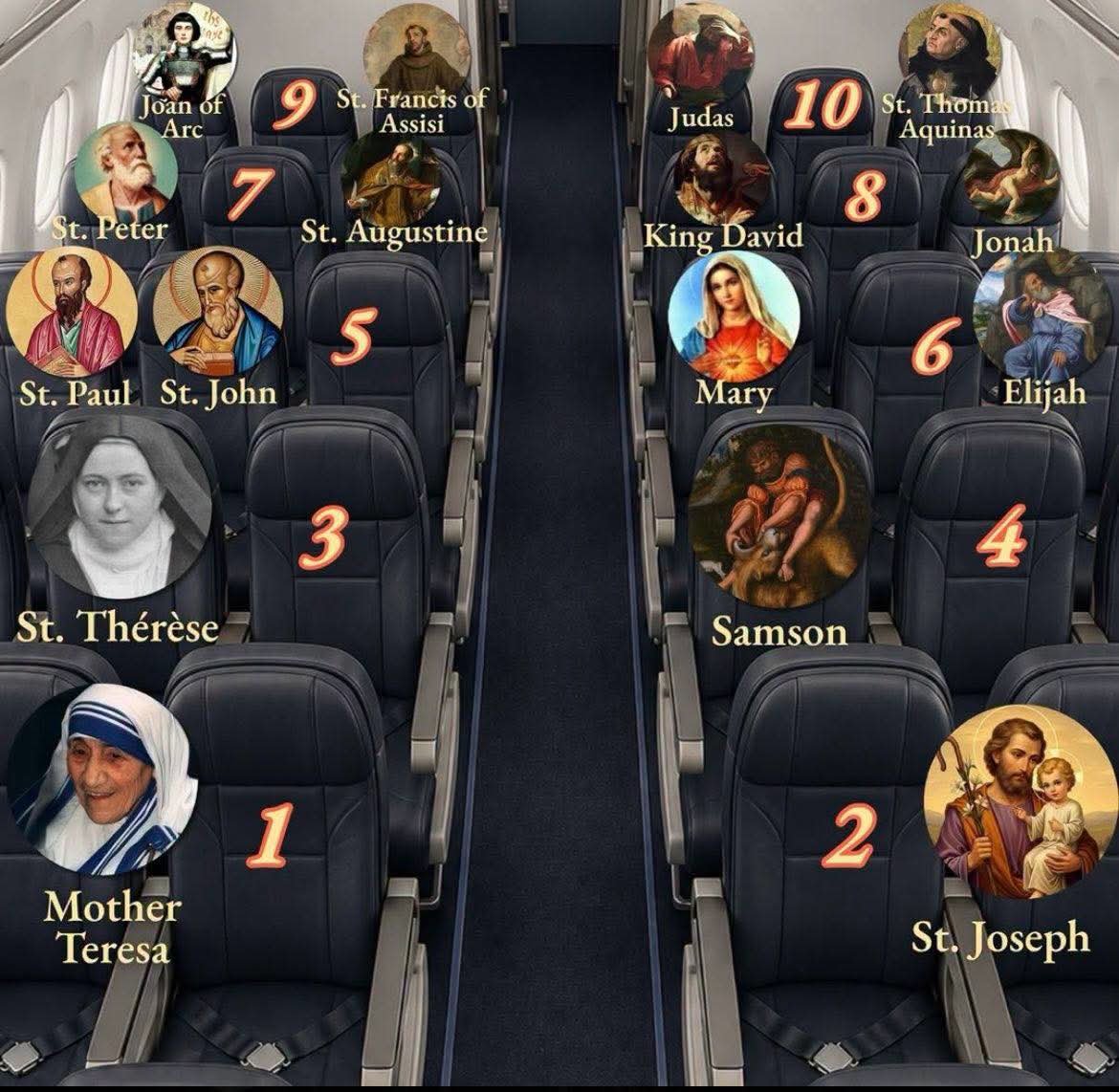
I am going with position/seat 11...
If you can't figure it out, I dare you to ask...
Jun 15

Oh man... um.. 6... I think...but maybe 7...? or...2...but also 5... I mean... there's so many open seats, I'd at least START in 5, its easy to get up and walk around...still next to our lady... maybe politely ask to sit in 7 for a bit...
2
1
187
I will have to say it is seat 0 since it is correctly stated that the seat numbers are leading to the back...
8
Not appropriate.
You can lend your beautiful voice in the right place, but doing this sort of thing for attention in St. Peter's Basilica is not it. This is the equivalent to tourists who go to Buckingham Palace and try to take photos with the guards or the mounted guards.🤦🤦🤦
Jun 14

This woman was singing gospel music inside the St Peter's Basilica and was sent out for public noise.
Was she right or wrong to do so ?
37
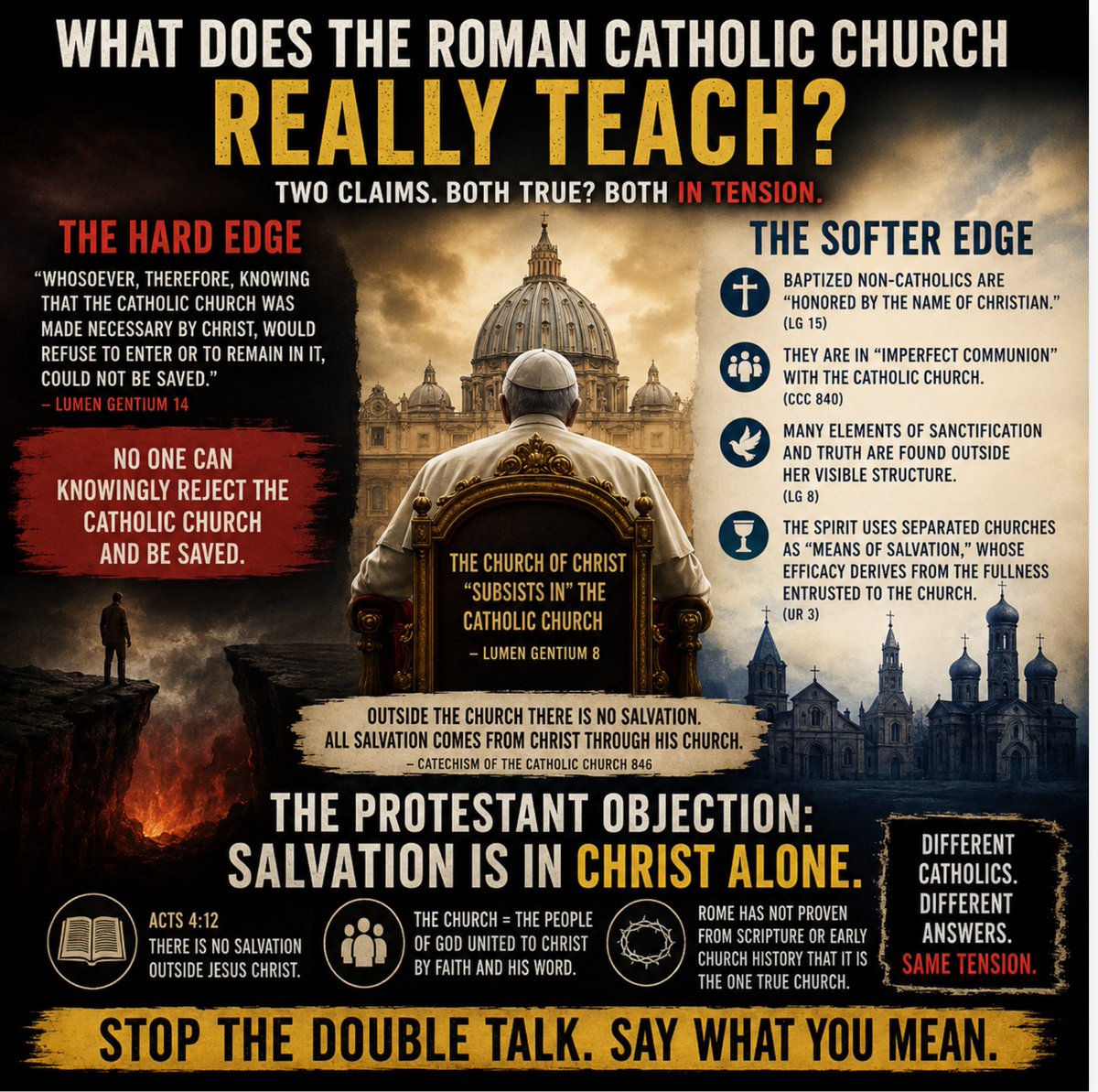
Depending on which Catholic you ask, you may get different answers. Some will say, “Of course Protestants can be saved. Vatican II calls them separated brethren.” Others will say, “No one can knowingly reject the Catholic Church and be saved.”
These are exactly the same thing. I explain it with a simple analogy:
x.com/CatechismTony/status/2…

In the following thread, a Catholic influencer on X states plainly that “Protestantism is condemned heresy” and that “absolutely nothing in Vatican II” could overturn the condemnations and anathemas issued by the Council of Trent in the sixteenth century.
On that latter point, he is correct according to Roman Catholic theology.
Why? Because Rome has long treated Trent’s dogmatic decrees—especially those touching justification, the sacraments, and ecclesial authority—as binding, infallible, and irreformable teachings of the Church. Vatican II may have changed the tone, vocabulary, and pastoral posture toward Protestants, but it did not repeal Trent.
What does the Roman Catholic Church actually teach about whether Protestants and Orthodox Christians can be saved outside full communion with Rome?
Depending on which Catholic you ask, you may get different answers. Some will say, “Of course Protestants can be saved. Vatican II calls them separated brethren.” Others will say, “No one can knowingly reject the Catholic Church and be saved.”
And the reason this gets confusing is because modern Roman Catholic ecclesiology tries to hold both claims together.
So let’s look deeper. In 1964, the Second Vatican Council, commonly called Vatican II, stated in Lumen Gentium that the one Church of Christ “subsists in” the Catholic Church, which is “governed by the successor of Peter and by the Bishops in communion with him.” Yet the same document also teaches that “many elements of sanctification and of truth” are found outside her visible structure. That creates the modern Roman Catholic framework: Rome claims the fullness of the Church while still acknowledging real, though imperfect, Christian communion beyond her visible boundaries.
That is the current Roman position in miniature. Rome claims the fullness while saying that non-Catholic Christians and communities may possess real elements of sanctification and truth, but not the fullness. Then comes the hard edge of the claim.
Lumen Gentium teaches that the Catholic Church is necessary for salvation because Christ is the one mediator and way of salvation, present in his body, the Church. It then says: “Whosoever, therefore, knowing that the Catholic Church was made necessary by Christ, would refuse to enter or to remain in it, could not be saved.”
So, if someone knowingly rejects Rome’s claim to be the Catholic Church made necessary by Christ, Rome’s own teaching says such a person “could not be saved.”
Note that this isn't Protestant propaganda. Those are the actual words of Vatican II.
But the same Vatican II also says baptized non-Catholic Christians are “honored by the name of Christian,” even though they do not profess the Catholic faith in its entirety or preserve communion with the successor of Peter. Confused yet?
The Catechism goes on to say that properly baptized Christians who believe in Christ are in a “certain, although imperfect, communion with the Catholic Church.” It adds that with the Orthodox Churches this communion is so profound that it “lacks little” to permit common Eucharistic celebration.
So, the formal teaching is this: Protestants are Christians, but imperfectly united. Orthodox are Churches, but wounded by lack of communion with Rome. Protestant communities may have real elements of grace and truth, but they are not Churches “in the proper sense” and do not possess the fullness Rome claims for itself.
That is the essence of the teaching.
But, Rome also says separated Churches and ecclesial Communities are “deficient in some respects,” yet not deprived of significance in the mystery of salvation, because the Spirit of Christ uses them as “means of salvation,” whose efficacy derives from “the very fullness of grace and truth entrusted to the Church.”
Read that carefully. Your Protestant church may be a means of salvation. But according to Rome, its efficacy derives from the fullness entrusted to Rome.
The Congregation for the Doctrine of the Faith — Rome’s doctrinal watchdog, now called the Dicastery for the Doctrine of the Faith — made this even more explicit in 2007. The CDF said Vatican II did not change Catholic doctrine on the Church, but “developed, deepened and more fully explained it.” It also said that “subsists in” indicates the full identity of the Church of Christ with the Catholic Church.
The same CDF document distinguishes Eastern Churches from Protestant communities. Eastern Churches, because they have apostolic succession, priesthood, and Eucharist, may be called particular or local Churches, though they lack full communion with Rome. But communities born from the Reformation “cannot, according to Catholic doctrine, be called ‘Churches’ in the proper sense” because they lack apostolic succession in the sacrament of Orders and have not preserved the genuine and integral substance of the Eucharistic mystery.
So let’s not pretend this is simple. Rome wants to maintain the doctrine of Extra Ecclesiam Nulla Salus — the ancient claim, given sharp medieval conciliar and papal formulations, that there is no salvation outside the Church — while also using Vatican II’s ecumenical language of separated brethren, imperfect communion, and elements of sanctification and truth outside her visible structure.
The Catechism states the modern version this way: “Outside the Church there is no salvation” means that all salvation comes from Christ the Head through the Church, his Body. It then says those who knowingly refuse the Catholic Church cannot be saved, while those who through no fault of their own do not know Christ or his Church may still attain eternal salvation by grace.
Herein lies the tension. To explain Roman Catholic doctrine on this question, you have to qualify almost every sentence. Protestants are separated brethren, but not in full communion. They are Christians, but deficient. Their communities — what we would call churches — may be used as means of salvation, but with an efficacy derived from Rome’s fullness. They may possess elements of sanctification and truth, but those elements properly belong to the one Church of Christ, which Rome says subsists in the Catholic Church. And Protestants may be saved, unless they knowingly reject the Catholic Church as necessary.
That is not Protestant confusion. That is the complexity built into modern Roman Catholic ecclesiology.
Is it any wonder why a traditionalist Catholic or SSPX adherent may emphasize one side of Catholic teaching and conclude that Protestants are in danger of hell, while a more conciliar Catholic may emphasize another side and speak warmly of us as separated brethren?
And here is my Protestant objection. The New Testament says salvation is in Christ alone.
Acts 4:12 does not say there is no salvation outside Roman jurisdiction. It says there is no salvation outside Jesus Christ.
Ephesians 4 does not say there is one Roman see, one papal monarchy, and one universal jurisdiction. It says there is one body, one Spirit, one hope, one Lord, one faith, one baptism, and one God.
So when a Catholic tells me, “You cannot accept Christ while rejecting his Church,” I want to know what is being smuggled into the word “Church.”
If by “Church” you mean the people of God united to Christ by faith, built on the apostolic gospel, and gathered under his Word and ordinances, I agree.
But if by “Church” you mean the Roman Catholic Church governed by the successor of Peter and bishops in communion with him, with papal supremacy, universal jurisdiction, Marian dogmas, purgatory, indulgences, prayers to saints, and the whole Roman sacramental system made binding on the conscience of all Christians, then no.
That is precisely the claim Protestants reject. Rome has not proven from Scripture or early church history that the one, holy, catholic, and apostolic Church is identical with Roman communion in the sense required by Roman dogma.
So if Rome wants to tell Protestants, “Knowingly reject us and you are in danger of hell,” then say it plainly.
But do not soften the claim with “separated brethren” language when convenient, then retreat to “no salvation outside the Church” when challenged.
The real issue remains the same: Christ founded his Church. Rome claims to be that Church in the full institutional and dogmatic sense required by Roman Catholicism. Protestants reject that claim.
Citing verses about Christ, the apostles, baptism, church authority, and the body of Christ does not prove Roman supremacy. It merely assumes several theological conclusions and then draws a Roman conclusion from those assumptions.
Is it any wonder different Catholics tell Protestants different things about salvation?
1
25
I have a fun video for @hodgetwins! 🚨🚨 MUST WATCH! 🚨🚨
youtu.be/bm00cSaToA8
11
Tony from Catechism Corner🇻🇦 retweeted

Jun 11
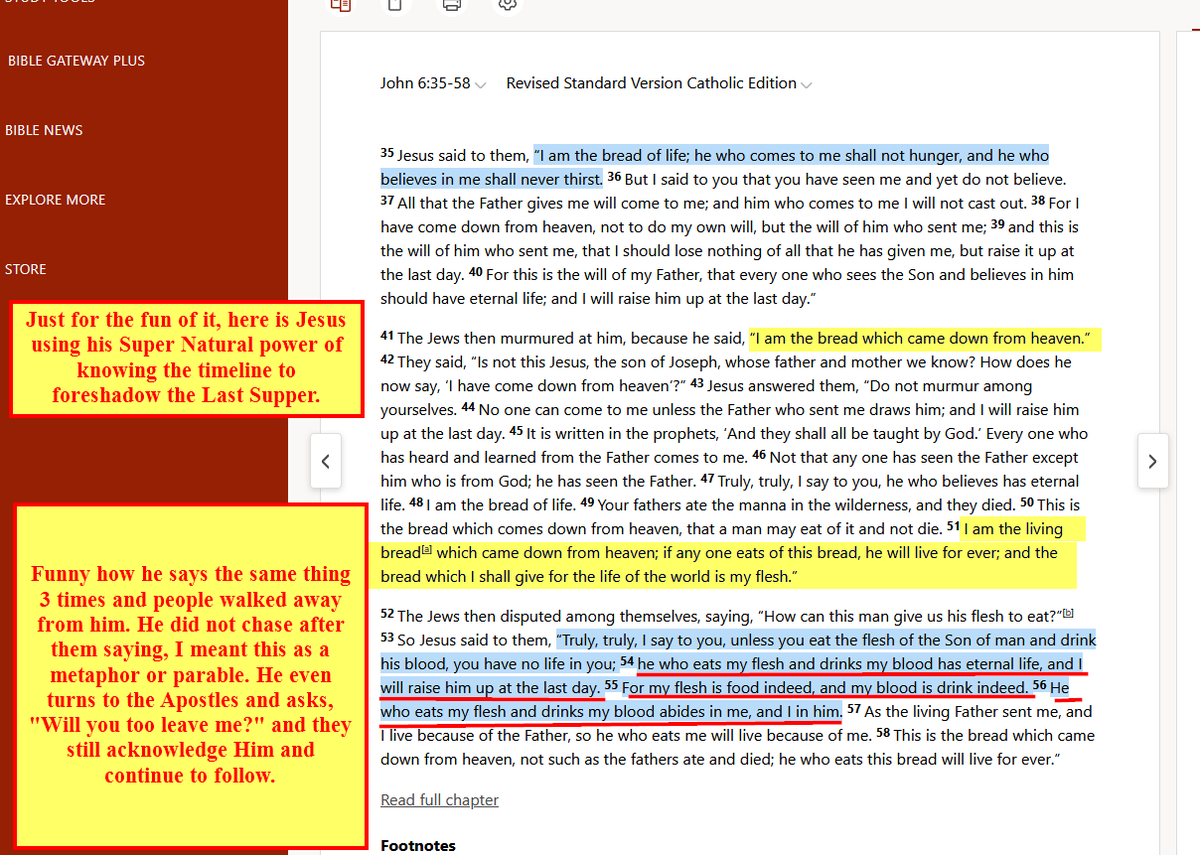
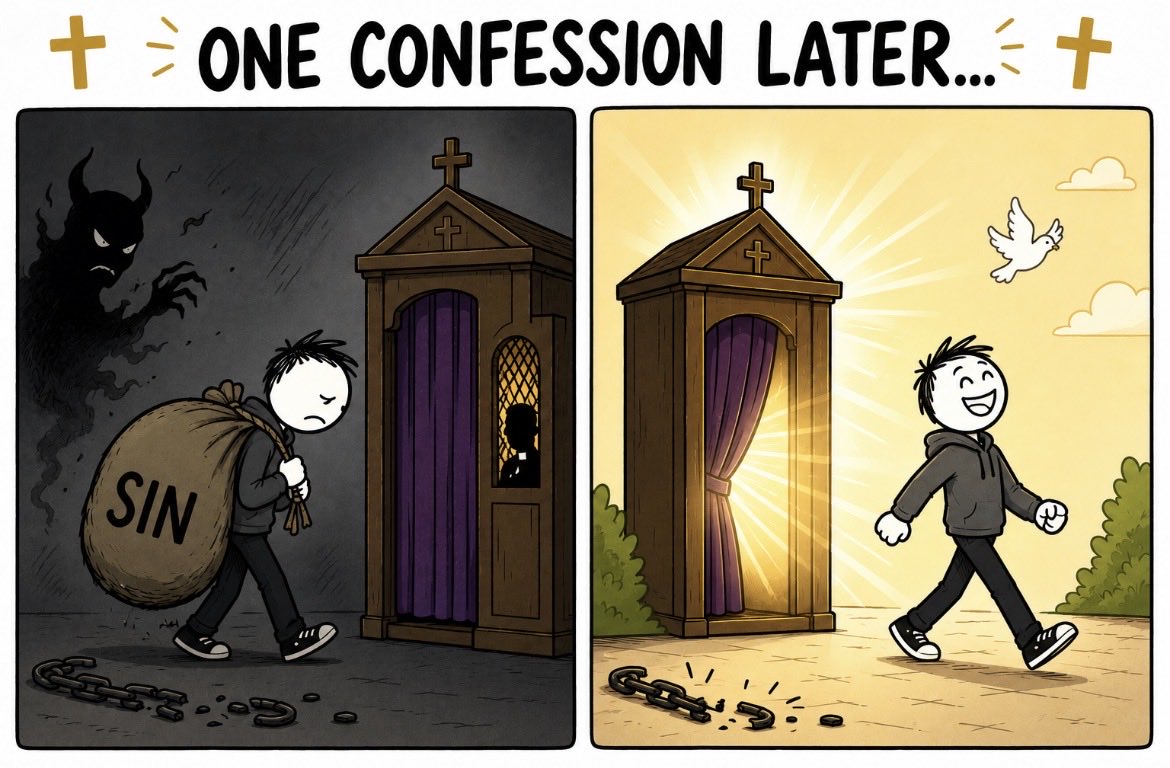
Protestants tell me: “Just confess directly to God.”
But Jesus said: “Whose sins you forgive are forgiven them.” (John 20:23)
Catholics didn’t invent confession.
We’re just never stopped💧
52
23
214
4,322
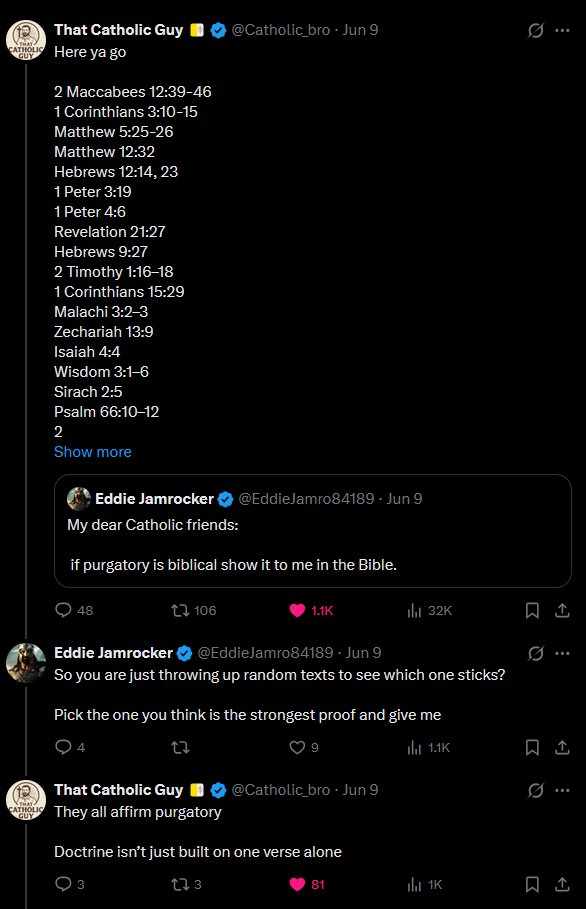
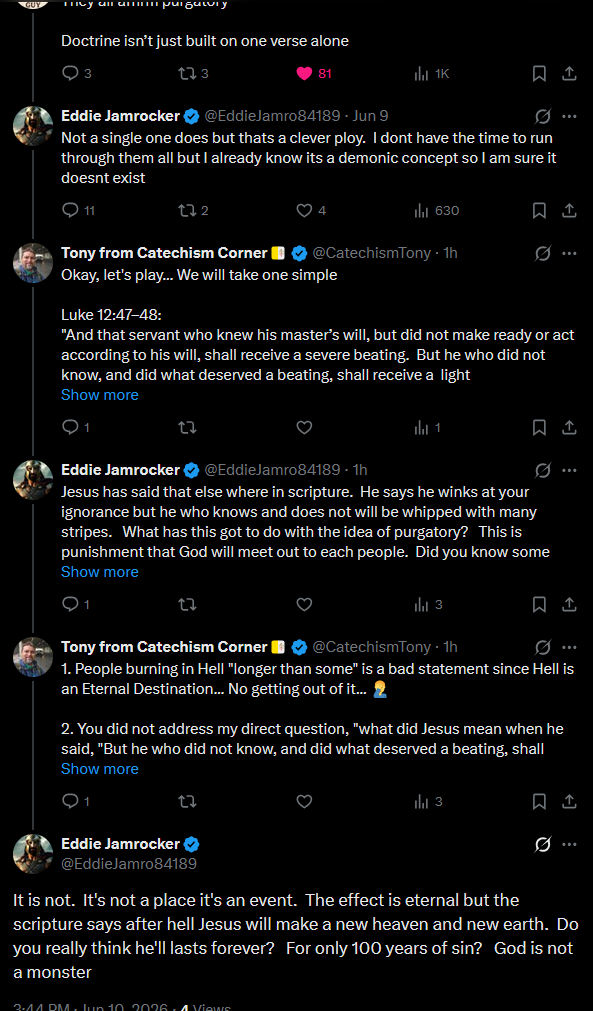
So I entered this thread (pictured below) because I was genuinely intrigued by the topic/discussion between @Catholic_bro and @EddieJamro84189.
@Catholic_bro provides a listing of Bible verses that support the concept of Purgatory. @EddieJamro84189 rebukes him and says, "So you are just throwing up random texts to see which one sticks? Pick the one you think is the strongest proof and give me" @Catholic_bro assures him they ALL affirm it. Then @EddieJamro84189 says, "Not a single one does but thats a clever ploy. ..."
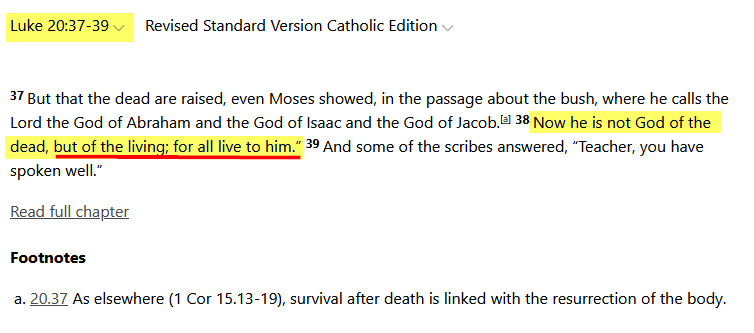
Enter me at this point and I bring up one single verse out of them and ask a simple question regarding Luke 12:47-48, "what did Jesus mean when he said, "But he who did not know, and did what deserved a beating, shall receive a LIGHT BEATING."?
He went back and forth with me, but still has not given me a direct answer to my question. Why? Let me explain the why...
The reason why our friend @EddieJamro84189 could not answer me is because it completely flat lines his narrative. Let's look at lines 47 and 48 individually.
47 And that servant who knew his master’s will, but did not make ready or act according to his will, shall receive a severe beating.
Jesus is saying in plain simple language, "Those who know what God wants/expects of us but do not act accordingly will suffer "severe beating" (Hell).
48 But he who did not know, and did what deserved a beating, shall receive a light beating. Every one to whom much is given, of him will much be required; and of him to whom men commit much they will demand the more.
Then in this line, Jesus is saying, "The ones who are ignorant/unknowing of what God wants/expects of us but does bad things that deserve a beating (Hell) will get a lighter beating (Purgatory).
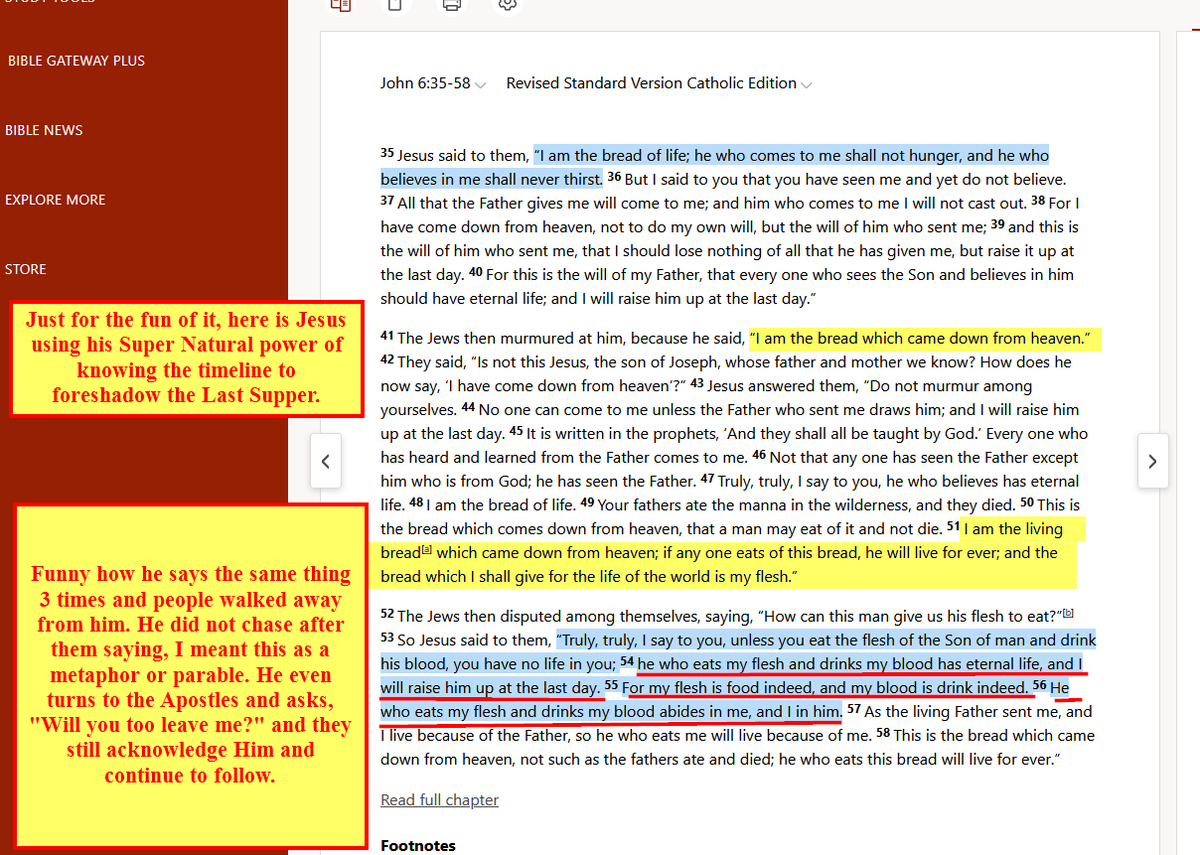
Purgatory is where we purge any last remaining Sins OR negative human traits like Hate or Arrogance before we can even exist in Heaven (place of Perfect Love and Goodness). Jesus doesn't meet us upon our death, dust us off, and say, "Come on in with that Human Hate and Arrogance you are holding in your heart against Catholics." because then Heaven would not be a place of PERFECTION! Our Human Arrogance would stain Heaven, thus it is physically/scientifically IMPOSSIBLE for an Arrogant Atheist to exist in Heaven. They must shed their arrogance and that is what Purgatory is about.
2
99
Tell us you never researched the full teachings of Purgatory without telling us.
Man, the Protestant Echo chambers really do brainwash people to just parrot each other.

Only a SATANIC LIAR would print something that DISPROVES the ADDED ON STEP OF PURGATORY in the hopes that no one knows what you did. I do.
Hebrews 9:27 King James Version
27 And as it is appointed unto men once to die, but after this the judgment:
2 steps, DEATH . JUDGEMENT.
No PURGATORY where you get to work off your sins and have others pray your stupid butt up like an episode of Survivor .
13
As a brother in Christ, can I make a suggestion?
Take a step back for a moment and read over every single post you have made in defense of Patrick.
Then look at the ENTIRE thread made by @GuerillaLawyer with a careful eye. Read everything that is being CAREFULLY said by him and @MrCasey62. Look at all of the posts as if you were a judge who needed to decide who would be thrown into jail purely based on evidence that is presented. Not words, but just physical evidence.
After you do all of that, you will see that one is coming with receipts and the other is just making arguments that support a narrative and have NO evidentiary substance!
MIND YOU THAT I AM NOT A LAWYER AND THE EXTENT OF MY KNOWLEDGE OF LAW IS BASED ON YOUTUBE AND MOVIES LIKE LEGALLY BLONDE and I can even see how poor your statements and his (@BibleInContext1) are based on nothing!
Remember Jesus words in Matthew 12:36-37, "I tell you, on the day of judgment men will render account for every careless word they utter; for by your words you will be justified, and by your words you will be condemned."
As you can see, the first post in the long thread was carefully crafted. If it was false and @BibleInContext1 were to bring a "defamation" lawsuit to court, he would lose alone with the last line that reads, "You can decide for yourself." because he presented his case and evidence (receipts) fully.
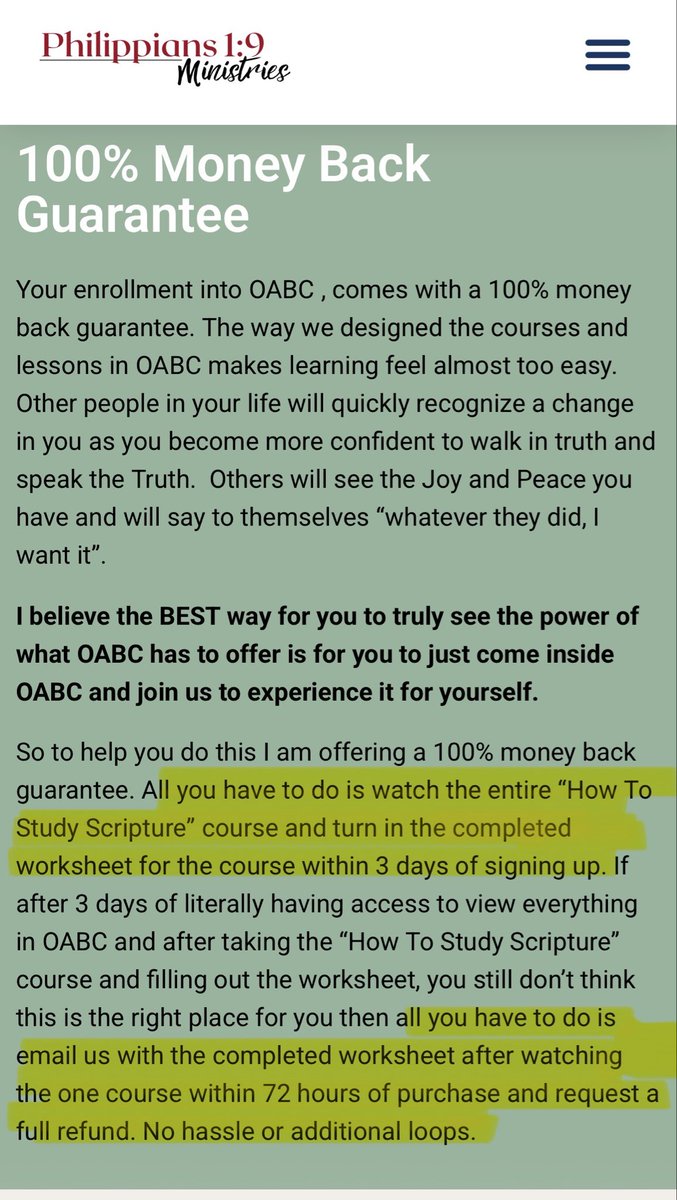
@BibleInContext1 has actually been accused of something that is actually major! If these facts were compiled along with his "full money back guarantee", I am willing to bet CRIMINAL CHARGES could be brought against him at this point!
Plain and simple, he has taken FULL paragraphs of other people's writings and not put ANY footnotes or bibliography pages to demonstrate where he got that information from specifically. In academics that is CALLED PLAGIARISM! You might be reminded of the scene from Good Will Hunting in this instance. The preppy guy attending Harvard tries to embarrass the guys, but completely plagiarizes every quote and called out on them specifically by book and page number. How do you like them apples?
x.com/GuerillaLawyer/status/…
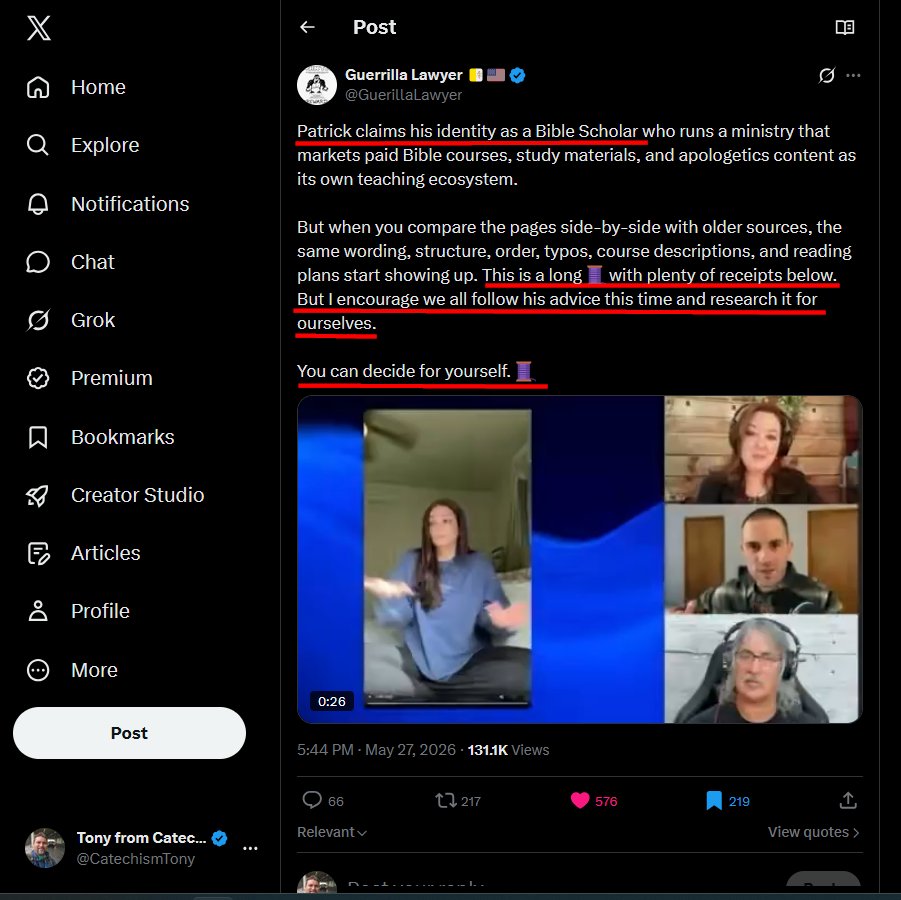

Patrick claims his identity as a Bible Scholar who runs a ministry that markets paid Bible courses, study materials, and apologetics content as its own teaching ecosystem.
But when you compare the pages side-by-side with older sources, the same wording, structure, order, typos, course descriptions, and reading plans start showing up. This is a long 🧵with plenty of receipts below. But I encourage we all follow his advice this time and research it for ourselves.
You can decide for yourself. 🧵
2
3
23
1,527
@GuerillaLawyer,
FYI... I bookmarked that link to your OP just so that I can read through it extensively! It is a phenomenal write up and I can tell you put a lot of time and effort into it. So it deserves real consideration and scrutiny!
It just astounds me that Patrick has done such a thing, but at the same time I am not surprised. Does he has "good genuine motives", I don't know when looking at everything you posted. Especially with this one single post about his "money back guarantee"!!!! THREE DAYS to watch all of his "How to study scripture" and turn in the completed worksheet! That translates that if you paid him $1,000, then just to ensure your money has not been spent already by him, you need to get that back to him in 3 days... otherwise your money is spent and gone by him!
x.com/GuerillaLawyer/status/…
Just gotta jump through some hoops and fast. But then you don’t have to jump anymore. 🤷🏻♂️
1
8
184
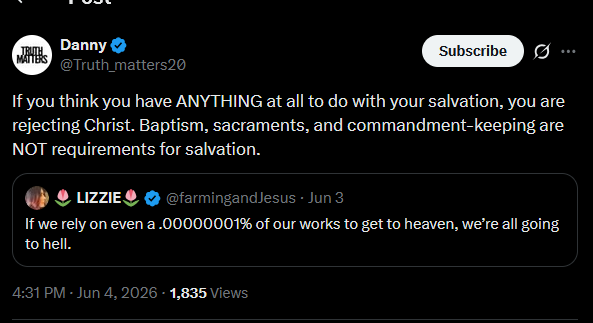
An Atheist answer to this low IQ post by @Truth_matters20:
"If you think reading the Bible has ANYTHING at all to do with your salvation, you are rejecting Christ."
21
What a scheme!
72 hours to get your money back because otherwise it will have been spent.🤯😳🤯😳
Just gotta jump through some hoops and fast. But then you don’t have to jump anymore. 🤷🏻♂️
21
This right here is 1 billion % truth!
When you make over a certain amount, "sorry, but you make too much."
When you are a politician/ bureaucrat then you get to steal money from the middle class and do insider trading to make millions.

The middle class is the most expensive place to live, and no one talks about it. Lower income households get assistance. The wealthy use tax strategies and loopholes. But the middle class pays full taxes, full tuition, full healthcare, full everything. So you work 50 hours a week just to stay in the same place and fund everyone’s life except yours.
10
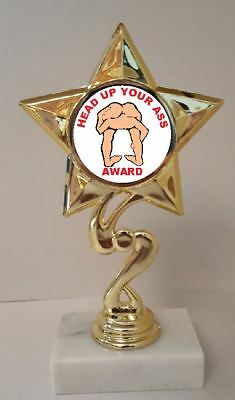
This has earned an award...
May 31

Have you discovered that the people with issues and questions about the divinity of Jesus Christ are Muslims and Catholics?
Cut from the same cloth
19
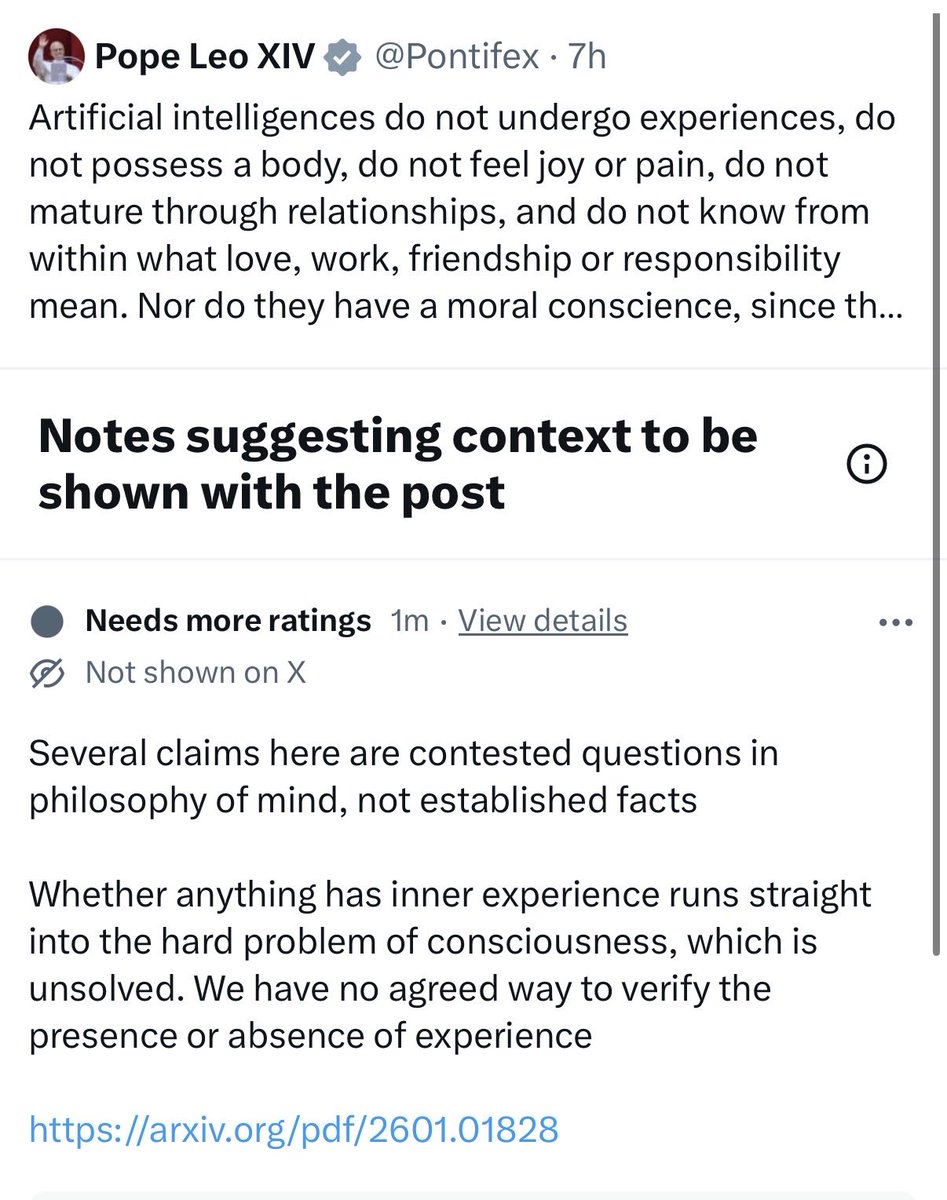
Wow... Just amazing!

14
Tony from Catechism Corner🇻🇦 retweeted

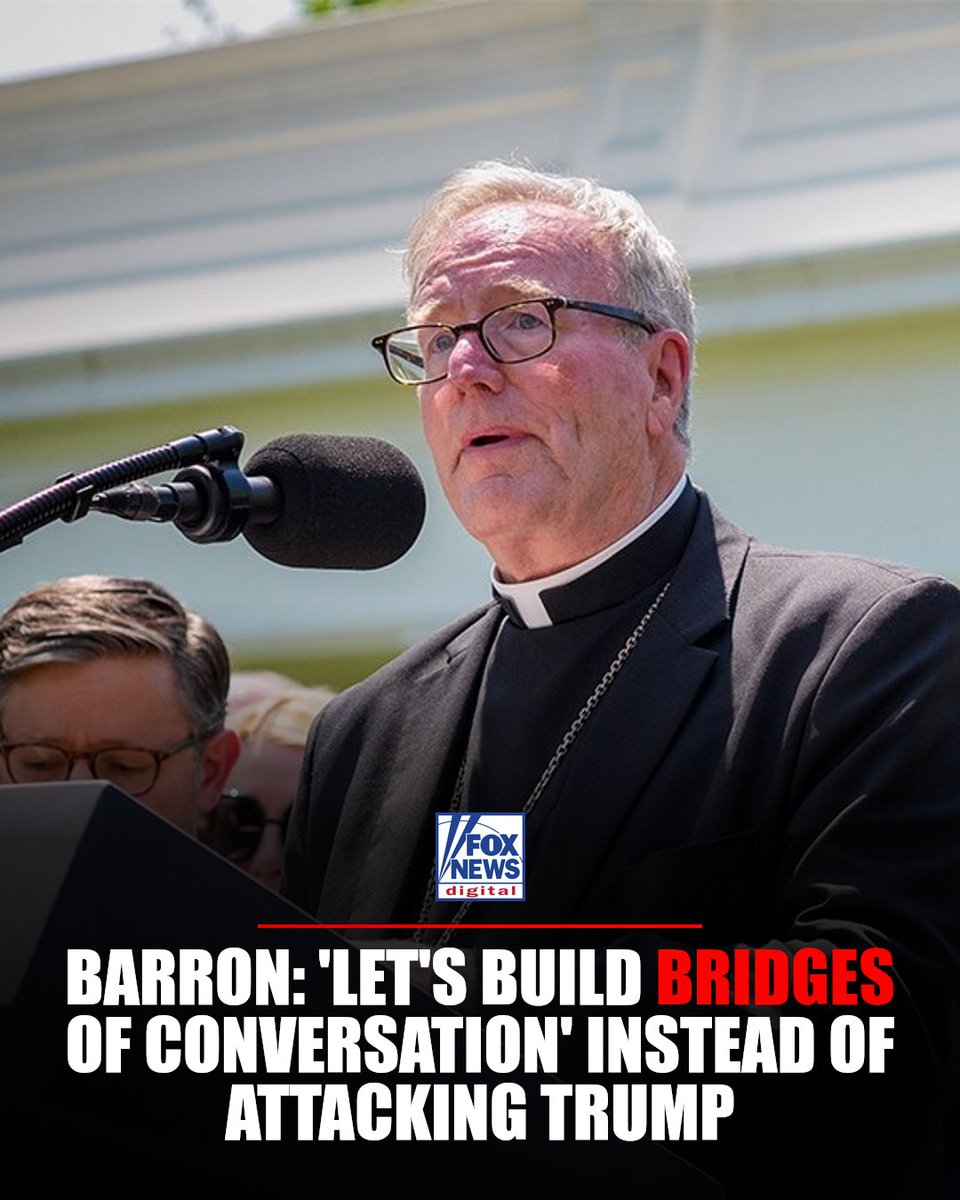
EXCLUSIVE: Bishop Barron blasts the Catholic left for 'demonization' of Trump, says there are 'moral reasons' to support border enforcement — citing child trafficking and thousands of missing kids. He wants dialogue, not lectures: 'Let's build bridges of conversation. That's a role the Church can play.'
774
2,680
12,013
314,865
Tony from Catechism Corner🇻🇦 retweeted

Apr 8
Chuck Norris owns the worst 𝕏 influencers
165
879
5,271
150,248