
CELL maximalist
Joined September 2022
- Tweets 1,232
- Following 2,024
- Followers 1,792
- Likes 1,326
173 Photos and videos








Bittensor needs to migrate to Cellframe for decentralized AI that can achieve scale in post-quantum conditions

This is your sign to go all in on Bittensor $TAO ⚠️
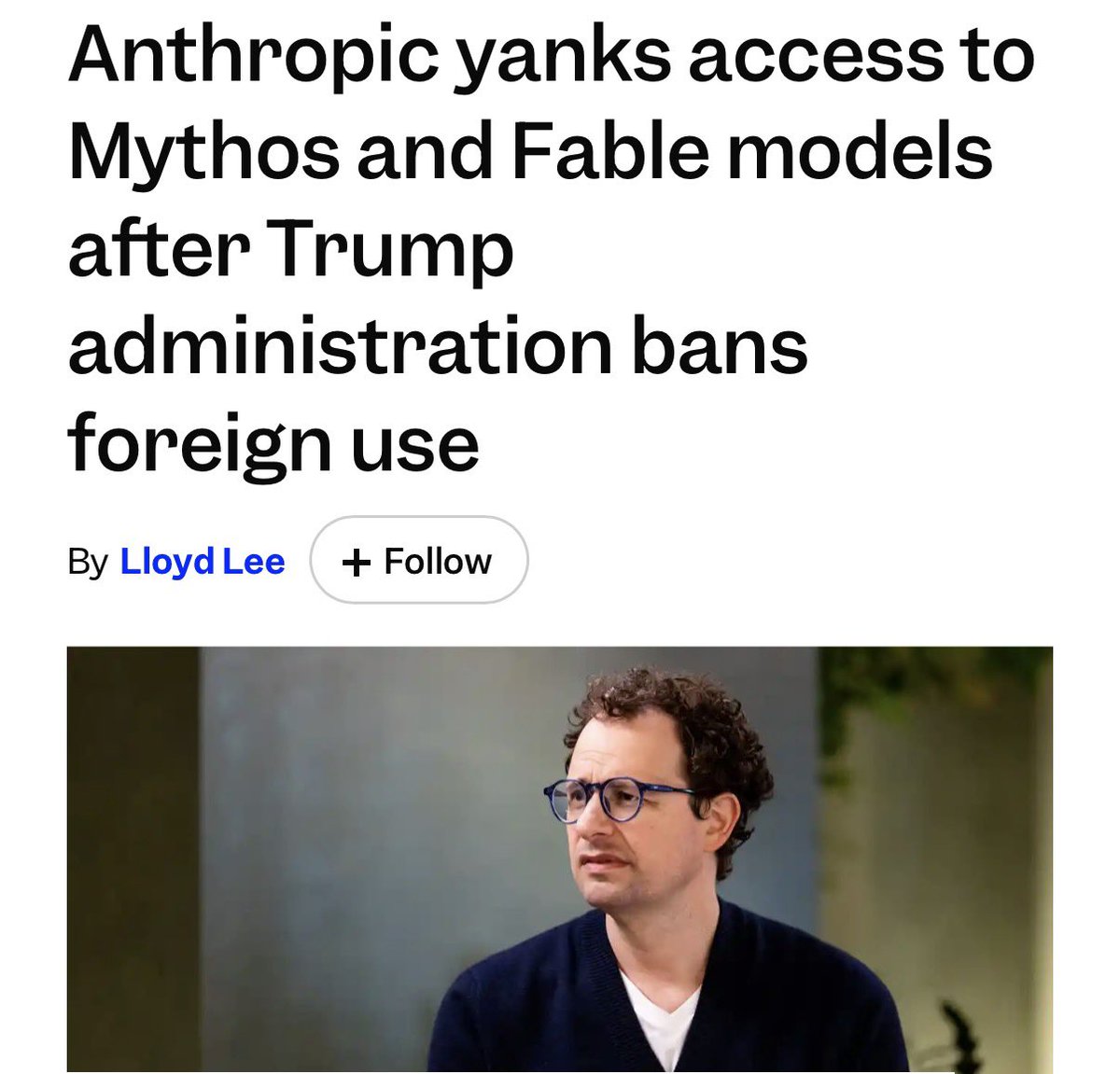
The US government just started banning access to centralized AI models
The world needs decentralized AI
The world needs Bittensor -> now
1
12
50
826

Rigorously engineered post-quantum blockchains like Cellframe will survive
Jun 9

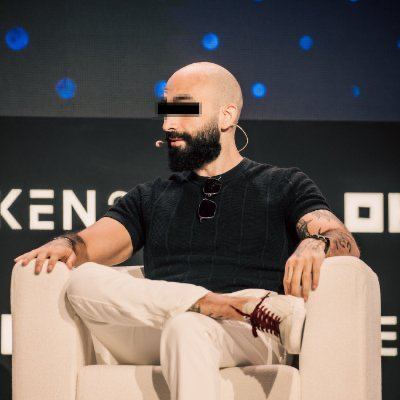
🚨 INSIGHT: Helius CEO @mert warns crypto is heading toward a software crisis, arguing that only rigorously verified systems will survive as AI raises the stakes.
1
13
37
629
Blockchain security will always be a battle
The Cellframe advantage is that our code is built from scratch (native post quantum) without the crazy bloat that makes older systems vulnerable
To defend blockchain we need a tactical retreat to the safety of the Cellframe ecosystem!

soon, you will find out that *all software* handling funds is prone to AI finding vulnerabilities. all of it
that's why you also saw tons of defi exploits already this year
open source, L1, L2, DeFi, mutable, immutable, private, transparent, cross-chain. if it's software, it is at risk. in fact, it has always been at risk, but now AI changes the math.
so what does one do about this? is the idea of crypto over?
in theory, the main difference for privacy contracts vs regular contracts is detectability
in practice, we've seen countless times in defi where the hackers got away fast even after detection (happened at least 7 times this year that I can count)
it is not an accident that you've seen so many in recent times
the safest way against this is self-custodying the native asset itself on the native chain. because even in the worst case, the validators could roll it back if the exploit is large and core enough. so there is some lower bound there
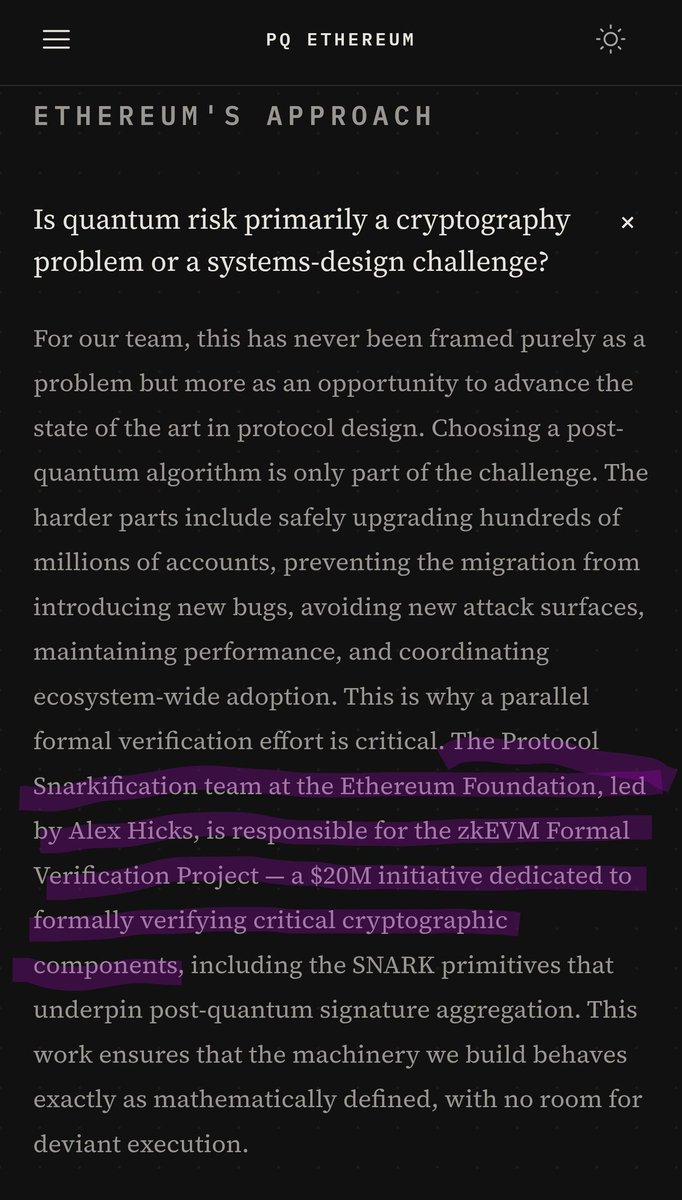
but as vitalik, toly, and many others have pointed out, the main improvement to defend against this going forward will be formal verification
this is a rigorous, mathematically-based method to formally prove that software behaves exactly as intended
this is also why open source will be critical. because you will have countless others also trying to help you collectively improve security (for rewards) whereas with closed source the math is fundamentally skewed because only the core team can defend
the next zcash upgrade, some defi protocols, and some chains are already in the process of doing this, aggressively
the result will be that crypto emerges stronger than ever before and in fact safer than centralized counterparts. there will be no stopping crypto.
1
14
58
1,044
Exciting look into the fallout of Google's splash quantum/cryptography paper
tl/dr: Their attempt to keep their methods secret backfired monstrously, and classical cryptography is f***ed
Time to go post-quantum
CELLFRAME
Jun 2

Today a crazy quantum story just got wilder.
On March 31, the Google Quantum AI team published a landmark result on Shor's algorithm for elliptic curve cryptography. Technically, the paper was a bombshell: a dramatic 10x improvement over the state-of-the-art. As a stunt and wakeup call to the blockchain space, those optimisations were illustrated on secp256k1, the elliptic curve underlying Bitcoin and Ethereum signatures.
But perhaps the most striking part of the paper was sociological, not technical. Instead of following standard academic process, the optimisations were kept secret, hidden behind a zero-knowledge (ZK) proof. Google's accompanying blog post mentions they "engaged with the U.S. government". The ZK proof demonstrates the existence of algorithmic improvements without leaking details. Academic censorship with ZK, a historic first!
As a co-author of the Google paper I witnessed some of the context surrounding this censorship. To be honest, multiple aspects of that context don't sit well with me. As much as I believe the general public ought to know more, I am limited in my ability to whistleblow. Though let me be clear about one thing: the Google team's professionalism has been absolutely exemplary, and they deserve nothing but praise.
Censorship has a way of backfiring. The Streisand effect, where an attempt to bury something only draws more attention to it, is exactly what's unfolding today. First, Google's key optimisation has been rediscovered by the French. And in a thrilling turn of events, a collaborative Shor-at-home challenge just launched. The initiative, available at ecdsa[.]fail, breached a new Shor world record in a matter of hours.
Let's start with the rediscovery. Just two months after Google's paper, French quantum expert André Schrottenloher cracks the main secret optimisation. His paper, titled "Optimized Point Addition Circuits for Elliptic Curve Discrete Logarithms", landed on the arXiv today. Big congrats to André, who beat several other nerdsnipped experts to it. In a blog post also published today, Craig Gidney, the world expert on Shor optimisations, revealed that he'd been sitting on this very optimisation for a whole year under censorship pressure.
Interestingly, André missed a handful of minor optimisations, both from Google's original publication and from improvements found since. It's plausible there's still plenty of juice left to squeeze out of Shor, and this is exactly what the ecdsa[.]fail challenge is about. The verifier program developed for the ZK proof does double duty, automatically filtering for valid submissions. Dozens of compounding small and micro improvements are rolling in. As of the time of writing there's an 8.4% improvement to Google's circuit, as measured by the product of logical qubit count and Toffoli gate count. Nice!
The nerdsnipping ran deeper than anyone expected. Over the last few weeks it became clear it extended well beyond André and other quantum experts. Behind the scenes, a small army of amateurs quietly got to work. Inspired by Karpathy-style autoresearch, they turned AI on Shor. Ironically, the verifier program for the ZK proof makes an ideal reward function for AIs. The barrier to entry for this modern style of research is refreshingly low, with several non-experts, even a teenager, finding nice optimisations. Get in touch if you'd like to join a Telegram group with fellow autoresearchers :)
Part 2: neutral atoms and qday
The story doesn't end with Google. On the same day Google went public, a stealthy startup called Oratomic published its own Shor paper in a coordinated release. It made a splash, ultimately becoming the most upvoted paper on scirate[.]com, a website ranking arXiv papers.
Oratomic's claim was wild. By building on Google's logical optimisations and applying custom physical optimisations for neutral atoms, they claimed just 10K physical qubits were sufficient to run Shor's algorithm on secp256k1. That number is mind-bogglingly low.
Knowing essentially nothing about neutral atoms when Oratomic's paper landed, I was intrigued and decided to learn more about the tech. I fell straight down the rabbit hole and spent a couple hundred hours on the topic. I got a little obsessed and watched every YouTube video I could find and spoke to a bunch of experts.
My conclusion? The tech is real, very real. Even Google recently decided to start a neutral atom lab, a notable pivot from their sole focus on superconducting qubits. If you care about qday, i.e. the day a quantum computer will break the first piece of cryptography in production, neutral atoms demand your attention. I shared some of my learnings on Shor and neutral atoms in a 30min talk at the ZKProof cryptography conference. You can find it on YouTube by searching "zkproof neutral atom".
Here's an interesting observation about this duo of breakthrough papers: neither Google nor Oratomic say a word about what their results mean for qday. No timelines. Zero. Nada. That is especially baffling given that the whole point of whitehat quantum cryptanalysis is to inform qday estimations and help the general public make good decisions.
So let me attempt to partially fill the silence, similarly to what Scott Aaronson did in his April 29 post. Given everything I know, including scary non-public information, I now put the odds of qday by 2032 at 50%. 10% by 2030.
Anecdotally, the US government has its own date: 2035. Originating at the NSA and later adopted by NIST, it's when branches of the US government will be disallowed from using quantum-vulnerable cryptography. In plain language: with hindsight, that date is a joke and should be discounted entirely. I don't see how NIST avoids being forced to pull it forward by years.
Part 3: post-quantum cryptography
There are good reasons to sound the alarm today, but please do not panic. Rushing carelessly towards immature post-quantum cryptography is a recipe for disaster. IMO a good target date for migration is 2029, roughly 3.5 years out. 2029 happens to be the date selected by Google, Cloudflare, and the Ethereum Foundation.
These days most of my time goes to safely migrating Ethereum towards post-quantum cryptography as part of the broader lean Ethereum effort. There's a lot to do. We need to rip out and replace BLS signatures at the consensus layer, KZG commitments at the data layer, and ECDSA signatures at the execution layer.
The plan to get there is compelling, and is based on hash-based cryptography. Within the Ethereum Foundation we've developed a Swiss army knife called leanVM (github[.]com/leanEthereum/leanVM) powered by the magic of hash-based SNARKs. Thanks to truly exceptional work by Emile, Thomas, and others, its performance is derisked. Regarding security, leanVM is a jewel, a minimal zkVM crafted for end-to-end formal verification and maximum security.
Want to help? There are two $1M initiatives. First, the Proximity Prize (proximityprize[.]org). Solve a long-standing mathematical conjecture in coding theory, improve hash-based SNARKs, and go home a millionaire. Second, the Poseidon Initiative (poseidon-initiative[.]info), offers $1M for breaking Poseidon, the SNARK-friendly hash function.
9
46
848

May 30
1
13
44
5,109
May 29
We are CELL, we are here!
May 29

Any quantum-computing proof chains out there? Or ones more prepared to be so?
3
9
50
1,577
Cellframe Social retweeted

May 29
Any quantum-computing proof chains out there? Or ones more prepared to be so?
56
5
44
8,357

While everyone argues about narratives, $CELL is becoming infrastructure. Quietly. Product by product. Fee by fee.
DEX, live. Web version is close. The rest is in today's AMA.
You should probably watch it. @cellframenet
7
54
108
4,667
Cellframe Social retweeted

May 25
Hanna does great research into quantum hardware and software
May 25

$IONQ $HQ $IBM $MSFT $XNDU $QBTS $INFQ $RGTI $AMZN $HON
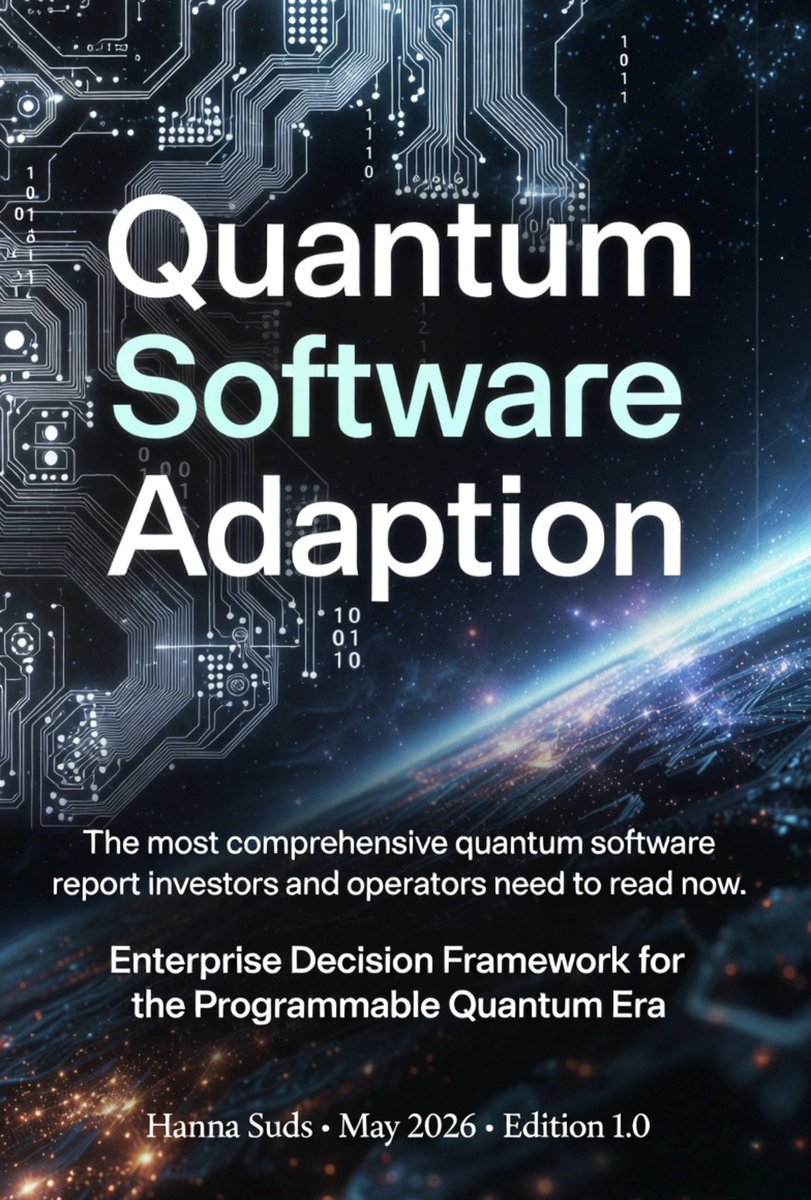
The most thorough and independent quantum software report ever published is now available.
While the quantum hardware race has captured nearly all the headlines and investment attention, this report makes one thing unmistakably clear: the software layer will ultimately determine which hardware companies succeed commercially and which remain laboratory curiosities. Hardware without production-ready, enterprise-accessible software is just expensive lab equipment. Yet the quantum software sector remains dramatically under-discussed and likely under-valued relative to its decisive importance for enterprise adoption and government programs.
Every serious quantum investor and enterprise decision-maker needs to understand this space right now as software companies such as Q-Ctrl, Horizon Quantum, Classiq, Riverlane, and several others are critical conductors of just how far and far the quantum ecosystem will mature. Make no mistake, though the market has generally discussed hardware companies, understanding the integrated relationships between hardware and software provides a true understanding of the market, where it’s going, and who’s taking us there.
To read the full report visit: quantumtechintegration.blogs…
This is the only complete, conflict-free framework evaluating ten leading quantum software vendors across eight dimensions — with reproducible scoring, due-diligence grids, sector guidance, and a full day 90 POC playbook.
No other report comes close to this level of depth and independence. Read the report at: quantumtechintegration.blogs…
2
4
30
2,719
Cellframe Social retweeted

May 25
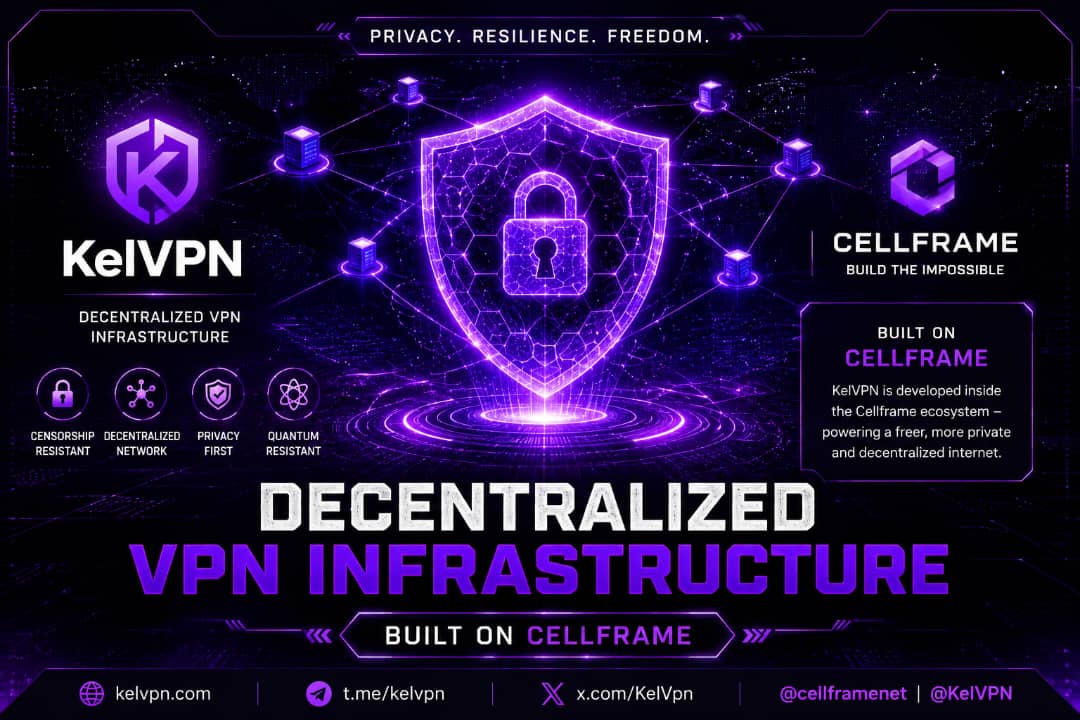
Traditional VPNs = centralized risk❌
Built on @cellframenet, @KelVPN delivers a decentralized, censorship-resistant, and quantum-resistant future for online privacy.🛡️
This is what the real #DePIN utility looks like in the #Web3 era.🚀
#Cellframe #KelVPN #Privacy
11
41
651
May 23
⏰ $2B in USGov cash for quantum
Time to adjust expected time of death for unsecured blockchains?

The Trump administration just committed $2 billion to quantum computing
How they're distributing the money:
• $IBM: $1 billion
• $GFS: $375 million
• $QBTS, $RGTI, and Infleqtion: ~$100 million each
• Diraq: $38 million
• And 3 private companies Atom Computing, PsiQuantum, Quantinuum
In return, the government is taking equity stakes in every company

1
7
41
1,331
May 21
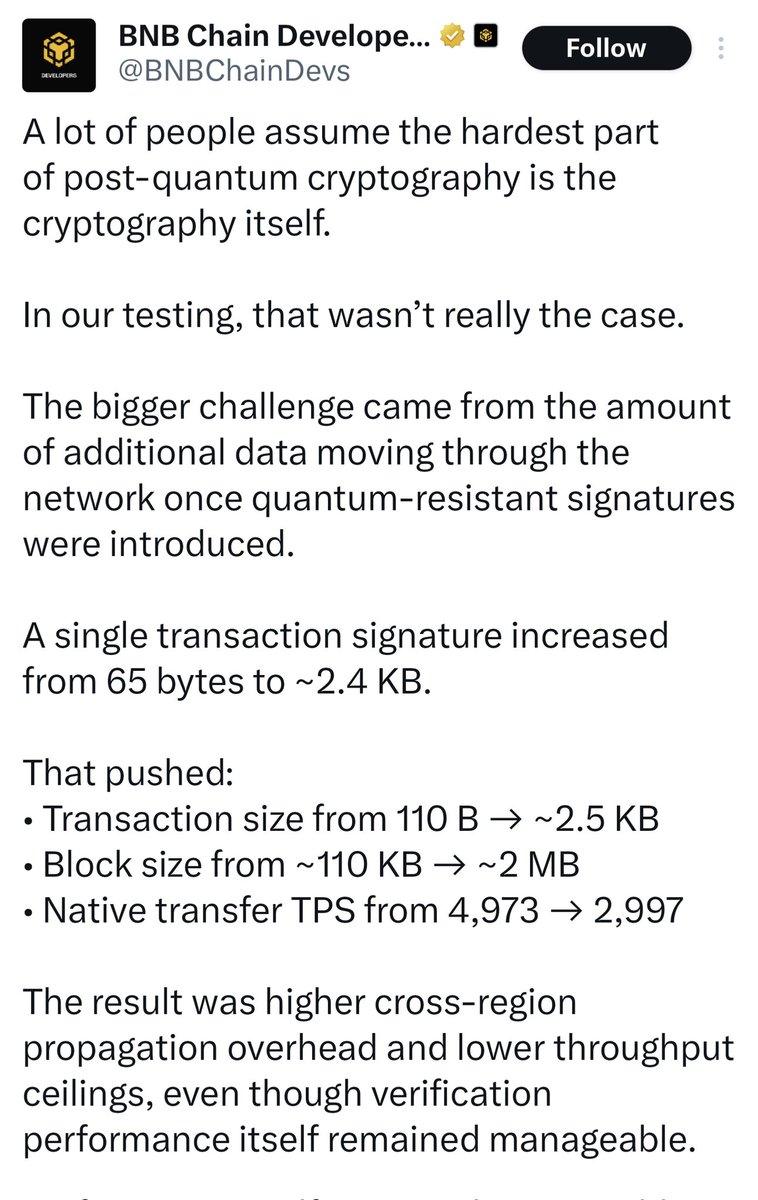
Amazing to see @cz_binance company post that they are just *now* in 2026 discovering the basic factors of post-quantum blockchain (that the PQ signatures require much more data) when we have been working on this for nearly a *decade* @BNBChainDevs
3
11
60
771
Cellframe Social retweeted

May 14
The text version of the AMA session from May 7 with Dmitry Gerasimov — CEO of Demlabs and project lead of Cellframe — is now available!
Key takeaways from the AMA:
- Current status of the investigation into the illegal m-token situation
- Infrastructure updates and enhancements following the Cellframe bridge hack
- Project tokenomics and team funding questions
- Order book synchronization and launch of the web version of Cellframe DEX
- Operating principles and development plans for the bitcoin quantum hedge — cBTC
- Expansion of the Cellframe ecosystem and launch of new services
Read the text version in the blog on the project's website: cellframe.net/blog/ama-with-…
9
30
115
3,290
Cellframe Social retweeted

May 18
#cellframe DEX key points.
Testing out the tech blog format, feedback appreciated.
youtu.be/BtETgvxxRkA
3
3
17
9,037
May 16
Uniswap and other DEXs are actually not very decentralized, since they depend on smart contracts
Cellframe solves this with a new generation of P2P architecture
May 16

One of the most overlooked risks in crypto is infrastructure dependency.
Most users think decentralization only means custody.
But real decentralization also means:
• communication layers
• networking layers
• execution layers
• security layers
If critical infrastructure remains centralized underneath, the ecosystem still inherits centralized points of failure.
That’s part of what makes @cellframenet interesting.
The ecosystem is not only focused on blockchain architecture, but also on surrounding infrastructure like decentralized networking and post-quantum security.
The next evolution of Web3 may not be about adding more chains.
It may be about reducing hidden dependencies.
#Cellframe #QuantumSafe

1
8
58
1,223
Another independent study, not a shill piece. Didn't even need one tbh 👇
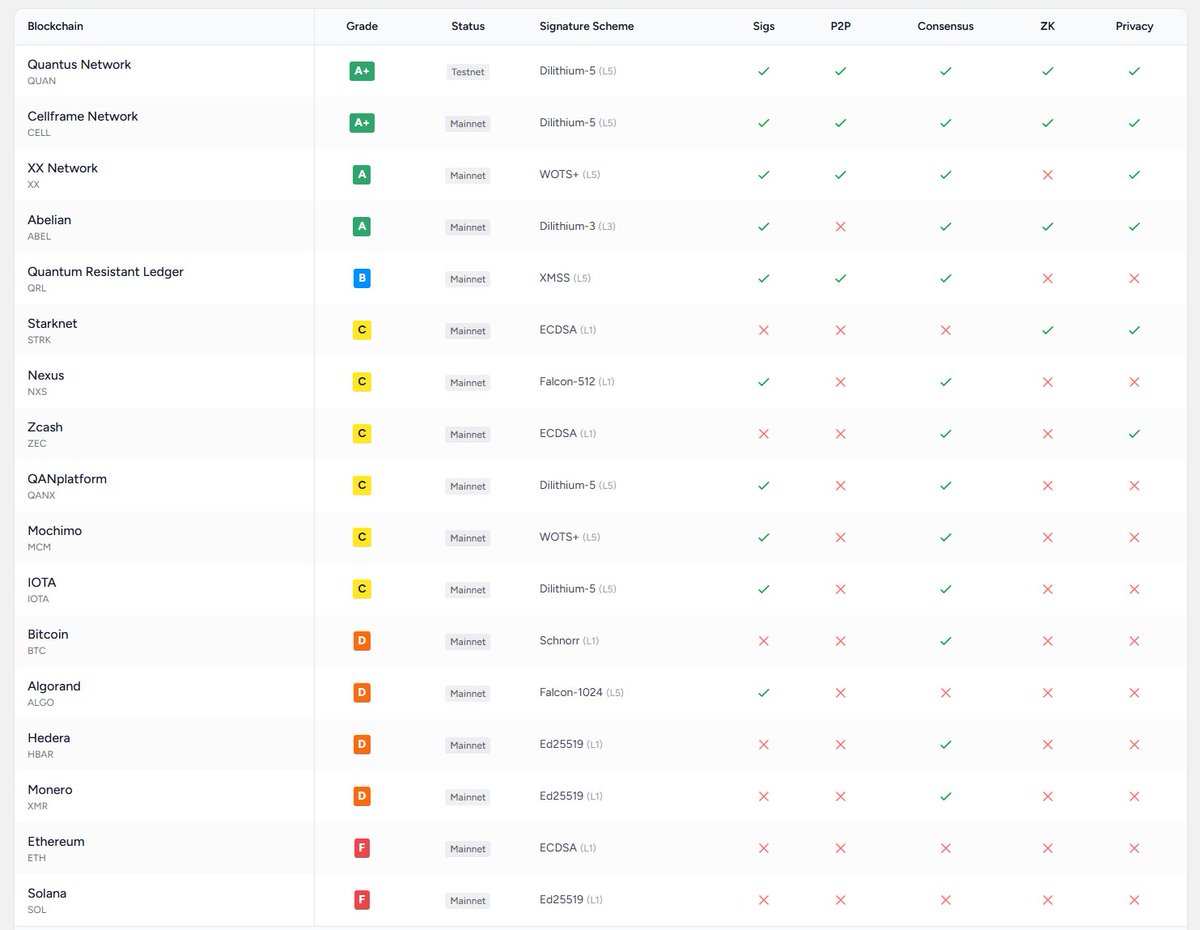

That's not really a problem, because there are already projects built for this from scratch, without retrofitting old code. New tech always shows up this way.
@cellframenet is the best example. Dilithium 5 and FALCON running on mainnet, A on the Quantum Canary Report, a published manifesto on the topic, and cBTC working as a 1:1 quantum hedge for Bitcoin.
You can check it here:
Quantum Canary Report (Cellframe’s maximum A rating): quantumcanary.org/is-your-bl…
cBTC - Bitcoin’s 1:1 quantum hedge (official announcement from 04/23/2026): cellframe.net/blog/cbtc-on-c…
Official Cellframe blog (All quantum updates): cellframe.net/blog/
Official Cellframe website (confirms native post-quantum architecture): cellframe.net/
2
21
53
1,995
Cellframe Social retweeted

● After a few people dropped other names in the comments, I went back for another pass. Some of these stacks are better than I expected.
Several of these teams are years ahead of the bigger high-cap chains, which are still sitting on real retrofit risk because nobody designed them for post-quantum from day one.
The point here is to flag the projects doing the work, not just the ones talking about it.
If I got something wrong, or missed something obvious, say so. I'd rather fix the map.
A few notes:
- QRL was one of the first chains to take post-quantum seriously. Conservative on security, and they've had a live network running for years.
- Cellframe is doing more than the "quantum-safe coin" pitch. The service-oriented infra layer and multi-algorithm setup is a different bet.
- Tidecoin took a Bitcoin-style route but wired in modern PQ primitives in a way that isn't just for show.
- Soqucoin is stronger than I expected on standards alignment and security posture. The stack is more serious than most people assume.
- Raqcoin is messier on some design choices, but at least it's in the conversation instead of pretending the problem isn't there.
The point isn't that these projects are equal in quality, architecture, or maturity. They're not. It's that there are already builders working on this before the rest of the
market gets forced into a panic retrofit.
That alone puts them ahead of most of the industry.
$QRL $CELL $TDC $SOQ $RAQ
8
10
27
1,027
Quantum is coming, good...
That is exactly the kind of future @cellframenet was built for.
$CELL
4
41
121
5,020