An attitude forged from life that began half way through last century. 🏴🇬🇧🇺🇸
Joined April 2021
- Tweets 36,867
- Following 3,096
- Followers 4,074
- Likes 28,400
2,078 Photos and videos




Pinned Tweet

5 May 2025
I’ve been shouting this for years:
CO2 IS PLANT FOOD, NOT A POLLUTANT.
Net Zero is a SCAM.
Climate Crisis is a HOAX.
4 May 2025

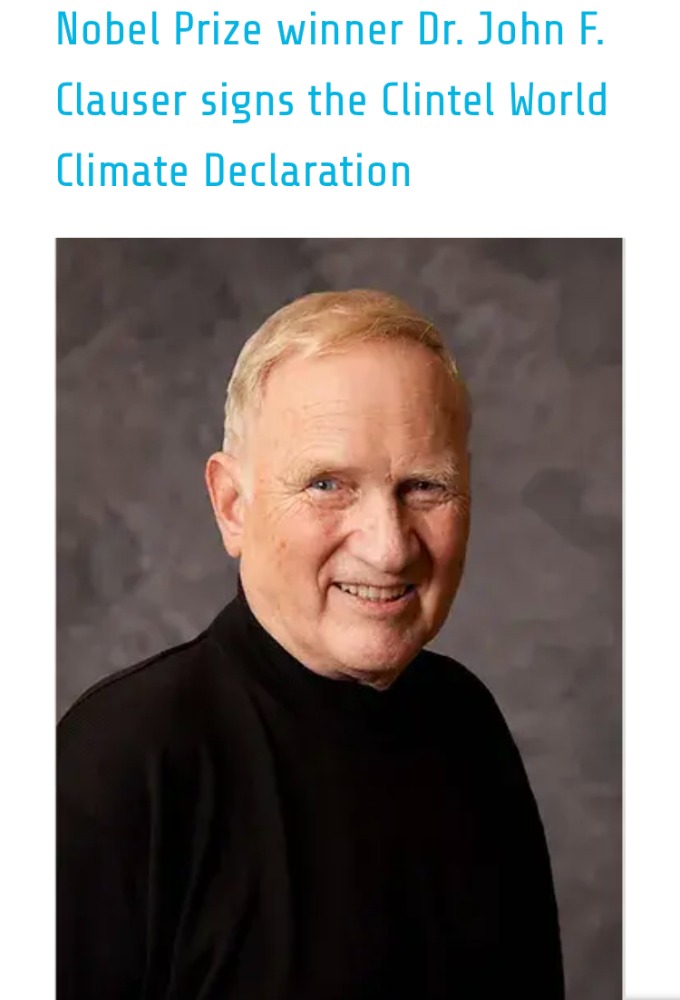
PHYSICS NOBEL PRIZE 2022
SIGNED CLIMATE DECLARATION:
"THERE IS NO CLIMATE EMERGENCY"
CLAUSER & a global network of over 1,900 scientists and professionals has prepared this urgent message:
"Natural as well as anthropogenic factors cause warming -
The geological archive reveals that Earth’s climate has varied as long as the planet has existed, with natural cold and warm phases. The Little Ice Age ended as recently as 1850. Therefore, it is no surprise that we now are experiencing a period of warming.
Warming is far slower than predicted
The world has warmed significantly less than predicted by IPCC on the basis of modeled anthropogenic forcing. The gap between the real world and the modeled world tells us that we are far from understanding climate change.
Climate policy relies on inadequate models
Climate models have many shortcomings and are not remotely plausible as global policy tools. They blow up the effect of greenhouse gases such as CO2. In addition, they ignore the fact that enriching the atmosphere with CO2 is beneficial.
CO2 is plant food, the basis of all life on Earth
CO2 is not a pollutant. It is essential to all life on Earth. Photosynthesis is a blessing. More CO2 is beneficial for nature, greening the Earth: additional CO2 in the air has promoted growth in global plant biomass. It is also good for agriculture, increasing the yields of crops worldwide.
Global warming has not increased natural disasters
There is no statistical evidence that global warming is intensifying hurricanes, floods, droughts and suchlike natural disasters, or making them more frequent. However, there is ample evidence that CO2-mitigation measures are as damaging as they are costly.
Climate policy must respect scientific and economic realities
There is no climate emergency. Therefore, there is no cause for panic and alarm. We strongly oppose the harmful and unrealistic net-zero CO2 policy proposed for 2050. If better approaches emerge, and they certainly will, we have ample time to reflect and re-adapt. The aim of global policy should be ‘prosperity for all’ by providing reliable and affordable energy at all times. In a prosperous society men and women are well educated, birthrates are low and people care about their environment."
13
36
97
8,859
Ian Harper retweeted

Jun 13
It is criminal that our government enabled a bat virus to infect and spread between humans. Indeed, it is hard to imagine a bigger betrayal of our species.
It is equally troubling that the mad scientists who did this then gaslit all the people of the world about it, including those who CORRECTLY interpreted the evidence.
Then, of course, the very same monsters amped up fear of the Covid frankenvirus and steered the panicked public away from safe medicines, and toward an obviously dangerous gene-therapy which they falsely called a vaccine in order to lure us into acceptance.
These are among the greatest crimes EVER committed against humanity. We now have persuasive evidence of everything I have said above.
If we don't correct the record and hold the perpetrators to account, this pattern will happen again, and again, and again--shortening our life expectancy, and degrading our quality of life each time that it does.
This is our Nuremberg moment. We can not simply move on from this ghastly chapter of history. We must finish it.
@brownstoneinst
Jun 12

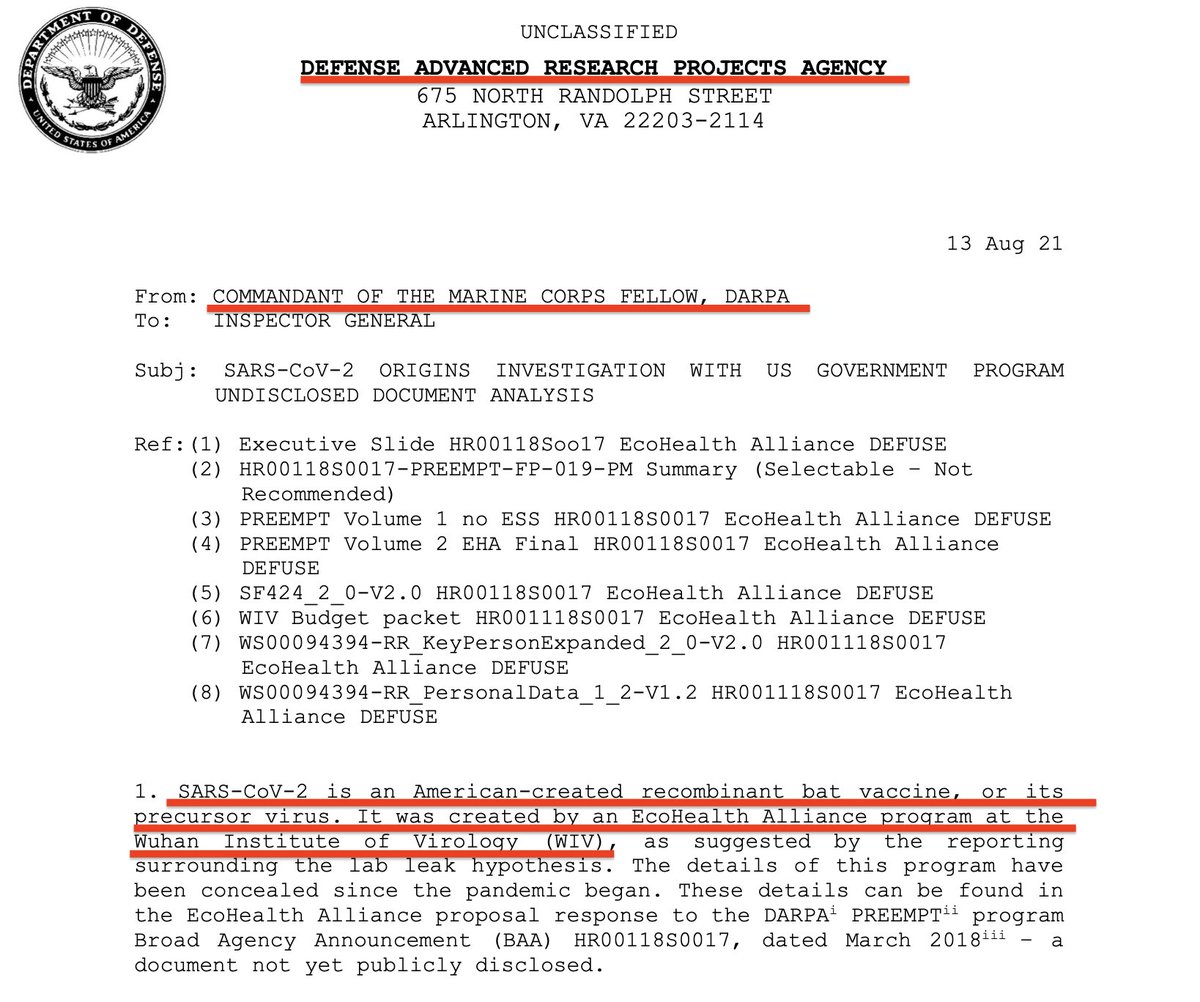
@RandPaul DOCS:
hsgac.senate.gov/wp-content/…
"SARS-CoV-2 is an American-created recombinant bat vaccine, or its precursor virus. It was created by an EcoHealth Alliance program at the Wuhan Institute of Virology (WIV)."
903
9,150
26,803
790,552
Ian Harper retweeted

Jun 12
How is this not front page news?!!👇🇺🇸

🚨SEN. RON JOHNSON EXPOSES HOW 74% OF VAERS DEATHS STRUCK WITHIN 48 HOURS OF THE COVID VAX!
The numbers are screaming — and the media has blacked it out completely. Sen. Ron Johnson lays bare the VAERS data showing 39,000 deaths worldwide, with a horrifying 74% hitting on the day of injection or within one to two days. He also reveals how FDA officials deliberately masked safety signals, silenced the experts who tried to unmask them, and why stories about pediatric deaths never reach the public.
This isn’t negligence. This is a coordinated cover-up of crimes against humanity.
They thought the media would protect them forever. But real fighters are dragging the darkness into the light.
No more hiding. No more lies. The reckoning has begun.
369
4,553
10,670
169,602
Ian Harper retweeted

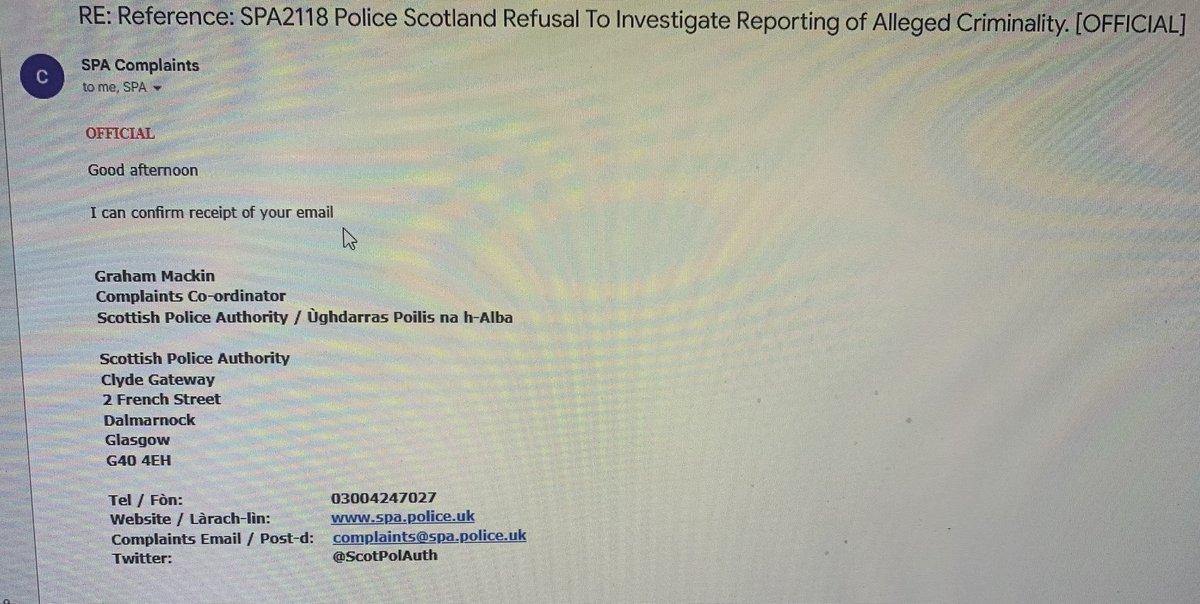
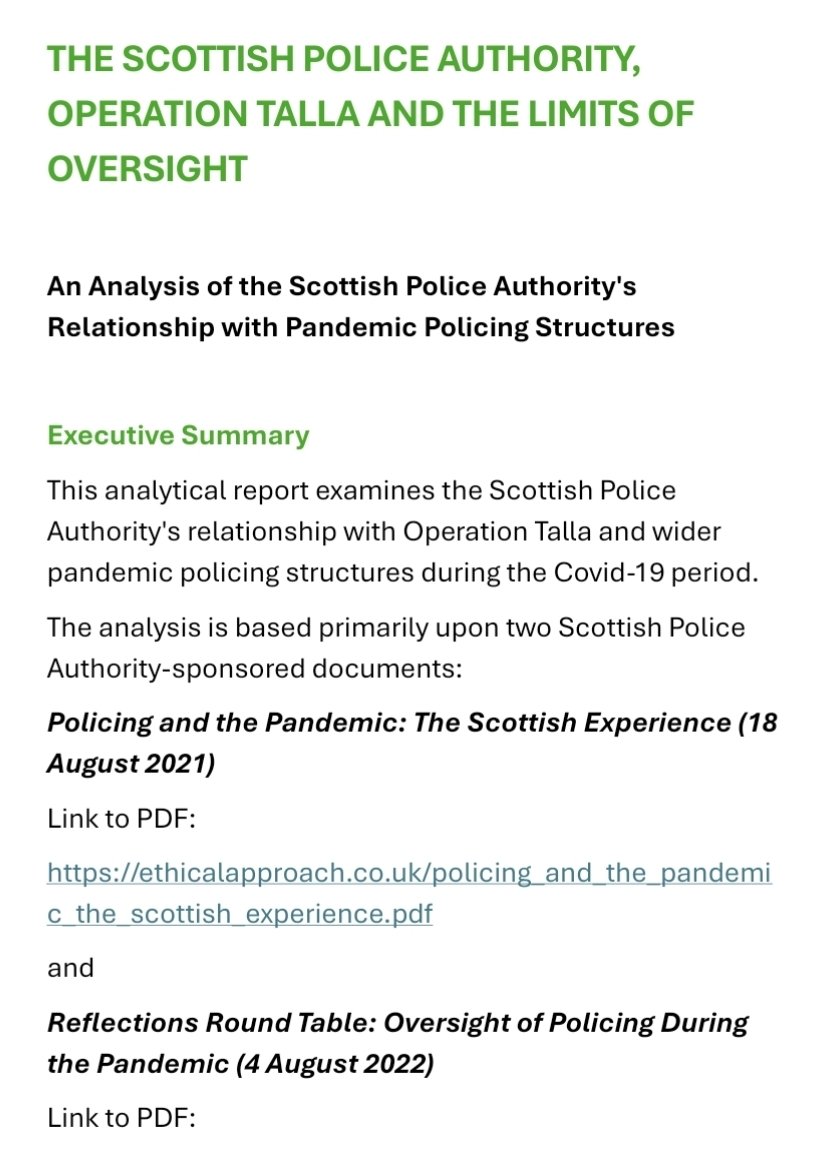
For years, the public have been encouraged to think of policing, oversight, government, advisory bodies and public-confidence mechanisms as distinct and independent parts of a constitutional system.
The Scottish Police Authority's own documents tell a more complicated story.
This new analysis examines publicly available SPA material relating to Operation Talla and reveals an extensive ecosystem involving:
• Police Scotland;
• Operation Talla command structures;
• Scottish Government;
• NPCC leadership;
• intelligence and analytics functions;
• advisory groups;
• public confidence programmes;
• oversight bodies.
The most important finding is not that the SPA knew about Operation Talla. The documents demonstrate that it did.
The more important question is this:
If oversight bodies, operational bodies, government actors, advisory structures and research functions were all operating within the same ecosystem, where precisely does oversight end and participation begin?
More importantly still, the documents demonstrate extensive scrutiny of how pandemic powers were exercised.
They do not however, demonstrate equivalent scrutiny of how police responded when members of the public attempted to submit allegations, concerns and information relating to the pandemic response itself.
Oversight of power is not the same thing as oversight of refusal to receive allegations concerning power.
That distinction may prove to be one of the most important constitutional questions arising from the entire Operation Talla period.
"The Scottish Police Authority, Operation Talla and the Limits of Oversight"
Read the full analysis:
ethicalapproach.co.uk/analys…
2
37
61
1,192
Ian Harper retweeted
Wakey wakey 👇🏻

There is a tendency to view Operation Talla, CJSSC, police disclosures, court administration, prosecution policy and digital justice reform as separate subjects.
They are not.
When examined individually, each appears administrative.
When examined cumulatively, a far more significant picture emerges.
Over the past several years, a substantial body of official material has entered the public domain revealing:
• national coordination structures;
• cross-agency criminal justice governance;
• integrated digital information systems;
• harmonised operational frameworks;
• shared strategic objectives; and
• increasingly centralised management of information flow.
At the same time, official disclosures have revealed examples of allegations being filtered, re-framed, classified as intelligence rather than crime, or not recorded at all.
In a justice architecture designed around interoperability and information flowing from a single point of entry, the initial classification decision becomes profoundly important.
If information enters the system in one form, the entire system inherits that classification.
If it does not enter the system at all, the consequences are obvious.
Operation Talla is no longer merely a matter of discovery.
CJSSC is no longer merely a matter of discovery.
Both have now entered the realm of persistent evidential architecture.
Time and inevitability walk side by side.
Further reading here:
CJSSC Hypothesis Paper:
ethicalapproach.co.uk/CJSSC_…
Transforming the Criminal Justice System - Forensic Analysis:
ethicalapproach.co.uk/transf…

1
13
24
627
Jun 11
You say:
“Blaming a group of people for the awful actions of an individual leads us to a very dark place.”
We ARE blaming a group of people for these actions to happen!!!
WE ARE BLAMING ALL THE POLITICIANS.
THEY ARE CULPABLE FOR ALLOWING THE EXTREME DANGER TO EXIST ON OUR STREETS.
Jun 11

This man is a threat to our democracy. He backs violence and extremism.
Blaming a group of people for the awful actions of an individual leads us to a very dark place.
Musk, Lowe, Farage, Robinson - these men don't give a shit about this country, they want to rip us apart.
1
1
43
Jun 11
I would say that @elonmusk has made an accurate statement.
People have every reason to be angry, because they’re afraid, afraid of their government’s response.
Demanding people“Calm down” is a response that reveals the disconnect between politicians and reality.

Murderous migrants beheading innocent people in their home town is what’s making people angry, not “social media”!
1
52
Jun 11
Jun 10

Here’s the problem. The liberal political class wants us to treat atrocities like Belfast as single, random, isolated incidents. “Yes, it’s horrific, but don’t overreact,” they say. “Let the police do their job. Justice will be delivered. Let’s remain united,” and so on.
But the public can see that such incidents *aren’t* random or isolated. They are, in fact, all the consequence of massive state failure in the area of asylum and immigration. All roads lead back there.
That’s why people are angry.. They are sick of the platitudes that get trotted out after each fresh incident. They don’t want to hear them anymore. They know that the decisions of establishment politicians have brought us to this current pass, and they don’t trust those same politicians to fix things, especially when some of them refuse to even recognise that the public’s anger is justified.
There has been a huge vibe shift in recent years. Imagine - God forbid - there were another 7/7. Does anyone think the public response would be anything like as restrained as it was then? We are in really dangerous territory.
The public don’t want flowers and candles and “Don’t let them divide us.” They want someone who says, “I recognise that the state has failed abjectly. We have allowed far too many people to settle in the country without knowing who they truly are. It has disrupted your communities. Your anger is justified. And I will do everything in my power to put things right.”
Any politician unwilling to articulate that message, fully and sincerely, is effectively sanctioning more years of growing social disharmony and discord. Things cannot heal until those in power recognise the extent of the problem and what it will take to fix it. And, on both counts, most of them don’t.
That’s why the next few years are going to be very, very turbulent.
25
Jun 11
A lesson in the history of our nation and how it is governed.
It is governed by sovereign citizens.
We the people of this nation have a right to be angry.
Our government calls for us to “Calm down” a demand to which the people will likely respond thus:
👇

LAWFUL REBELLION
YOUR RIGHT UNDER MAGNA CARTA
Under article 61 of Magna Carta 1215 (the founding document of our Constitution) we have a right to enter into lawful rebellion if we feel we are being governed unjustly. Contrary to common belief our Sovereign and her government are only there to govern us and not to rule us and this must be done within the constraint of our Common Law and the freedoms asserted to us by such Law, nothing can become law in this country if it falls outside of this simple constraint. Article 61 shows quite clearly who really holds the power in this country, that being quite simply us the people; we have Sovereignty not any Parliament and nor can this be taken from us by any Parliament who claim to have taken the people's Sovereignty.
This is how we solve our political woes and take our country back.
Only we can save ourselves.
Please repost.

1
33
Jun 11
Jun 10
Here’s the problem. The liberal political class wants us to treat atrocities like Belfast as single, random, isolated incidents. “Yes, it’s horrific, but don’t overreact,” they say. “Let the police do their job. Justice will be delivered. Let’s remain united,” and so on.
But the public can see that such incidents *aren’t* random or isolated. They are, in fact, all the consequence of massive state failure in the area of asylum and immigration. All roads lead back there.
That’s why people are angry.. They are sick of the platitudes that get trotted out after each fresh incident. They don’t want to hear them anymore. They know that the decisions of establishment politicians have brought us to this current pass, and they don’t trust those same politicians to fix things, especially when some of them refuse to even recognise that the public’s anger is justified.
There has been a huge vibe shift in recent years. Imagine - God forbid - there were another 7/7. Does anyone think the public response would be anything like as restrained as it was then? We are in really dangerous territory.
The public don’t want flowers and candles and “Don’t let them divide us.” They want someone who says, “I recognise that the state has failed abjectly. We have allowed far too many people to settle in the country without knowing who they truly are. It has disrupted your communities. Your anger is justified. And I will do everything in my power to put things right.”
Any politician unwilling to articulate that message, fully and sincerely, is effectively sanctioning more years of growing social disharmony and discord. Things cannot heal until those in power recognise the extent of the problem and what it will take to fix it. And, on both counts, most of them don’t.
That’s why the next few years are going to be very, very turbulent.
24
Ian Harper retweeted

Jun 10
Here’s the problem. The liberal political class wants us to treat atrocities like Belfast as single, random, isolated incidents. “Yes, it’s horrific, but don’t overreact,” they say. “Let the police do their job. Justice will be delivered. Let’s remain united,” and so on.
But the public can see that such incidents *aren’t* random or isolated. They are, in fact, all the consequence of massive state failure in the area of asylum and immigration. All roads lead back there.
That’s why people are angry.. They are sick of the platitudes that get trotted out after each fresh incident. They don’t want to hear them anymore. They know that the decisions of establishment politicians have brought us to this current pass, and they don’t trust those same politicians to fix things, especially when some of them refuse to even recognise that the public’s anger is justified.
There has been a huge vibe shift in recent years. Imagine - God forbid - there were another 7/7. Does anyone think the public response would be anything like as restrained as it was then? We are in really dangerous territory.
The public don’t want flowers and candles and “Don’t let them divide us.” They want someone who says, “I recognise that the state has failed abjectly. We have allowed far too many people to settle in the country without knowing who they truly are. It has disrupted your communities. Your anger is justified. And I will do everything in my power to put things right.”
Any politician unwilling to articulate that message, fully and sincerely, is effectively sanctioning more years of growing social disharmony and discord. Things cannot heal until those in power recognise the extent of the problem and what it will take to fix it. And, on both counts, most of them don’t.
That’s why the next few years are going to be very, very turbulent.
1,229
6,572
27,054
1,233,504
Ian Harper retweeted

Jun 11
A recent court case not guilty by jury despite the judges best efforts for a guilty verdict.
This case, result on 8/6/26 At Bristol Crown Court is why jury trials must NEVER be removed.
The judge in this case has been reported to Avon and Somerset Police for Perverting the course of justice and misconduct in public office.
A crime number has been issued and the complainant Dale Vincent has sent a strong letter to the Chief Constable Sarah Crew outlining his expectations and their legal and statutory obligations to investigate these crimes, witnessed by the forces own Police Inspector present on two days of the five day trial.
Without the jury Dale would be in prison today. That’s how corrupt this system is.
This was no ordinary case. An alleged assault on an emergency worker, a police officer, but the jury did not believe the assault happened. This was Dale making a citizens arrest of a police officer for failing to close a vaccine centre administering the bio weapon jabs for covid. Significant evidence from experts was available to the police but they point blank refused to look at it, or to speak to @DrAseemMalhotra who was waiting and available on the phone to speak to the police and the NHS director at the centre. He would have advised them to stop the vaccines with credible and evidenced reasons why.
The judge refused to allow Dr Malhotra’s evidence to be put to the jury or allow him to be called as a witness.
For 18 months it was agreed my statement was permitted and I was lined up to give evidence in support of Dale. My statement 14 pages is damning. On day three of the trial my evidence was refused to be shown or me as a witness allowed to give evidence. The judge did not want our evidence on the public record or to be seen by a jury.
Dale’s McKenzie friend was then dismissed and not allowed into the court, no reason given.
Dale has protected characteristics in law, special measures were in place but the judge left Dale abandoned and put a Police Inspector there instead.
The public gallery was closed too.
This trial, the judges behaviour and the rightful verdict of not guilty should be front page news to expose the judiciary and prove jury trials MUST REMAIN.
The X post is attached.
My statement for anyone wanting to see why I couldn’t give evidence or have my statement scrutinised is here too.
I’m sure if you read it you’ll understand why the jury couldn’t hear my evidence.
ethicalapproach.co.uk/sexton…
x.com/xpcbirmingham/status/2…
Jun 8

🔥 HUGE BREAKING NEWS. 🔥
MONDAY 8TH JUNE 2026.
DALE VINCENT FOUND NOT GUILTY AT BRISTOL CROWN COURT OF ASSAULTING AN EMERGENCY WORKER.
This is in relation to the incident on the 4th of October 2022 when attempting to close down a vaccine centre with others, he made a citizens arrest on a police officer for Misconduct in Public Office because the officer was walking away from a crime scene. The officer alleged he was assaulted at the time and Dale was subsequently arrested and charged.
The jury agreed despite the horrendous and criminal behaviour of the judge who was perverting the course of justice and misconducting himself in public office by doing everything he could to make sure Dale was found guilty.
Dale has reported the judge to the police for the above offences and a Police Inspector at the court issued Dale with a crime number.
My statement that I refer to in the video explaining it all, the one the judge refused to be allowed to be read out in court or for me to give my evidence in support of Dale is attached for everyone to read.
Once read you will see why the judge banned my evidence and my statement to be heard by the jury and placed on the public record.
Well tough Judge Burgess, here it is.
Everyone can Judge for themselves why he did what he did.
ethicalapproach.co.uk/sexton…
We are all proud of you Dale. ❤️🙏🏻
9
90
161
2,239
Ian Harper retweeted
A defendant is denied key witnesses.
Contextual defence evidence is excluded.
The jury hears the prosecution case but little of what the defence wanted to place before them.
The jury still refuses to convict.
Sometimes the most important part of a verdict is not what the jury heard. It is what they heard and still weren't persuaded by.
A verdict is sometimes more about a jury judging the justice system itself, rather than the accused.
8
25
59
1,477
Ian Harper retweeted

Jun 11
Earth is not facing urgent climate-related damage, despite claims embedded in the United Nations' 40-year grand plan.
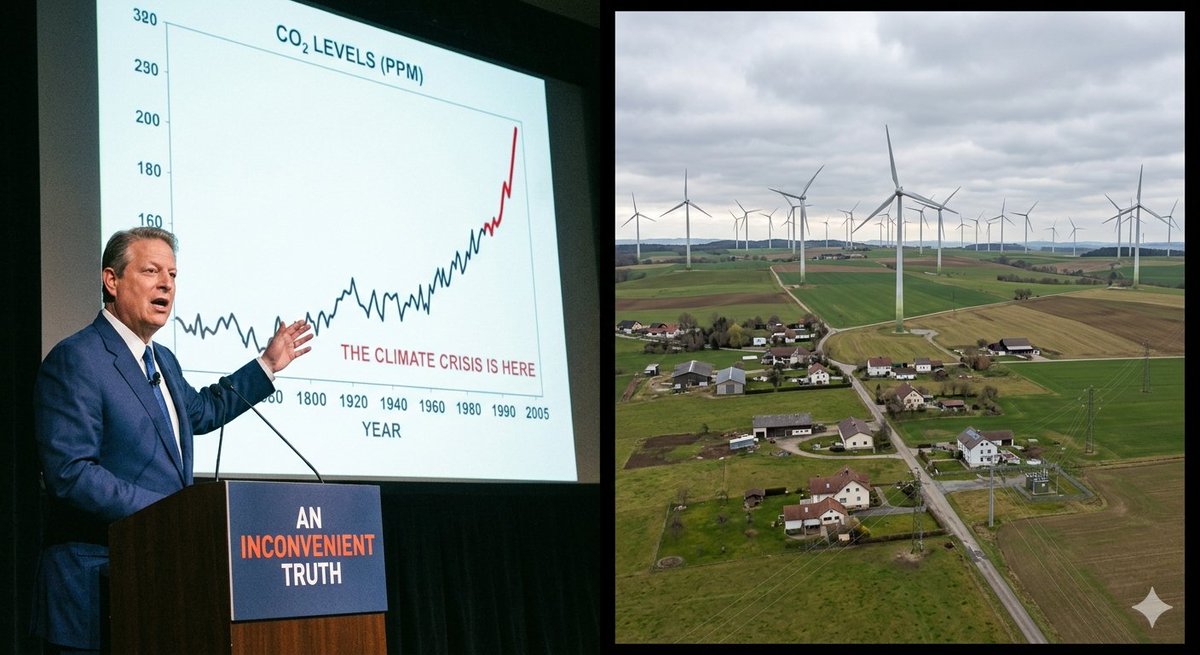
The real damage can be measured in global instability and widespread economic and industrial decline. The estimated price tag for this UN agenda is a staggering $275 trillion by 2050 (based on a 2022 McKinsey Global report). This involves constructing a completely new global grid, blanketing landscapes with stadium-sized wind and solar arrays.
The global warming agenda is an ideology, driven in part by a misleading, fear-laced 2006 documentary by former US vice president, Al Gore. 'An Inconvenient Truth' has not stood the test of time, yet its purpose was achieved: to blame human society for an environmental collapse that hasn't happened. The movie gained widespread exposure, injecting deep cultural guilt into the drive to build today's worsening glut of turbines and solar arrays.
In effect, it replaces dense and dependable hydrocarbon energy with mechanical gadgetry - systems that have proven to be intermittent and unreliable and subject to 20-to-25-year replacement cycles.
The idea that human society is single-handedly overheating the world has its own dedicated core of followers. But no Western country sought the genuine backing of its citizenry via democratic consultation for this shift.
The UN has led a relentless, top-down economic campaign, denouncing any doubts as 'science denial'.
47
338
805
11,089
Ian Harper retweeted
Jun 11
One only has to look at the sheer scale of the planet to see the flaws in the climate agenda.
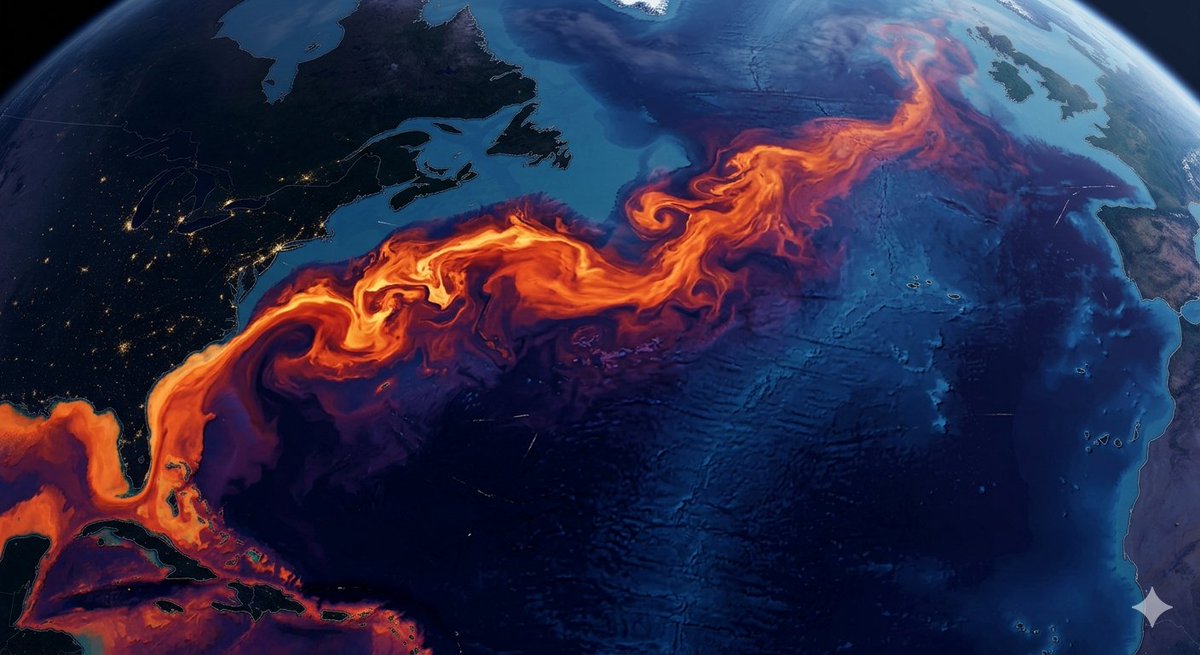
Combined, every town and city on Earth occupies a mere 3% of the world's landmass. The true driving forces for regional climates rest in the oceans and major landforms - the planet's genuine engine rooms. Oceans cover 72% of the globe to an average depth of 2.3 miles. They contain roughly 86% of the global carbon reservoir and 91% of all retained heat energy; by comparison, our thin atmosphere holds a meager 1 to 2% of each.
Ancient ocean currents give balance to the world's weather, carrying tropical warmth to northern regions in cycles that drive migration, cloud formation and global storms. Landforms guide ocean currents across deep geological time, as tectonic changes to continental land masses reshape the entire world.
The legacy of ignoring this planetary scale of the environment can be seen today in our defaced countryside and industrialised coastal retreats. Sweeping vistas are being vandalised by massive arrays of wind and solar structures, causing immeasurable localised environmental carnage.
It has created a perpetual, asset-swapping loop of renewal and replacement at a staggering, endless cost to national economies, while hollowing out traditional industries and aggressively mining the earth for rare metals like copper and silver.
The back-end of this 'clean' energy loop is an impending hazardous waste crisis. With global solar capacity now officially surpassing 2 Terawatts (TW)—representing between 7 and 8 billion solar panel equivalents—the world is utterly unprepared for the onslaught of disposal.
The International Renewable Energy Agency projects up to 78 million metric tons of solar e-waste by 2050. Because there is little financial incentive for complex recycling, up to 90% of decommissioned panels currently go straight into the ground. When left to fracture in landfills, heavy metals like lead and cadmium can leach into surrounding soil and groundwater.
This will remain the most visible legacy from the Twenty-First Century.

49
494
1,106
15,039
Ian Harper retweeted
Jun 10
We now find the intermittent energy harvested from wind and sun is physically unable to replicate the dense, reliable power of hydrocarbons.
Trying to force wind and solar to deliver baseload power has failed. McKinsey Global (2022) estimates the full cost of a net-zero transition by 2050 at $275 trillion—running at an astronomical $9.2 trillion every year.
This utopian experiment has already squandered trillions in global capital, triggering an economic shockwave that has sent Western nations into a general decline.
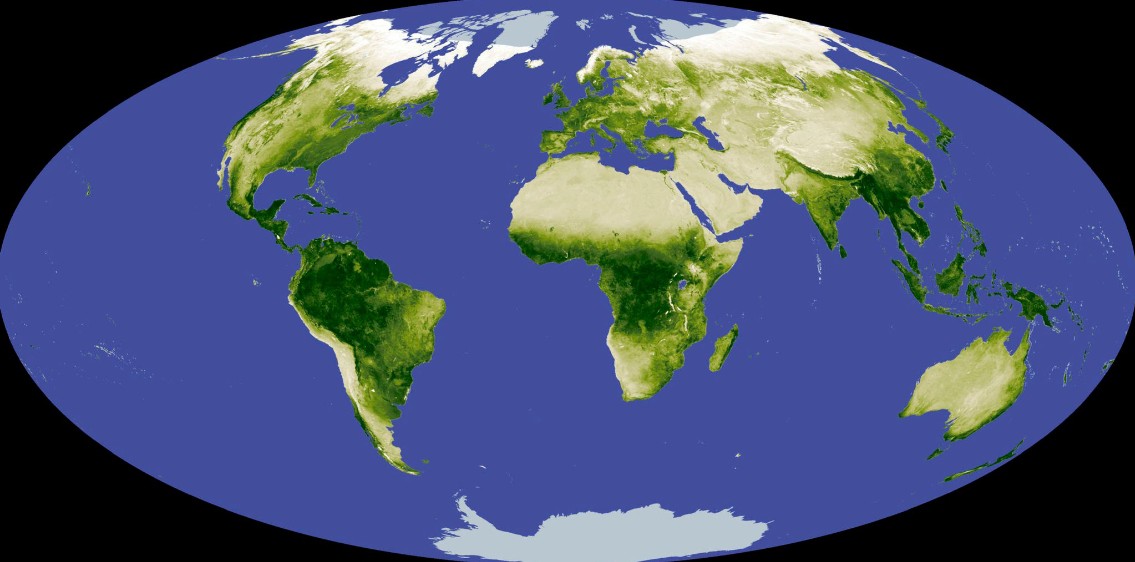
There is no climate apocalypse in sight. In fact, NASA satellite data confirms the world has been steadily greening for two decades, driven by a CO₂-led global vegetation recovery.
There was never a reason for such destructive haste to dismantle coal, oil and gas energy, because there was no urgent crisis. Geologists have already mapped vast, proven reserves of untapped hydrocarbons that offer a natural bridge to the future:
* Coal: 1.06 trillion tonnes (approx. 132 years remaining).
* Natural Gas: 7,299 trillion cubic feet (approx. 143 years remaining).
* Crude Oil: 1.65 trillion barrels (approx. 53 years remaining).
The actual volume of untapped hydrocarbons could easily be two or three times as much—enough to power humanity for another three centuries. This abundance allows ample time for adequate forward planning until truly viable, next-generation alternatives are invented.
Image: Two decades of satellite-verified biomass expansion. Source: Stocktrek Images / Getty Images
39
287
692
11,611
Ian Harper retweeted

My talented friend @MichaelPack_ has produced a great documentary about the lockdown dissidents & the silencing of science during the covid pandemic.
So much harm caused by the lockdowns, school closures, and mandates could have been avoided.
I'm working now to reform public health and science so nothing like that ever happens again.
@WSJopinion

During the COVID-19 pandemic, a group of prominent scientists challenged the prevailing government approach to lockdowns. The Lockdown Dissidents tells the story of researchers who say they were censored when they questioned the public health consensus. on.wsj.com/3QyWXCd
158
1,484
3,739
116,911
Ian Harper retweeted
Jun 9
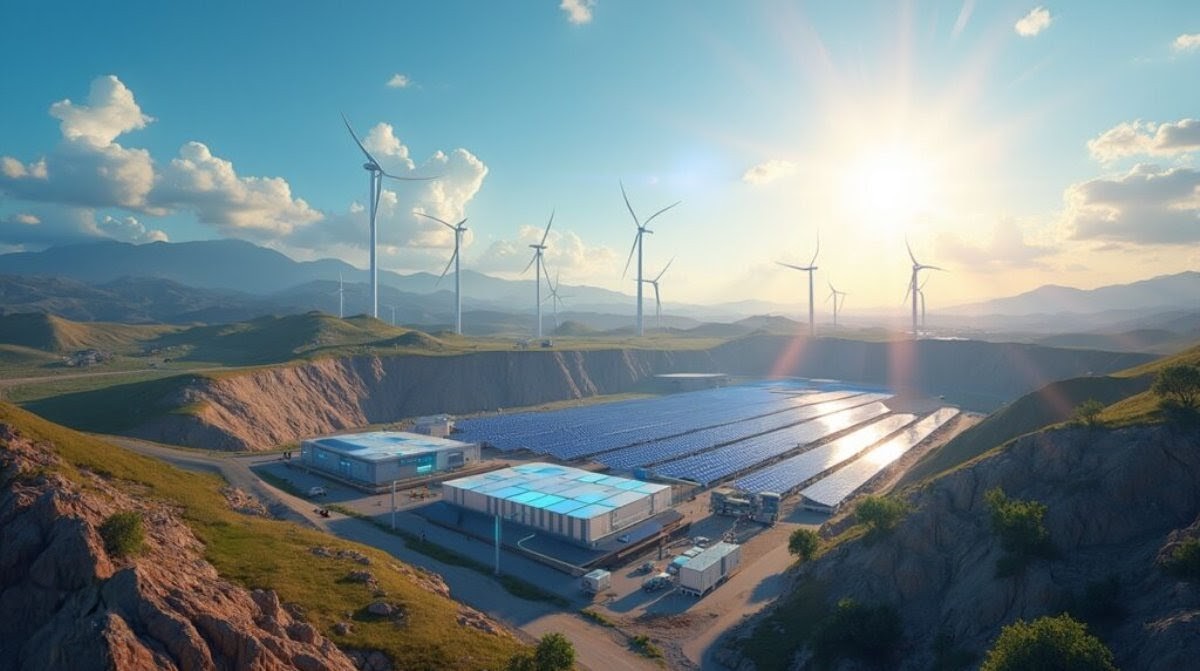
Wind and solar aren't the future - they are a high-maintenance, low-yield, asset-degrading collection of unreliable gadgetry.
Ultimately, the actual physics makes them exceptionally intermittent and they fail to deliver a true net profit to everyone who was forced to subsidise them. We are told wind and solar are the limitless, romantic future of energy. But when you strip away the romance, they are not pristine monuments to progress.
The reality is, they are complex jumbles of electronics, specialised glass, composite blades and concrete foundations. Like any domestic appliance, they degrade, malfunction and eventually they just wear out, sooner rather than later.
Whether it is a 'minor rural block' or a massive multi-million-dollar commercial farm, the financial equation is plagued by intermittency. Because these technologies only work sometimes, they require trillions in redundant grid infrastructure, backup gas plants, or toxic, short-lived battery arrays just to keep the lights on.
The narrative promises clean, free power from the sky. But both wind and solar are bound by physical barriers that guarantee they can never deliver the promised utopian returns.
A wind turbine cannot simply absorb all the energy passing through it. In 1919, physicist Albert Betz proved that if a turbine extracted 100% of the wind’s kinetic energy, the air behind the blades would stop moving entirely, blocking any new wind from entering. The absolute mathematical maximum efficiency for any open-airflow turbine is 59.3%.
Because of this physical wall, real-world utility turbines max out at around 45% efficiency in perfect conditions. But because the wind rarely blows at perfect speeds, their actual annual average output (capacity factor) globally sits at a dismal 25% to 40% depending on location. They aren't magical power plants; they are mechanical bottlenecks.
Solar panels face an equally rigid thermodynamic wall. Standard silicon panels have a maximum theoretical efficiency of roughly 33% because nearly half of all incoming solar energy is simply too powerful to be captured and is instantly lost as heat, while another chunk of photons passes right through the material like a ghost.
Millions of homeowners who bought into rooftop solar since the late 2000s are discovering the financial math didn't hold up. As early subsidies and high buy-back tariffs evaporated, owners were left with creeping daily grid supply charges and degrading panels.
After only 10 to 15 years, the costly inverters fail, leaving properties with expensive, non-functioning roof clutter.
102
535
1,312
20,806
Ian Harper retweeted

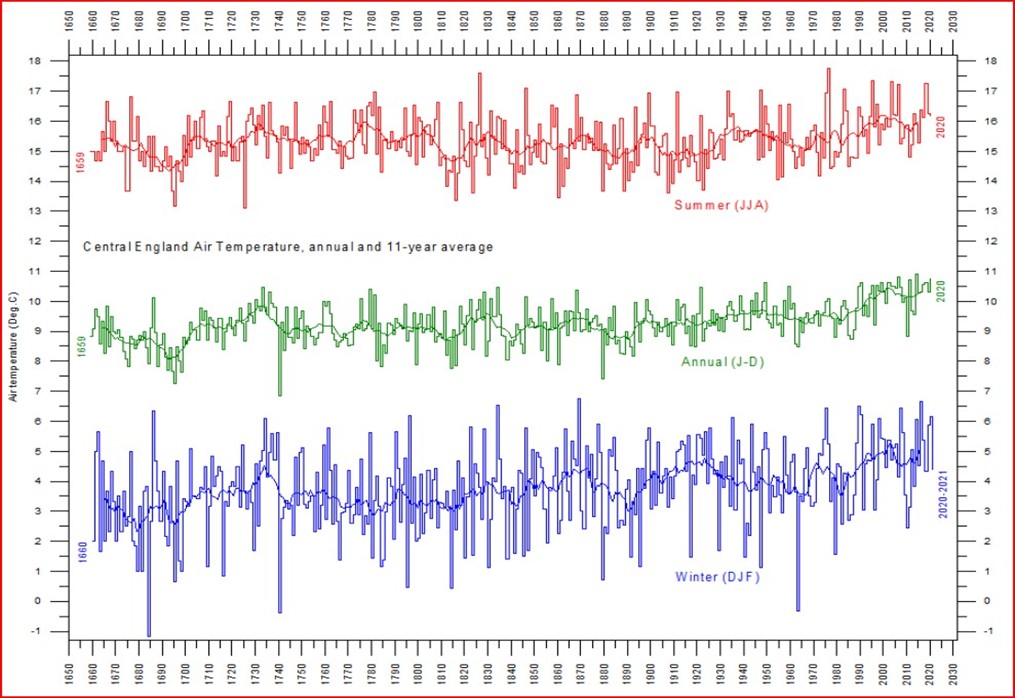
The CET (Central England surface air Temperature) series is the longest existing meteorological record. Thermometer measurements made from 1659 to now.
There is NO indication of ANY warming effect from industrialisation in the record. ZERO, ZIP, NADA.
16
33
77
2,457
Ian Harper retweeted

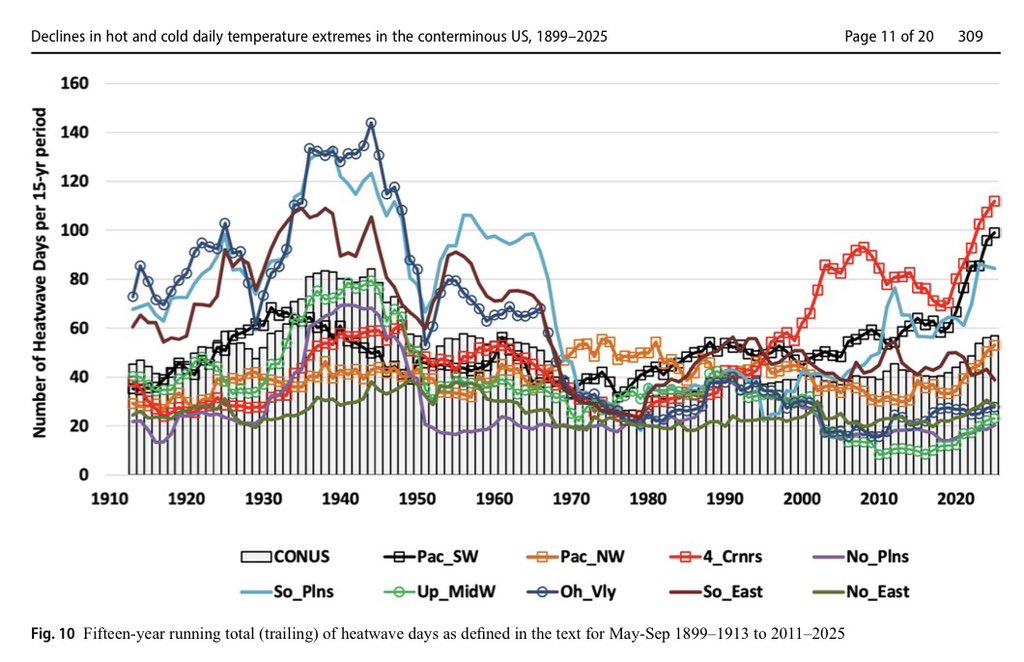
If CO₂ is the primary driver of heatwaves, why do many U.S. regions show more heatwave days during the Dust Bowl era than today?
Real climate science starts with observations... not narratives.
13
58
158
3,026
Ian Harper retweeted

Jun 9
Jun 9
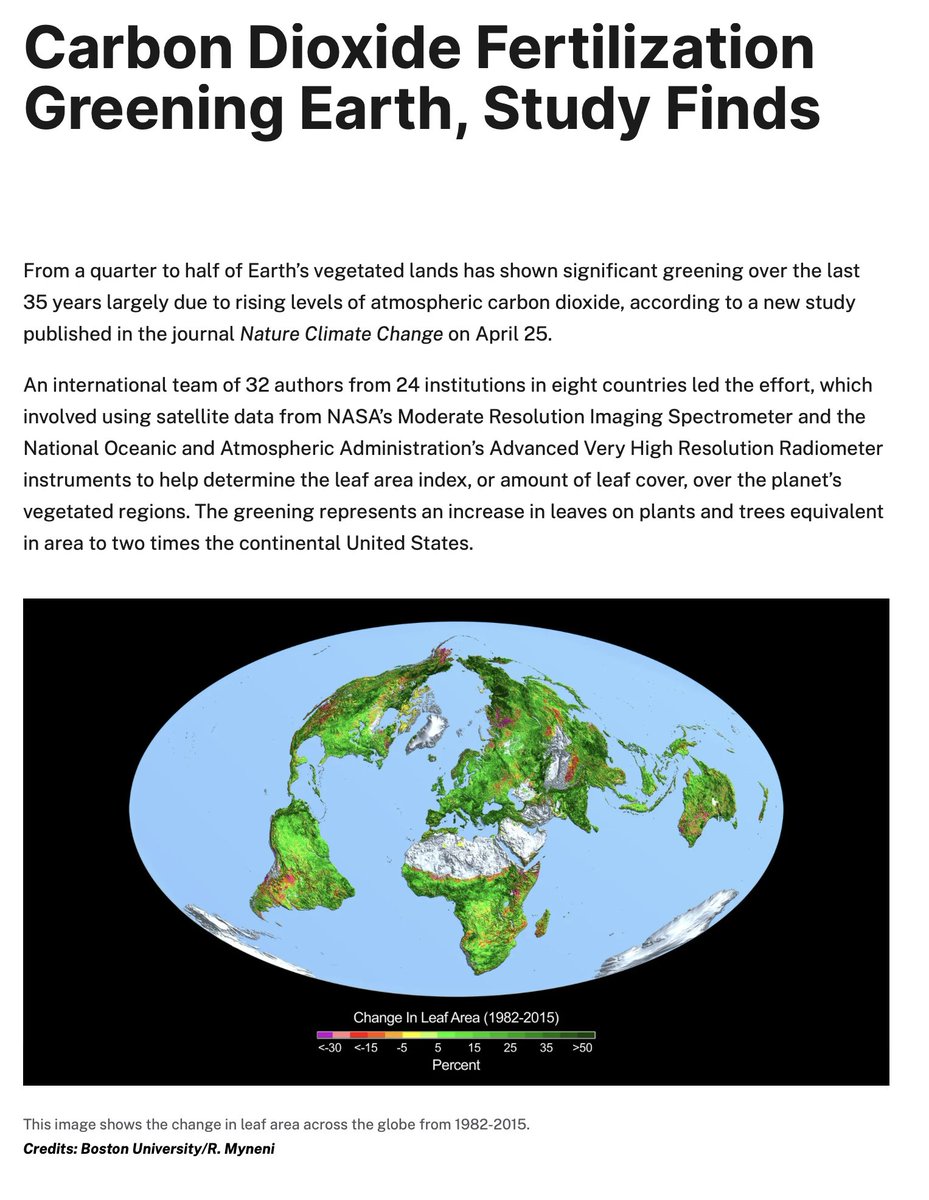
'Carbon Dioxide Fertilization Greening Earth, Study Finds'
"From a quarter to half of Earth’s vegetated lands has shown significant greening over the last 35 years largely due to rising levels of atmospheric carbon dioxide, according to a new study published in the journal Nature Climate Change on April 25
An international team of 32 authors from 24 institutions in eight countries led the effort, which involved using satellite data from NASA’s Moderate Resolution Imaging Spectrometer and the National Oceanic and Atmospheric Administration’s Advanced Very High Resolution Radiometer instruments to help determine the leaf area index, or amount of leaf cover, over the planet’s vegetated regions. The greening represents an increase in leaves on plants and trees equivalent in area to two times the continental United States"
1
1
16
1,612