We are a community of parents, healthcare workers, teachers, students and individuals who care about improving indoor air quality. Let’s clean our air.
- Tweets 1,641
- Following 528
- Followers 555
- Likes 838



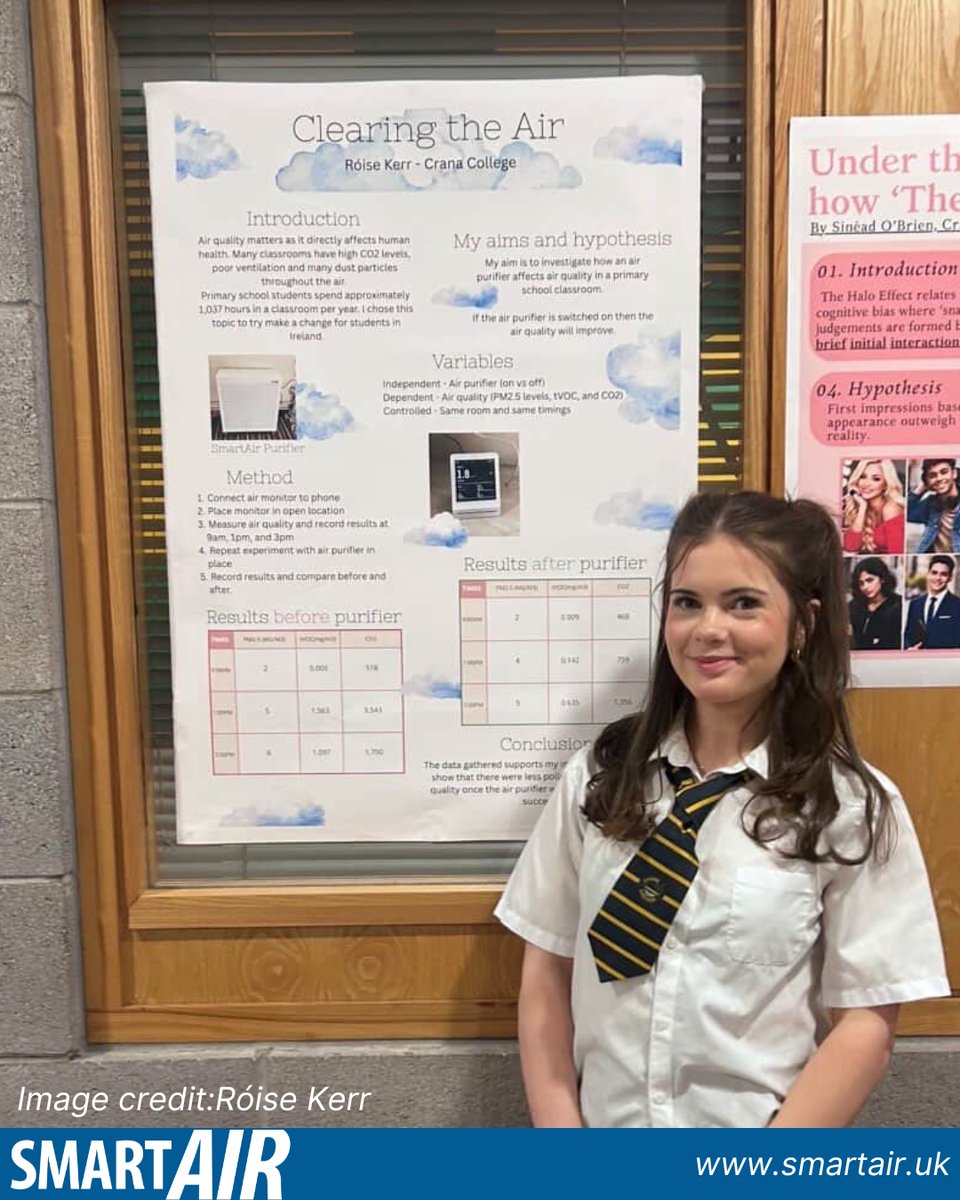
ALT Róise, a school student standing indoors beside a project poster titled “Clearing the Air,” which explains an investigation into air quality and the impact of an air purifier in a primary school classroom. Smart Air branding and website appear along the bottom of the image.
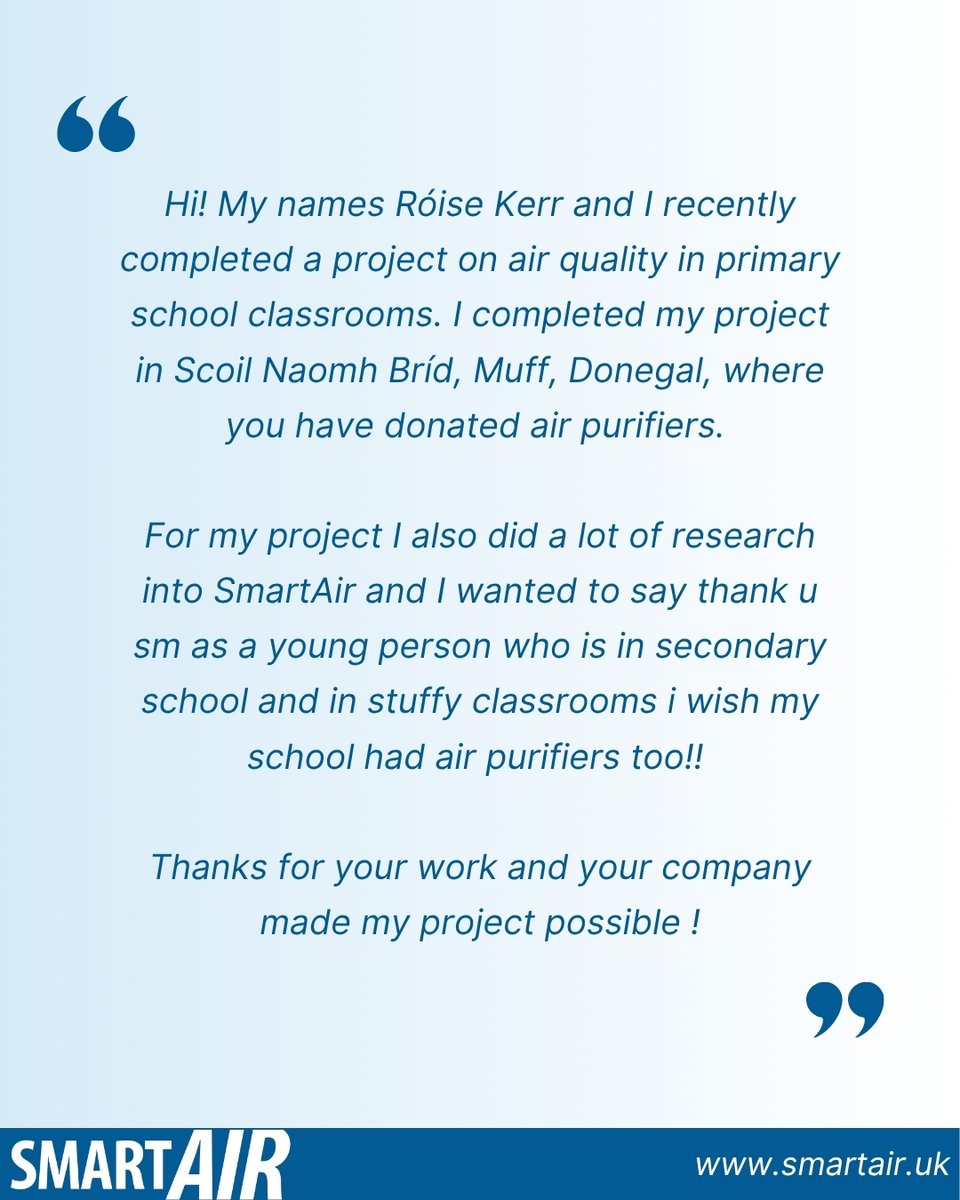
ALT Graphic featuring a quote from Róise about her project on air quality in primary school classrooms, thanking Smart Air for donated air purifiers. The quote is displayed on a light blue background with large quotation marks and Smart Air branding and website at the bottom.

ALT Róise, a school student standing indoors beside a project poster titled “Clearing the Air,” which explains an investigation into air quality and the impact of an air purifier in a primary school classroom. Smart Air branding and website appear along the bottom of the image.
ALT Graphic featuring a quote from Róise about her project on air quality in primary school classrooms, thanking Smart Air for donated air purifiers. The quote is displayed on a light blue background with large quotation marks and Smart Air branding and website at the bottom.
ALT Image shows the article in the link within the post with images of the Blast air purifier from Smart Air UK www.smartair.uk




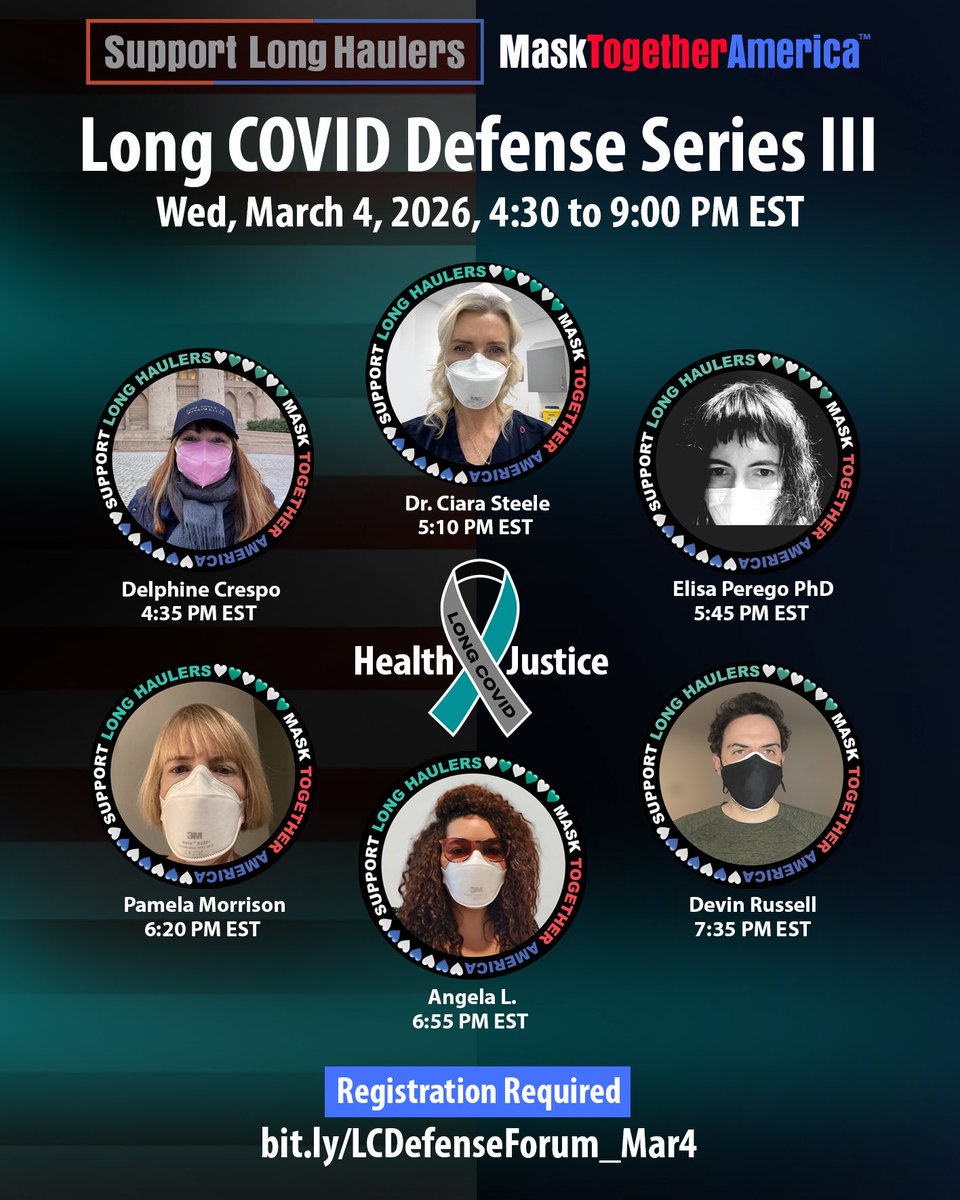
ALT An invitation for everyone to register for Long COVlD Defense Series III on March 4, 2026, 4:30pm - 9:00pm EST. 6 Q&A sessions will feature an extraordinary panel of speakers, with their masked portraits showing inside frames that say “Support Long Haulers and Mask Together America”. Schedule: 4:35 pm Delphine Crespo, President of Association of Long COVID Aragón 5:10 pm Dr. Ciara Steele, co-founder of Clean Air Advocacy Ireland (CAAI) 5:45 pm Pamela Morrison, Long COVID Advocacy Ireland 6:20 pm Elisa Perego PhD, Long COVID Rise Up expert member who coined the term Long COVlD 6:55 pm Angela L., Creator of International Long COVID Awareness Day 7:35 pm Devin Russell, Founder of Long COVID Foundation Register to join: https://bit.ly/LCDefenseForum_Mar4

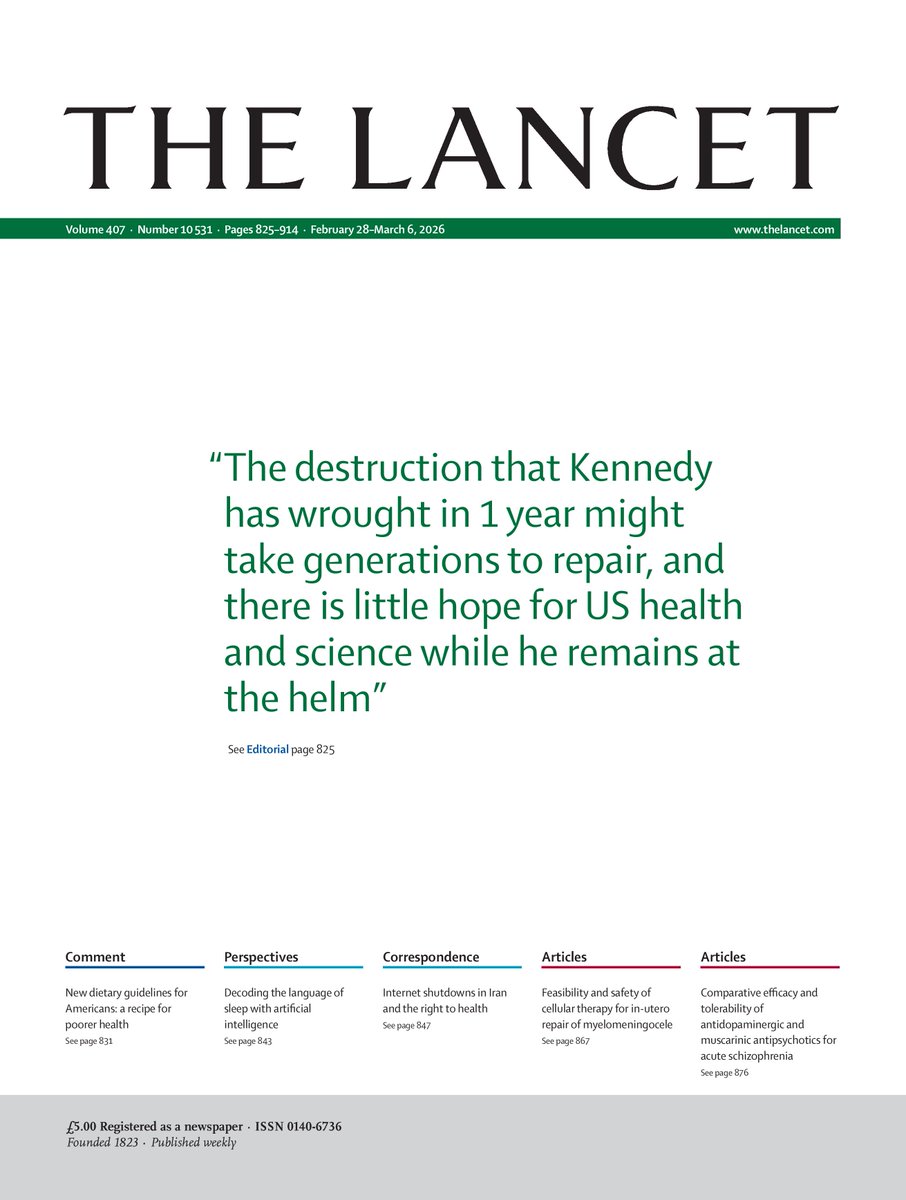
ALT Cover of The Lancet, 28 February 2026 issue. The quote: \u201CThe destruction that Kennedy has wrought in 1 year might take generations to repair, and there is little hope for US health and science while he remains at the helm.\u201D