@RosemountMNFB OL Coach. 10 szn HFC in PA and MN. Former Army Officer. @SJUAlumni, @TroyAlumni, @CUAAlumni. RTs not endorsements.
Joined January 2015
- Tweets 11,971
- Following 1,121
- Followers 832
- Likes 8,436
1,784 Photos and videos
Pinned Tweet

19 Feb 2019
God called a great man & a born leader home last night! The almighty must’ve needed a warrior! I love you, Pat! @bubblerbball @GoBubblers
1
3
15
Coach Nate Freier retweeted

May 13
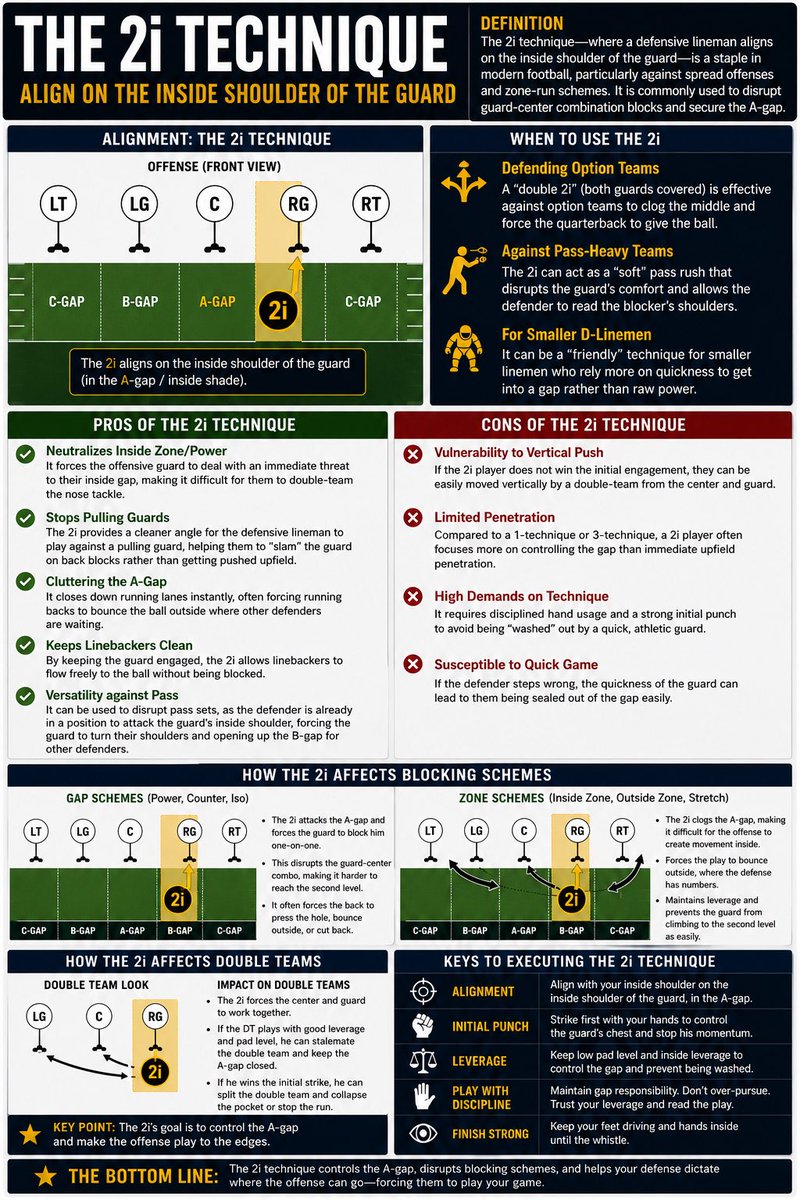
The 2i technique remains one of the most effective and versatile interior defensive line alignments in modern football
Aligned on the inside shoulder of the guard in the A-gap, the 2i is designed to disrupt blocking schemes, control interior run lanes, and prevent offensive linemen from working cleanly to the second level
Its value has grown significantly against today’s spread offenses, zone run concepts, and pass-heavy systems because it creates immediate interior stress on the offensive line
The 2i technique can:
✅ Disrupt Inside Zone and Power schemes
✅ Prevent easy guard-center combination blocks
✅ Clog interior run lanes quickly
✅ Force running backs to bounce runs outside
✅ Slow down pulling guards in gap schemes
✅ Keep linebackers clean and flowing freely
✅ Create confusion in protection schemes
✅ Affect both the run and pass game
Against gap schemes like Power, Counter, and Iso, the 2i forces the guard to immediately account for inside pressure, making it harder for offenses to create movement at the point of attack
Against zone schemes, the 2i helps close interior running lanes and prevents offensive linemen from climbing efficiently to linebackers
The technique is especially valuable because it allows defenses to dictate leverage and force offenses into uncomfortable blocking angles
However, the 2i also demands discipline and technique
To consistently win from a 2i alignment, defensive linemen must:
✅ Maintain low pad level
✅ Win the initial punch
✅ Control leverage
✅ Play with disciplined gap integrity
✅ Keep active hands
✅ Anchor against vertical movement
✅ Finish through contact
Without proper leverage and hand placement, a 2i defender can get washed vertically or displaced by double teams
The 2i is not always about immediate penetration
Sometimes its biggest impact comes from controlling space, muddying blocking schemes, and forcing the offense to play laterally instead of downhill
In today’s game, where offenses want clean interior movement and vertical displacement, the 2i technique helps defenses regain control of the line of scrimmage and force offenses to play on the defense’s terms
2
21
196
15,318
Happy Mother’s Day to the best life partner and mom ever! The kids and I are so blessed! We love you so much! #38YearsStrong #ToughMother
2
91
I know what you’d like me to say here (and there have been a lot of great HuskerFBs), but, based on on the WHO and WHY I coach, I gotta go #DeanSteinkuhler

Fullbacks.
1
2
575
Coach Nate Freier retweeted

watching kirk ferentz talk offensive line details is amazing. fundamentals like this are always the difference. no surprise why iowa churns out sunday guys up front.
5
48
899
115,137
Coach Nate Freier retweeted

Tight Zone Progression 🏈
(Playside/Covered OL)
✅Coaching Points:
🔘Low pad level (Defender on one knee)
🔘Kill roaches with steps 🦶🏾💢🪳
🔘Scoop water with strike 🤲🏾💧
🔘Hat across 🧢➡️
🔘Strain & Finish THROUGH whistle‼️
2
20
197
15,596
Coach Nate Freier retweeted

Many Coaches teach a Gallop or “high leg” by the FST (FSG on an “Ace” call) on Double Teams on Gap Runs but you can further maximize lateral displacement by implementing a Flipper Cross Shove.
Learn more at TOSFB.com
1
10
135
16,783
Coach Nate Freier retweeted

2016 Iowa State running QB Super Power
11
44
754
82,467

Tennessee OL coach Glen Elarbee on coaching the “Hammer technique” at @thecoolclinic 🔨
✔️ Used on single blocks in the run game
✔️ Lateral first step w/ inside football
✔️ Vertical 2nd step through the crotch of the defender
27
269
25,905
Coach Nate Freier retweeted

May 1
That jersey was worn before you.
It’ll be worn after you.
Your only job?
Make the next person proud to put it on.
5
277
1,040
45,674
Coach Nate Freier retweeted

May 2
Gotta say I have really enjoyed watching @TheUFL this season, some good football with some good football players… the NFL needs to get behind this and use to grow players like they used to with #NFLEurope (I know the incredible value it would have)!
89
242
1,701
100,627
Attention coaches with military or public service experience! I’d be grateful to hear from you! See post below. Everyday I see the impact of my military and public service experience in my approach to coaching. I am keen to hear your stories as well. Feel free to DM me.

Been very quiet on X lately. But, I am back with a purpose. A “day job” colleague and I are starting a project on translating the lessons military veterans and public servants bring to coaching team sports. We are interested in hearing different perspectives. Three quick asks.
181

For those teammates who follow me. I’d be grateful for a repost on the note below as well. Thanks to all!
Been very quiet on X lately. But, I am back with a purpose. A “day job” colleague and I are starting a project on translating the lessons military veterans and public servants bring to coaching team sports. We are interested in hearing different perspectives. Three quick asks.
96
And, finally, in season, your have to tailor your go-tos to the way your upcoming opponent plays. Same skills, often, same drills, but carefully scripted to prepare specifically for rival tactics. 2/2
Depends on where we are in the season. Early, rapid fire EDD. We have half a dozen or so OL skills that are core to our offense. They are go-to in Indy early whenever I get a chance. Install, focus on the specific play skills with a structured “battle drill” approach. 1/2
74
Been very quiet on X lately. But, I am back with a purpose. A “day job” colleague and I are starting a project on translating the lessons military veterans and public servants bring to coaching team sports. We are interested in hearing different perspectives. Three quick asks.
1
1
3
402
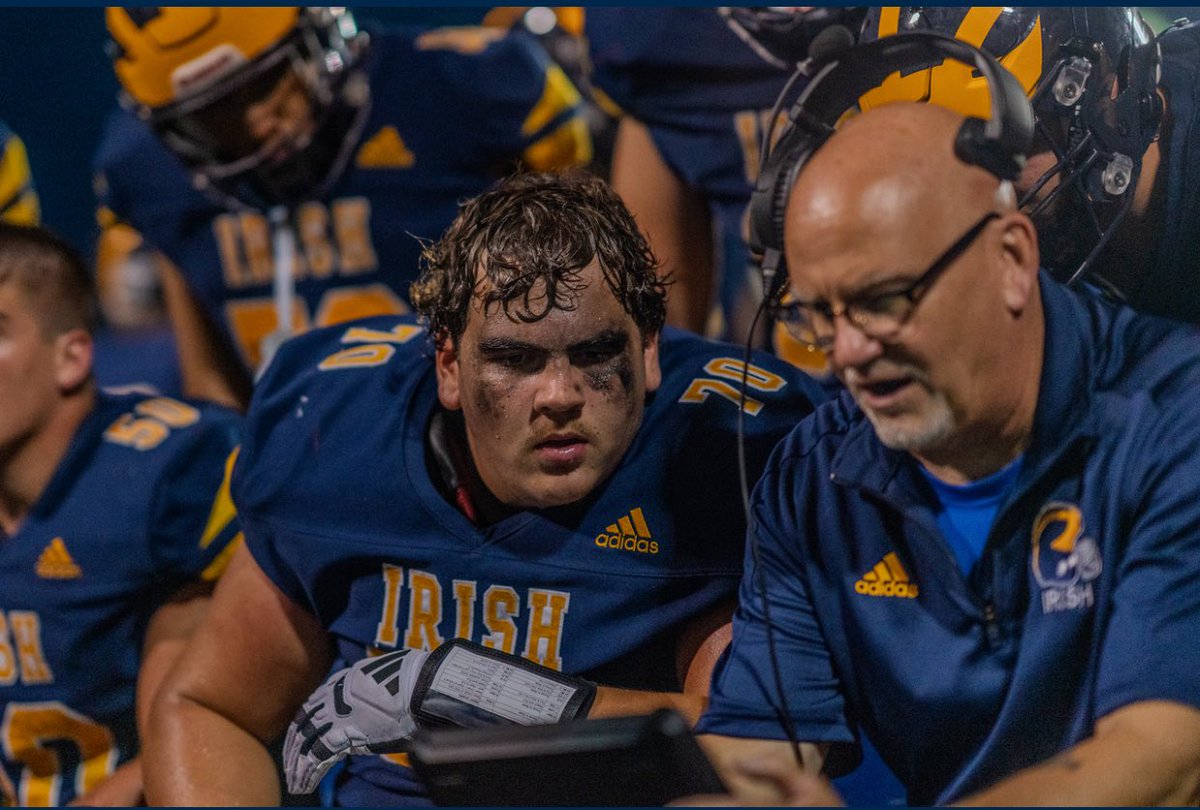
First, please DM me if you are a vet, first responder, etc & coach (any men’s or women’s sport) and have some thoughts on how your experience shaped your coaching career. Second, please pass along my details to others who fit the category and you feel would have great insights.
1
48
Finally, third, if you are on LinkedIn. Please reach out to connect. Here is my profile linkedin.com/in/nathan-freie… Excited about this project and look forward to connecting and exchanging ideas.
53
This is phenomenal and long overdue for football!

One of the coolest things the Rose Bowl does is have the broadcast booth select the players of the game. Wanted to give it originally to the ENTIRE IU OL but when told that couldn’t happen I thought Pat really embodied the OL dominance for 60 minutes and should be the player of the game. And then to watch that moment when he found out was one of my favorite moments of the year. 🌹🥹
1
186
Coach Nate Freier retweeted

Miami dialed up one of the nastiest Red Zone plays I’ve seen in a while, QB G/H Counter Rail RPO with SEVEN O-Linemen 💪🏼
Here’s a quick breakdown of the play ✍🏼
7
68
593
46,841
Coach Nate Freier retweeted

20 Dec 2025
The triple option offense fosters a team culture that values precision and team effort
#RunTheDamBall
41
34
507
47,194