
Joined March 2023
- Tweets 91
- Following 86
- Followers 8
- Likes 27
25 Photos and videos
















10 Dec 2025
🚀2025: AI flips from "tool" to default OS⚡️
Coding → AI cranks it out faster
Search → instant answers
Productivity → total automation
Apps → smart agents
No more just "using" AI.
We're rebuilding workflows around it.
It's AI-everything: ACTIVATED
Do you feeling the shift?
47
9 Dec 2025
Ever wished your AI could actually use your browser for you?
Like logging in, filling forms, scraping data, or navigating sites automatically?
Browser MCP that's making this real. It lets AI (like Claude or Cursor) control your browser.
Game-changer or a bit scary?🤔🚀
48
8 Dec 2025
Can anyone tell if JRE is platform dependent or not?
8 Dec 2025

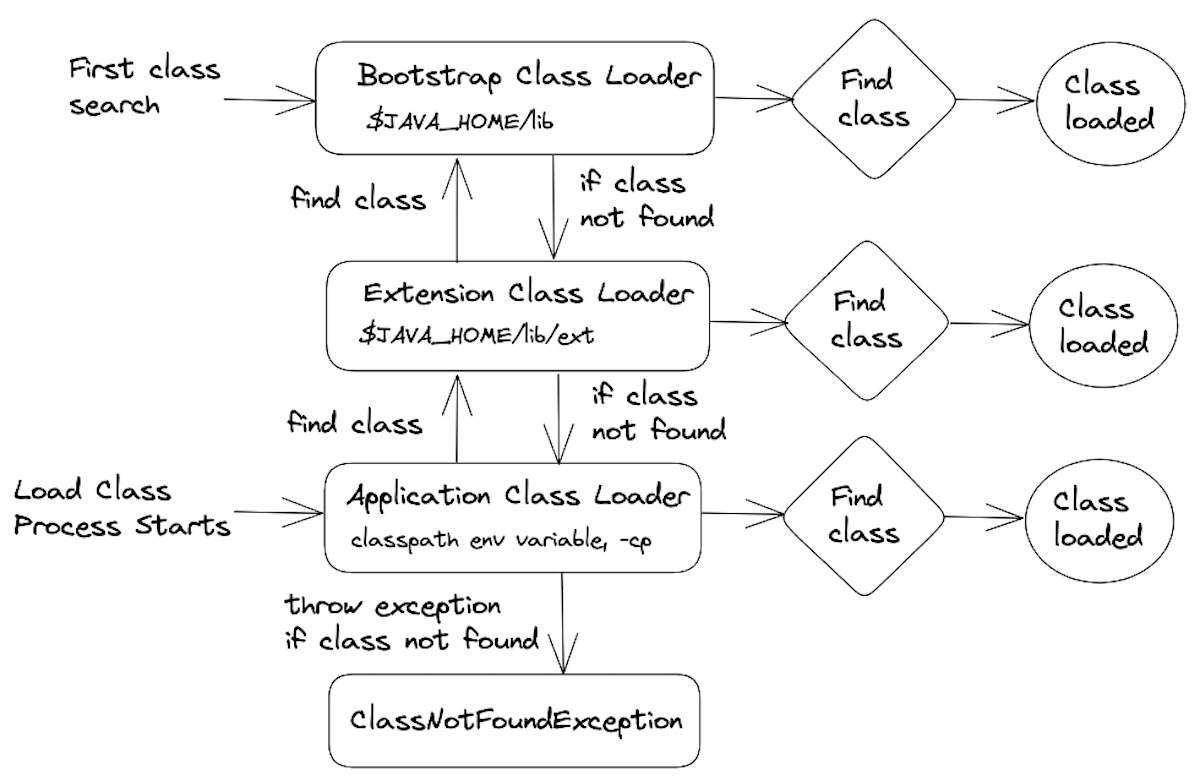
How Java's ClassLoader Loads Classes Dynamically
Java uses a powerful and flexible ClassLoader mechanism to load classes into the JVM at runtime. This allows Java programs to load code on demand, support modular applications, and enable dynamic linking.
At runtime:
→ The Bootstrap ClassLoader loads core Java classes like java.lang and java.util from the JVM’s internal libraries.
→ The Extension (Platform) ClassLoader loads standard extension libraries from the JVM’s extension directories.
→ The Application (System) ClassLoader loads classes from the application’s classpath, including your .class files and external libraries.
→ Custom ClassLoaders can be created to load classes from special sources such as databases, encrypted files, or remote servers.
→ Class loading follows the parent delegation model, where each ClassLoader first asks its parent to load a class before trying itself.
→ Once a class is found, the ClassLoader reads its bytecode, verifies it, and defines it inside the JVM so it can be executed.
→ Dynamic class loading enables features like plugins, hot-swapping, modular software architecture, and runtime dependency resolution.
The result: Java’s ClassLoader system allows classes to be discovered, verified, and linked dynamically, ensuring security, flexibility, and powerful runtime extensibility.
Want to go deeper? Check out this ebook:
Mastering Java: From Fundamentals to Advanced Concepts
codewithdhanian.gumroad.com/…
35
8 Dec 2025
🧵 Starlink India (2026) – Rural folks only, quick reality check:
₹8,600/month unlimited
₹34,000 one-time dish
25–150 Mbps, works anywhere with clear sky.
If you actually live under clear sky right now…
Would you seriously pay and install this in 2026?
#Starlink #InternetBuzz
20
8 Dec 2025
The Cloudflare DNS outage proved one fact:
"The internet is only as strong as its weakest link."
Redundancy saves lives (and APIs).
48
8 Dec 2025
VS Code is the comfy ex we all still love….
but the breakup is coming in 2026.
AI editors are evolving so fast it’s actually scary.
If you had to ditch VS Code tomorrow and pick your forever editor, who’s taking the crown?
Drop your weapon of choice one-sentence hot take👇
#AI
27
8 Dec 2025
IndiGo chaos: flights delayed everywhere because… not enough pilots.
Passengers stuck for hours.
My dev brain:
“This is literally a server with 0 worker threads getting slammed.” 😭
#IndiGoCrisis #indigochaos #Indigo #API
1
23
8 Dec 2025
Real life ✈️
→ Too many passengers
→ Not enough pilots
→ Massive queue at gate
→ Everyone losing their minds
Backend life 🌐
→ Too many requests
→ Not enough workers/threads
→ Queue blows up
→ 504 Gateway Timeout = users losing their minds
Same energy. Same meltdown.
1
12
8 Dec 2025
Airlines fix it by hiring more pilots.
We fix it by adding workers/instances.
When your endpoint is dying, what’s your first move? A) More workers NOW
B) Better load balancer
C) Proper queue (Redis/SQS)
D) Rate limit & pray
E) Cry in the dark Reply your go-to fix 👇
7
7 Dec 2025
Supabase: “Here’s full Postgres auth storage realtime auto APIs. Go build Twitter in a weekend.”
Motia Dev: “I’ll generate your entire folder structure, workflows & clean code so you never cry during refactors.”
Infra king vs Boilerplate slayer.
1
19
7 Dec 2025
Real question:
⚡ Supabase if you want backend in 5 mins?
🧩 Motia Dev if you hate messy code forever?
Or are you psycho and using both?
Drop your vote hot take below, I’m watching 👀
13
7 Dec 2025
🧵 Can someone explain why npm run dev runs like Usain Bolt on Linux but like a sleepy sloth on Windows? 😂
10
6 Dec 2025
Today I explored how @nginx works internally, and I want to share it with you in a simple way.
Nginx architecture 👇
🌐 Client Requests
↓
👑 Master Process
↓
🧵 Worker Processes (1 or many)
↓
🔁 Event Loop handles I/O without waiting
#NGINX #WebServer
1
16
6 Dec 2025
4️⃣ I/O Handling 🔌
While one request waits for DB/files/network,
the worker moves to next request instantly.
No time wasted ⏳ → More efficiency 💨
1
13
6 Dec 2025
Why companies love NGINX? ❤️
• Handles massive traffic with fewer resources
• Faster than thread-per-request servers
• Great for static files, reverse proxy & load balancing
• Lightweight stable scalable
13