
COMMONHOLD NOW is committed to freehold flat ownership with Commonhold. Ending the leasehold system in England & Wales for control. We’re a Grassroots campaign.
Joined March 2023
- Tweets 12,137
- Following 1,341
- Followers 2,049
- Likes 9,858
83 Photos and videos

Pinned Tweet

Mar 3
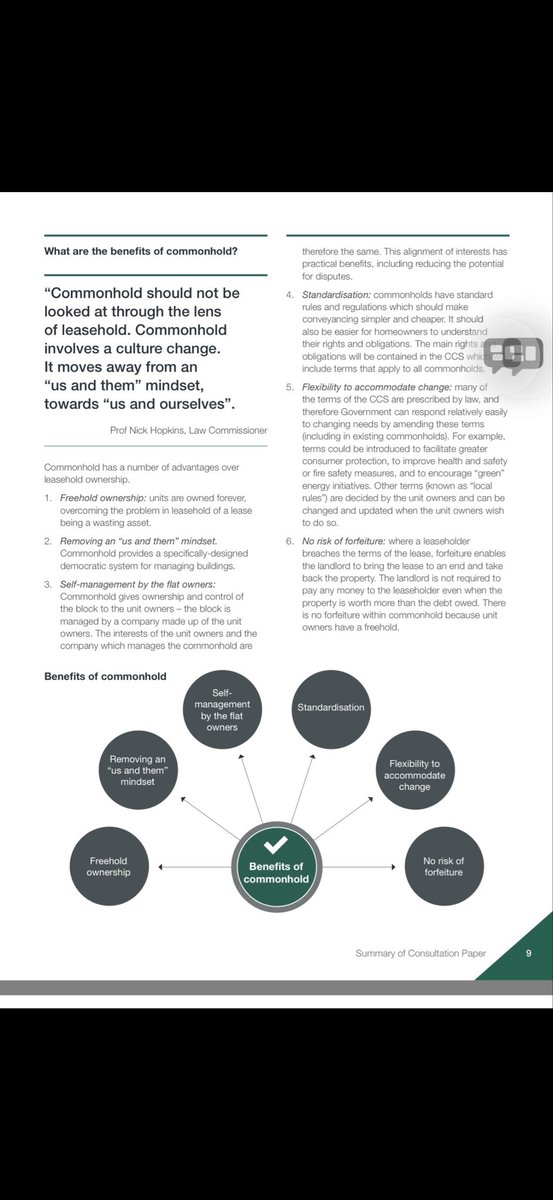
What are the benefits of commonhold?
"Commonhold should not be looked at through the lens of leasehold. Commonhold involves a culture change.
It moves away from an
"us and them" mindset, towards "us and ourselves".
Prof Nick Hopkins, Law Commissioner
3
12
14
727
Commonhold Now retweeted

"This isn’t just a London problem — it’s a NATIONAL SCANDAL. Leasehold is now bringing the wider housing market to a standstill. We have been warning government for almost a decade that this would happen"
#trapped #LeaseholdScandal
dailymail.com/money/mortgage…
5
26
51
1,473
Commonhold Now retweeted
Another leaseholders life just fell apart when they opened a
Major Works notice for a staggering £54,416 per flat‼️- they had their flat for sale but no chance now 🥲
Who has that kind of money? @mtpennycook @vickyfoxcroft
@SteveReedMP @mhclg
@LKPleasehold #LeaseholdScandal
7
36
71
1,894
Commonhold Now retweeted

May 5
The case for leasehold in this article is wrong and predicated on false premises.
1/ leases of new flats or houses are not sold at a “substantial discount” to reflect the fact that they are leasehold and carry ground rents.
The ground rent is neither legally nor commercially necessary. Ground rent as part of the price / consideration for the grant is not legally necessary because the leases are made by deed and require no consideration.
The ground rent is not a term of the lease any purchaser can negotiate. The same is true of many other terms in leases. It is common to see flats of identical configuration, if not next door to each other, sold for materially different premiums but with the same ground rent.
Indeed, in virtually all cases the developer will have agreed to sell the ground rent income before the first flat is built and cannot negotiate even if the flat buyer offers a higher premium for no ground rent.
Nor is it uncommon or unusual to see leases that prescribe the ground rent by factors that have nothing to do with the premium paid, for example by the number of bedrooms.
Further, when the Competition and Markets Authority investigated leasehold in 2015 it could find no evidence that new houses were sold for less than freehold houses. And where is the constant against which to compare flats because they are generally never sold as freehold?
2/ buying a leasehold flat or house is not the same as buying a sofa on instalments. If a sofa is bought on hire purchase then the buyer owns it outright at the end after making all payments. Not true for a leasehold flat or house, which goes back to the freeholder at the end of the term even after all payments are made. Indeed, modern leases also require the leaseholders to pay all the upkeep and for improvement of the building.
3/ a lease is not a right to occupy. That would be a rental tenancy. A long leasehold is an estate in land carrying the right of exclusive possession for the term. It is this right that makes it saleable and mortgageable.
4/ the myth that leaseholders are incapable of running estates or building places is to be contrasted by experience of right to manage and resident management companies, including at very large sites. Walk round New York or Paris or any other major city and you will see neighbourhoods full of communally owned and managed buildings. It is quintessentially feudal to say the British are too stupid to manage their own buildings without a third party freeholder.
5/ leasehold is not and has never been designed for multi occupancy blocks of flats. It was all that was available at the time large numbers of flats began to be built to ensure that positive covenants could be legally enforceable as owners changed and in multi-storey blocks. Other common law countries (Australia, Canada to name but two) saw the flaws in leasehold and developed a bespoke legal model. That is what Commonhold seeks to achieve for England.
6/ the fundamental flaw in leasehold, which cannot be fixed, is that it creates an adversarial relationship and a principal-agent problem between freeholders and leaseholders. The freeholder has all the power and no responsibility. More than 50 years of Parliament attempting to regulate service charges demonstrates this problem is inherent, a feature not a bug.
7/ as to freeholders’ property being expropriated without market value under the 2024 Leasehold and Freehold Reform Act 2024 this is wrong and the Divisional Court said so last October. We shall see if the Court of Appeal agrees.
In any event, the loss of the freeholders’ right to 50% of marriage value when leases below 80 years are extended is unjustifiable in market terms. The freeholder gives nothing in exchange, keeps his freehold interest and is compensated for the loss of ground rent. Ending marriage value stops freeholders extracting ransom from a lease extension or freehold purchase.

🚨NEW EXCHANGE🚨 Would scrapping leasehold be a mistake?
@SCP_Hughes of @WorksInProgMag : YES
@wjprescott of @WeAreBrightBlue : NO
👇Link👇
centrewrite.brightblue.org.u…
18
57
120
14,715

Commonhold Now retweeted
Lord @MichaelGove, former Secretary of State for Levelling Up, Housing and Communities, told us that freeholders "have benefitted from a system whereby they get money for nothing", and he'd like to see an acceleration by Government to end ground rent.
16
67
146
45,422
Mar 3
Thanks to @MCHLG and leasehold campaigners @NLC_2019 @LiamSpender
for their work and evidence while looking forward to seeing commonhold become the default form of flat ownership as it is elsewhere.
@CommonsHCLG @FloEshalomi @SteveReedMP @Keir_Starmer
@mtpennycook
parliamentlive.tv/Event/Inde…
3
16
509
Commonhold Now retweeted
1
9
471
Commonhold Now retweeted

4 Dec 2023
We need fundamental and comprehensive leasehold reform including the reinvigoration of commonhold.
Looks like it will have to be a Labour government that delivers it.
23
68
192
48,618
Commonhold Now retweeted
4 Jul 2025
Full service charge protection consultation here 👇🏻
gov.uk/government/consultati…
6
12
22
4,755
Commonhold Now retweeted
💥 WE CONTINUE TO FIGHT IN THE BEST INTERESTS OF LEASEHOLDERS 💪@LKPleasehold
LKP is in the high court tomorrow seeking to intervene on the government's side against freeholders attempting to torpedo leasehold reforms
💪DAVID VS GOLIATH💪
👇👇
mailchi.mp/leaseholdknowledg…

4
33
76
6,238
Commonhold Now retweeted
🔝Leasehold concerns rise to 66% in landmark survey by @HomeOwnersAll
Despite Government pledges to reform the system, leaseholders remain trapped in homes they cannot sell.
@T_Haynesy @mtpennycook @mhclg
#Leaseholdscandal #Trapped
telegraph.co.uk/money/proper…
8
31
56
1,901
Commonhold Now retweeted
In the meantime @HomeOwnersAll landmark survey today reports leasehold is a growing concern .....
Sticking plasters will not fix the systematic issues with leasehold. The system is rotten to the core.
#GetCommonholdDone @CommonholdNow
x.com/NLC_2019/status/192508…

🔝Leasehold concerns rise to 66% in landmark survey by @HomeOwnersAll
Despite Government pledges to reform the system, leaseholders remain trapped in homes they cannot sell.
@T_Haynesy @mtpennycook @mhclg
#Leaseholdscandal #Trapped
telegraph.co.uk/money/proper…
6
15
563
Commonhold Now retweeted
7 May 2025
An Important Change for Commonhold!
What about existing leaseholds converting to Commonhold?
“It is proposed that the threshold for conversion should be reduced to 50% of leasehold owners being in favour.”
@mtpennycook
lexology.com/library/detail.…
6
6
932
Commonhold Now retweeted

COMMONHOLD
Associations will be mandated to operate reserve accounts to improve financial robustness and prevent unit owners having to pay large and unexpected maintenance bills. They will also be able to obtain loans to help with the cost of major works.
lexology.com/library/detail.…
1
10
18
485
Commonhold Now retweeted

6 May 2025
Anatomy of a Firetrap:
Will broadcast on Radio 4 at 8pm tonight.
Available on BBC Sounds now: bbc.co.uk/sounds/play/m002bs…
Sneak peak here:
13
43
74
8,711
Commonhold Now retweeted

6 May 2025
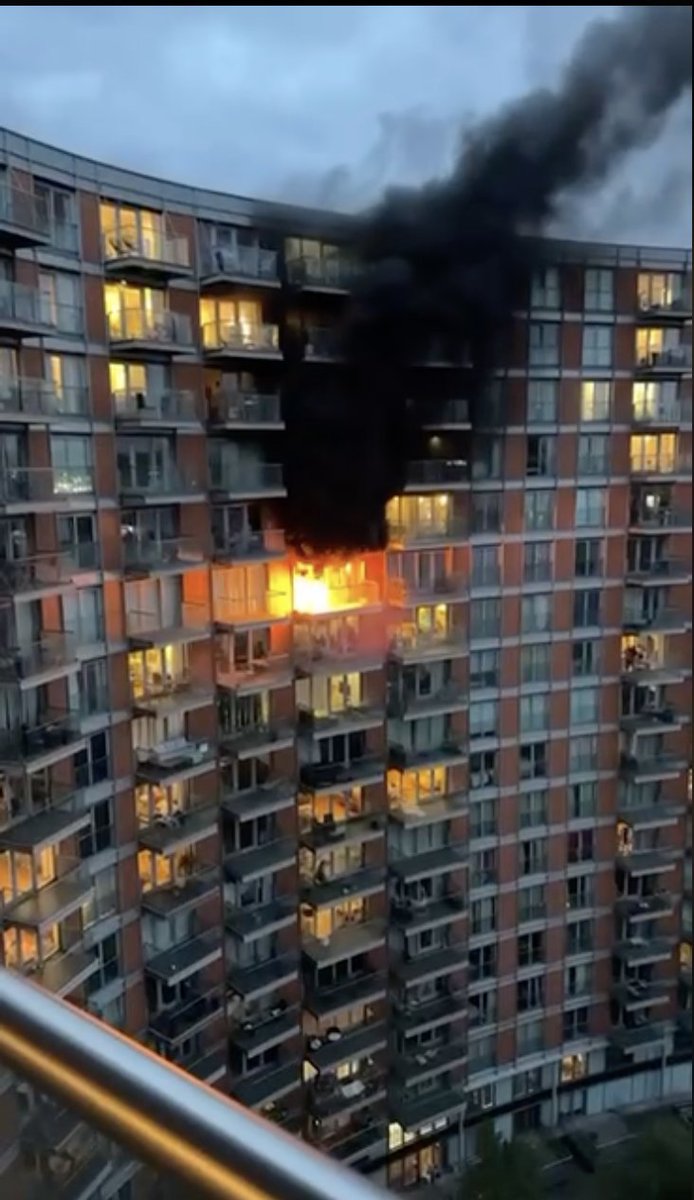
Fire at New Providence Wharf river side - flames visible from balcony - London Fire Brigade on site
Flames reducing I have been told and picture is from some time ago
Second fire at this block where fire visible from balcony, last fire showed major fire safety issues in block
3
22
24
5,251
Commonhold Now retweeted
💥FLEECEHOLD STRIKES IN PETERBOROUGH💥
80% of new housing estates in the UK remain unadopted, exposing residents to escalating estate management fees and unplanned repair costs. #FleeceholdScandal
@andrewpakes_ @PTPaulGrinnell
peterboroughtoday.co.uk/news…
15
33
641
Commonhold Now retweeted
Evidence up to 30 fake company directorships may have been created in an attempt to block leaseholders from taking control of their building's management company.
#LeaseholdScandal
@KimJohnsonMP @WaddingtonPost
bbc.com/news/articles/c175jv…
3
34
54
1,369