Joined January 2022
- Tweets 1,043
- Following 1,772
- Followers 4,968
- Likes 897
36 Photos and videos




Thomas Small retweeted

Jun 11
New @MHconflicted episode with me, discussing how Israel's security doctrine changed due to the October 7th massacres, leading to non-stop wars on multiple fronts
open.spotify.com/episode/4Aj…
5
9
30
3,493
Thomas Small retweeted

Jun 9
Myself and @ConflictedThom return to bring you up to date on all the latest manoeuvrings in the Middle East.
Aimen and Thomas discuss:
•Trump’s chaotic, micromanaged Iran diplomacy and reliance on inexperienced “real estate” advisers.
•Pakistan, Qatar, Oman, Turkey, and Egypt as flawed or compromised mediators with “skin in the game.”
•Why Aimen thinks Switzerland would be the proper neutral US–Iran mediator.
•Oman’s tilt toward Iran amid assumptions of American decline and future Iranian regional weight.
•The UAE–Saudi split over Iran: Emirati hawkishness versus Saudi caution and strategic bruising.
•Saudi resentment over Yemen, Houthi attacks, Israel’s freer hand, and lack of US security guarantees.
•Israel, Hezbollah, Lebanon, and Iran: efforts to decouple the Lebanon front from the US–Iran track.
podcasts.apple.com/ae/podcas…
7
20
86
7,377
Thomas Small retweeted

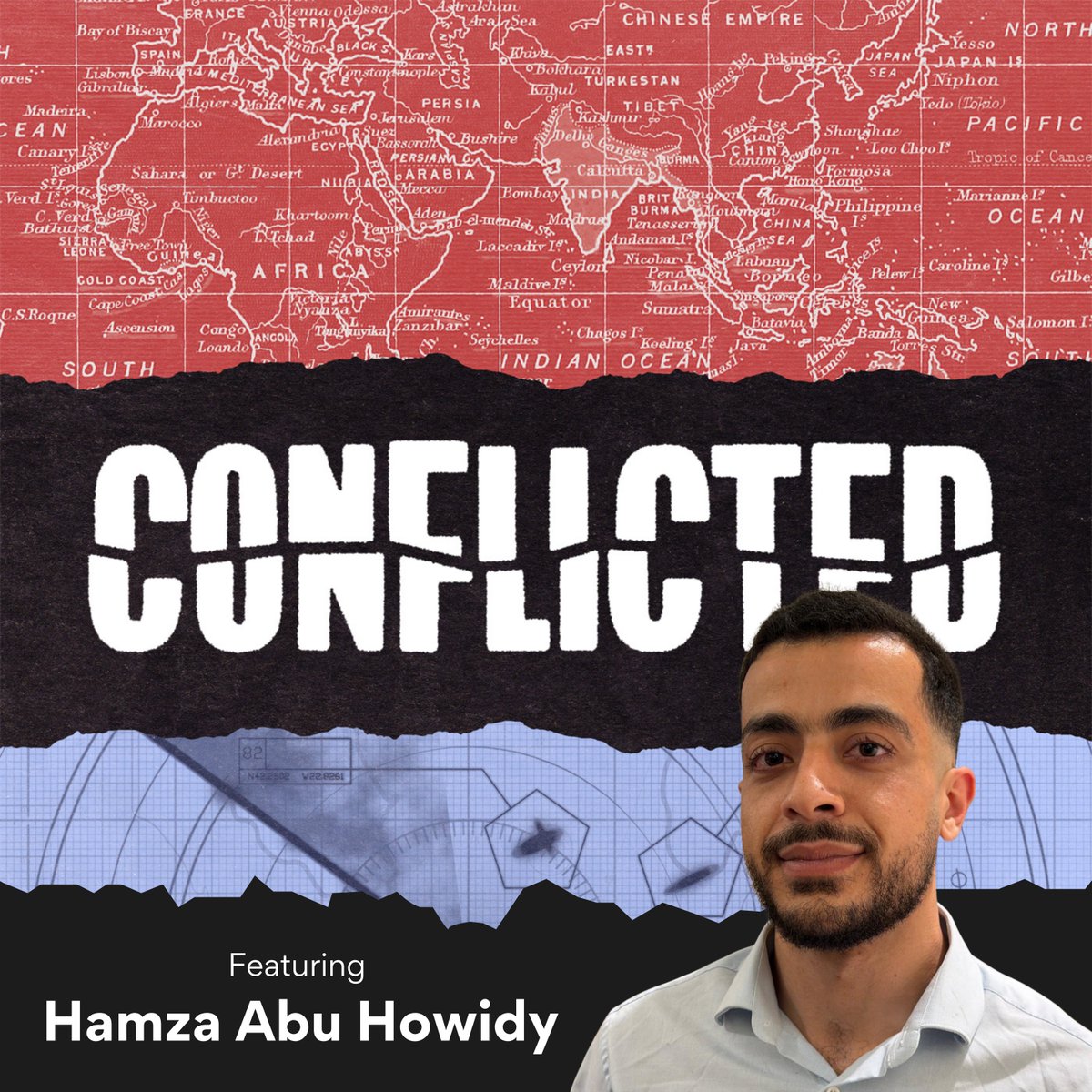
Hamza Abu Howidy returns to Conflicted Conversations, to talk moving from Gaza to the West Bank to unpack settler violence, settlement expansion, the collapse of the two-state dream, and Palestine’s increasingly unbearable one-state reality after 7 October.
Listen now below 🔗
4
4
13
3,498
Thomas Small retweeted

Strange and lovely to be on the other side of the mic for this one
Conflicted has been such a huge part of my life for the best part of eight years now. I came up with the idea, but @AimenDean, @ConflictedThom and the audience have made it the huge success that it deserves to be

New Ep! 🚨
With Aimen still away, we’re taking this opportunity to introduce you all to our exec producer @TheJakeWarren . A journalist and programme-maker, he not only had the idea for Conflicted, he is also the founder of @messageheard , who produces the show.
Listen below.
5
11
1,033
Thomas Small retweeted

The genius of Middle Eastern politics is the improbable ability to convert colossal military defeats into political victories. The genius of American politics is the uncanny ability to convert colossal military victories into political defeats.
9
124
644
18,716
Thomas Small retweeted
May 21
There is a genuinely bizarre psychological dynamic unfolding right now around this war.
Trump appears convinced that the war is unpopular at home, that Americans want out, and that domestic priorities must now take precedence - even if that means accepting a deal that, only weeks ago, would have looked humiliating by American standards.
Remember where this started: “unconditional surrender” for Iran.
Now? If the current trajectory continues - with Tehran refusing compromise on the nuclear file, ballistic missiles, proxies, and now effectively trying to invent a new doctrine around controlling the Strait of Hormuz - we could end up watching something that looks disturbingly like unconditional surrender… but for the US!
And here’s the irony that’s frying my brain right now:
Even some of the people inside the US political circles who opposed the war are suddenly horrified at the prospect of a half-finished war. Because an unfinished war is not “peace.” A half-finished war risks looking like strategic exhaustion. It risks damaging American prestige, deterrence, and by extension the credibility of the “mighty” dollar itself.
People forget something very important: America First at home only works if America remains first abroad.
The dollar is not magic paper blessed by the gods of Wall Street. It sits on three pillars: reserve currency status, energy trade dominance, and global trade settlement. Those pillars are reinforced when the United States projects global military strength and reliability.
Ironically, during the war itself, you saw parts of the market reacting exactly to that logic: commodities wobbling, safe-haven psychology shifting, the dollar strengthening because global markets still instinctively run toward American power in moments of crisis.
So now we arrive at the weirdest part of all:
Trump, fearing the war is unpopular, may have accidentally made it more popular by appearing too eager to leave it unfinished.
Because suddenly people are imagining the consequences of an Iran that is eschatologically and fanatically emboldened after surviving the confrontation - thinking the “unseen divine hands of the hidden Imam Mahdi” did it - while still threatening the arteries of the global economy through the Strait of Hormuz.
And this is where my brain officially melts.🫠
Was this deliberate? Was this the madman theory? Was it incoherent incoherence? Or coherent incoherence designed to create maximum unpredictability? Did Trump intentionally manufacture uncertainty to pressure Tehran? Or are we all collectively trying to reverse-engineer strategy out of chaos because nobody actually knows what’s happening?
At this point, I genuinely need a whole liter of Coke Zero and a whiteboard the size of the Sahara just to map the psychology of this thing.
Thank you all for following this utterly insane geopolitical soap opera with me. I still can’t decide whether we are witnessing strategic genius, strategic improvisation, or history’s first case of weaponized confusion as a doctrine of statecraft.🤦🏻♂️
122
143
687
60,753
Thomas Small retweeted

May 21
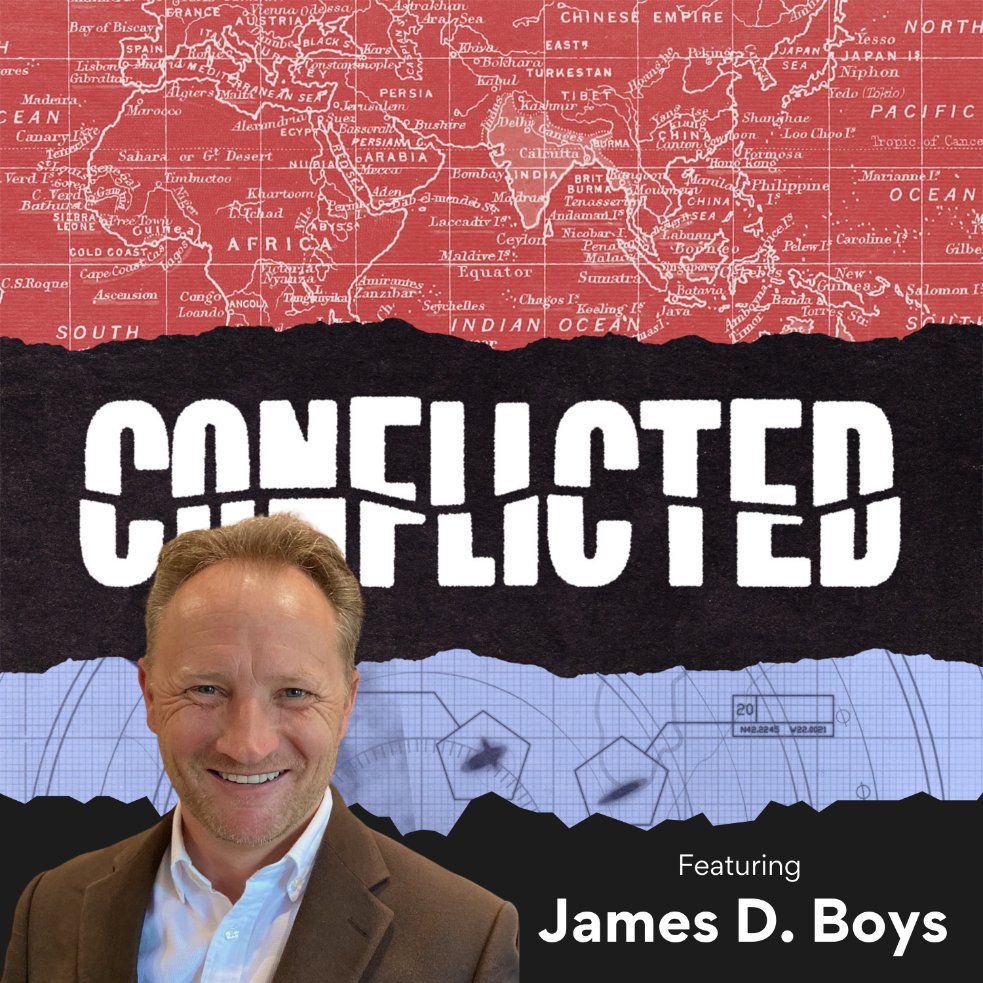
I was delighted to discuss my new book, “US Grand Strategy and the Madman Theory” from @ManchesterUP with @ConflictedThom on @MHconflicted Order your copy at amzn.eu/d/09jNE54c and listen in at:
Apple: podcasts.apple.com/gb/podcas……
Spotify: open.spotify.com/episode/1m6……
Is Donald Trump mad? Or is he a practitioner of the Madman Theory — and therefore not mad at all?
@jamesdboys, author of U.S. Grand Strategy and the Madman Theory: From Nixon to Trump, argues that the Madman Theory is not madness, but the performance of madness.
4
11
2,394

May 21
Really really enjoyed meeting @jamesdboys and discussing his book with him. Thought-provoking stuff.
May 21

I was delighted to discuss my new book, “US Grand Strategy and the Madman Theory” from @ManchesterUP with @ConflictedThom on @MHconflicted Order your copy at amzn.eu/d/09jNE54c and listen in at:
Apple: podcasts.apple.com/gb/podcas……
Spotify: open.spotify.com/episode/1m6……
1
3
1,060
Thomas Small retweeted
New Episode!
Aimen in back with a huge amount of behind-the-scenes information on what's been happening in the Middle east in the past three week.
What was the real reason the UAE withdrew from OPEC...
Listen now to find out, links below!
3
2
6
514
Thomas Small retweeted

I didn't know Helen of Troy could generate so much conflict.
1,381
9,808
82,350
2,909,022

Three people have been killed after two teenage suspects carried out a shooting at an Islamic centre in San Diego, California
trib.al/vmezdEk
39
7
40
42,393
Thomas Small retweeted
May 16
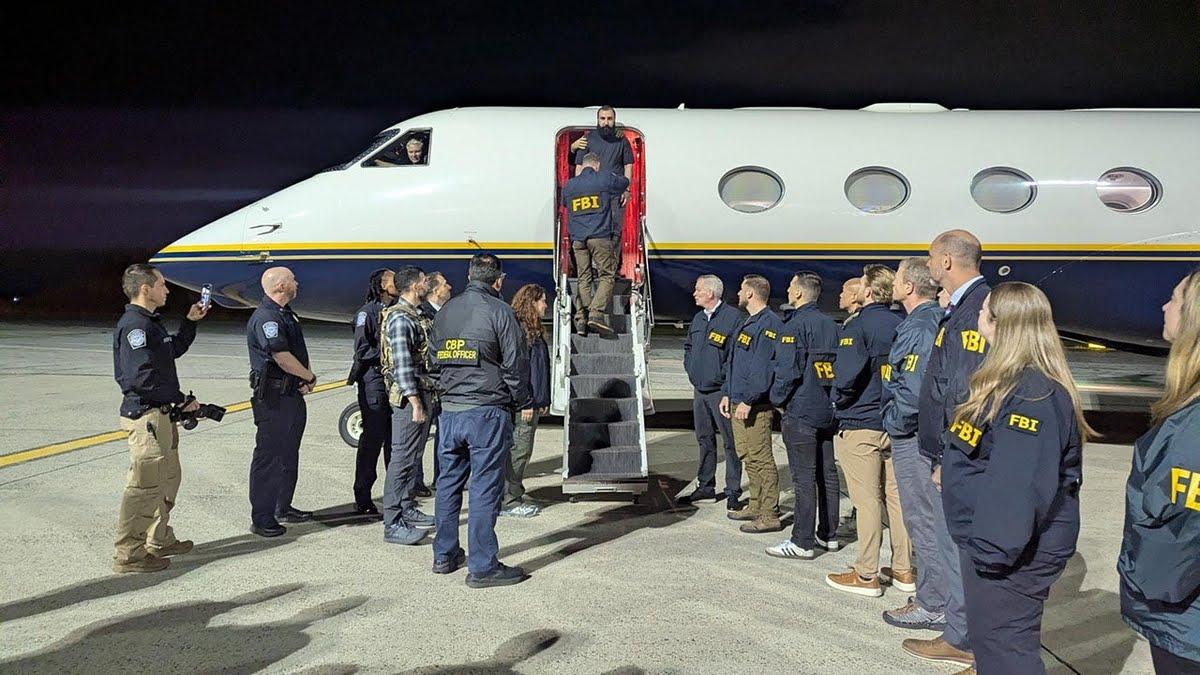
The achievement of the @FBI in capturing Mohammad Baqr a-Saadi, the Kataeb Hezbollah (KH) mass murderer, would not have been possible without the fantastic agents working on his file. One of the lead agents on Mohammad Baqr's case is also the lead agent investigating my kidnapping by KH. This amazing woman is determined, compassionate, smart and knowledgeable. This ginger angel kept doggedly working my case because she knew I needed her and she knew that solving the case would help US national security interests. Indeed, owing to the incredible stupidity of my torturers, they provided me with a plethora of information about their operations, which I happily provided to the FBI after my release.
The American people are lucky to have such dedicated agents helping to keep them safe.
26
172
907
96,460
Thomas Small retweeted

May 15
Russkaya Obshina, the biggest of a network of nationalist groups in Russia, has carried out many raids in the past two years: Russian Orthodox Church, a powerful ally of the Russian state, recommended all its bishops build partnerships with it bbc.com/news/articles/cq5p30…
2
3
422
May 15
It is of course shameful that Iranians are being treated this way by their government. At the same time, I’m quite sure that, for most of us, lack of Internet access would be an important step along the road to better mental health.
May 15

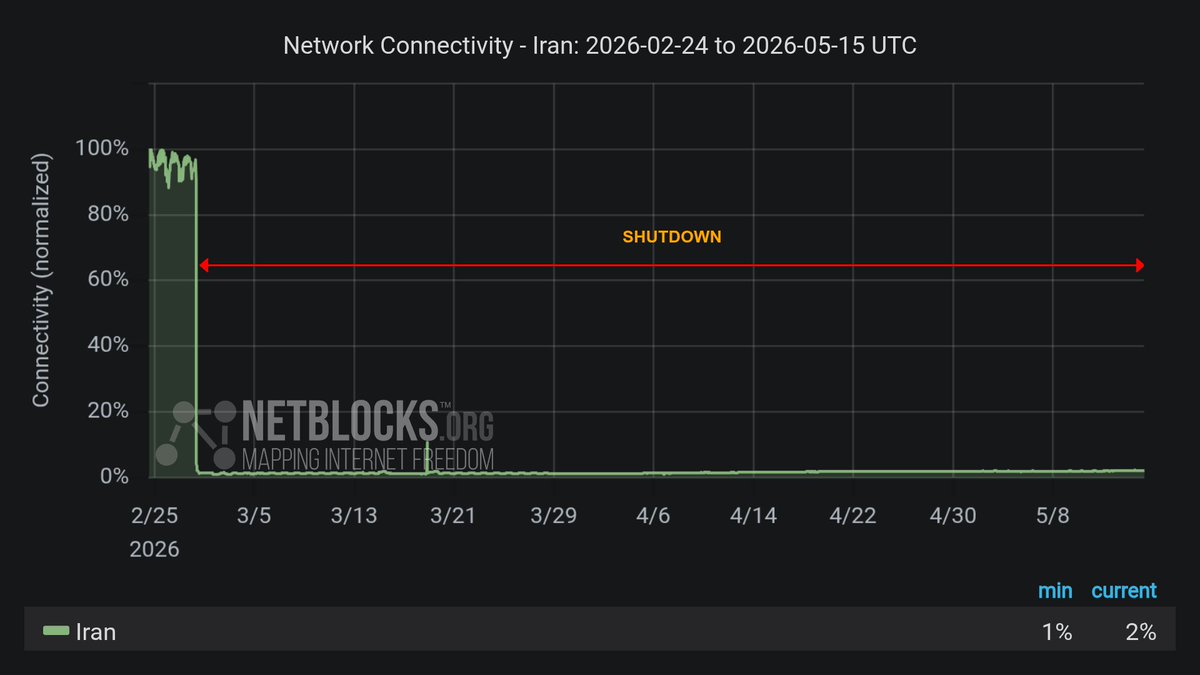
🌍 #Iran's digital isolation is now entering its 77th day as the internet blackout passes 1824 hours. The measure presents an emerging mental health risk to the public, who are largely cut off from online platforms, communications, and normal interaction with the outside world.
1
626
Thomas Small retweeted

We need to be honest with ourselves: so far, this campaign has been a major strategic failure.
There were certainly important operational achievements, and the level of coordination between U.S. Central Command and the Israel Defense Forces was highly impressive. But wars are not judged by tactical successes alone, they are judged against their original strategic objectives.
The Iranian regime did not fall, and at this stage there is no indication that it is close to collapsing. There was no regime change in Iran; instead, there was a change within the regime, and arguably for the worse. The crisis appears to have strengthened Mojtaba Khamenei and the more hardline elements of the Islamic Revolutionary Guard Corps, giving them greater influence over Iran’s decision-making process.
On the conventional front, Iran still retains most of its military capabilities. Even where damage was inflicted, it has not fundamentally altered Tehran’s ability or willingness to resume military confrontation.
On the nuclear front, Iran continues to possess a massive stockpile of enriched uranium, including the same roughly 440 kilograms enriched to near-weapons-grade levels. More importantly, the regime still possesses the scientific and technical expertise necessary to enrich to 90% if it chooses to do so.
And beyond that, Iran still maintains leverage over the Strait of Hormuz — which remained open and stable before the war began.
I do not know how this conflict will ultimately end. But if these are the conditions under which it concludes, then this will be remembered as a profound strategic failure — one that leaves behind a far worse regional reality than the one that existed before the campaign began.
Ignoring that reality will not improve the situation; it will only deepen the problem.
Iran built its national security doctrine around asymmetric capabilities. Damage to its navy or air force, however significant tactically, does not fundamentally undermine its ability to wage this kind of confrontation.
That is the reality, whether policymakers are comfortable acknowledging it or not. A serious strategy for weakening the Iranian regime in the future has to begin with an honest recognition of this reality.
It is possible that the United States is planning additional, more significant steps. But if we are assessing the campaign as it stands today, the outcome is deeply negative.
Without acknowledging that, Washington risks building its next phase on a false premise — and that is exactly how tactical achievements turn into strategic failure.
No wonder Iran is not surrendering at the negotiating table if this is indeed the reality.
It is time to go back to the drawing board rather than keep insisting on an approach that has already failed.
And it starts with one basic understanding: Iran is not Venezuela. Conventional cost-benefit calculations do not necessarily work against a regime that is willing to sacrifice its own population to preserve its rule.
There is no textbook solution here.
Not the Kurds, not arming the opposition, and not targeted killings. None of these, on their own, provides a strategic answer to the Iranian problem set.
It is time to think seriously about a different strategy, because the current approach is not containing the threat. It is producing a security reality that is, almost by definition, worse than the one that existed before.
If the objective is to weaken the Iranian regime over time, then repeating tools that have already failed is not strategy.
#IranWar
May 12

New: Classified military intelligence assessments from early this month show Iran has regained access to most of its missile sites, launchers and underground facilities. Including: U.S. intel assesses Iran has restored operational access to 30 of the 33 missile sites it maintains along the Strait of Hormuz, and ~90% of Iran's underground missile sites are "partially or fully operational." w @Adamentous @maggieNYT nytimes.com/2026/05/12/us/po…
56
199
658
222,386
Thomas Small retweeted

May 12
Always pleasant to discuss issues with @ConflictedThom, this time a deep dive @MHconflicted about Mali and the Sahel, the reasons, the actors -a few names-, the power brokers and the foreseen aftermath following the major attacks conducted by JNIM & FLA podcasts.apple.com/no/podcas…
2
8
49
11,528
Thomas Small retweeted
May 7
Two weeks ago on our podcast @MHconflicted along with @ConflictedThom I mentioned that a senior GCC intel source told me that one Gulf leader personally called Jared Kushner in fury over the market manipulation and chaos surrounding the Iran crisis.
According to the source, the leader was so exasperated he even joked about writing a cheque for “a billion or two” to whoever inside Trump’s circle was profiting from the turmoil … just to end the debacle and get back to the actual objective: finishing the job with Iran.
Kushner, according to the source, strongly denied that anyone in Trump’s family or inner circle was involved, insisting: “Your Highness, I assure you, none of us is involved whatsoever. This is being seriously investigated, I promise you.”
Finally we have the confirmation that it is being investigated! Let’s hope we find the real culprit, and let’s hope that it doesn’t involve anyone in a position of power or authority!

ABC: The DOJ is investigating a series of suspiciously timed trades in the oil market just ahead of major announcements by Trump about the war against Iran, sources told ABC News. The DOJ, along with the CFTC, is probing at least four of these trades where traders made a total of more than $2.6 billion betting that oil prices would drop right before they did.
24
68
311
35,348
Thomas Small retweeted

May 7
How the May 9 cult now backfires against an aging, weakened Putin. “The grandfathers already reached Berlin by now. But we’re just shaking our fists and talking nonsense about red lines.” My analysis ahead of Saturday’s much-curtailed Victory Parade.
wsj.com/world/russia/putins-…
12
110
376
32,857
Thomas Small retweeted

The reason Saudi Arabia had concerns about Project Freedom is that if Iran were to launch multiple waves of ballistic missiles, cruise missiles, and drones against Gulf states, the U.S. still might avoid retaliation because Donald Trump prioritizes securing a deal with Iran. Iran’s attack on the UAE, and the lack of a U.S. military response, reinforced those concerns. GCC countries want credible security guarantees and protection from the United States against Iranian attacks. #IranWar
May 7

Having spoken to a senior Saudi official about the NBC article regarding Project Freedom, I honestly think the article completely misunderstood what actually happened because it was written almost entirely from a US perspective rather than from a GCC perspective.
First of all, contrary to the impression being created, the GCC were NOT blindsided by Project Freedom.
They knew about it beforehand. Roughly half a day before. The airspace was opened. The facilities were available. Nobody objected. There was broad support for the idea because, at least publicly, Project Freedom was supposed to be a limited humanitarian-security operation aimed at relieving the 22,000 sailors trapped around Hormuz and allowing shipping lanes to breathe again.
Nobody in the GCC had a problem with that.
But here is the issue .. and this is the part the NBC article completely misses.
If you are asking GCC countries to participate in such an operation, then you need to be upfront about the rules of engagement from day one!
You cannot say:
“Please open your skies and bases, expose your energy infrastructure”
…only for everyone to discover afterwards that the actual American policy was apparently:
“Oh by the way, if Iran attacks you with ballistic missiles, cruise missiles and drones in several waves, we still won’t retaliate because Donald Trump is busy chasing The Deal.”
And this is exactly what shocked the Saudis. Not the Iranian attack itself.
The UAE/GCC expected retaliation.. This is Iran. Nobody in the Gulf is naïve about that anymore.
The shock came from the American reaction afterwards.
You had attacks against Emirati infrastructure. Fujairah was targeted. Multiple waves involving drones, ballistic missiles, cruise missiles.
And Washington’s response was basically:
“Meh. Minor incident. Let’s not escalate.”
Minor incident?!
For the GCC that was madness.
Because what Riyadh, Kuwait and Abu Dhabi suddenly realized was that Trump’s obsession with preserving “The Deal” had apparently reached the point where Gulf energy infrastructure was now considered acceptable collateral damage in the pursuit of his precious negotiations.
Everything became:
The deal.
The deal.
The beautiful deal.
The greatest deal.
The mother of all deals.
The ultimate “Art of the deal”
Or perhaps, more accurately:
The ultimate fart of the deal.
Because from the Gulf perspective, this stopped looking like strategy and started looking like desperate political vanity mixed with deadly wishful thinking.
Had the GCC been told beforehand:
“Listen, whatever Iran does to you during Project Freedom, America will not retaliate because we do not want to endanger negotiations…”
…they would have almost certainly refused participation from the start.
The problem was not Project Freedom itself.
The problem was discovering midway through the operation that the GCC countries were apparently expected to sit there quietly as punching bags while Washington played negotiation theatrics with Tehran. So the Saudis and Kuwaitis pulled plug!
Because the GCC know something US usually forgets:
Iran plays the long game.
You can freeze enrichment.
Pause enrichment.
Delay enrichment.
Sign ten agreements.
Twenty agreements.
Forty agreements.
But if the infrastructure remains…
If the centrifuges remain…
If the IRGC remains…
If the proxy network remains…
then eventually the game resumes.
There will be another distraction.
Another pandemic.
Another financial crisis.
Another war somewhere else.
Another paralysis in Washington.
And while the world is distracted, enrichment quietly resumes again.
Ironically, much of Iran’s highly enriched uranium stockpile expanded during the pandemic years precisely because global attention was elsewhere.
Judging by the reaction to the UAE attacks, the Saudis and Kuwaitis concluded that Trump’s version of deterrence had become:
“Please absorb the missiles quietly because I’m trying to write the sequel to “The Fart of the Deal.”
4
13
60
4,882