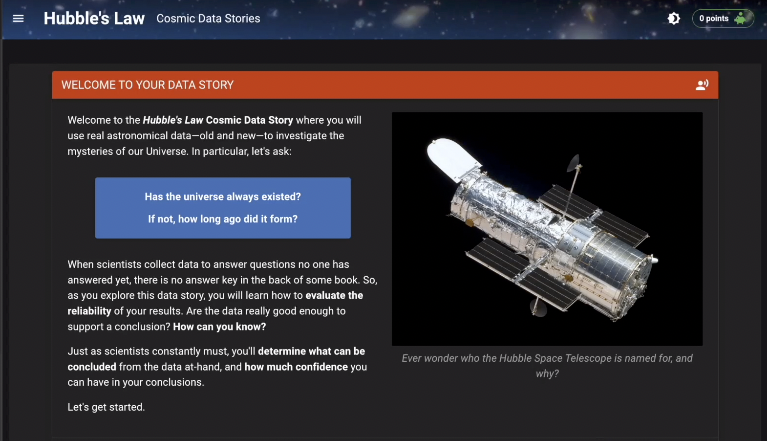
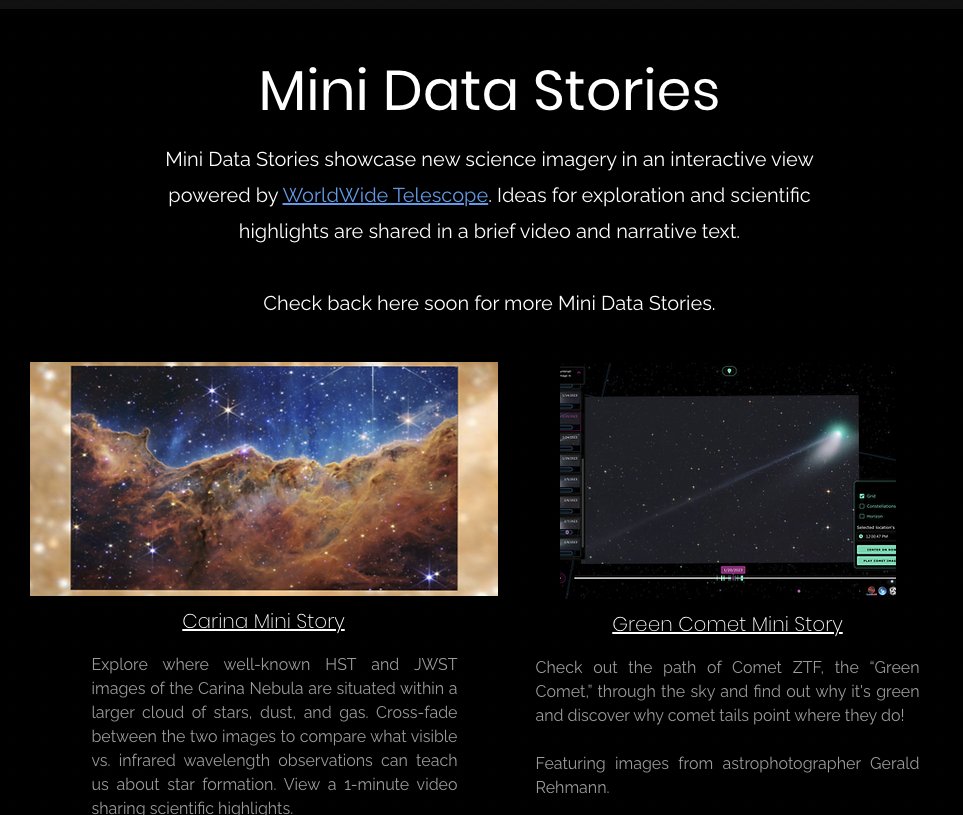
Learn about our Universe through data! This account is managed by the CosmicDS team at the Harvard-Smithsonian Center for Astrophysics.
Joined February 2021
- Tweets 61
- Following 54
- Followers 68
- Likes 102
8 Photos and videos
Cosmic Data Stories retweeted

Apr 9
We usually see the @NASAArtemis #Artemis II path in an 🌎-centered view, which makes it look like make a hairpin turn at the moon!
But in a 🌕-centered view (via @CosmicDataStory), we see it's more of a nudge back to 🌎 #moon
Did you know this?
🔗 Interactive ⬇️
1
2
1
253

23 Jun 2025
Get up close personal with the stunning #RubinFirstLook images with our new interactive. projects.cosmicds.cfa.harvar… 🌟 @VRubinObs
23
2 May 2025
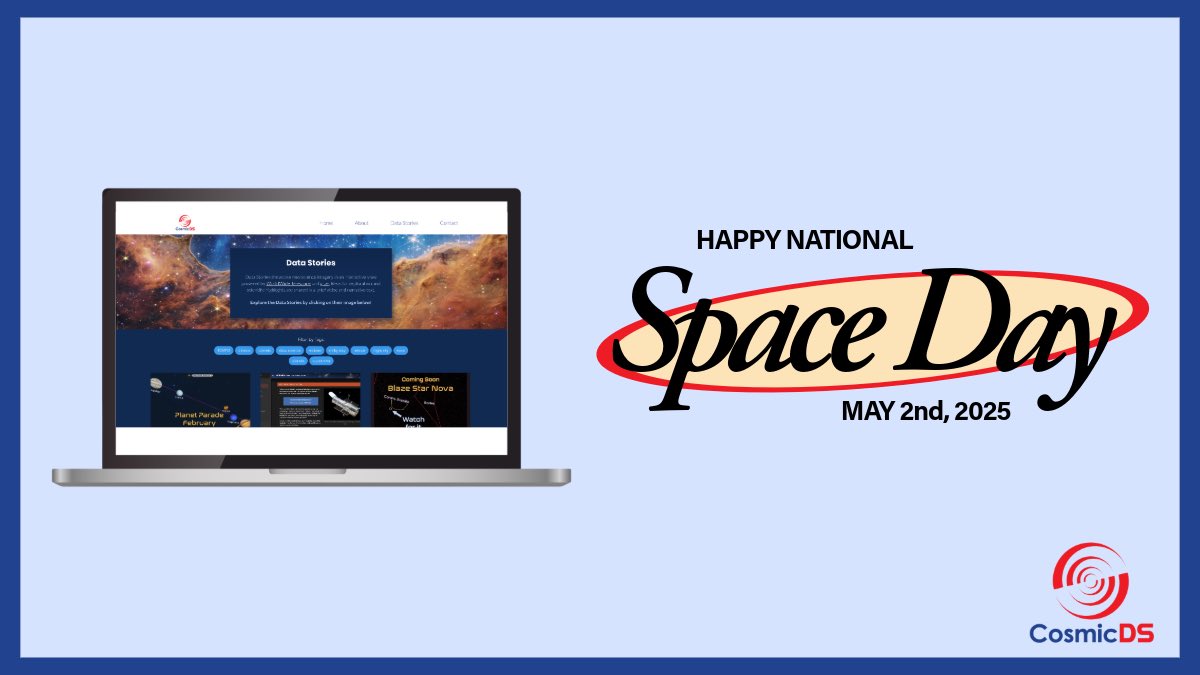
Our favorite day! 🪐🥳 This #NationalSpaceDay, check out the many ways you can experience space science data and imagery through Cosmic Data Stories! Use the link in our bio to learn more 🔗
2
1
80
23 Apr 2025
Congratulations to the team at @CenterForAstro on the STARS launch. 💫
23 Apr 2025

Center for Astrophysics | Harvard & Smithsonian/Smithsonian Institution: Smithsonian Astrophysical Observatory Launches Nationwide Astronomy Program for Rural Schools cfa.harvard.edu/news/smithso…
1
1
27
23 Apr 2025
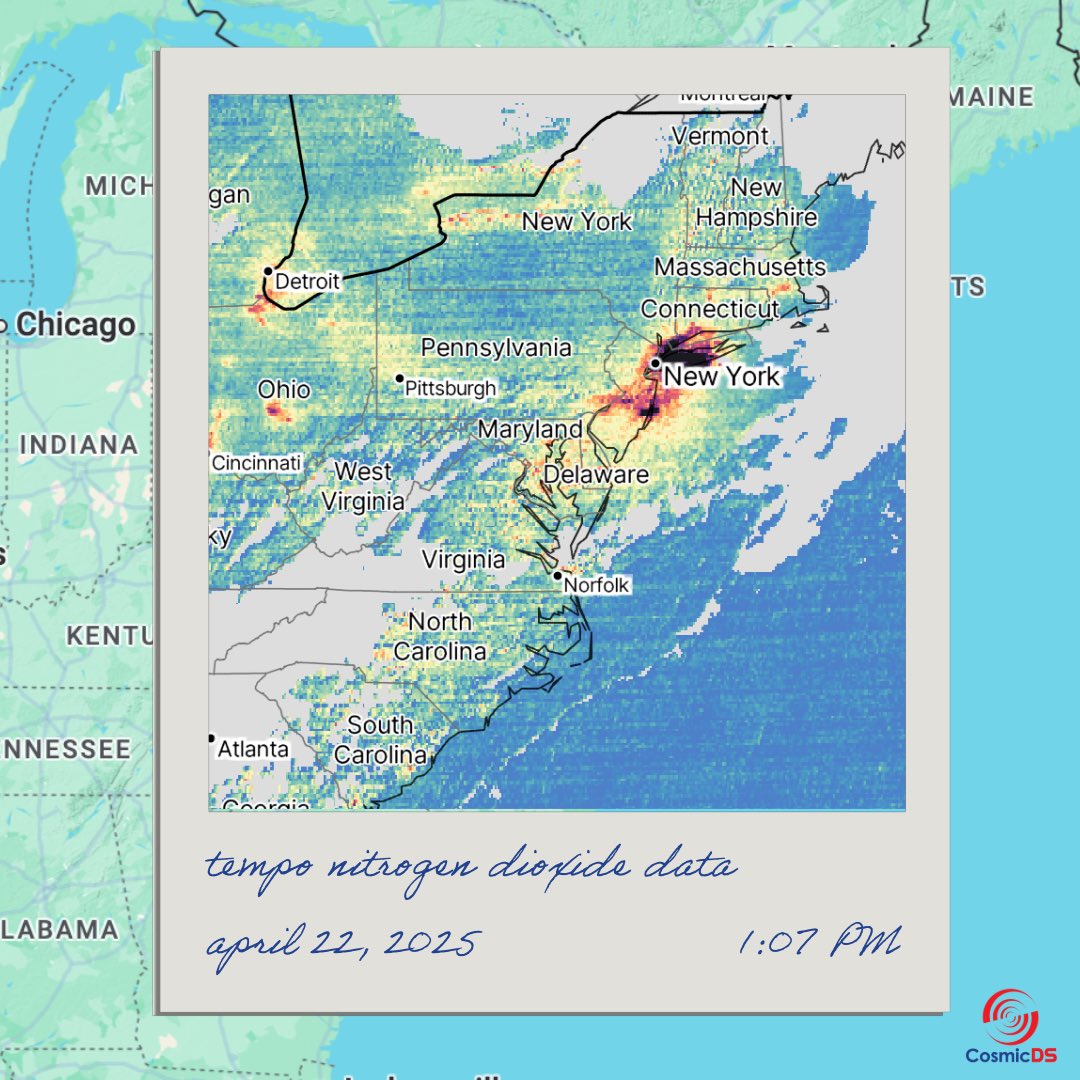
Did you know that the NASA and Smithsonian @TEMPO_Mission measures air pollution at a neighborhood scale across North America on an hourly basis? Check out our #TEMPO data story to track yesterday’s #earthday nitrogen dioxide levels in your neighborhood! 🌎
2
1
51
Cosmic Data Stories retweeted

Teaching your students about the planetary alignment? The Planet Parade Data Story is an easy tool for finding the planets in the sky from any location! A short video with an overhead view of the solar system shows WHY all the planets are visible together projects.cosmicds.cfa.harvar…
3
4
240
14 Feb 2025
The planets align!
But, sorry, they're not in a straight line!
Check out the story and video to learn why!
#planetaryalignment #Astronomy
projects.cosmicds.cfa.harvar…
1
1
35
Cosmic Data Stories retweeted

6 Feb 2025
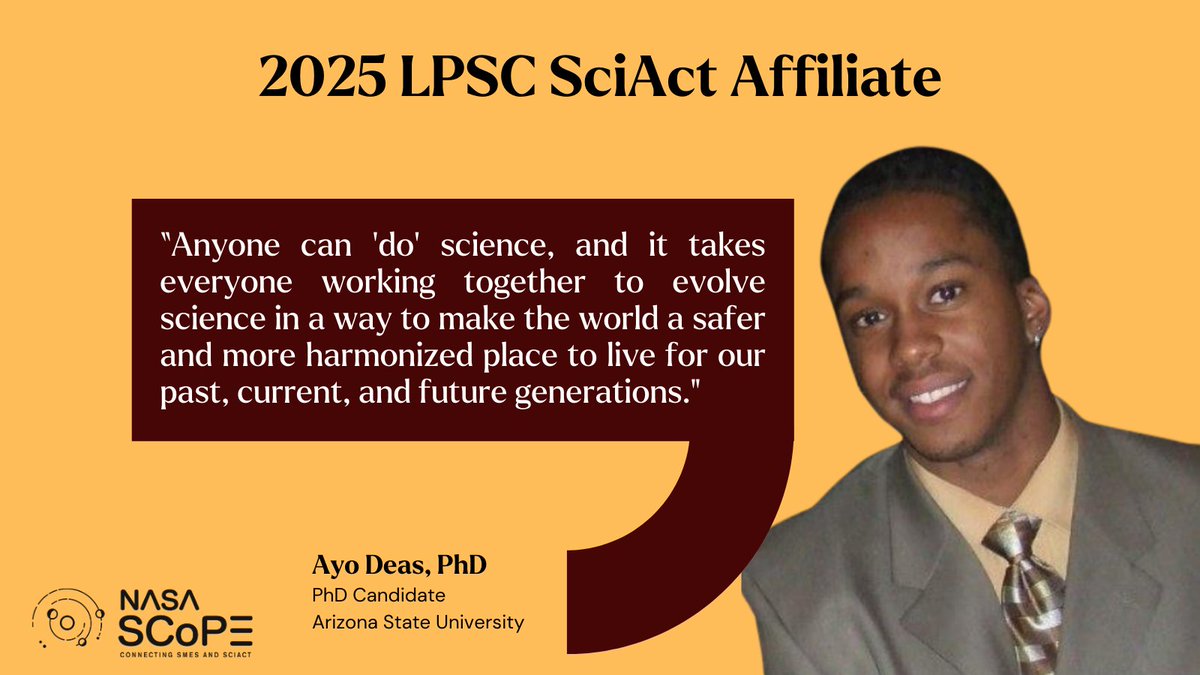
Meet Ayo Deas, a #LPSC2025 @NASA SciAct Affiliate! He is a researcher at @GC_CUNY, where he obtained his Ph.D. in Earth and Environmental Sciences. Ayo’s research is focused on how tree growth 🌲 responds to water availability over environmental gradients.
1
1
138
6 Sep 2024
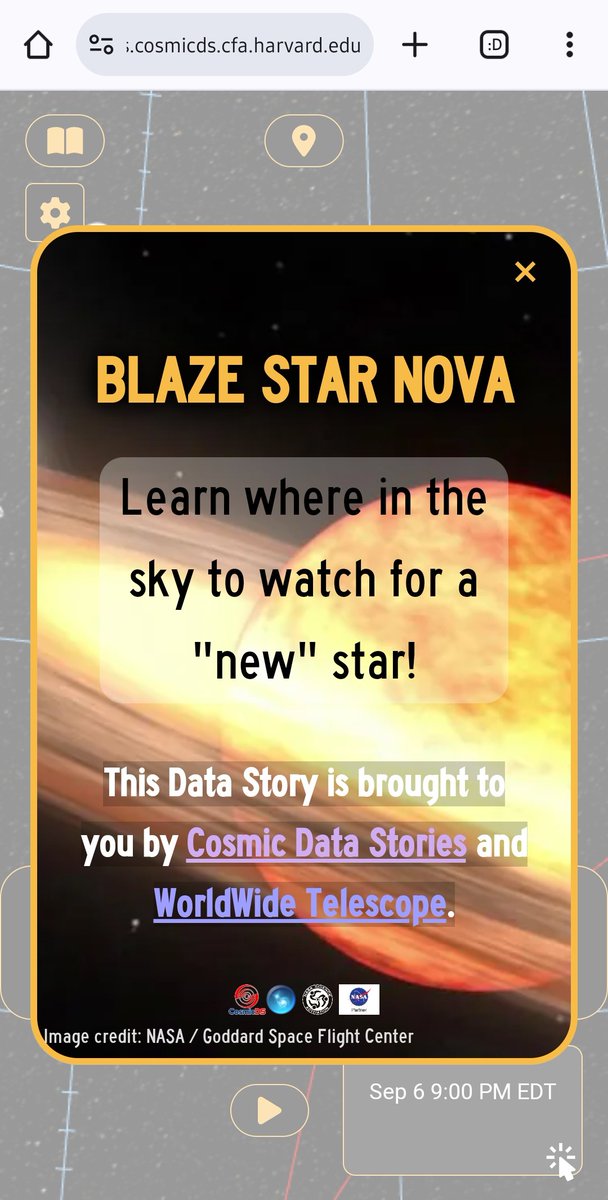
Astronomers believe a "new star" (a #nova) could appear in the sky soon! Learn what this is and how to find "T Corona Borealis" in this interactive map so you are ready to notice it when it happens!!
#Nova #BlazeStar
projects.cosmicds.cfa.harvar…
1
1
100
Cosmic Data Stories retweeted

17 Jun 2024
NO2 emissions from #PostFire in SoCal as seen by @TEMPO_Mission
17 Jun 2024

#PostFire has increased to 15,610 acres w/ 8% containment. Firefighters are securing the edge & mopping up along the northern perimeter. Hand crews are finding opportunities to build direct line through steep, rugged terrain along the fire’s southern edge. bit.ly/4c1gUXX
1
9
32
6,460
Cosmic Data Stories retweeted
TEMPO #AirQuality data is live and you can explore it yourself using a new data tool designed by our @CosmicDataStory colleagues!!
Check out the data here: tempo.si.edu/data_for_public…
30 May 2024

Near real-time data of #AirPollution over our neighborhoods is here!
Our hourly daytime scans of North America’s atmosphere from coast to coast will help us better understand what’s in the air we breathe.
TEMPO data is publicly available.
Learn more: pweb.cfa.harvard.edu/news/te…
3
2
424
Cosmic Data Stories retweeted

8 Apr 2024
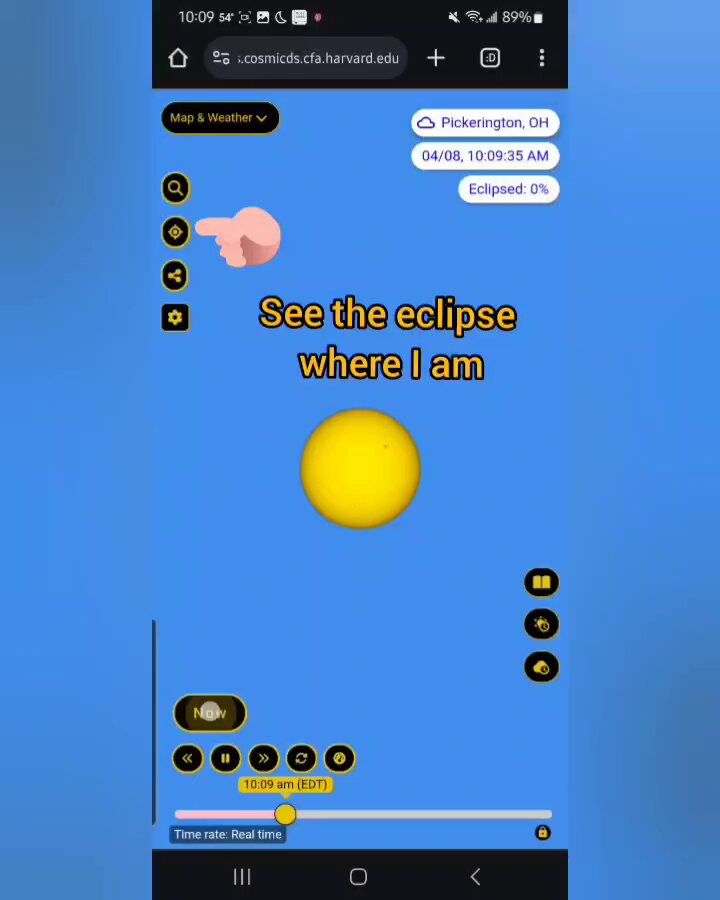
Stuck in traffic or under clouds? Want a simulation of the #eclipse as it’s happening?? Check out this app from @CosmicDataStory projects.cosmicds.cfa.harvar…
3
3
619
Cosmic Data Stories retweeted

8 Apr 2024
For a preview of what today's #SolarEclipse2024 will look like where you are, check out the mobile-friendly app Eclipse Simulator from @CosmicDataStory. Here, @AlyssaAGoodman (past fellow and science program codirector) offers a demo. (URL in description!) youtu.be/YPwhybmUOds?si=o48-…
2
3
637
8 Apr 2024
Keep track of what you'll see with for #TotalSolarEclipse2024 and check out how it will look on the Path of Totality!!!
☀️ 🌑 🌎
projects.cosmicds.cfa.harvar…
1
2
764
Cosmic Data Stories retweeted

3 Apr 2024
Our documentary on @novapbs, featuring a lot of @CenterForAstro folks, lands tonight 8pm ET! pbs.org/wgbh/nova/video/grea…
1
4
31
2,759
4 Apr 2024
Find out where and when the eclipse is visible wherever you are to optimize you plans as you head to see the eclipse, whether or not you're in the #GreatAmericanEclipse #PathofTotality #SolarEclipse2024
projects.cosmicds.cfa.harvar…
1
1
78
4 Apr 2024
Check out this intro from @AlyssaAGoodman to see what you can do!!
youtu.be/YPwhybmUOds?si=nB_7…
31
4 Apr 2024
Thanks for sharing our #GreatAmericanEclipse eclipse app! See how the eclipse will look and when from anywhere! #SolarEclipse2024 #PathofTotality
4 Apr 2024

T-4.6 days to #Eclipse2024!
Check out the Eclipse Simulator mobile-friendly app from @CosmicDataStory at @Harvard, at bit.ly/cosmicds-eclipse-2024.
BONUS: there's a quick demo video on YouTube, at
youtube.com/watch?v=YPwhybmU…
Thanks @NASA Science Activation @astrojthe3 Pat & Jon!
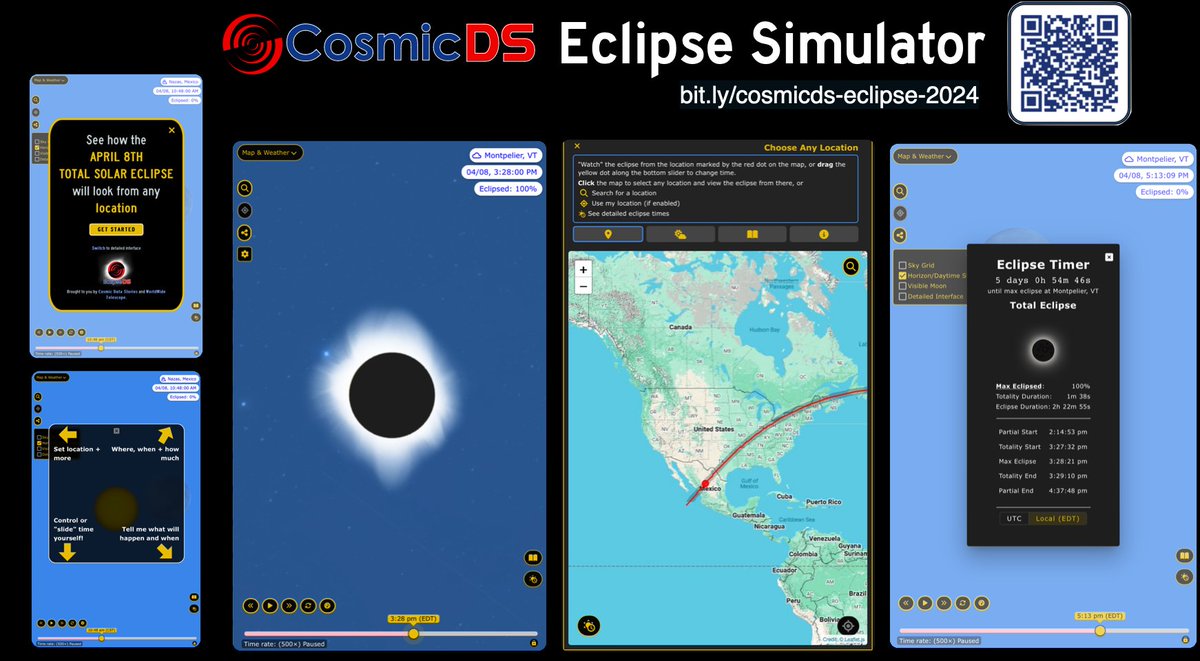
ALT Screenshots from the new Eclipse Simulation app from the Cosmic Data Stories Team
86
Cosmic Data Stories retweeted
16 Mar 2024
This NYT article about the April 8 #Eclipse2024 & clouds is almost as good as... (1 of 2) nytimes.com/interactive/2024…
1
1
3
392
Cosmic Data Stories retweeted
Learn how you can use @MicroObs and @CosmicDataStory to engage audiences in using real tools and real data before, during, and after the upcoming eclipse.
Check out our latest #CosmicConversation on exciting resources for eclipse programming!
youtu.be/D3oAJajeTTQ
3
2
153