
Joined January 2022
- Tweets 3,354
- Following 1,023
- Followers 1,012
- Likes 5,879
256 Photos and videos






NDW.mega 🏰🐍 retweeted

Jun 12
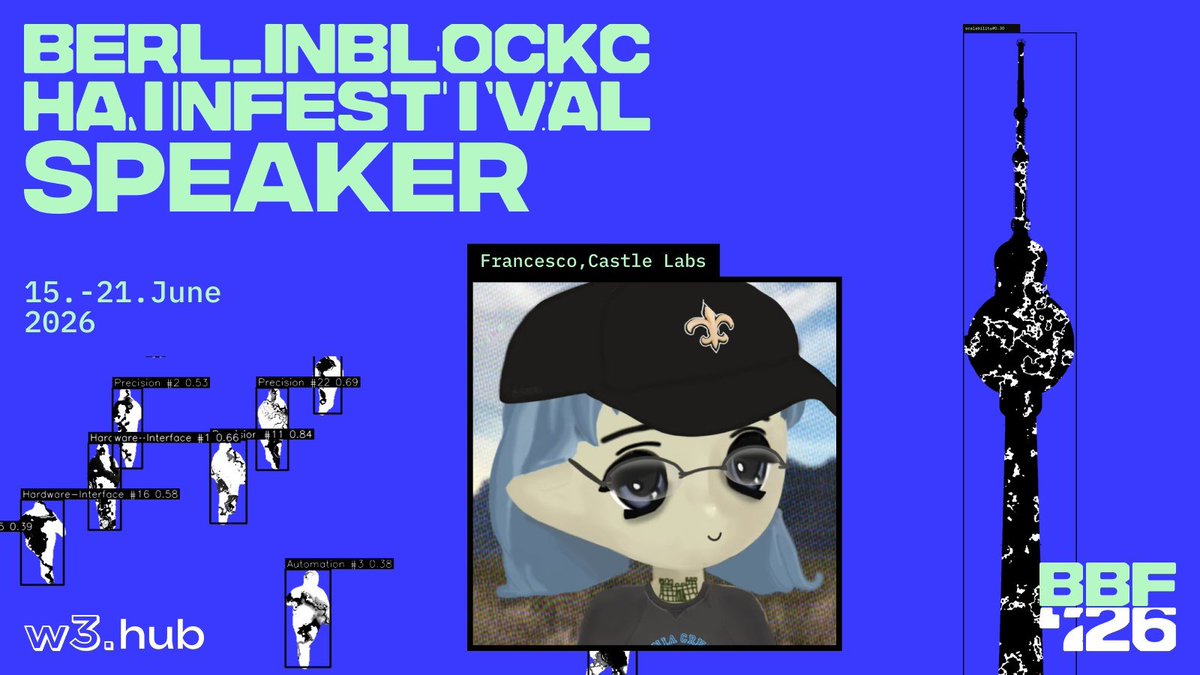
Castle Labs is a media sponsor for @BerBlockWeek
Our co-founder @francescoweb3 will give a speech on privacy on 17th June
Reach out in DM to connect
3
4
16
1,579
NDW.mega 🏰🐍 retweeted
Jun 11
Privacy is normal
It is no longer just a cypherpunk ideology. It’s becoming necessary onchain infrastructure for both user protection and institutional adoption.
Crypto has always had a financial privacy problem.
Public blockchains made finance auditable, but they also made financial behaviour permanently observable. Wallet balances, counterparties, payroll, treasury movements, order flow, strategy, liquidations, swaps, transfers. All of it is part of a public data trail.
As chain analytics and AI make that data cheaper to process, an open, transparent ledger starts to look like surveillance infrastructure.
Usable privacy in crypto cannot just mean hiding everything from everyone; that much is clear.
The more realistic path is selective disclosure: systems that can hide sensitive information from the public while allowing users, institutions, auditors, and regulators to prove specific facts when required.
We had the chance to sit down with @0xmikemcc from @0xprivacypools, one of the Ethereum-aligned protocols building in the post-Tornado Cash era, to discuss how they are approaching the landscape.
Mike framed the protocol’s V1 as “an MVP to test whether there was demand for compliant privacy.”
The early numbers are modest: roughly $20m in volume and around 5,000 individual deposits, but the team is keen to get V2 out and begin a new wave of growth.
Privacy Pools aims to preserve user privacy while preventing addresses linked to exploits, scams, or hacks from using the pool to privately break the onchain link. The protocol also allows each user to share their transaction record with others for reporting and compliance purposes.
On legal liability for privacy protocols, Mike said the team “looked at the Roman and Alexey lawsuits and took every point they were indicted on, then modified our protocol to mitigate that indictment point.”
For a protocol like Privacy Pools to grow, it needs distribution, and more importantly, distribution that feels seamless.
Privacy does not scale if users have to leave their wallet, open a separate app, pay extra, and think like a privacy power user. Privacy Pools V2 is being built with the opposite in mind: embedded privacy through wallets, bridges and transaction surfaces.
Mike’s north star is simple: deprecate Privacy Pools’ own front end, and let regular, everyday interfaces route the traffic.
This aligns with our recent report’s broader conclusion: privacy is no longer only about hiding transactions. It is becoming a requirement for usable financial infrastructure.
The first wave of crypto privacy was ideological.
The next one is practical.

8
9
34
4,405
NDW.mega 🏰🐍 retweeted
Jun 10
12
20
69
5,895
NDW.mega 🏰🐍 retweeted

Jun 10
87
74
537
126,776
NDW.mega 🏰🐍 retweeted
Jun 9
The Full-Stack Privacy Ecosystem: Privacy as Infrastructure for User Protection and Institutional Adoption
Featuring @octra @fhenix @ambire @RAILGUN_Project @0xprivacypools @Arcium @encifherio @Starknet
Read the complete report for free here: docsend.com/v/sjv2g/thefulls…
42
23
149
20,406
NDW.mega 🏰🐍 retweeted

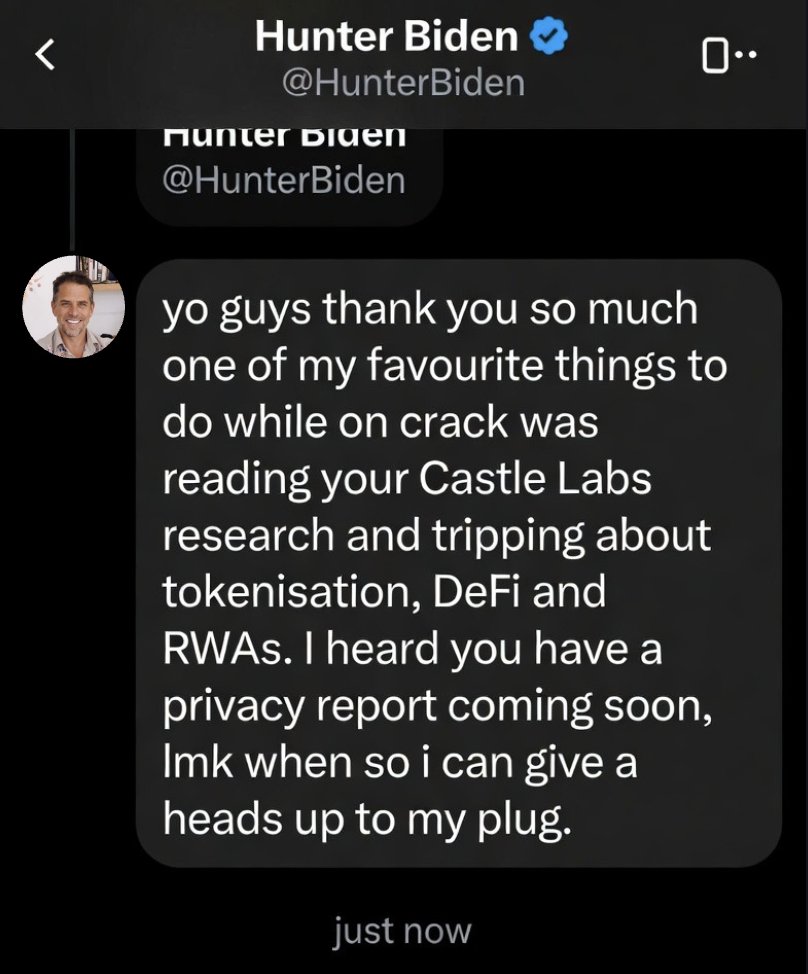
The next US president @HunterBiden
loves @castle_labs
perfect research to trip on
Privacy report releasing next week
9
4
46
2,107


NDW.mega 🏰🐍 retweeted

Jun 5
yeah everything sucks and it feels like it’s over but
it’s actually an awesome time to try apps, so here’s a few I’ve been using lately:
@mnstr
@stompdotgg
@variational_io
@noise_xyz
23
6
80
6,685

NDW.mega 🏰🐍 retweeted

May 31
Signing a transaction
The policies: please verify calldata, domain and message hash in your hardware wallet device before proceeding with blind-signing.
Crypto people's brain:
5
3
18
2,618

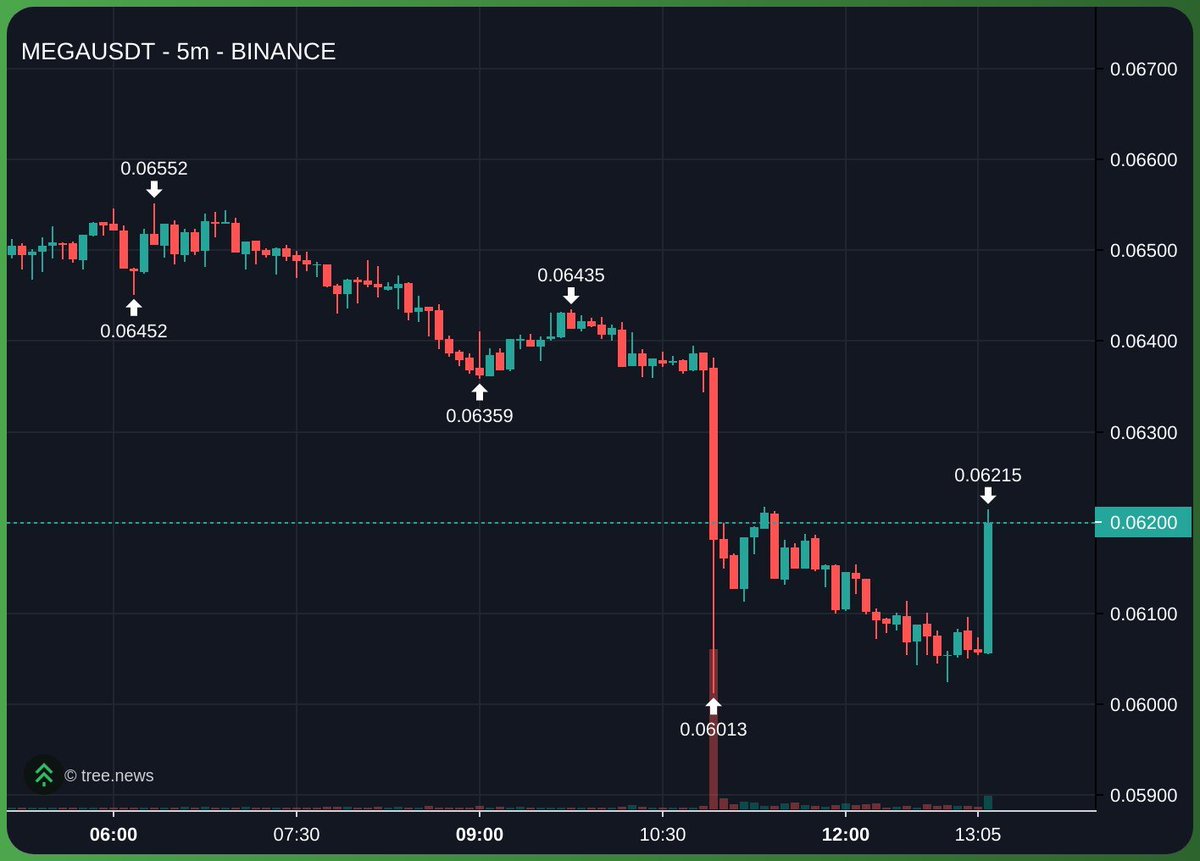
haven’t really talked about recent megaeth events & $mega price action yet.
no filter thoughts:
i’m not surprised at all by the current state of things. berachain taught me a year ago that building an ecosystem from scratch is probably one of the hardest challenges in crypto.
that being said, making conclusions right now makes zero sense to me. you probably start seeing the real picture 12 to 24 months after mainnet, not a few weeks in. calling it dead today is just pointless.
about the token, not surprised either. recent chain tges paved the way for this kind of price action, and when a team doesn’t “crime” the token, this is usually what happens. funny enough, people now almost expect teams to manipulate price lol.
the reality is that most people don’t see value in chain tokens anymore. megaeth at least has an interesting system with usdm buybacks, but these things take months or years before creating meaningful organic buy pressure.
we’re in an era where you can be bullish on a team, a chain and its apps, while still not wanting to hold the token because the risk/reward just doesn’t feel attractive enough.
eventually mega will find its bottom, probably once people stop farming engagement and doom posting about it because they’ve got nothing better to talk about. then probably comes the depressive phase. most chains die there. the few that survive usually become the best trades of your life.
stop reading x all day. ask yourself the real questions. stop blaming the team and just be honest with urself. you wouldn’t have done any better so stfu. and if you made money thanks to megaeth, at least be grateful for that. everyone who never took profit at tge either already has too much money, or was looking for a life changing trade in the wrong place.
i love megaeth.

46
7
143
12,201
NDW.mega 🏰🐍 retweeted
May 27
Thank you everyone for the incredible response to our vault research.

1
16
1,205
NDW.mega 🏰🐍 retweeted

May 27
1/ When people talk about on-chain liquidity, the usually think about transparency. Every swap, every pool, every price, visible.
But there's a whole market hiding underneath the swaps. Bots quoting, buying, selling. 1000x a day.
Here's one of them 🧵
6
9
32
1,246
NDW.mega 🏰🐍 retweeted

May 26
You saw the teaser. Her doomscrolling for a trade idea while the group chat drew blanks.
That was the old way.
Now she clocks a pair trade on the walk to her car and runs it from the back seat. Full clip here. The how, in the thread below. 👇
22
28
119
27,589

NDW.mega 🏰🐍 retweeted
May 20
The Vaultification of Finance: An evolution of vaults from their initial implementations to the infrastructure layer for institutional finance onchain.
Featuring @Morpho @upshift_fi @veda_labs @SteakhouseFi @SentoraHQ @pendle_fi @ipor_io
Full report: docsend.com/view/r3278hmn8d6…
19
15
109
31,970
NDW.mega 🏰🐍 retweeted
May 18
Come meet our beautiful founders, @0xAtomist & @francescoweb3 in Milan this week, along with the wider Italian DeFi Mafia 🇮🇹
We are proud to be a media partner for the third year running.
This is not an event you want to miss.
ciao regazzi
May 18

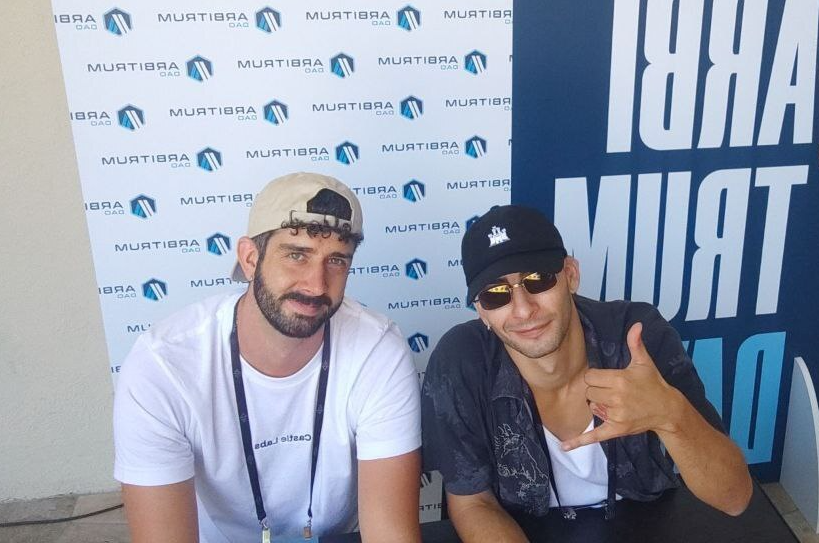
We are proud to announce Castle Labs @castle_labs as Media Partner for ETHMilan 2026!
Castle Labs is a world known web3 boutique advisory and research firm. They are among the most respected research firms in crypto and have also managed multiple grant programs as delegates for Arbitrum DAO, saving it millions of dollars thanks to their ethics and diligence.
Meet Castle labs this week at ETHMilan!

10
7
49
5,487
NDW.mega 🏰🐍 retweeted

May 18
We’ll be hosting an options summit during @eth_milano focused on the opportunities and challenges around decentralized volatility markets and structured products.
Date: Thursday, May 21 • Afternoon
DM @DanDeFiEd or reply below if interested in joining.
Rysk it all.
May 18
We’re happy to welcome Rysk Finance as a sponsor of ETHMilan 2026.
@RyskFinance is building decentralized options and structured products infrastructure, bringing advanced trading strategies and onchain risk management tools to the Web3 ecosystem.
Thanks to the Rysk team for the support.
Meet Rysk finance at ETHMilan this May 21-22
19
4
58
7,008