
Staying strong in crypto with a kind heart 🙂
Joined October 2024
- Tweets 3,316
- Following 183
- Followers 255
- Likes 7,167
53 Photos and videos












Crypto Chris AUS retweeted

Jun 4
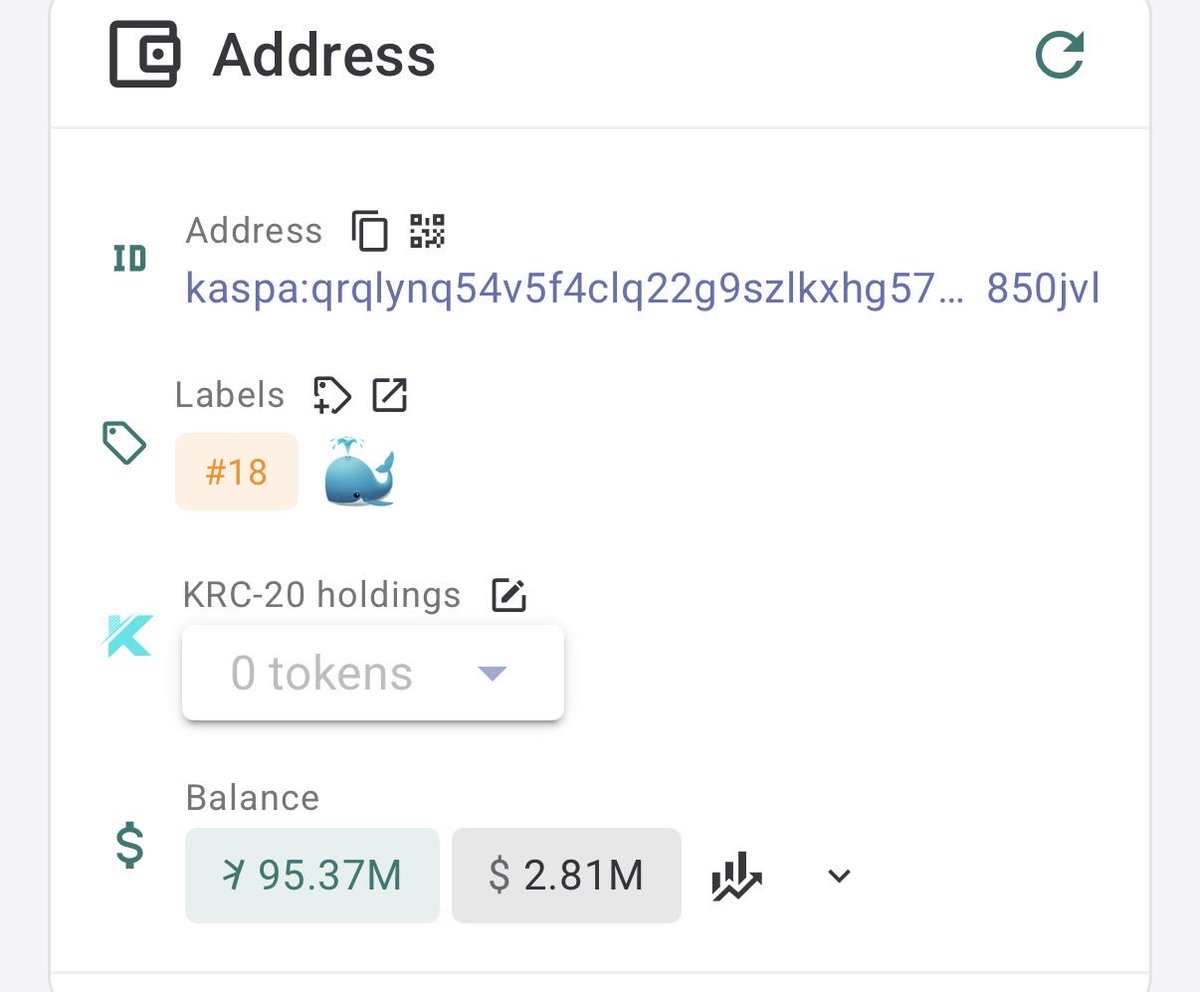
A KAS whale has stacked 95.37M KAS $2.81M over the last three months and now sits at #18 by total holdings. Added another 3M KAS just yesterday
16
119
2,561


Crypto Chris AUS retweeted
May 31
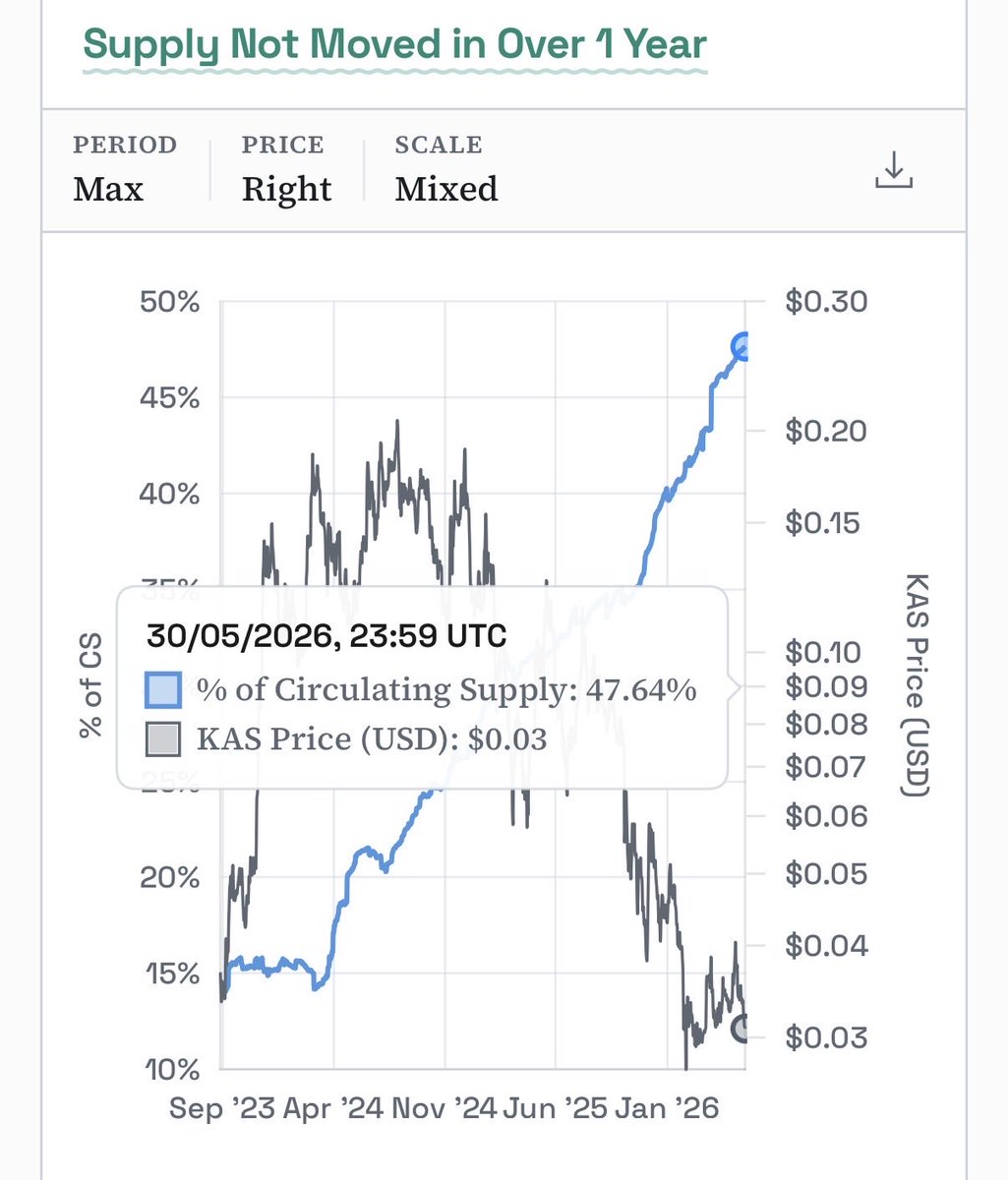
47.64% of circulating $KAS hasn’t moved in over a year — a new high for the metric, up from around 15% in late 2023.
The contrast with price is the whole story. The 1y dormant share has climbed steadily through the entire stretch where price fell from ~$0.20 toward $0.03. Long term holders aren’t selling into weakness; they’re sitting through it.
Nearly half the supply has now gone untouched for a year or more.
ALT Kaspalytics.com
1
39
146
7,925
Crypto Chris AUS retweeted

May 30
Most crypto is still fighting over who has the fastest casino.
#Kaspa is trying to build something far bigger:
a real-time Proof-of-Work financial operating system.
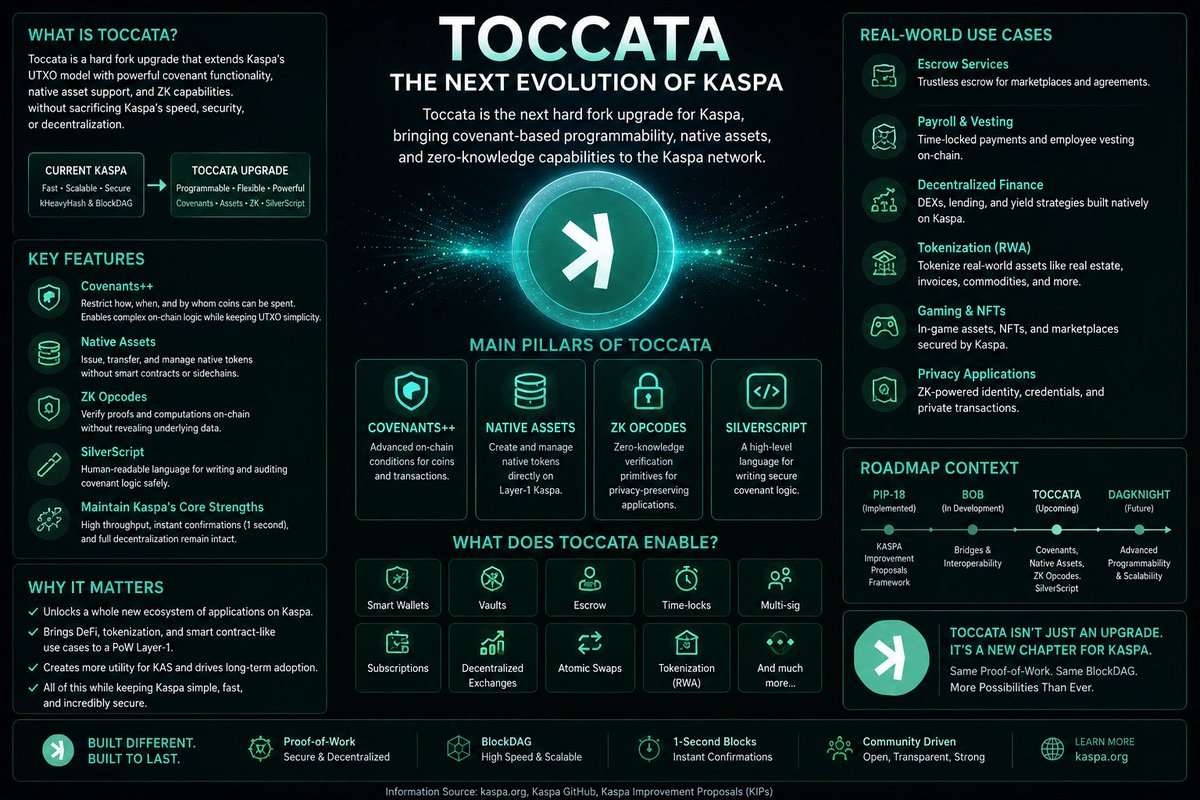
Toccata is the turning point.
This hard fork doesn’t just “add smart contracts.”
It gives Kaspa two programmability paths most chains can’t combine cleanly:
Native L1 covenants
Based zk applications anchored to L1 sequencing
That matters.
Because Kaspa is not trying to copy Ethereum.
It is not trying to become another monolithic smart contract chain.
It is building programmability around its own strengths:
parallel blocks, UTXO logic, high-frequency PoW, and BlockDAG consensus.
With Silverscript, developers get a safer way to write complex L1 covenant programs directly on Kaspa.
With KIP-17, Kaspa gets extended script opcodes.
With KIP-20, covenant IDs bring lineage management.
With KIP-16, zk verifier precompiles open the door to proof-based applications.
With KIP-21, sequencing commitments allow zk apps to follow L1 ordering without centralized sequencers deciding what enters or exits.
That last part is massive.
Most L2s today depend on sequencers that can reorder, censor, delay, or extract value.
Kaspa’s based zk direction aims for something different:
applications that inherit L1 sequencing, prove their own execution, and bridge through $KAS itself.
Not “trust me bro” scaling.
Not centralized middleware.
Not fake decentralization with a multisig.
Proofs. Covenants. Commitments. L1 ordering.
And over the next 5 years, if Toccata, DAGKnight, vProgs, and the zk runtime stack mature, Kaspa could be capable of something almost no other crypto can offer:
Bitcoin-like monetary hardness, Ethereum-like programmability, Solana-like speed, and rollup-like scalability without abandoning Proof-of-Work.
Imagine:
• real-time PoW settlement
• native assets on L1
• covenant-based vaults and smart wallets
• canonical L1/L2 bridges
• zk applications that scale with their own activity, not the whole network
• parallel-centric execution environments
• based computation over a high-frequency BlockDAG
• eventually, synchronously composable verifiable programs
• payments fast enough for commerce
• DeFi without sacrificing the monetary base layer
• programmability without turning the L1 into bloatware
That is the real Kaspa thesis.
Not just “faster blocks.”
A new architecture for decentralized money:
lean L1, high-frequency PoW, covenant logic, zk verification, based applications, and verifiable execution.
Other chains may be fast.
Other chains may have smart contracts.
Other chains may have zk.
Other chains may claim decentralization.
But very few are trying to combine all of it on top of a fair-launched Proof-of-Work BlockDAG.
Toccata is not the finish line.
It is the moment Kaspa evolves from:
“fast digital cash”
to
programmable real-time money.
And if the next 5 years play out right, $KAS won’t be competing to become the next Ethereum, Solana, or Bitcoin.
It will be in its own category:
the first real-time Proof-of-Work settlement layer for global programmable finance.
Max share Kaspa fam
Crypto Proselyte
10
57
167
3,817
Crypto Chris AUS retweeted

May 24
6
17
77
962
Crypto Chris AUS retweeted

May 19
35
35
129
9,431
Crypto Chris AUS retweeted

May 18
$KAS Toccata hardfork test on testnet-10 was a succuss. Onwards towards mainnet! Official date details coming soon!

53
312
1,184
71,024
Crypto Chris AUS retweeted

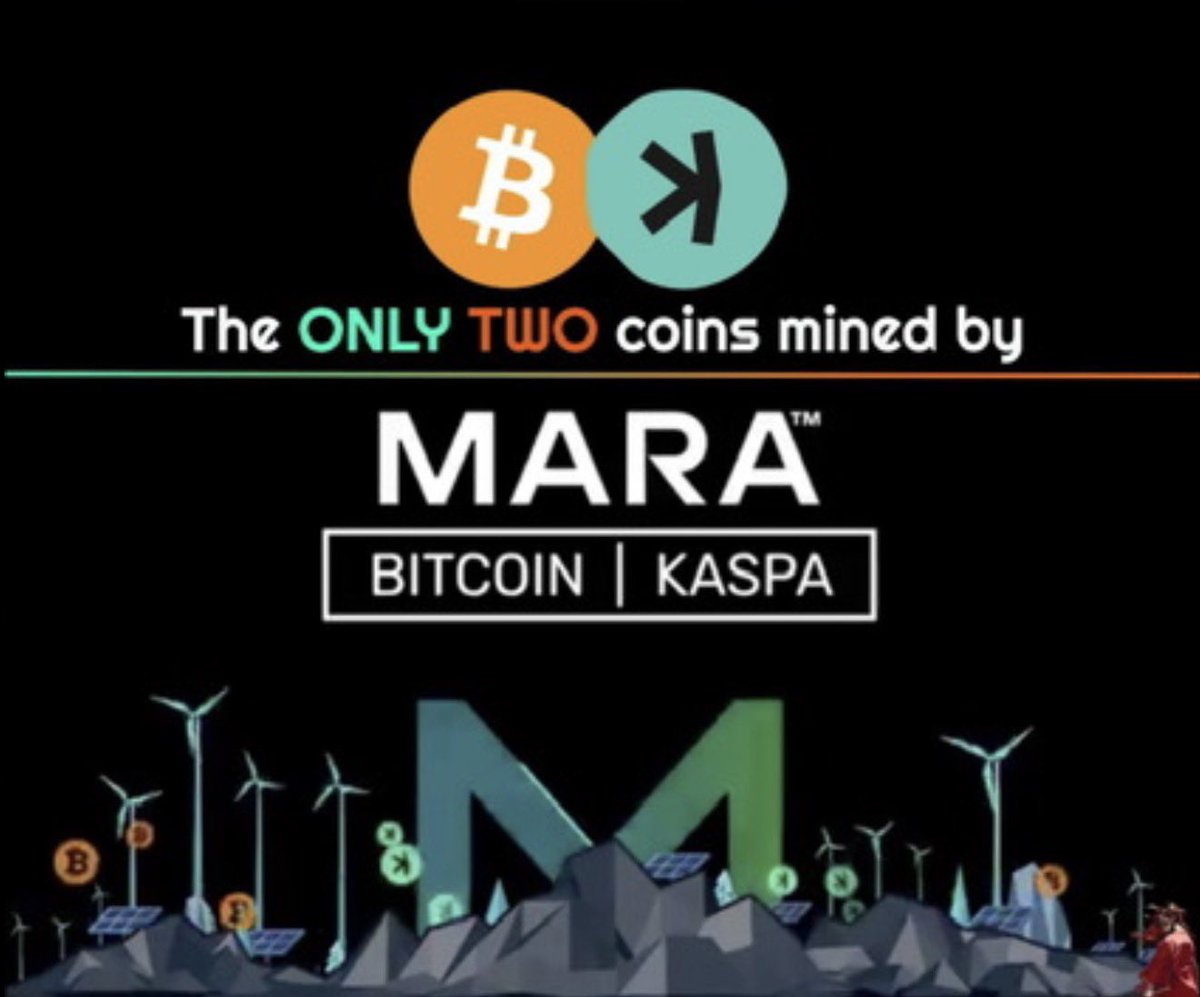
Every single day for months, top 3.
Mara mining $BTC and $KAS only.
Wallet 1 has loaded up big, every chance it's an institution. My guess is @Grayscale.
Are you paying enough attention to $KAS???
Provably not.....
1
1
3
98

Today we're announcing that we have been actively mining Kaspa.
Diversification has been key to our investments in energy solutions and tech innovations, and it remains crucial in our digital asset compute operations. Read the full press release: ir.mara.com/news-events/pres…
500
968
2,644
1,428,033
Crypto Chris AUS retweeted
2
17
76
763
Crypto Chris AUS retweeted

May 15


7
14
130
2,691
Crypto Chris AUS retweeted
May 13


14
179
226
5,378
Crypto Chris AUS retweeted
Definitely $KAS, have you not looked at Coin Market Cap?
$KAS consistently leading the polls for the last 4 months.
It's OK though, @cryptocom and @RobinhoodApp will list first.
1
28
1,693
Crypto Chris AUS retweeted

May 11
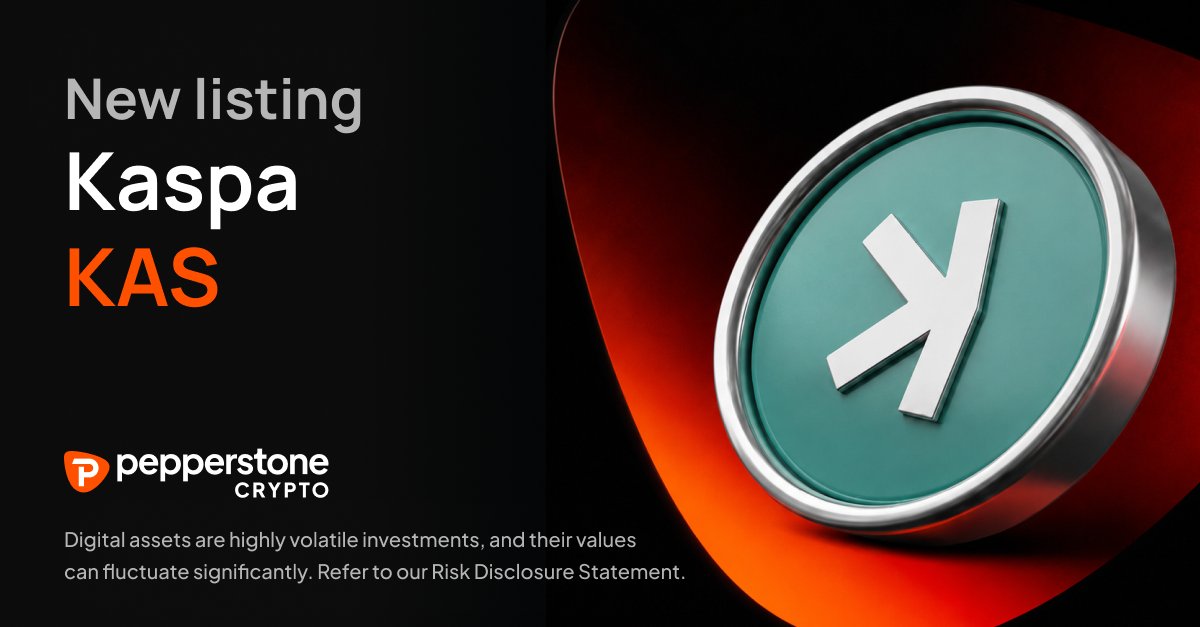
New listing: kaspa:native
Kaspa (KAS) is a proof-of-work Layer 1 blockchain built on a BlockDAG architecture, allowing multiple blocks to be confirmed simultaneously for high throughput without sacrificing decentralisation. Fair-launched in 2021 with no pre-mine or presale, KAS has already mined ~95% of its hard-capped 28.7B supply — a scarcity event approaching fast as remaining issuance closes out by late 2026.
Recent market news: KAS has a circulating supply of ~27B tokens and a market cap recently cited around $1.0B–$1.06B USD.
KAS is available now on Pepperstone Crypto 👉 pcrypto.com/en-au/convert/KA…
#NewListing #AusCrypto #CryptoAustralia #BitcoinAustralia #PepperstoneCrypto #TradeCryptoAU
35
214
920
29,720

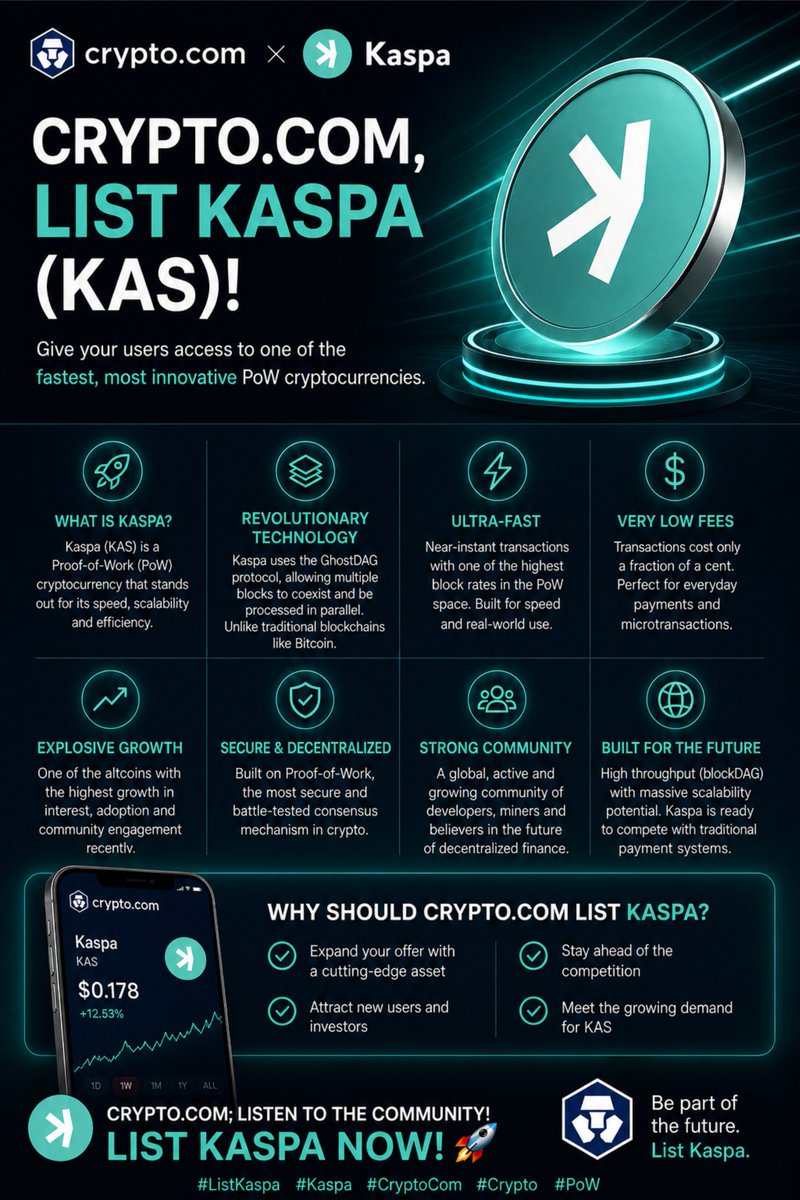
🚀 Help us get Crypto.com attention!
We want to see Kaspa (KAS) listed on @cryptocom one of the fastest and most innovative PoW cryptocurrencies out there.
👉 Like, repost, and share this flyer so it reaches Crypto.com!
The stronger the community, the louder the message. Let’s make it happen.
#ListKaspa #Kaspa #Cryptocom $kas
7
106
302
2,644
$APT is seriously going to make a huge move up, very soon....



123
Crypto Chris AUS retweeted
1
1
122