
@Kaspaunchained $KAS #Kaspa Future proofing crypto!
Joined June 2009
- Tweets 9,258
- Following 1,181
- Followers 2,820
- Likes 19,839
805 Photos and videos


And $KAS will literally be the only network fast enough, scalable enough and secure enough to accommodate them.

BREAKING: CZ just said AI agents won’t use banks.
“They’ll use crypto.”
“The native currency for AI agents will be cryptocurrencies.”


56
KaspaUK retweeted

Jun 9
My logic is different.
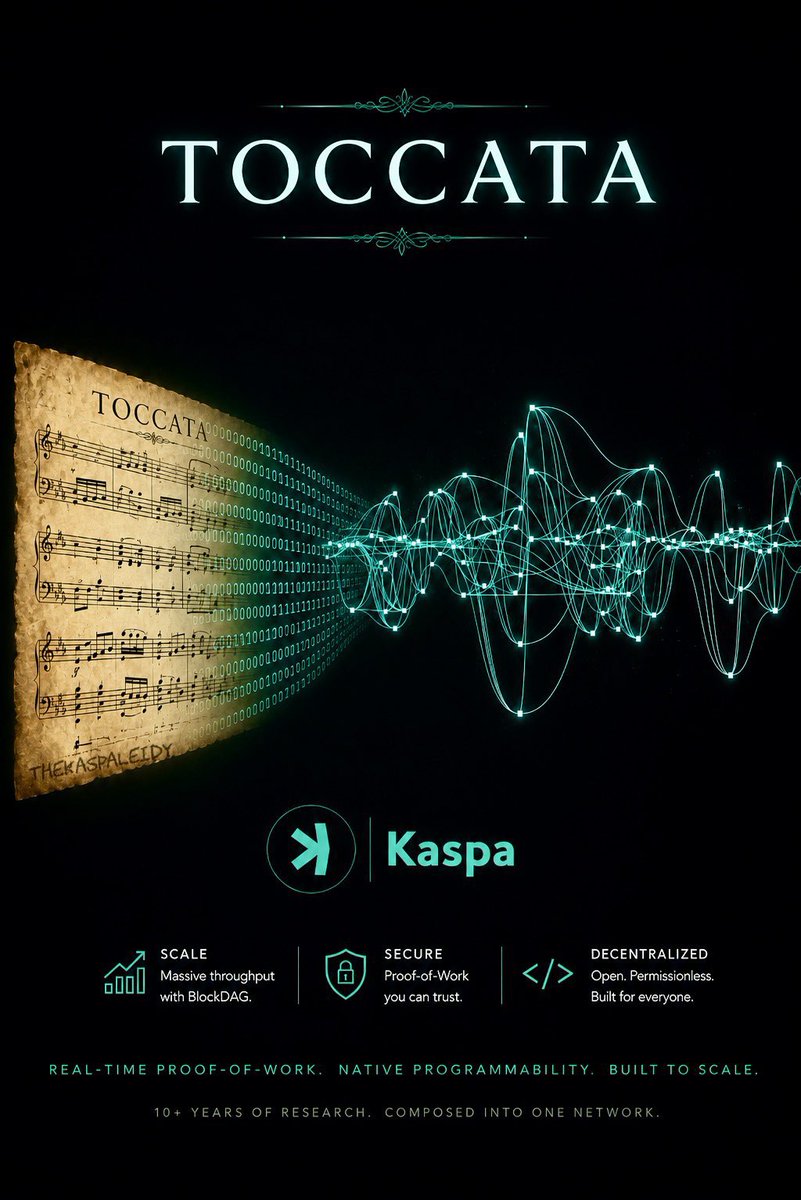
If the market can assign a trillion-dollar valuation to a digital asset that primarily serves as a store of value…
Then how much could infrastructure be worth that:
operates 24/7
runs 365 days a year
settles transactions in seconds
enables programmability
supports stablecoins
powers AI agents
facilitates financial coordination
serves as the global internet of money
👀
That’s a legitimate question. ⚡🚀🍻
12
61
291
5,078
KaspaUK retweeted

Meeting with OKX tomorrow, going to ask why $KAS isn't listed yet👀
Trading experience has been good but would be better with Kaspa listed.
113
148
870
22,614
KaspaUK retweeted

Jun 5
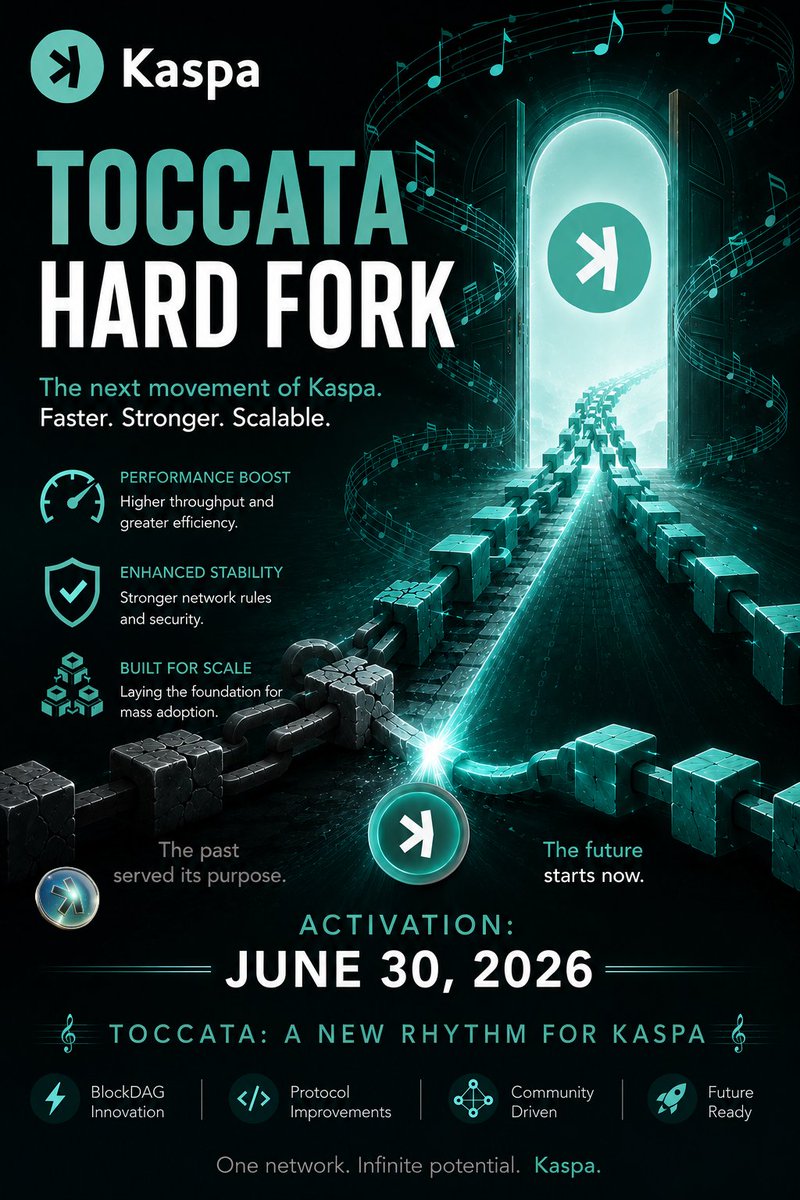
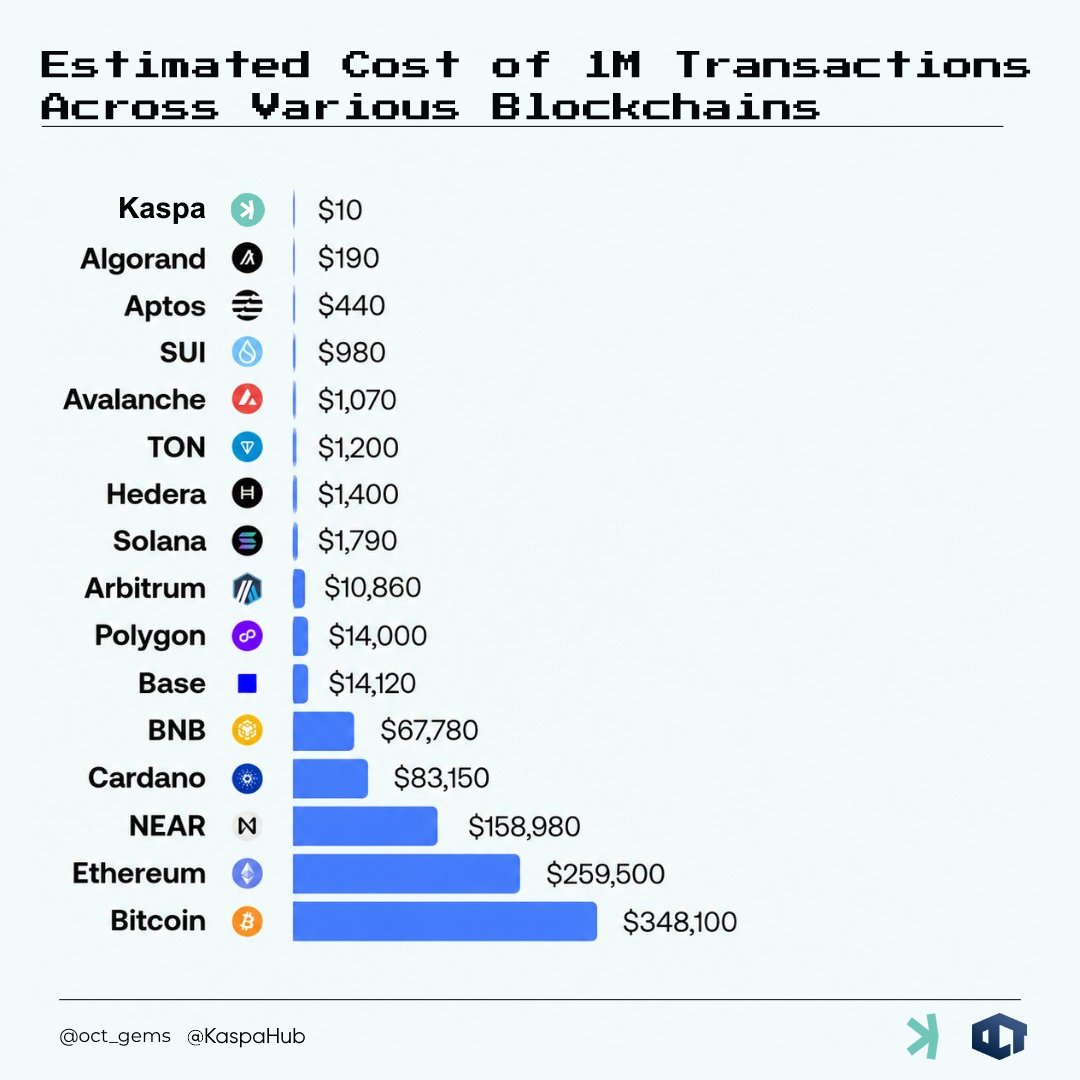
**Official Toccata Release — Mainnet Hardfork Activation Included** (Links in reply)
We’re excited to announce the official Kaspa release containing the **Toccata Hardfork** activation logic.
Toccata is scheduled to activate on mainnet at DAA score `474,165,565`, expected around **June 30, 2026, 16:15 UTC**.
This is a consensus-changing upgrade. All node operators, miners, pools, exchanges, indexers, wallets, and infrastructure providers must upgrade before activation to remain compatible with the network.
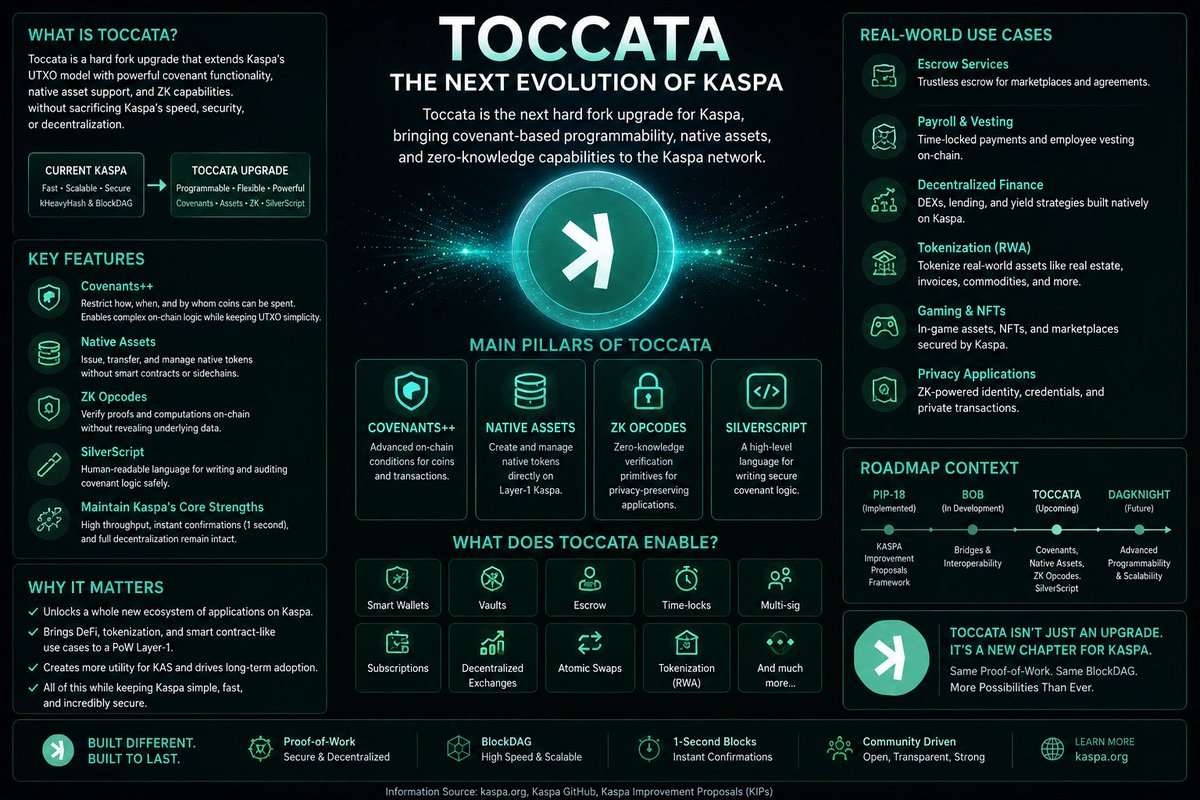
Toccata introduces a major expansion of Kaspa L1 capabilities, including:
• **Native L1 covenant support** through transaction introspection, allowing for more expressive contracts, including stateful contracts
• **Covenant IDs**, providing stable covenant lineage across UTXO transitions, so covenant instances can preserve continuity as their state moves from one UTXO to the next
• **ZK proof verification on L1** via `OpZkPrecompile`, enabling to trustlessly offload computation off-chain.
• **Partitioned sequencing commitments**, improving support for based ZK applications by making lane-local proving scale with relevant activity rather than global throughput
Please upgrade as soon as possible and verify your nodes are running the new release well before the activation DAA score.
Thank you to everyone who contributed to designing, implementing, reviewing, and testing Toccata.
40
293
763
71,254

KaspaUK retweeted

Jun 1
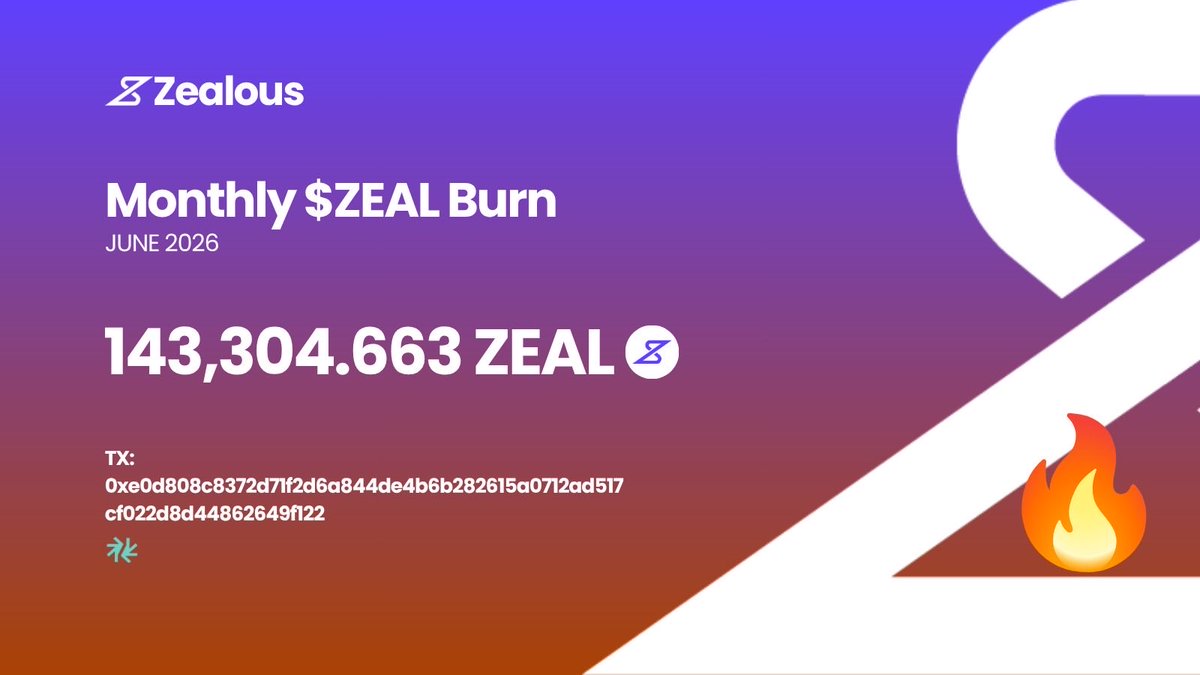
Another month, another burn.
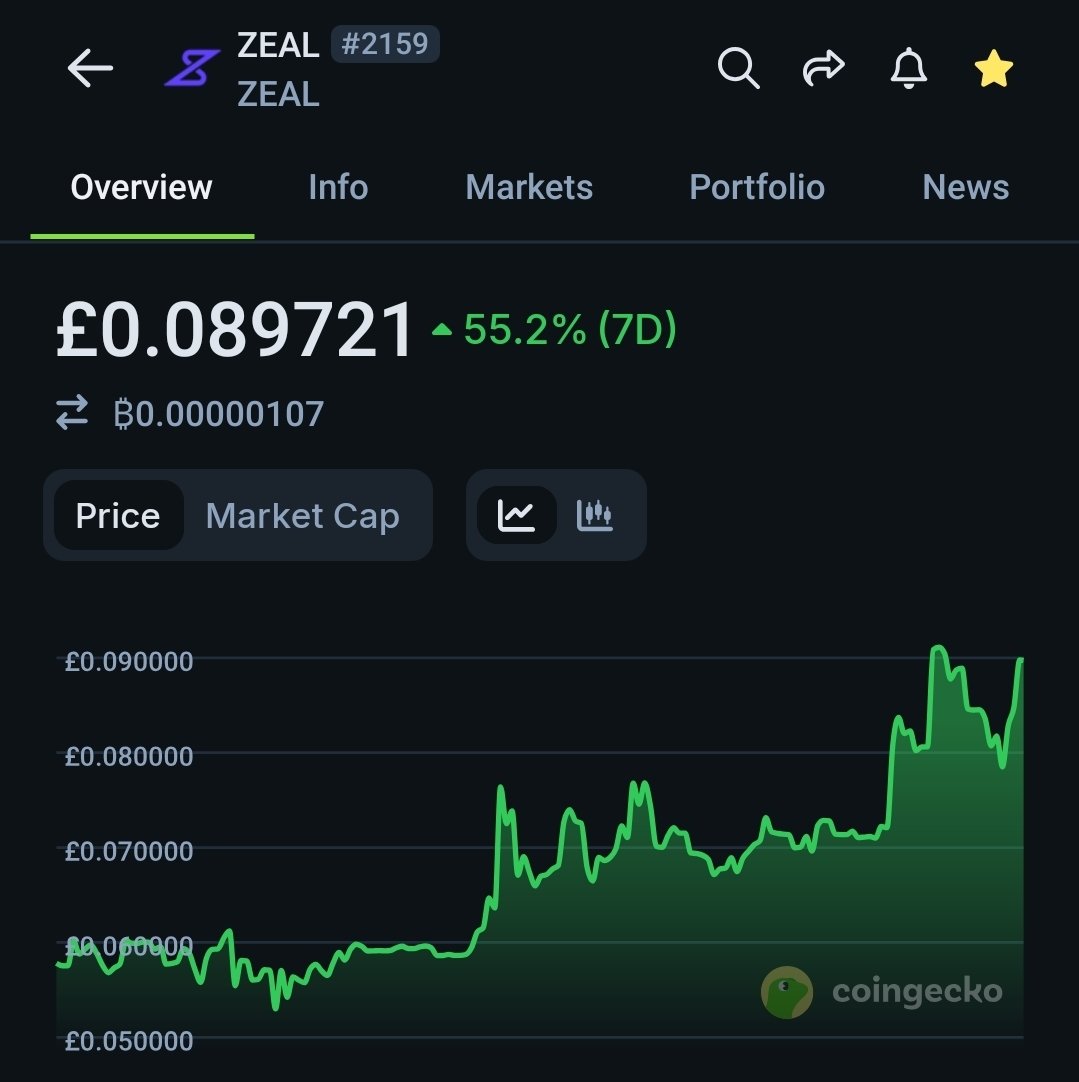
143,304.663 ZEAL permanently removed from supply.
The buyback & burn engine keeps running. 🔥
3
27
93
3,483
KaspaUK retweeted

May 29
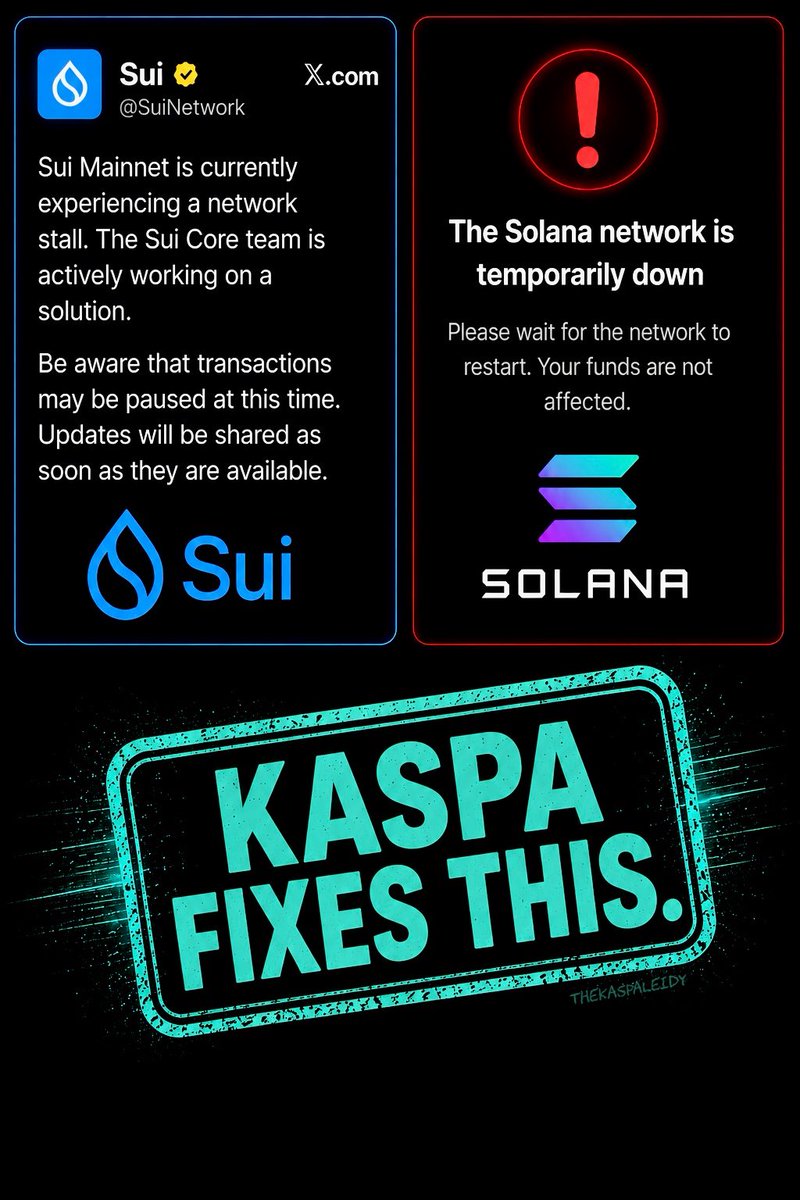
Centralized networks are trash.🚫👎🗑️ 🚮
Because when they stop working, everyone suddenly remembers they're centralized.
A decentralized network doesn't need permission to continue.
It doesn't need a rescue team.
It doesn't need a restart.
It simply keeps producing blocks and reaching consensus.
That's the difference.
Kaspa fixes this. ⚡️
Study Kaspa.
$Kas #Kaspa
7
77
240
4,119

That's a really good question, but it's hard to answer in a single tweet because our mission is quite extensive, and it requires a lot of background knowledge to really understand what sets Kaspa apart.
Currently, a lot of people see Kaspa as “Bitcoin’s crazy little brother” that improves time-to-finality by leveraging the benefits of DAG-based consensus protocols without accepting their traditional drawbacks, such as decreased decentralization or a limited validator set.
This perception is somewhat accurate, but it falls short of conveying the full picture, because Kaspa’s vision extends far beyond just trying to be a better Bitcoin.
Anyone willing to study Kaspa and its broader vision will discover similarities to nearly all major existing DLT designs: from Bitcoin, to Ethereum, to Solana, Sui, Celestia, and beyond.
My personal view is that “research” in the DLT space is approaching a point of convergence. We increasingly understand how to push distributed systems close to the limits of what physics permits. The frontier is no longer only about raw throughput or faster finality. The attention is shifting toward game theory, incentives, sequencing, MEV, alignment, and how to build systems where the economic incentives of users, builders, miners, validators, applications, and infrastructure providers do not work against each other.
That is why debates like based rollups versus arbitrary sequencing, shared sequencing, MEV mitigation, proposer-builder separation, and execution-layer incentives matter so much. These are not niche technical details. They determine whether a network can remain neutral, decentralized, and aligned while scaling to global usage.
And this is where I think Kaspa is pushing the boundaries in a very important way.
Kaspa is not merely trying to be “fast.” The goal is to build an L1 where speed, decentralization, security, and incentives are aligned at the base layer. A system that does not scale by hiding complexity behind trusted committees, privileged sequencers, centralized validator sets, or opaque coordination mechanisms, but instead tries to preserve the spirit of proof-of-work while extending what an L1 can realistically do.
Because Kaspa arrived later than many other major projects, it does not carry the same degree of technological debt. It can absorb lessons from Bitcoin, Ethereum, rollups, modular blockchains, high-throughput monolithic chains, DAG research, MEV research, and the broader history of decentralized systems, and combine those lessons into something more optimal.
To me, that is what Kaspa is building: not just a faster blockchain, but a more incentive-aligned decentralized infrastructure layer.
But this also creates a different challenge.
Kaspa’s biggest problem today is not its technology. It is the lack of centralized coordination around communicating the vision. And because Kaspa is a grass-roots movement, that responsibility does not belong to a marketing department, or a single leadership team. It belongs to the community.
That also means the community has a different role to play.
There will always be holders who are mainly interested in price, and that is completely fine. But there also need to be people who are here because they want to use the technology to build a different future. People who care about the architecture, the incentives, the open questions, the trade-offs, and the long-term trajectory of decentralized infrastructure.
I am one of those people.
I am not interested in DLTs merely as a way to generate wealth. I am interested in them because I believe they can change the trajectory of humanity as a whole.
For that reason, I want to use this opportunity to announce a regular community hangout where we discuss the current state of development, the open questions, and where we can align our vision together.
The first session will be on Tuesday, June 9th, 2026.
We will talk about the vProgs framework, how the codebase works, what sets Kaspa apart, where we improve on existing solutions, and what still needs to be done. The goal is for this to become a regular, possibly bi-weekly, event where we as a community come together to discuss the future and understand the technology.
Eventually, we can invite people from other projects as well, but the main focus at the beginning will be explaining and communicating how things work under the hood.
There is still a lot of work to be done, and I do not want to waste precious time. So the first sessions may feel a little improvised, but we can improve as we go.
The important thing is that we start.
So mark the date: Tuesday, June 9th, 2026.

Hey @hus_qy I'm very curious of something. How would you answer the question #1 "What are they building?"
What is your opinion on what Kaspa is building?
50
299
720
73,740
KaspaUK retweeted

May 26
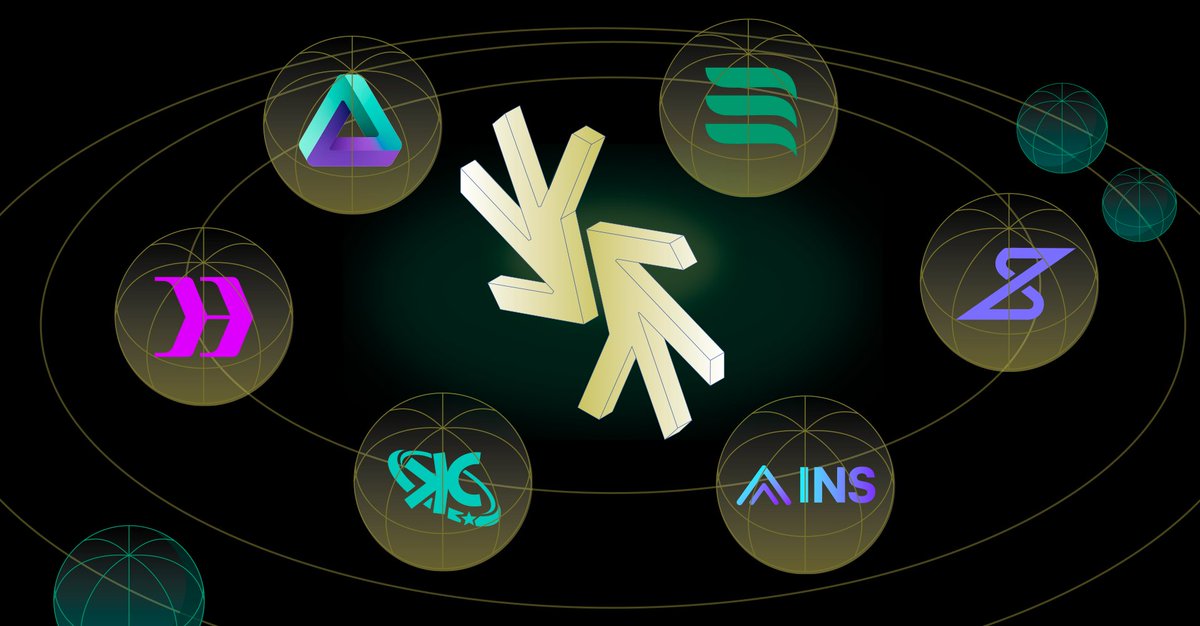
Within eight weeks of open mainnet, a working DeFi ecosystem with $4.5M in liquidity deployed on Igra:
- ZealousSwap: Uniswap v.2 AMM app.zealousswap.com/
- Kaskad: collateralization and leverage for KAS kaskad.app/
- Nuntius: TEE-based Composite Order Book oracle github.com/Kaskad-Lending/ka…
- KaspaCom: KRC-20 and L1-native DeFi, positioned for covenants post-Toccata kaspa.com/
- INS: Igra Name Service, identity primitive insdomains.org/
- Hyperlane: cross-chain warp routes nexus.hyperlane.xyz/
- Attesting protocol: 14 independent attesters with 33M IGRA staked attester-dashboard.igralabs.…
- KAT Bridge: KRC-20 to ERC-20, iKAS entries and exits katbridge.com/.
We optimize so builders ship faster by working directly with core and ecosystem teams.
Come build with us.
t.me/IgraCommunity | discord.com/invite/igralabs
14
89
313
8,310
KaspaUK retweeted

May 18
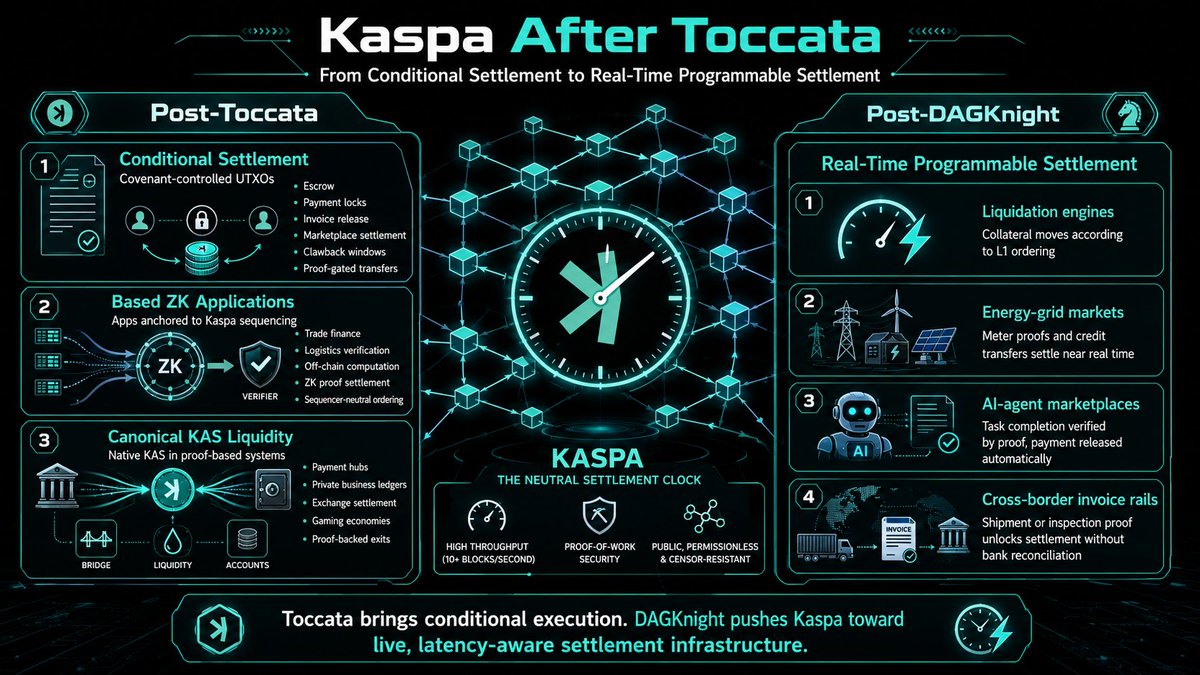
The biggest realistic post-Toccata use case for Kaspa is conditional settlement, not generic “smart contracts.” Toccata gives Kaspa covenant-based L1 programmability, SilverScript, ZK verification opcodes, sequencing commitment access, and KIP-21’s partitioned sequencing commitments. That means the practical first wave is likely covenant-controlled UTXOs: escrow, vaults, payment locks, staged invoice release, marketplace settlement, clawback windows, native asset controls, and proof-gated transfers where the L1 validates spending conditions without becoming an Ethereum-style global-state VM. This is useful because it keeps Kaspa’s execution surface local to UTXOs while still allowing complex stateful flows.
The second major use case is based ZK applications anchored to Kaspa sequencing. A realistic example would be a trade-finance or logistics application posting transaction data to Kaspa, letting off-chain provers compute the business logic, then submitting a ZK proof showing the state transition was valid. The important part is that the app follows L1 ordering instead of an external sequencer’s order, so the app cannot arbitrarily add, censor, or reorder transactions outside Kaspa’s accepted sequence. That makes Kaspa valuable as a neutral settlement clock for applications that need auditability, but not full public execution.
The third major use case is canonical KAS liquidity inside ZK systems. Entry and exit mechanics can allow native KAS to move into an L2-style environment as a 1:1 bridged asset, while exits require proof-backed authorization. That points toward payment hubs, private business ledgers, exchange settlement layers, gaming economies, and asset systems where KAS remains the collateral and settlement asset rather than being replaced by wrapped liquidity controlled by a multisig bridge.
Post-DAGKnight, the usage profile changes from “programmable settlement” to real-time programmable settlement. DAGKnight is intended to make confirmation adapt to actual network conditions rather than rely on fixed assumptions, pushing Kaspa closer to latency-aware proof-of-work settlement.
Examples become sharper: a liquidation engine can trigger collateral movement against L1 ordering without trusting a sequencer; an energy-grid market can settle meter proofs and credit transfers near real time; an AI-agent marketplace can escrow payment, verify task completion by proof, and release funds automatically; a cross-border invoice rail can lock KAS, wait for shipment or inspection proof, then release settlement without banks reconciling private ledgers. Toccata gives Kaspa conditional execution. DAGKnight makes that execution feel like live infrastructure instead of delayed blockchain accounting.
11
86
242
9,610
KaspaUK retweeted

May 18
$KAS Toccata hardfork test on testnet-10 was a succuss. Onwards towards mainnet! Official date details coming soon!

53
310
1,183
70,751
KaspaUK retweeted

May 18
checkmate is coming to kaspa
May 18

$KAS Toccata hardfork test on testnet-10 was a succuss. Onwards towards mainnet! Official date details coming soon!
47
285
1,063
35,467
KaspaUK retweeted
May 16
Toccata, Kaspa's next consensus upgrade, is currently targeted for mid to late June.
Here's what it means for the ecosystem and for Igra.
What is Toccata?
Toccata is the first major Kaspa hard fork since Crescendo. It is a foundational shift towards new L1-native primitives and a stronger base for the execution layers built on Kaspa.
What features does Toccata add to Kaspa L1?
- Covenants: Kaspa-native primitives for enforcing how KAS can be spent. Enables future native L1 assets and vault-like designs.
- ZK opcodes: Groth16 and RISC Zero STARKs verification on Kaspa. Cryptographic groundwork that future capabilities like vProgs and trust-minimized bridges will build on.
- Partitioned sequencing: application-specific lanes that let L1 applications and execution layers maintain isolated transaction history. This scales L1 by isolating each application's data.
How does Toccata relate to rollups?
These primitives are additive to existing execution architectures on Kaspa. EVM rollups like Igra already operate on Kaspa. L1-native capabilities advance in parallel: native Kaspa assets, including potential native stablecoins, become possible as the primitives mature.
What does it mean for Igra?
Several changes for teams integrating with Igra at the L1 level:wy Igra release. We are migrating from txid_mask grinding to a dedicated IGRA lane with updated ATAN storage format and deployment tooling. We are integrating with TN12 and TN10 (where the DAA score transition will be tested) and runnwing our own devnet on the Toccata branch for repeated fork simulation.
What does it mean for the Igra ecosystem?
Several changes for teams integrating with Igra at the L1 level:
- Code that filters or searches for Igra transactions on L1 will need to add a subnet check.
- Code that generates Igra entry transactions (wallets, bridges) will need to include the correct subnet.
More details here: t.me/IgraCommunity/7263/1229…
We're considering a transition period to support the current prefix alongside the new subnet requirement; we'll communicate the decision as it firms up.
What's the timeline for integration on Igra?
Igra's Frigate testnet for Toccata integration will be available end of May. Expect several weeks of testing to validate the integration. If you're building on Igra, or plan to, reach out and we'll get you set up.
What does it mean for Igra users and holders?
Your iKAS and all other assets are safe. All bridges and protocols remain operational throughout the testing and upgrade window. Igra has navigated complex mainnet operations before with no asset loss, and we are preparing redundant testing infrastructure to simulate the fork transition extensively before mainnet deployment. No action required from you during this period.
We will keep you informed at every step.
Questions or comments? Please join our socials. Telegram: t.me/IgraCommunity
Discord: discord.com/invite/igralabs
Email: team@igralabs.com
10
141
511
13,363
KaspaUK retweeted
May 17
Introducing Flow: trade on-chain in a flow, not a race.
A new on-chain spot market built around continuous clearing, where limit orders match around one shared market price with live fills over time.
No LPs. No market makers. No solvers.
Testnet launches this June on @Igra_Labs
14
59
170
12,431
KaspaUK retweeted
May 17
Here we go again: rehearsing a major hardfork on testnet 10, this time crescendoing into Toccata
Activation is scheduled for tomorrow May 18, 16:00 UTC.
Existing TN10 miners/operators should upgrade now. In a few hours upgraded p2p nodes will stop connecting to non-upgraded nodes as we enter the 24h pre-activation window.
Let’s make the mainnet activation boring by making the TN10 rehearsal as mainnet-real-world as possible
May 17

The Toccata hardfork stack is now ready, and we’re entering the final stage before mainnet activation: a full hardfork activation on Testnet-10. The scheduled activation point is: May 18, 2026, 16:00 UTC DAA Score: 467_579_632
Everyone is welcome to join and mine on testnet, so we can verify the transition works fine before mainnet activation.
I wrote detailed instructions for joining as a testnet miner (Link in reply)
43
324
992
62,893
KaspaUK retweeted

7 Feb 2021
I'm alive, I just lost my private key
35
202
731