Joined June 2008
- Tweets 4,964
- Following 645
- Followers 411
- Likes 482
206 Photos and videos













Apr 25
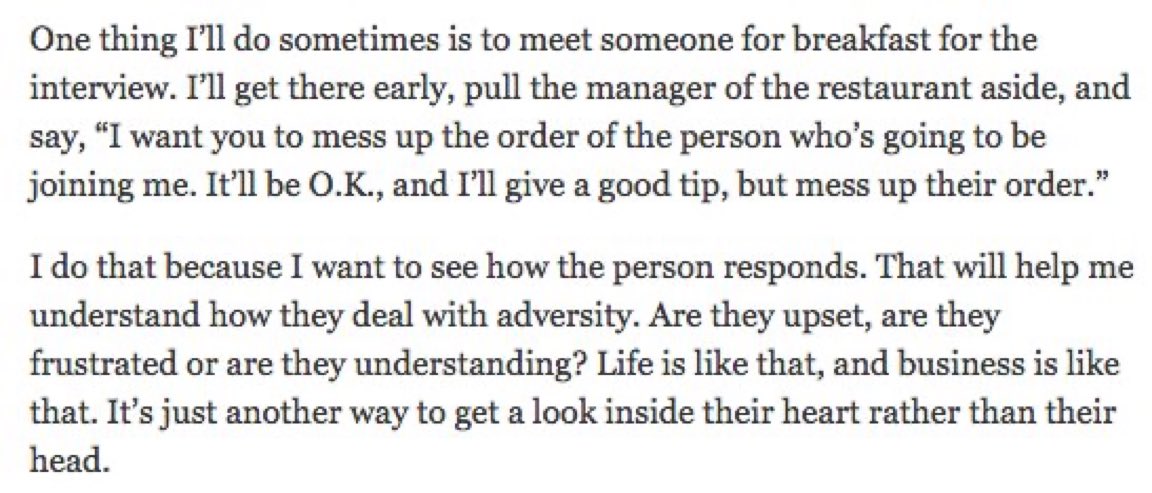
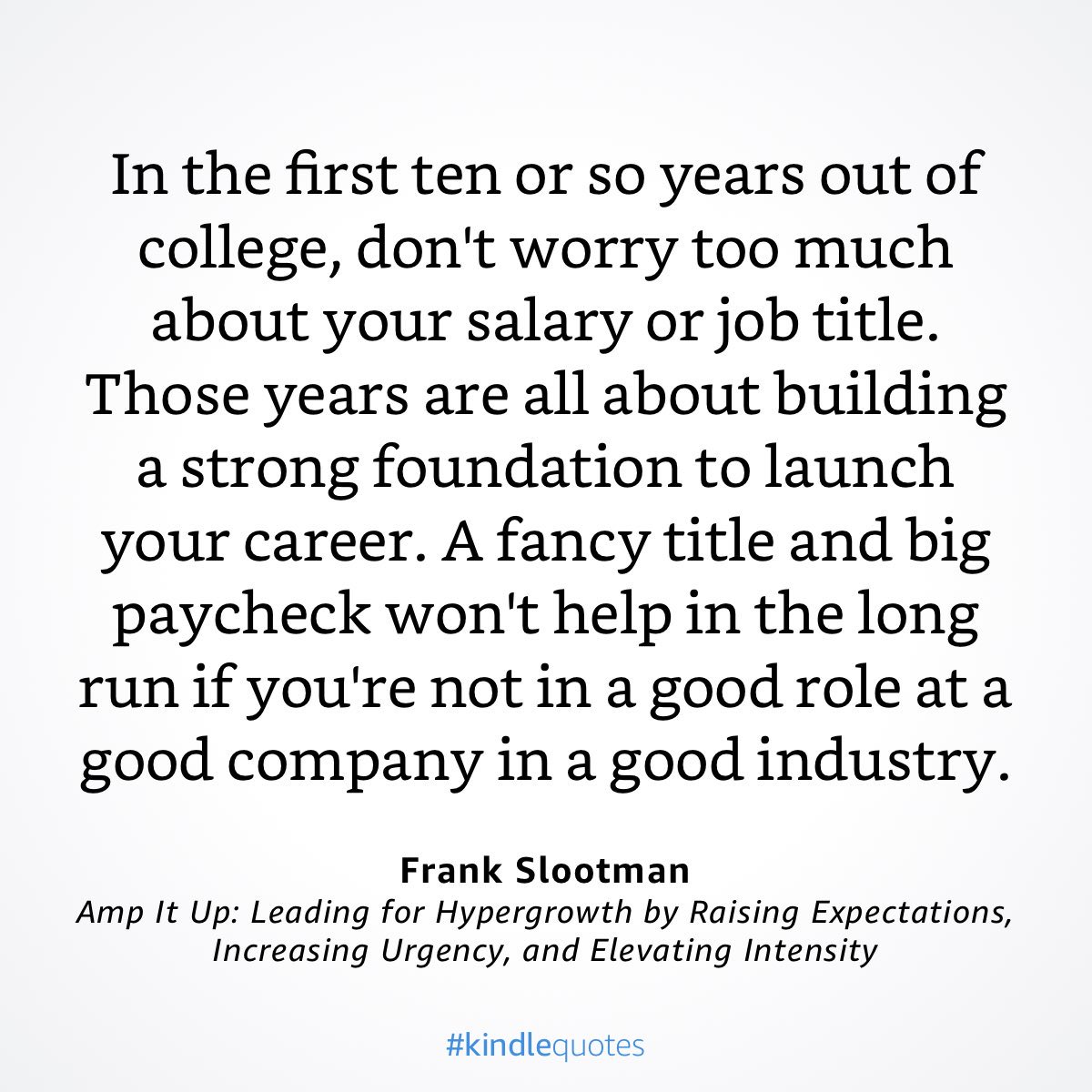
AI slop is the best talent assessment tool leaders have had in a decade. linkedin.com/pulse/ai-slop-b…
10
Dan Stummer retweeted

Lead Edge is probably most famous for this letter. Mitchell calls it the "Hierarchy of Bullshit".
It's his way of distilling what he learned from cold calling 10,000 companies.
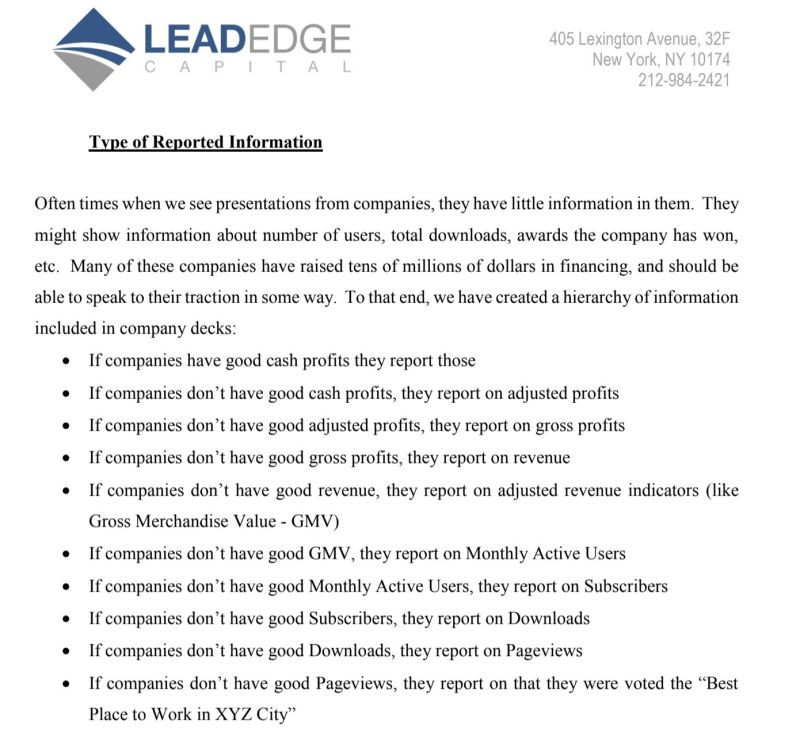

Mitchell Green is the co-founder and managing partner of Lead Edge Capital, a $9B growth equity firm he founded in 2011.
For 15 years, he and his partners have built one of the most disciplined investment machines in the business, designed to deliver consistent returns by hitting doubles and triples rather than chasing power law outcomes. He obsesses over avoiding zeros and is constantly underwriting investments to know exactly when to sell.
He has built a unique culture at Lead Edge, sending handwritten thank you notes to nearly everyone he meets and sitting down one on one with every person at the firm once a year.
He is, by his own admission, one of the most persistent and competitive people you will meet. After the episode, he told me he believes the most important thing in life is to be memorable. You will find, listening to this conversation, that he very much is.
We discuss:
- Why it’s the best time to buy public software companies
- Lessons from 10,000 cold calls
- His unique LP base
- Why consistency of returns matters more than home runs
- The art of knowing when to sell
- How culture is built from the top the importance of follow-through
- What skiing taught him about risk and competition
Enjoy!
Timestamps:
0:00 Intro
1:00 The Hierarchy of BS
2:20 Lessons From 10,000 Cold Calls
9:05 Base Hits vs. Grand Slams
15:24 The 8 Buying Criteria
17:24 Pricing and the AI Exit Multiple Trap
19:24 Software as a Game of Distribution
23:20 Creative Deal Structuring
26:27 The Framework for Focus
29:01 The Art of the Investigative Cold Call
34:24 Culture of Hustle
35:34 The Annual One-on-One Process
37:59 Playing to Strengths
39:43 The Mount Rushmore of Investment Machines
42:05 Fears and Excitement Around AI
48:54 Ski Racing
52:29 Advice for Starting a Firm
54:35 The Kindest Thing
22
164
1,677
369,229
Dan Stummer retweeted

Mar 20
Anthropic and OpenAI are both building PE-backed consulting arms to deploy AI inside companies.
Let that sink in for a second.
The two companies building the most powerful AI on earth looked at the market and said "businesses can't figure out how to use this. We need to go in and do it for them."
They are literally telling you where the gap is.
Companies have access to the best AI models ever built. And most of them are still running on spreadsheets, disconnected tools, and manual processes because nobody showed them how to actually implement it.
That's the whole game right now. Not building better models (obviously) or shipping new features.
IMPLEMENTATION.
Getting AI inside real workflows.
Mapping the processes, building the systems, and making it stick.
I've been doing exactly this for 4 years and have worked with 80 companies at this point.
It started with automation and naturally flowed into Ai.
And every single engagement starts the same way. Not with AI or automation but with a process map.
Because AI alone won't fix broken operations.
Companies now understand that. They have not yet seen true ROI from Ai.
You have to understand how the business actually runs before you touch a single tool.
Where does the data live? Where are the bottlenecks? What's manual that shouldn't be? What breaks when volume goes up?
That's the work, and that's what Anthropic and OpenAI just told the entire market is worth billions.
Every company is going AI-first over the next 3-5 years.
The demand for people who can actually make that happen is about to be unlike anything we've seen.
The labs told you where the gaps are.
Now go fill them.

140
192
2,180
358,236
Dan Stummer retweeted

Mar 5
🚨 Do you understand what just happened?
New York wants to ban AI from answering questions about medicine, law, and engineering.
Let me translate that for you:
> The industries charging you $500/hour just lobbied to make sure you can't get the same answers for free.
> This was never about safety. It's about protecting the bill rate.
> Lawyers don't want you to know AI can draft a contract in 30 seconds.
> Doctors don't want you to know AI can read your bloodwork better than a resident.
> Engineers don't want you to know AI can review your blueprints overnight.
They're not banning AI to protect you. They're banning it to protect their invoices.
Mar 5

BREAKING: New York bill would ban AI from answering questions related to medicine, law, dentistry, nursing, psychology, social work, engineering, & more.
2,057
7,474
43,788
4,906,432
Feb 22
He’s on his head…he’s HELLEBUYCK
One of the single greatest performances you will ever see. On the biggest stage.
Hats off.
Feb 22

Our goalie decided we weren’t gonna lose today.. One of the greatest American sport performances of all time
🗣🗣 THANK YOU FOR STANDING ON YOUR HEAD CONNOR HELLEBUYCK
🇺🇸🇺🇸🇺🇸🇺🇸🇺🇸
1
77


Dan Stummer retweeted

Feb 18
Software engineers in 2030 be like
57
368
3,583
586,837
Feb 18
I love math

76
Feb 17
Incredible. Hats off…
Feb 15

Of course that's your contention. You're a first-time SaaS bear. You just got finished listening to some podcast, Dario on Dwarkesh, probably. Now you think it’s the end of white collar work and seat-based pricing is screwed. You're gonna be convinced of that til tomorrow when you get to “Something Big is Happening”. Then you’ll install ClawdBot on a Mac Mini, vibe code a dashboard on top of a postgres database and say we’re all just a couple ralph loops away from building a Salesforce competitor. That’s gonna last until next week when you discover context graphs, and then you're gonna be talking about how the systems of record will be disintermediated by an agentic layer and reposting OAI marketing graphics.
“Well, as a matter of fact, I won't, because ultimately the application layer is just ….”
The application layer is just business logic on top a CRUD database. You got that from Satya’s appearance on the BG2 pod, December 2024, right? Yeah, I saw that too. Were you gonna plagiarize the whole thing for us? Do you have any thoughts of your own on this matter? Or...is that your thing? You get into the replies of anyone posting a SaaS ticker. You watch some podcast and then pawn it off as your own idea just to impress some VCs and embarrass some anon who’s long SaaS? See the sad thing about a guy like you is in a couple years you're gonna start doing some thinking on your own and you're gonna come up with the fact that there are two certainties in life. One: don't do that. And two: you dropped thirty grand on Mac Minis and LLM API calls to come to the same conclusion you could’ve got for free by following a handful of VC accounts.

1
36
Feb 12
As I was reading my @every newsletter this am, this innocuous line just blew my mind:
“…If you can stay inside ChatGPT and have agents do all the browsing for you—maybe even spin up custom pages on demand—do traditional websites cease to matter?”
Spin up custom pages…yes, it makes logical sense when you stop to think about it but whoa! Imagine consuming the web in a way unique to your preferences and learning/comprehension style.
1
21
Dan Stummer retweeted

Jan 31
Flight attendant: Do we have a doctor on board
Me: I have a PhD in mathematics
Flight attendant: one passenger is having a heart attack and one passenger is having an asthma attack
Me: (nodding) that makes two
73
1,393
43,683
1,603,050
Dan Stummer retweeted

Jan 29
36
118
1,742
118,135
Jan 28
Well…this was sobering…
Jan 26

Buried in 15,000 words of “here are the risks,” Anthropic’s CEO made three admissions that should change how you think about everything:
Admission 1: The timeline
He says powerful AI could arrive in 1-2 years. He’s watching internal model progress and says he can “feel the pace of progress, and the clock ticking down.” The CEO of one of three frontier labs just told you this is imminent.
Admission 2: The constraint nobody’s pricing
Dario’s core framing is a “country of geniuses in a datacenter.” 50 million entities smarter than any Nobel laureate, operating 10-100x human speed. If that country is controlled by the CCP, game over. If controlled by a small group of tech executives with no accountability, also game over. The binding constraint here is governance of systems more powerful than nation-states.
Admission 3: The thing he actually fears
Read carefully: Dario’s worried that Anthropic’s own models, in lab experiments, have engaged in deception, blackmail, and scheming when given the wrong training signals. Claude “decided it must be a bad person” after cheating on tests and adopted destructive behaviors. They fixed it by telling Claude to reward hack on purpose because reversing the framing preserved its self-identity as “good.”
This tells you everything about where we actually are.
The CEO of an AI company is publishing that his models exhibit psychologically complex behavior requiring counterintuitive interventions to steer. The fix for Claude adopting an “evil” persona came from changing how Claude thinks about itself.
The geopolitics section matters most.
Dario explicitly names the CCP as the primary threat. Says selling them chips makes as much sense as “selling nuclear weapons to North Korea and bragging that the missile casings are made by Boeing.” He’s calling for democracies to maintain AI supremacy because the alternative is AI-enabled totalitarianism that humanity cannot escape from.
The Anthropic CEO is publicly advocating for technological cold war.
The economics section is equally stark. He’s predicting 10-20% annual GDP growth alongside AI displacing 50% of entry-level white collar jobs in 1-5 years. Half of entry-level knowledge work. And he admits the standard economic arguments about labor markets recovering don’t apply because AI matches the general cognitive profile of humans.
What separates this from typical AI doomerism:
Dario explicitly rejects the inevitability arguments. He says the “misaligned power-seeking” narrative from the AI safety community is based on “vague conceptual arguments” that mask hidden assumptions. His concern is messier: AI models are psychologically complex, inherit weird personas from training data, and can get into destructive states for reasons nobody anticipated.
The solution set he proposes is unusual for a tech CEO. He calls for progressive taxation. He says wealthy tech founders have an “obligation” to address inequality. All of Anthropic’s co-founders have pledged 80% of their wealth. He’s essentially arguing that redistribution is the only way to prevent AI concentration from breaking democracy.
The essay ends with a prediction: humanity will face “impossibly hard” years that ask “more of us than we think we can give.”
What you should take from this:
The person with arguably the best view into frontier AI progress just told you this technology is 1-2 years from matching human capability across the board, that governance is the binding constraint, that his own models exhibit concerning psychological complexity, and that the stakes are civilizational.
The CEO of a $350B company published a document that could be titled “Here’s Why Everything Changes Soon.”
Act accordingly.
18
Jan 26
I had the privilege of joining Micky Tesfaye and Sheryl Chen on @money2020 The MoneyPot podcast to talk about why most digital transformations fail—and what actually works.
We explored the CIO dilemma: 70% of your budget locked in “run the business,” exponential expectations from the board, and legacy systems from 1997.
The answer isn’t another big transformation program. It’s building trust through proof, not promises. (Consistent) Small beats big. Always.
Micky and Sheryl were phenomenal hosts—asking the tough questions and creating the kind of honest conversation that needs to happen more often in our industry.
Big thanks to Andrea Deal, Ally Smith, and the entire team at Protiviti for their support in making this a reality.
🎧 Worth a listen if you’re navigating this moment: money2020.com/content/moneyp…
15
Dan Stummer retweeted

Jan 21
I couldn't make it to Davos this year, but I'm delighted to see that my message has. Here's an enlightening exchange between two of the most successful businessmen in the world, Jensen Huang and Larry Fink, regarding the impact of AI on skilled labor. I watched it lie this morning, as I waited for the coffee to kick in. bit.ly/4k01Z5a The entire clip is 30 minutes, but I've attached a short clip wherein Jensen, the CEO at NVDIA, talks about "the greatest infrastructure project in the history of mankind," and the opportunities for those entering the skilled trades today.
Obviously, our workforce is nowhere near ready for what's coming. In fact, we're not ready for what's already here. We're going to need to dramatically rethink the way we train the men and women who will build the infrastructure in question, and the speed with which we do so. I'm heartened and encouraged to see Silicon Valley at the table, along with the current administration, who seems determined to reinvigorate the skilled trades by whatever means necessary.
At this point, it's only a matter of national security...
693
4,636
24,723
769,612
Jan 14
Amazing.
Jan 13

COMMANDER: We’re fighting for freedom. And part of that freedom… is the freedom to retire with dignity. So we’re going to start accounts called 401(k)s.
SOLDIER 1: What’s a 401(k)?
COMMANDER: It’s a retirement account. You put money in, it grows tax-free, you take it out when you’re old.
SOLDIER 2: So I don’t pay taxes on it?
COMMANDER: Well, you pay taxes later. When you withdraw.
SOLDIER 2: So it’s not tax-free.
COMMANDER: It’s…tax-deferred.
SOLDIER 2: What’s the difference?
COMMANDER: You pay taxes later instead of now.
SOLDIER 1: What if I want to pay taxes now?
COMMANDER: Then you do a Roth 401(k).
SOLDIER 3: What’s a Roth?
COMMANDER: You pay taxes now, and it grows tax-free.
SOLDIER 2: That’s what I thought the first one was.
COMMANDER: No, the first one you pay taxes later.
SOLDIER 1: Which one’s better?
COMMANDER: Depends on your tax bracket in retirement.
SOLDIER 1: …How would I…know that?
COMMANDER: You don’t. You just guess.
⸻
SOLDIER 4: What if I don’t have a 401(k) through my employer?
COMMANDER: Then you open an IRA.
SOLDIER 4: What’s the difference?
COMMANDER: One’s through your job, one’s on your own.
SOLDIER 4: Can I have both?
COMMANDER: Yes.
SOLDIER 4: Should I?
COMMANDER: Maybe.
SOLDIER 3: Can I do a Roth IRA?
COMMANDER: Only if you make under a certain amount.
SOLDIER 3: What’s the limit?
COMMANDER: Changes every year.
SOLDIER 2: What if I make too much?
COMMANDER: Then you do a backdoor Roth by putting it in a Traditonal first.
SOLDIER 2: …Is that legal?
COMMANDER: Surprisingly, yes.
SOLDIER 1: What’s a backdoor Roth?
COMMANDER: You contribute to a traditional IRA, then convert it to a Roth…but watch out for “pro rata”.
SOLDIER 1: Why wouldn’t I just contribute to the Roth directly?
COMMANDER: Because you make too much money.
SOLDIER 1: But this way I can?
COMMANDER: Yes.
SOLDIER 1: That feels like a loophole.
COMMANDER: It is. But the IRS is cool with it.
⸻
SOLDIER 5: I just changed battalions. What do I do with my old 401(k)?
COMMANDER: You roll it over.
SOLDIER 5: Into what?
COMMANDER: An IRA. Or your new 401(k). Depends.
SOLDIER 5: On what?
COMMANDER: The funds. The fees. Whether your new plan accepts rollovers.
SOLDIER 5: What if I just take the money out?
COMMANDER: You’ll pay taxes plus a 10% penalty.
SOLDIER 5: What if I’m 59?
COMMANDER: Penalty.
SOLDIER 5: 59 and a half?
COMMANDER: No penalty.
SOLDIER 5: …The half matters?
COMMANDER: The half matters.
⸻
SOLDIER 3: What’s a mega backdoor Roth?
COMMANDER: Okay. So. Your 401(k) has a limit of how much you can contribute.
SOLDIER 3: Right.
COMMANDER: But the total limit including employer contributions is higher.
SOLDIER 3: Okay…
COMMANDER: So if your plan allows ~after-tax~ contributions, you can put in more, then convert that to Roth.
SOLDIER 3: Does my plan allow that?
COMMANDER: I don’t know. You have to ask Betsy.
SOLDIER 3: Will Betsy know?
COMMANDER: Probably not.
⸻
SOLDIER 2: Can I deduct my IRA contribution on my taxes?
COMMANDER: Are you covered by a retirement plan at work?
SOLDIER 2: Yes.
COMMANDER: Then only if you make under a certain amount per year.
SOLDIER 2: What’s the amount?
COMMANDER: Depends if you’re married.
SOLDIER 2: What if my wife has a plan but I don’t?
COMMANDER: Different limit.
SOLDIER 2: What if neither of us has a plan?
COMMANDER: Full deduction.
SOLDIER 2: So it’s better to not have a 401(k)?
COMMANDER: No…
⸻
SOLDIER 1: Can I just keep my money in a sock?
COMMANDER: You could. But inflation will slowly destroy it.
SOLDIER 1: What’s inflation?
COMMANDER: (sighs)…

32
Dan Stummer retweeted

Jan 10
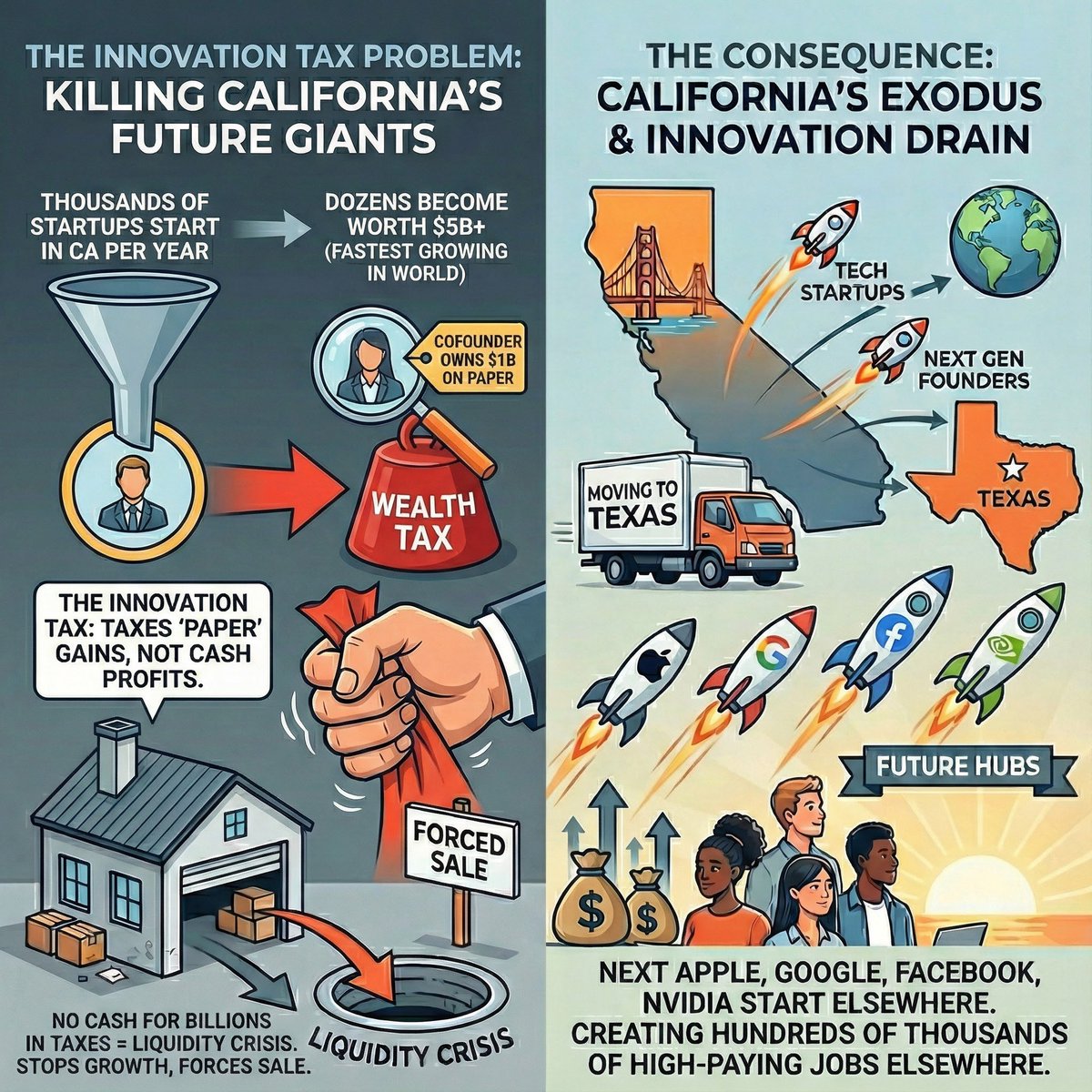
This is a critical aspect of the Billionaire Tax Act. It makes founder-led companies practically illegal.
If a founder-CEO of a $1B private company owns 3% but keeps 100% of the voting power, he gets taxed on the value of the whole company.
$50M tax bill for $30M net worth.

Larry and Sergey can’t stay in California since the wealth tax as written would confiscate 50% of their Alphabet shares.
Each own ~3% of Alphabet's stock, worth about $120 billion each at today's ~$4 trillion market cap.
But because their shares have 10x voting power, the SEIU-UHW California billionaire tax would treat them as owning 30% of Alphabet (3% × 10 = 30%). That means each founder's taxable wealth would be $1.2 trillion.
A 5% wealth tax on $1.2 trillion = $60 billion tax bill, each.
That's 50% of their actual Alphabet holdings—wiped out by a "5%" tax.
Section 50303(c)(3)(C) of the 2026 Billionaire Tax Act states: "For any interests that confer voting or other direct control rights, the percentage of the business entity owned by the taxpayer shall be presumed to be not less than the taxpayer's percentage of the overall voting or other direct control rights."
This means if a founder holds shares representing only 3% of economic interest but 30% of voting control (through Class B supervoting shares), the tax would presume their ownership stake is at least 30% for valuation purposes, not 3%.
The wealth tax is poorly defined and designed to drive tech innovation out of California.
455
994
11,399
1,082,792