
UX engineer building offensive security tools @dreadnode. weak opinions, strongly held
Joined March 2009
- Tweets 7,811
- Following 1,341
- Followers 494
- Likes 8,379
210 Photos and videos








Pinned Tweet

Feb 18
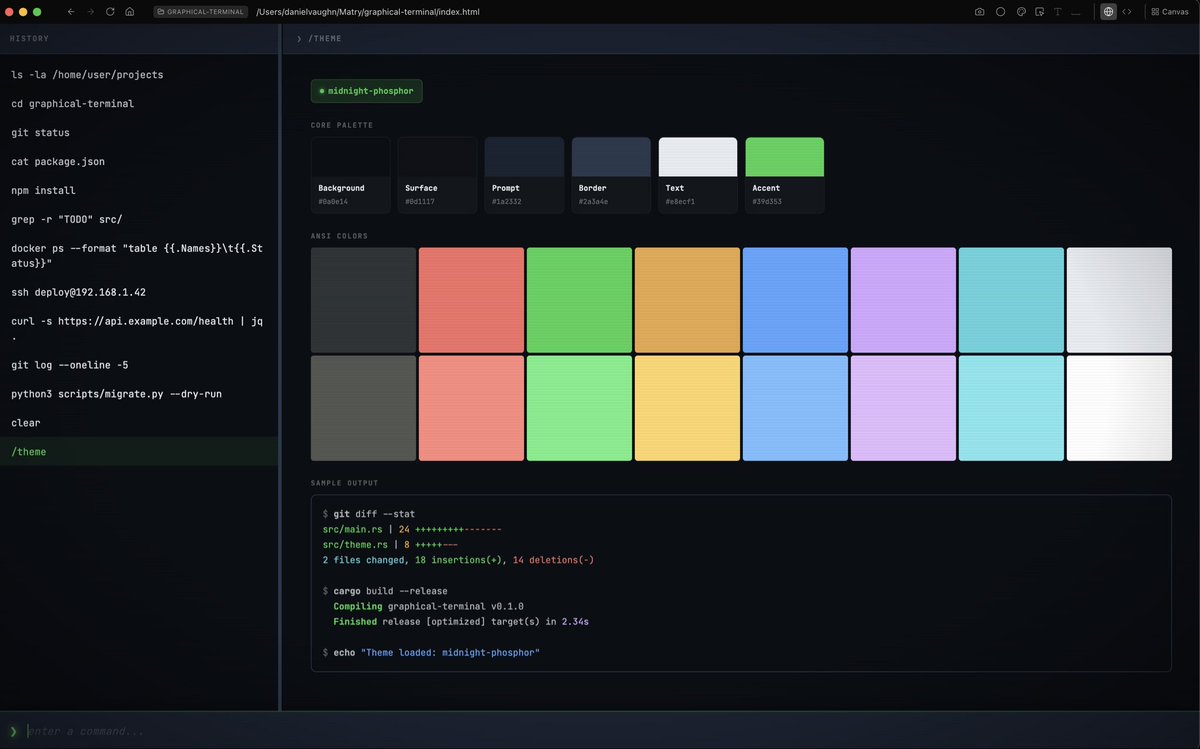
Spent years building Matry as a coding tool for designers. Then Cursor and Claude Code made it redundant.
But they aren’t really built for designers, so what should the next design tool look like?
I think it looks like a browser.
waitlist here → matry.design
1
1
4
566
I’m willing to be convinced that this is real, but unless each those of those frames are videos, there’s no way that page is going to run at more than like 2 frames per second. iykyk

Introducing Omma Canvas.
First-ever massive parallel agent generation.
Trigger up to 100 agents in parallel on a canvas to build real sites, web apps, and more.
44
Guess I’m gonna have to buy a PC now
Jun 17

Unreal Engine 5.8 ships today with experimental MCP server support:
Your sources, your pipeline and your workflow—simply configure the MCP plugin and connect to any agent. Get familiar with the MCP server and the PCG Primitive Plugin today and see what teams can build together: epic.gm/ue-5-8-blog
45
Jun 17
Dreadnode is the coolest company I’ve ever worked for and it’s not even close.
Jun 17

🎬 Black Hat USA Speaker Spotlight Series: Meet Martin Wendiggensen, AI Research Scientist at Dreadnode, in our latest #BHUSA Speaker Spotlight as he tackles three key questions:
👉 What are you most excited about at Black Hat USA?
👉 What will your session focus on?
👉 What’s one key takeaway attendees can expect?
🔥 Don’t miss #BHUSA Briefing, “Catch Me If You Can: AI Investigators Hunting Autonomous Attackers as a Benchmark”—a cutting-edge look at how defenders can evaluate and challenge the next generation of autonomous, AI-driven cyber threats 🤖🕵️♂️
As offensive AI capabilities evolve, this session explores how AI investigators can be designed to track, test, and benchmark attacker behavior—bringing a new level of rigor to security evaluation and resilience.
🔗 Learn more: bit.ly/4fQAJ93
#BHUSA #Cybersecurity #AI
2
27
Jun 17
Jun 17

I have never slept next to Kate.
The only thing we do in bed is have sex.
We have separate beds and homes.
Should you do the same? Not necessarily. The science is split. Here's the data:
1) Your partner does wake you up when you sleep together.
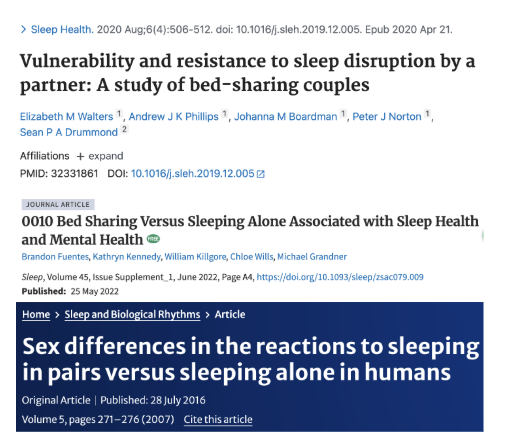
7 nights of actigraphy sleep measurement in 55 couples (aged 18 to 72, no sleep disorders) showed about 6 partner triggered awakenings per night, on average. Roughly 1 in 5 of wake ups was set off by the partner stirring first, and participants slept through only about half of their partner’s awake time.
The catch: the study never compared sharing a bed to sleeping alone.
2) Yet couples who sleep together report sleeping better.
A survey of about 1,000 adults found that sharing a bed with a partner tracked with less insomnia, less fatigue, more sleep, and better mental health than sleeping alone.
The catch: self-reported, cross-sectional, no follow-up. Healthier, happier people may simply be the ones more likely to share beds, so this is associative at best.
3) Women's sleep might take the hit from sharing a bed.
A study of 10 couples had each person sleep at least 10 nights alone and 10 nights together. Women slept measurably worse with a partner in the bed, on both actigraphy and their own ratings. Men reported sleeping better, subjectively.
4) Polysomnography, the gold standard for measuring sleep and sleep stages, points to REM gains with co-sleeping.
A study of 12 couples found co-sleeping came with about 10% more REM sleep, less fragmented REM, longer undisturbed REM runs, and tighter sleep-stage syncing between partners, alongside more limb movement.
5) Synced sleep tracks with lower blood pressure and inflammation.
In 46 couples that slept together, the more in sync their sleepwake timing, the lower their sleeping blood pressure (strongest in women) and the lower their inflammation (both sexes). The link held even after adjusting for how often they actually shared a bed, so the driver looks like the synchrony, not sharing the bed.
Only two of these studies compared the same person in both beds, and both are tiny: 10 and 12 couples. One found the result flips by sex. The rest is correlation. The answer is individual. For some couples the shared bed improves sleep. For others, separate beds are the right move.
56
Jun 16
A few years ago I was actively working on a JS UI framework that was specifically built to be leveraged by design tools.
I’m thinking it might be time to revive that effort.
23
Jun 15
following both tech and video games on here makes it kinda hard to know which fable we’re talking about
27
Jun 15
god this is so true

This is good actually. The less you know about programming, the less reason you have to overcomplicate things. There is an annoying Bell Curve kind of situation in programming where you spend decades studying just to realize that whatever dumb shit you were doing in the beginning is the right way.
45
Jun 14
Yep. I (and I think a lot of others) are sick of reading heaps of generated text. It’s exhausting.
That’s not just on designers - a lot of what I read on a day-to-day is generated code review, generated planning, generated spec, etc. I don’t like it.

Design briefs used to be perfect because they were imperfect but real.
Now they’re pages and pages of meaningless words and imagery (which is generated slop most of the time).
To anyone briefing creatives;
Write the brief yourself.
The output will be much better.
35
Jun 14
yes
Jun 13

sry but indiehackers who are also parents and family ppl are in a different league
fuck outta here with your unlimited free time, 8hrs of sleep and empty calendars
42
Jun 13
Doing yard work and having your toddler try to help you is a top-tier life experience.
23


Jun 12
I’ve been building a tool very similar to this. One thing to note is that real html on real websites can be extremely ugly. Not even ugly for reading, just like…divs that do nothing, boxes that don’t align, all sorts of terrible awful stuff.

Imagine a world where you could copy/paste websites into editable Figma layers (jk you don’t have to imagine you can do this now with our Chrome extension)
1
68
Jun 12
It’s interesting how different the reaction is from the design world compared to the dev world.
The web has long been an open platform that lets anyone pick apart the source code for websites. It’s one of the best parts of the platform, and it’s how a lot of us got started.
Jun 12

I can’t believe we live in a world where copying other people’s work has become so normalized that companies like Figma actively build products to make you more efficient at it.
2
60
Daniel Vaughn retweeted

Jun 11
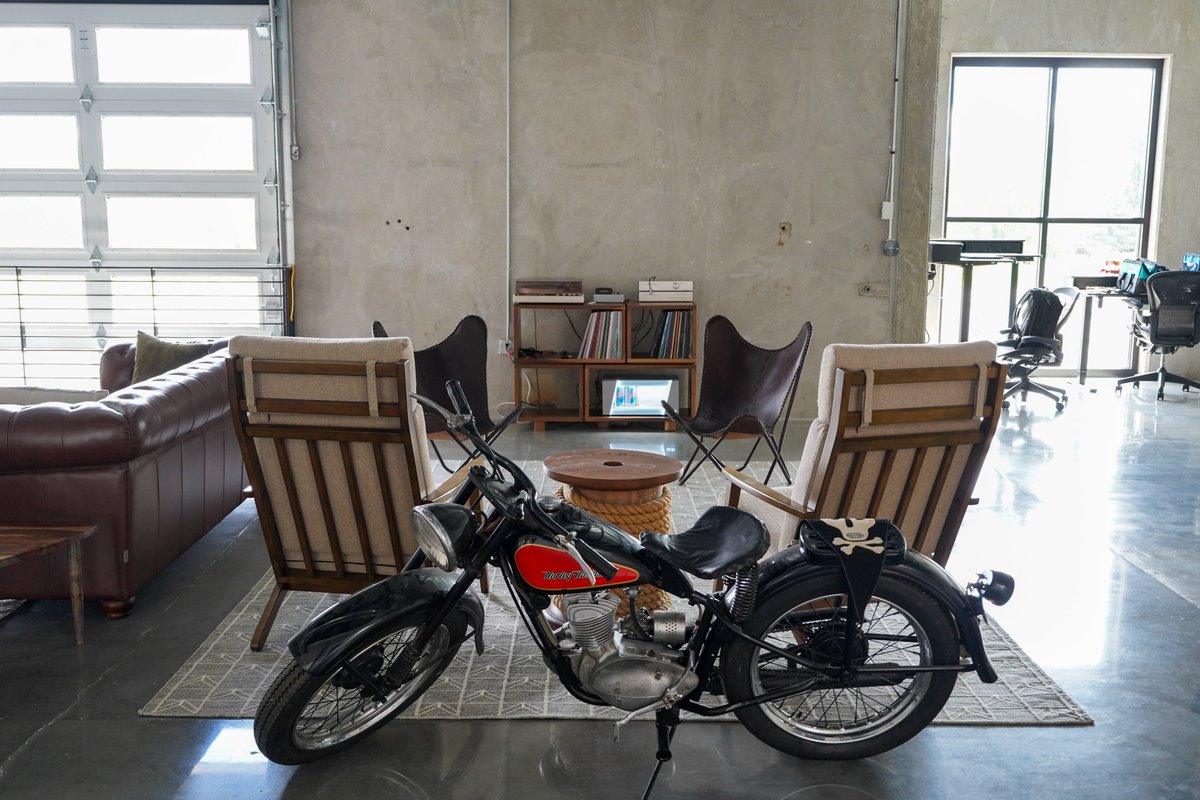
Welcome to Dreadnode HQ!
📍 Bozeman, Montana
In/near Bozeman? Hit us up, we'd love to host you at the new space!



7
5
68
6,524
Daniel Vaughn retweeted

Jun 9
He will reveal that JAI has stood for "JavaScript Artificial Intelligence" this entire time, and it will be IPO'ing along with SpaceX in the ~$1T range.
8
9
761
16,076
Daniel Vaughn retweeted
Jun 9
AI red teaming at machine speed and scale.
50 attack algorithms. 500 transforms. 130 scorers.
Probe LLMs, agents, MCP servers, and traditional ML for security and safety vulnerabilities — all in one simple workflow.
Start for free → app.dreadnode.io

4
43
246
12,657

Software design now is like ahhh yeah you’re gonna need an LLM for that no wait it’s a sub agent actually open a worktree no you need skills to get that done no no no it’s now a loop you need a loop to do it actually install a connector first I changed my mind you need a plugin
27
12
216
14,464
Daniel Vaughn retweeted

have fun with your loops today you fucking idiots
54
87
2,005
89,729
Jun 8
this is one of the funniest things I’ve ever seen

New podcast just leaked! Featuring your favorite talking heads.
Disclaimer: uhh... uhm...
1
52
Daniel Vaughn retweeted

Jun 4
Discovered a new method for detecting if someone is using Incognito in Chrome:
Write 512 tiny 1-byte responses into a scratch Cache API cache, then read:
navigator.storage.estimate().usageDetails.caches
Normal Chrome: ~393kb
Incognito: ~85kb
Why? When you're in incognito, Chrome writes to memory instead of disk, which leaves less metadata residue
49
199
3,189
256,051