Formerly Infogroup. We heart #data, probably because that's our specialty. Follow us to nerd out on data, #AI, #machinelearning, #marketing, #sales and more.
Joined January 2009
- Tweets 8,729
- Following 4,239
- Followers 3,783
- Likes 3,158
492 Photos and videos











Jun 12
Customers don’t switch identities; brands just fail to connect them. This video explains how unified identity bridges B2B B2C for smarter, privacy-first engagement.
#UnifiedIdentity #CustomerData #Personalization #MarTech
data-axle.com/resources/blog…
1
1
20
Jun 11
Bad data isn’t just frustrating; it’s costing you customers. Our research shows:
• 66% of consumers have encountered incorrect business info
• 85% say it impacts whether they return
• 87% are more likely to choose a business with accurate data
data-axle.com/resources/blog…
1
2
23
Data Axle retweeted

12 Jan 2024
Everything I know about getting better results with Google Performance Max 🎯
1: Lead-Gen
2: eCommerce
3: Smart Bidding
4: Audience Signals
jxtgroup.com/google-performa…
44
34
663
1,838,121
Data Axle retweeted

Jun 10
Confused by all the AI hype?
These people make it easy to understand and they teach you how to actually build your own AI tools
Agents & frameworks
@hwchase17 — LangChain founder; agents nonstop
@jerryjliu0 — LlamaIndex founder; data agents
@LangChainAI — framework releases & patterns
RAG & retrieval (making AI use your own data)
@jobergum — the go-to for search tradeoffs
@virattt — practical RAG on real apps
@_philschmid — clear, hands-on LLM guides
Testing & reliability
@HamelHusain — the "test it before you ship" guy
@sh_reya — evals ML engineering
@eugeneyan — applied ML, easy to follow
Fine-tuning (training your own model)
@rasbt — LLMs from scratch
@danielhanchen — fast, cheap fine-tuning
@winglian — practical training setups
@ai_explorer25 -- ai tools and resources
Save this 🔖 and reply with who I missed.




9
40
185
14,364
Data Axle retweeted

Jun 10
An Anthropic engineer said something that completely changed how I think about Claude:
“You’re not supposed to prompt Claude. You’re supposed to build a system that prompts itself.”
Most people open Claude, type a question, get an answer, and leave.
That is using maybe 10% of what it can do.
In this walkthrough, he breaks down how advanced users actually work with Claude:
→ Why your CLAUDE.md file can have a bigger impact than the prompts you type
→ How to build multi-agent workflows with separate agents for research, execution, review, and orchestration
→ The architecture that turns Claude from a chatbot into a production system
→ The three properties every agent team needs to stay reliable as complexity grows
The most interesting idea is that you stop thinking in terms of prompts.
Instead, you design systems.
One agent gathers information.
One agent builds.
One agent critiques.
One agent coordinates everything.
The human stops managing every step and starts managing the workflow itself.
If you’ve been using Claude exclusively through the chat interface, there’s a good chance you’re missing most of the platform’s capabilities.
This is less about prompting better.
And more about building environments where the AI can do the prompting, planning, and coordination on its own.
One of the best practical AI workflow breakdowns I’ve seen recently.
Worth bookmarking.
45
96
507
61,934
Jun 10
Most organizations store customer intelligence across multiple systems with inconsistent definitions. That means analysts spend more time preparing data than analyzing it. Semantic data layers are emerging as the solution.
data-axle.com/resources/blog…
#AIData #DataArchitecture
1
1
21
Jun 9
AI is moving fast. But speed alone is not the advantage.
If your data foundation is not strong, AI will only accelerate the wrong decisions. We break down what it takes to make AI work, from data infrastructure to connected customer insights. data-axle.com/resources/blog…
#AI
1
1
25
Jun 8
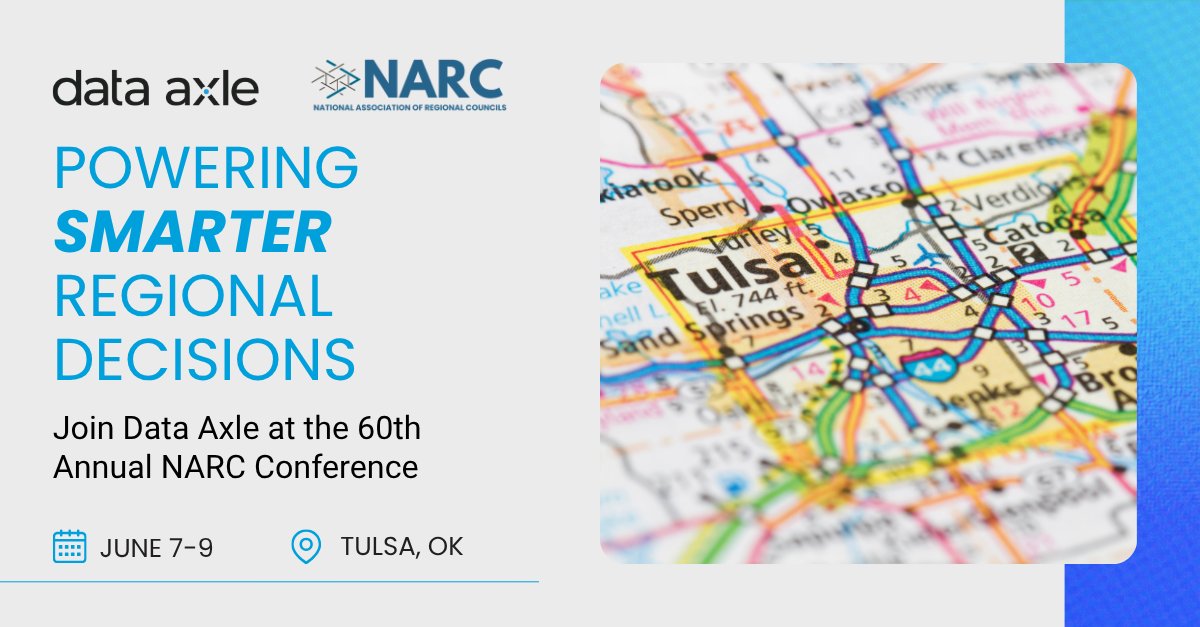
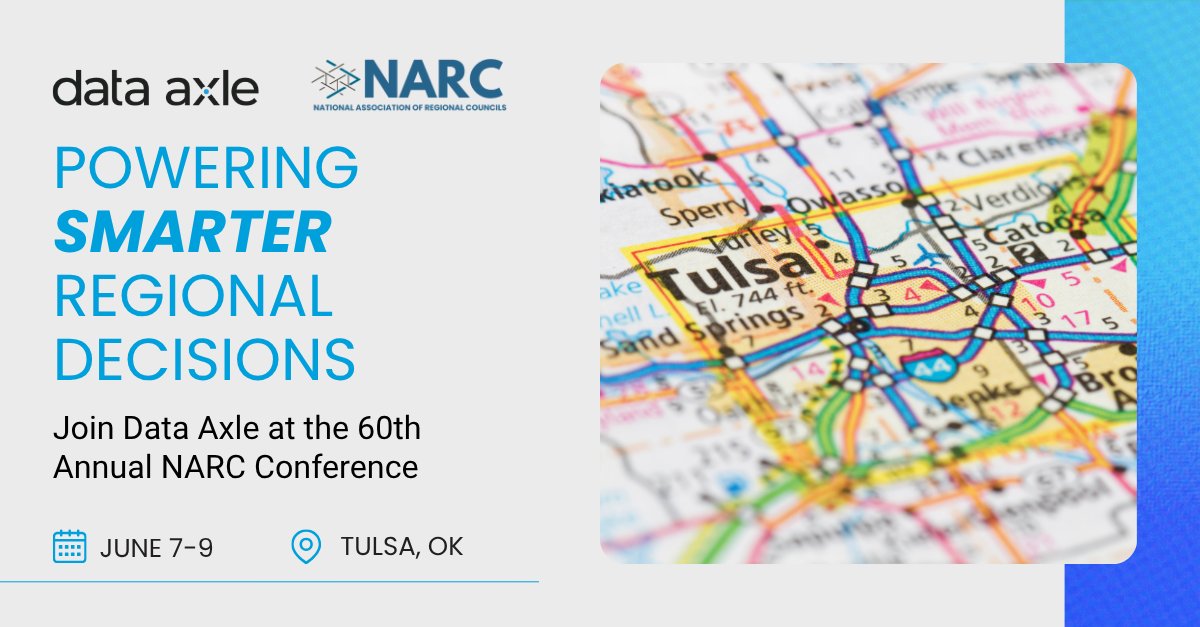
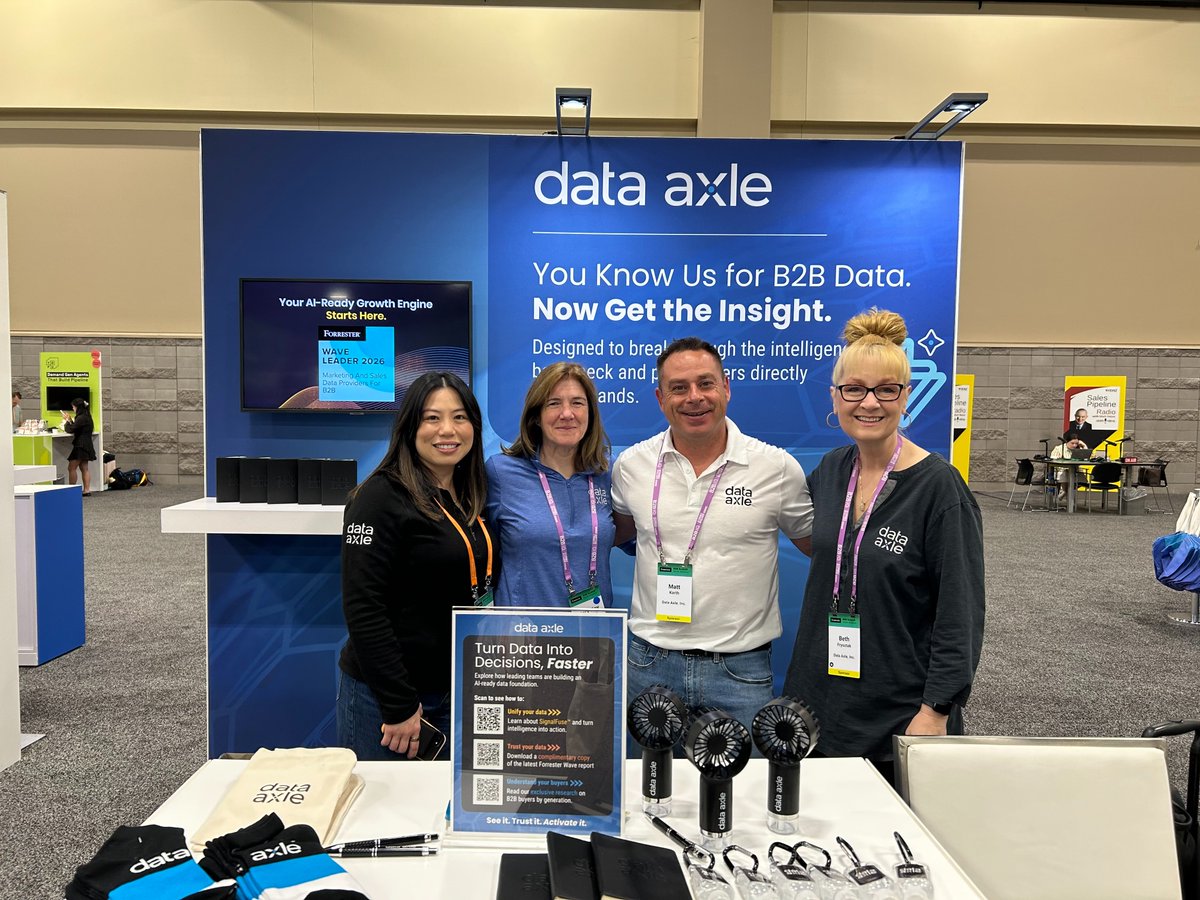
Our Keelia Shumaker and Kam Draper are boots on the ground at the 60th Annual NARC Conference, the nation’s premier event for regional cooperation, innovation, and planning excellence. Stop by our booth!
#NARC2026
20
Jun 4
Father’s Day marketing tip: You’re not targeting dads. You’re targeting people buying for them.
The key? Use dad personas as intent signals to drive smarter campaigns. See how to do it with data👇data-axle.com/resources/blog…
#FathersDay #MarketingTips #AdTech #DataDriven
1
1
31
Jun 3
AI isn't failing marketers. Weak data foundations are. Join our Christy Walsh McGrath & @HCLSoftware to learn why AI initiatives stall and how leading organizations are building AI-ready strategies with trusted data, unified identity, and richer customer context. #GartnerMKTG
1
1
36
Jun 2
The June edition of the Data Axle Digital Audiences Newsletter is here!
This month: Amazon Prime Day audiences, sports fan segments for soccer, golf, tennis & Tour de France, plus new AI-powered audiences to help marketers reach consumers with precision.
view.highspot.com/viewer/45b…
1
1
43
Jun 1
We’re heading to Tulsa for the 60th Annual NARC Conference! Stop by our booth to see how we help organizations power smarter planning.
#NARC2026 #RegionalPlanning #TransportationPlanning #EconomicDevelopment #DataDriven #MPO #CouncilsofGovernment
1
1
29
May 29
Join Data Axle, @HCLSoftware and AI Evangelist Sumitra Patil at the @Gartner_inc Marketing Symposium to discuss why AI projects stall and what leading organizations are doing to build the data-driven foundations that power successful AI strategies.
hclsw.co/e78336
31
May 28
Most companies don’t have a data problem.
They have a “why does it take 5 days to get an answer?” problem. By the time insights arrive, the opportunity is already gone. SignalFuse™ changes that.
Learn how.
#AI #BusinessIntelligence
youtube.com/watch?v=7MqUmho_…
1
1
53
May 27
Your martech stack isn’t “broken” — your data flow is.
This video shows how to move from integration chaos to client-ready, reliable reporting with standards governance monitoring.
🎥 Watch
#MarTech #DataIntegration #DataQuality #MarketingOps
1
1
1
39
May 26
A map can show you where businesses are. But it won’t tell you what’s missing. Explore how organizations are using location intelligence to uncover these patterns and make smarter decisions.
data-axle.com/resources/blog…
#LocationIntelligence #GIS #DataDrivenDecisionMaking
1
1
83
May 22
Cookies are going away. AI is stepping in.
🎥 Watch how demand gen teams can adapt with AI, first-party data, and privacy-first strategies → data-axle.com/resources/blog… #AIMarketing #DemandGen #MarTech
1
1
43
May 21
Cookies are disappearing. Privacy rules are tightening. Personalization still matters. This guide explains: what they are, how marketers use them, and why they’re critical for safe collaboration. data-axle.com/resources/blog…
#DataCleanRooms #MarketingData #PrivacyFirst #MarTech
1
1
36
May 20
AI is moving fast. But speed alone is not the advantage. If your data foundation is not strong, AI will only accelerate the wrong decisions. Watch the quick overview below, then dive deeper into the full article.
#AI #DataStrategy #MarketingTechnology
data-axle.com/resources/blog…
1
1
39
May 19
A map shows where businesses are.
Context shows where opportunity is.
New from Data Axle: how location-infused business data is reshaping strategy; from expansion to community impact.
Read more: data-axle.com/resources/blog…
#Data #LocationIntelligence #GIS
1
1
33