
Extract, enrich, and discover the full value of your data with Datavid. Enterprise AI, knowledge graphs, semantic data, and data engineering.
Joined July 2021
- Tweets 1,033
- Following 313
- Followers 131
- Likes 1,663
264 Photos and videos







Pinned Tweet

Many RAG PoCs look promising at first.
But in regulated environments, AI does not scale on retrieval alone. It needs quality, structure, governance, and interoperability behind it.
In this short video, we show how Datavid helped unify cross-biobank research with an ontology-driven metadata foundation and governed semantic RAG approach.
👉 Explore GraphRAG services: datav.id/48RsOUF
#GraphRAG #EnterpriseAI #RAG #KnowledgeGraph #DataGovernance #LifeSciences
1
80
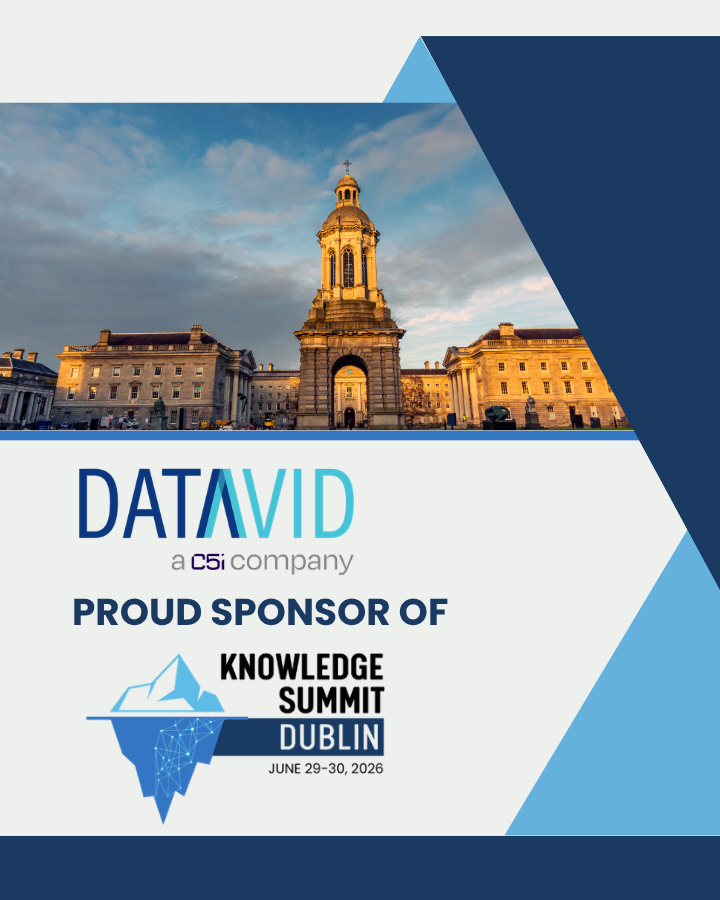
Excited to share that Datavid will be at @ksummitdublin 2026 🚀
From semantic search to knowledge graphs, we’re helping enterprises build trusted, AI-ready knowledge foundations.
Looking forward to conversations around this year’s theme: “Humans in the Loop.”
📍 Trinity College Dublin
🗓️ 29–30 June
See you in Dublin 👋
datav.id/49EVjW5
#KnowledgeSummitDublin26 #EnterpriseAI #KnowledgeGraphs #Datavid
1
24
💡 AI can generate answers.
But can organizations trust them?
In our next issue, we explore what it takes to build AI people can trust, not just adopt, including Roche’s approach to accurate, contextual policy guidance.
📩 Subscribe here: datav.id/4dXdUPG
#EnterpriseAI #KnowledgeGraphs #AI
1
22
🏦Banks have the data. The problem is it is fragmented, manual, and impossible to act on at speed.
Regulation keeps evolving. Legacy systems were not built for this.
Datavid helps financial institutions turn siloed data into governed, AI-ready platforms built for compliance, agility, and growth.
👉Explore: datav.id/4nWwvyN
#BankingAndFinance #RegTech #DataGovernance #EnterpriseAI #Datavid
1
48
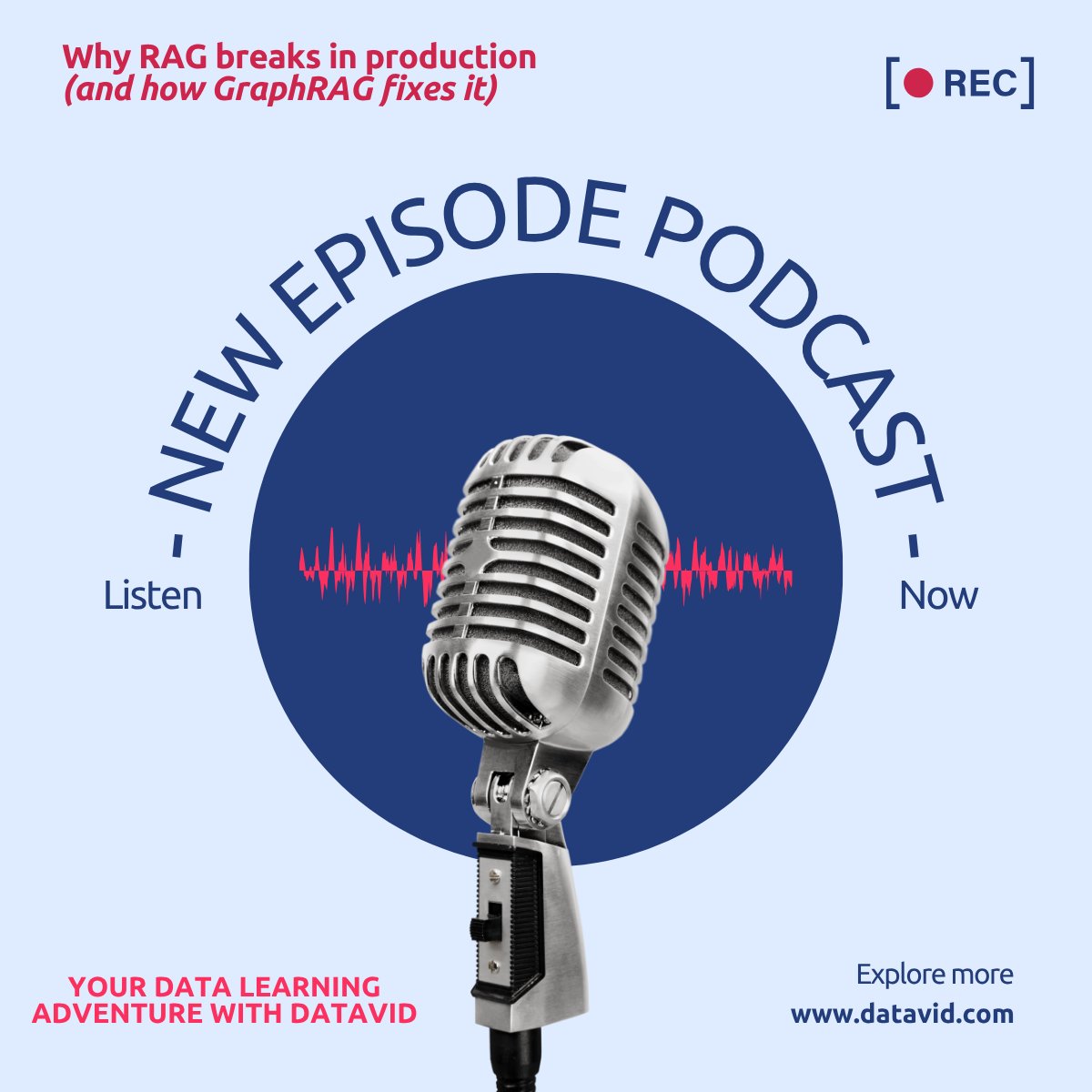
Demo worked perfectly.
Production? Not so much. ⚠️
The problem was never the AI.
It was the architecture underneath it.
We got into it. All of it.
🔗 datav.id/4wVCTdJ
▶️ datav.id/4wX8w6G
#GraphRAG #EnterpriseAI #AIEngineering #Datavid
11
Enterprise search does not fail in just one way.
Sometimes users get no results.
Sometimes they get irrelevant results.
Sometimes they use vague terms.
Sometimes the system simply does not understand context.
For BSI, this was a real challenge inside its Compliance Navigator platform.
Users needed to find the right standards even when they did not know the precise search term. Datavid helped transform the experience with semantic search powered by knowledge graphs, connecting user intent with relevant standards.
What causes the biggest breakdown in enterprise search?
1) No results found
2) Irrelevant results
3) Vague search terms
4) No context understanding
Vote below in the comments!
#EnterpriseSearch #SemanticSearch #KnowledgeGraphs #Datavid
1
19
For BSI, “cardiac catheter” once returned 0 results because there was no exact keyword match. Datavid added semantic search and knowledge graphs, connecting the query to related concepts and relevant standards.
Case study: datavid.com/case-studies/bsi…
1
28
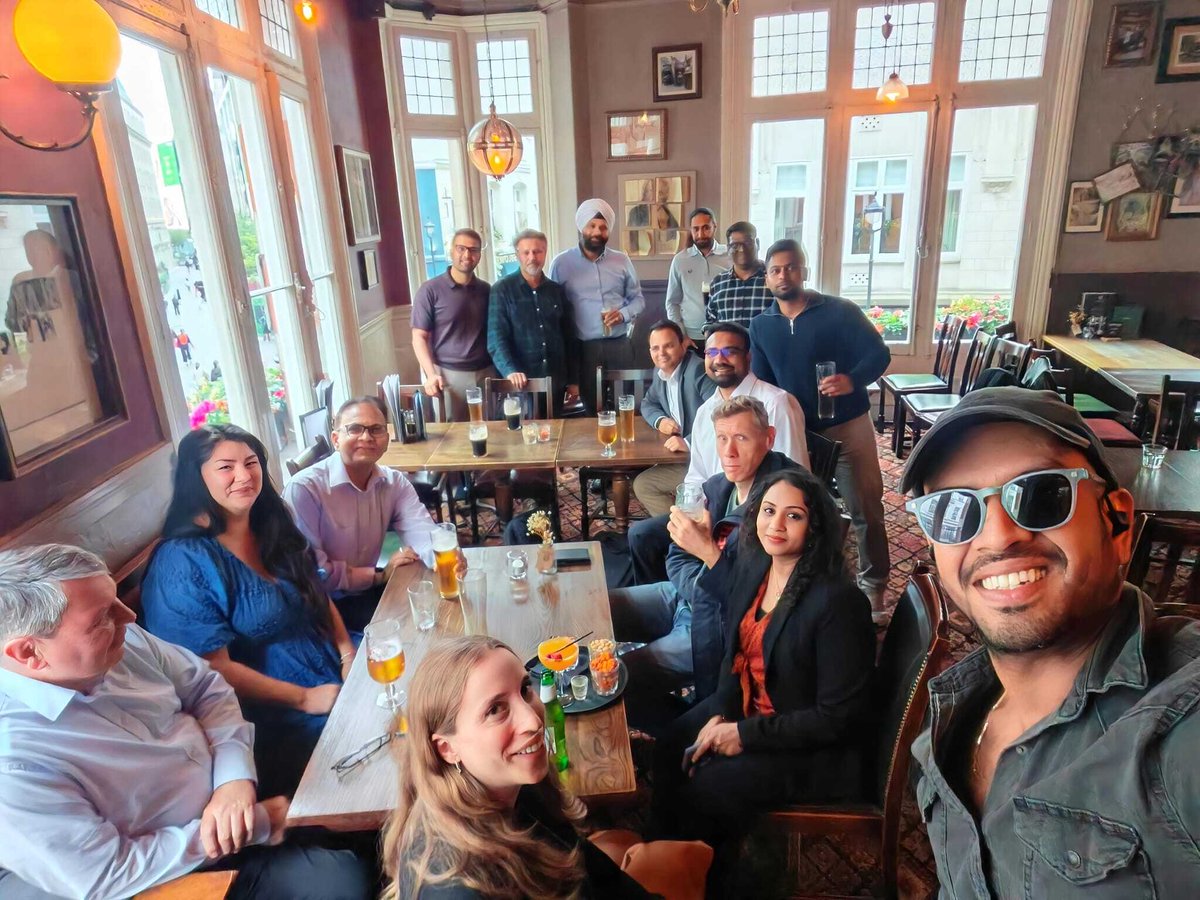
Simple days, great memories. 😊
This week’s London get-together with the Datavid and C5i colleagues was all about the good stuff: office catch-ups, cakes, lunch, and the classic after-work drinks and dinner!
A great reminder that some of the best team moments come from simply spending time together!
#TeamDatavid #C5i #TeamCulture
14
Compliance is not the enemy of AI speed. Ungoverned data is. 💡
Build AI on governed, auditable data and policy becomes your moat, not your blocker.
How is your organization turning compliance into an advantage? 👇
#AIGovernance #DataCompliance #EnterpriseAI #Datavid
4
3 questions heading toward every firm deploying AI in regulated environments:
1. Can your data keep up?
2. Who controls what AI agents have access to?
3. Can you replay a decision on demand?
Most firms can answer one. ⚠️
@BalvinderDang breaks it down 👇
datav.id/4nmvfV9
#AIGovernance #RegTech #FinancialServices
13
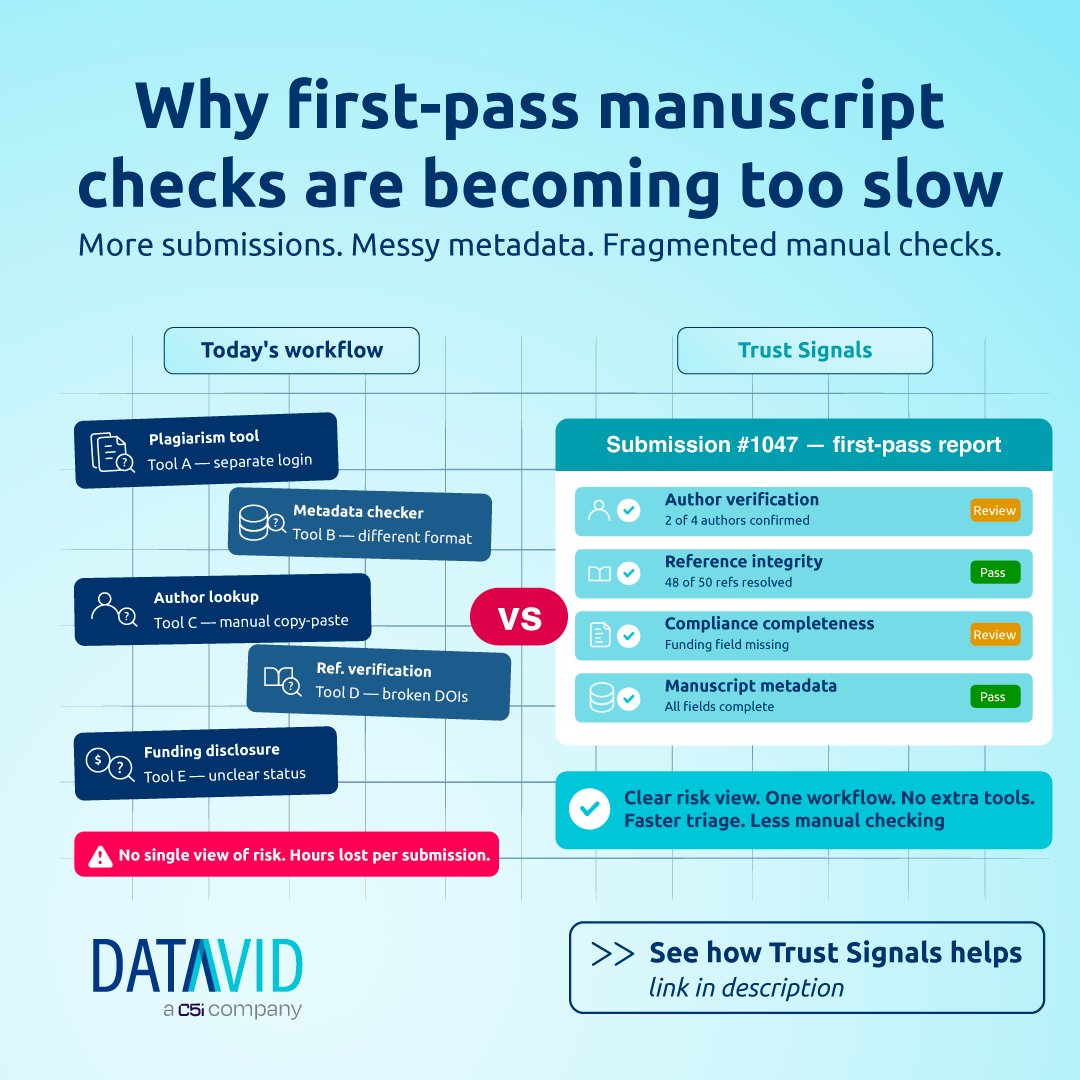
Research integrity checks are most effective before peer review begins, not after publication.
Trust Signals helps editors screen authors, manuscripts, references, and affiliations using 30 trust markers and an explainable Trust Score.
Explore: datav.id/4tD3nxP
#ResearchIntegrity #Publishing
10
Every regulatory failure traces back to the same place.
Not bad tech. Not bad intentions. The data layer. 🚨
Our CEO @BalvinderDang on why 👇
datav.id/42sg5Ek
#RegTech #DataGovernance #FinancialServices
15
Datavid - a C5i company retweeted

May 27
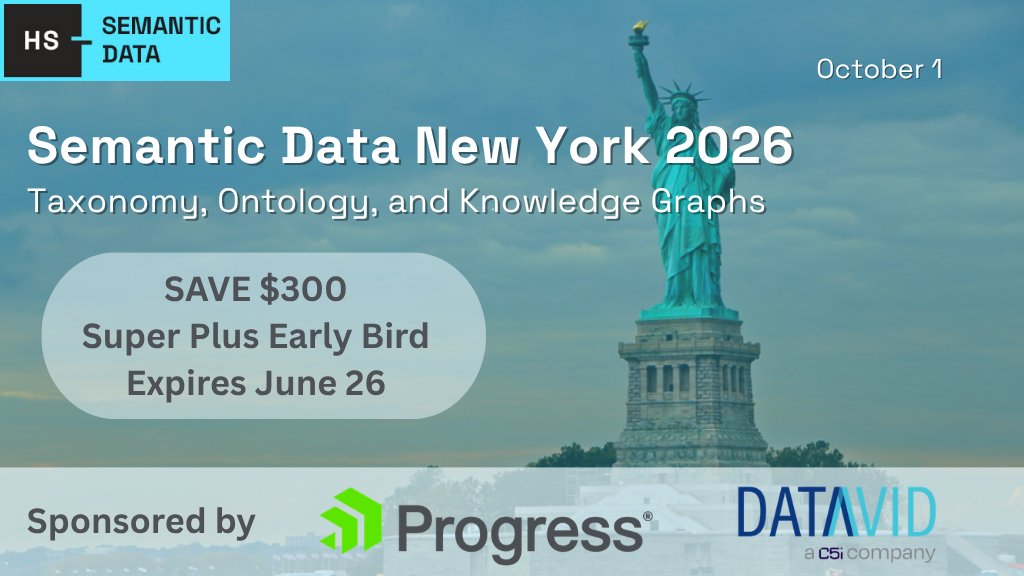
Semantic Data New York 2026 takes place October 1 in New York, co-located with DAM New York
Join practitioners exploring #taxonomy, #ontology, #knowledgegraphs and AI-ready data systems with practical insights & networking
SAVE $300 ends June 26
#SemanticDataNY #SemanticData2026
2
2
43
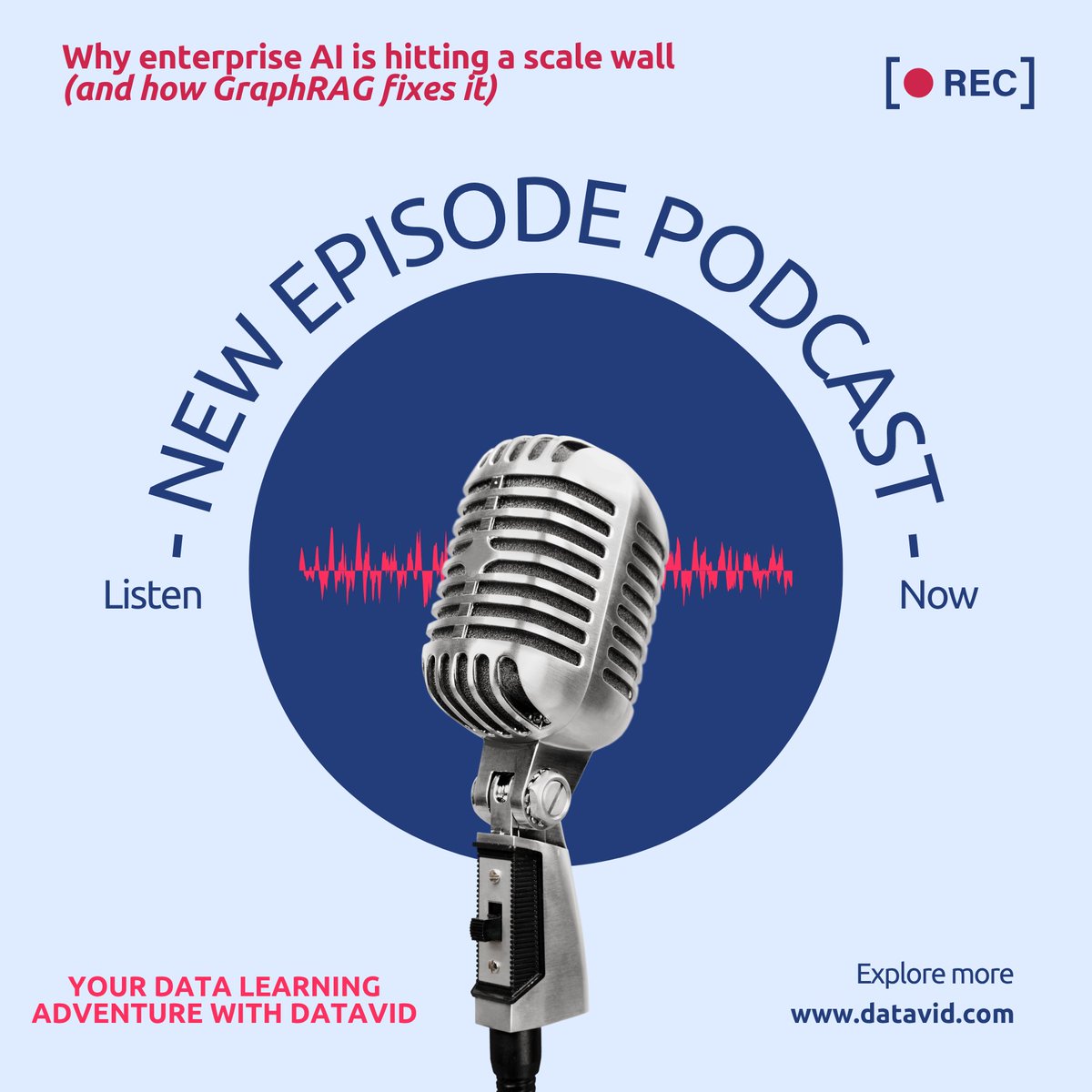
If your AI feature feels “almost there” but never reliable… 🤔
Demo = ✨impressive
Production = ⚠️unpredictable
Users don’t complain — they just stop trusting it
The issue?
RAG treats every query like a fresh start.
But users:
• ask follow-ups
• refine questions
• expect continuity
That gap = broken experience.
GraphRAG fixes this with connected context.
Less firefighting. More building
👉 Full breakdown: datav.id/4vZOojL
#AI #GraphRAG #ProductManagement
1
52
Siloed research. Inconsistent clinical data. AI strategies with no foundation to stand on. 🔬
In life sciences, fragmented data does not just slow teams down. It delays discovery, breaks compliance, and holds innovation back.
That is where Datavid can help. 💡
Structured. Searchable. AI-ready. Built for life sciences teams ready to move faster.
Find out what is possible for your team.
datav.id/4mV9v2y
#LifeSciences #DataStrategy #AIReady #SemanticSearch #RegulatoryCompliance #Datavid
1
47
RAG works for clean, document-based data 💬
Enterprise data isn’t that.
It’s messy, connected, and dependent 🔗
That’s where RAG breaks ⚠️
Not a model problem.
A structure problem.
Fix → ground it in a knowledge graph 🧠
datav.id/4tFnw7f
#GraphRAG #EnterpriseAI
1
63
Legacy infrastructure does not announce itself as a problem.
It just quietly costs you.
ASTM fixed it.
Here is how: datav.id/3RjpE6g
#CDO #DataEngineering #DigitalPublishing #Datavid
30
Data quality isn’t a tech problem. It’s a business outcome problem.
You feel it when:
→ audits get uncomfortable ⚠️
→ reports don’t match
→ AI isn’t trusted 🤖
That’s not pipelines failing.
That’s credibility breaking.
We see this pattern often with regulated teams.
More here 👇
datav.id/4tGAhOU
#DataQuality #AI #Compliance #DataGovernance
7
How was this number produced?"
Most financial institutions cannot answer that question from their systems. They rebuild it. Every time. 🔄
We explored why this keeps happening and what the fix looks like 👇
datav.id/4ff8uAt
#RegTech #FinancialServices #DataArchitectur
6
The real AI productivity problem is not generation. It is verification.
One of the strongest themes we took away from @KGConference was that enterprise AI productivity is not just about creating more output.
It is about making sure that output can be trusted.
AI can now produce drafts, summaries, reports, recommendations, and answers at speed. But in business-critical environments, speed is only useful if the output is accurate, complete, compliant, and traceable.
Someone still needs to check:
Is this correct?
Where did the answer come from?
Is the source reliable?
Can we explain it to a regulator, customer, scientist, editor, or internal decision-maker?
In regulated and knowledge-intensive industries, that verification burden can quickly reduce, or even cancel out, the productivity gain.
This is where knowledge foundations matter.
Knowledge graphs, semantic layers, metadata, provenance, and governed retrieval help move AI from “more output” to better, more trusted outcomes.
Because the goal is not simply to generate faster.
The goal is to make enterprise knowledge easier to find, understand, reuse, and trust.
Explore how Datavid helps organizations build AI-ready data foundations: datav.id/4ueJf60
#KnowledgeGraphs #EnterpriseAI #SemanticData #GraphRAG #AIReadyData #DataGovernance #TrustedAI #KnowledgeGraphConference #Datavid
1
19
🤖 Your AI is generating answers. ⏳ Your team spends the next hour figuring out if it can be trusted.
That is not a model problem.
It is a knowledge problem.
The bottleneck in enterprise AI is not generation. It is verification.
📩 More in this month’s newsletter, subscribe now: datav.id/438FFOT
#EnterpriseAI #GraphRAG #DataStrategy
1
32