
🇺🇸🇪🇺American by birth, European by choice 📘Read my book: TheOwnedContinent.eu ✍️Read my Substack: davekeating.substack.com/
Joined May 2008
- Tweets 55,318
- Following 3,251
- Followers 57,589
- Likes 9,075
7,895 Photos and videos

Dave Keating retweeted

The Iranians reportedly added senior psychologists to their negotiating team to review messages before they were passed to Trump through mediators.
They believed Trump was operating in an impaired mental state and developed a psychological profile to help tailor their communications.
According to their account, this approach appeared to improve the negotiations, which they described as resembling a clinical process.
Source: Drop Site's @jeremyscahill
x.com/RT_com/status/20656788…
20
135
415
32,283
We can only fantasise that we had leaders like this in Europe right now.
Unfortunately we are in a period of leadership vacuum, at the most dangerous moment possible for Europe.
What's the solution?

Carney: The new world order will be built from Europe. Canada is the most European of non-European countries, and we are transforming our cooperation with the EU ... In a more dangerous and divided world, Canada has chosen to build and work in partnership with Europe.
2
12
50
3,745
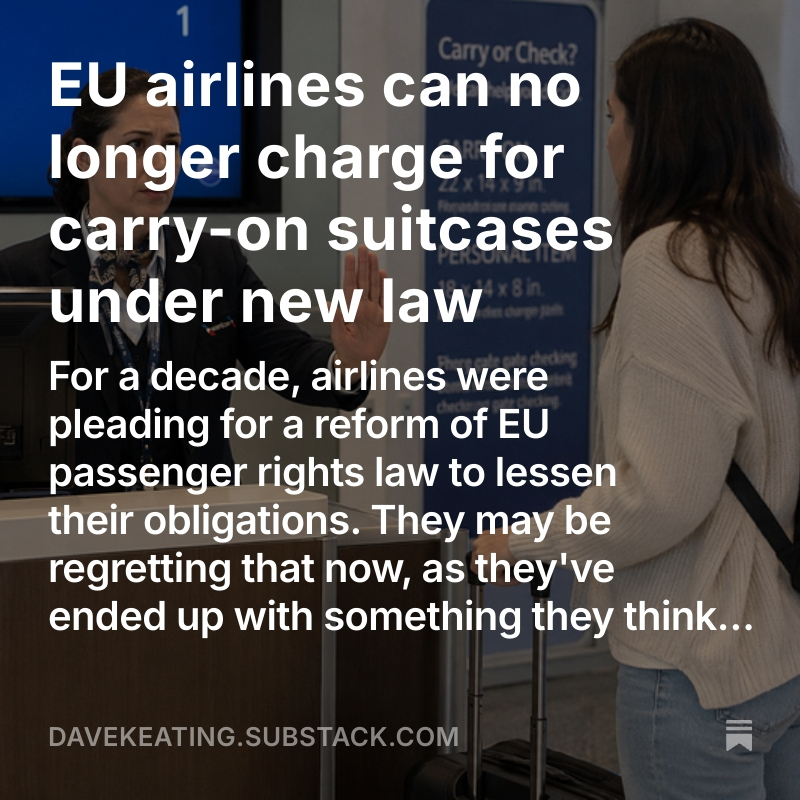
Under a deal reached between 🇪🇺Parliament & Council last night, EU airlines can no longer offer basic fares that don't include carry-on suitcases.
It might seem like this is good for passengers, but it will actually make fares more expensive.
Read more: davekeating.substack.com/p/e…
5
4
20
24,200
Dave Keating retweeted

Jun 11
Incredible. Scotland puts a wind turbine near Trump’s golf course in Aberdeen 20 years ago. He sues and loses. Then his resulting hatred of wind turbines now ends up with the US Secretaries of Defense & Interior fabricating absurd lies to justify killing wind energy in the US.

Burgum on wind turbines: We have a report from Hegseth that it’s a national security threat. You could launch an attack on the US in with a bunch of drones coming through a wind tower field, it would undetectable until it was came through because the radar interference
540
6,540
27,075
846,521

Jun 12
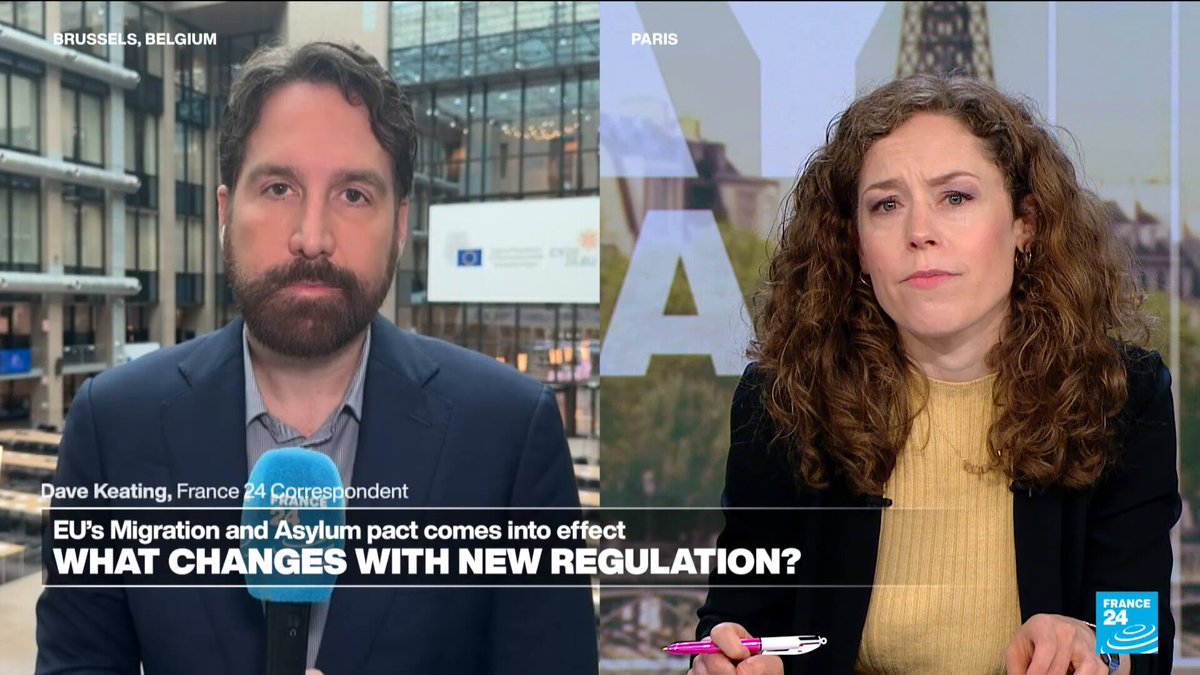
The EU Migration & Asylum Pact takes effect today, ushering in a new era for external border security balanced by a Europeanisation in protection of human dignity for how migrants are treated.
It's a long-delayed response to the 2015 migration crisis. Why did it take so long?
1
9
15
2,028
Jun 12
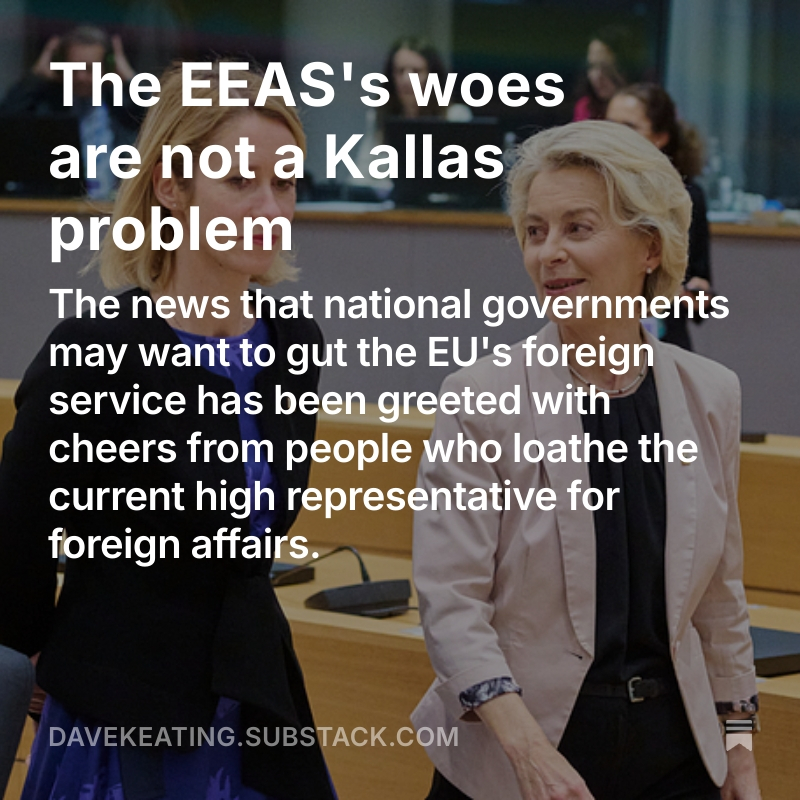
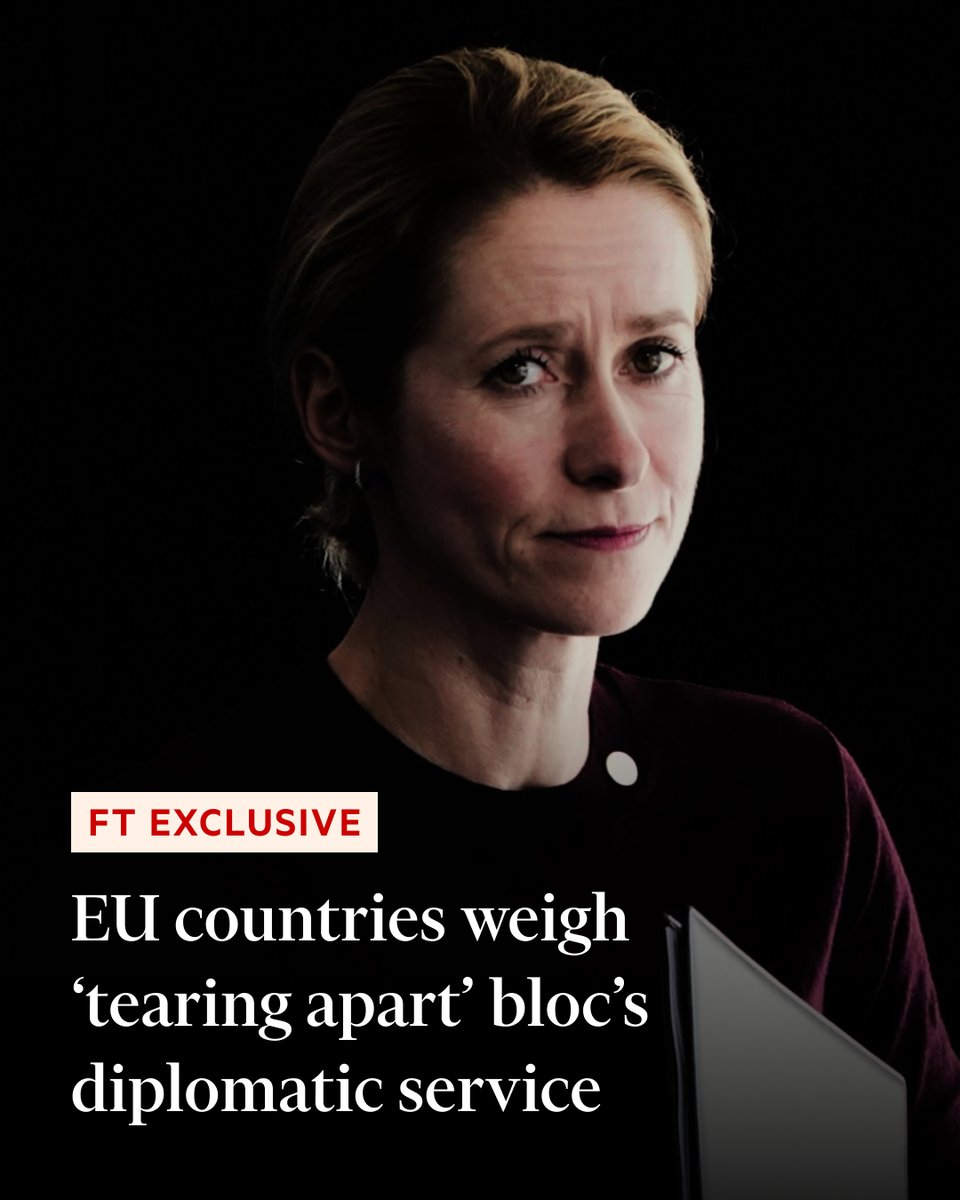
Whatever your opinion of @KajaKallas, the floated idea to gut the EU's foreign policy service because of anger with her would be European self-sabotage.
There is more than meets the eye to this story, coming from the woman on the right in this photo. davekeating.substack.com/p/t…
4
23
61
4,717
Dave Keating retweeted

Jun 11
France and Germany want to gut the EEAS, but dismantling the EU's diplomatic service won't fix EU foreign policy. The problem is structural.
frenchdispatch.eu/p/eeas-ref…
3
10
18
2,838
Dave Keating retweeted

EU countries are great in finding scapegoats for their own failures in European foreign policy. Kallas is certainly not the problem. The Commission/EEAS articulation was always a hybrid & difficult. With a presidential & centralising von der Leyen this has become a bigger issue…
Jun 11

FT Exclusive: France, Germany and other European nations are discussing proposals for a radical overhaul of the EU’s 15-year-old diplomatic service, including stripping powers from the bloc’s chief diplomat. ft.trib.al/Hskd8cT
2
9
16
2,762
Jun 11
.@CaminoMortera I respectfully disagree. To say that voters only have a say in government decisions when 100% of them agree on something is to misunderstand the whole point of representative democracy.
When the US president takes a foreign policy decision, that person has been chosen by a majority of electors that were voted by the people. When the US Senate takes a foreign policy decision, a majority of Senators elected by the people have agreed.
If the Council were to switch to taking foreign policy decision by qualified majority rather than unanimity, the voters would be represented in that decision by their elected foreign ministers. A majority of them (even more democratic in the EU's case because the votes are taking into account the representatives' state size) would have voted for it.
There is no other way to have a common EU foreign policy. What we have now would be like if any of the 50 US state governors could veto a foreign policy decision of the US. There would be no United States if that were the case.
Europeans face a choice: do they want to be sovereign and relevant, or not? If they don't, then go ahead and dismantle the EEAS and keep national vetoes on foreign policy. But forget about being independent of foreign powers in the 21st century. And if you're in the East, start learning Russian.
Jun 11

Kallas is neither the worst nor the best HR we have ever had. Times have, quite simply, changed. When the failed Constitution and then Lisbon designed the EEAS, Britain was in the EU and History had apparently Ended.
To think that the Commission or the EEAS are the only bodies capable of an effective European foreign policy is to ignore how the EU has handled, rather successfully, the crises of the past five years: by distributing labour.
To those advocating a unified foreign policy: what do you do with the counterfactual of the never-ending sanctions drama, other than calling for the abolition of national vetoes? And if vetoes go, who can voters hold accountable in the EU machinery for decisions that turn out to be mistakes? I can think of a couple of very serious examples. How does the EU survive if voters feel that 'Brussels' is imposing decisions on the most core tenets of what makes a country a country, war and peace, without them having a say?
I, for one, think QMV on foreign policy would be the end of the European project. And because I do not want the European project to end, I think we need to be creative.
3
4
19
3,479
Jun 11
Europe is continuing to move backwards
Jun 11
FT Exclusive: France, Germany and other European nations are discussing proposals for a radical overhaul of the EU’s 15-year-old diplomatic service, including stripping powers from the bloc’s chief diplomat. ft.trib.al/Hskd8cT
13
9
71
11,896
Jun 11
Strangely, Reuters has a polar opposite report after reading the same document.
Why? Because the paper floats different options.
x.com/liliebayer/status/2065…
Jun 11

French officials have suggested an overhaul of the EU's diplomatic service that could include boosting the role for foreign policy chief Kallas in a bid to improve the bloc's response to crises, an internal paper showed.
@andrew_r_gray @IrishJReuters
reuters.com/world/france-flo…
1
3
11
1,549
Jun 11
RT @javilopezEU: Defunding the @eu_eeas now is geopolitical self-sabotage.
At a time when Europe needs a stronger voice in the world, weak…
31

Jun 10
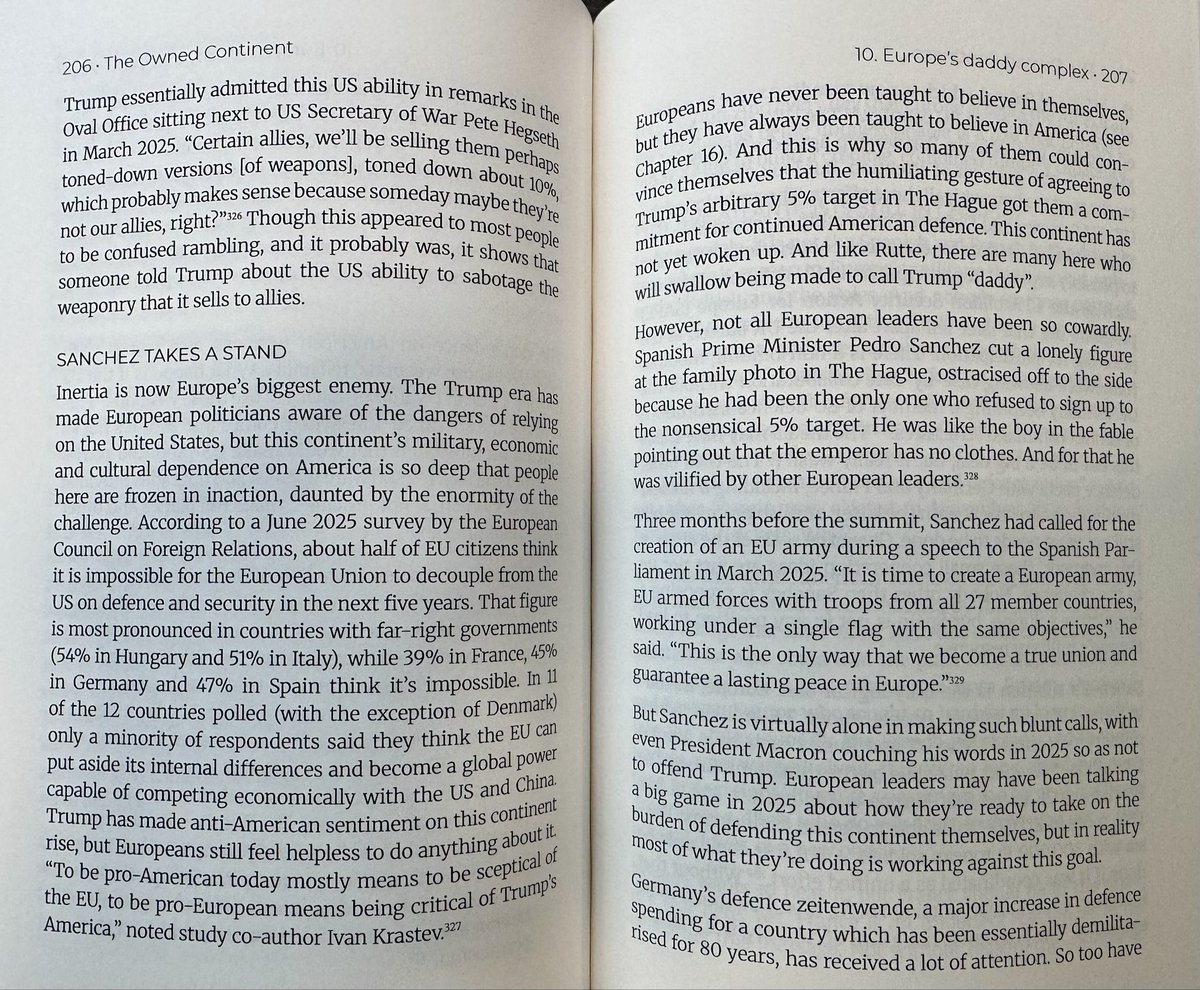
Why have Europeans let themselves become so dominated by the United States militarily, economically and culturally?
Check out my interview about my book The Owned Continent with @EncompassEurope to find out: encompass-europe.com/podcast…
4
1
640
Jun 10
If Iceland joins the EU, it will finally get a democratic vote on deciding the laws they must follow (as part of EEA) rather than being a 'fax democracy' forced to accept laws decided by 27 other European countries.
How is that a step away from democracy?
euractiv.com/news/interview-…
3
9
32
1,576
Dave Keating retweeted

Jun 10
PODCAST: @davekeating talks to @AdamsonPaul about his book 'The Owned Continent - How to Free Europe from American Military, Economic and Cultural Dependence' | Encompass Podcasts encompass-europe.com/podcast…
2
1
515
Jun 10
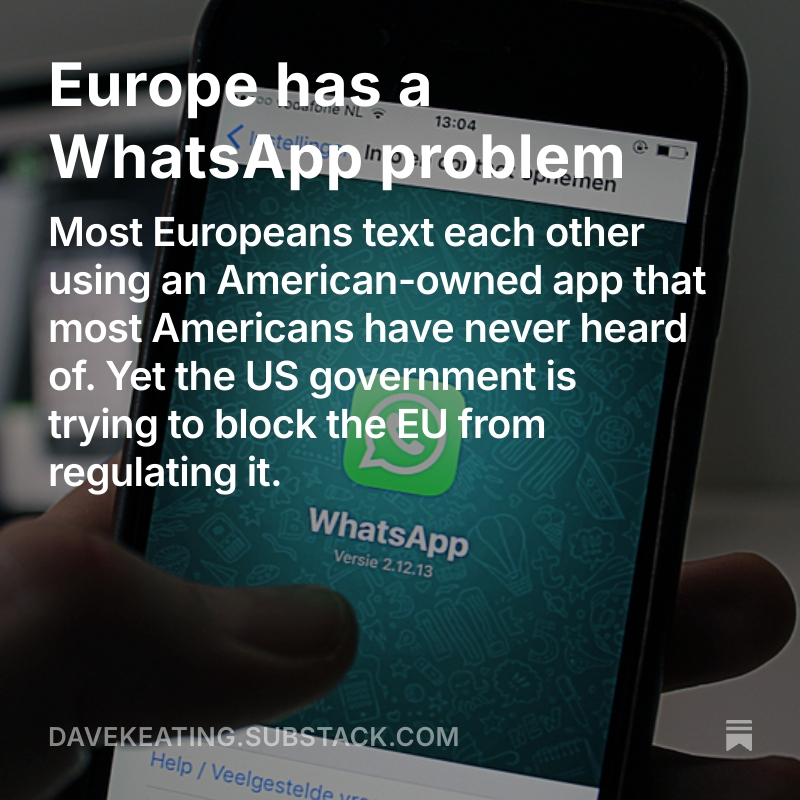
Yesterday the 🇪🇺Commission announced it is forcing Meta to open #WhatsApp to rival AI companies. It's just the latest attempt to regulate Europe's most-used texting platform.
But the US government is protecting WhatsApp's American owner (Facebook). davekeating.substack.com/p/e…
3
5
16
2,000
Jun 9
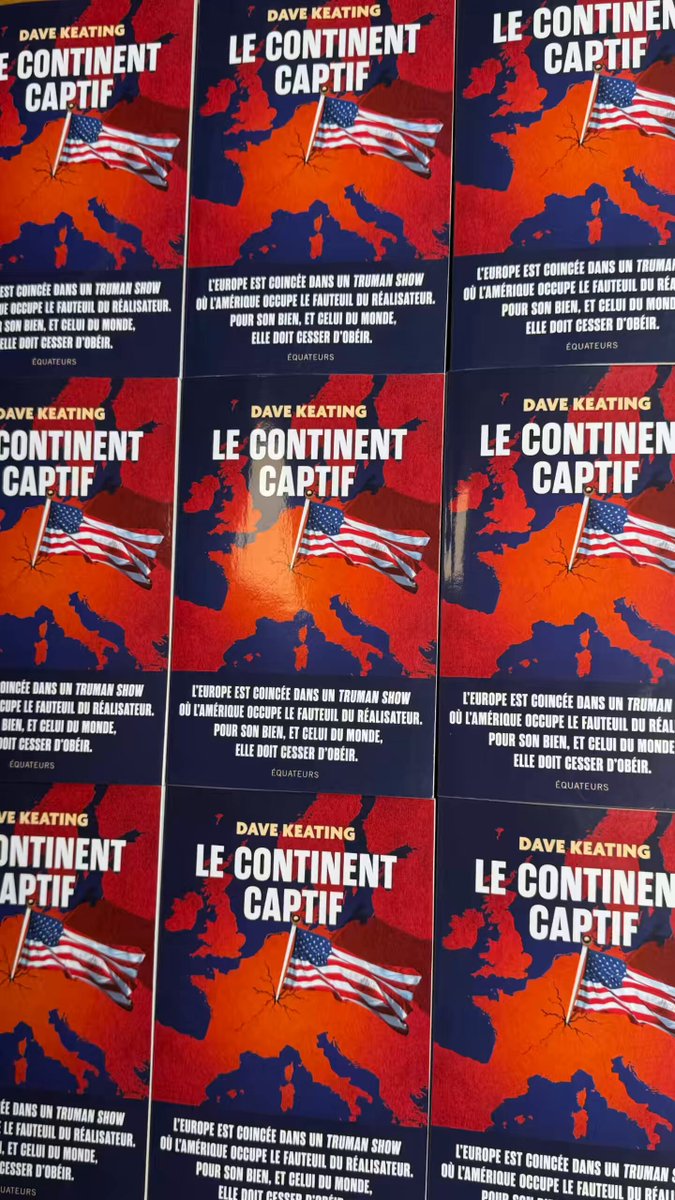
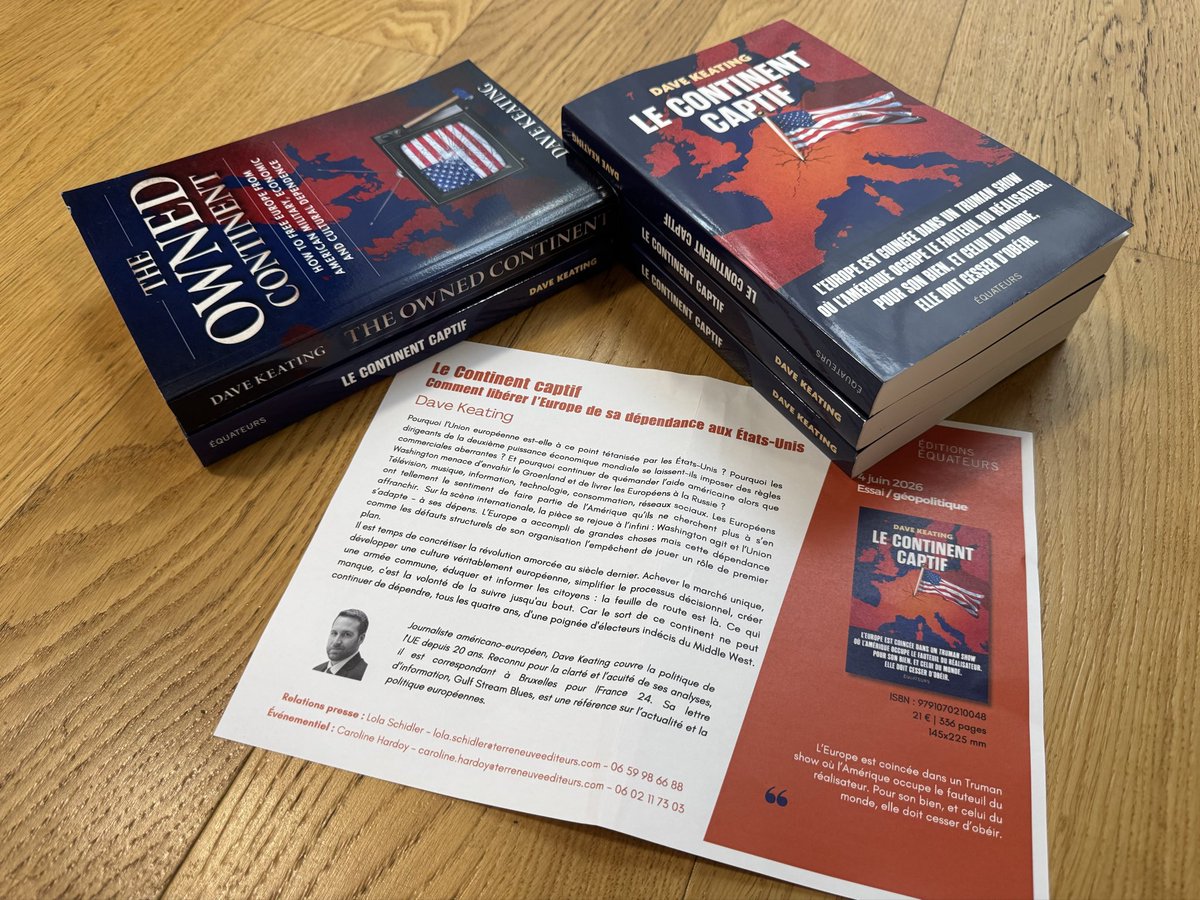
Ce jeudi à 19h, à la librairie Librebook à Bruxelles.
Je ferai la première lecture publique de l'édition française de mon livre Le Continent captif.
Register here: theownedcontinent.eu/events
1
4
1,296
Dave Keating retweeted

Jun 8
This should be the last time that America ever hosts a major international tournament - in any sport. The International Olympic committee should be watching very carefully for LA 2028
Jun 8

World Cup referee - Africa's best - is denied entry to United States and sent back after landing at Miami Airport, despite having a diplomatic passport trib.al/NScoXem
657
3,983
22,276
464,034