
FRB ATL Economist from MN, NM, IL. Simplistic rhythms and vocals that span all the hope and hopelessness of the human condition. My views and not my employer
Joined January 2021
- Tweets 1,368
- Following 673
- Followers 1,039
- Likes 4,860
66 Photos and videos

David Wiczer retweeted

29 Oct 2025
Stuck on a tarmac, so a great time to post about our newly updated MPRD paper (see x.com/davide_melc/status/195… for a previous summary). What’s new? 1/n

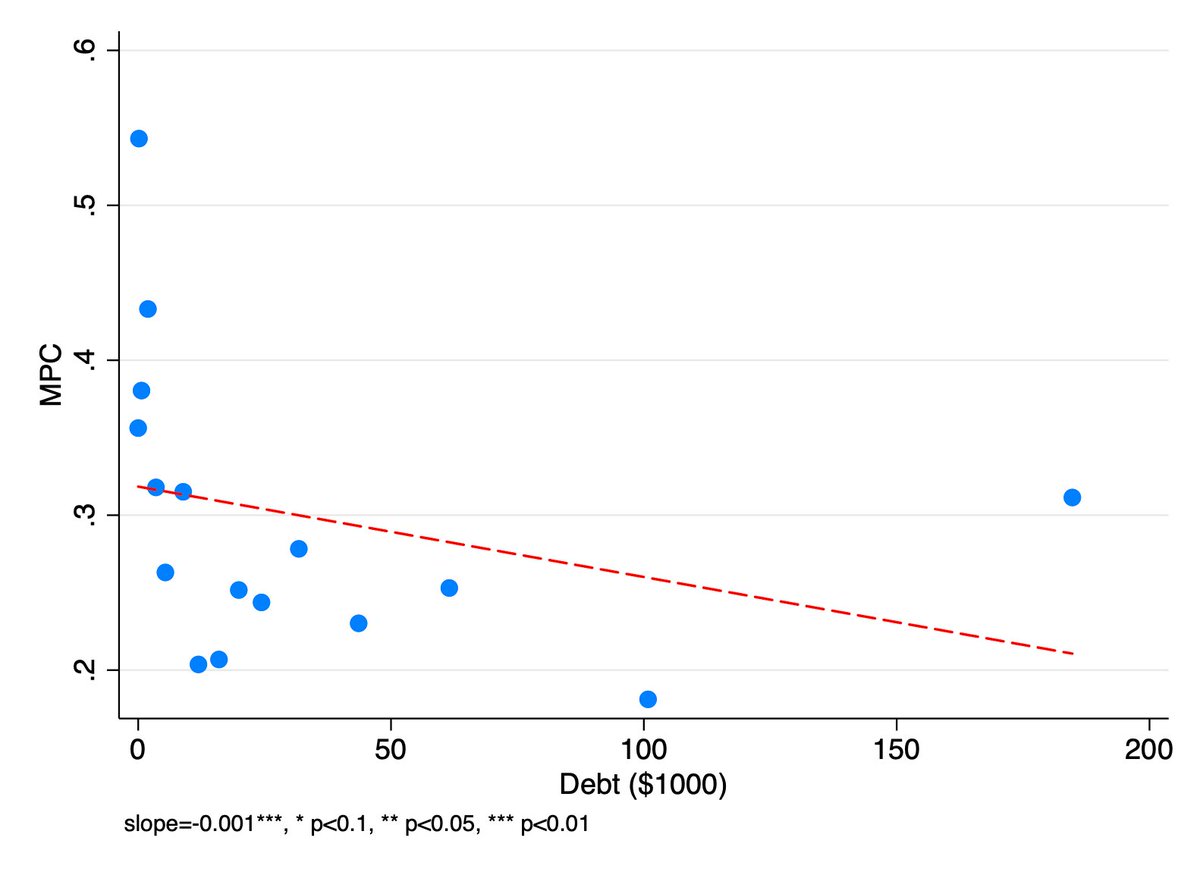
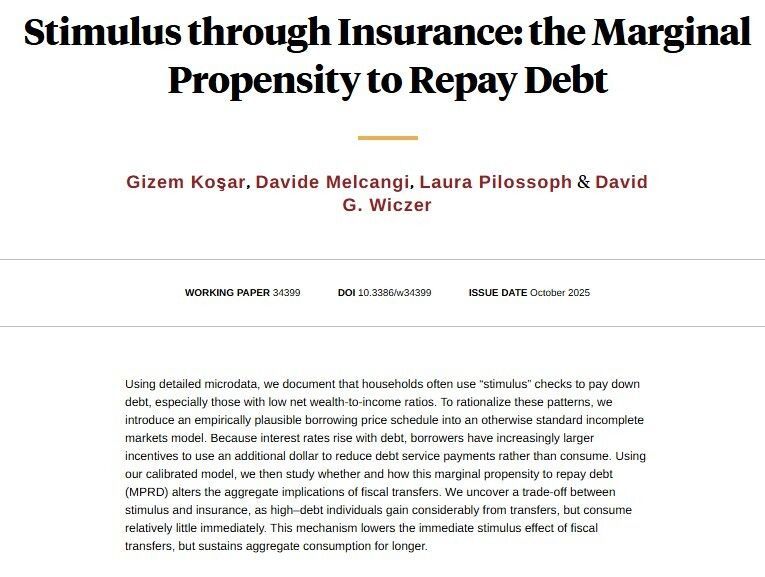
Low net wealth-to-income households repay debt with stimulus checks rather than consume. Debt-price schedules rising with debt explain this, altering the nature of fiscal stimulus, from @gizemkosar, Davide Melcangi, @pilossopher, and @david.wiczer nber.org/papers/w34399
1
1
7
675

Low net wealth-to-income households repay debt with stimulus checks rather than consume. Debt-price schedules rising with debt explain this, altering the nature of fiscal stimulus, from @gizemkosar, Davide Melcangi, @pilossopher, and @david.wiczer nber.org/papers/w34399
1
9
22
5,128

21 Aug 2025
A fun/important little piece with @AtlantaFed colleagues. Our survey center asked firms how exposed their supply chain was to imports. More import-intensive firms expect to raise prices more *and* the more their competitors import,the more they'll raise
atlantafed.org/research/publ…
1
4
22
1,327
21 Aug 2025
It raises the idea that competitive pressure will dictate how much tariffs pass through to prices and, forebodingly, even firms who don't get a cost shock could see other firms' cost shock as cover to raise their own prices.
1
1
5
236
8 Aug 2025
My co-authors making our work sound sooo good. To quote the video, "in our data, we find that households who are more indebted, instead of spending it immediately they use the stimulus to pay down debt."
8 Aug 2025

Many households used stimulus checks to repay their debts. How does this affect the effectiveness and design of fiscal policy?
We discuss our research on the latest @FacultiNet video, based on work with @gizemkosar @DavidWiczer @pilossopher
faculti.net/debt-stimulus-an…
1
5
472
8 Aug 2025
Lots more in the paper and even more *very cool* updates coming soon!
dropbox.com/scl/fi/wer0gpl60…
140
David Wiczer retweeted

8 Aug 2025
Many households used stimulus checks to repay their debts. How does this affect the effectiveness and design of fiscal policy?
We discuss our research on the latest @FacultiNet video, based on work with @gizemkosar @DavidWiczer @pilossopher
faculti.net/debt-stimulus-an…
1
7
45
3,653
David Wiczer retweeted

8 Aug 2025
Households often use stimulus checks to repay their debt. How does this fact change the effectiveness and design of fiscal policy?
Check out the @FacultiNet video where we discuss our joint work with @davide_melc, @pilossopher, and @DavidWiczer:
faculti.net/debt-stimulus-an…
5
29
1,636
David Wiczer retweeted

31 Jul 2024
13/N We are in good company: @ShibataEcon has found similar results on mismatch, and @DavidWiczer - @ElizaForsythe - @ProfLisaBKahn - @fabolange on reallocation.
1
1
3
429
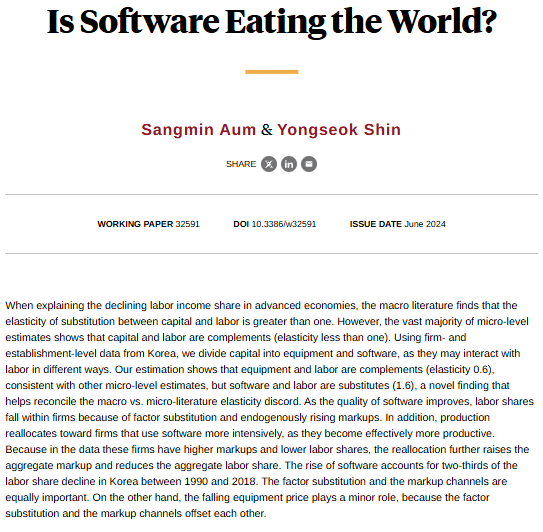
Software substitutes for labor, while equipment complements labor. The rise of software explains higher markups and lower labor share, from Sangmin Aum and Yongseok Shin nber.org/papers/w32591
5
48
183
31,761
David Wiczer retweeted

18 Jun 2024
It’s no surprise that quits rise in a tight labor market, but the scale of quits in 2021 came as a shock. In this #EconomicInsights article, Ryan Michaels evaluates three explanations for what some call the Great Resignation. bit.ly/4c9mnfu
#EconTwitter

3
6
4,884
David Wiczer retweeted

16 Apr 2024
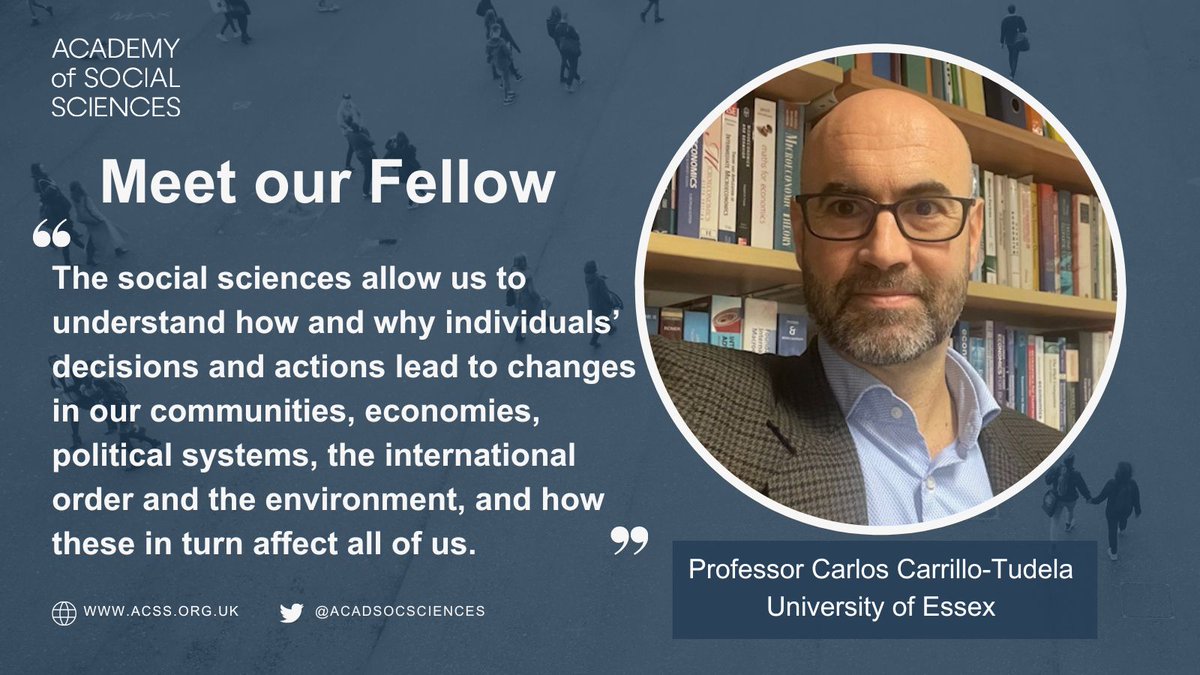
Meet our Fellow @CarrilloTudela, Professor of Economics at @Uni_of_Essex! A leading figure in the area of macro labour, Carlos’ research has been used as evidence in UK parliamentary enquiries & informed the Bank of England’s Monetary Policy Committee.
➡️acss.org.uk/professor-carlos…
6
19
4,281
David Wiczer retweeted

18 Apr 2024
As we announced in Cartagena last year, and due to our perception that demand to present papers at the SED meetings has been increasing, we decided to increase the supply (we considered increasing prices ....).
Thus, the first WInter Meetings of the SED will take place... 🥁 1/3
1
46
166
91,079
David Wiczer retweeted

17 Apr 2024
There are lots of theories on why inflation has been sticky in the first quarter of the year. Rents being slow to be reflected in CPI? Some economists pin some blame on the Fed Chair’s pivot in December. bloomberg.com/news/articles/… via @economics
2
2
5
3,132
16 Apr 2024
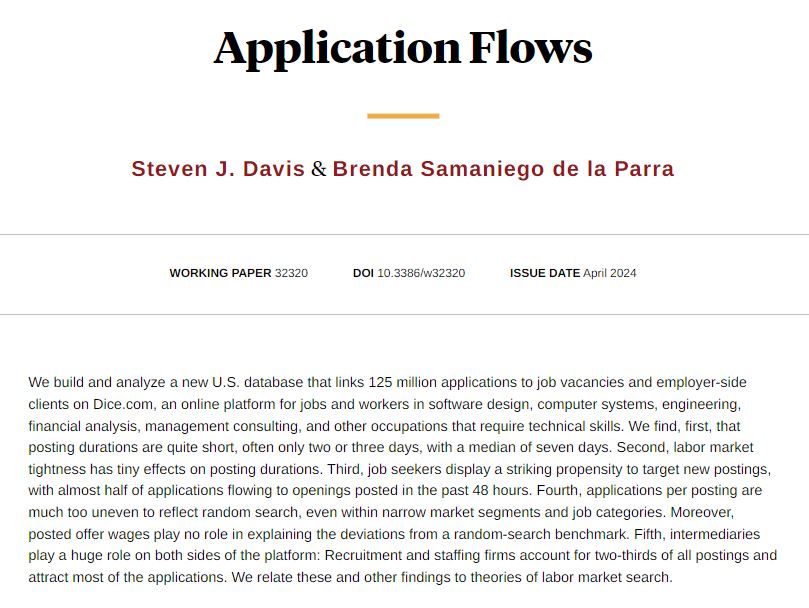
This paper is so incredibly interesting for anyone using vacancy data. The overwhelming conclusion is that matching does not happen randomly between the stock of seekers and openings: a few openings get *a ton* of applicants and vacancy dynamics are stock-to-flow.
125 million applications linked to job vacancies and employers reveal evidence of nonsequential search and a huge matching role for labor market intermediaries, from Steven J. Davis and Brenda Samaniego de la Parra nber.org/papers/w32320
1
8
50
6,237
David Wiczer retweeted

10 Apr 2024
Now including my chapter on RBC! Super happy to be included in this fantastic project
4
71
7,641
David Wiczer retweeted

5 Apr 2024
Machine learning for Quantitative Macro
sites.google.com/site/zfeng2…
9
103
428
48,490
David Wiczer retweeted

28 Mar 2024
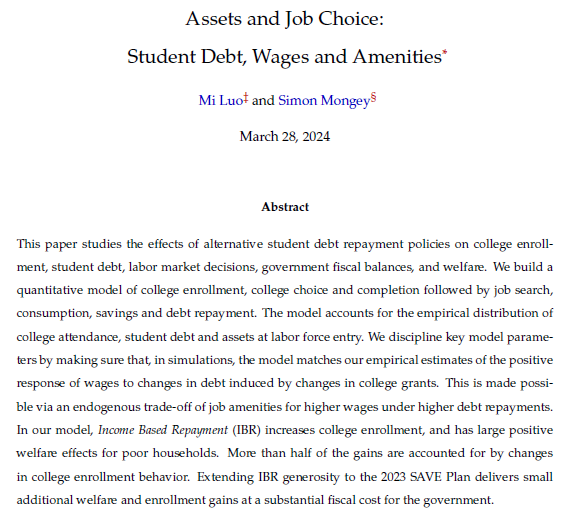
1/4: Very happy to have finished a long revision of my paper with Mi Luo on student debt and job choice. We added a model of college enrollment and choice, such that the distribution of debt, assets, skills and education is fully endogenous and lines up with the data.
5
16
143
24,926
David Wiczer retweeted

23 Mar 2024
Brilliant paper by three young star scholars. A deep exploration of the microfoundations of the memberships theory of inequality.
This paper studies how local institutions and preferences over school attributes shape the impact of education policies in space, from @francesco_ago, Margaux Luflade, and @MartelliniPaolo
nber.org/papers/w32246

2
9
74
15,796