
Technology Evangelist. Travel & Hotel Aficionado. High Altitude Junkie. Photographer. Maverick. Iconoclast.
Joined August 2011
- Tweets 2,758
- Following 918
- Followers 402
- Likes 5,991
37 Photos and videos









Pinned Tweet

12 Jun 2021
Thank you @Chamath @SocialCapital for this! Dead chuffed & also humbled to be in such company. Looking forward to meeting everyone & also what lies ahead quite excitedly! 🌱
11 Jun 2021

We wrapped up our climate change competition and are pleased to announce our winners.
-1k applications
-180 were excellent
-35 teams interviewed
-8 proposals stood out as particularly innovative
So we have 8 winning teams vs 3 as planned, and each will receive a $25k award.
1
7
Debesh Sharma retweeted

Jun 10
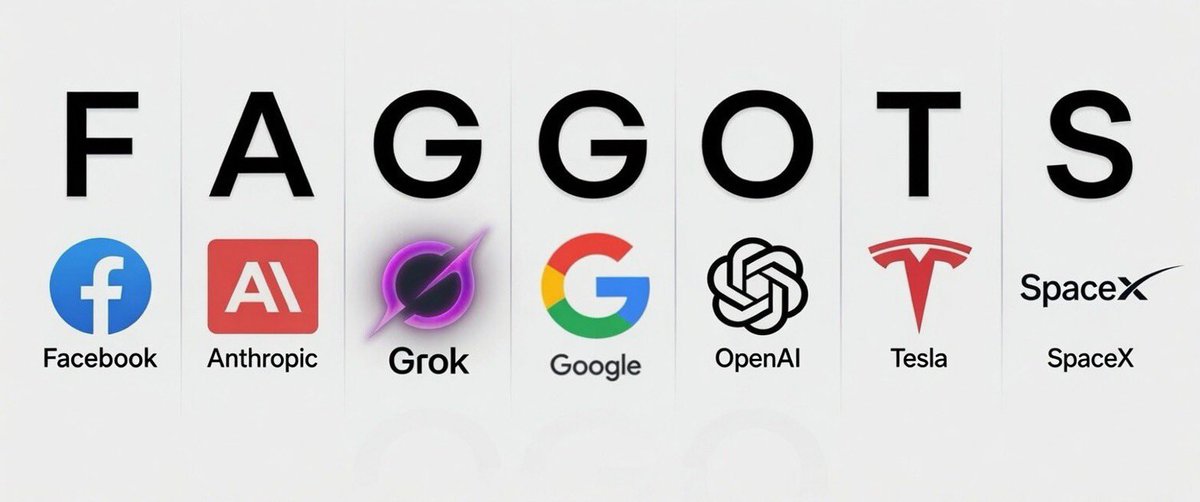
the new world order

491
3,089
51,908
3,966,174
Debesh Sharma retweeted

Jun 10
The World Cup begins tomorrow, and many will watch the matches. Soccer reminds us of something we must not forget: life is not a race to show off on our own, but a path we learn to walk together. Anyone who does not know how to pass the ball, even if they have talent, has not yet understood the game. Anyone who does not know how to live with and for others has not yet understood life. #ApostolicJourney
1,520
15,245
101,930
5,451,738
Debesh Sharma retweeted

Jun 10
Mañana comenzará el Mundial, y muchos estarán atentos a los partidos. El fútbol nos recuerda algo que no debemos olvidar: la vida no es una carrera para lucirse en solitario, sino un camino que aprendemos a recorrer juntos. Quien no sabe pasar el balón, aunque tenga talento, todavía no ha entendido el juego. Y quien no sabe vivir con los demás y para los demás, todavía no ha entendido la vida. #ViajeApostólico
1,323
29,248
145,723
8,132,177
Debesh Sharma retweeted

If you read nothing else today, read this.
Jun 9

Things the recovery industry will not tell you:
1. The drug worked. That is why people use it. Not weakness. Not moral failure.
A neurological event so complete and persuasive that any honest account of addiction has to start there.
The problem is not that the drug fails. The problem is that what it does is unrepeatable, and you will burn your entire life to the ground trying to get back to a place that no longer exists.
2. Shame is not guilt. Guilt says I did something bad. Shame says I am something bad. Guilt is appropriate. Shame is a cell with no windows. Most people use the words interchangeably. That mistake is lethal.
3. You cannot shame someone who has already named the thing you are holding over them. Say it first. Say it in plain light. The weapon drops.
4. Guilt can coexist with self-respect. Shame cannot. You can hold the damage and the dignity at the same time. I know because I live there.
5. Radical honesty does not give you back who you were. It hands you the clean slate of who you always wanted to be. The mask comes off. The cartoon other people drew of you stays on the page.
6. Nobody gets clean on a winning streak.
7. You have to be almost self-delusional in your forgiveness of yourself. (Go watch Chase Hughes)
8. The greatest sin was not the chaos. It was the absence. Being unavailable to the people who needed you.
9. Sustainable recovery starts with one thing: honesty with yourself. If you love an addict and want to help, that is the only door in.
10. I am only an expert on my recovery. Nobody is an expert on anyone else’s.
18
166
2,990
960,175
Debesh Sharma retweeted

As someone who partially grew up among European elite kids like him, this reminds me just how incredibly hollow some of them are.
For a quick background, I went to one of the poshest high schools in France (Janson de Sailly, for those who know) and, afterwards, to what was at the time - and probably still is - the most expensive undergraduate school in Europe (EHL in Lausanne, Switzerland).
Needless to say, many of my classmates were from unbelievably privileged backgrounds. Just in my classroom in Lausanne I had the son of a (very famous) Russian oligarch, the son of Italy's largest real estate developer and the son of Spain's largest real estate developer (funnily, the latter two were flat mates).
Another classmate of mine came from the richest family in Naples, Italy and - while we were at school - his father (known in Naples under the nickname "Il Sultano") got arrested for having bribed half of Naples's city council - which, if you know Naples, ought to tell you something.
These were the kids I was doing group projects on business ethics with (literally) 😅
Anyhow, my story, and probably my luck, was that - before going to high school in Paris - I was raised in very normal public schools in the South of France where my friends were anything but wealthy. Their parents were farmers and everyday workers.
Which means - and I'd come to realize this was very important in life - that it was easy for me to understand how big a mistake it is to see money as identity and meaning - and to confuse someone's net worth with their actual worth.
What really struck me at the time was the contrast with my "poor" classmates of earlier in my life. They couldn't define themselves by what they had - by definition - and this forced them to reach deeper for their identity: their skills, knowledge, humor, etc.
Rich kids can skip that entire process, and the tragedy is that most of them do: they reach for the readymade identity that money provides. I remember being incredibly frustrated by many of my classmates, like "ok, I get it, your dad is rich and you own a lot of nice things but who are YOU, what else is there?" The answer, more often than not, was nothing.
To be fair, there were exceptions. One of my classmates I was most impressed by came from one of Zurich's wealthiest families (which, if you know Zurich, means insanely wealthy) yet he was almost OCD in not showing he had money: driving the shittiest car imaginable, living in a small studio, etc. He was very intellectual, very contrarian, and clearly at war with the idea that his family's wealth ought to define who he was.
I only discovered who he actually was when I started my first company and he approached me to invest: to discuss the investment I went to one of his family homes, which it turned out was a literal palatial castle on the shores of Geneva lake. The guy had decided to live in a small rundown studio when he literally had a castle sitting empty a 5-min drive away.
THAT I was impressed by: it's easy to see that money isn't meaning when you don't have any. To see it when you have more than almost anyone - when everyone around you is organized around the opposite assumption - is much harder. But to actually live it, to choose the studio when you have the castle keys in your pockets - with no audience to applaud you for that - that shows real depth.
At the end of the day, I think, the real distinction isn't between rich and poor but between people who exist from the inside out and people who exist from the outside in.
Wealth just happens to make it incredibly easy to be the latter, to skip the work of becoming someone and settle for a borrowed identity that glitters from the outside but is hollow all the way through. A Potemkin village identity.
This is actually a real societal issue, and magnified by social media (with idiotic posts like this one 👇): the more "outside in" folks out there, the less people with genuine internal anchors, the more fragile everything becomes.
When you think about it, everything that genuinely matters in a society is built by people who think for themselves: they take the world in, pass it through something genuinely their own, and give back something that didn't exist before: an idea, a conviction, a stand.
Every reform, every invention, every act of moral courage in history came from someone with an internal anchor strong enough to resist the current. Remove those people and all you have left is the current.
This isn't new, by the way. Most ancient traditions warn against exactly this, from the Bible (the golden calf story) to Confucius, who built his entire ethics around the distinction between the exemplary person (the Junzi, 君子) - oriented around internal cultivation and righteousness - and the petty person (Xiaoren, 小人), oriented around profit and gain. The junzi builds himself from the inside, the xiaoren chases what's outside.
So please, do not make the mistake of being impressed by wealthy people flaunting their wealth. Don't focus on the glitter, focus on the hollowness it's trying to hide.
Jun 8

16yo billionaire kid in Monaco. $100,000,000 secrete car garage. People don’t pay income taxes in Monaco?
520
2,514
17,467
2,760,464
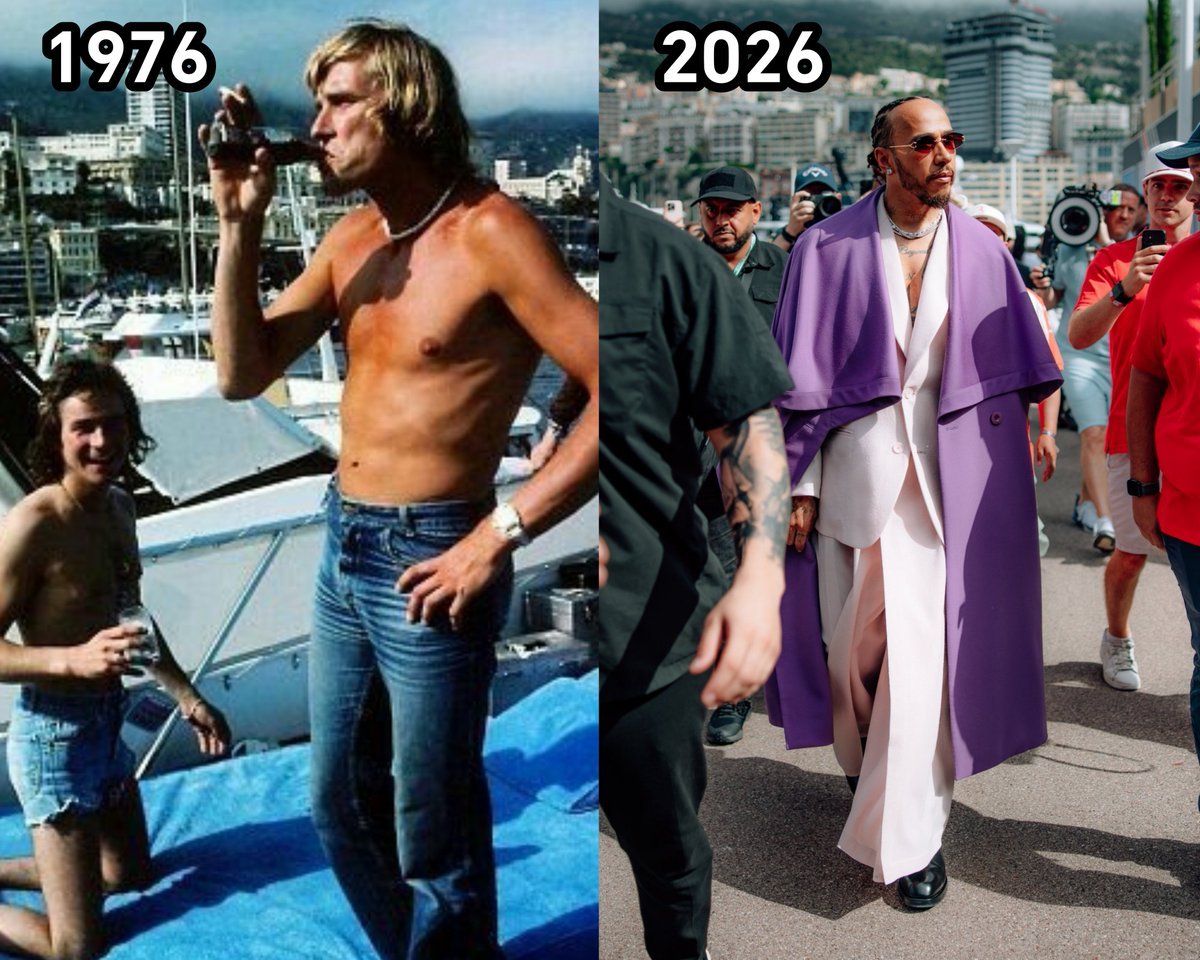
Hmmmm. Yes, what happened? 😳🤔

À gauche : James Hunt, pilote de Formule 1 en 1976.
À droite : Lewis Hamilton, pilote de Formule 1 en 2026.
Qu’est-ce qui s’est passé ?
9
Debesh Sharma retweeted

The Iranian navy, which has been destroyed eight times, has apparently closed the Strait of Hormuz again, because the United States, for the seventh time, won the war that wasn’t a war, so now the United States has to open the Strait of Hormuz that was already open before the not-war began.
The not-war began because Iran had uranium that was totally, completely, beautifully obliterated, so they can’t build the nuclear bomb they weren’t building, which is why the United States had to start the not-war it definitely didn’t start.
Now the United States, which has nuclear weapons, is threatening to use nuclear weapons to stop Iran from getting nuclear weapons, because nuclear weapons are far too dangerous for countries with nuclear weapons to allow other countries to have.
If the United States saw the United States doing what the United States does in other countries, the United States would invade the United States to liberate the United States from the tyranny of the United States.
2,705
34,534
103,389
3,513,153
Debesh Sharma retweeted

Jun 5
I see your profile picture. That’s Johnny Cash. My hero too. Arrested seven times. Smuggled 668 amphetamines across the Mexican border in 1965. Took every drug there was and drank like I did. Cheated on his first wife. Slept with more woman than I ever did. Hit bottom in a cave in Tennessee in 1968 trying to crawl off and die. And then he got up. He got clean. He spent the rest of his life singing for prisoners and addicts and the people the country threw away because he knew he was one of them.
That was the whole point of the Man in Black. He wore it for the poor and the beaten down. He wore it for the prisoner who has long paid for his crime. He wore it for the ones who never heard a word of Jesus. He wore it for the addicted and the dying. He wore it as a standing witness that no one is past saving.
You picked his picture. You did not pick his message. Try listening to the words.
1,542
9,072
85,165
4,252,273
😂😂😂
Jun 4

40 years ago today, l asked my childhood sweetheart, my best friend and the most gorgeous woman l know to marry me.
All three said no.
1
53
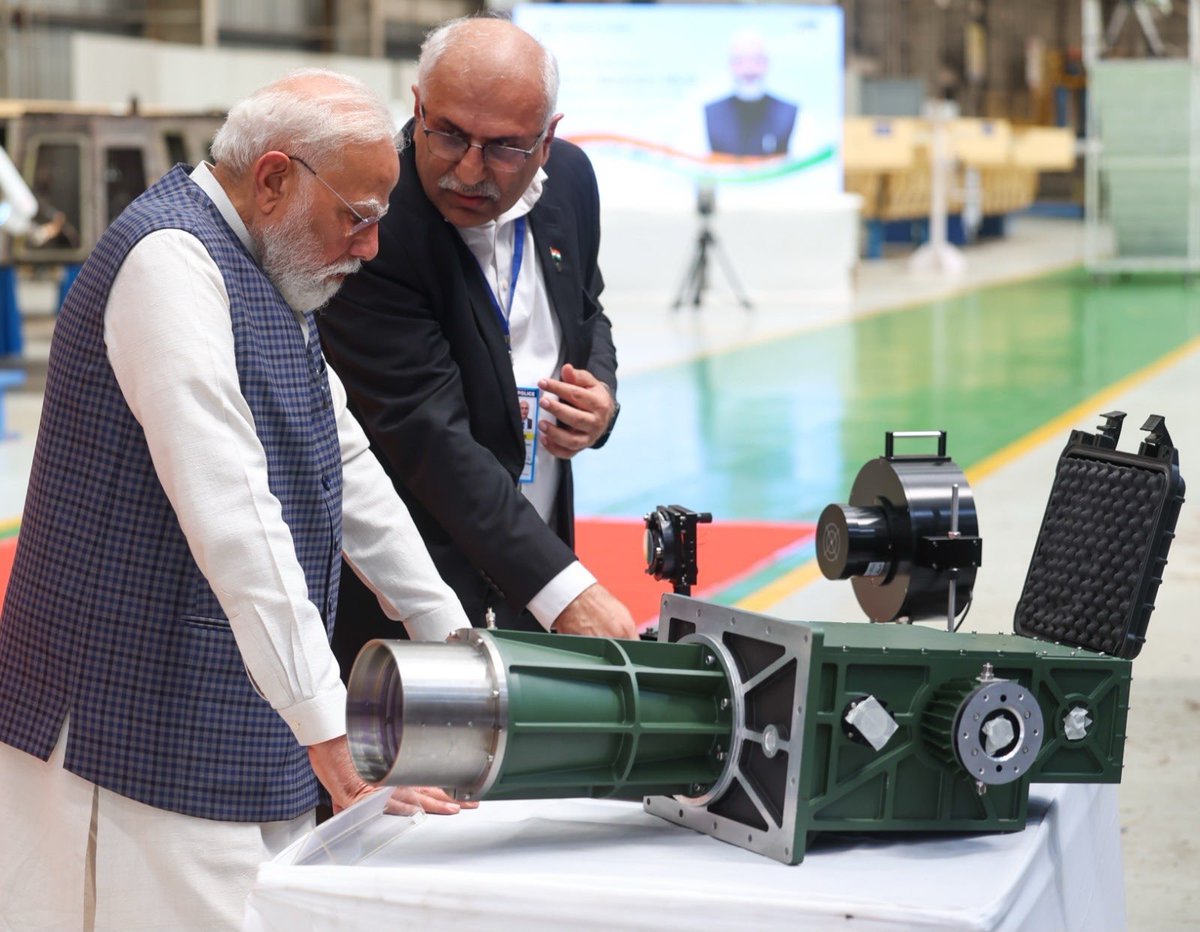
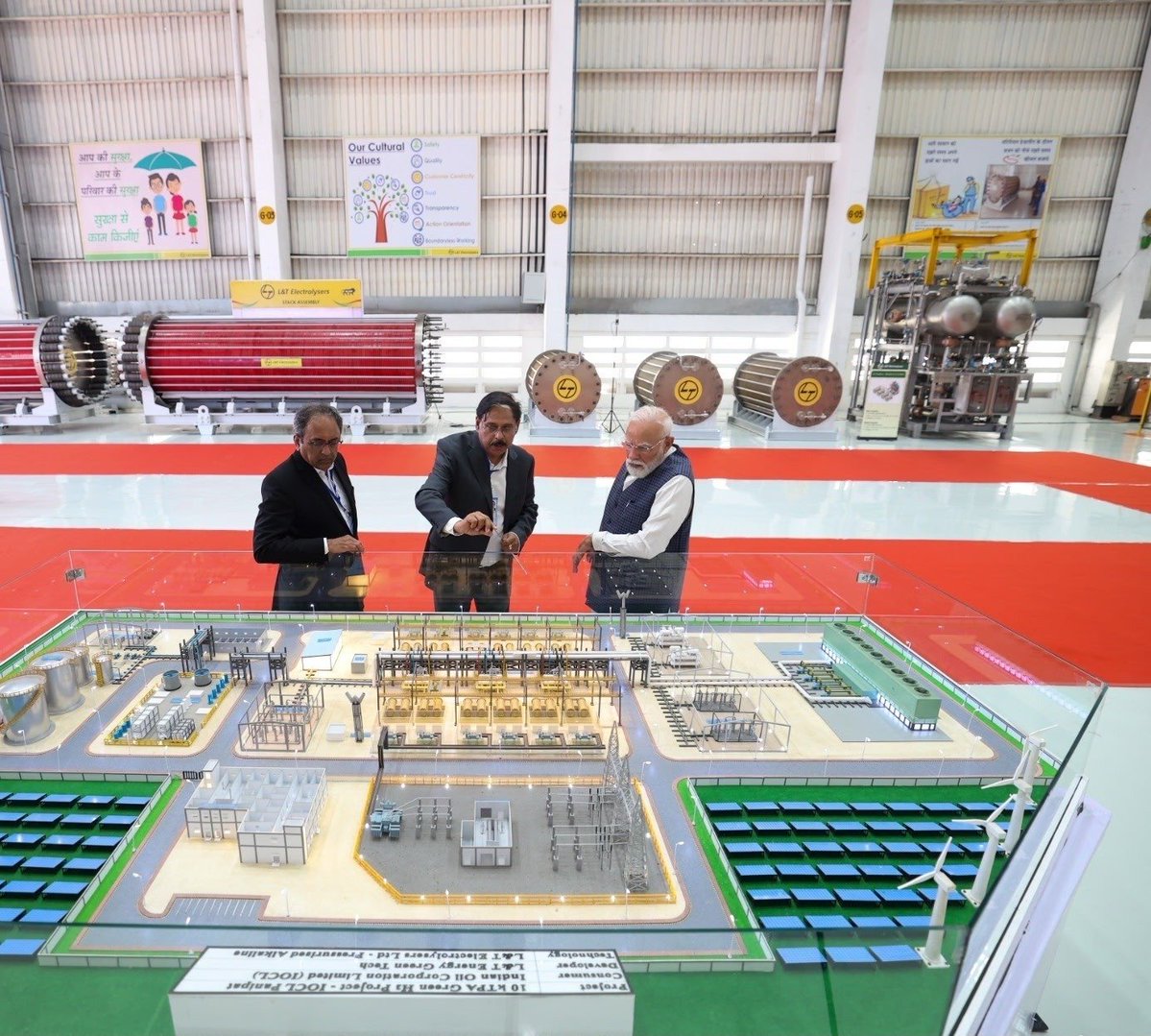
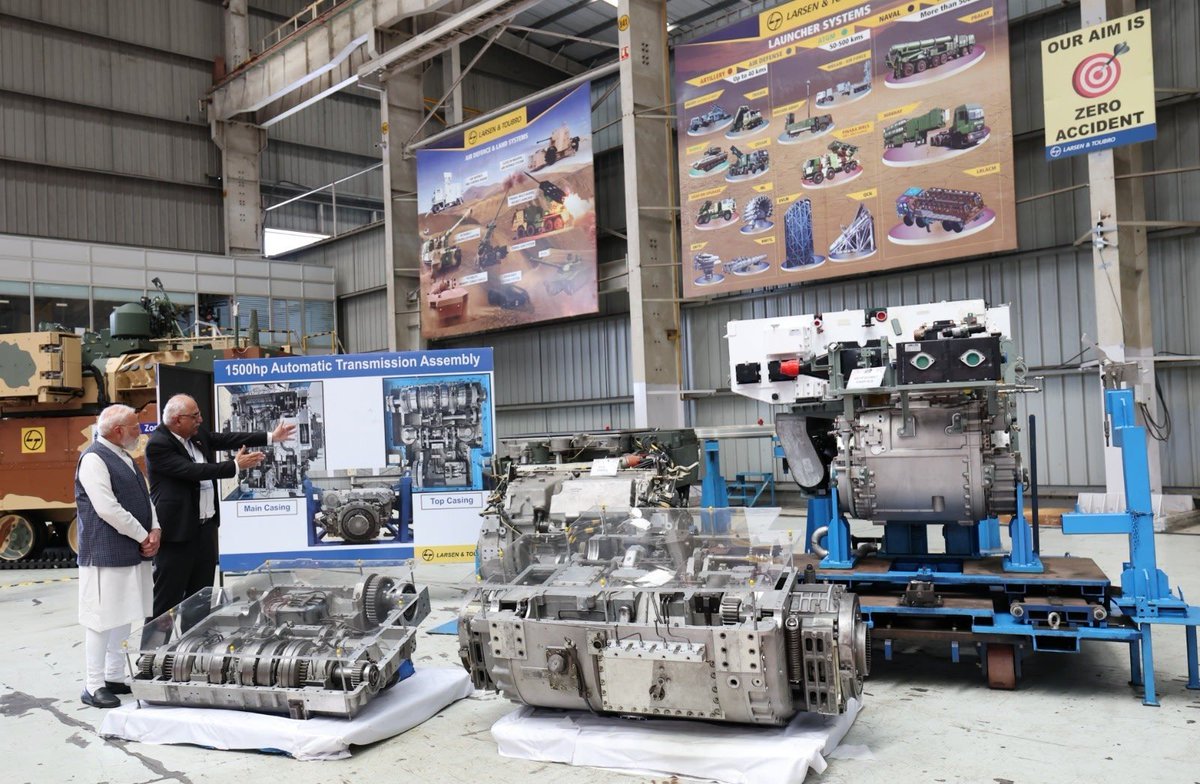
These pictures tell such a story. The PM with some VPs/SVPs equivalent or thereabouts. No one else. Where are the people who did the actual work? The young blood? The real innovators? @narendramodi ji - you could please ask for them by diktat to always be there. @larsentoubro
Jun 5

This afternoon, went to the L&T complex at Hazira. Witnessed some of their pioneering innovations across different sectors. The role played by L&T in furthering self-reliance in the defence sector is commendable.
@larsentoubro

100
Debesh Sharma retweeted

Jun 3
The most peaceful moments of a man’s life…
131
939
11,470
678,751
May 30
Never thought I would RT @RahulGandhi, but then this deserves it. Sterling stuff.
May 29

17-year-old Sarthak Sidhant has exposed how CBSE manipulated its own selection process to benefit COEMPT, using CBSE’s own documents.
The details in his blog reveal how CBSE changed the RFP to unduly benefit COEMPT, at the cost of TCS.
He has revealed the hollowness of Dharmendra Pradhan ji’s denials. The PM remains silent, as usual. The question is simple: who are they protecting, and why?
An independent judicial inquiry is now essential to uncover the full extent of this scam.
Sarthak’s work shows that India’s Gen Z is brilliant and fearless. And sooner or later, they will find out the full truth.
81
Apr 23
What an embarrassing attempt to gaslight instead of an apology.
Apr 22

We have seen a video made by a certain Indian national. Claims being made by him are false and fabricated. He had come to the Embassy and we were ready to meet him, but he refused to show his identity/passport. We follow some standard security protocols for visitors to the Embassy.
The Embassy remains committed to offering all possible assistance to Indian nationals. We have a regular outreach to all members of the Indian community.
@MEAIndia
Community note
जो भी वीडियो सामने आया है उसमें दिख रहा है कि दूतावास का कर्मचारी भारतीय शख्स के साथ दुर्व्यवहार कर रहा है। सिर्फ इतना ही नहीं, कर्मचारी की भाषा भी धमकाने वाली सुनाई दे रही है। ऐसे में दूतावास का यह क्लेम सही नहीं लग रहा है। दूतावास को स्पष्ट सबूतों के साथ सामने आना चाहिए।
x.com/Nalanda_index/…
123
Debesh Sharma retweeted

Apr 19
11,482
14,437
204,007
19,184,223
Debesh Sharma retweeted

Apr 4
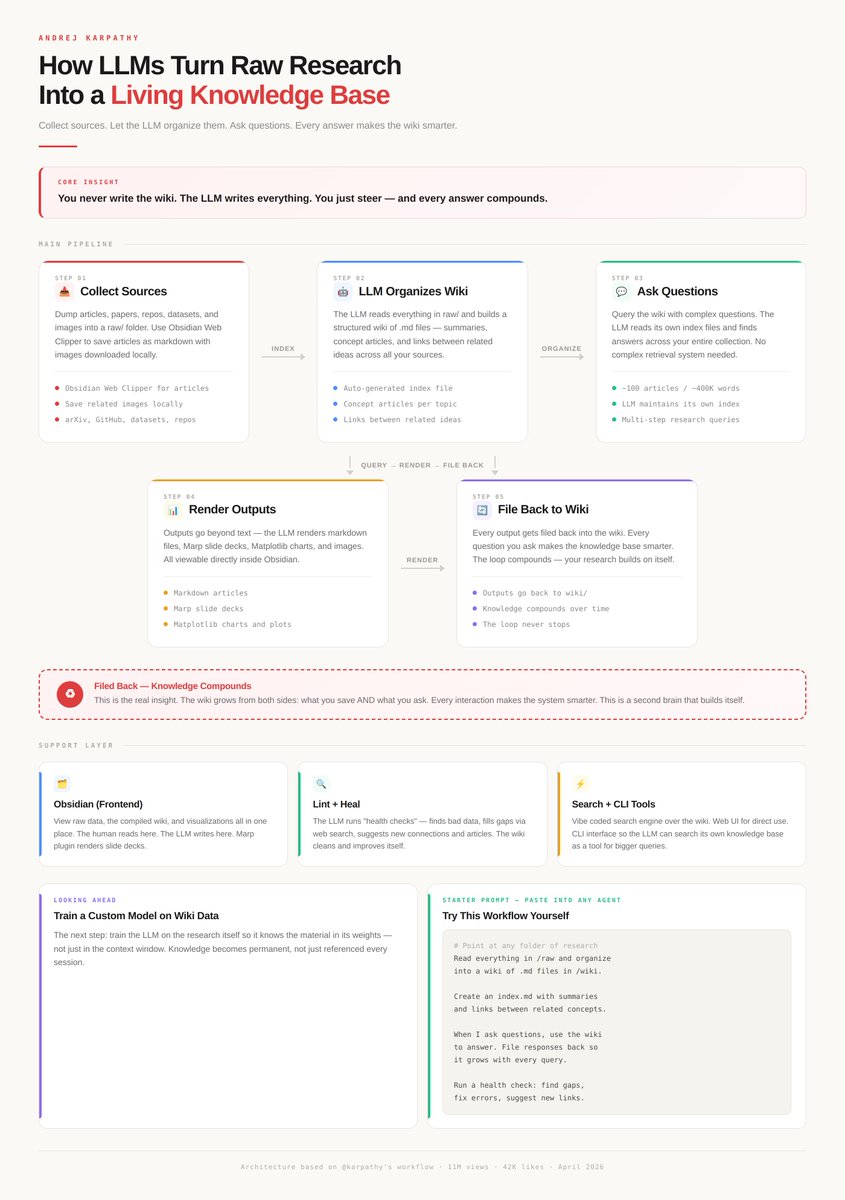
let me explain what Karpathy just shared
he’s spending way less time using AI to write code and more time using it to build personal knowledge bases
the full breakdown:
→ he dumps raw sources (articles, papers, repos, datasets, images) into a folder. then has an LLM organize them into a wiki… a collection of markdown files with summaries, links between related ideas, and concept articles that connect everything together
→ he uses Obsidian as his frontend. he views raw data, the organized wiki, and visualizations all in one place. the LLM writes and maintains the entire wiki. he rarely touches it directly
→ once the wiki gets big enough (~100 articles, ~400K words on one recent research topic)… he just asks the LLM questions against it. no RAG (complex retrieval system) needed. the LLM maintains its own index files and reads what it needs
→ outputs aren’t just text. he has the LLM render markdown files, slide decks, charts, and images… then files the outputs back into the wiki so every question he asks makes the knowledge base smarter
→ he runs “health checks” where the LLM finds inconsistent data, fills gaps using web search, and suggests new connections and articles. the wiki cleans and improves itself over time
→ he even vibe coded a search engine over his wiki that he uses directly in a browser or hands off to an LLM as a tool for bigger questions
→ his next step: training a custom model on his own research so it knows the material in its weights… not just in the context window
most people use AI to get answers.
Karpathy is using AI to build his own ‘Jarvis’ via compounding knowledge systems that get smarter the more he uses them
the difference between asking ChatGPT or Claude a question and having a personal research engine that grows with every session is the gap most people haven’t crossed yet
and this is where it gets really powerful
not replacing your thinking but organizing everything you’ve ever learned into something you can query or create with forever
if you’ve been using CLAUDE .md and context files in Claude Code… this is that same idea at a much bigger scale
if you’re doing any kind of AI work or deep learning on a new topic right now…
this workflow is worth studying closely
you’ll want to adopt it yourself
this is one of AI’s brightest minds after all. we’re all better off listening to him.
Apr 2

LLM Knowledge Bases
Something I'm finding very useful recently: using LLMs to build personal knowledge bases for various topics of research interest. In this way, a large fraction of my recent token throughput is going less into manipulating code, and more into manipulating knowledge (stored as markdown and images). The latest LLMs are quite good at it. So:
Data ingest:
I index source documents (articles, papers, repos, datasets, images, etc.) into a raw/ directory, then I use an LLM to incrementally "compile" a wiki, which is just a collection of .md files in a directory structure. The wiki includes summaries of all the data in raw/, backlinks, and then it categorizes data into concepts, writes articles for them, and links them all. To convert web articles into .md files I like to use the Obsidian Web Clipper extension, and then I also use a hotkey to download all the related images to local so that my LLM can easily reference them.
IDE:
I use Obsidian as the IDE "frontend" where I can view the raw data, the the compiled wiki, and the derived visualizations. Important to note that the LLM writes and maintains all of the data of the wiki, I rarely touch it directly. I've played with a few Obsidian plugins to render and view data in other ways (e.g. Marp for slides).
Q&A:
Where things get interesting is that once your wiki is big enough (e.g. mine on some recent research is ~100 articles and ~400K words), you can ask your LLM agent all kinds of complex questions against the wiki, and it will go off, research the answers, etc. I thought I had to reach for fancy RAG, but the LLM has been pretty good about auto-maintaining index files and brief summaries of all the documents and it reads all the important related data fairly easily at this ~small scale.
Output:
Instead of getting answers in text/terminal, I like to have it render markdown files for me, or slide shows (Marp format), or matplotlib images, all of which I then view again in Obsidian. You can imagine many other visual output formats depending on the query. Often, I end up "filing" the outputs back into the wiki to enhance it for further queries. So my own explorations and queries always "add up" in the knowledge base.
Linting:
I've run some LLM "health checks" over the wiki to e.g. find inconsistent data, impute missing data (with web searchers), find interesting connections for new article candidates, etc., to incrementally clean up the wiki and enhance its overall data integrity. The LLMs are quite good at suggesting further questions to ask and look into.
Extra tools:
I find myself developing additional tools to process the data, e.g. I vibe coded a small and naive search engine over the wiki, which I both use directly (in a web ui), but more often I want to hand it off to an LLM via CLI as a tool for larger queries.
Further explorations:
As the repo grows, the natural desire is to also think about synthetic data generation finetuning to have your LLM "know" the data in its weights instead of just context windows.
TLDR: raw data from a given number of sources is collected, then compiled by an LLM into a .md wiki, then operated on by various CLIs by the LLM to do Q&A and to incrementally enhance the wiki, and all of it viewable in Obsidian. You rarely ever write or edit the wiki manually, it's the domain of the LLM. I think there is room here for an incredible new product instead of a hacky collection of scripts.
92
431
3,721
490,321
Debesh Sharma retweeted

Apr 2
LLM Knowledge Bases
Something I'm finding very useful recently: using LLMs to build personal knowledge bases for various topics of research interest. In this way, a large fraction of my recent token throughput is going less into manipulating code, and more into manipulating knowledge (stored as markdown and images). The latest LLMs are quite good at it. So:
Data ingest:
I index source documents (articles, papers, repos, datasets, images, etc.) into a raw/ directory, then I use an LLM to incrementally "compile" a wiki, which is just a collection of .md files in a directory structure. The wiki includes summaries of all the data in raw/, backlinks, and then it categorizes data into concepts, writes articles for them, and links them all. To convert web articles into .md files I like to use the Obsidian Web Clipper extension, and then I also use a hotkey to download all the related images to local so that my LLM can easily reference them.
IDE:
I use Obsidian as the IDE "frontend" where I can view the raw data, the the compiled wiki, and the derived visualizations. Important to note that the LLM writes and maintains all of the data of the wiki, I rarely touch it directly. I've played with a few Obsidian plugins to render and view data in other ways (e.g. Marp for slides).
Q&A:
Where things get interesting is that once your wiki is big enough (e.g. mine on some recent research is ~100 articles and ~400K words), you can ask your LLM agent all kinds of complex questions against the wiki, and it will go off, research the answers, etc. I thought I had to reach for fancy RAG, but the LLM has been pretty good about auto-maintaining index files and brief summaries of all the documents and it reads all the important related data fairly easily at this ~small scale.
Output:
Instead of getting answers in text/terminal, I like to have it render markdown files for me, or slide shows (Marp format), or matplotlib images, all of which I then view again in Obsidian. You can imagine many other visual output formats depending on the query. Often, I end up "filing" the outputs back into the wiki to enhance it for further queries. So my own explorations and queries always "add up" in the knowledge base.
Linting:
I've run some LLM "health checks" over the wiki to e.g. find inconsistent data, impute missing data (with web searchers), find interesting connections for new article candidates, etc., to incrementally clean up the wiki and enhance its overall data integrity. The LLMs are quite good at suggesting further questions to ask and look into.
Extra tools:
I find myself developing additional tools to process the data, e.g. I vibe coded a small and naive search engine over the wiki, which I both use directly (in a web ui), but more often I want to hand it off to an LLM via CLI as a tool for larger queries.
Further explorations:
As the repo grows, the natural desire is to also think about synthetic data generation finetuning to have your LLM "know" the data in its weights instead of just context windows.
TLDR: raw data from a given number of sources is collected, then compiled by an LLM into a .md wiki, then operated on by various CLIs by the LLM to do Q&A and to incrementally enhance the wiki, and all of it viewable in Obsidian. You rarely ever write or edit the wiki manually, it's the domain of the LLM. I think there is room here for an incredible new product instead of a hacky collection of scripts.
2,887
7,229
59,759
21,349,171
@SingaporeAir Never expected SQ to be this shoddy. At one point of time, you were the epitome of class & service. Messed up my travel plans completely. Customer service assures callback (after repeated confirmations) and still doesn't call. POOR!
2
1
3
86
Debesh Sharma retweeted

Apr 3
There is something seriously wrong if a body charged with regulating food goes to the police to file FIRs against those who question its performance.
What is the FSSAI really regulating? Food? Or people who question it?
Deeply disturbing
theprint.in/feature/fir-cont… via @theprintindia
112
1,785
4,836
68,705