
Joined January 2023
- Tweets 688
- Following 87
- Followers 77
- Likes 2,952
60 Photos and videos








Apr 18
Do you know that now being the bear market szn is the best time to connect with people in the web3 space?
@youfadedwealth shares the secrets on livestream with @JerrySinger and @thedazzlenetwork

LIVE w/ EXIT LIQUIDITY x.com/i/broadcasts/1jGXgewaA…
2
2
28
2,713


Are you ready
UOL is coming on @opensea
Apply : uolnft.xyz/
Comment wallet and retweet ⏳⏳⏳

966
869
2,369
40,120
𝗗𝗲𝗲 retweeted

Feb 27
Genesis Globe waitlist is now live.
To apply, visit: genesisglobe.xyz
Globe early entries will be very selective. Spread the word.
Hint: Gglobe

8,170
5,341
7,313
273,879
𝗗𝗲𝗲 retweeted

Feb 1
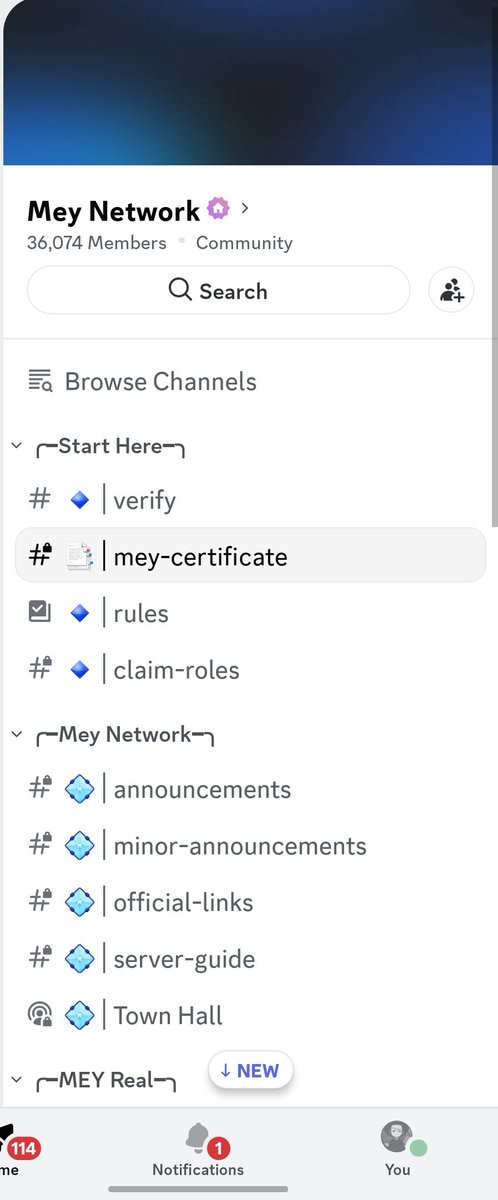
Mey network is rewarding everyone that joins their discord
Claim your certificate
Follow @Mey_Network on X
discord.gg/fG7TryvYV5
RT & like. ❤️
Drop your screenshot of you joining through this invite rewarding the first 10 people good like
RT & like. ❤️
18
8
33
756
Jan 18
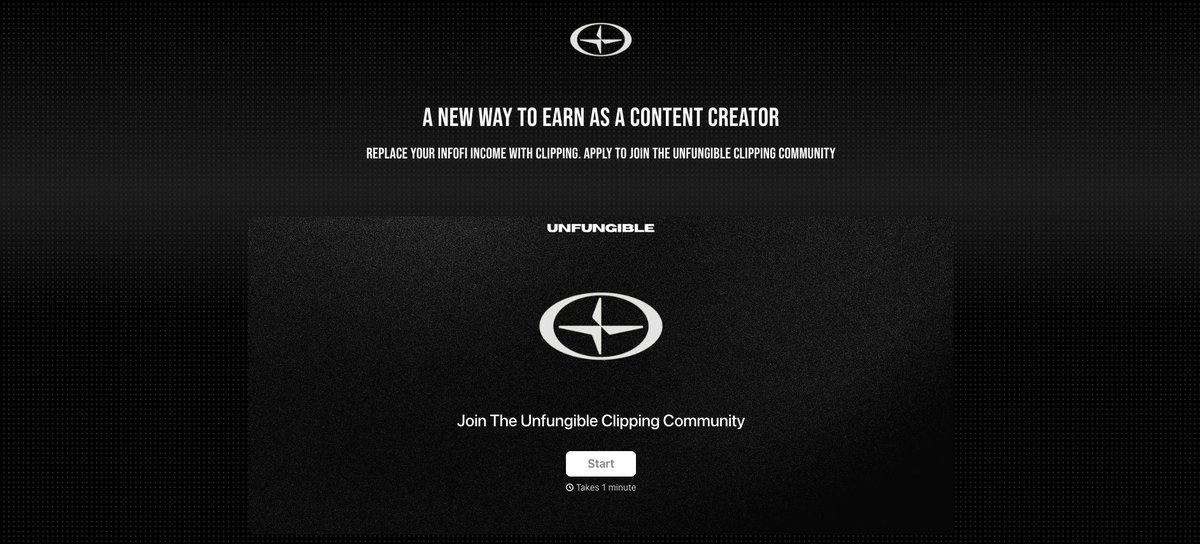
Clipping is the new underrated alpha.
No too much skills required, apply now to join Unfungible Clipping Cabal.
Jan 16

If you are InfoFi creator impacted by the recent X API change, there’s a better way to earn.
It's called Clipping.
Our clipping community helped creators replace their InfoFi income, distributing $50k in rewards in the last 60 days.
Apply to join via the link in bio.
47
Jan 18
Checking out Arc ecosystem.
--> ArcFlow
@ArcFlowFinance is a native DEX & liquidity layer on @arc
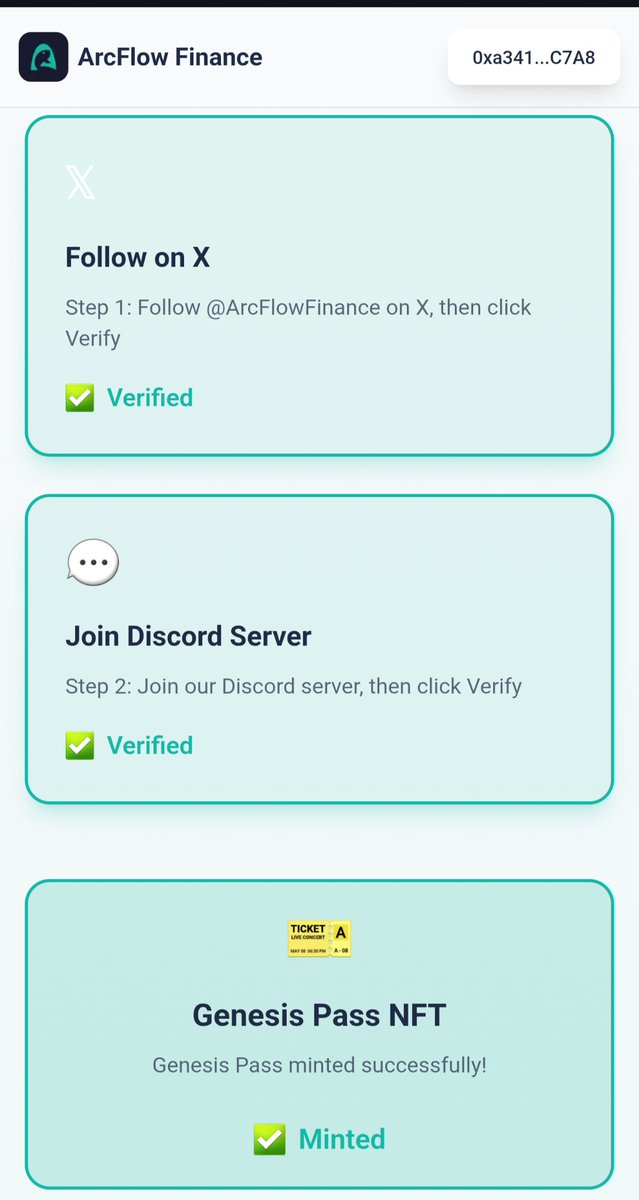
Step by step guide :
• Go to: arcflow.finance
• Connect wallet
• Follow X, join Discord
• Mint Genesis pass
• Post about ArcFlow on X, submit link and mint activity NFT
Go to engage with ArcFlow testnet by carrying out swaps and providing liquidity: app.arcflow.finance
Link to faucet: app.arcflow.finance/faucets
That's all for now.
50
Jan 15
I need lists of smart followers :(
Jan 15

We are revising our developer API policies:
We will no longer allow apps that reward users for posting on X (aka “infofi”). This has led to a tremendous amount of AI slop & reply spam on the platform.
We have revoked API access from these apps, so your X experience should start improving soon (once the bots realize they’re not getting paid anymore).
If your developer account was terminated, please reach out and we will assist in transitioning your business to Threads and Bluesky.
13
Jan 15
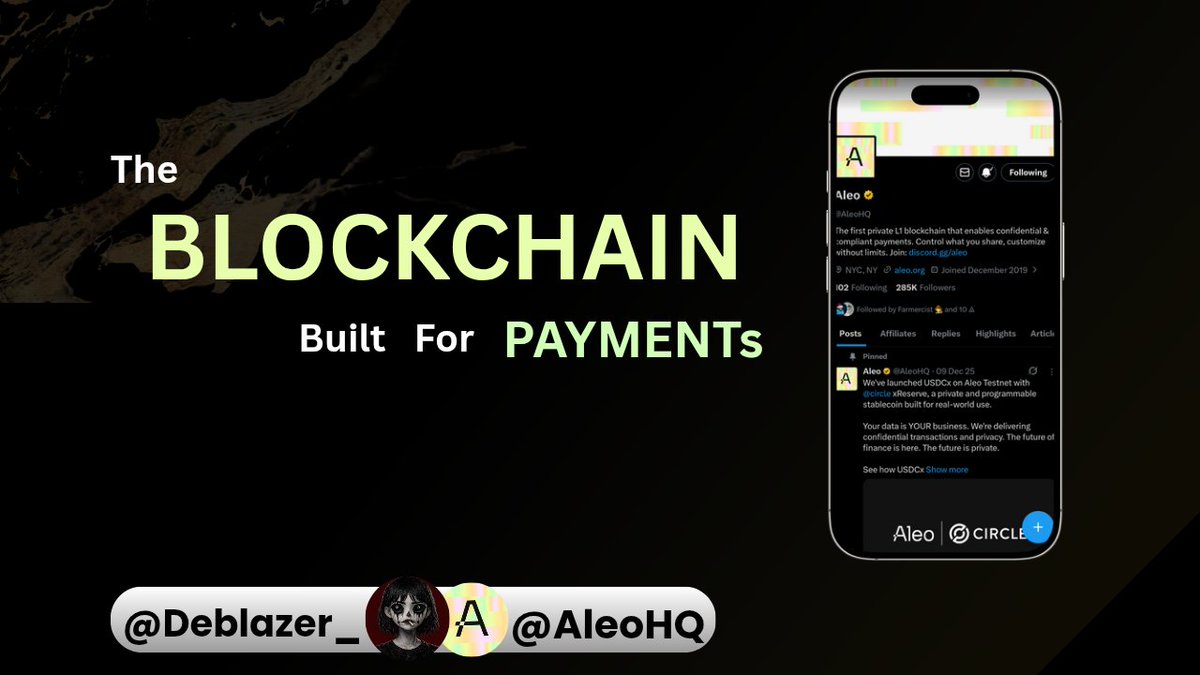
Over the years, working closely with people and systems, one thing has become very clear to me: most blockchains were not built with privacy in mind. They exposed everything by default, including transactions, balances, and application data, and then tried to fix the problem later with add-ons. From what I have researched so far, Aleo took a different path from the beginning.
When I first studied Aleo, what stood out immediately was its foundation. Aleo is a Layer-1 blockchain designed so that privacy is native, not optional. From the moment a transaction or application runs on Aleo, privacy is already there. Users do not need to trust third parties or rely on extra tools to protect their data. The system itself is built to respect confidentiality. Aleo uses zero-knowledge cryptography. I have seen many systems claim privacy, but Aleo applies zero-knowledge proofs in a practical way. These proofs allow the network to confirm that a transaction or computation is correct without seeing the actual data. In simple terms, Aleo can say “this is valid” without knowing private details like identities, amounts, or internal logic. That alone changes how trust works on a blockchain. Aleo is not focused on hype, but on real use cases. Private payments, stablecoins, confidential payroll, business transactions, private DeFi, and identity protection are areas where transparency can cause harm instead of trust. Aleo is built for those realities.
One thing I appreciate is that Aleo does not treat privacy as rebellion against regulation. Instead, it treats privacy as user ownership of data. Users decide when information should be revealed, rather than having everything exposed by default. This makes Aleo more realistic for long-term adoption in the real world. If you check @AleoHQ and the official website, you will notice that Aleo communicates progress openly, sharing technical updates, ecosystem growth, developer tools, partnerships, and education around zero-knowledge technology. It reflects a team focused on building, not just marketing.
With experience observing how humans interact with technology, I see Aleo as a response to one of blockchain’s biggest failures, exposing users by default. Aleo is not trying to make everything secret, but to make privacy intentional, programmable, and compliant. While the technology is complex and adoption will take time, Aleo stands out as one of the most serious efforts to build a privacy-first blockchain that can actually work in the real world.
6
1
774
Jan 12
I would love to learn more skills, and social media management is one of them.

I am taking Social Media Management interns ‼️
I’ve spent 5 years in Web3 working with top-tier companies and I’m opening the door for a few serious people to learn through real, hands-on experience.
→ You’ll learn for free 🔥🙂↔️
→ Must be proactive, reliable & hungry to grow
→ Laptop & stable internet required
→ Must be following me, @growthinweb3 & @Callme_Fade
Quote this post with why I should mentor you.
Offer closes by 19th January!
Follow, Like, RT, bookmark, comment & tag 5 friends

1
110
Jan 12
Dear reply guy
Don't waste your reply
Reply counts on @Zetarium_
Don't fade @Zetarium_
Make your reply count
#zetarium
17
Jan 9
There was a man who sold things online, He put in a lot of effort. Customers from different parts of the world buys from him, but he receives the payment with big payment companies like PayPal and Stripe.
One faithful morning, the man woke up and saw a message.
“Your account has been frozen.”
He was confused.... He knew very well that he did nothing wrong, but the company held his money. He could not touch it nor use it. He sent messages. He waited many days before he git response.
That was when he learned something important:
" The money was never really his."
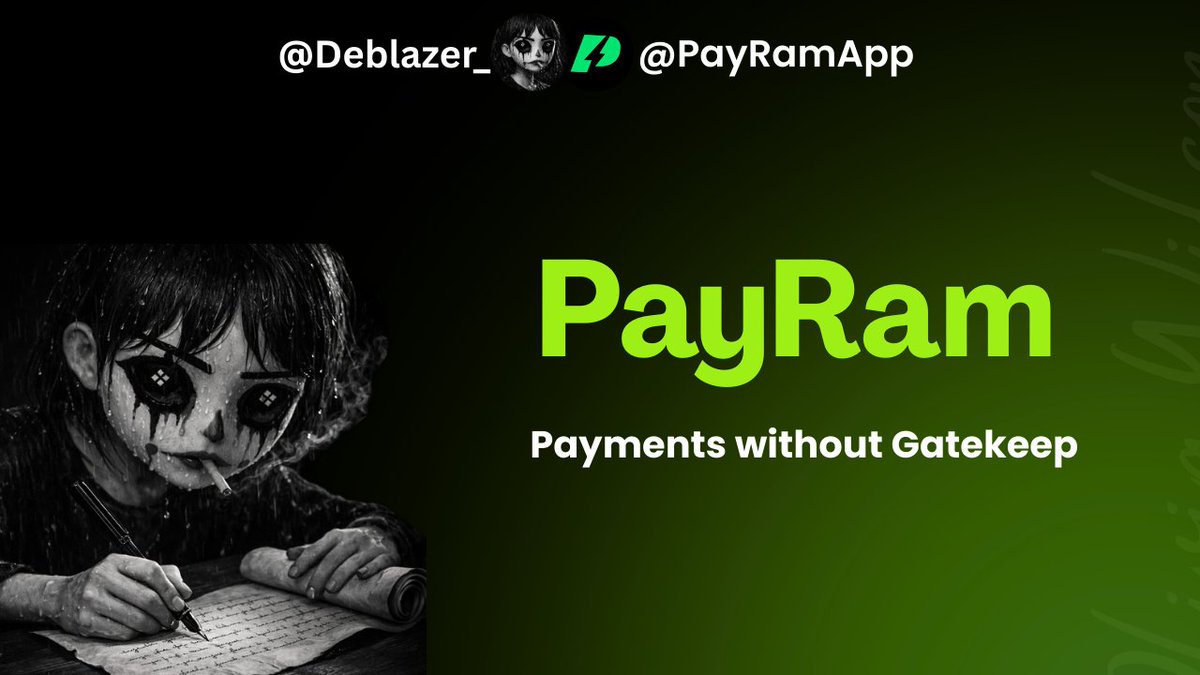
That problem is why PayRam was created.
PayRam is a self-hosted, non-custodial stablecoin payment system.... PayRam is actually a tool that helps people receive money online without another company holding their money.
With PayRam, the business owner installs the system on his own server. No bank or company controls it. The owner is in full control.
PayRam does not keep money for anyone. It only helps payments move from the customer to the seller.
PayRam allows people to pay using stablecoins.... This makes business safe and easy.People can pay from anywhere in the world.
PayRam works on different blockchain networks like TRON and other EVM networks. Some networks are cheap, while some are fast. The business owner can choose what works best.
The most important part is that, PayRam never touches the money. When a customer pays, the money goes straight from the customer’s wallet to the seller’s wallet. PayRam cannot see the private key, they cannot hold the money, they will never freeze the money nor even delay or reverse the payment. Once the money is sent, it belongs to the seller fully.
PayRam also gives each customer a special payment address. This is called a Customer Deposit Wallet. Because of this, the seller can know who paid and how much they paid.... It is neat and safe.
PayRam does not collect plenty of personal information. There is no forced KYC, neither heavy monitoring. This helps people who live in places where banks do not work well or where payment companies like to block accounts.
PayRam also has useful tools. Sellers can create payment links, send invoices, design their payment page, and see all payments on a dashboard. There is also a tool called SmartSweep, which can move money automatically to a safe wallet.
In today’s world, many companies want control. PayRam gives the control back to the owner. It allows people to sell, get paid, and keep their money without fear.
That is why PayRam is important.
Checkout @PayRamApp
8
8
45
607
Jan 7
For a long time, climate action has been about looking backward.
We pollute, we count it and we try to fix what already happened.
But the truth is simple:
Counting the past does not always change the future.
That is why @ClimateCreditAI exists.
Climate Credit was created because many climate systems today focus on reports, not real action. They talk about emissions already reduced, but they don’t always help new climate projects get the money they need to start and grow, Climate Credit is trying to fix that.
Instead of waiting for impact to happen first, Climate Credit focuses on funding climate projects before the impact comes. Because without early money, many good climate ideas never move past paper.
They're building a system people can trust.
Companies and institutions want to support climate action, but they need proof. They need to know their money is doing real work, not just sitting inside a report. Climate Credit is built to give that confidence, using clear tracking and proper verification.

2
68
Jan 7
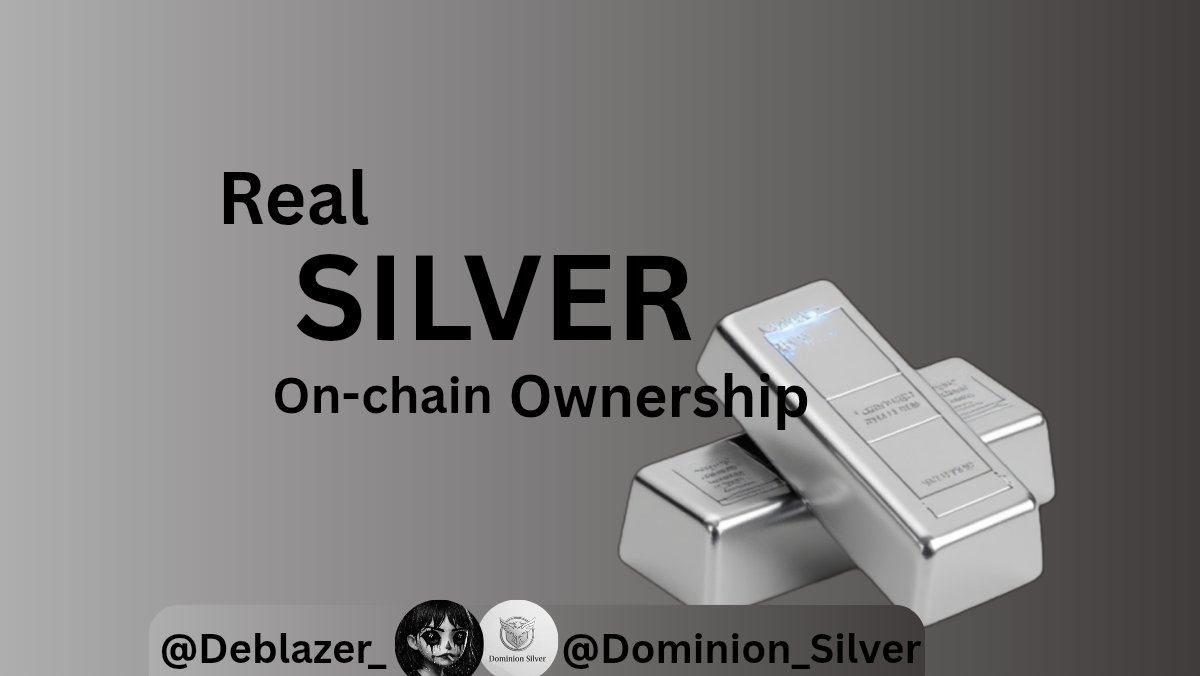
One day, I was talking to a friend about saving money. He told me he owns silver. I asked him a simple question: “Where is the silver?” He opened his phone and showed me an app. I saw numbers and a chart, but I did not see silver. That moment made me think. Many people say they own silver, but they do not touch it or see it.
They only see numbers on a screen. While researching, i came across @Dominion_Silver
🧵🔻
2
11
44
388
Jan 7
While reading further on Dominion Silver’s website, I saw how everything connects to one thing: the $SILV token.
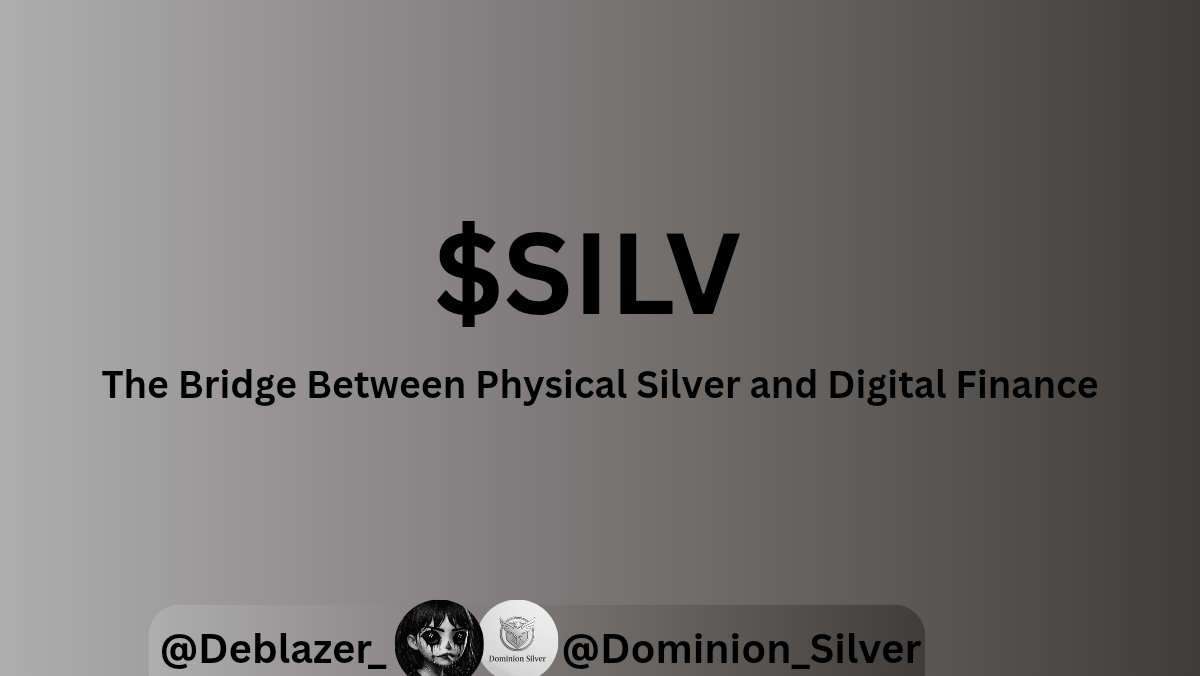
$SILV is the digital proof of ownership. It represents real silver that is already stored safely. Each token is backed by physical silver. When someone holds $SILV, they are not just following silver price. They are holding a claim to real silver. The blockchain keeps the record of who owns what. This makes ownership clear, easy to check, and easy to move. The silver stays real.
$SILV simply shows who owns it.
1
2
44
Jan 7
Dominion Silver is not trying to change silver.... They are trying to change how we own it.
In a world where many assets are only numbers on a screen, Dominion Silver is asking a simple question again:
If silver is real, should ownership not be real too?
Before you say you own silver, ask yourself one question:
Can you point to it?
If this question matters to you, then Dominion Silver and $SILV are worth understanding.
@superteam x @Dominion_Silver
2
34