
African diaspora. Watching power, intervention, and information wars shaping Africa. Beyond the headlines. Anti-imperial. Unaligned. Feminist.
Joined December 2023
- Tweets 171
- Following 231
- Followers 515
- Likes 79
2 Photos and videos
Pinned Tweet

May 29
The case for recognising Somaliland is strong on its own terms. Democratic. Stable. Self governing for 35 years. The Red Sea argument just made it stronger. But African sovereignty should not need a American strategic crisis to become legible to the world. Somaliland deserved this in 1991. The fact that it took Iran closing Hormuz to get here is the part worth sitting with.
foxnews.com/world/iran-houth…
21
43
211
5,760
Riyadh is engineering a civilian government around Sudan’s General Burhan and hoping we don't notice what they're trying to do.
Saudi Arabia is piecing together an internationally acceptable civilian facade to prop up the Sudanese Armed Forces leader while the war grinds on millions displaced, famine spreading, drones overhead.
This isn’t neutral mediation. It’s Riyadh choosing sides in Sudan’s conflict, securing its Red Sea interests and influence by dressing military rule in civilian clothes.
Sudan is not a Gulf chessboard. No more external powers installing “legitimate” fronts for their preferred warlords while African civilians pay the price. Real sovereignty means Sudanese civilians leading not Saudi-brokered puppets in a endless proxy game.
africaintelligence.com/easte…
1
12
Nigeria is facing an Islamist reckoning.
Recent school abductions and brutal teacher beheadings in Oyo State deep in the southwest have shattered the old narrative that this is just banditry or farmer-herder clashes.
The religious symbolism, demands for future legal concessions, and clear jihadist tactics show Boko Haram and its affiliates pushing southward in their long war for a Sharia theocracy.
For years external analysts and local elites downplayed the theological drive behind the violence. Now the threat is reaching new regions while the state struggles to contain transnational networks exploiting porous borders.
This is not just Nigeria’s internal security failure. It is the painful cost of unresolved post-colonial fractures: weak sovereignty, ungoverned spaces, and imported extremist ideologies turning African soil into endless battlegrounds.
Nigerians deserve real stability and control over their own destiny, not endless cycles of terror and denial.

"Boko Haram and its affiliates’ decades-long campaign to impose a Shariarist theocracy on Nigeria has entailed infinitely more abductions and gorier killings," argues expert Ebenezer Obadare. cfr.org/articles/nigerias-is…
1
67
Naomi Conteh retweeted

The World Cup is exposing an uncomfortable truth about international relations: citizens of countries in the Global South face systemic discrimination in visa and immigration procedures.
77
1,130
4,130
59,778
Jun 15
Somalia’s uranium of over 10,200 tons should be building African futures. Instead Türkiye pushes deeper into the resource scramble, another outsider claiming strategic minerals as sovereignty gets traded piece by piece.
africa.businessinsider.com/l…
3
14
29
1,509
Jun 15
Egypt’s days as the self-appointed big brother of the Nile are over.
South Sudan has forced Egypt to shut down its strategic military outpost in Pagak, Upper Nile a forward base with surveillance gear and 260 troops monitoring the GERD and Nile waters right on Ethiopia’s border.
Juba’s order strips Cairo of its key intelligence foothold in the interior. For years Egypt has used military footholds and colonial-era water claims to maintain downstream dominance over the Nile Basin.
This closure, amid South Sudan’s alignment with upstream states, marks a direct rejection of that imperial-style control. No more treating African rivers as Egypt’s private monopoly or upstream nations as outposts. The Nile belongs to those who live on it not to Cairo’s encirclement games.
Sovereignty is finally pushing back.
africaintelligence.com/north…
8
19
66
5,100
Naomi Conteh retweeted

Jun 14
Xenophobia in Africa’s southernmost nation will have vast implications for the continent. foreignpolicy.com/2026/06/12…
1
13
18
4,176
Jun 14
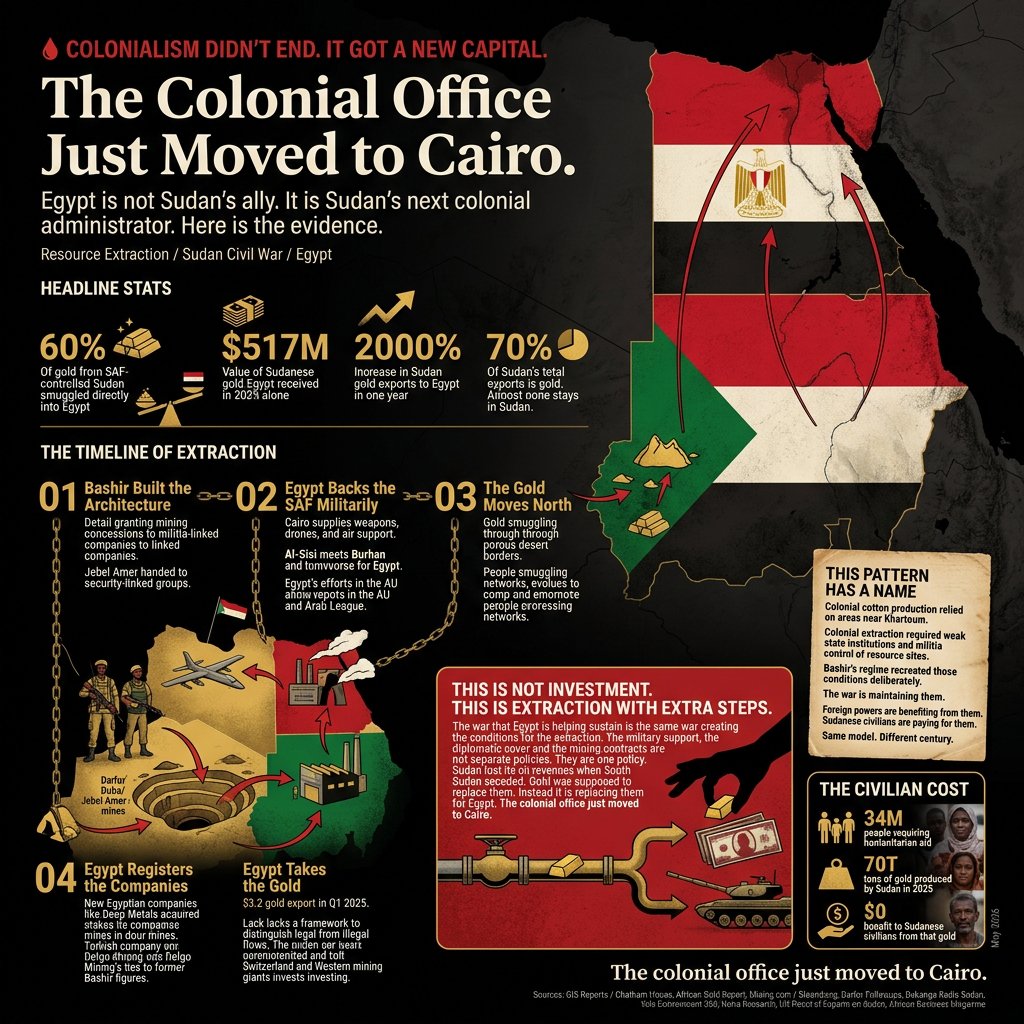
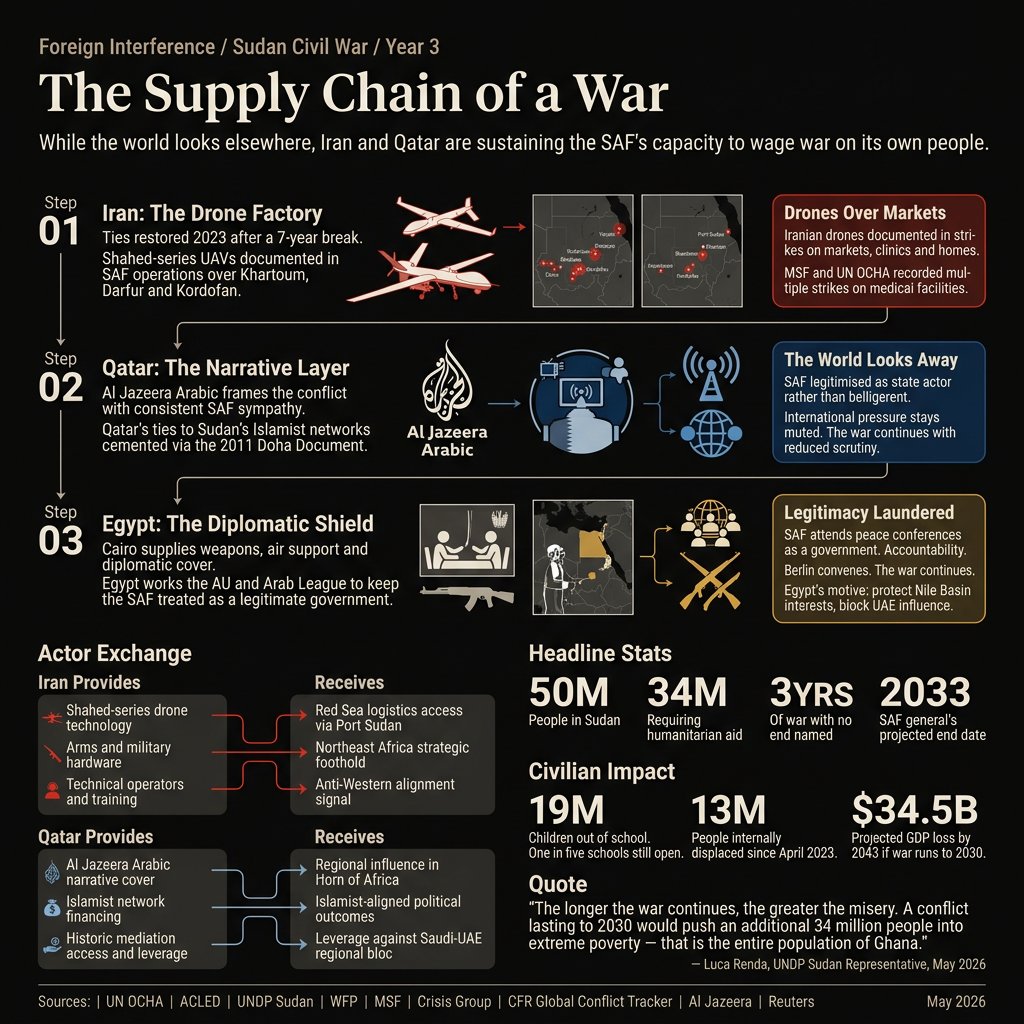
Western Sudan’s vast livestock trade, one of the world’s largest, can only move through Port Sudan’s facilities. Tehran’s military backing of the SAF, complete with drones and port access ambitions, fuels the stalemate and entrenches another imperial foothold on African soil.
arabnews.com/node/2647073/am…
1
2
4
432
Naomi Conteh retweeted

The hidden terms of Chinese investment and aid in Africa l.theafricareport.com/npn
1
4
7
1,484
Jun 14
Somaliland opens a new representative office in Taiwan and insists on its right to pick partners. Beijing and Mogadishu keep applying pressure, but African decisions keep getting treated as open for outside veto. Interesting.
reuters.com/world/china/soma…
3
2
8
308
Jun 11
Foreign Affairs acknowledges what is increasingly clear: America is losing command of the global commons.
The post-WWII order in which the US unilaterally policed sea lanes, chokepoints and trade routes under its military umbrella is fraying. Asymmetric actors, drones, missiles and coastal denial strategies are raising the cost of dominance. Rerouted shipping exposes the fragility.
This is not mere technical decline. It marks the erosion of the architecture through which one power claimed to guarantee the "free seas" while shaping them to its strategic and economic advantage intervening where needed, securing resource flows, and projecting power across the Global South. For Africa and the Global South, the implications run deep.
Maritime routes, energy corridors and economic lifelines are becoming sites of contestation rather than smooth domains of external management. The era of one empire securing (and defining) the maritime order is ending.
Jun 10

Washington still fields “the world’s most capable force of aircraft, warships, and submarines,” writes @IBKardon. But “the efficacy of U.S. military power in contested littoral zones” is eroding.
foreignaffairs.com/united-st…
2
89
Jun 11
China's Hengli Petrochemical, freshly sanctioned by the US, is now hunting West African and non-Iranian Middle Eastern crude to keep its refineries running.
Same playbook, different flag. Beijing's "win-win" partnerships have long meant debt, influence, and resource outflows from Africa while local communities see little sovereignty or benefit. Sanctioned or not, this scramble for African oil exposes the extractive core of Chinese engagement: secure the barrels, lock in the leverage, talk south-south solidarity.
Africa should not just be a fuel depot for great power competition whether Western sanctions, Russian mercenaries, or Chinese refiners.
Real decolonisation demands control over our own resources and an end to every external actor treating the continent as a supply line. African agency first. No more resource curses dressed up as partnership.
reuters.com/business/energy/…
3
2
6
531
Jun 11
UNHCR reports fewer people forcibly displaced in 2025 the first drop in a decade with 14.7 million returns, especially to Sudan, DRC, Syria, and Afghanistan. This is no victory.
Many were pushed back by hostile host policies, depleted resources, and desperation in returning to destroyed homes, insecurity, and collapsed services. Displacement is not a neutral statistic. It is the human cost of prolonged conflicts, external interventions, and power plays that treat African and Global South lives as collateral.
70% remain in long-term exile, mostly hosted by poorer neighbours, while root causes resource extraction masked as security, proxy wars, and failed settlements go unaddressed. Managed suffering is not solutions. Real change demands African agency and an end to the cycles of instability that profit external actors.
Jun 11

The number of people displaced worldwide by conflict and persecution fell in 2025 for the first time in a decade, but levels of refugees facing long-term displacement remain unacceptably high, a U.N. refugee agency report said on Thursday. reuters.com/world/unhcr-says…
1
2
130
Naomi Conteh retweeted

Jun 11
Pope Leo heads to Canary Islands to highlight perilous journeys of migrants bbc.in/4v24gkK
71
80
520
62,017
Jun 10
Wagner secures the mining sites. Rwanda linked businesses take the contracts. The CAR government stays in power. Wagner's model promised security while advancing resource extraction, political influence and great power posturing. Rwanda mixes security assistance with economic ventures while Central Africans fear organised predation. Every actor arrived with a security rationale. Every actor is leaving with resources. The country changes. The architecture does not.
theafricareport.com/421387/c…
1
5
304