
Fellow @EppcDC, Krauthammer Fellowship director @tikvahfund, bioethics column @mosaicmag. Contrib. editor @publicdiscourse @mosaicmag
Joined April 2023
- Tweets 2,306
- Following 839
- Followers 403
- Likes 20,728
41 Photos and videos











Devorah Goldman retweeted

Jun 11
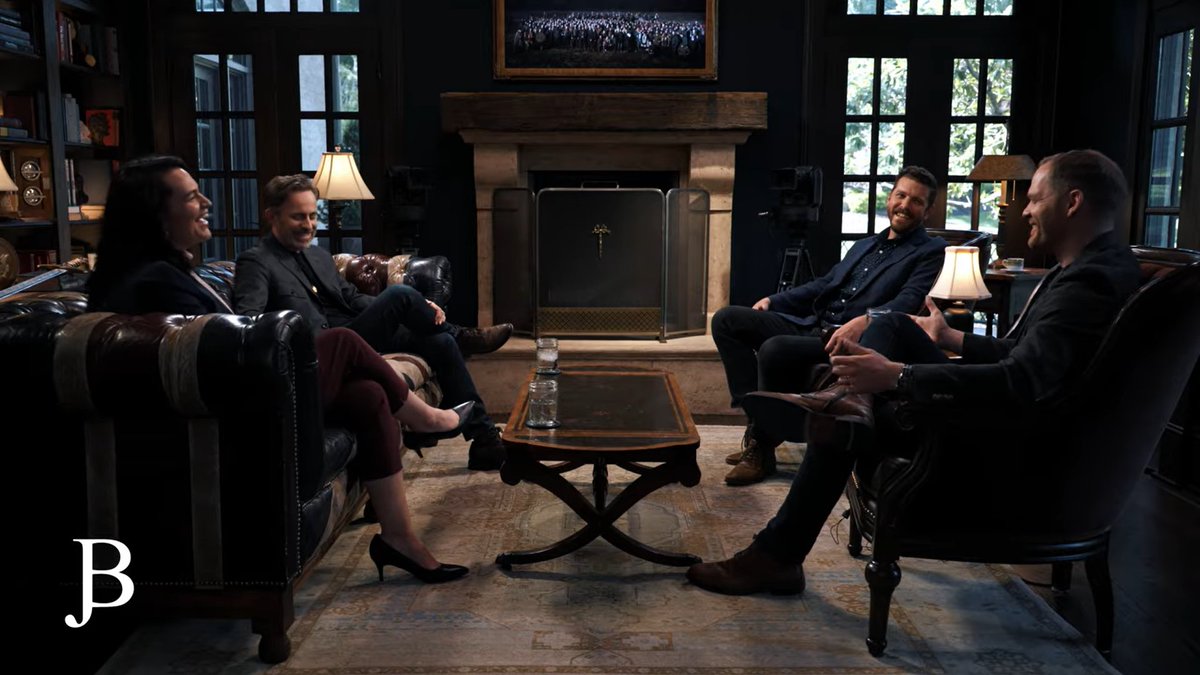
Some overdue personal news for those who don't already know, I'm working as a producer on The Jeremy Boreing Show!
Jeremy's wisdom and unique vision are desperately needed in the media space today, and I'm honored to be a small part of building something new with him.
If you haven't tuned in yet, I hope you do. I think this show is really something special.
299
187
3,226
83,168
Devorah Goldman retweeted

May 21
Announcing our kickoff webinar for #FideiltyMonth 2026! Featuring @McCormickProf, @erikabachiochi, @RealBenCarson, and @DevGoldman on fidelity and the Declaration. #America250. Register below👇

2
9
13
3,080
Devorah Goldman retweeted

Applications for the Richard John Neuhaus Fellowship on American Flourishing are open.
Those interested in exploring the Judeo-Christian tradition and its role in shaping public policy should apply by July 3rd!
publicinterestfellowship.org…
6
6
754
Devorah Goldman retweeted

I loved being part of @YUNews graduation today. Had fun playing some tunes!
May 28

Unbelievable moment at today’s @YUNews commencement: the great Joey Newcomb and @GovMikeHuckabee jamming to a Diaspora Yeshiva Band classic.
22
33
417
26,778

May 29
Excellent monologue on war by @JeremyDBoreing. Glad to see it featured in @mosaicmag's picks and hope it gets many more views! ideas.tikvah.org/mosaic/pick…
1
3
8
302
May 26
Delighted to have started this new project with @mosaicmag at @tikvahfund.
May 26

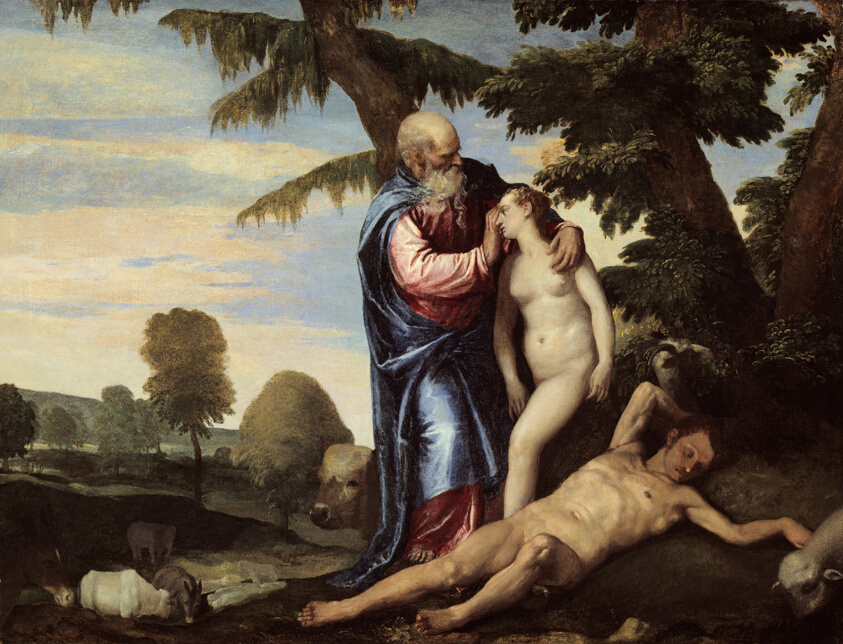
Today, Mosaic begins a recurring column by Devorah Goldman on medicine, bioethics, technology, and what it means to be created in the image of God. What does the creation of Eve tell us about the human condition that medicine has forgotten?
ideas.tikvah.org/mosaic/obse…
1
5
4
570
Devorah Goldman retweeted

May 25
“Don’t you dare tell me it’s all Jewish propaganda.”
Aaron Maclean shares a story about his father, a U.S. Army officer who helped liberate Dachau, and why living memory matters more than ever.
Watch the full conversation with Sir Niall Ferguson on School of War.
podcasts.apple.com/us/podcas…
24
236
1,133
61,260
Devorah Goldman retweeted
Applications for the Richard John Neuhaus Fellowship on American Flourishing are now open until July 3rd.
Those interested in exploring the Judeo-Christian tradition and its role in shaping public policy should apply today!
publicinterestfellowship.org…
9
10
1,299
Devorah Goldman retweeted

May 17
“By my count, the syllabus assigns roughly 45 pages of canonical Western philosophical writing across the entire quarter, against more than 500 pages of contemporary work organized around identity, oppression and indigenous ways of knowing ... There is no Aristotle, no Augustine, no Aquinas, no Montaigne, no Locke, no Mill, no Newman, no Steiner, no Bloom — none of the writers who built the case for liberal education that the course claims to defend. A course advertised as a defense of liberal education has been built without the thinkers who defined it.” @imarinovic demolishes the disastrous new @Stanford freshman program.
115
883
5,022
268,931
Devorah Goldman retweeted

May 15
The longer I live, the clearer it becomes to me that people will have a religion, or something that plays the role in their lives played by religion in the lives of people of faith. The only question is what religion (or pseudo-religion) they will have, and whether it will be a good one or a bad one--one that upholds human dignity and teaches genuine virtue, or one that does not.
59
129
838
46,420
Devorah Goldman retweeted

May 15
The country's first detransitioner clinic will be opening!!!
And it will be at Texas Children's Hospital!!!
AS PART OF A $10 MILLION DOLLAR FRAUD SETTLEMENT!!!!!
The Glory goes to G-d!
And the team of people who were willing to burn down their lives to do the right thing when it was the hardest thing to do.
May 15

Attorney General Paxton Makes History by Securing a Landmark Healthcare Fraud Settlement that Creates the Nation’s First-Ever Detransition Clinic and Secures $10 Million from Texas Children’s Hospital for “Transitioning” Kids:
texasattorneygeneral.gov/new…
19
72
422
12,121
Devorah Goldman retweeted

May 14
My dad built something truly special out of nothing.
He walked away from a lucrative Big Law job to launch something unheard of--fighting for everybody's religious liberty? Even the religions you disagree with?
It was a huge risk--he would always half-joke that in Becket's first office, you couldn't open the door all the way because it would hit his desk. They had many tough months getting off the ground--and he always paid himself last, if at all. But he never lost faith because he knew in his heart he was doing it in service to God.
Today, Becket has dozens of Supreme Court precedents--Little Sisters of the Poor, Hobby Lobby, etc--to its name and is largely responsible for the words "under God" remaining in the Pledge of Allegiance.
My dad kept running Becket while battling Parkinson's for years--and then had the humility to step away when the time was right (a rare trait in Washington!)
A truly special organization founded by a truly special man.
May 13

32 years ago today, Seamus Hasson opened Becket’s doors—the only nonprofit law firm dedicated to defending religious freedom for all. Since then, Becket has secured victories for people of all faiths in courts across the country and built an undefeated record at the Supreme Court with 13 wins. Take a closer look at Becket’s impact: youtube.com/watch?v=-lU6jV0o…
35
178
1,089
121,464
Devorah Goldman retweeted

May 12
October 7 barbarism beyond all imagination: New report details how terrorists performed almost unimaginable horrors upon Israeli families trib.al/SlA19xo
253
1,052
2,999
407,996

Kristof’s Unbelievable Tale in today’s @wsjfreeex wsj.com/opinion/free-express…
47
110
711
61,697
Devorah Goldman retweeted

May 10
Wonderful conversation with @KassyAkiva about her journey to Judaism and conversion. The Jewish people are so blessed to have such an extraordinary Eishes Chayil in the family. podcasts.apple.com/us/podcas…
4
12
99
12,218
Devorah Goldman retweeted
Ryan T. Anderson Reflects on Ethics and Public Policy Center's 50th Anniversary
youtube.com/watch?v=LqVqSy4z…
7
10
4,414
Devorah Goldman retweeted
Smartphones, social media, pornography and AI chatbots threaten sex, marriage, and fertility.
Read the new report here: eppc.org/publication/tech-an…

3
4
503
Devorah Goldman retweeted

Apr 27
What an incredible comment. If you don't follow @HusseinAboubak, you are missing out on greatness, routinely.

You are essentially asking why there is no arc that leads to redemption in the modern Arabic novel. That is an excellent question.
There are two established frameworks for answering it. The first is postcolonial: the darkness of the Arabic novel is the darkness of colonized peoples working through historical trauma. The second is civilizational: Arab and Muslim culture lacks a moral architecture for redemption and falls back on ruthlessness and darkness. Both are grand, sweeping, and, in my humble opinion, mostly wrong — or rather, mostly ideological. Each reproduces its own premise as its conclusion. You cannot accept the postcolonial answer without first accepting a Leninist analysis of imperialism and culture. You cannot accept the civilizational answer without first accepting a developmental schema in which the Arab world is measured by what it lacks relative to Europe. Neither explains; both presuppose.
What if the answer is simpler? What if, instead of reaching for macro-historical frameworks, we look at the men who actually wrote these novels? Given an understanding of how Western elites led their own society into a trajectory of kitsch and ugliness, one should be sympathetic to the idea of an elite-led cultural collapse, which is what I believe happened in the Middle East.
The major Arab novelists of the twentieth century belong, almost without exception, to a single class: the radically secularized cultural elite. Many are radical atheists. They passed through European or European-style education and emerged having internalized a very specific moment in European intellectual history — its most spiritually nihilistic moment, usually through France and Germany. They absorbed existentialist despair, naturalist determinism, and post-Enlightenment nihilism. They did not arrive at darkness through the pressure of their own civilizational or colonial experience, etc. They adopted it, consciously, from a European literary discourse that was itself already a symptom of spiritual crisis.
Here one must invoke René Girard's concept of mimetic contagion, because what happened next is textbook mimetic dynamics. The first generation were still imitating Europe directly. They had read their Flaubert, their Camus, their Dostoevsky-without-the-Christianity, and they wrote in conscious dialogue with those models. But the imitation did not remain at this level. What emerged very quickly was a self-referential, closed literary discourse in which Arab novelists began imitating each other. The model was no longer Europe itself but the image of Europe already internalized by the previous Arab novelist. Darkness became the mark of seriousness. Nihilism became the credential of literary authenticity. The bleaker the novel, the more "realistic" it was judged to be — where "realism" had long since ceased to describe any actual relation to reality and had become instead a term of prestige within the closed circle of the discourse itself. It became pure unreality. This, of course, applied to the modern history of European aesthetics as well. Realism means ugliness, for some degenerate reason.
This is mimetic rivalry in its purest form. Each new novelist must outdo his predecessor in despair in order to be recognized as serious. Rape, dismemberment, political torture, sexual degradation — these escalate not because Arab reality is uniquely brutal (it actually became so brutal largely as a result of this tradition, in my opinion) but because the internal logic of the literary discourse demands perpetual intensification. The audience for this literature is not the broad Arab public, which largely does not read these novels. The audience is the discourse itself: other novelists, critics, prize committees, translation editors in Paris and London who have their own mimetic investment in the image of the Arab world as a theater of darkness. The award-selection algorithm is the mechanism by which the mimetic cycle reproduces itself. The prizes reward the darkness, the darkness attracts the prizes, and the entire circuit operates at a comfortable distance from any lived reality — which contains, as all human reality does, suffering and joy, cruelty and tenderness, despair and faith. One must then ask: what is the expected result when such dispositions are crowned at the top of a semi-literate and developing society? One may even go deeper and suggest that later Arab real-world nihilism, political and religious, is related to this.
Dickens does not write humane novels because Victorian England was a kind or gentle place. It was monstrous. He writes humane novels because he writes from within a Christian moral structure that remained functional even as it was being secularized — a structure in which characters can change and redemption is a live possibility. The same holds for Tolstoy and George Eliot. The Arab novelists in question do not work within any equivalent — not because Arabic or Islamic civilization lacks one, but because these writers personally rejected the one available to them and replaced it with borrowed European despair.
They were writing a century after Dickens.
Dostoevsky was, of course, a revolutionary nihilist who became genuinely Christian, and that is why his works trace an arc through the deepest despair and onward to redemption. The last major European work that attempted to reach redemption at all was, I believe, Richard Wagner's Parsifal — which Friedrich Nietzsche hated profoundly, writing: "I despise everyone who does not experience Parsifal as an attempted assassination of basic ethics... an outrage upon morality." It is not an accident that the last work Roger Scruton wrote before he died was a monograph on Parsifal. I am here only right, of course, if we exclude redemptive works like Tolkien's Lord of the Rings — which was in many ways a response to Wagner and late Romanticism — from the canon of high culture, which the Western cultural elite indeed does exclude.
The darkness of the Arabic novel is the voice of a specific class of intellectuals who chose the most despairing available version of European modernity and made it the dominant register of serious Arabic literature. The redemption is absent because the men who write have decided, as a matter of intellectual conviction, that redemption is no longer a serious category. Nietzsche himself wrote that "redemption" is one of the most repulsive words.
The great partial exception is Naguib Mahfouz. His career begins in social realism — the Cairo Trilogy is a genuine attempt at the Dickensian novel, and it nearly succeeds. It then passes through crisis: Children of Gebelawi is the patricide, the allegory in which God is killed. But Mahfouz, unlike his contemporaries, could not rest in the nihilism. His late work represents a sustained effort to retrieve faith and redemption from within the wreckage. His oeuvre is really to be read as one man's journey out of post-Christian nihilism. He is the one major Arabic novelist who turned back. That is what makes him the greatest of them, and it is also what is most consistently missed in how he is read.
He began his career writing as his peers wrote. Then he separated from them, and spent the remainder of his life writing allegories about seeking the Father who had been murdered or forgotten.
6
12
126
33,111
Devorah Goldman retweeted

Apr 26
If you want to see how misinformation goes viral on here.
An account with 350 followers posts an AI image of the shooter wearing an IDF sweatshirt and claims it’s from Insta. No link or anything.
Mario then promotes that claim to his 3.4 million followers as if it’s factual.
88
477
2,336
148,952
Devorah Goldman retweeted

Apr 26
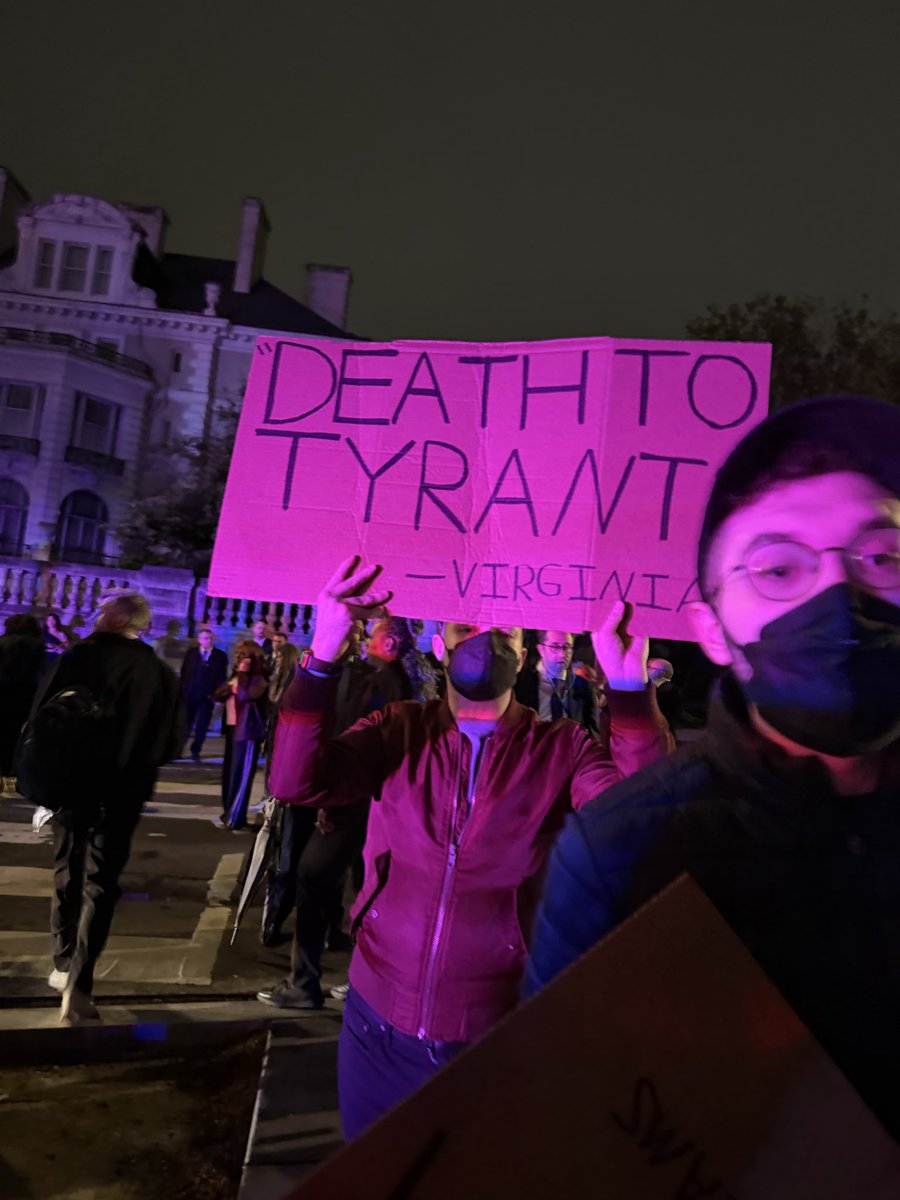
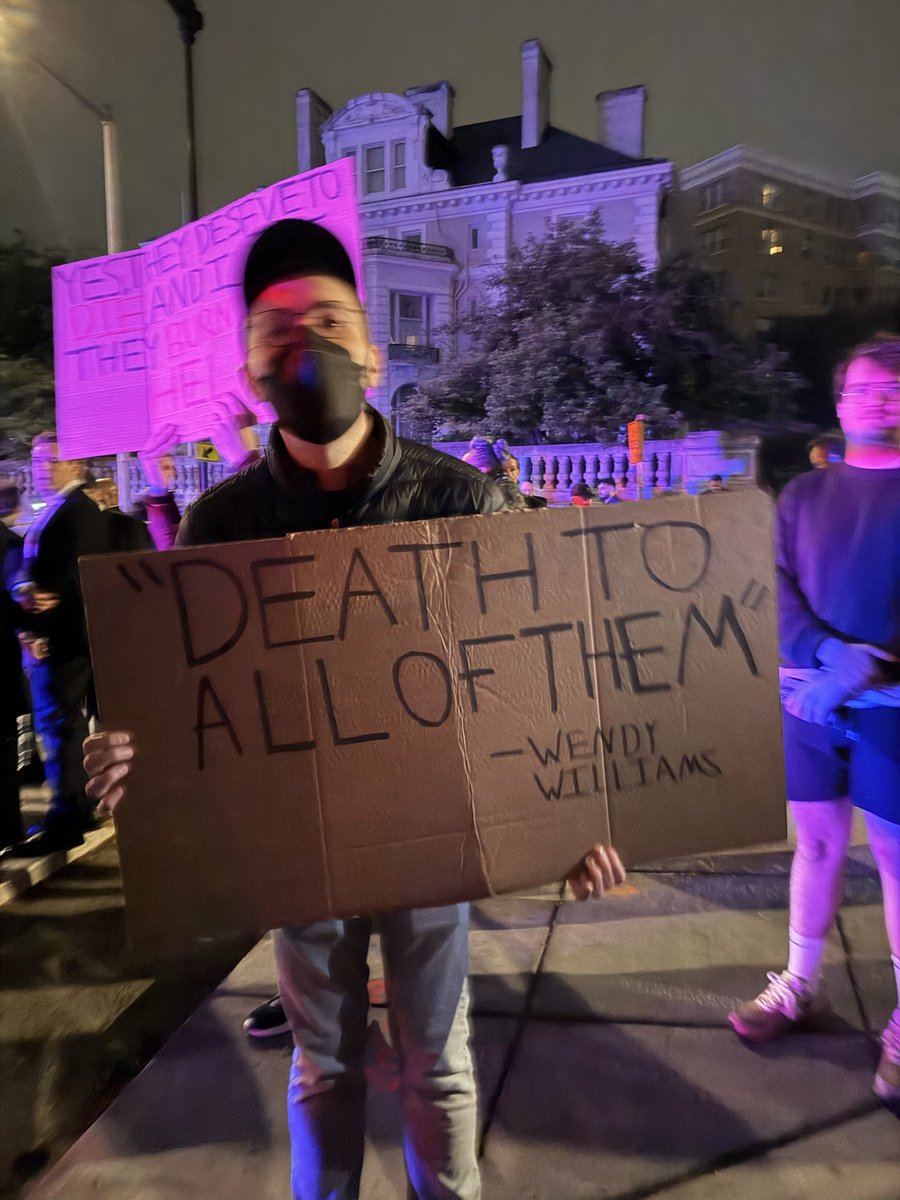
As my colleagues and I walked toward the Hilton for the White House Correspondents’ Dinner, a man shouted “F*** you!” right at us — simply because we were attending.
Later that night, after the shooting, we were running to the White House for the briefing when we passed three teenage girls glued to their phones, reacting to the news. One of them said, “Aw man, I wish they got him,” and her two friends giggled.
That moment stopped me cold. When our young people casually cheer for violence like it’s a game, we have a serious problem. Radicalization isn’t some abstract issue — it’s showing up casually in everyday conversations and in our kids’ attitudes.
Apr 26

Meanwhile outside WHCD, the dude on the right hit me with his sign
1,155
7,310
24,405
830,938