Joined June 2025
- Tweets 128
- Following 19
- Followers 650
- Likes 5
1 Photos and videos

Mar 12
Your Terraform state file contains plaintext secrets and maps every resource you own.
Most teams treat it like a build artifact.
Here's how that comes back to bite you — and what to do about it before you have 50 workspaces: 🧵
1
4
52
Mar 12
Full deep-dive with:
→ Complete KMS S3 DynamoDB bootstrap in HCL
→ Secrets pattern (Terraform shell CLI population)
→ CloudTrail config for SOC 2 audit evidence
→ Drift detection GitHub Actions workflow
→ [devopsunlocked.hashnode.dev/…]
What's the worst state incident you've dealt with? 👇
1
59
2 Dec 2025
Day 36/100 of #100DaysOfDevOps.
K8s Config 101:
- `ConfigMap` = Plain text, non-sensitive config.
- `Secret` = Base64 "obfuscated" sensitive data.
Base64 is NOT encryption. For production-grade security, you need to integrate an external secrets manager like HashiCorp Vault.
#DevOpsUnlocked #Kubernetes #Security #SecretsManagement #DevSecOps #Vault
1
1
261
1 Dec 2025
Day 35/100 of #100DaysOfDevOps.
Your K8s bill is too high. Here's how I fix it:
1. Install Cluster Autoscaler to kill idle nodes.
2. Install Kubecost/OpenCost for visibility.
3. Use actual usage data to slash over-provisioned pod resource requests.
Stop guessing. Start measuring.
#DevOpsUnlocked #Kubernetes #FinOps #AWS #Azure
250
30 Nov 2025
Day 34/100 of #100DaysOfDevOps.
K8s Probes Explained:
- **Readiness:** "Can I have traffic?" -> Fails? Stop sending traffic.
- **Liveness:** "Are you alive?" -> Fails? Restart the pod.
Don't confuse them. One handles temporary load, the other handles catastrophic failure.
#DevOpsUnlocked #Kubernetes #K8s #Reliability #SRE
207
29 Nov 2025
Day 33/100 of #100DaysOfDevOps.
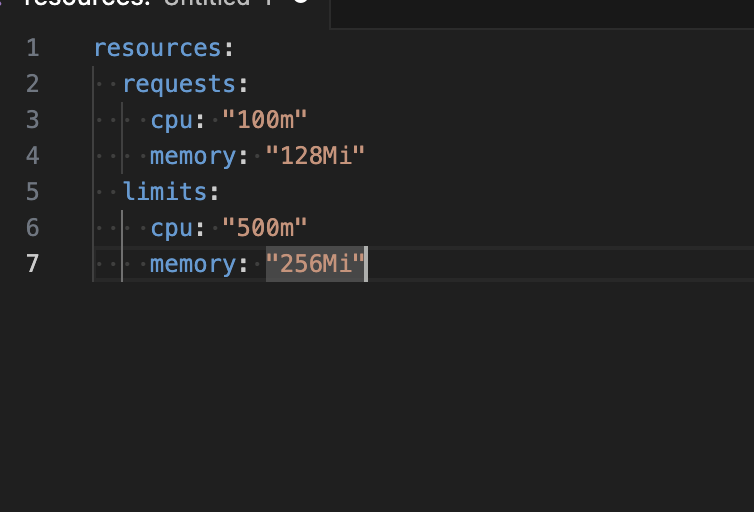
Forgetting K8s resource requests/limits is the #1 cause of unstable clusters.
- `requests`: What your pod is guaranteed. The key to scheduling & stability.
- `limits`: The hard cap before your pod is throttled (CPU) or killed (memory).
Always set requests. Your cluster's health depends on it.
#DevOpsUnlocked #Kubernetes #K8s #ResourceManagement #CostOptimization
141
28 Nov 2025
Day 32/100 of #100DaysOfDevOps.
Three non-negotiable security settings for your production K8s pods:
1. Don't run as root.
2. Read-only root filesystem.
3. Disable privilege escalation.
This should be your baseline. Enforce it with a policy engine.
#DevOpsUnlocked #Kubernetes #Security #K8s #PodSecurity #DevSecOps
153
27 Nov 2025
Day 31/100 of #100DaysOfDevOps.
If your devs have `cluster-admin` on a production K8s cluster, you have a security incident waiting to happen. Not "if," but "when."
Use RBAC. Grant permissions per-namespace. Default to read-only.
Least privilege isn't a suggestion; it's a requirement.
#DevOpsUnlocked #Kubernetes #Security #K8s #Security #RBAC #DevSecOps
102
26 Nov 2025
Day 30/100 of #100DaysOfDevOps.
Kubernetes Namespaces are for organization, not for security.
Use them to:
- Group resources by team or environment.
- Apply RBAC and resource quotas.
- Avoid naming conflicts.
They are a wall made of paper, not steel. Don't rely on them for hard security isolation.
#DevOpsUnlocked #Kubernetes #K8s #Namespaces #DevOps
98
25 Nov 2025
Day 29/100 of #100DaysOfDevOps.
How to get internet traffic into your K8s app?
`Internet -> Ingress Controller (e.g., NGINX) -> Ingress Rule -> Service -> Pod`
The Ingress object defines the routing rules ("host.com/path goes here"). The Ingress Controller is the actual proxy server that does the work.
#DevOpsUnlocked #Kubernetes #K8s #Ingress #Networking #DevOps
103
24 Nov 2025
Day 28/100 of #100DaysOfDevOps.
Stop giving your CI pipeline `cluster-admin` rights. It's a huge security hole.
Adopt GitOps (ArgoCD/Flux).
1. Git is your source of truth.
2. An in-cluster agent pulls changes.
3. All changes are via Pull Request.
It's more secure and the future of Continuous Delivery.
#DevOpsUnlocked #GitOps #Kubernetes #DevOps
96
23 Nov 2025
Day 27/100 of #100DaysOfDevOps.
Helm is a necessary evil in Kubernetes.
Good for:
- Installing third-party charts (e.g., Prometheus).
- Basic templating of your app YAML.
Bad for:
- Complex logic. `{{ if .Values... }}` gets ugly, fast.
Use it wisely.
#DevOpsUnlocked #Kubernetes #Helm #k8s #DevOps
98
22 Nov 2025
Day 26/100 of #100DaysOfDevOps.
Stop using `kubectl run`. Stop using `kubectl create`.
Define your desired state in a YAML file.
Store that YAML in Git.
Run kubectl apply -f your-file.yaml.
This is the way. It's declarative, version-controlled, and the core of GitOps.
#DevOpsUnlocked #Kubernetes #GitOps #K8s #DevOps
85
21 Nov 2025
Day 25/100 of #100DaysOfDevOps.
Opinion: Unless your company's product IS a Kubernetes distribution, you have no business building your own cluster.
Use EKS, AKS, or GKE.
Your team's time is better spent building features, not debugging etcd.
#DevOpsUnlocked #Kubernetes #EKS #AKS #GKE #AWS #Azure
82