
I’m interested in industries that connect the old and the new to the future.
Joined May 2013
- Tweets 36,265
- Following 1,926
- Followers 1,481
- Likes 133
2 Photos and videos

Dio retweeted

Jun 13
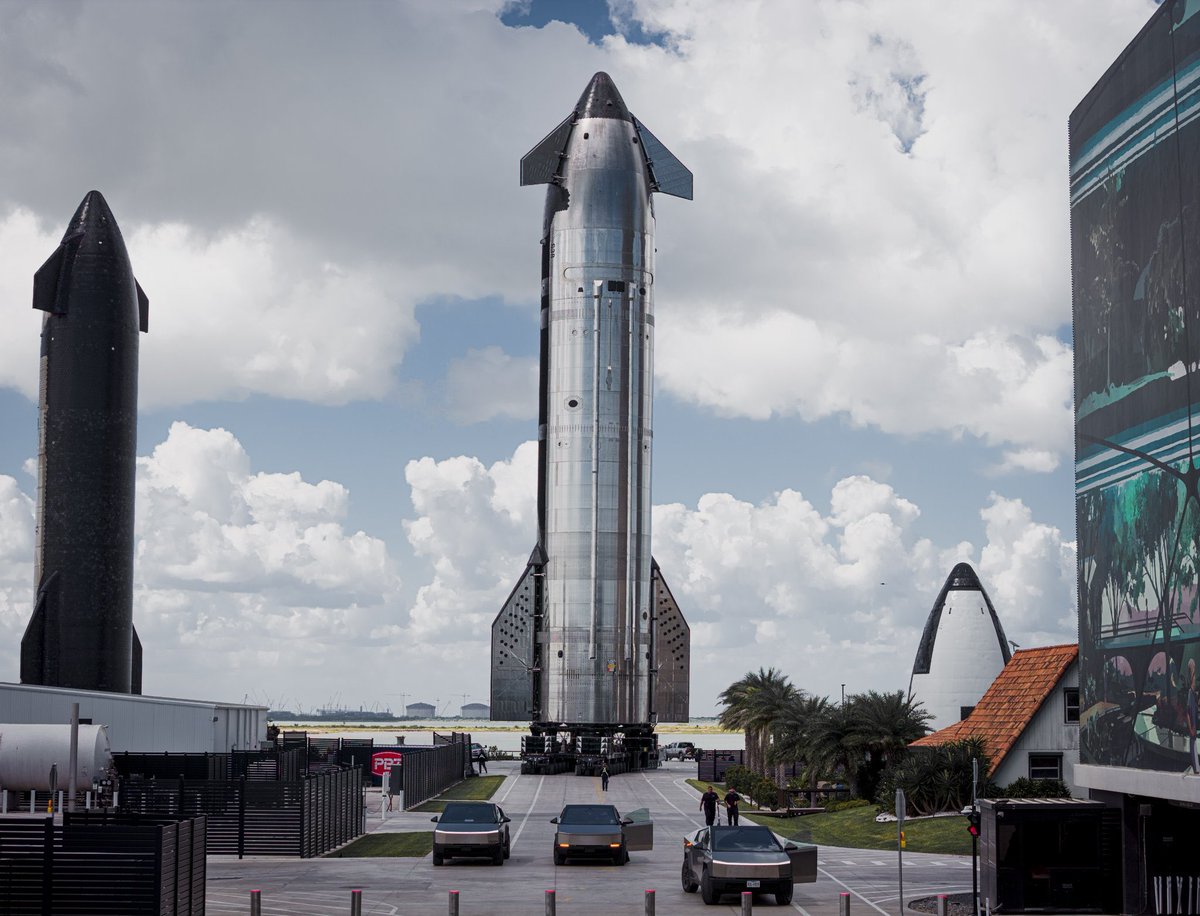
🚨 THE ENERGY TECHNOLOGY THAT COULD POWER CIVILIZATION FOR THE NEXT 100 YEARS ISN'T FUSION.
Molten Salt Reactors use molten fluoride or chloride salts as coolant and in some designs, the nuclear fuel itself is dissolved directly into that salt.
This is very different from traditional reactors. Instead of solid fuel rods sitting in water under high pressure, these systems run at much higher temperatures but at atmospheric pressure, which dramatically reduces the risk of explosions or meltdowns.
The salt can flow over solid fuel, or the fuel can be mixed directly into the coolant. Both approaches are being actively developed.
Why this matters:
• MSRs operate at high temperatures, making them potentially much more efficient at generating electricity and process heat
• Low-pressure operation makes them inherently safer than conventional water-cooled reactors
• Some designs can burn existing nuclear waste or use thorium as fuel
• The technology could support everything from advanced power generation to hydrogen production and industrial heat
The deeper implication:
For decades, nuclear power has been dominated by one basic design concept.
Molten salt reactors represent a fundamental rethink using a liquid that can act as both coolant and fuel.
This opens the door to reactors that are safer, more flexible, and potentially capable of solving some of nuclear energy’s biggest historical challenges (waste, fuel efficiency, and public perception of safety). While still in development, MSRs are one of the most promising pathways for next-generation nuclear power.
We may be looking at the early stages of a genuinely new chapter in how humanity generates clean, reliable energy.
Do you think molten salt reactors will become a major part of the future energy mix, or will traditional designs continue to dominate?
Follow for more frontier energy technology and next-generation nuclear systems.
62
262
978
71,123
Dio retweeted

Jun 13
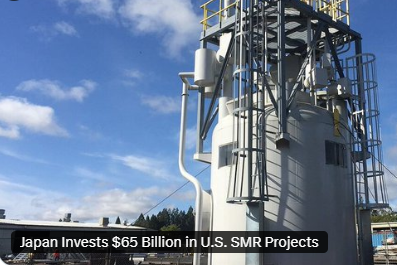
Japan has decided to invest over $65 billion in US-lead SMR projects. They will invest $40 billion in GE Vernova and Hitachi (BWRX-300), and up to $25 billion in NuScale. Article link in reply.
A bit of a shame that no money is invested in non-water SMRs or smaller LWR SMRs.
The 2nd to last paragraph of the article seems to sugget that the US and Japan are giving up on dominating the international large reactor market. Instead, they will focus on SMRs.
Quote:
"Notably, 90% of large-scale nuclear reactors started in the past decade worldwide are Chinese or Russian. The U.S. and Japan plan to counterattack in terms of manpower and technology through joint investments in next-generation SMRs."
12
42
170
10,346
Dio retweeted

Jun 13
Lynx M20 #Robots Revolutionize Mountain Farming with Smart ‘Last-Mile’ Crop Transport
by @DeepRobotics_CN
#Robotics #EmergingTech #Innovation #Technology
10
25
1,477

The effort behind this. 🦾👍
Jun 13

You’re humanoid home helper is getting ready for delivery:
A lot of engineering goes into making autonomy look simple
Here’s a 2 hour timelapse of F.03 repeatedly walking up and down stairs. @adcock_brett | Robots
1
6
Dio retweeted

Jun 5
This week, @BernieSanders warned in the @nytimes that a handful of billionaires could determine the future of humanity through the rise of AI.
So, today, @rkbaggs sat down with Dr. David Minarsch (@david_enim) of @autonolas to discuss AI's role in our future. 👇
#CHAINREACTION
71
74
162
63,103
Dio retweeted
Jun 13
🚨 JUST IN: OpenAI is being investigated by a coalition of US state attorneys general, per Bloomberg.


141
156
1,391
142,177

This isn’t about corporate control. AI now poses nuclear level risks: irreversible, asymmetric, easily spread. Nationality based limits show where geopolitical lines and future capital flows will form.
Jun 13

AI giant Anthropic says it has taken its latest artificial intelligence models offline to comply with a directive from the Trump administration to prevent their use by foreign nationals. apnews.com/article/anthropic…
11
f you don’t treat AI as infrastructure, you shouldn’t build deep dependence on it. Dependency depth and governance design must move together.
Jun 13

📍 Most leaders think the AI economy is creating more competition.
The real shift is that it is concentrating organizational dependence.
As a recent Forbes analysis highlights, a small group of companies, including Anthropic, OpenAI, and Nvidia, is increasingly shaping where enterprise AI investment, innovation, and adoption are flowing. The strategic implication is not who wins the AI race. It is how organizations redesign leadership, governance, and decision-making when critical capabilities become concentrated within a few external ecosystems.
1️⃣ Authority Shift: AI platform selection is no longer just a technology decision. It increasingly determines governance structures, procurement priorities, risk ownership, and executive accountability. Choosing a platform also means accepting part of its operating model.
2️⃣ Structural Blind Spot: Many organizations compare model performance, pricing, and technical capabilities while overlooking concentration risk. The deeper AI becomes embedded into core workflows, the harder strategic flexibility becomes if external providers change pricing, priorities, or platform direction.
3️⃣ Governance Gap: Competitive advantage will depend less on accessing the most advanced models and more on building an organization that can adapt regardless of which provider leads the next wave of AI innovation. Resilient operating models will outperform optimized vendor relationships.
The real executive challenge is not selecting the strongest AI platform. It is ensuring your organization never becomes strategically dependent on a single AI ecosystem.
Is your leadership team treating AI platforms as software vendors, or as long-term strategic infrastructure partners? What is driving that decision?
via Forbes
@chessieowl @simplydt @dan_in_robots @BindIdeas971 @DioOmega @CheszAI @homeMetaX @jameslhbartlett @alMansoor_ae @kkruse @ozsilverfox @Seozilla_ai @sulefati7 @faryus88 @MathildaLoco @ricardo_ik_ahau @timo_vi @Nicochan33 @NathaliaLeHen @TCyberCast @corixpartners @bociek191905 @Corix_JC @Transform_Sec @pchamard @RLDI_Lamy
1
9
Weather satellites are national assets, but finer‑scale data is now captured by private firms—pushing governments to keep control while still relying on fast‑moving commercial tech.

A startup called WindBorne Systems is running a full end-to-end AI weather pipeline — raw observations in, final predictions out — and beating European government systems on accuracy. Government weather agencies have a serious challenger.
#AI #ClimaTech
techcrunch.com/2026/06/01/th…
3
Dio retweeted

On June 10, 1977, Apple began shipping the first full Apple II systems. The machine would help launch the personal computer revolution.
I was too young to own one. I saw my first Apple II in a computer lab, and I stood there in awe of it. A machine that did color, ran games, and answered to whatever you typed. I had no idea then how much cleverness was packed inside that beige case.
What makes it worth revisiting nearly 50 years later isn’t just what it became. It’s how advanced it was for a company founded a year earlier and run out of a garage.
The design was largely the work of one engineer: Steve Wozniak. He had an obsession with simplicity. Most engineers solved problems by adding components. Wozniak solved them by removing components. Every chip cost money, drew power, and could fail. He wanted the same result with fewer parts.
The Apple II displayed color graphics using a trick engineers still study. Wozniak exploited quirks in how NTSC televisions decode color, pulling color images out of hardware never designed to produce them. Instead of adding circuitry, he found a shortcut in the physics of the display. He didn’t work it out alone. Al Alcorn, the engineer behind Pong, sat him down and walked him through how NTSC color worked. Woz took it from there.
Memory was the next problem. In 1977, RAM was brutally expensive. The base Apple II shipped with 4KB, smaller than this post. Developers still built games, business software, and full programming environments inside that limit. Every byte mattered. These people weren’t writing software so much as performing magic acts.
The machine also had something competitors skipped: expansion slots. Owners could add printers, storage, networking cards, and memory. Instead of locking buyers into a fixed system, the Apple II became a platform that could grow. That openness built an ecosystem years before anyone in Silicon Valley overused the word.
Then VisiCalc arrived. In 1979, Harvard MBA student Dan Bricklin and his MIT classmate Bob Frankston released the first spreadsheet for personal computers. Business owners could model finances in minutes instead of hours with paper ledgers. Executives who cared nothing about technology bought Apple IIs because the software paid for itself. Dealers joked that customers came in asking for VisiCalc and left with an Apple II attached to it.
Apple also pushed the machine into schools, which is how a generation, including me, met computing through those beige plastic boxes.
The Apple II wasn’t the most powerful computer of its era. It won because it solved hard problems in ways that made the technology feel within reach. Nearly five decades later, the formula still holds. The companies that shape the future are rarely the ones with the best specs. They’re the ones that hide the complexity well enough that everyone else can just use the thing.

3
5
17
706

Dio retweeted

Jun 5
What is the DOE reactor pilot program and why is it useful? I have been asked that a lot today in response to the first reactor in the program by @AntaresNuclear achieving initial criticality. @stoohill13 and explain here: breakthroughjournal.org/p/bu…
1
6
15
2,377
Dio retweeted
Jun 4
The @AntaresNuclear reactor is the first reactor in the DOE reactor pilot program to reach criticality. This is a milestone!

2
9
38
4,827

For those impacted by the earthquake in the Philippines, Starlink Mobile is providing free connectivity to @enjoyGlobe customers in the affected regions.
Families, communities and businesses with compatible LTE smartphones can now stay connected through select apps and SMS even if terrestrial networks are not available
Jun 10

Koneksiyon direkta kanimo sa higayong kinahanglan nimo.
#AlagangGlobe is bringing Globe Starlink connectivity to the provinces hardest hit by the Southern Mindanao earthquake:
- Sarangani
- South Cotabato
- Sultan Kudarat
Free data and SMS to ensure you always stay connected to your loved ones and to life-saving information. We continue to pray for everyone's safety and will rebuild together. #GlobeOfGood
477
1,528
5,293
1,406,281
Dio retweeted

Jun 10
AI is advancing at a pace our policymaking institutions were never built for—and the gap between the two is becoming the central challenge of the technology. In his latest essay, our CEO Dario Amodei lays out how to close it.
We're launching three new initiatives to support the efforts he outlines.
Jun 10

Today I'm publishing a new essay, Policy on the AI Exponential. AI is progressing extremely fast—much faster than the policy process was built to handle. The essay lays out where I think the technology is now, and the action needed to close the gap: darioamodei.com/post/policy-…
425
458
5,486
1,466,076
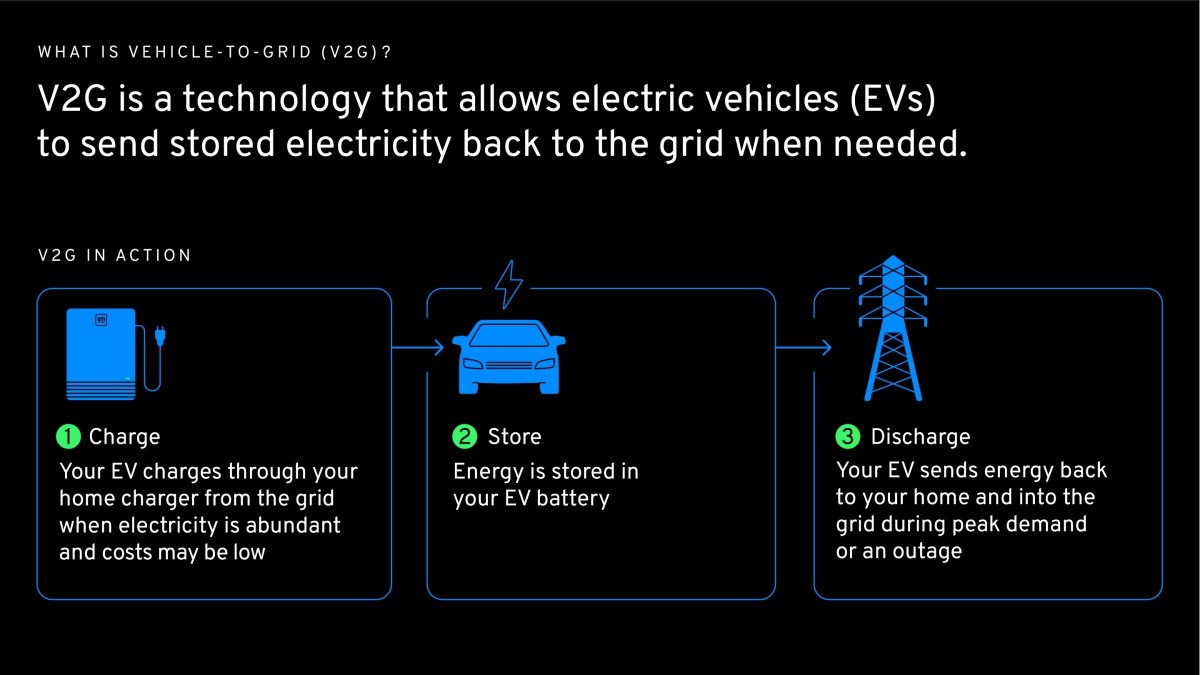
As AI drives up power demand, GM’s EVs become more valuable as distributed storage. GM is clearly positioning itself as an infrastructure player. 😉
Jun 10
GM thinks EVs can help offset AI’s energy suck with vehicle-to-grid tech
The automaker wants to use the energy in hundreds of thousands of EV batteries to help stabilize the electrical grid.
theverge.com/transportation/…

1
15
Dio retweeted

Jun 10
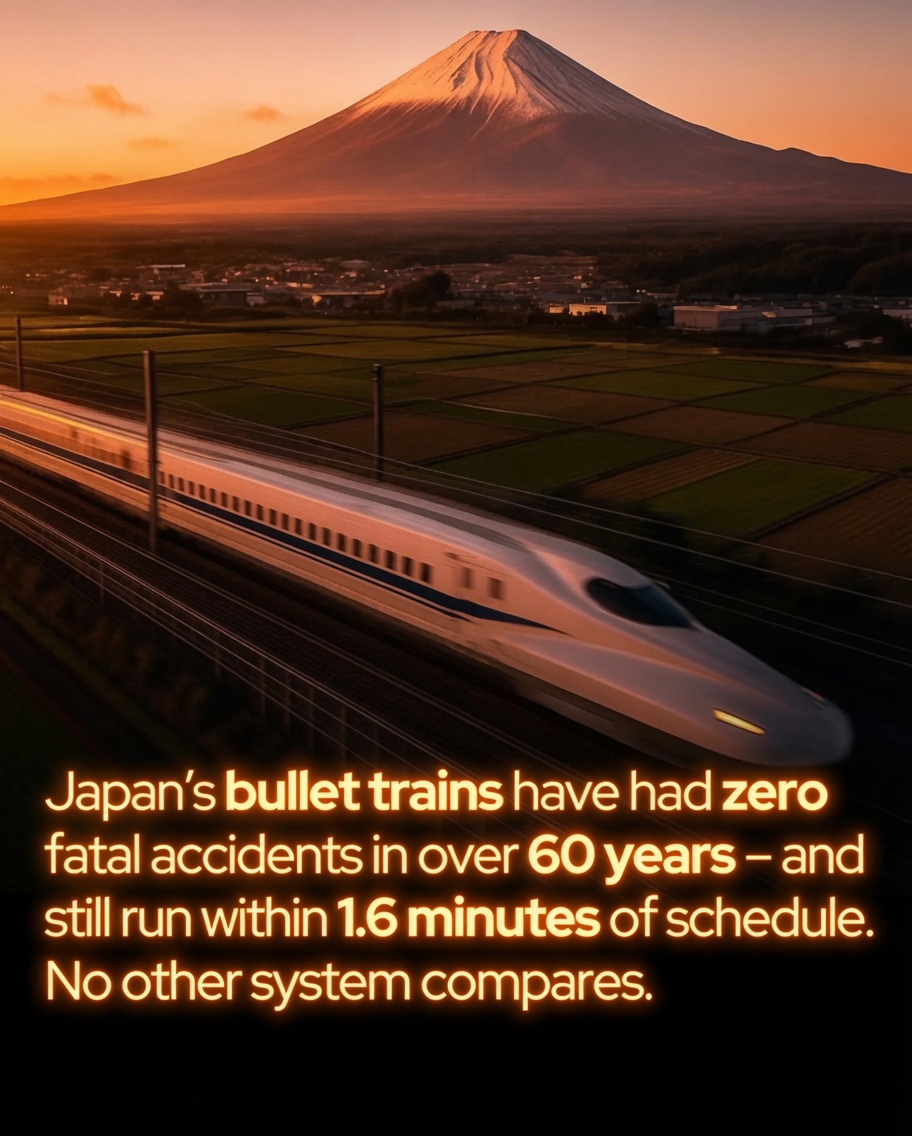
Japan’s Shinkansen bullet trains have operated for over 60 years with a perfect safety record: zero passenger fatalities from crashes or derailments.
Since the first line opened in 1964, the network has carried more than 10 billion passengers while traveling at speeds of up to 200 mph (320 km/h). This makes it one of the safest high-speed transportation systems in history.
The remarkable safety stems from deliberate design choices: dedicated, grade-separated tracks that eliminate crossings with other trains, roads, or freight; advanced automated control systems; real-time earthquake detection that can stop trains within seconds; and rigorous, continuous maintenance and staff training.
The system is equally renowned for its punctuality. In fiscal year 2023, the average delay across the network was just 1.6 minutes per train, even when including disruptions from earthquakes, typhoons, and other natural events.
On the busiest Tokaido Shinkansen line (Tokyo–Osaka), around 432,000 passengers ride daily, with trains departing every few minutes. Few transportation systems worldwide match this combination of speed, scale, safety, and reliability.
37
276
1,056
33,065
Promotion architecture creates leaders who lack understanding, and they build governance that repeats the same gap. Until this loop breaks, AI governance won’t progress.
📍 This looks like a career progression problem.
It is actually an AI governance design failure.
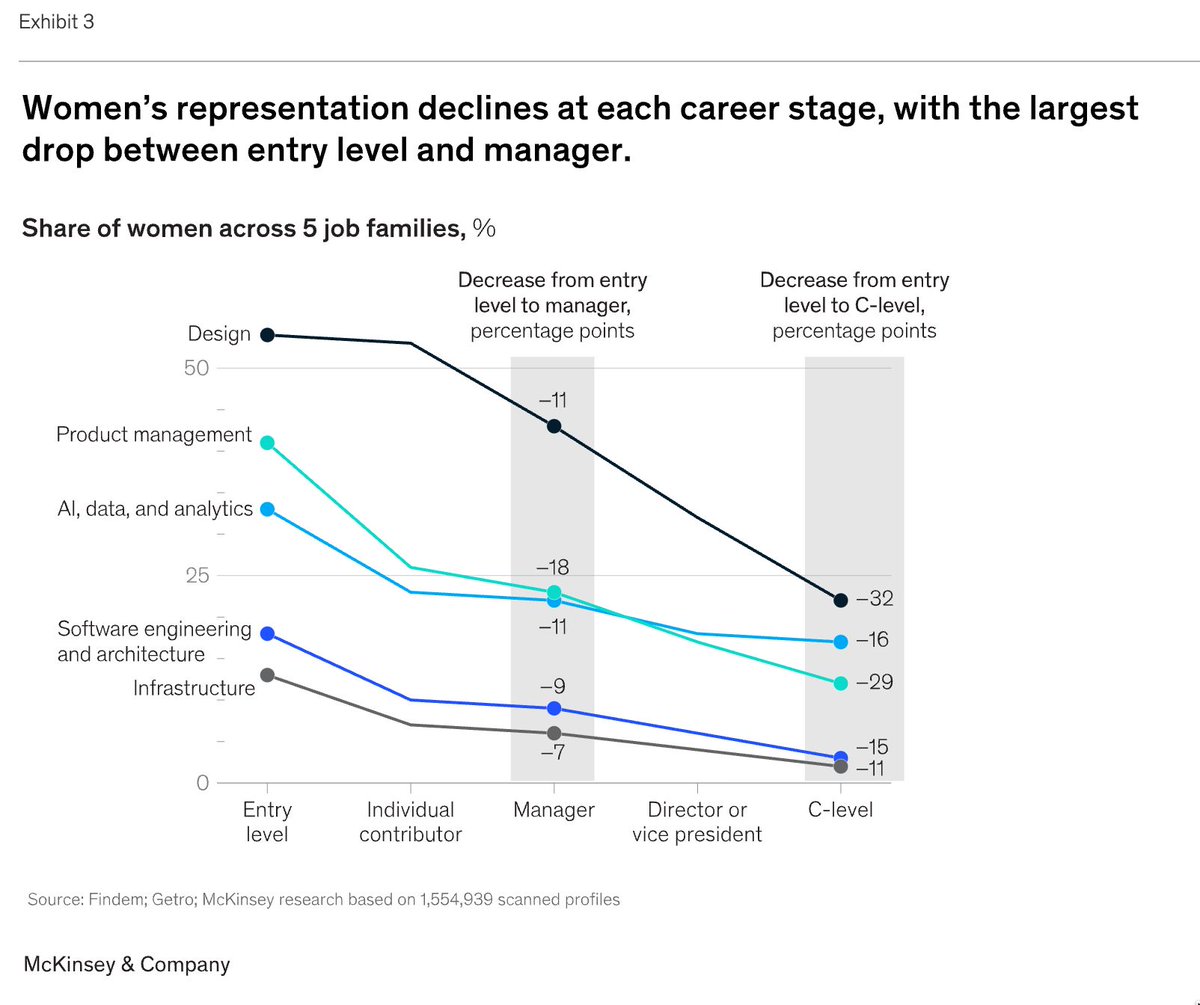
As McKinsey highlights, women's representation falls by 7 to 18 percentage points between entry level and first management across all five major tech job families, with the sharpest attrition occurring precisely at the transition into leadership.
1️⃣ Governance Gap: Leadership roles in data, product, and engineering determine how AI systems are built and governed. Early attrition narrows that decision layer before it forms.
2️⃣ Structural Shift: The steepest losses occur at the manager transition, not at recruitment. The design failure is inside the organization, not upstream of it.
3️⃣ Performance Consequence: Organizations building AI governance structures with a narrowed leadership base are compressing the oversight capacity those systems require.
The AI governance layer is being built by whoever survives the first management transition.
via McKinsey
@chessieowl @simplydt @dan_in_robots @BindIdeas971 @DioOmega @CheszAI @homeMetaX @jameslhbartlett @alMansoor_ae @kkruse @ozsilverfox @Seozilla_ai @sulefati7 @faryus88 @MathildaLoco @ricardo_ik_ahau @timo_vi @Nicochan33 @NathaliaLeHen @sulefati7 @faryus88 @TCyberCast @corixpartners @bociek191905
1
22
Dio retweeted

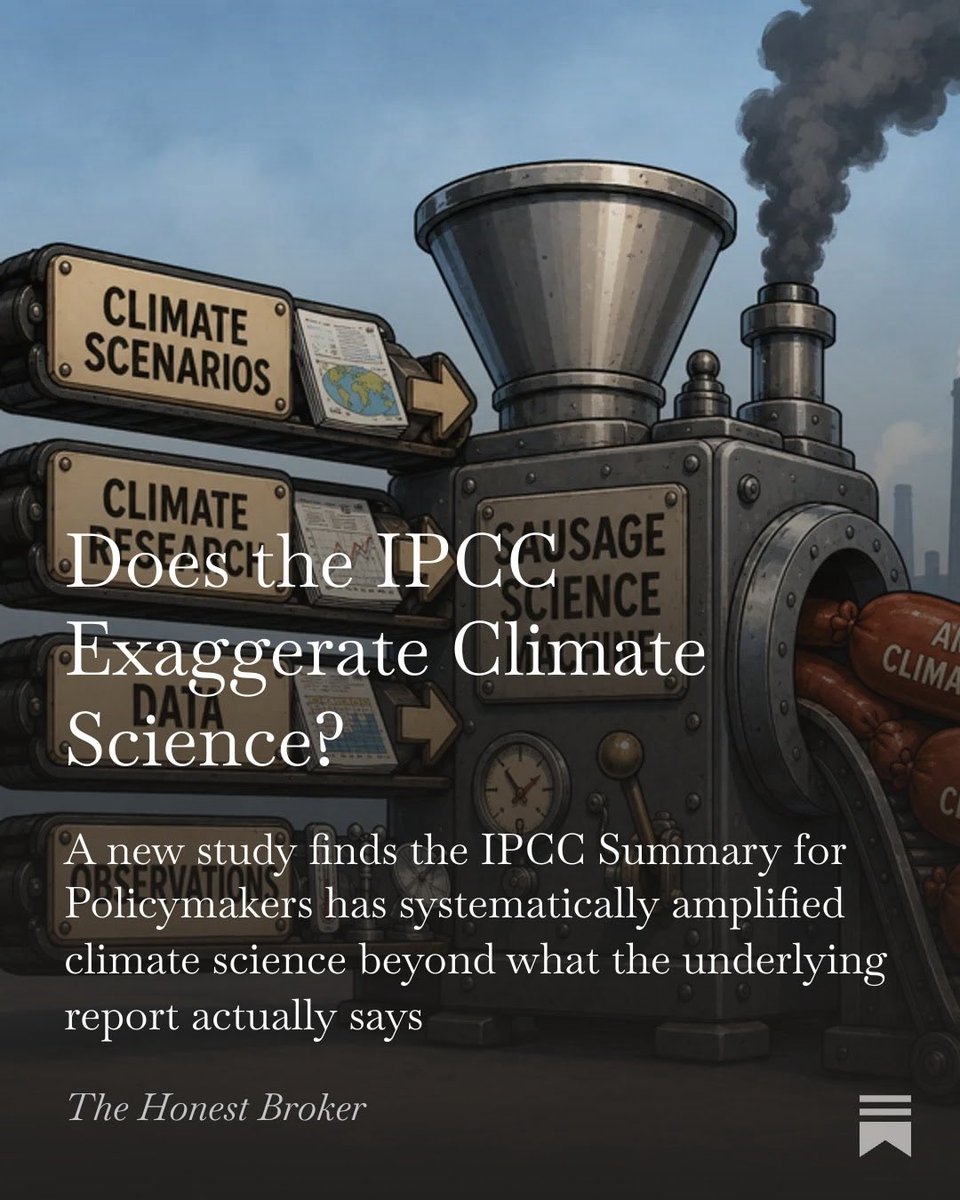
Does the IPCC Exaggerate Climate Science?
A new study finds the IPCC Summary for Policymakers has systematically amplified climate science beyond what the underlying report actually says
Link in reply
29
116
362
38,503