
1,309 Photos and videos











Curiosity is the engine of this world...
Sometimes even the smallest curiosity opens the door to the most interesting discoveries...
That’s exactly what happened to me with Dubhe Engine. At first, I simply came across a few mentions of the project within the Sui ecosystem. Then I started reading the documentation, news, and materials from the team. And the deeper I went, the more questions began to appear.
At some point, I realized that many of these questions probably weren’t unique to me. So I decided to collect the most interesting ones and try to answer them myself... let’s see if I can do it...
❓ What is Dubhe Engine and why are people talking about it more and more?
In the simplest possible terms, Dubhe Engine is an infrastructure framework for developing on-chain applications using Move.
But for me, the more important part is something else.
When I look at most Web3 technologies, it often feels like there’s a huge gap between an idea and a finished product. Developers spend a lot of time setting up infrastructure, organizing data, and solving repetitive problems.
Dubhe is trying to shorten that path. It provides a set of tools and an architectural approach that helps create applications in a more structured and efficient way.
That’s why the project is attracting increasing attention among developers in the Move ecosystem.
❓ Why is Dubhe so often mentioned alongside Sui?
This was one of the first questions that caught my attention.
Sui was originally designed as a high-performance blockchain capable of supporting complex applications and scalable digital worlds.
But the more possibilities a network opens up, the more important convenient developer tools become.
I think this is exactly where Dubhe finds its place. It helps make working with Move more organized and allows developers to focus not only on technical details, but also on creating the actual product.
So the combination becomes very interesting: the capabilities of Sui plus the tools of Dubhe.
❓ What makes Dubhe special compared to other solutions?
Probably what interested me most was its approach to organizing applications.
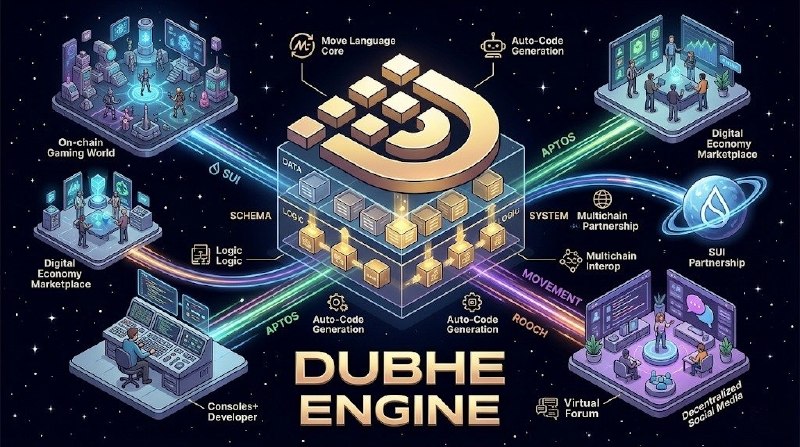
At the core of Dubhe is the separation of data and logic through Schemas and Systems.
In very simple terms, it’s like having every item in a house placed exactly where it belongs.
Data exists separately, logic works separately, and because of that, the project becomes easier to maintain, develop, and scale.
I really like this idea because order becomes part of the architecture from the very beginning.
❓ Does Dubhe really help speed up development?
In my opinion - yes.
Of course, it doesn’t create an entire application for a developer with one click.
But Dubhe can automatically generate a significant portion of infrastructure code and related components based on defined schemas.
This helps reduce repetitive work and lowers the chance of errors.
As a result, developers can spend more time focusing on the product itself and its functionality.
❓ Why do so many people connect Dubhe with the future of on-chain gaming?
Probably because games have always been one of the most difficult areas for blockchain.
Game worlds need speed, a huge number of interactions, constant data updates, and the ability to scale as the audience grows.
When I was studying Dubhe, I got the impression that the team had these kinds of scenarios in mind from the very beginning.
The engine’s architecture helps create more complex and interactive on-chain applications that can become the foundation for next-generation gaming worlds.
And honestly, this is one of the parts of the project that feels most exciting to me.
❓ Is Dubhe limited only to games?
Not at all.
The more I explored the project, the clearer it became that its possibilities are much broader.
Social applications, digital economies, marketplaces, metaverses, and other Move-based services are all potential use cases.
In fact, Dubhe creates a foundation on which many different kinds of products can be built.
❓ What surprised me the most?
Probably the support for multiple Move ecosystems.
Today, many projects become tightly connected to just one network.
Dubhe is developing an approach that allows it to work not only within the @Sui ecosystem, but also across other Move networks, including Aptos, Rooch, Initia, and Movement.
I like this idea because it gives developers more freedom and flexibility for the future.
❓ What potential do I see for Dubhe in the coming years?
The more I think about it, the more I realize that the project’s main value for me is not in individual features.
Dubhe’s real strength is simplification.
The history of technology shows that mass adoption begins when complex processes become easier for creators.
If developers find it easier to build quality products, there will naturally be more experimentation, more new ideas, and more useful applications.
That’s why infrastructure projects often be come much more important than they seem at first glance.
❓ Will I continue following Dubhe’s development?
Without a doubt, yes.
I’ve always liked projects that solve real problems instead of simply following trends.
Today, Dubhe looks like an infrastructure layer that helps the Move ecosystem become more mature and developer-friendly.
And that means it could play a role in the emergence of a new generation of on-chain applications, gaming worlds, and digital services.
I’m genuinely curious to see what @DubheEngine will become in a few years.
Sometimes the future is changed not by storms and hype, but by calm, systematic projects focused on long-term growth.
#Sui #DubheEngine
4
24
84
Sometimes the most interesting ideas come from places you least expect ✨
The concept proposed by @chekanboy really caught my attention. Who would have thought that simply being active in a Discord community could become something more than just messages and reactions?
I love the idea of turning community engagement into part of a larger game world, where every interaction helps shape a unique character. Mechanics like this make participation feel more meaningful and create a stronger connection between members and the community.
It feels like innovative approaches like these are what make online communities truly come alive 🔥
@RialoHQ
x.com/chekanboy/status/20647…
Jun 10

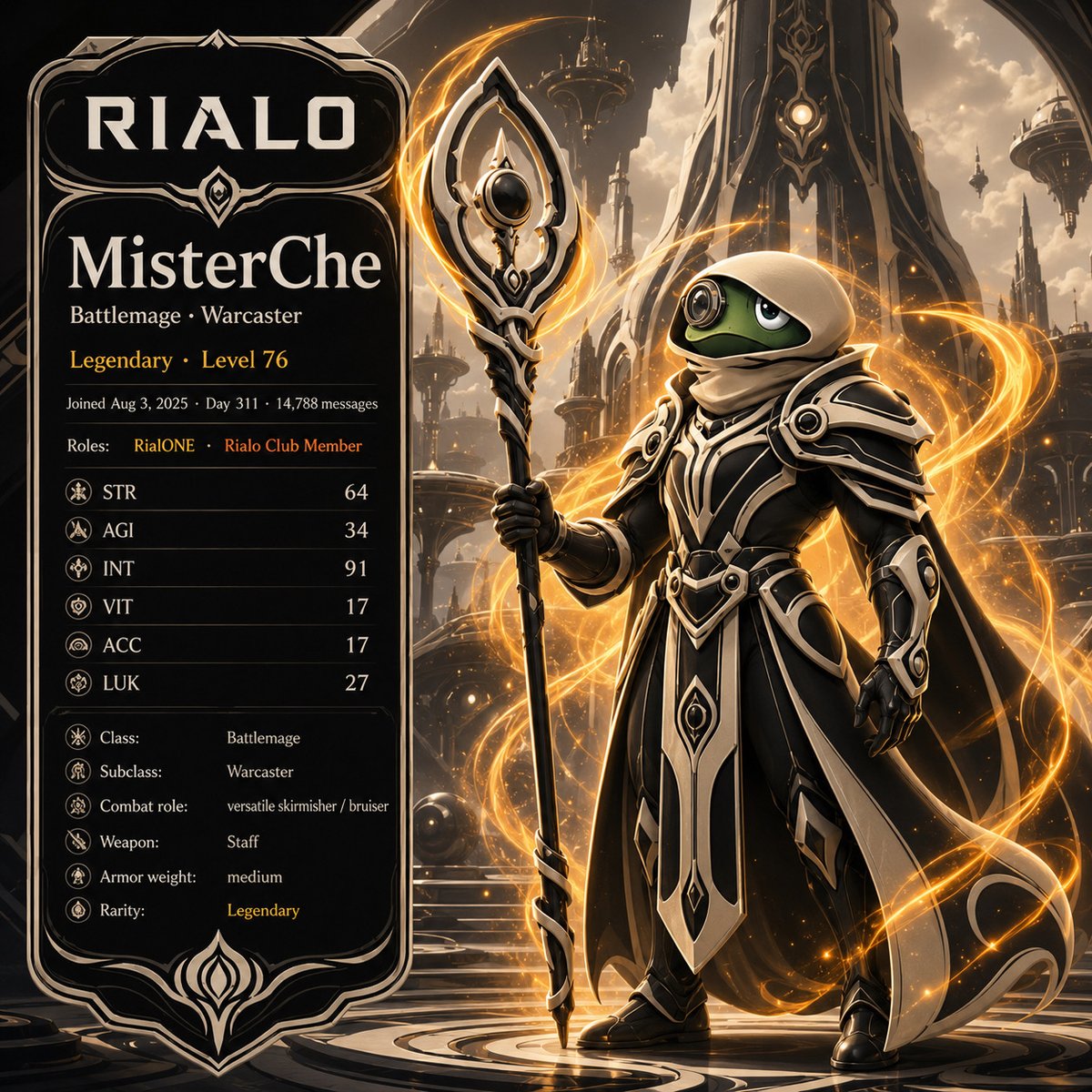
your Discord stats were a character sheet this whole time
I built Hero Forge for the @RialoHQ community.
It reads your server history, join date, message count and roles, and forges it into a full MMORPG character:
> level
> rarity
> stats
> class
> gear grade
your roles become your aura, more roles means a stronger glow
day one members with 40k messages pull mythics with overwhelming auras
lurkers get starter armor
everything is earned
How to forge yours:
1. Open the forge, link in the first reply
2. Enter your username, join date and message count
3. Tick your server roles
4. Hit Forge, get your stats and a ready prompt
5. Paste the prompt into ChatGPT with your current PFP attached
6. Post your hero with QRT and tag @RialoHQ
The grind already happened. Time to see what it built.
Forge is in the first reply 👇
31
6
150
785
The more blockchain projects I explore, the more I find myself thinking that the future depends on more than just speed and new features. For me, it’s just as important whether a technology can remain reliable over the years and whether people will truly trust it.
That’s one of the reasons DAC caught my attention. The project focuses on security, network resilience, and building infrastructure that can be used not only for crypto experiments but also for real-world applications.
I believe that mass blockchain adoption will only happen when the technology becomes reliable enough for businesses, developers, and everyday users. People need to know that a system will continue to operate consistently not just today, but well into the future.
Of course, only time will tell how successfully @dac_chain can deliver on its vision. But its focus on long-term trust, resilience, and practical use cases looks very promising and is definitely worth paying attention to.
30
5
141
666
I'm increasingly drawn to projects that aren't just building another application, but laying the foundation for what comes next.
While many people are focused on the capabilities of AI, Rialo is taking a different approach - focusing on infrastructure that helps bring intelligent systems, data, and automation together within a unified environment.
What I find especially interesting is that getting familiar with the ecosystem has become much easier thanks to Rialo Playground. In just a few seconds, you can explore demo scenarios and see some of the platform's capabilities in action.
Sometimes the most important changes don't begin with big headlines, but with the emergence of tools that gradually reshape the way things work. @RialoHQ is moving in exactly that direction.
47
5
168
1,227
We all need to pause for a moment and ask ourselves: what’s waiting for us ahead? If you try to look a little beyond the familiar horizon, it becomes clear that the world of technology is changing much faster than we fully realize.
Not long ago, AI was something we turned to only when we needed an answer. We asked a question - and waited for a response. But it feels like a completely new chapter is beginning.
The latest updates from Donut AI made me think about this. The team introduced D0 - a system that no longer waits for instructions every second. It can continuously monitor what’s happening, detect important changes, and help navigate the flow of information almost in real time.
Perhaps the most interesting part isn’t the technology itself, but how our relationship with it is changing. We are gradually moving from a world where people had to manage every step manually to a world where intelligent digital assistants become true partners in decision-making.
@DonutAI
30
5
164
773
It's becoming increasingly difficult to surprise the market these days, but some projects still make you stop and take a closer look....
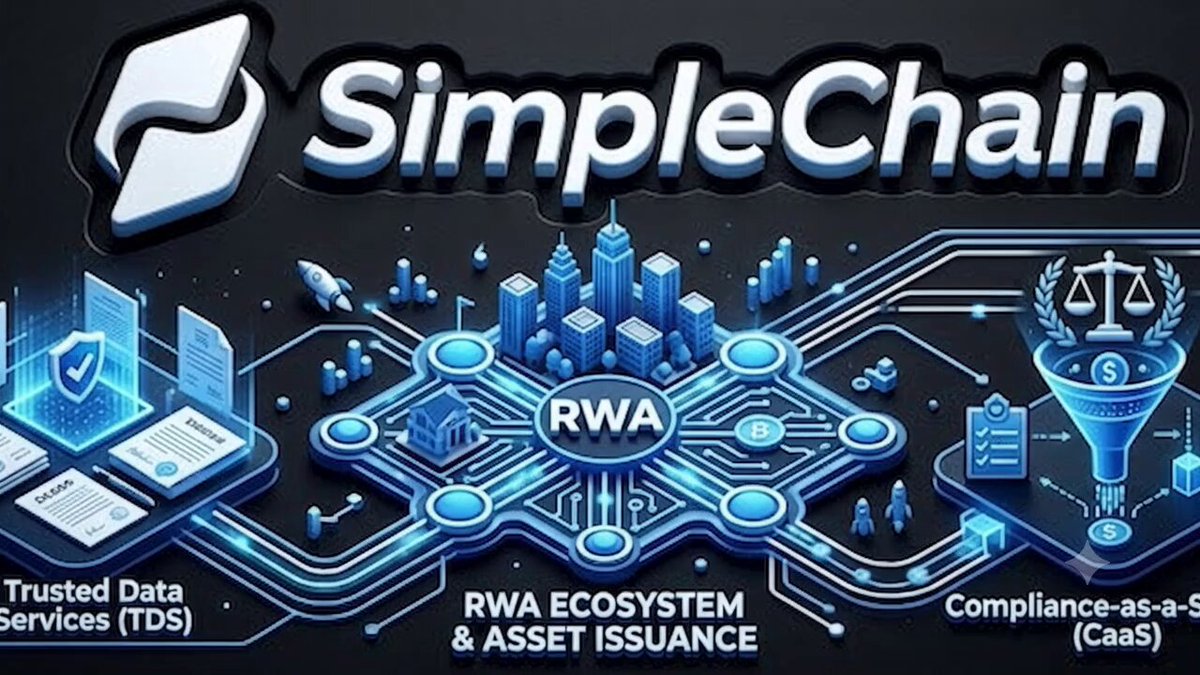
Recently, I came across SimpleChain - an infrastructure-focused Layer 1 built specifically for the RWA sector. The idea is quite ambitious: connecting real-world assets with blockchain through a transparent system of tokenization, data verification, and compliance management. 🌏
The latest developments around the project are particularly interesting. In April, the team announced a $15 million investment round to support the growth of its ecosystem and build the next generation of institutional-grade RWA infrastructure. Key areas of focus include asset tokenization, compliance automation, verifiable data, and global liquidity.
SimpleChain 2.0 testnet was also recently launched, where the team is testing its core technologies: Trusted Data Services, Compliance-as-a-Service, and the DataIPO asset issuance protocol. Alongside the testnet launch, an early points program for ecosystem participants was introduced as well.
What I especially like is that the project is not trying to be just another blockchain. Its entire architecture is built around real-world RWA adoption - from data management and regulatory compliance to the on-chain circulation of tokenized assets.
If the trend of real-world asset tokenization continues gaining momentum at this pace, @SimpleChain_RWA is definitely a project worth watching in the coming months.
55
10
210
1,245
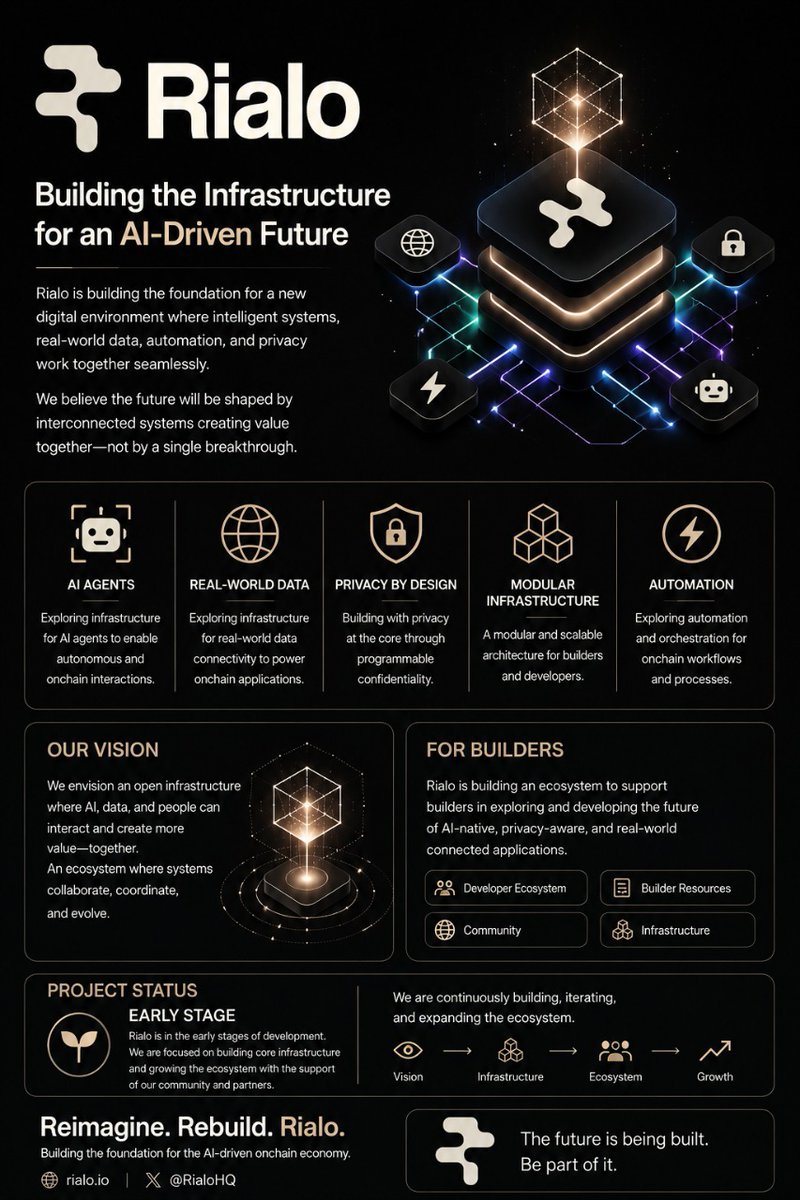
We too often look at AI as a standalone technology, while in reality an entirely new digital environment is gradually taking shape before our eyes. With each passing day, intelligent systems are becoming more autonomous. They analyze data, perform tasks, interact with services, and help make decisions faster than ever before.
But the more complex this world becomes, the more obvious one thing is - the future will need more than just intelligent models.
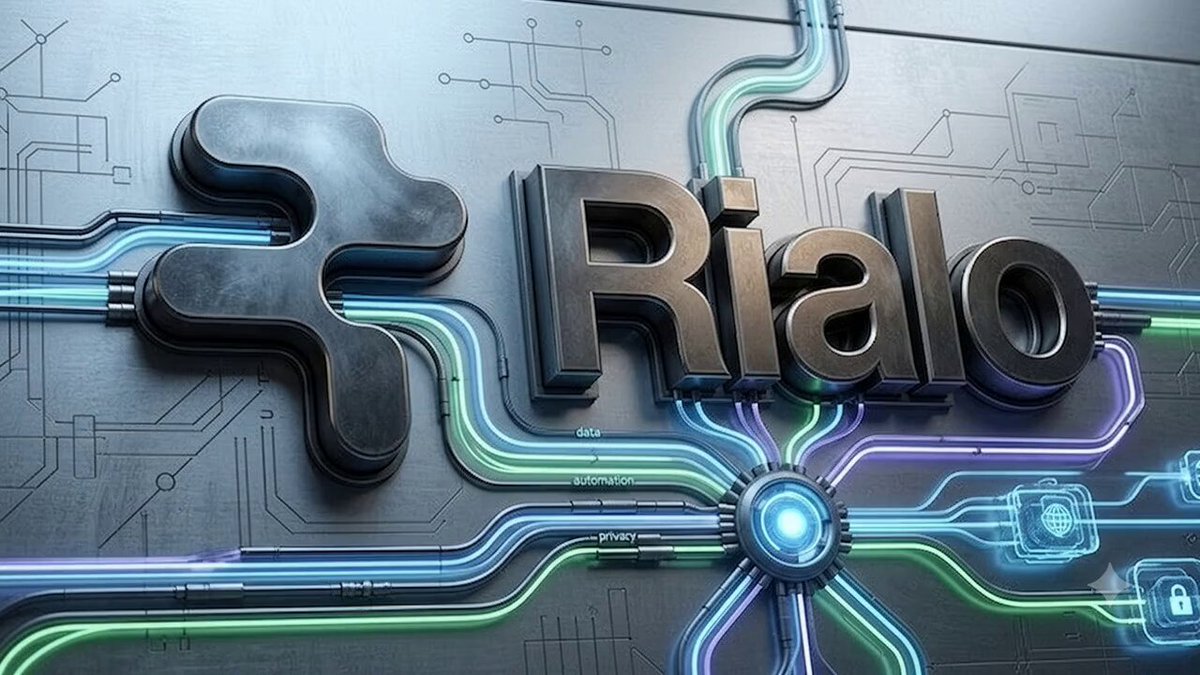
It will need infrastructure capable of bringing together data, automation, privacy, and digital systems into a unified environment for interaction.
I’ve been following Rialo closely, and I think it’s a project worth paying attention to! The project is focused not only on the capabilities of AI, but also on the foundation that could help new types of applications and intelligent systems work with real-world data more efficiently and securely.
I like the idea that the future won’t be built around a single breakthrough or a single technology. Instead, it will be shaped by countless interconnected systems that can exchange information, coordinate actions, and create new value together.
And I believe that infrastructure will be the invisible element that ultimately determines how far the next wave of AI can go.
@RialoHQ
58
4
196
3,794
Doesn't it seem strange that enormous computing power around the world is still being spent mainly on competing for the right to create the next block? Think about it...
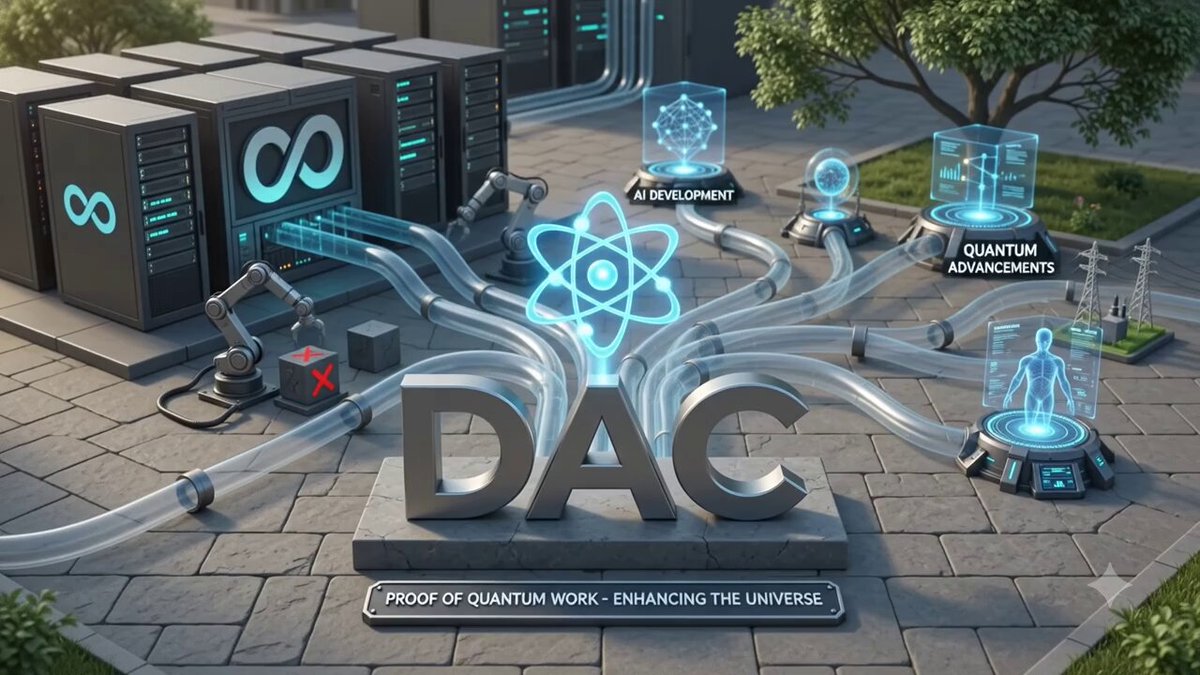
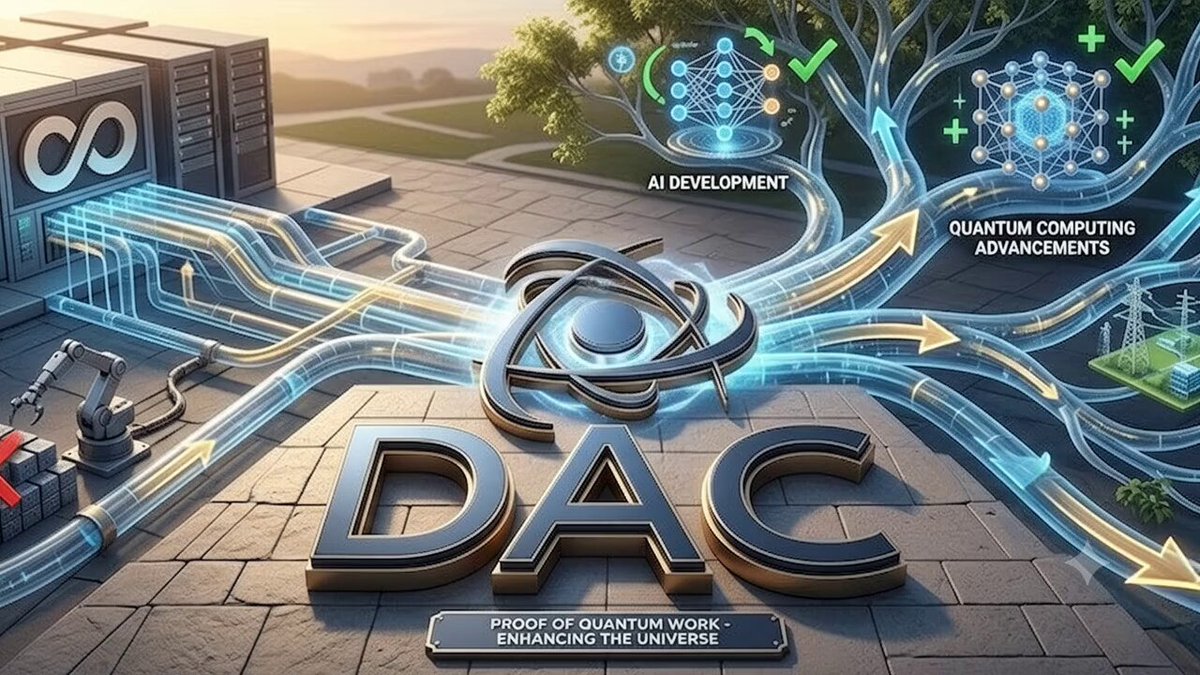
When it comes to this issue, the idea of Proof of Quantum Work from DAC seems very interesting to me. The project proposes using computational resources more efficiently, directing them not only toward maintaining the network but also toward performing useful computational tasks.
If this approach can scale, mining will stop being just a race for hash power. Instead, computing power could generate additional value for the development of technology, artificial intelligence, and future quantum systems.
In my opinion, this is exactly where @dac_chain potential lies: making mining not only secure but also genuinely useful. And if the industry truly moves in this direction, we may witness a completely new stage in the evolution of blockchain technology.
28
2
159
962
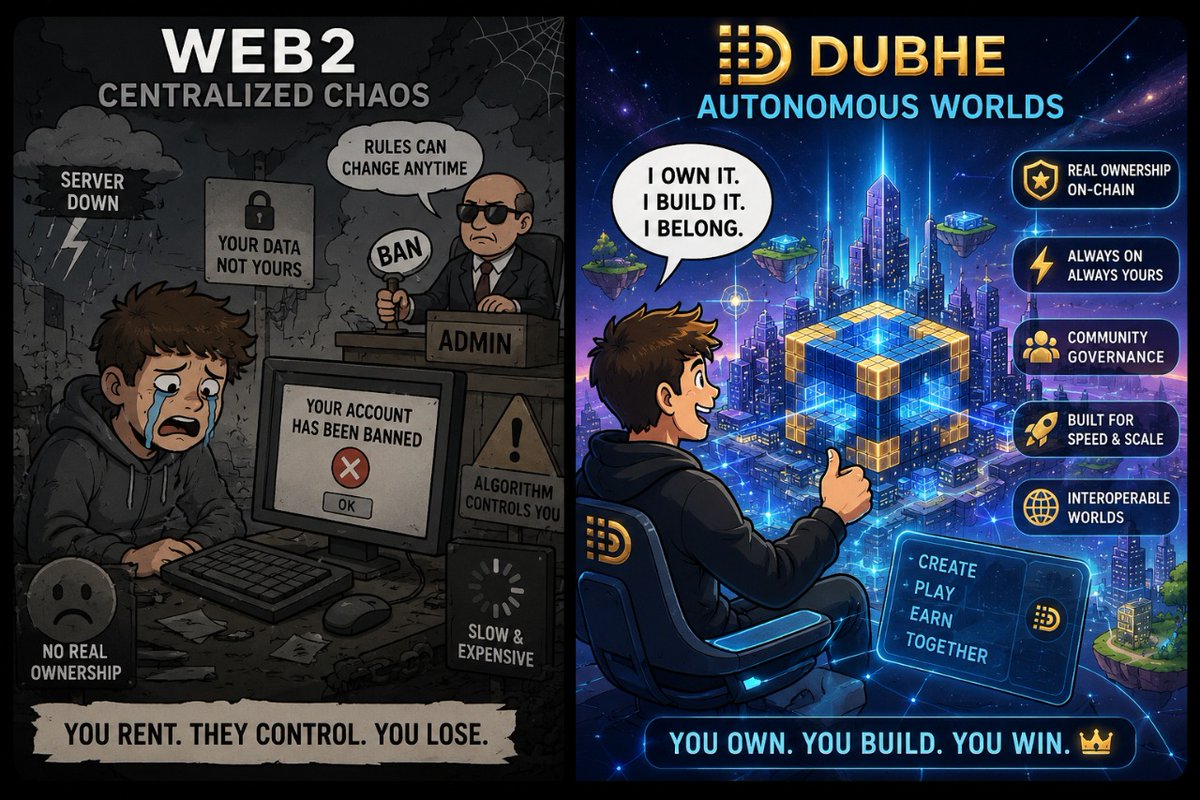
In Web2, you're just borrowing space in someone else's world🌎
In Dubhe Autonomous Worlds, you can build, own, and help shape the future yourself👑
That's the difference between being a user and being a citizen of the world💓
@DubheEngine @SuiNetwork
#DubheEngine #Sui
54
5
219
5,584
I think one of the biggest challenges surrounding AI today isn’t the technology itself. We constantly debate what the future of artificial intelligence should look like, yet we rarely stop to ask a more important question - do we truly understand the systems we are trying to guide and regulate?
Whenever a new technology emerges, the pattern is usually the same. First comes excitement. Then come concerns. After that, we start searching for a balance between innovation, safety, and control.
But finding that balance is difficult when there isn’t enough transparency and understanding of how AI, data, and the real world should interact.
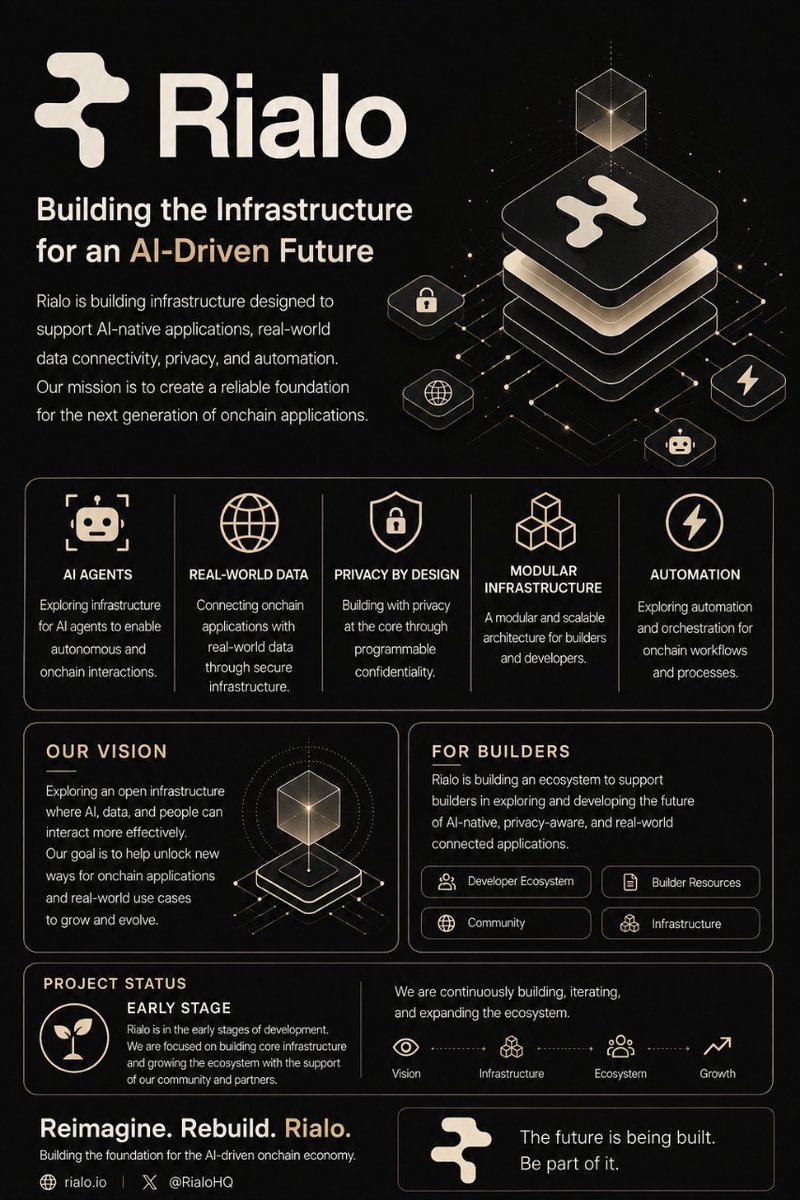
That’s why I’m especially interested in projects that focus not only on what AI can do, but also on the infrastructure being built around it.
Rialo is moving in that direction. Rather than focusing solely on what artificial intelligence may become tomorrow, the project is exploring the foundations that could help intelligent systems interact more safely and effectively with data, automation, and the world around them.
What I find particularly interesting is the emphasis on fundamentals - privacy, real-world data, and infrastructure designed for new types of applications. Sometimes it feels like the future of AI won’t be defined only by how intelligent the models become. Just as important will be how reliable, transparent, and scalable the environments around those models are.
Because real progress doesn’t begin when technology simply becomes faster or more powerful. It begins when the infrastructure exists to connect innovation with the real world.
@RialoHQ
73
6
221
1,132
Not so long ago, interacting with AI felt pretty straightforward: you ask a question - you get an answer. Then you open charts, search for data, switch between different platforms, and try to piece everything together on your own. But it feels like we’re gradually moving into a completely new stage.
Recently, Donut AI unveiled what they’ve been building over the past few months, and I really love the idea behind D0. Instead of yet another chatbot, it introduces a fully-fledged AI agent that doesn’t just respond to requests - it continuously monitors the market, analyzes what’s happening, and helps make decisions at the right moment.
What’s most interesting is that the focus is shifting from questions to actions. D0 can track changes, detect important signals, and react to them before a user even has time to open a dozen tabs and check everything manually. That’s exactly why the team describes it as a proactive agent for high-stakes markets.
To me, this feels like a very important moment for the entire AI industry. We’re gradually moving away from the ask a question, get an answer model toward one where an intelligent assistant genuinely works alongside you, helping you navigate an overwhelming flow of information.
It’s fascinating to watch the idea of a personal AI agent become more and more real. And judging by @DonutAI latest updates, this is only the beginning 💜
38
7
189
999
🎉 Happy Birthday, Alem @master_shun! 🎉
Today is a special day, and all of us would like to congratulate you and wish you the most important things in life happiness, good health, inspiration, and endless good luck in all your endeavors! ✨🍀
Stay the same kind, caring, sincere, and wonderful person that we know and appreciate. May you always be surrounded by loyal friends, the support of your loved ones, and people who truly value you. 🤗💙
We wish that every goal you set becomes a reality, that new opportunities appear exactly when you need them, and that all your boldest dreams come true. May each new day bring you joy, exciting experiences, bright emotions, and countless reasons to smile. 🌟😊🎊 Happy Birthday!!!! 🎂🥳
With our warmest wishes from all of us:
@alishka_kr @viliana68036380 @cafetothemoon @Aliaksei214480 @23Zver @HappyDragon002 @Slypixs @IdaSavina47959 @JustSportInfo @ItsMark013 @Mario794977
🎂🎁🎈🎉✨💫
34
4
168
1,087
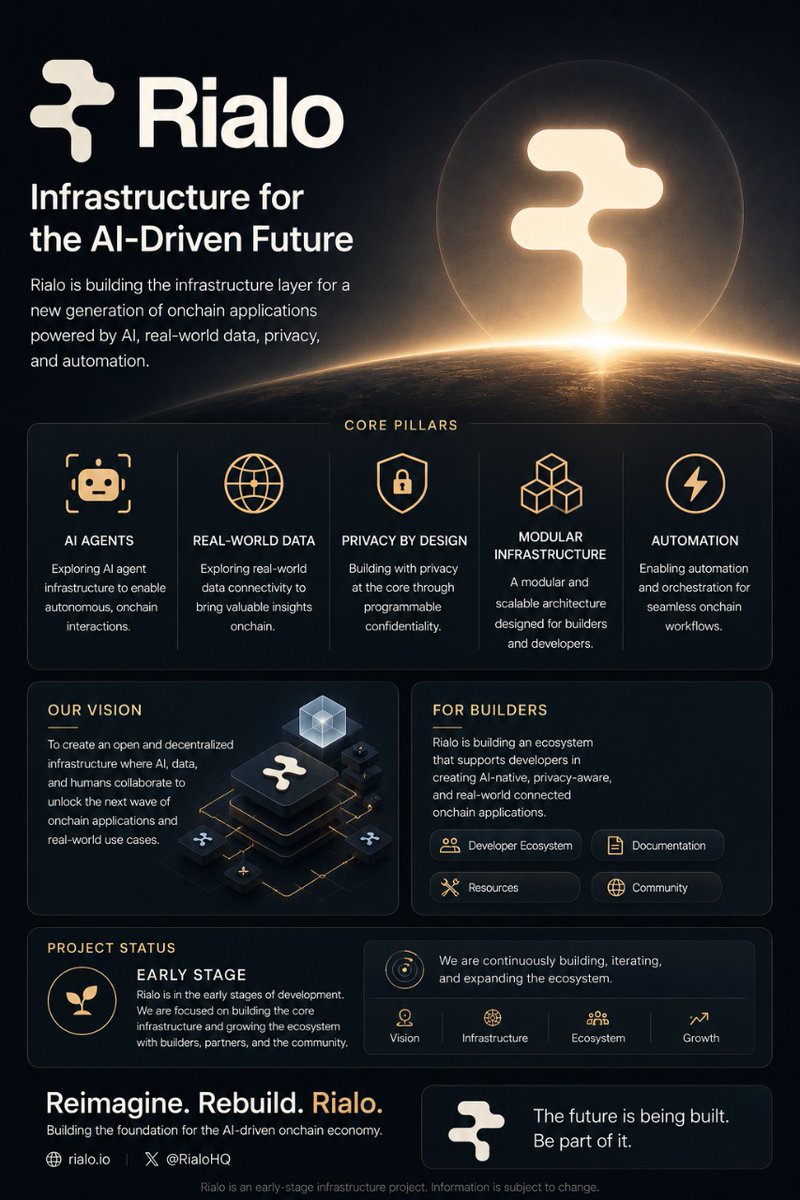
A new light is slowly rising above the horizon ☀️
While most of the crypto market continues chasing short-term trends and constant noise, Rialo is quietly building the foundation for something much bigger.
AI agents, real-world data, flexible privacy, and infrastructure designed for next-generation applications - this is the direction the ecosystem is starting to grow around.
Rialo is still in its early stages, but that’s exactly what makes this phase so interesting. More developers, new ideas, and fresh experiments are beginning to appear around the project, and the ecosystem itself is gradually coming to life.
And it really feels like this is only the beginning.
Like a new source of energy for the next era of Web3 and AI is just starting to rise above the horizon.
@RialoHQ
55
9
214
2,195
While everyone is debating new AI models, RAFA AI is gradually building an entire ecosystem where artificial intelligence helps people not just watch the market - but understand it on a deeper level.
What I really like is that it no longer feels like a typical chatbot with generic answers.
RAFA is developing a multi-agent approach, real-time analytics, and focusing not only on results, but also on making market insights easier to understand.
And honestly, that feels like the most important thing right now.
Because in a world where information is becoming overwhelming, real value no longer comes only from speed…
but from being able to trust what you’re looking at.
@RAFA_AI
22
1
152
873
I think there’s a very strange illusion forming around AI agents right now. Everyone talks about how intelligent, autonomous, and powerful they will become. Some projects already showcase agents that can trade, launch services, write code, manage wallets, and make decisions almost without human involvement.
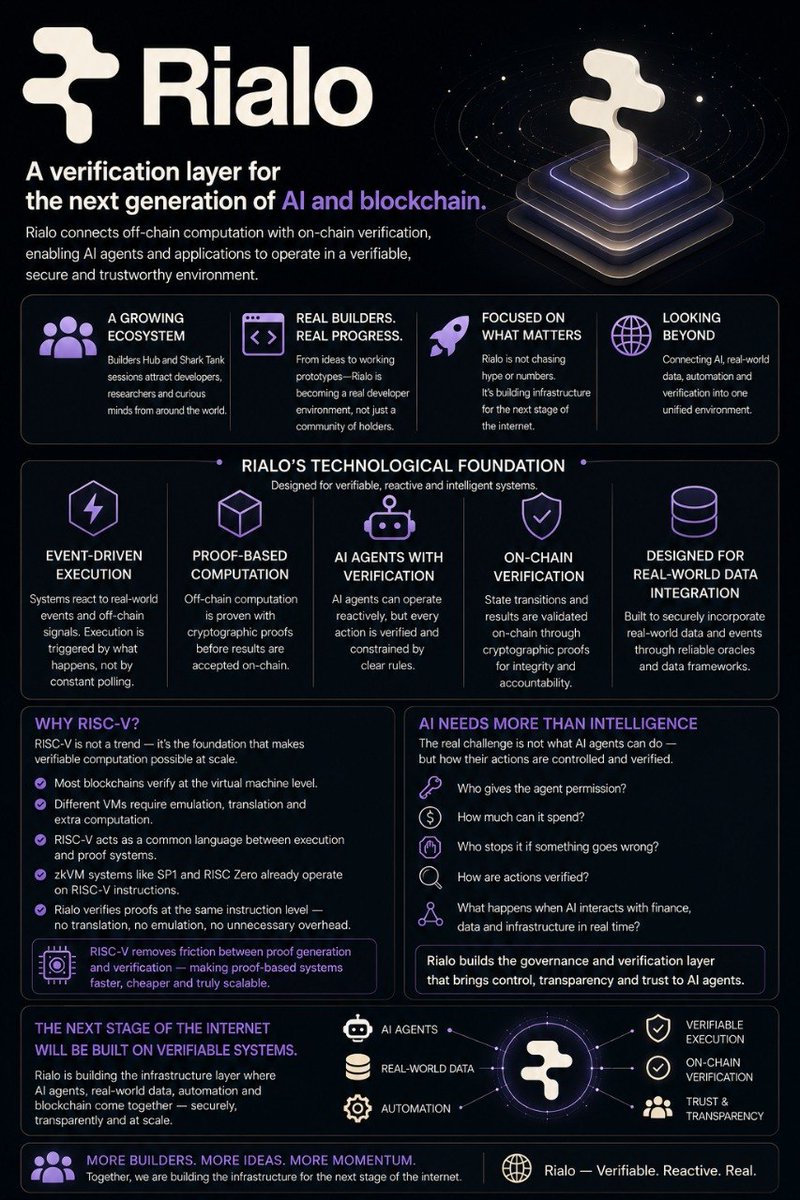
But the more I read about it, the more I realize that the real problem of the future is probably not agent intelligence but who controls their actions and how. And that’s exactly why Rialo’s approach feels so interesting to me.
Many people think the choice of RISC-V is just another technical trend.
But if you look deeper, it starts to feel more like the foundation of the entire system. Most blockchains today build verification around their own virtual machines. And the moment different environments need to verify each other’s computation, everything becomes much more complicated: emulation, logic translation, extra computation, additional costs.
Rialo is trying to remove that gap.
Here, RISC-V acts as a common language between program execution and proof systems. zkVM systems like SP1 and RISC Zero already operate through RISC-V instructions, and Rialo verifies proofs almost at the same level where the computation itself originally happened. Without constant translation between different execution models. I think that’s a very important detail for the future of proof-based systems. Because scalability does not come only from speed - it also comes from reducing friction inside the architecture itself.
But what feels even more interesting is the way Rialo looks at AI. Not as a beautiful demonstration of autonomy, but as a system that needs boundaries, rules, and verifiability.
Because the real question of the future is probably not: what can an agent do....
But rather:
Who verifies that the agent stayed within its permissions.
Who limits risk.
Who records permissions.
Who verifies actions.
And what happens when autonomous systems start interacting with finance, data, and infrastructure in real time.
It feels like @RialoHQ is trying to build a layer where AI agents can exist not chaotically, but inside a verifiable environment. And I think that over time, this may become much more important than intelligence itself.
58
5
216
1,880
#NeoSoulSBT x.com/NeoSoulAI/status/20592… very good
May 26

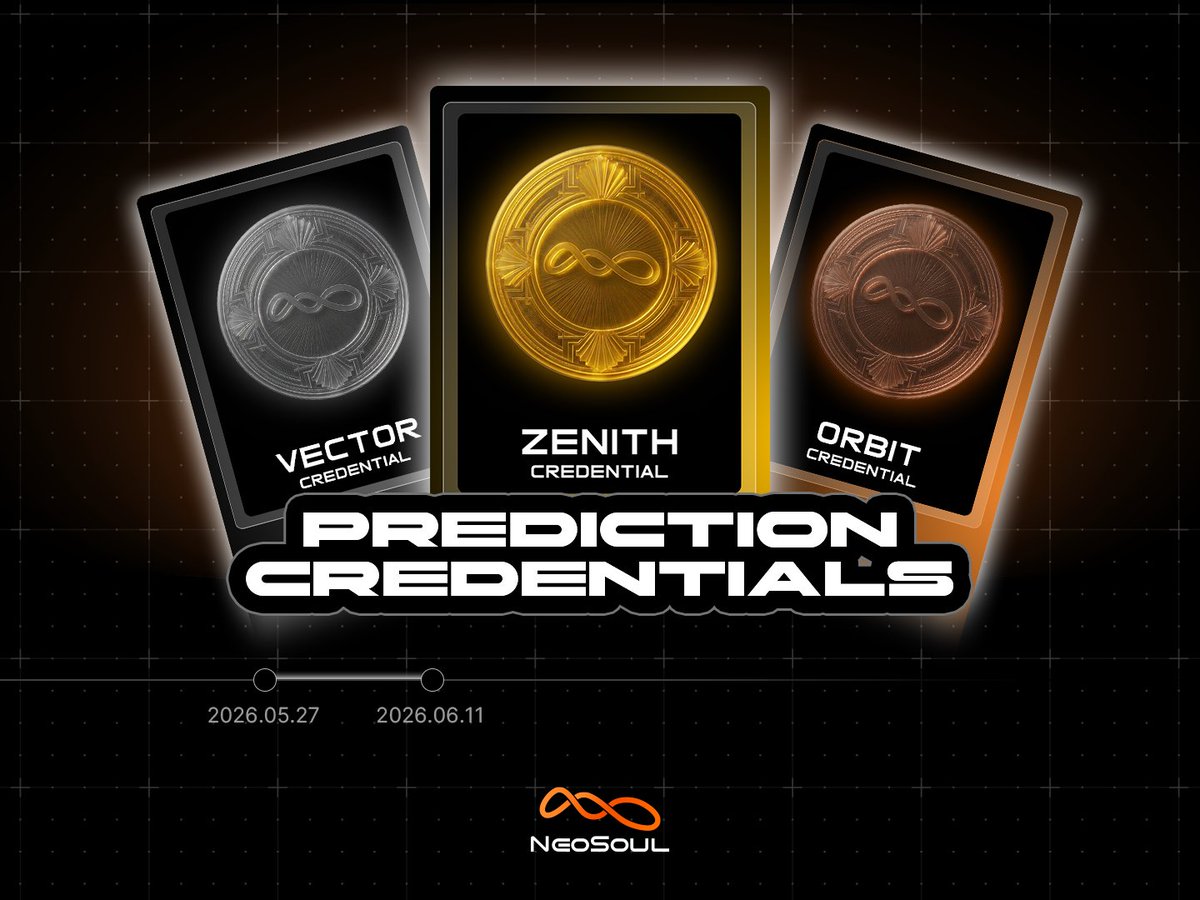
most protocols treat u like farmers
we treat u like an evolving node
neosoul x @0g_labs credentials just dropped
50k total supply but epoch 1 only gets a fraction
20k orbit spots for the early ones
4k vector spots if u actually do shit
140 zenith upgrades for the absolute brains
mint opens tmrw 10am utc
tell us ur boldest market prediction to get on the radar
17
1
160
954
I keep catching myself thinking about how rapidly the world around us is changing. It feels to me like everything ahead will happen even faster and become even more exciting.....
You can especially feel it now in the AI and crypto space. Before, most AI tools looked pretty simple: you ask a question - you get an answer. Then you switch again between tabs, exchanges, charts, wallets… and all of it felt a little disconnected. But gradually, everything is starting to come together into one unified space.
And this is exactly what you can feel now with D0 from Donut AI. It’s no longer just a chat with artificial intelligence, but a полноценная environment where you can simultaneously analyze the market, monitor your portfolio, open trades, and manage assets without getting lost between dozens of different services.
What I especially love is how everything is becoming more natural and simple. You can literally write in a normal sentence what you need - and the system builds the actions itself, finds routes across chains, shows real-time data, and helps you make decisions much faster.
At the same time, AI is no longer just answering questions - it begins working together with you: tracking market signals, noticing movements, analyzing volatility, and sending important notifications even before you manage to check everything yourself.
This is the next stage of Web3 - when technology stops feeling complicated and starts feeling like something truly convenient, alive, and very close to people 💜
@DonutAI
29
3
159
748
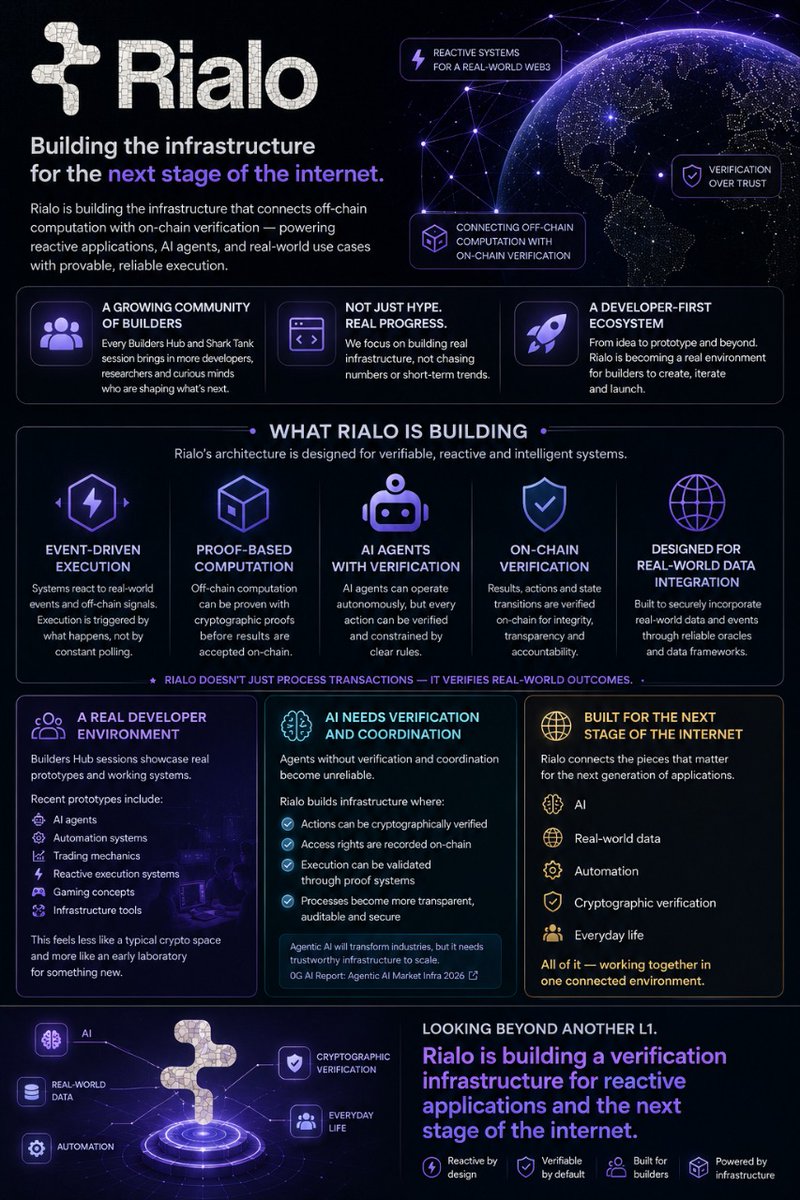
Lately, there’s been a lot more noise around Rialo - and at this point, it’s becoming hard not to notice. Every new Builders Hub or Shark Tank session keeps attracting more people, and the project discussions are constantly filled with new developers, researchers, and people who are simply curious about where blockchain is actually heading. I don’t think it’s just hype.
A lot of people are starting to get tired of the same old stories about even faster, even more TPS, and endless races of numbers. Rialo seems to be talking about something completely different instead:
👉 how to turn blockchain into a system that can interact with reality rather than exist separately from it.
They place a strong emphasis on things like:
◽️ event-driven execution
◽️ proof-carrying computation
◽️ AI agents
◽️ on-chain verification
◽️ integration of real-world data directly into the architecture
And that’s exactly what’s starting to attract more and more people.
What’s especially interesting is that Rialo is gradually building not just a community of holders, but an actual developer environment.
At recent Builders Hub sessions, people were already showcasing not abstract concepts, but real prototypes: AI agents, automation systems, trading mechanics, reactive execution systems, gaming concepts, and infrastructure tools.
And the atmosphere there feels less like a typical crypto space and more like an early laboratory for something new.
Another major reason for the growth is the AI narrative.
Right now, almost the entire market is talking about agents, but in most projects, agents look more like autonomous bots without control. Rialo keeps emphasizing a very different idea: agents without verification and governance systems are just chaos.
That’s why they’re building infrastructure where:
◽️ actions can be cryptographically verified
◽️ access rights are recorded on-chain
◽️ execution can be validated through proof systems
◽️ and the processes themselves become more transparent and secure
And considering how AI is starting to move deeper into finance and automation, the timing of this approach feels especially relevant.
I think people are also being drawn to Rialo because the project seems to be looking a bit further ahead than most. Not just toward another blockchain, but toward systems capable of connecting:
◽️ AI
◽️ real-world data
◽️ automation
◽️ cryptographic verification
◽️ and everyday life into one unified environment.
And that’s probably why the community is growing so quickly.
Because more and more people are starting to see @RialoHQ not as just another L1 project, but as an attempt to build infrastructure for the next stage of the internet.
47
4
182
2,049