
Co-founder of Wrapp, ex-Spotify CTO, ex-Stardoll. Technologist, advisor, angel. Values freedom. If you're wondering if a tweet was sarcastic, the answer is yes.
Joined March 2007
- Tweets 15,466
- Following 2,835
- Followers 13,802
- Likes 16,443
761 Photos and videos






Andreas Ehn retweeted

May 15
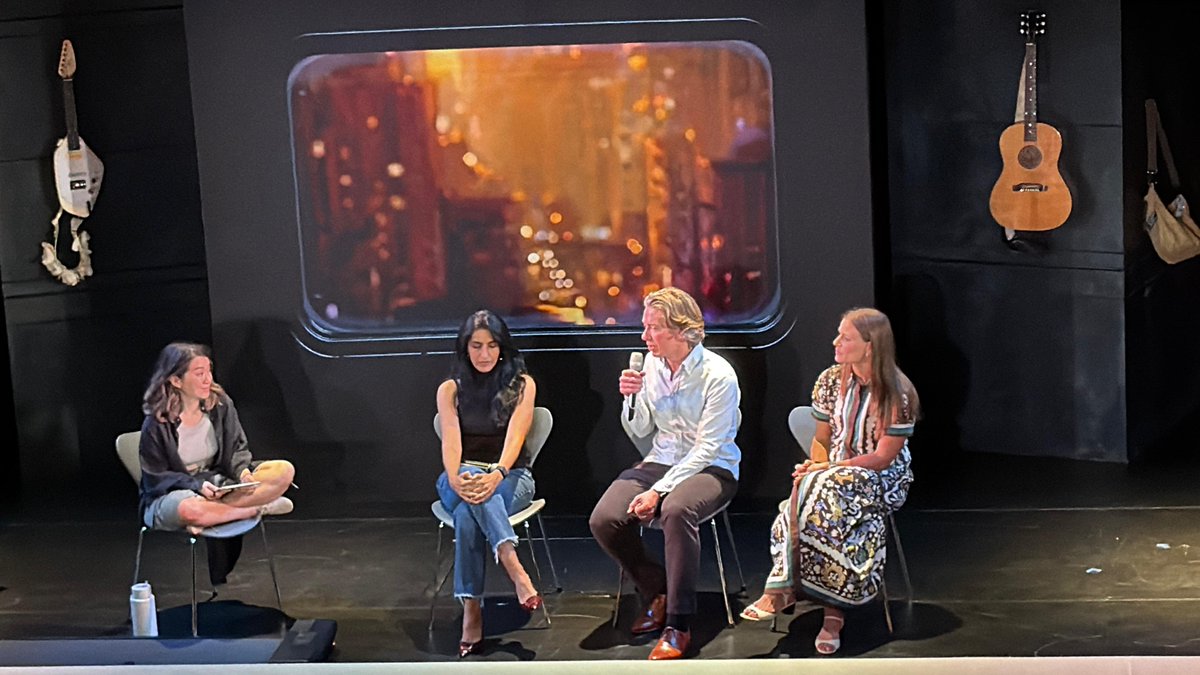
So fun to join @inchchua on stage last night after her performance of Myles – Soulmate in a box. Her story raises important questions about the not-so-distant future. It's a timely, relevant and entertaining musical about artificial intimacy. srt.com.sg/show/myles/
1
2
3
753

May 7
Just got back to Singapore. Going through Changi is always a delight but checking my email on the way home, I'm faced with some bad news. @AmazonSG is closing its Amazon Fresh grocery delivery service.
4
7
1,055
May 7
Day-to-day quality of life noticeably improved in Singapore when Amazon launched. It's a shame that they're scaling back.
1
1
495
May 9
Don't miss if you're in Singapore
May 9

Everyone working in tech and AI in Singapore, and everyone else: come watch SRTs production of Myles — Soulmate in a box. Brilliant @inchchua spent five years building her dream AI boyfriend. Now she shares their story. srt.com.sg/show/myles/
1
541
Apr 28
OS level switch that turns off (or time-limits) short-form video across all apps, enforced by app store reviews
Apr 27

2
1
504
Apr 22
There is plenty of room at the bottom
Apr 21

These two things are about the same size
"2nm" transistor gate pitch : 42nm
Flagellum motor : 45nm


1
1
804
Mar 4
Why do some developers (especially at banks and similar) turn off paste in password fields? What are they trying to achieve? If anything, it will make people choose worse passwords because they can't be bothered to manually type good ones.
310
225
10,053
585,659

Story time:
Me and my wife enjoy a small luxury, fresh blueberries on our cereal in the morning, which I buy at ≈ $2.50 a pint every single week excepting a couple weeks a year when the prices are higher, or the 2 months I pick them from my own bushes.
Blueberries have a country of origin stamp requirement. Every year, I watch as my blueberry source marches from Chile and Argentina up through Central America, through the States and into Canada, only to repeat.
All for a consistent 2.50 a pint, week after week, year after year.
The "food system" makes this not only possible, but profitable to all involved, just so I can live like a king and have fresh fruit on my Cheerios.
The modern world is amazing and we don't appreciate the bounty that we have at our fingertips nearly enough.

That fry represents one, maybe 2 shelf stable, long storage, Idaho potatoes grown in a single field by a single farmer, processed and flash frozen for indefinite storage until needed, fried on demand as needed
That fruit cup is the result of 7 different fruit suppliers, harvested and shipped fresh from global supplies in a matter of hours to a day, hand cut and assembled and served immediately before browning and decay sets in.
The fact you can do that for the cost of 15 minutes of labor or less is a f---ing miracle.
81
477
10,545
666,653
2 Dec 2025
Remember when Google made search so fast it could autocomplete the entire web? Wild how magical that felt.
Can't wait for LLMs to get that kind of responsiveness.
3
11
1,036
21 Nov 2025
What are the best AI shopping agents available today? Who is working on this?
1
5
839
Andreas Ehn retweeted
7 Nov 2025
One of the best things with parenting is the return to your hobbies and interests. I fully understand engaged football dads now. I see it. It’s just so much fun. @ehn is prepping for math competitions while I help our oldest practice his lines for the show. He loves both.
1
2
798
Andreas Ehn retweeted

22 Oct 2025
IP hawks are trying to kill off AI. That's what you'd expect from holders of monopoly privileges. (I'm a bit bummed that they're training AI on only two of my books, to be honest.) anthropiccopyrightsettlement…
6
4
38
2,312
Andreas Ehn retweeted

29 Sep 2025
It's true – @modal has raised a $87M Series B at a $1.1B valuation to advance the future of AI infrastructure.
Thank you to @Lux_Capital, @Redpoint, @AmplifyPartners, and others.
Now more than ever, AI demands a complete reinvention of traditional compute infrastructure
140
81
1,128
857,753

Everyone is a libertarian on the Internet.
Because it is simultaneously far more progressive and far more capitalist than any previous society.
It is ultra-progressive because billions of people from every race, religion, and ethnicity are on the global Internet. Anyone can speak to anyone, broadcast anything, associate with anyone, and do just about whatever they want if it is permitted by code.
It is also uber-capitalist because billions of people can transact with anyone, hire anyone, work for anyone, found their own businesses, become zillionaires, set up their own servers, and enjoy perfect freedom of association.
The common thread is individual consent. You consent to sign up to a server. You consent to install an app. And every million-person community on the Internet is formed by a million similar voluntary actions.
So: the Internet proves that consent scales, that voluntarism scales, that internationalism scales, that capitalism scales.
It proves this empirically. Because by and large, despite all its faults, the total freedom of the Internet is attractive. The ultra-nationalist nevertheless chooses to post on an international network. The anti-capitalist nevertheless chooses to post through a capitalist phone.
The reason the Internet works is that code is law. So all the impractical libertarian ideas that presupposed flawless judges or strict property rights suddenly became feasible.
For example, open borders in the physical world doesn’t work. But in the digital world, a site like Facebook actually can onboard billions of strangers and automatically adjudicate the interactions between them.
Similarly, polycentric law before the Internet didn’t work, because you couldn’t realistically have multiple legal systems in the same physical location. But now with Bitcoin and Ethereum and Solana, you can simply swap between different monetary policies and contract enforcement as you see fit.
The fundamental point is that the Internet makes libertarianism more practical.
For example, the esteemed @RonPaul wrote about ending the Fed, but that couldn’t realistically be done at the level of the state. However, tech libertarians could build Bitcoin, and thereby practically end the Fed at the level of the network.
Similarly, tech libertarians couldn’t shut down the Post Office, but they could boot up email. They couldn’t reform taxi medallions, but they could boot up Uber. They couldn’t reform these failed states, so they built the alternative on the global network.
Such examples can be multiplied. But the point is that actually existing libertarianism does exist. It is called the Internet. It is simply the most popular thing in the world, perhaps the most popular thing in human history. It is much more popular than any individual politician or state.
And yet it is still underestimated.
1 Jul 2025

Time to debunk the “nobody is a libertarian” chart, since it’s going viral again. Anytime you see a heat map purporting to show that nobody holds a combination of economic conservative and social liberal views, you should be skeptical. They almost always manufacture that result by miscategorizing the axis on which a given question belongs or what constitutes a left or right answer.
In order to move toward the bottom (social liberal) on this chart, you would have to AGREE with the statements:
✅ “Over the past few years, Black people have gotten less than they deserve.”
✅ “Generations of slavery and discrimination have created conditions that make it difficult for Black people to work their way out.”
✅ Illegal immigrants are a net “contribution” to our country.
In order to move to the right (economic conservative) on the chart, you would have to DISAGREE with the following statements:
❌ “Politics is a rigged game.”
❌ “People like me don’t have any say.”
❌ “Social Security is important to me personally.”
Do you know any libertarians who believe in reparations for slavery, feel well represented in the political process, and don’t think entitlements are important? Yeah, neither do I. No wonder the chart doesn’t either.
127
447
1,611
359,151