An independent, non-partisan, not for profit organization
Joined December 2024
- Tweets 659
- Following 42
- Followers 1,375
- Likes 266
260 Photos and videos
Economic Policy & Business Development retweeted

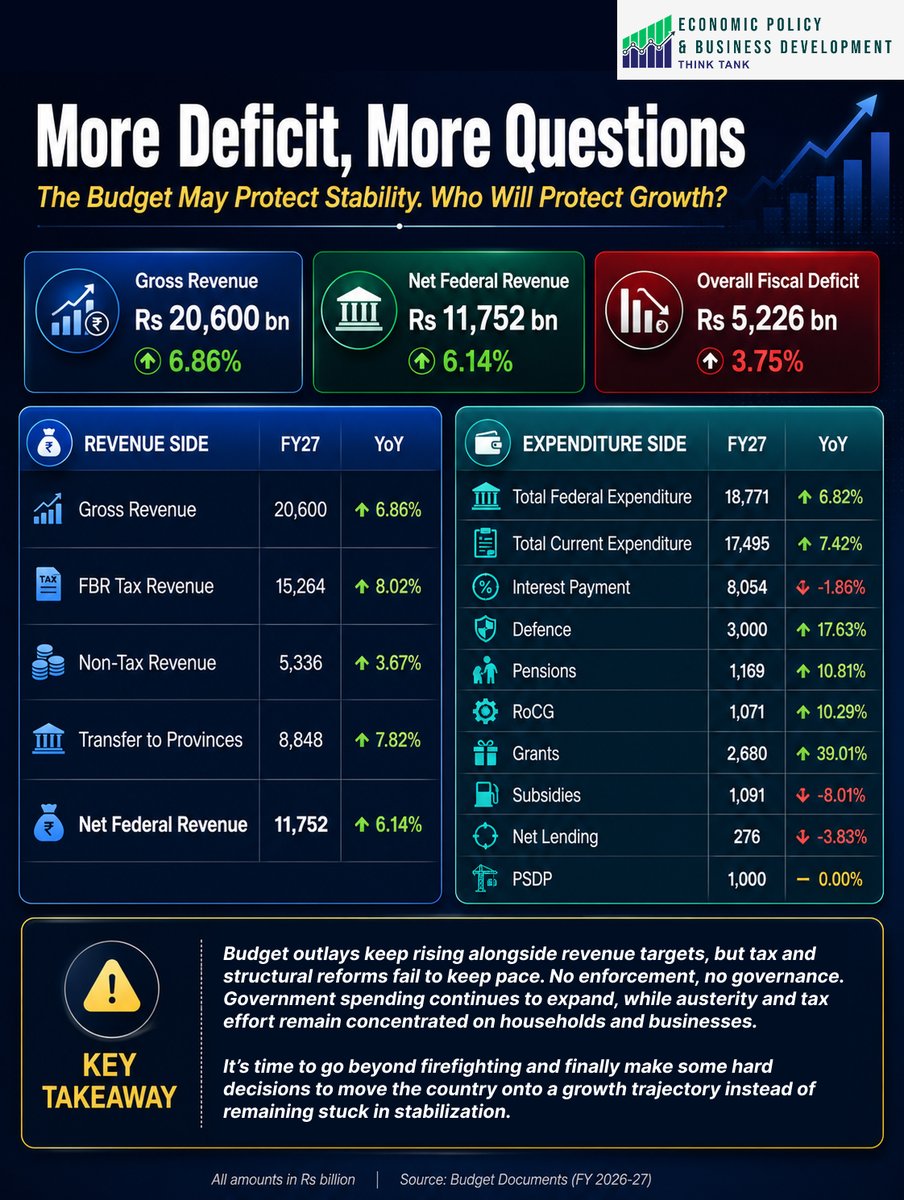
The FY27 budget reflects continued fiscal consolidation, but adjustment quality remains weak. Gross revenue grows 6.9% (FBR tax 8.0%), with no clear shift toward broadening the tax base versus increased burden on existing taxpayers.
Current expenditure rises 7.4%, led by RoCG (Rs 1,071bn, 10.3%), pensions (Rs 1,169bn, 10.8%), and grants (Rs 2,680bn, 39.0%), despite austerity claims. Subsidies decline (-8.0%), but structural rigidities persist.
Both the budget deficit (Rs 7,020bn) and fiscal deficit (Rs 5,226bn) widen year-on-year, while growth remains subdued—indicating stabilization without meaningful expansion.
It’s time to go beyond firefighting and make the hard decisions needed to shift from stabilisation to a growth trajectory.
4
4
11
682
Economic Policy & Business Development retweeted

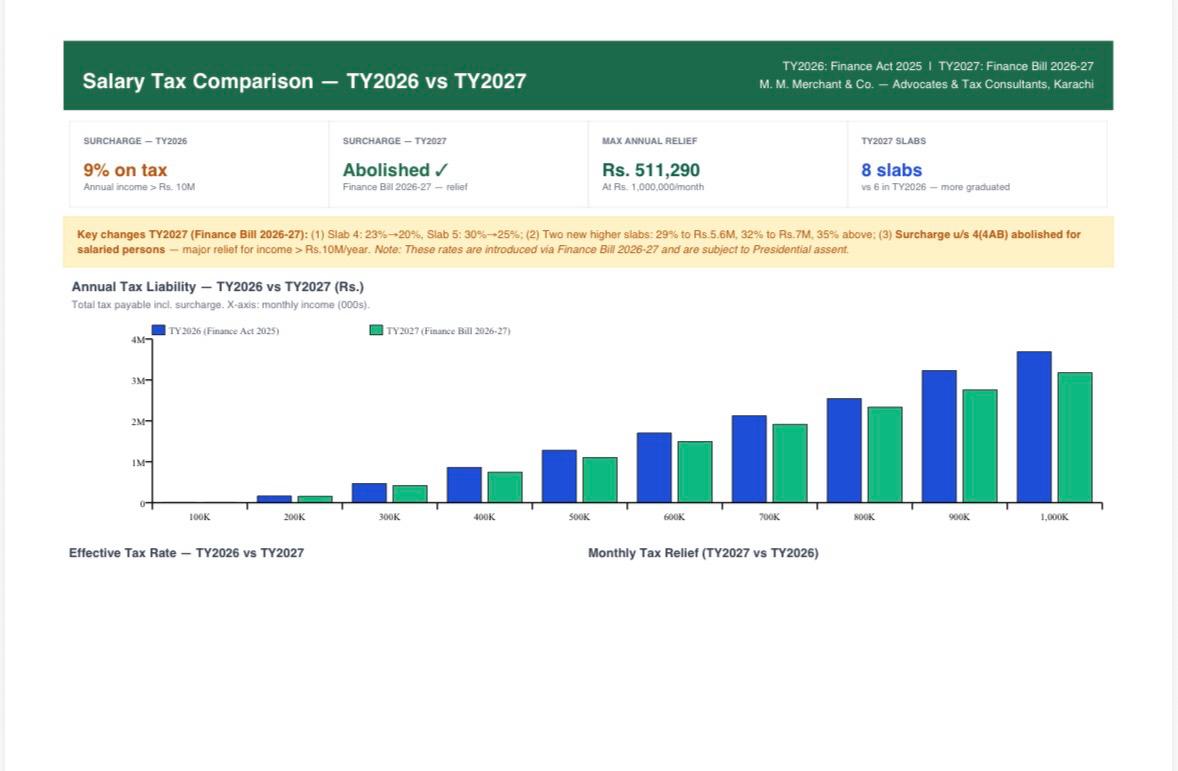
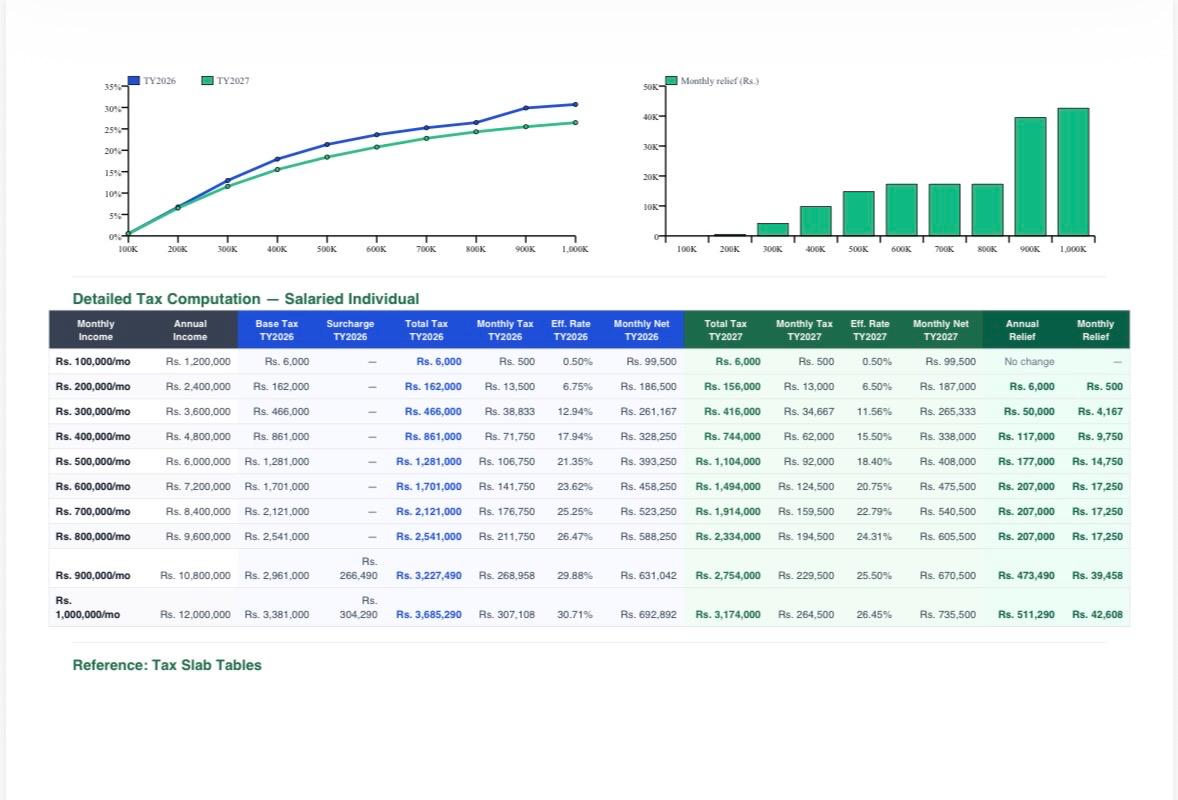
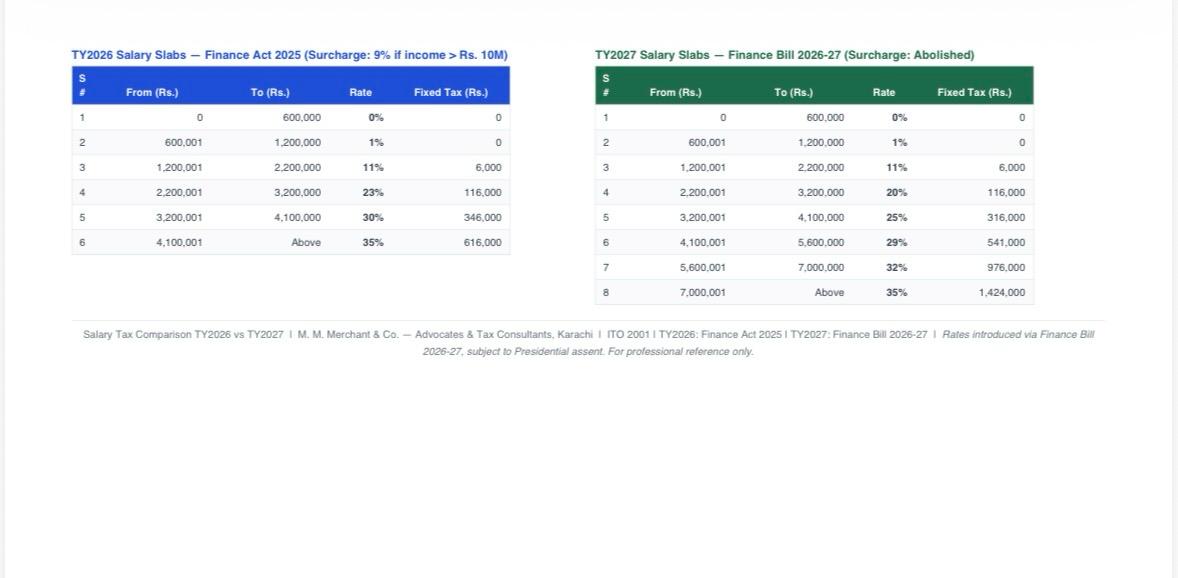
Proposed Tax Relief for the Salaried Class in the 2026–27 Budget is not Enough!
The amount of tax currently being charged on income slabs, especially below Rs. 1,500,000 per month, affects the ability of this most important segment of the society to meet their basic living needs, including payment of utility bills, education, healthcare, and the overall well-being of their children and families.
The salaried class is the most important segment of the economy. Let the Middle Class be the Engine of Growth for Pakistan! If they are able to spend, the Economic Cycle and Growth will start, with revenues coming back to the state as indirect taxes.
I strongly suggest the Govt and the Parliament to provide further relief to the salaried families.
I propose that there should be only three tax slabs for the salaried class
- Income from Rs. 100,000 per month to Rs. 500,000 per month: 5% tax
- Income from Rs. 500,000 per month to Rs. 1,500,000 per month: 10% tax
- Income above Rs. 1,500,000 per month: 20% tax
The charts attached show the proposed relief for the salaried class in the 2026–27 budget proposals.
#SalariedClass
#TaxRelief
#Budget2026
#PakistanEconomy
#TaxReforms
#MiddleClassMatters
#EconomicGrowth
#FairTaxation
#BudgetProposal
#SupportSalariedClass
#IncomeTax
#Parliament
#PakistanBudget
#TaxJustice #ReliefForSalariedClass
9
18
69
8,958
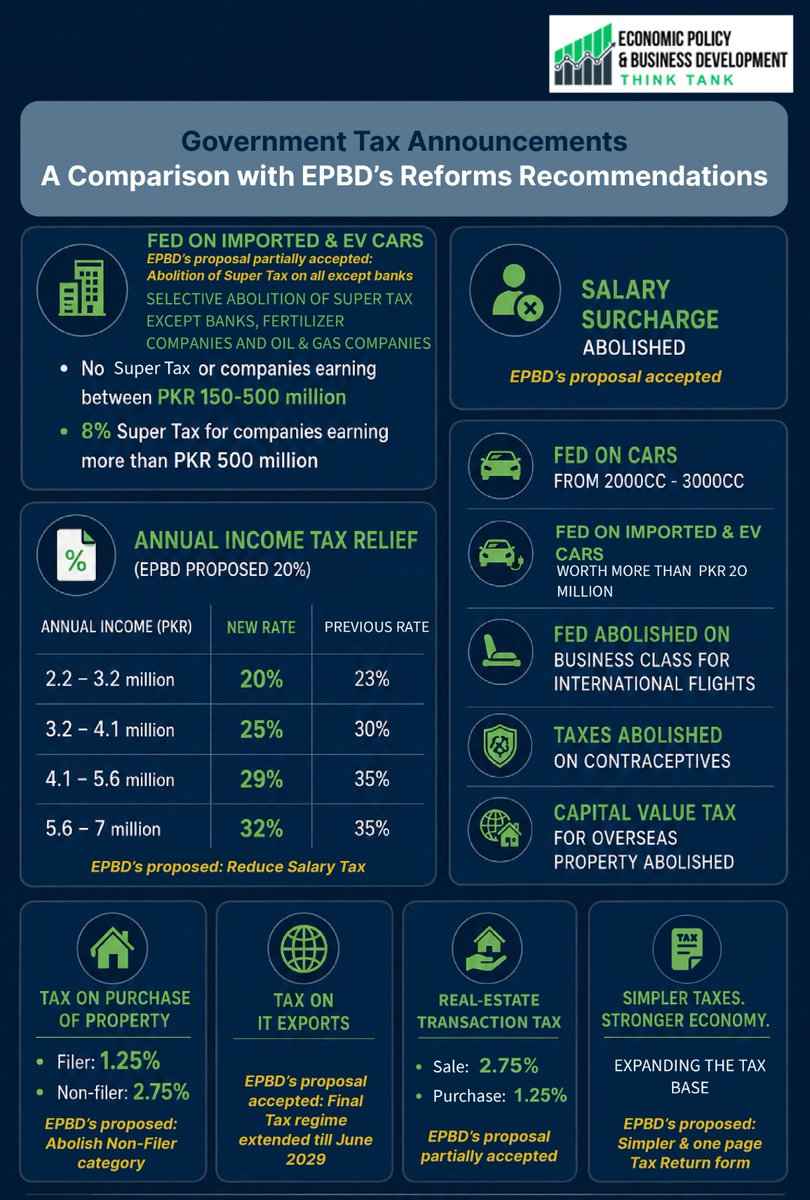
When the Government Listens: EPBD's Reform Roadmap Becomes Reality.
- Salary Surcharge Abolished.
- Super Tax Partially Abolished.
- Income Tax Reduced.
- IT Exports Regime Extended to 2029.
- One page Tax Return Form.
- Real Estate Transaction Tax partially accepted.
Five reforms, one vision — proof that evidence-based policy works!
3
4
10
555
@mukarram_ansari @jam_kamal @CapitalStake
@Asad_Ashah @MJavedGhani @DrIkramulHaq
@AliKhizar @Huzaimabukhari @SaleemFarrukh
@MiftahIsmail @najam_ali @peconomist_ @AtifRMian
@PIDEpk @AajKamranKhan @MoWP15 @etribune
@brecordernews @thenews_intl @geonews
@MoIB_Official @MOPASSPK @nhsrcofficial
@PlanComPakistan @mophrd @MoWP15
@81ShahbazRana @nadeemmalik @MalickViews
89
The FY27 budget reflects continued fiscal consolidation, but adjustment quality remains weak. Gross revenue grows 6.9% (FBR tax 8.0%), with no clear shift toward broadening the tax base versus increased burden on existing taxpayers.
Current expenditure rises 7.4%, led by RoCG (Rs 1,071bn, 10.3%), pensions (Rs 1,169bn, 10.8%), and grants (Rs 2,680bn, 39.0%), despite austerity claims. Subsidies decline (-8.0%), but structural rigidities persist.
Both the budget deficit (Rs 7,020bn) and fiscal deficit (Rs 5,226bn) widen year-on-year, while growth remains subdued—indicating stabilization without meaningful expansion.
It’s time to go beyond firefighting and make the hard decisions needed to shift from stabilisation to a growth trajectory.
4
4
11
682
@mukarram_ansari @jam_kamal @CapitalStake
@Asad_Ashah @MJavedGhani @DrIkramulHaq
@AliKhizar @Huzaimabukhari @SaleemFarrukh
@MiftahIsmail @najam_ali @peconomist_ @AtifRMian
@PIDEpk @AajKamranKhan @MoWP15 @etribune
@brecordernews @thenews_intl @geonews @MoIB_Official @MOPASSPK @nhsrcofficial
@PlanComPakistan @mophrd @MoWP15 @81ShahbazRana @nadeemmalik @MalickViews
46
@Nawaiwaqt_ @jang_akhbar @thenation @24NewsHD @Financegovpk @sifcpakistan @FBRSpokesperson @FPCCIOfficial @NIH_Pakistan @Official_PetDiv @StateBank_Pak @SECPakistan @nadeemmalik @brief_pk @MalickViews @Profitpk @RadioPakistan @EconomicTimes @TheEconomist @infokpgovt @92newschannel @AmirMateen2 @MalickViews @ThePBC_Official @PSX100 @SDPIPakistan @trade_flow @TextilePtea @CapitalStake @BNC_PvtLimited @AajKamranKhan
@SAMAATV
92
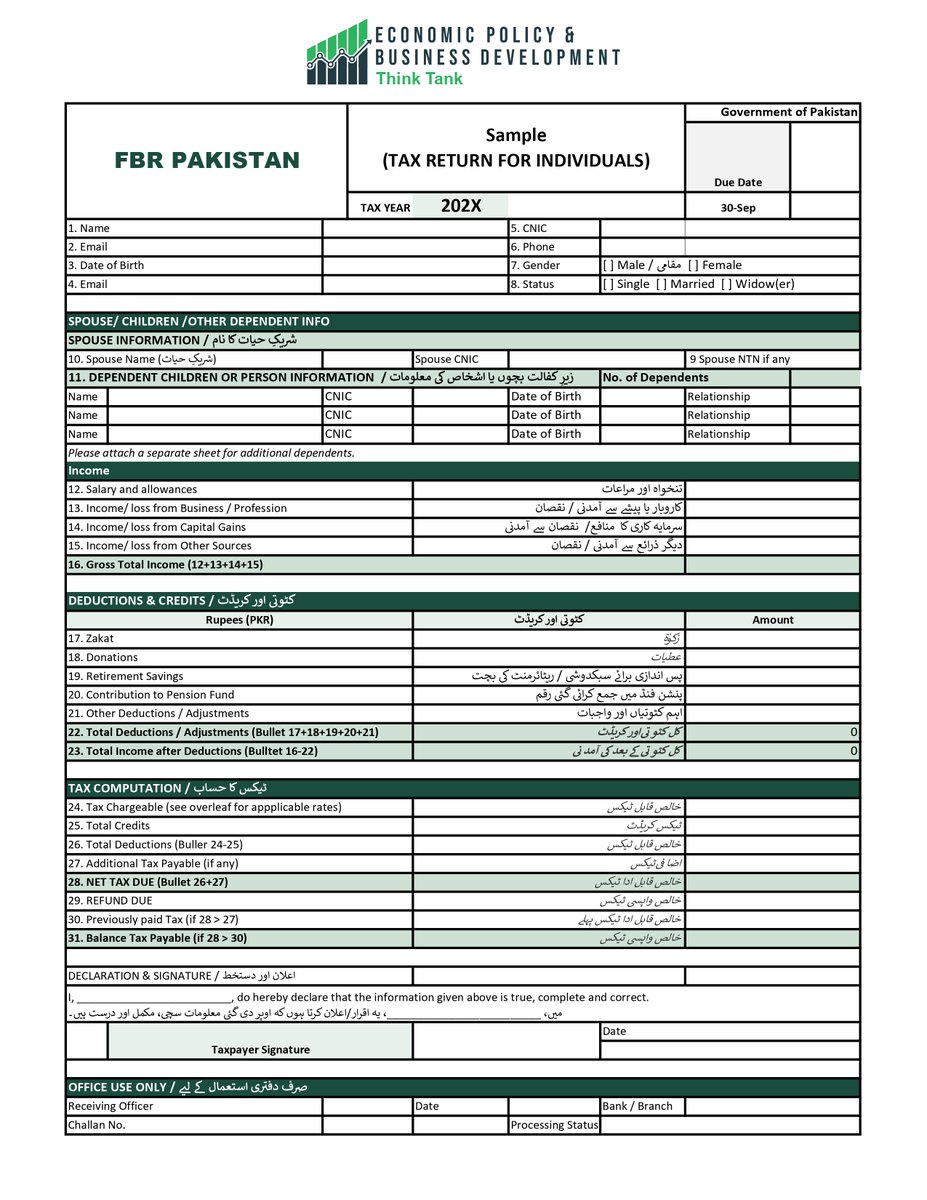
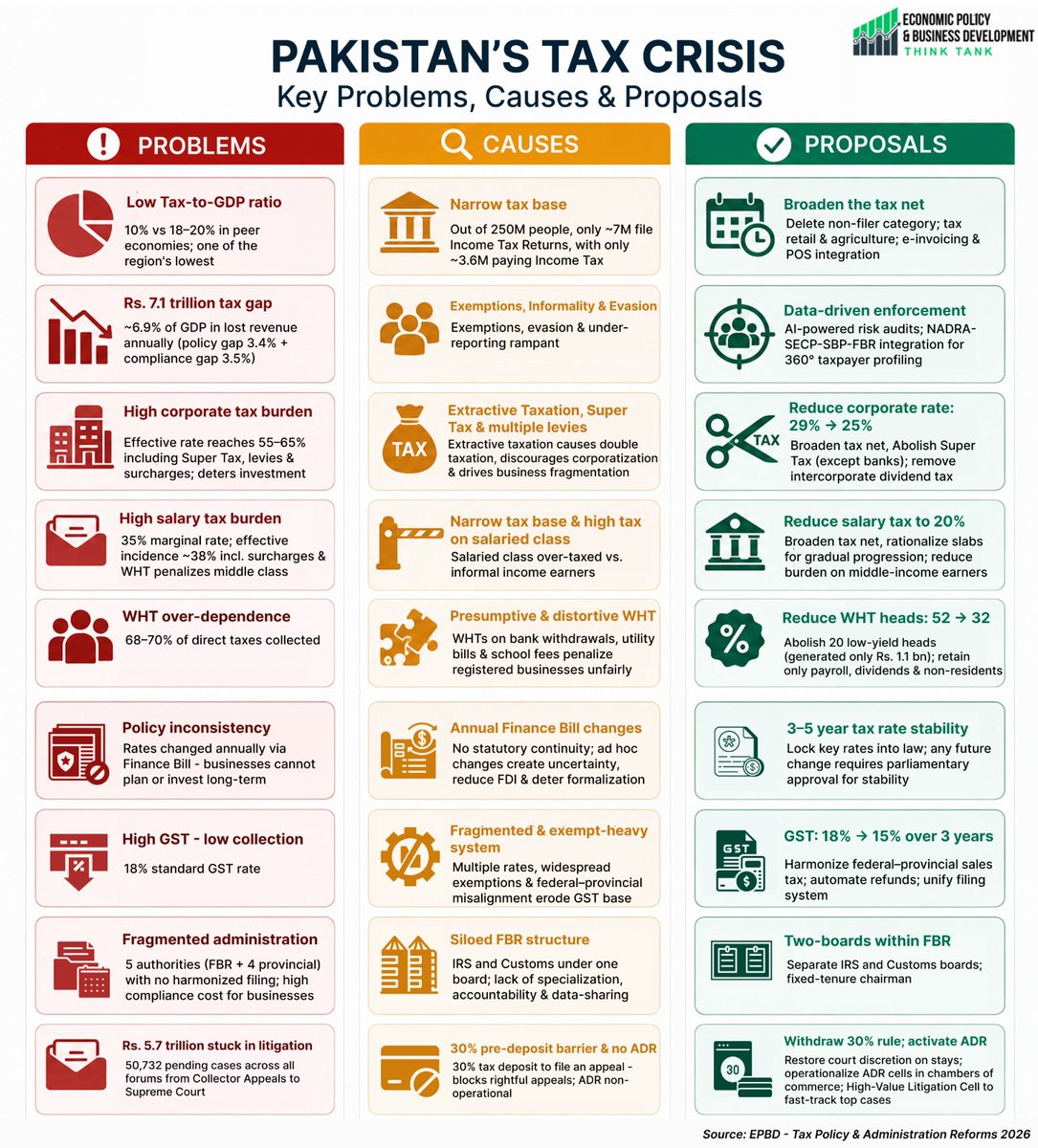
Big win for tax simplification: the government has approved EPBD's proposal for a one-page tax return form in Urdu and regional languages, for shopkeepers, first put forward in our Tax Policy and Administration Reform paper on 25 May 2026.
#Budget2026 #Tax #Parliament @FBRSpokesperson
3
7
17
1,663
@Nawaiwaqt_ @jang_akhbar @thenation @24NewsHD @Financegovpk @sifcpakistan @FBRSpokesperson @FPCCIOfficial @NIH_Pakistan @Official_PetDiv @StateBank_Pak @SECPakistan @nadeemmalik @brief_pk @MalickViews @Profitpk @RadioPakistan @EconomicTimes @TheEconomist @infokpgovt @92newschannel @AmirMateen2 @MalickViews @ThePBC_Official @PSX100 @SDPIPakistan @trade_flow @TextilePtea @CapitalStake @BNC_PvtLimited @AajKamranKhan @SAMAATV
90
@mukarram_ansari @jam_kamal @CapitalStake @Asad_Ashah @MJavedGhani @DrIkramulHaq @AliKhizar @Huzaimabukhari @SaleemFarrukh @MiftahIsmail @najam_ali @peconomist_ @AtifRMian @PIDEpk @AajKamranKhan @MoWP15 @etribune @brecordernews @thenews_intl @geonews @MoIB_Official @MOPASSPK @nhsrcofficial @PlanComPakistan @mophrd @MoWP15 @81ShahbazRana @nadeemmalik @MalickViews
86
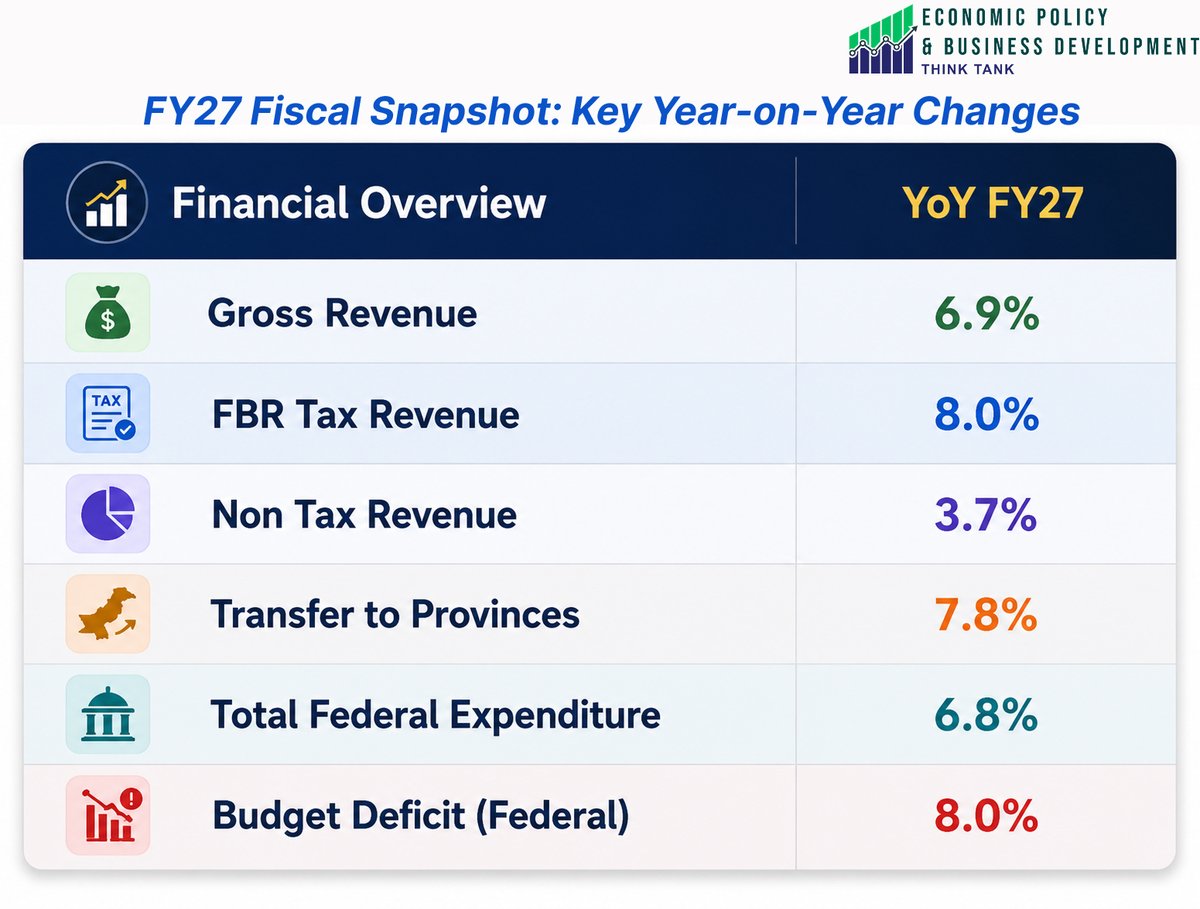
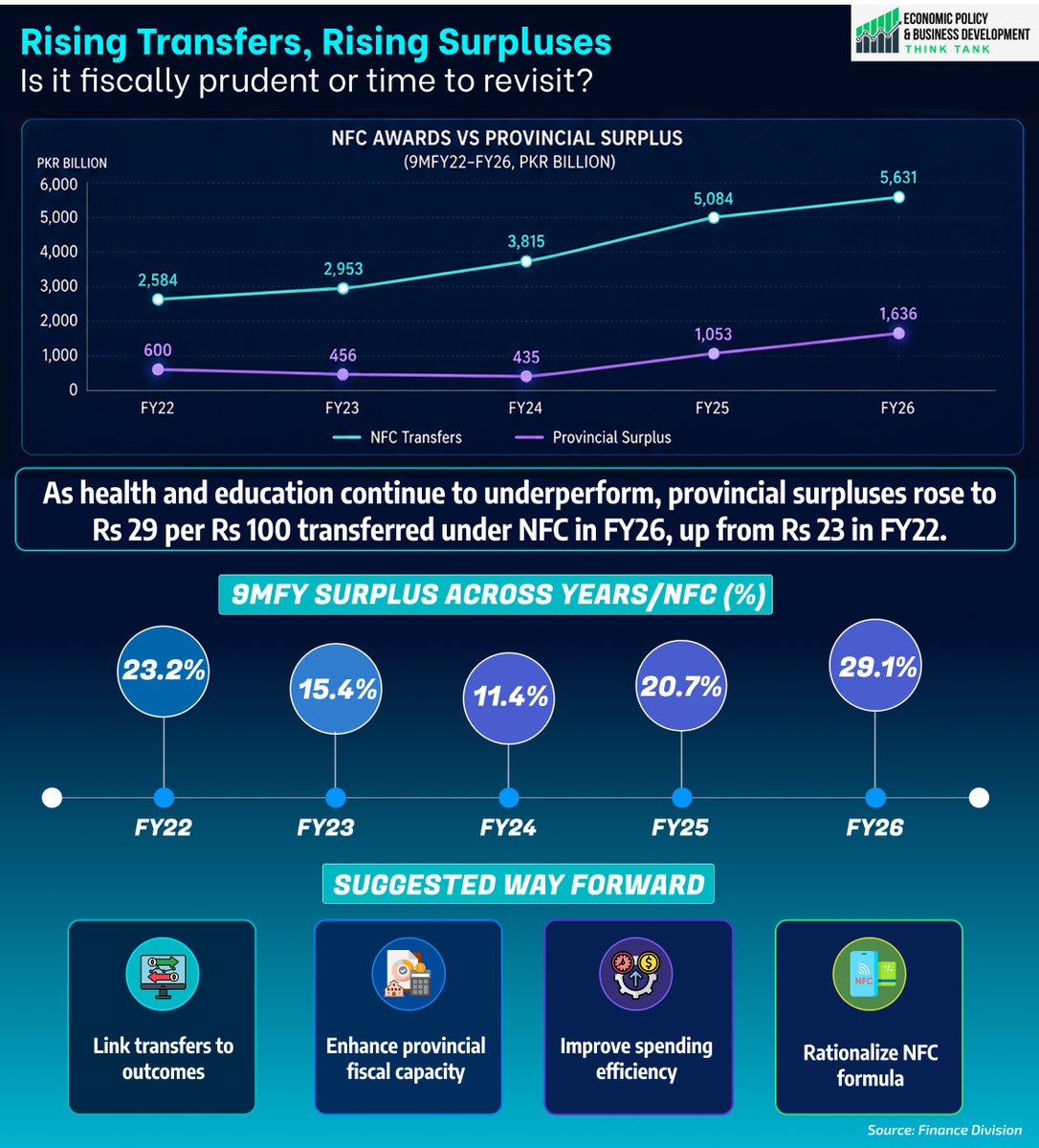
Revenue targets increase by 6.9% YoY in FY27 compared to FY26, but a critical question remains: will this growth be driven by broadening the tax base and expanding the tax net, or by further squeezing an already burdened population? The real solution lies in stronger enforcement and compliance, not in imposing additional pressure on existing taxpayers. Similarly, a 3.7% increase in non-tax revenue raises concerns over whether higher levies and charges will further erode purchasing power and restrict the operating space for businesses. Provincial transfers rise by 7.8%, yet it remains uncertain whether this additional funding will translate into tangible improvements in socio-economic indicators. Federal expenditure increase by 6.8%, but questions persist over whether the additional spending will genuinely support development priorities or simply expand government outlays. Most notably, fiscal expansion continues without corresponding deficit reduction; despite higher revenue targets, the budget deficit will rise by 8%, highlighting persistent structural weaknesses in fiscal management.
#Budget2026 #Parliament #Pakistan
1
2
8
500
@mukarram_ansari @jam_kamal @CapitalStake @Asad_Ashah @MJavedGhani @DrIkramulHaq @AliKhizar @Huzaimabukhari @SaleemFarrukh @MiftahIsmail @najam_ali @peconomist_ @AtifRMian @PIDEpk @AajKamranKhan @MoWP15 @etribune @brecordernews @thenews_intl @geonews @MoIB_Official @MOPASSPK @nhsrcofficial @PlanComPakistan @mophrd @MoWP15 @81ShahbazRana @nadeemmalik @MalickViews
157
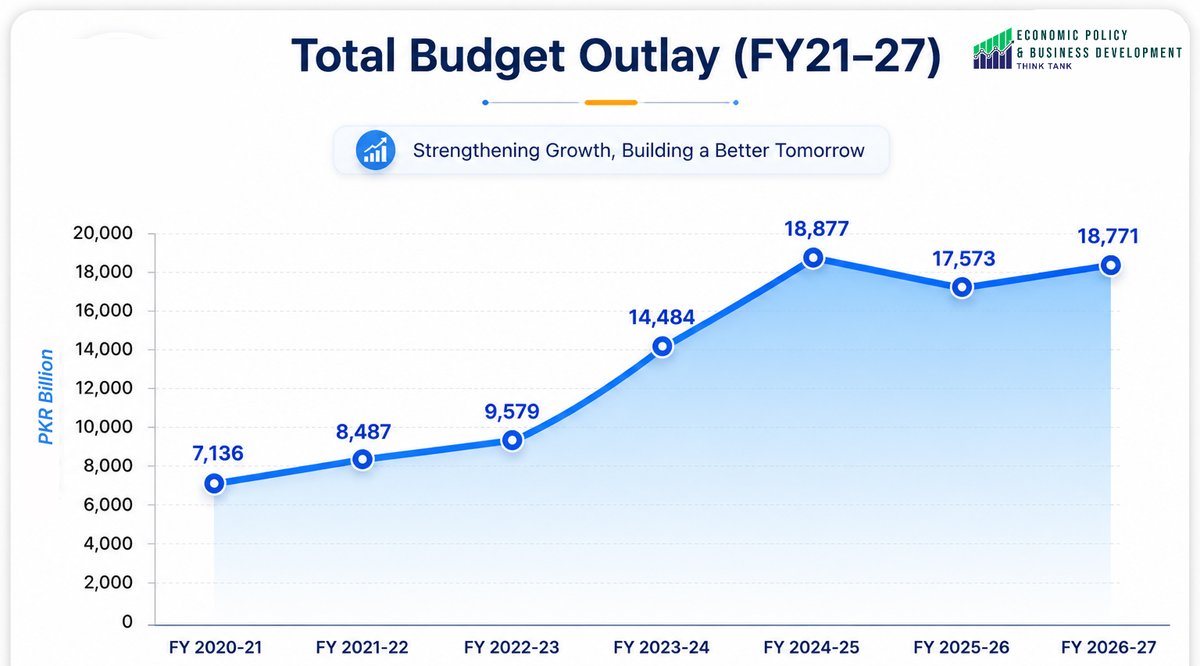
A substantial increase in Pakistan’s budget outlay from PKR 7,136 Bn in FY21 to PKR 18,771 Bn in FY27 raises concerns about fiscal sustainability and expenditure efficiency. The sharp rise in spending between FY23 and FY25 significantly expanded government commitments, potentially intensifying pressure on public finances amid persistent economic challenges. With total federal expenditure increasing by 6.8% year-on-year in FY27, concerns remain about whether the government will be able to finance these expenditures without placing additional burdens on the public.
#Budget2026 #Pakistan #Parliament
1
5
12
601
@mukarram_ansari @jam_kamal @CapitalStake
@Asad_Ashah @MJavedGhani @DrIkramulHaq @AliKhizar @Huzaimabukhari @SaleemFarrukh @MiftahIsmail @najam_ali @peconomist_ @AtifRMian @PIDEpk @AajKamranKhan @MoWP15 @etribune @brecordernews @thenews_intl @geonews @MoIB_Official @MOPASSPK @nhsrcofficial @PlanComPakistan @mophrd @MoWP15 @81ShahbazRana
160
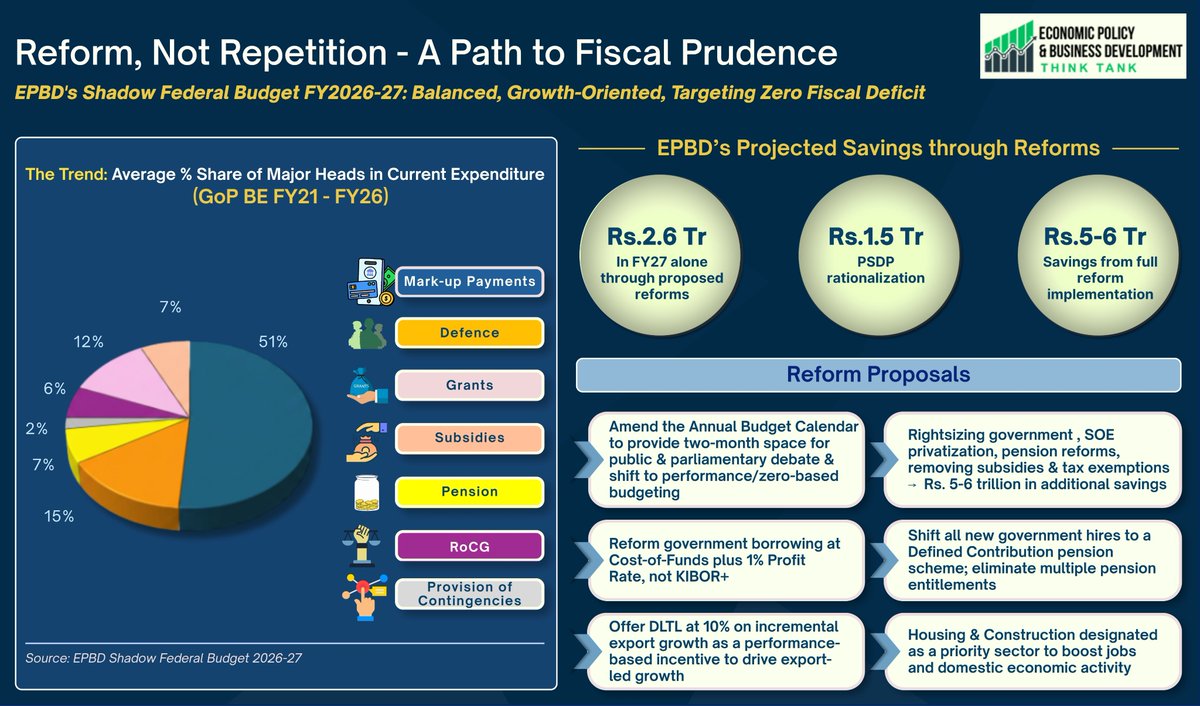
Pakistan's federal current expenditure more than doubled in five years, from Rs. 6,345 billion in BE FY21 to Rs. 16,286 billion in BE FY26 driven by markup payments that averaged 51% of current expenditure over this period, a pension burden growing at approximately 20% annually, persistently high civil administration costs, and grants and subsidies that have remained inadequately controlled.
Left unaddressed, these structural pressures have kept Pakistan locked in a cycle of high borrowing, rising debt servicing costs, and shrinking fiscal space, with little room for the development and social investment the economy urgently needs.
EPBD's Shadow Federal Budget FY2026-27 proposes a comprehensive reform pathway to reverse this trend: reforming government borrowing from KIBOR-linked rates to a cost-of-funds plus 1% profit rate, shifting new government hires to a Defined Contribution pension scheme and eliminating multiple pension entitlements to contain the growing burden, rightsizing government through winding up unnecessary ministries, SOE privatization, and removal of unjustified subsidies and exemptions, projected to unlock over Rs. 5 trillion in additional savings; and closing 91 unnecessary PSDP projects to yield a further Rs. 1.5 trillion.
Underpinning all of this is a call for institutional discipline that has been absent for over a decade. EPBD proposes amending the annual Budget Calendar to provide two full months for public and parliamentary deliberation before approval, beginning with pre-budget consultation papers in mid-April and culminating in full parliamentary scrutiny before passage of the Finance and Appropriation Bills by 30 June.
It also demands adherence to the constitutional and legal framework governing fiscal management, including the FRDLA 2005 and the PFM Act 2019, and urgent finalizations of a new NFC Award - overdue for more than ten years - as a foremost constitutional obligation, essential to restoring fiscal balance between the Federation and the Provinces.
EPBD's Shadow Federal Budget FY2026-27 is ultimately a call to move from a culture of fiscal repetition to one of genuine reform, where expenditure is rationalized, institutions are made to function as the Constitution intended, and the budget process itself becomes transparent, deliberative, and accountable to the public it is meant to serve.
Read the Shadow Federal Budget document here: epbdt.org.pk/shadow-document…
#Budget2026 #Pakistan
2
2
7
641
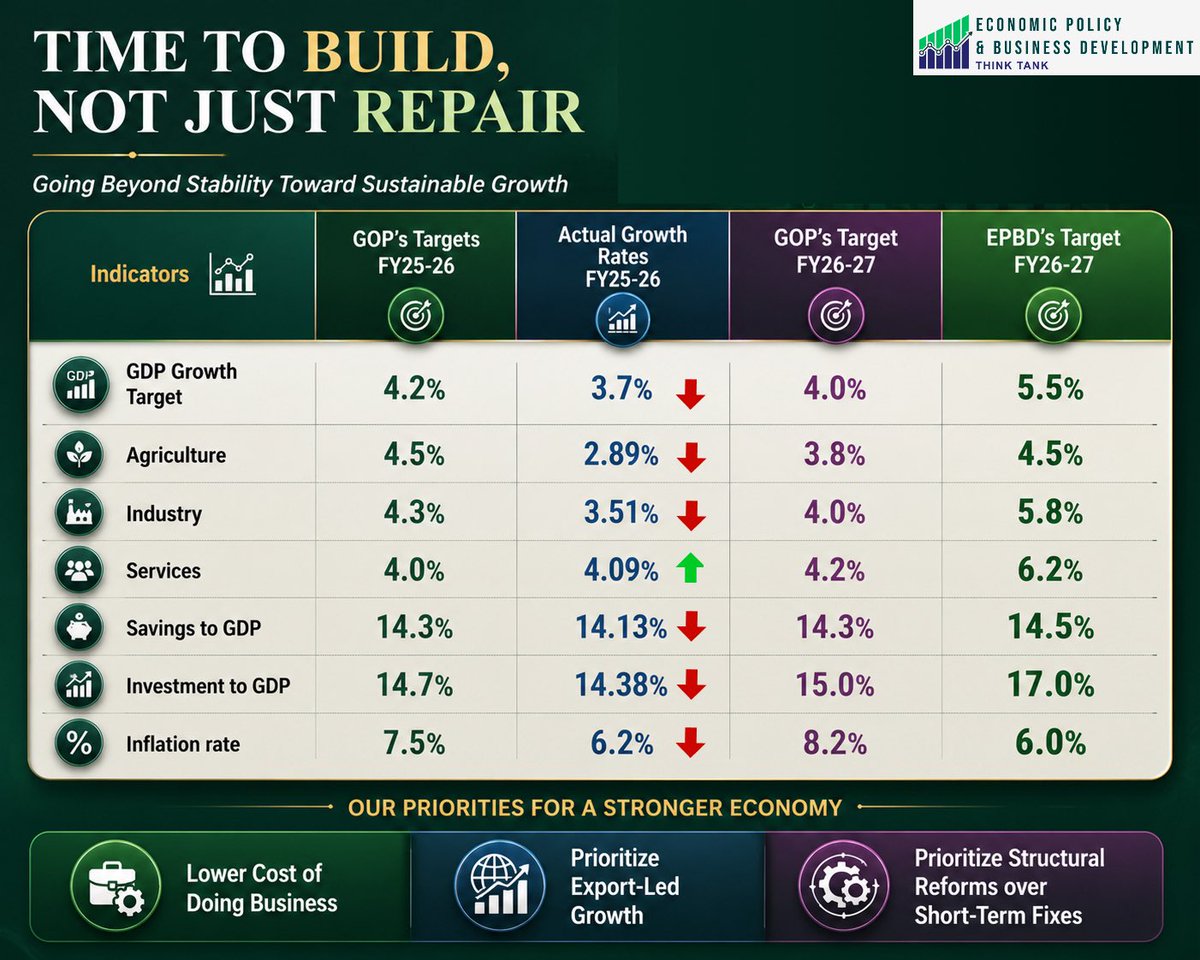
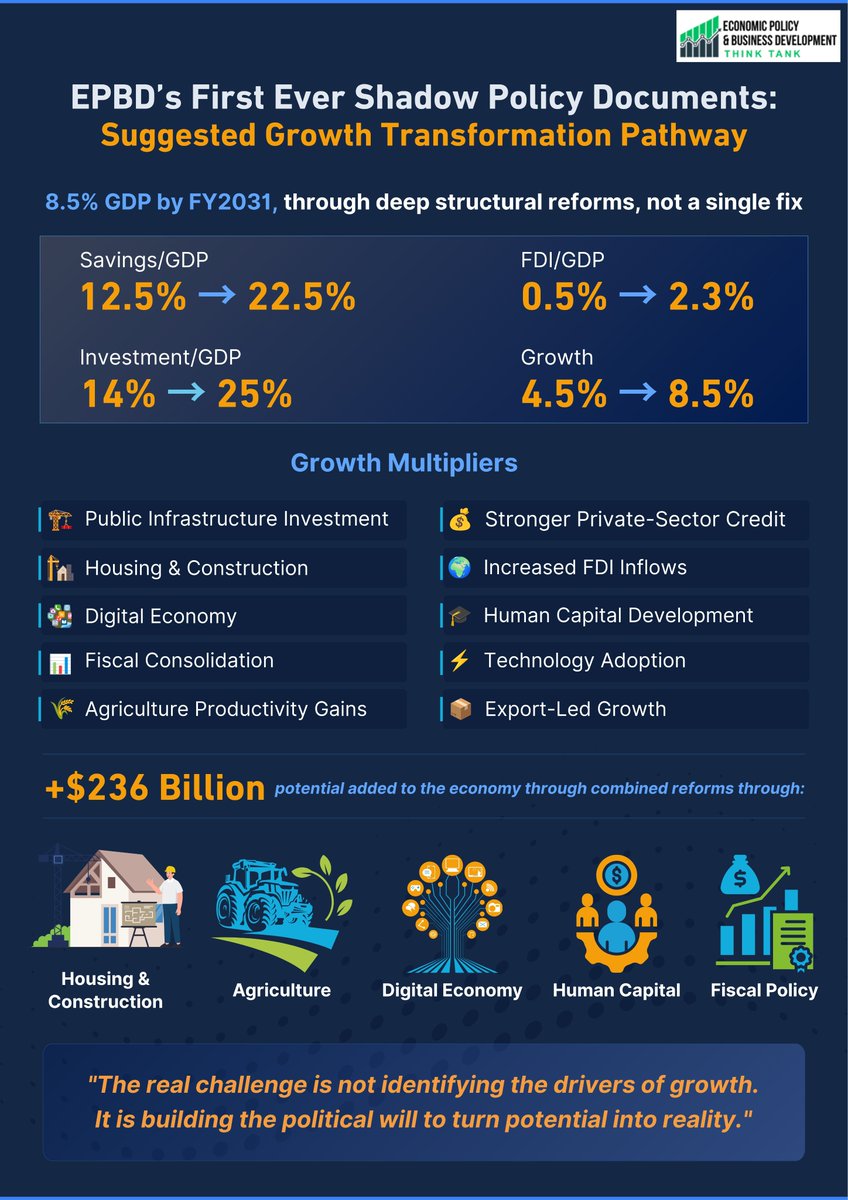
Pakistan has long been trapped in a cycle of boom and bust. While stabilization has been achieved, the critical shift toward sustainable growth remains.
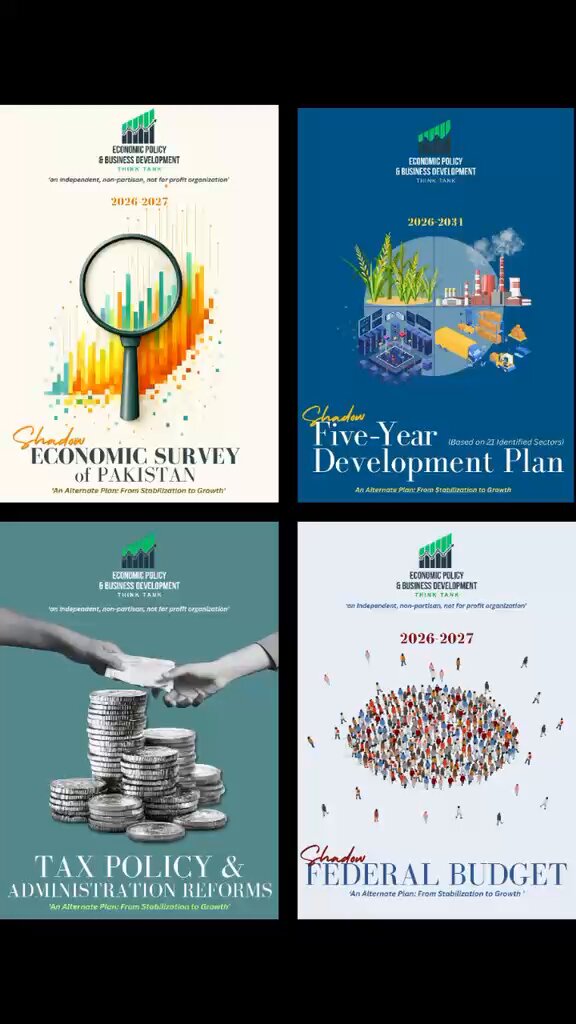
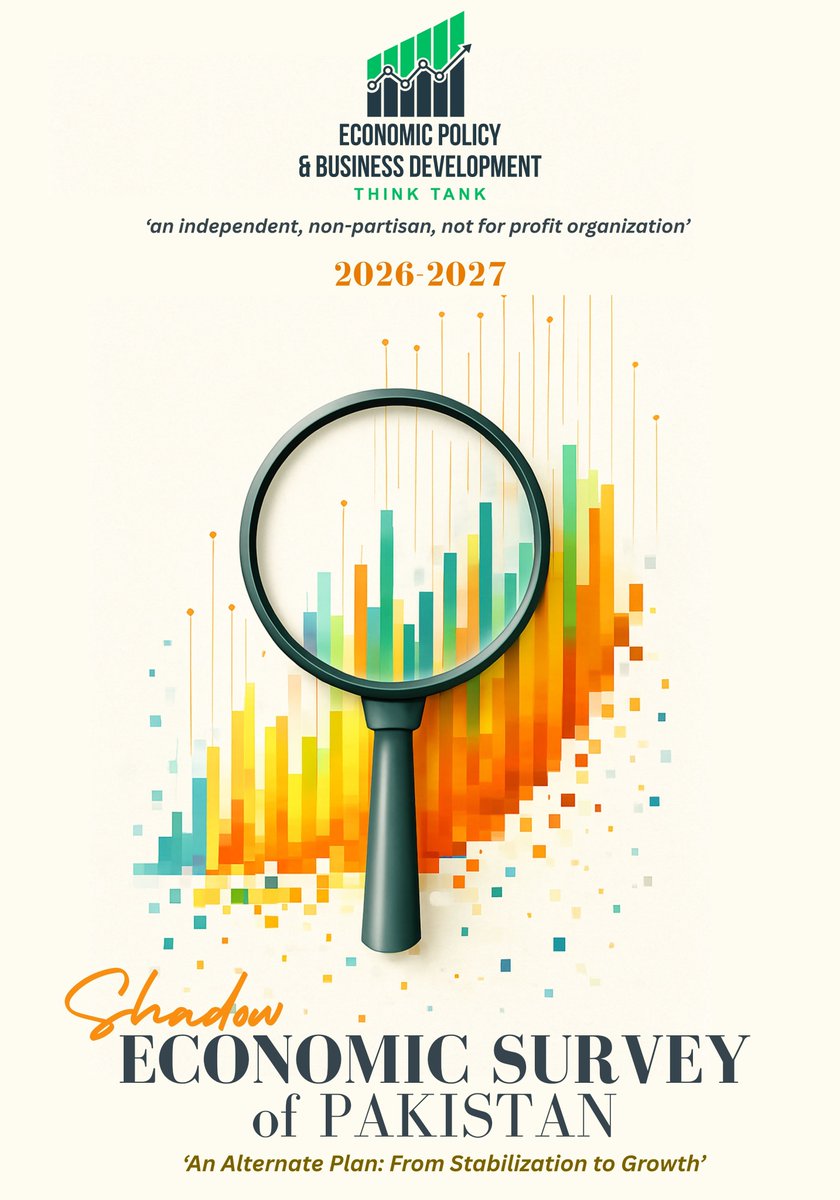
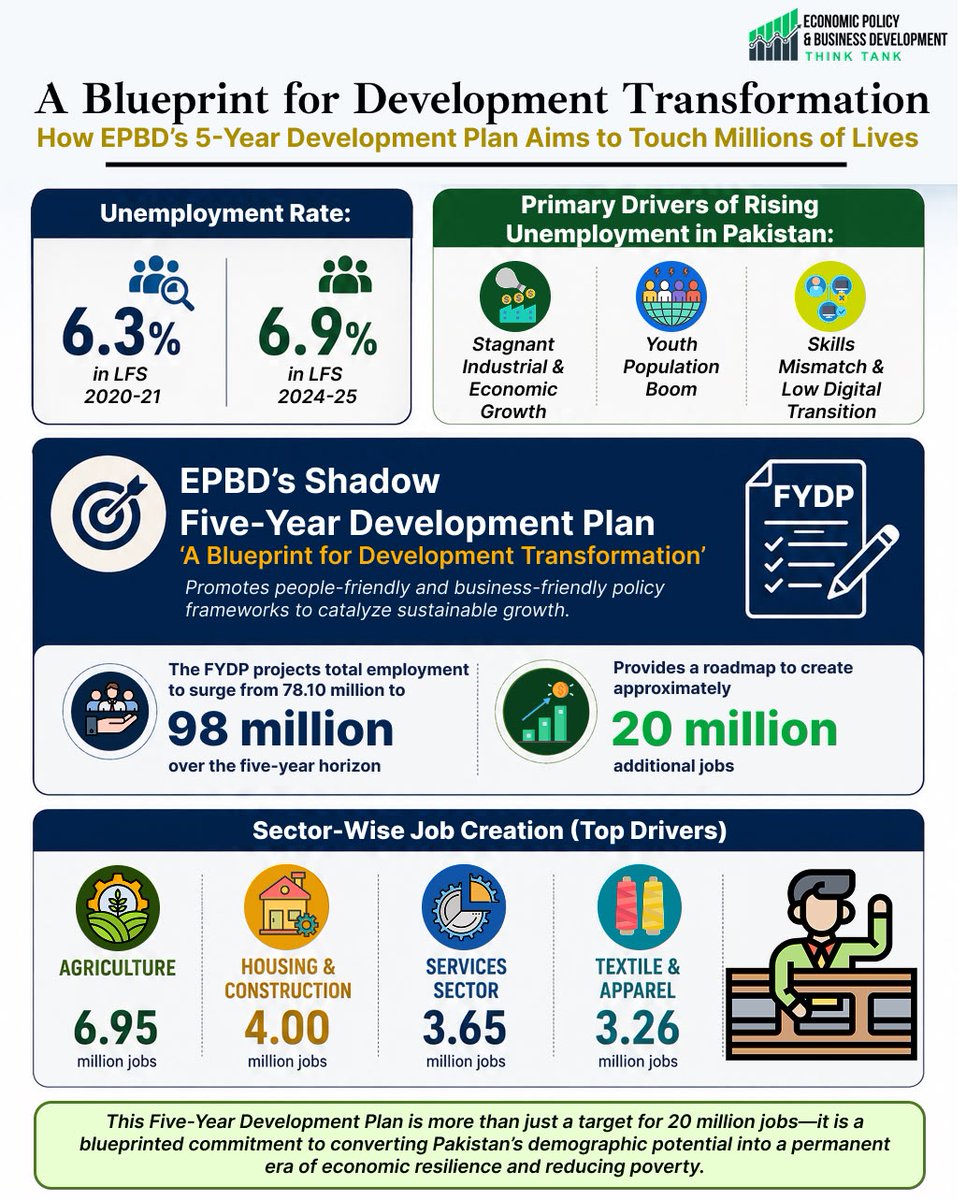
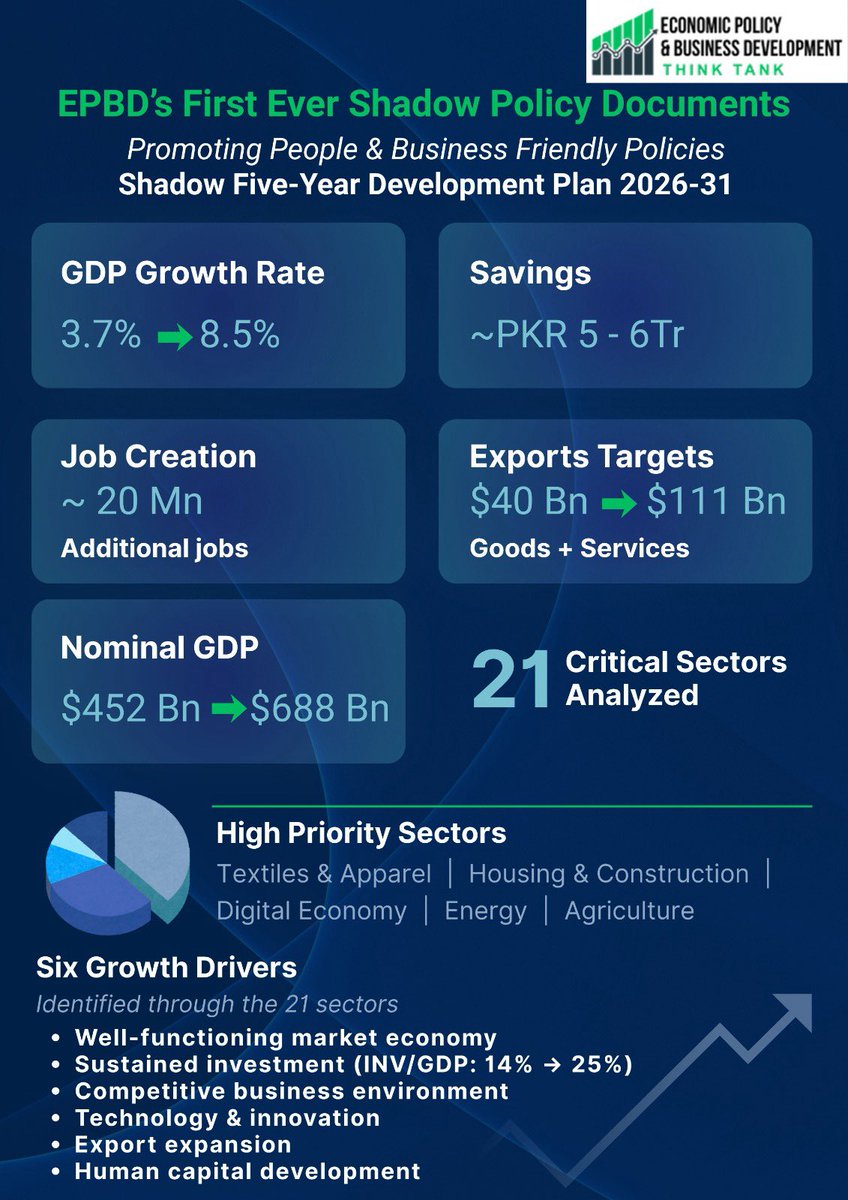
EPBD has launched four comprehensive shadow policy documents that serve as the alternate blueprint and a tactical menu of choices to transition from stabilization to long-term economic growth.
Here’s the link (epbdt.org.pk/shadow-document…) to access the following shadow policy documents:
1. Tax Policy & Administration Reforms
2. Shadow Federal Budget (2026-27)
3. Shadow Economic Survey (2026-27)
4. Shadow Five-Year Development Plan (2026-31)
4
2
4
615
@Nawaiwaqt_ @jang_akhbar @thenation @24NewsHD @Financegovpk @sifcpakistan @FBRSpokesperson @FPCCIOfficial @NIH_Pakistan @Official_PetDiv @StateBank_Pak @SECPakistan @nadeemmalik @brief_pk @MalickViews @Profitpk @RadioPakistan @EconomicTimes @TheEconomist @infokpgovt @92newschannel @AmirMateen2 @MalickViews @ThePBC_Official @PSX100 @SDPIPakistan @trade_flow @TextilePtea @CapitalStake @BNC_PvtLimited @AajKamranKhan
137