Investor. Advisor. CEO of BizFamous
Joined March 2009
- Tweets 1,397
- Following 411
- Followers 833
- Likes 2,633
134 Photos and videos






May 17
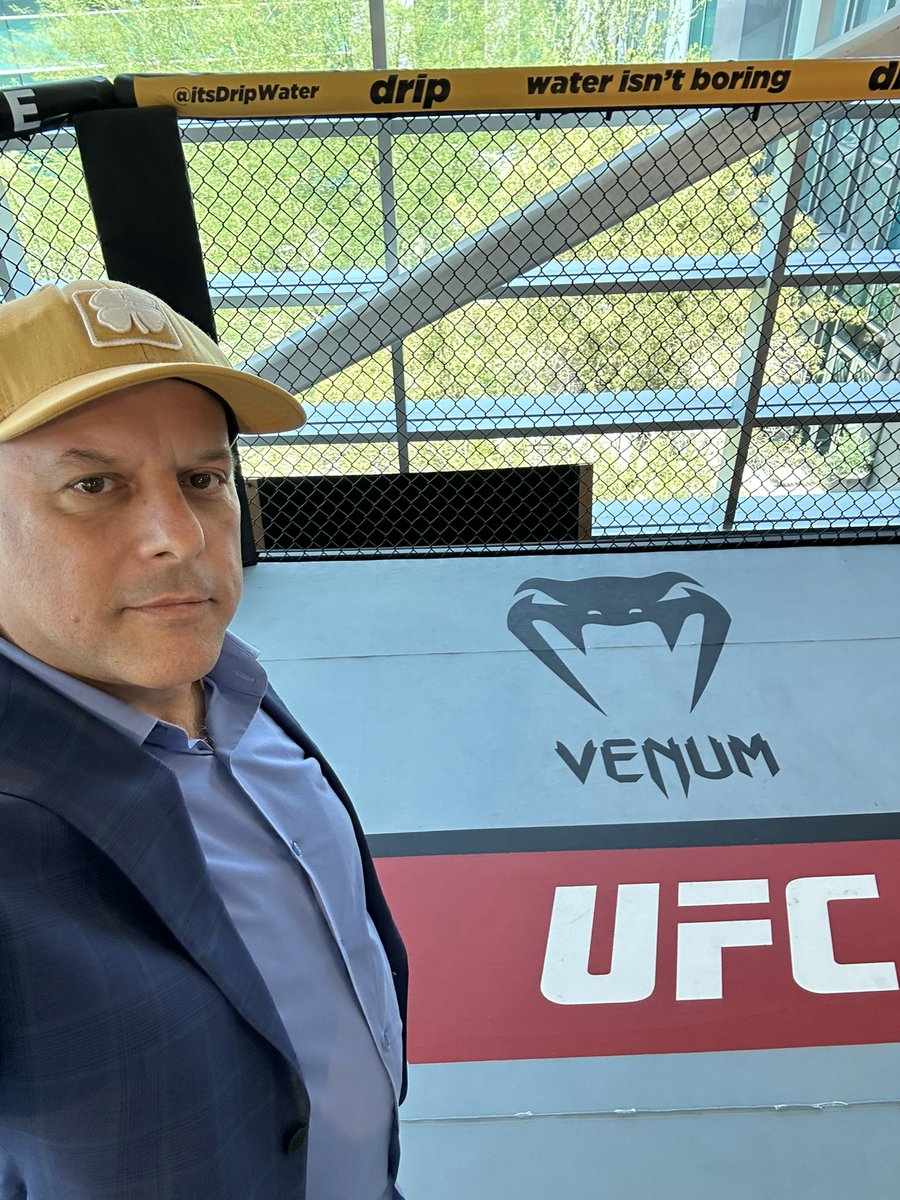
Ladies Fight So disappointing… lame. Thought they would at least script it to last a couple of rounds 🤷♂️ #mma #netflix #rouseyvscarano #ufc #rouseycarano
2
106
Apr 24
Hey #SteelersNation !! How the heck does our first round draft pick not be present in Pittsburgh when the draft is in #Pittsburgh???
The Bus is awesome 😎
@steelers #nfldraft
1
421
Jan 25
Great article by my friend @KimanziC !!
How about I buy YOU dinner? 😎
Entrepreneurs… don’t fall prey to the lottery syndrome mentality! newsweek.com/made-a-million-…
3
1
3
191
ERock Christopher retweeted

9 Nov 2025
This was beyond reckless and irresponsible.
They should play this “side by side” clip on BBC so people can see both versions and judge for themselves.
9 Nov 2025

NEW: BBC to apologize for deceptively editing President Trump’s January 6 speech in an effort to make it look like he encouraged violence at the Capitol.
The apology letter is reportedly expected to come early next week.
“Samir Shah, the BBC’s chairman, will write to the culture, media and sport committee on Monday to express regret for the way the speech, made on the day of the Jan 6 2021 Capitol riot, was spliced together,” the Telegraph reported.
BBC’s director general Tim Davie and Shah were both allegedly warned about the doctored footage in May but decided to keep quiet, according to the outlet.
338
1,558
13,366
1,144,703
ERock Christopher retweeted

9 Nov 2025
NEW: BBC to apologize for deceptively editing President Trump’s January 6 speech in an effort to make it look like he encouraged violence at the Capitol.
The apology letter is reportedly expected to come early next week.
“Samir Shah, the BBC’s chairman, will write to the culture, media and sport committee on Monday to express regret for the way the speech, made on the day of the Jan 6 2021 Capitol riot, was spliced together,” the Telegraph reported.
BBC’s director general Tim Davie and Shah were both allegedly warned about the doctored footage in May but decided to keep quiet, according to the outlet.
2,953
13,932
57,095
3,707,254

🎉Introducing Kling AI Avatar! Any Role, Any Voice!
Simply add your Avatar image and audio, and prompt the emotions and expressions to bring your Avatar to life!
Limited access only upon launch. Comment "Kling AI Avatar" & Repost to get early access!
#klingai #klingavatar
1,036
896
2,410
624,994
ERock Christopher retweeted

1 Aug 2025
Let’s have lunch together
I’ll pick one.
Use #TheFixerOnFoxTonight

187
83
493
27,961
1 Jul 2025
Everyone should get both sides of any argument or controversy…
I believe Marcus will triumph once the truth comes to light!
1 Jul 2025

It’s come to my attention that @BusinessInsider and @dakincampbell are doing a hit piece on me and #TheProfit
When I heard about two months ago I confronted the reporter and reminded him that while I respect the media, any untruth would result in litigation. He is being fed information from a company that sued me and lost not only the case but will be held accountable from a personal guaranty. Normally any PR expert would say “be quiet” don’t engage, but that’s not going to happen here. Last Friday the reporter called to interrogate me on “one sided” accusations.
To be clear three company’s and I went to litigation. In every case, we won. Many may remember articles done by one reporter years ago, same reporter, two articles, different outlets. You can google it. As a reminder, the show stated in 2013 and ended in 2020. His comments were that many companies claimed, but wouldn’t name them, that their lives were destroyed and that I drained the companies money to fix up their places etc. What’s ironic is that never once did I receive any money of any kind, other than in a very limited number of cases recovered my money.
The timing of this as the reporter stated, was on the heals of our new @FOXTV show coming out, #TheFixer . He asked if Fox was aware of all this ? What was the new show about ? What was the premise?
As many know I have had many blessings in business to make money. Making money of any small business I have ever worked with didn’t happen. His statement of me “profiting by taking advantage of businesses and taking things from them” is not only incorrect but insulting.
In the middle of the call I told him I was aware of one business he called, because they called me immediately telling me that he was digging for information and the questions were not only slanted but tone was odd.
I have no regrets or hard feelings towards any business but clearly hold high on my list many. My relationships with many of them still continues today and you will see a couple on the new show.
I encourage you to do your own research.
1
2
147

9 Apr 2025
Wonderful advice…
9 Apr 2025

104% tariffs on China are not enough. I'm advocating 400%. I do business with China. They don't play by the rules. They've been in the WTO for decades. They have never abided by any of the rules they agreed to when they came in for decades. They cheat, they steal, they steal IP. I can't litigate in their courts. They take product, technology, they steal it, they manufacture it and sell it back here.
Nobody has taken on China yet, not the Europeans, no administration for decades. As someone who actually does business there, I've had enough. I speak for millions of Americans who have IP that have been stolen by the Chinese. 400% tariffs tomorrow morning!
2
209
12 Mar 2025
Absolutely 💯 accurate… pay our #teachers what they deserve dammit!!
If we expect to compete globally, we have to attract top talent to teach! (Gotta love alliteration)
12 Mar 2025
America spends more on education than almost any other country, yet our reading and math scores are the WORST in the G7 and G20. Why? Unions.
Unions protect mediocrity and keep bad teachers in place, while great teachers who actually make an impact get underpaid. That’s insane! If we want to fix education, we need to fire the bad teachers and pay the great ones a LOT more.
I’m all for rewarding results. If you’re advancing math and reading scores, you should be making a great salary. If you’re holding students back, you’re out!
1
2
203
5 Mar 2025
Go check out this Wonderful deal.,,
1
83
ERock Christopher retweeted

10 Feb 2025
Saying “I don’t Know” to where $500 billion is the reason why America supports DOGE.
1,109
16,399
77,427
1,245,131
28 Jan 2025
Support this cause!
28 Jan 2025
We are ready @CampingWorld to contest this. We love the outdoors and it’s nonsense like this that causes inflation.
#StopTheInsanity
California Senate Bill 253 (SB 253), known as the Climate Corporate Data Accountability Act, mandates that public and private companies with annual revenues exceeding $1 billion and operating in California disclose their greenhouse gas (GHG) emissions. This includes direct emissions (Scope 1), indirect emissions from energy consumption (Scope 2), and indirect emissions from the entire value chain (Scope 3). The reporting requirements begin in 2026 for Scope 1 and 2 emissions, and in 2027 for Scope 3 emissions. Additionally, companies must obtain third-party assurance for their reported data, with increasing levels of scrutiny over time.
Potential Negative Impacts on Businesses:
1.Increased Compliance Costs: Implementing comprehensive emissions tracking and reporting systems can be financially burdensome. Estimates suggest that annual reporting costs could range between $300,000 to $600,000 per company. These expenses may ultimately be passed on to consumers, potentially affecting market competitiveness.
2.Supply Chain Challenges: Accurately reporting Scope 3 emissions requires extensive data collection from suppliers and other third parties. This process can be complex and time-consuming, especially for companies with vast and intricate supply chains. The difficulty in obtaining precise data may lead to reliance on estimates, which could undermine the accuracy of the reports.
3.Legal and Regulatory Risks: The stringent reporting requirements and the need for third-party assurance introduce potential legal liabilities. Companies may face penalties of up to $500,000 for non-compliance or inaccuracies in reporting. Furthermore, the complexity of the regulations could lead to inadvertent non-compliance, exposing businesses to legal challenges.
Questionable Environmental Benefits:
While the intent of SB 253 is to enhance transparency and encourage emission reductions, its effectiveness in achieving tangible environmental benefits is debatable. The focus on detailed reporting does not directly incentivize companies to reduce their emissions. Instead, it emphasizes disclosure over actionable environmental improvements. Without accompanying measures that promote or enforce actual emission reductions, the legislation may result in increased administrative burdens for businesses without delivering significant environmental gains.
In summary, while SB 253 aims to promote corporate transparency regarding greenhouse gas emissions, it imposes substantial compliance costs and challenges on businesses. Moreover, without mechanisms to ensure that reporting leads to concrete emission reductions, the legislation may not effectively address environmental concerns.
1
1
74
ERock Christopher retweeted

17 Nov 2024
This is beyond absurd. The @nytimes says @RobertKennedyJr “was wrong” about Froot Loops having too many artificial ingredients compared to its Canadian version, and then goes on to explain the artificial colorings and preservatives in the U.S. vs the Canadian version.
@RobertKennedyJr is right and The NY Times is an embarrassment.
I had to check the print paper just to make sure this was a real article and indeed it is.
1,701
7,641
48,108
2,385,401
16 Nov 2024
You know who lost tonight? #Boxing
The #TysonPaul fight could have lifted the sport
Instead it lost trust and people won’t watch the next circus act.
Not one serious barrage or meaningful exchange of blows. 😢
3
332
ERock Christopher retweeted

15 Nov 2024
I look forward to working with the Trump Administration on fulfilling his promise to cap credit card interest rates at 10%.
We cannot continue to allow big banks to make record profits by ripping off Americans by charging them 25 to 30% interest rates.
That is usury.
9,179
15,545
240,353
11,429,911
16 Nov 2024
1
324