
An ideas advocacy org building economic power for all. ⬇️bsky.app/profile/economicsec…
Joined November 2016
- Tweets 8,447
- Following 1,211
- Followers 11,829
- Likes 5,321
1,407 Photos and videos


Young people in rural communities are watching the industries that sustained their families for generations start to disappear.
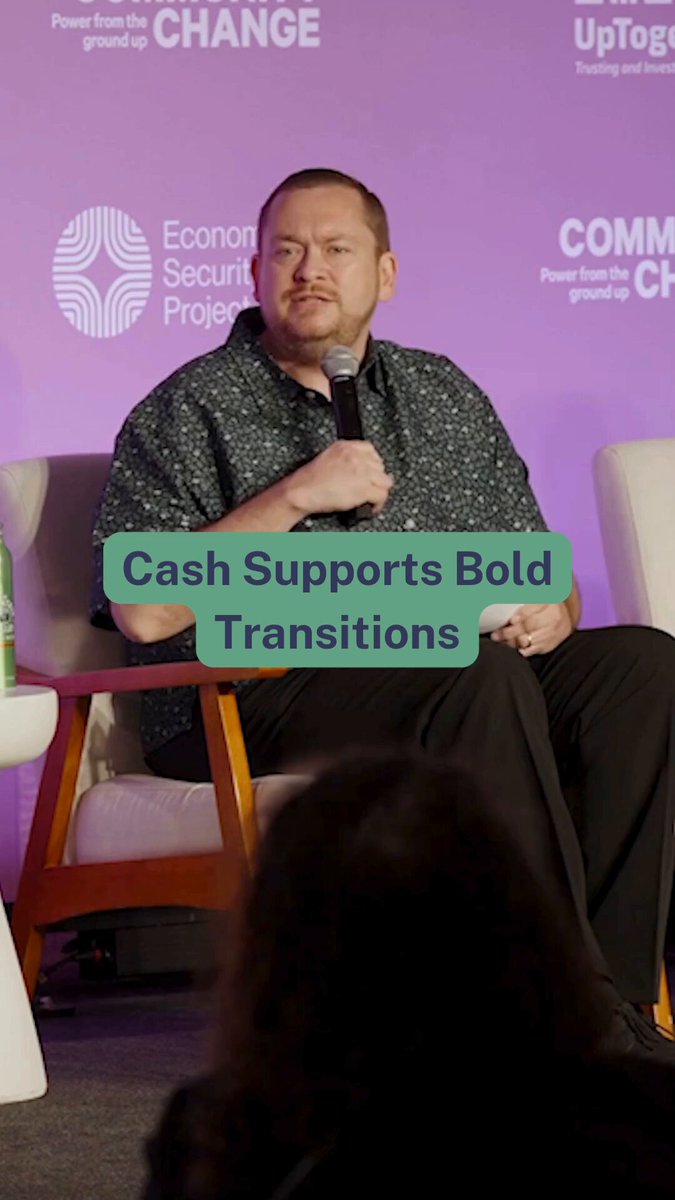
AS Travis Helmondollar of CASEWV explained at #GINOW2026, cash helps people navigate moments of transition. It gives people the runway or breathing room to make bold moves — to change industries, learn a new skill, and build something new.
Watch the full "Growing Champions in New Sectors" panel discussion also featuring Phil O'Leary (WI Rural Prosperity Task Force), Joe Tolbert (Waymakers Collective) Monica Potts of The New Republic.
🔗 youtube.com/watch?v=kHC9LTB3…
2
93
Economic Security Project retweeted

Jun 10
For those wanting to understand how it sits in the policy space, I explain here how this compares/contrasts against the current Abundance movement.
There's also a clip of Mamdani recently giving remarkably on-point remarks on prioritizing markets incomes.
newsletter.mikekonczal.com/p…
1
7
1,527
Economic Security Project retweeted

interesting stuff from @mtkonczal & crew at The ESP
3
7
28
6,664
Economic Security Project retweeted
Jun 10
Very excited to have this live! I think it brings together important priorities in housing that can serve as a basis after this moment.
Check it out, I also have a quick blog recap in the next link. /1

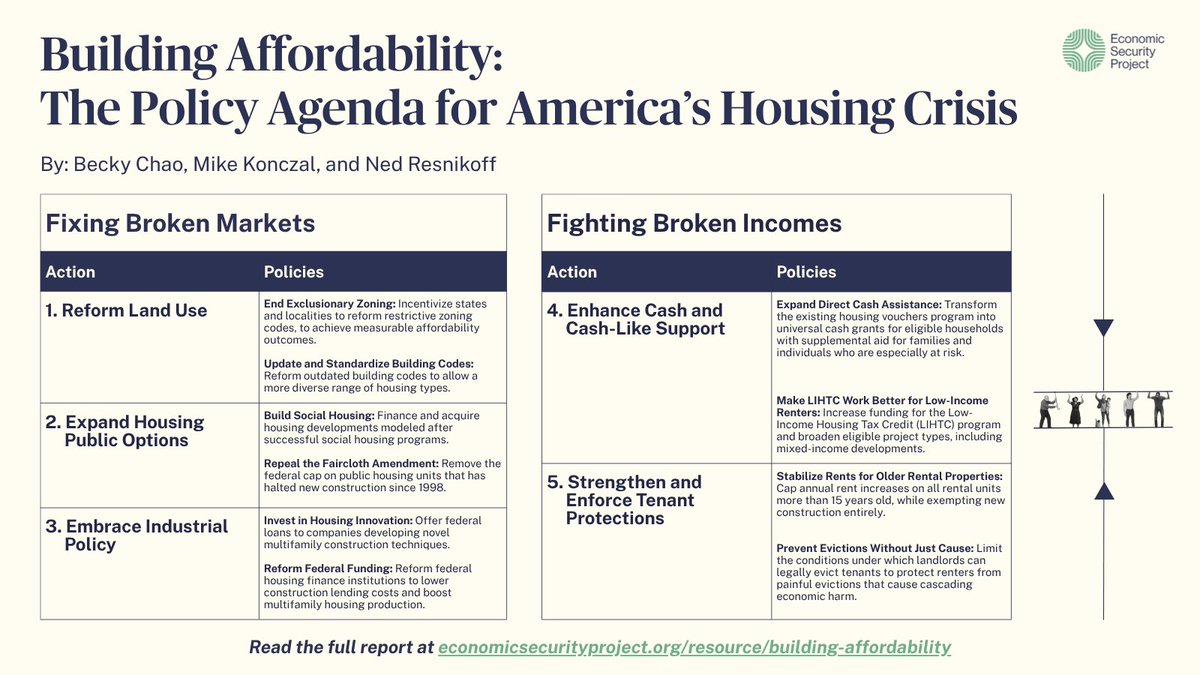
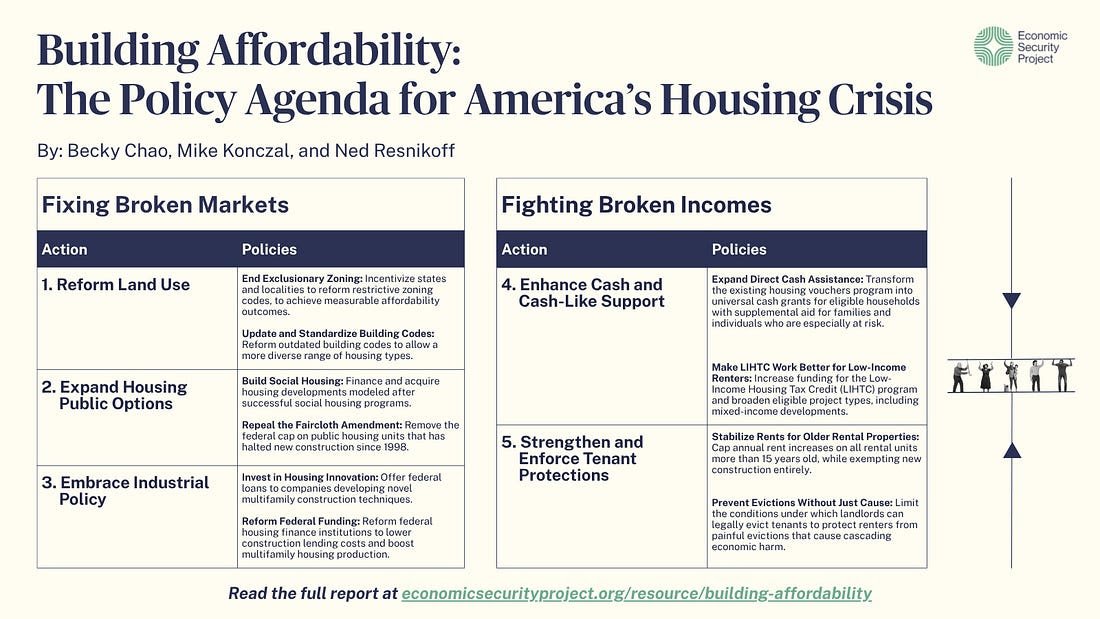
1/ Today, ESP released Building Affordability, our new policy agenda on housing, which tackles the two causes of unaffordability: broken markets and broken incomes.
Written by @chao_becky, @Mtkonczal, and @resnikoff, it shows how policy can expand supply while also directly protecting tenants.
1
6
18
4,982
1/ Today, ESP released Building Affordability, our new policy agenda on housing, which tackles the two causes of unaffordability: broken markets and broken incomes.
Written by @chao_becky, @Mtkonczal, and @resnikoff, it shows how policy can expand supply while also directly protecting tenants.
3
19
37
30,480
4/ Even in a housing market that works well, people with low incomes still can't afford market-rate housing. This group needs income support, and it's also the population most at-risk of homelessness. Added supply is necessary but insufficient to meet people’s needs.
2
2
5
282
5/5 This afternoon, our authors will discuss the paper live with experts from across the field. Sign up here to join the convo at 3 pm ET/12 pm PT.
🔗 economicsecurityproject-org.…
1
7
220
Economic Security Project retweeted

Today we’re launching The #GoodLife Agenda.
We’ve spent decades told that if the economy grows, people’s lives will get better.🧵

2
29
45
16,732
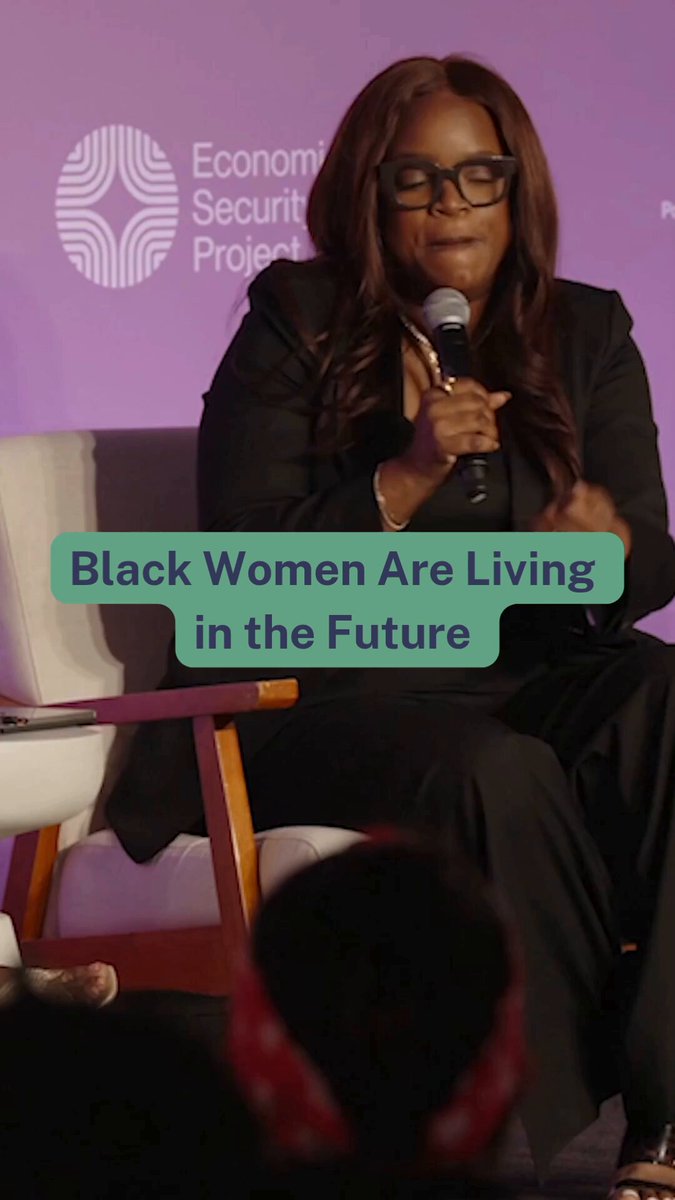
"Black women have already been living in the future."
At #GINOW2026, activist, educator, and host Brittany Packnett Cunningham sat down with Dr. Aisha Nyandoro, CEO of SpringBoard to Opportunities, to talk about what economic freedom actually looks like, Black women's genius, and what becomes possible when we remove obstacles for people.
Watch their full conversation here: youtube.com/watch?v=w0I3iWb_…
1
1
135
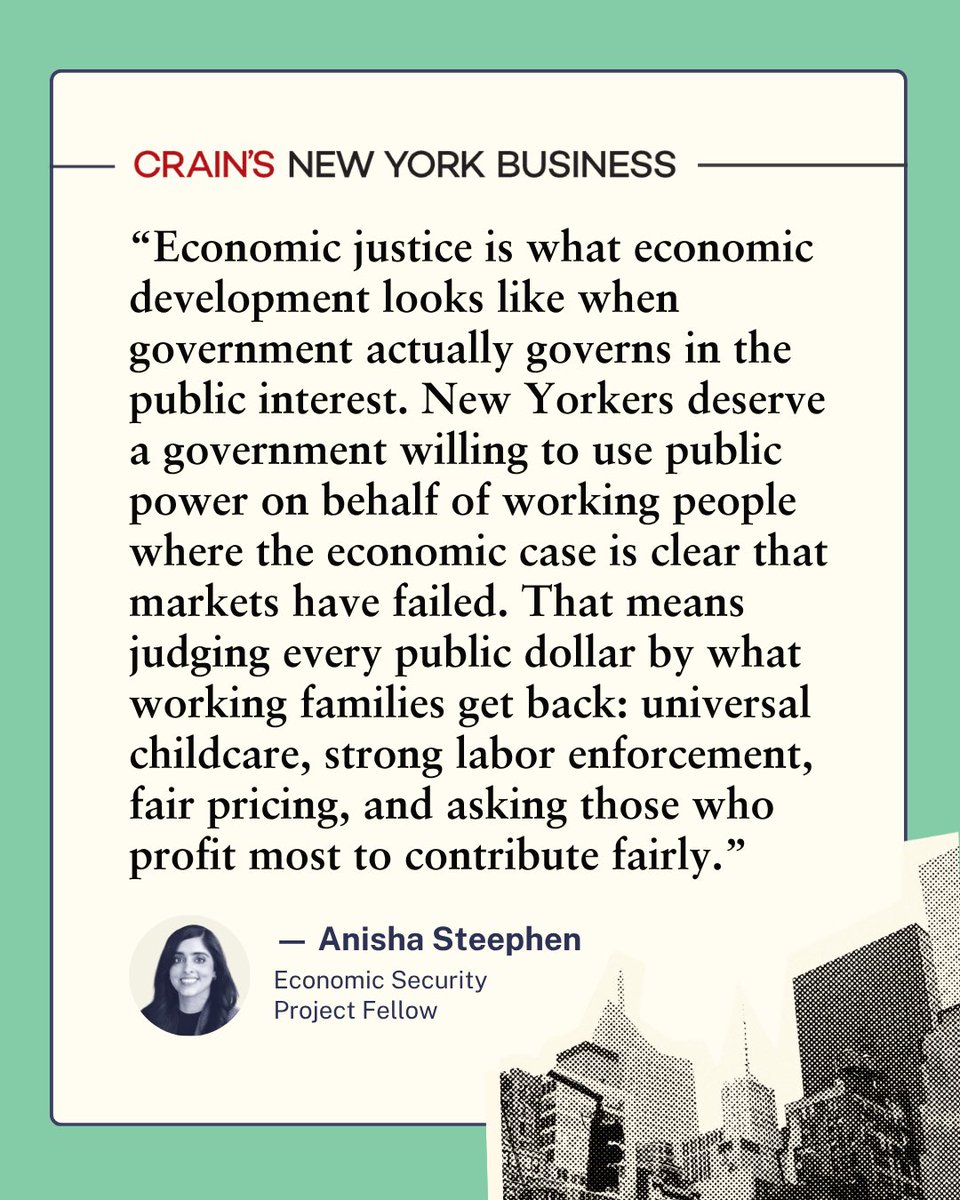
"Economic justice is what economic development looks like when government actually governs in the public interest."
For decades, we have been told that what's good for business is good for everyone. But rising rents, stagnant wages, and a persistent affordability crisis tell a different story. ESP fellow Anisha Steephen breaks down what real economic development can look like in NYC and cities across the country via @CrainsNewYork.
🔗 Read her full op-ed: crainsnewyork.com/opinion/co…
3
3
236
Housing is the biggest expense most families face. And right now, it's nearly impossible for millions of Americans to get ahead of it — over 21 million households spend more than a third of their income on housing, and 62% of Americans say buying a home is simply unrealistic in 2026.
But the political will to change this is building. And we're meeting the moment.
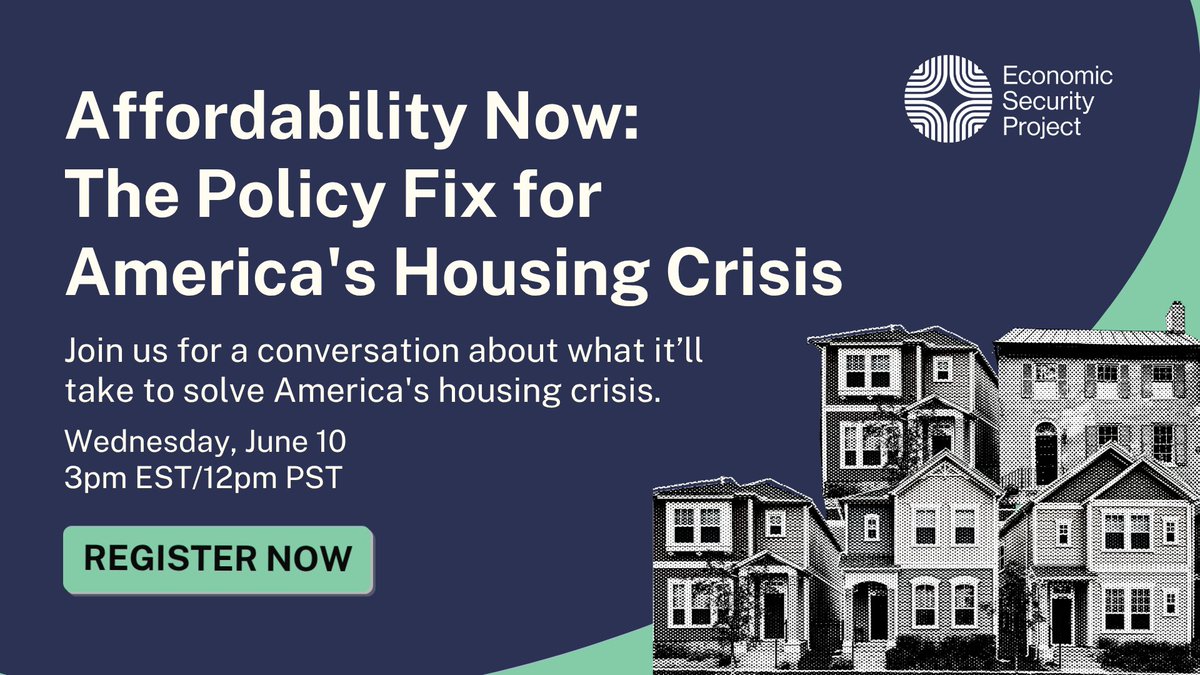
Next Wednesday, June 10, at 3 pm ET / 12 pm PT, we’re hosting a virtual webinar to introduce our new report, “Building Affordability: The Policy Agenda for America's Housing Crisis,” a comprehensive roadmap spanning land use reform, expanded public housing options, industrial policy, direct cash support, and stronger tenant protections.
Register to join the conversation: economicsecurityproject-org.…
2
2
3,425
Working families are facing an affordability crisis. Rising costs, hidden fees, and a tax system that was not built for them are making it harder to get ahead.
Our partners at Economic Security Illinois Action just wrapped up a big session in Springfield fighting back against exactly that.
See what they won for working families.
economicsecurity.us/news/wha…

🎉 The Illinois legislative session is a wrap. And we have a lot to celebrate.
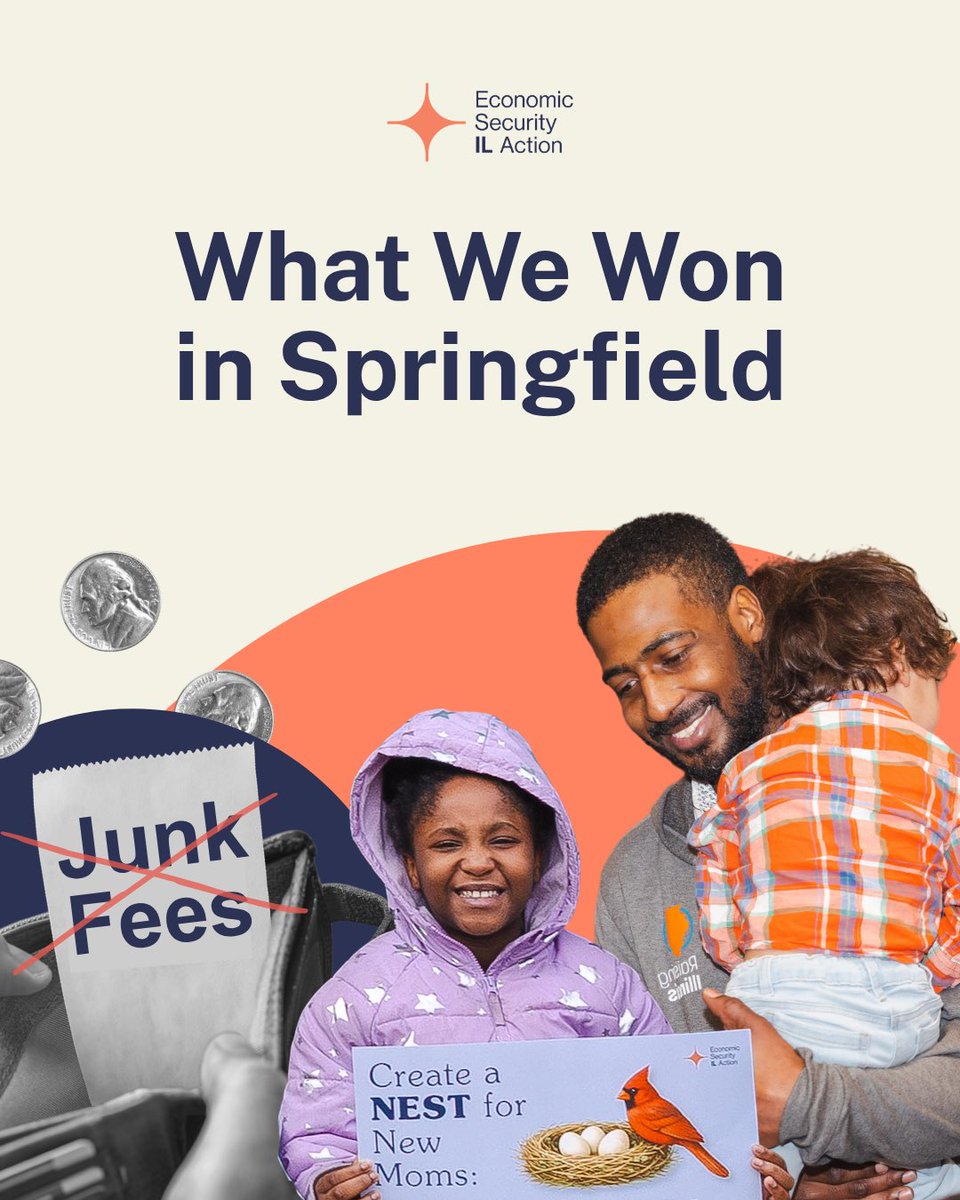
Working families in Illinois have been squeezed by rising prices and corporate greed. This session, we fought back—and we won:
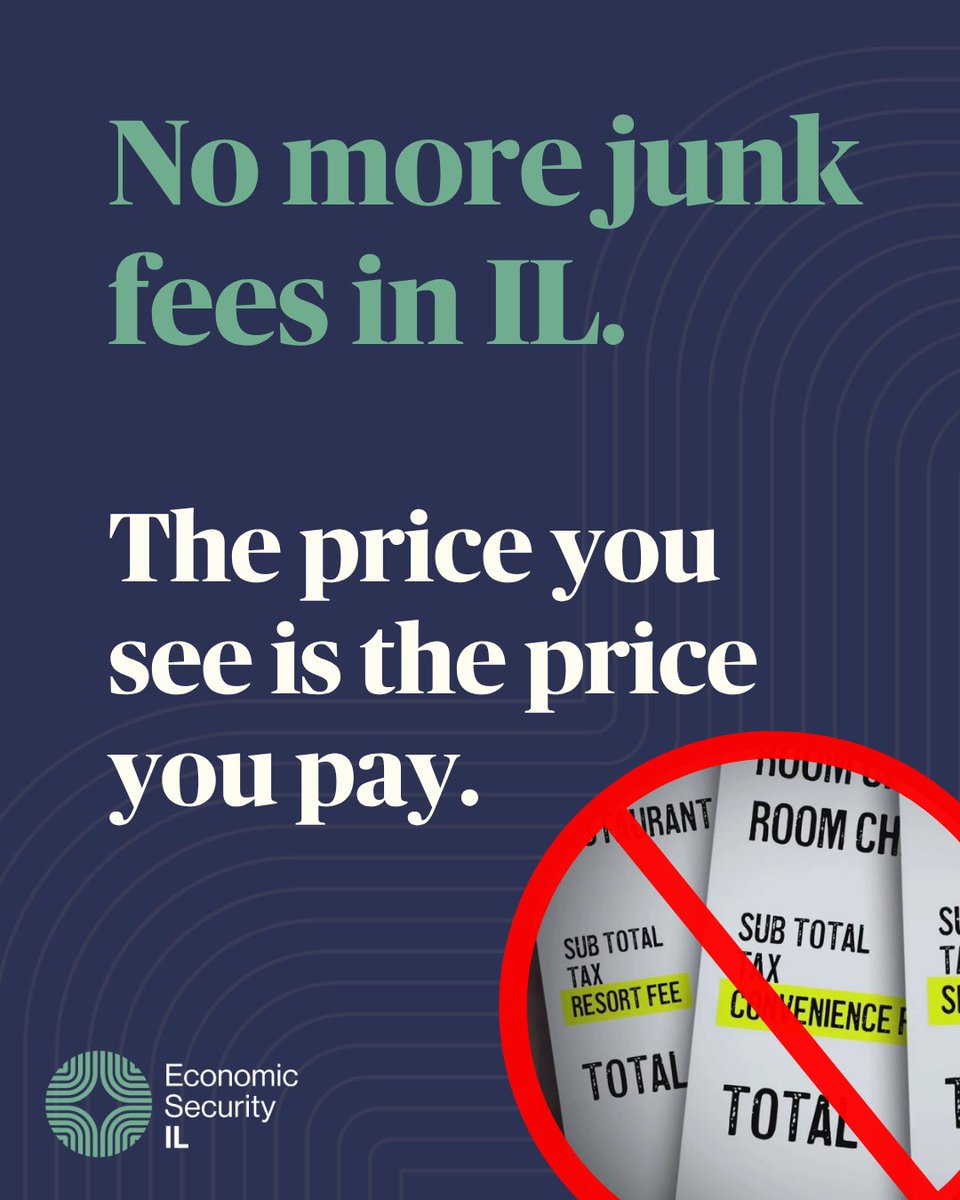
✅ Hidden junk fees are banned. After three years of advocacy, HB 228 passed. The price you see is the price you pay. No more hidden “convenience” or “processing” fees at checkout.
✅Illinois now has the ability to support local guaranteed income initiatives like the Newborn Equity Support Transfer (NEST), laying the foundation for future investments in economic security.
These victories were made possible by our coalition partners, advocates, parent leaders, and community members who showed up, spoke out, and refused to back down.
This is what fighting for working families looks like. And our fight continues.
Read our full statement here: 🔗
economicsecurity.us/news/wha…
Thank you to our partners @COFIOnline @LIFTCommunities @Move_UpTogether @ChiTrust @StartEarlyorg @FoodDepository @newmomschicago @latinopolicy @LeagueWomenVote @IllinoisStand @ChicagoVotes @actnforchildren
And legislators @SenatorAquino @RepBobMorgan @RepKellyCassidy @graciela4senate
2
2
250
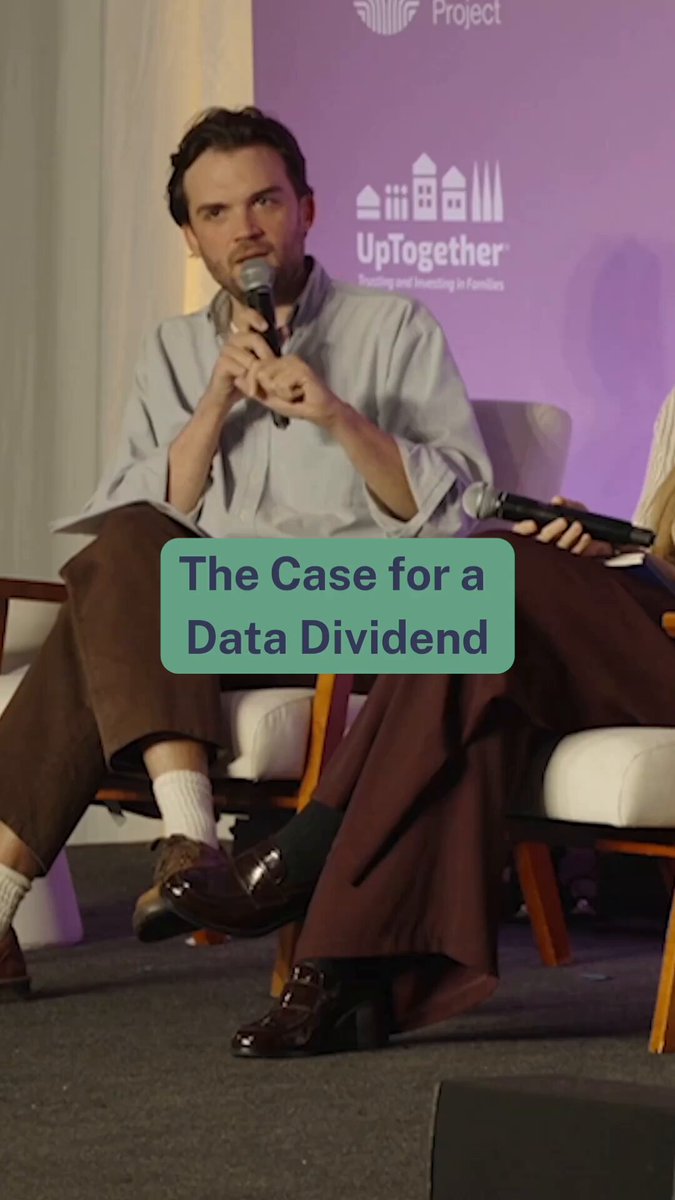
“One thing about the data dividend that I think is really interesting is the extent to which it underlines the fact that AI is a collective endeavor.” — @readmaxread
Every AI chatbot or tool is built on terabytes of words and data that people created—our writing, conversations, art, and collective knowledge.
So if AI companies are profiting off our collective knowledge, shouldn’t we get a return?
That's the idea behind a data dividend. Discussed at our Wages, Work, and AI panel at #GINOW2026, it's a growing policy idea that would require tech companies to pay regular cash returns to the public for the data powering their AI systems.
Watch the full session featuring ESP Executive Director @taylorjo, Rayan Semery-Palumbo, Anna Yelizarova, and Max Read: youtube.com/watch?v=2yfqiZp1…
2
144
"Taxing AI is one way we make sure the winnings from AI benefit all Americans, rather than channeling them only to the wealthy few."
From excise taxes on data centers to overhauling a tax code that penalizes hiring humans to taxing billionaires on their wealth — there are real pathways to building shared prosperity in an AI economy. @SenWarren lays out the case. 👇
time.com/article/2026/05/27/…
1
4
236
Families are working harder than ever and still can't afford the basics. A new CNN shows how Americans feel about the affordability crisis. 76% say the high cost of living is the biggest economic problem facing their families. 67% say their wages can't keep up with rising prices. Only 1 in 3 can cover a $1,000 emergency. The strain cuts across income, party, and generation.
The pattern is clear. Broken markets are driving up the cost of essentials — groceries, housing, utilities — while wages haven't kept up. Fixing the affordability crisis means tackling both sides of the problem, like putting money directly in people's pockets through a #guaranteedincome and tax credits, and investing in public options like city-owned grocery stores.
cnn.com/2026/05/12/politics/…
1
2
143
The affordability crisis is solvable — it just takes political will, explains ESP Executive Director @taylorjo in @damemagazine.
Proven solutions like universal childcare, guaranteed income, and moving toward universal healthcare coverage are all within reach. They're policies that have been tested and shown to work ,and together, they could address the affordability crisis head-on and build an economy that actually works for everyone.
Read the full piece.
damemagazine.com/2026/05/13/…
2
234
Junk fees are on their way out in Illinois.
You’ve probably come across these deceptive fees before. A “convenience fee” on your concert ticket. A “processing fee” on your hotel booking. A charge that appears at checkout that was never on the price tag.
The average American family loses more than $3,200 a year to these hidden fees. For working families already stretched thin by an affordability crisis, those added costs matter. It’s the cost of three months of groceries for a family of four. Half a year’s worth of utility payments. A mortgage or rent payment.
Hidden junk fees make it harder for families to know what they are actually paying and harder to make fair choices about how to spend their money. But for Illinois families, junk fees will be a thing of the past!
Yesterday, legislators in Springfield banned junk fees, and once the governor signs the bill into law, Illinois joins a growing list of states making good on the promise: the price you see should be the price you pay.
146