Problematic and always troublesome feminist, life-long anti-violence against women & girls frontline. 🇨🇦 #KPSS #WomanIsNotASocialConstruct
Joined December 2020
- Tweets 4,596
- Following 854
- Followers 1,000
- Likes 25,916
60 Photos and videos

Pinned Tweet

16 Aug 2025
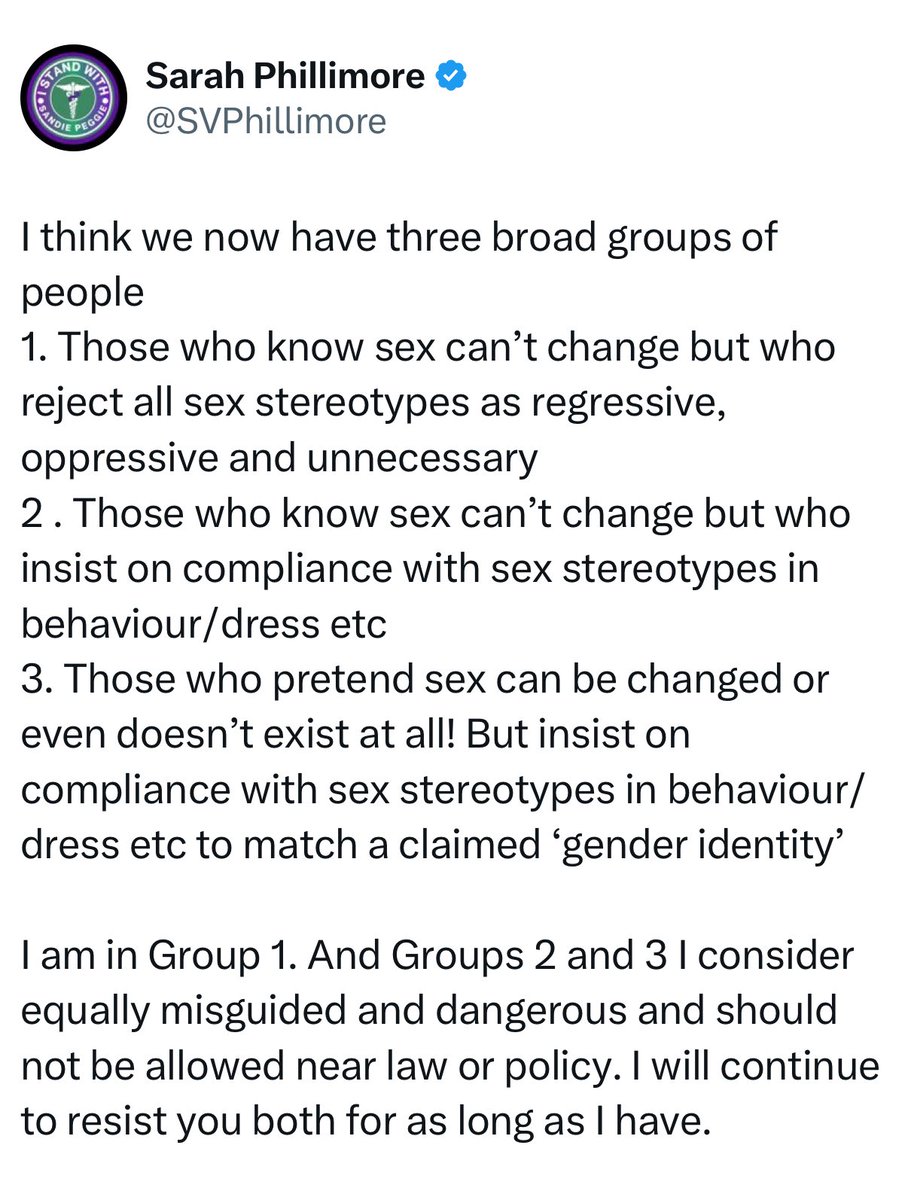
@SVPhillimore articulates in the most straightforward terms what the feminist position is & has always been.
All Hail Group 1.
7
11
383
Rogue Ellement retweeted

May 26
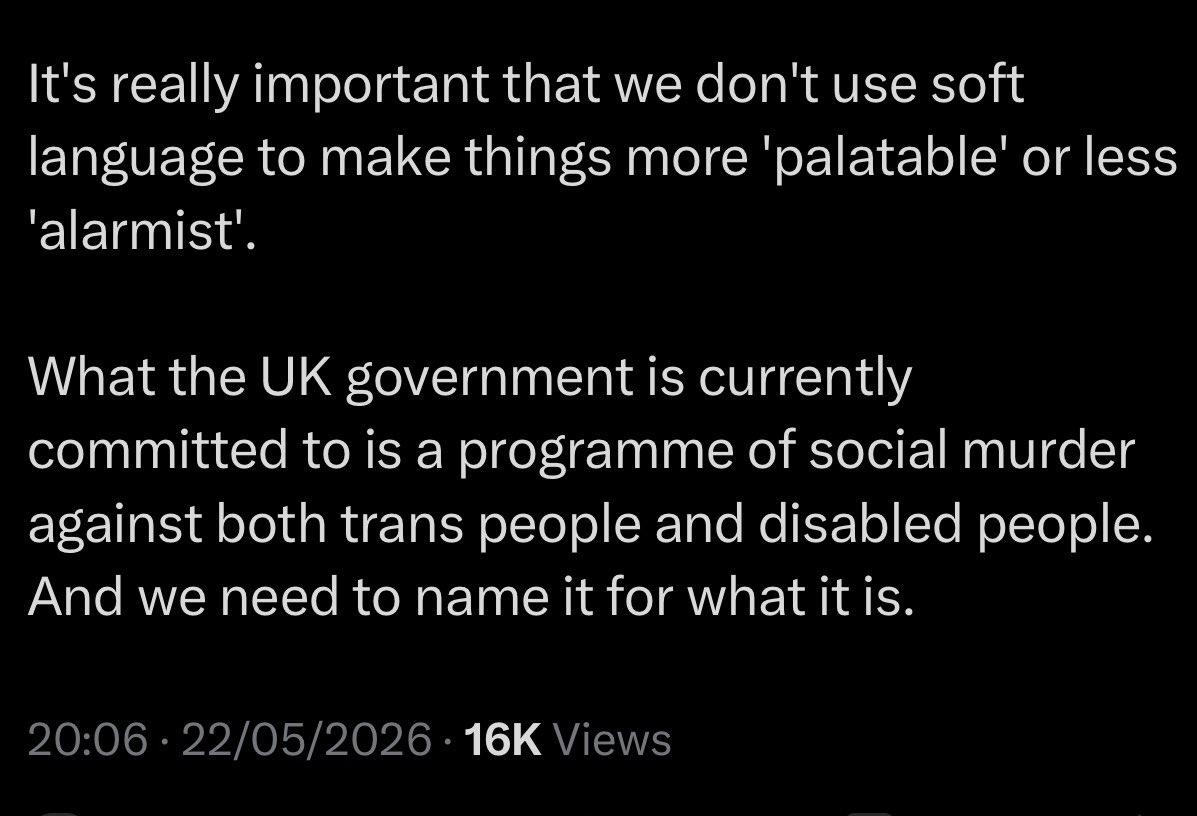
I was socially murdered once when I was told to stay out of the penguin enclosure at the zoo. I literally died of their refusal to throw me a herring.
491
2,068
24,729
392,021
Rogue Ellement retweeted
May 26
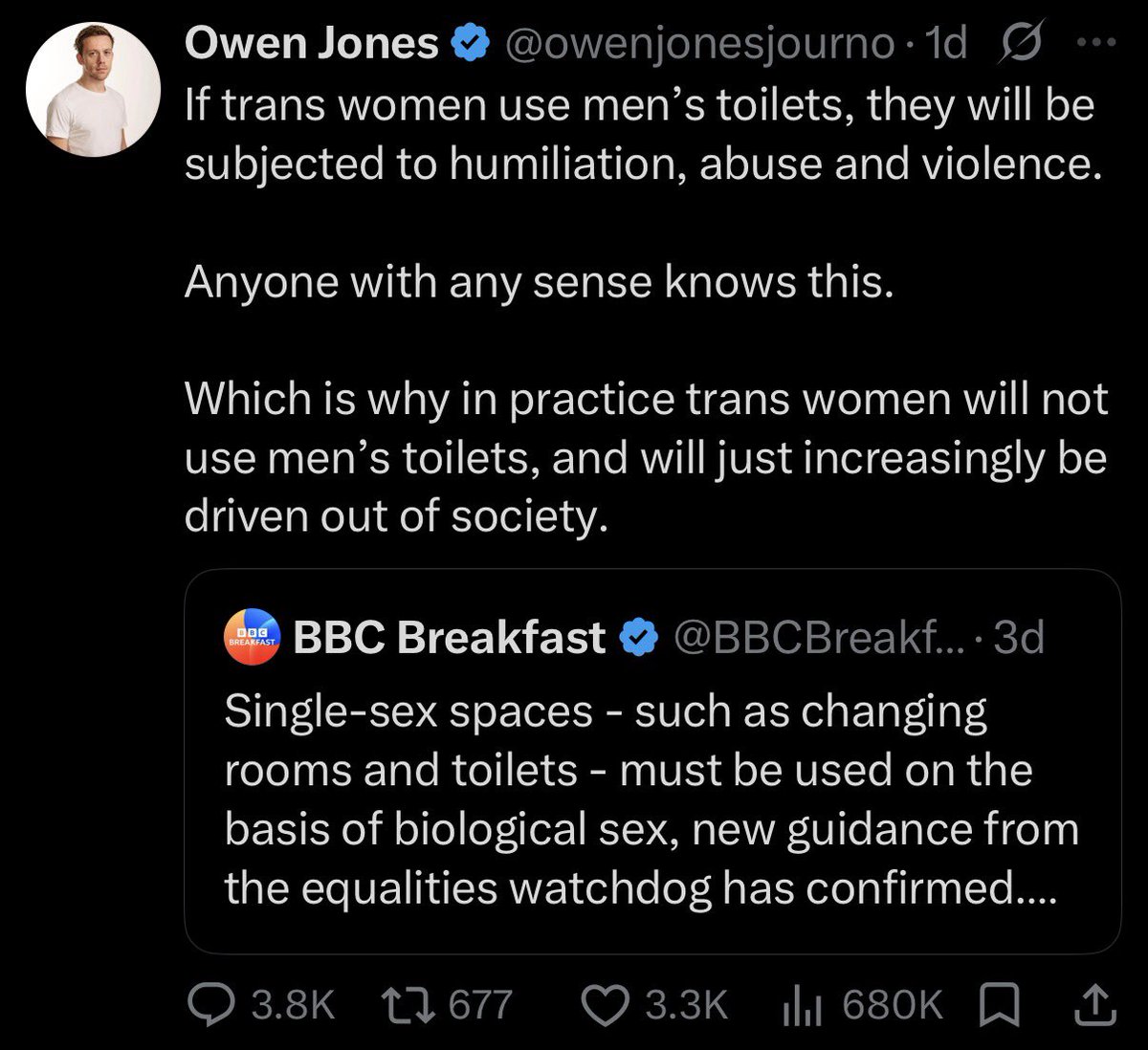
The risk of a woman being abused or assaulted in the women's toilet is indeed low, as long as it remains women-only. Risk goes up considerably when men are admitted to women's spaces.
thetimes.com/life-style/sex-…
I'd be very interested to see the statistics on a trans-identified man's risk of being assaulted in the men's bathroom. Do you have them, @owenjonesjourno?
May 25

The risk of a trans woman being abused or assaulted in the men’s toilet per visit = extremely high.
The risk of a woman being abused or assaulted in the women’s toilet per visit = extremely low.
558
3,321
25,990
792,759
Rogue Ellement retweeted
May 25
Follow the logic.
Women are deluded and naive for thinking predatory and violent men can be kept out of women-only spaces. ‘They can rape you anywhere.’
However, trans-identified men can only be safe in women-only spaces, because no abuser would ever follow them in there.
872
4,715
31,931
1,452,376
Rogue Ellement retweeted

May 27
Today, I was given a permanent ban of posting on my Facebook page, @Meta. The page can exist - apparently - but I am not allowed to post on it anymore. The page has been deemed controversial due to the Giggle v Tickle case and increased popularity of 25,000 new followers in a week. I don't want to labor the irony of being banned on a social networking platform while fighting in court for the right to ban men from a woman only social networking platform, it is what it is. Frankly, I'd love to have the same right that you do, @Meta.
Women are routinely punished for not accepting men as women. It doesn't turn those men into women. Nothing will.

1,046
5,298
24,193
498,316
Rogue Ellement retweeted
May 29
I challenge every single person who believes minors should be enabled and even encouraged to transition to read this first person testimony to the end.
1/3
via @IWF independentwomen.com/2026/05…
980
8,035
39,108
2,031,405
Rogue Ellement retweeted

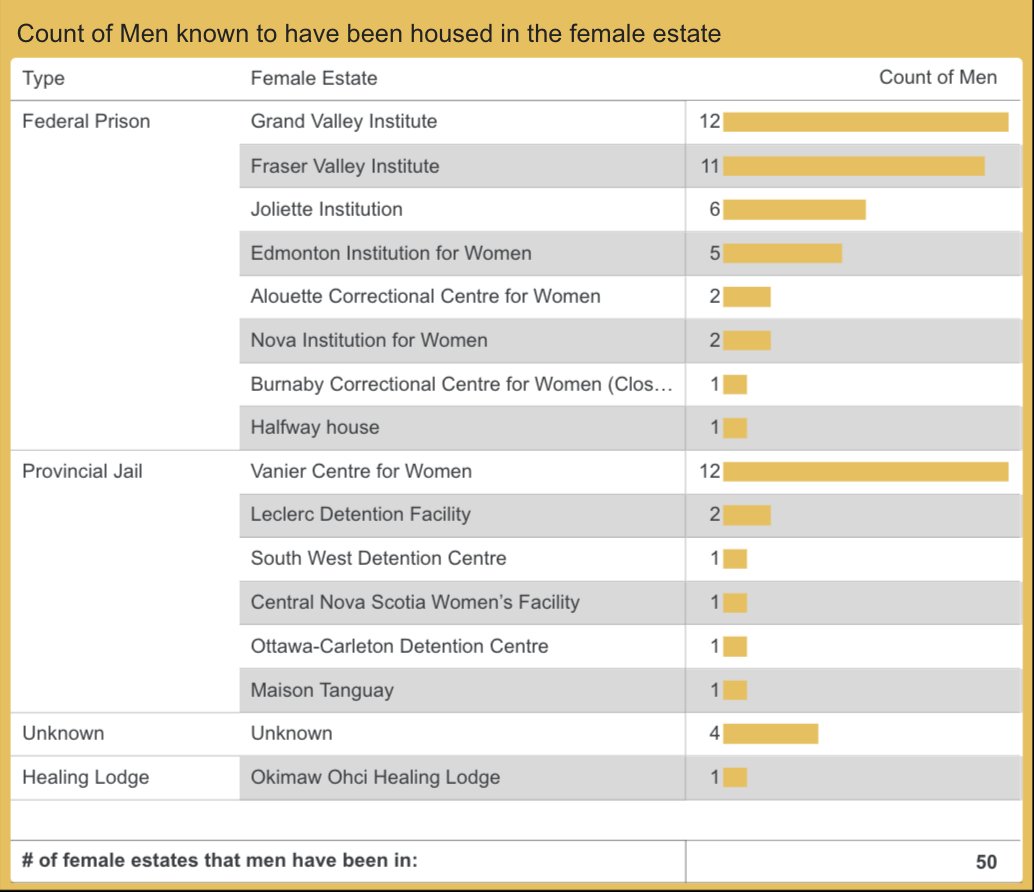
Which women's jails and prisons in Canada are known to have housed the most men?
It's a tie!
Ontario's Grand Valley Institute and Vanier Centre for Women have both housed at least 12 men.
A close runner up at 11 is BC's Fraser Valley Institute.
1/2
#KPSS #cdnpoli
7
74
137
2,660
Rogue Ellement retweeted

Mar 29
Profound and brilliant post. The harm that has been done to so many children by telling them lies and foreclosing their natural development into adulthood is immense - there will probably never be a full accounting. It's a tragedy of our time, one of the biggest.

Girl Guides and the Single Sex Question: What Child Development and Safeguarding Tell Us
(longish post)
Girl Guides exists as a single sex organisation for a reason grounded not in prejudice but in developmental science. The research on adolescent girls consistently shows that dedicated single sex environments support confidence, risk taking, and identity formation in ways that mixed environments do not, particularly during the years when girls are navigating the social pressures of puberty and early adolescence. Removing the single sex character of those spaces does not leave them neutral. It changes them in ways that the developmental evidence suggests are meaningful.
The safeguarding concern is straightforward and does not require any claim about the intentions of individual children. Safeguarding frameworks are designed to manage risk at a population level, not to make judgements about individuals. Single sex overnight environments, changing facilities, and residential trips carry specific safeguarding protocols that depend on the single sex character of the group. When a child who is biologically male is included in those environments on the basis of a self reported gender identity, those protocols are compromised in ways that any competent safeguarding review would flag. The 2025 UK Supreme Court ruling, which confirmed that woman and sex in the Equality Act refer to biological sex, reinforces the legal basis for maintaining those boundaries.
The developmental harm to girls at this stage of their lives is not incidental. It goes to the heart of what single sex provision is for. Adolescence is the period in which girls are forming their understanding of themselves as female, navigating the physical changes of puberty, developing the capacity for intimacy and trust with peers of the same sex, and beginning to construct the adult identity that Erikson describes as the central developmental task of this life stage. The research on single sex environments consistently finds that girls in those settings show greater willingness to take intellectual and social risks, report higher levels of comfort with their own developing bodies, and demonstrate stronger peer relationships built on the specific solidarity of shared female experience. Those benefits depend on the space actually being what it presents itself as being.
When a biologically male child is present in that space, the girls in it are placed in a position that the developmental literature does not support and that safeguarding guidance does not anticipate. They are asked to manage the presence of a biological male in changing rooms, on overnight trips, and in the intimate social environment of a group that exists precisely to give them respite from mixed sex social pressure. They are asked to do this at the developmental moment when bodily privacy, peer trust, and the consolidation of a female identity are most significant. And they are asked to do it without their consent having been sought, and frequently without their parents having been informed. The schema formation argument drawn from Bem's work is relevant here: girls at this stage are actively constructing their understanding of what it means to be female, and an environment that systematically blurs the boundary between female and male does not loosen those schemas in a liberating way. It introduces confusion into a developmental process that requires clarity and safety to proceed well.
There is also a relational dimension that deserves attention. Bowlby and Fonagy establish that the capacity for secure peer attachment depends on environments that are predictable, boundaried, and safe. An environment in which the boundaries of membership are uncertain, in which girls may not know whether a peer is biologically male or female, and in which raising a concern is socially costly, is not an environment that supports secure attachment or genuine peer intimacy. The harm is not dramatic or visible. It is the quieter harm of a developmental environment that has been subtly but significantly altered at a moment when its character matters most.
The developmental concern for the boys themselves is less often discussed and deserves equal attention. Erikson and Marcia show that identity formation is a developmental achievement of adolescence requiring a genuine period of exploration and moratorium. A boy who is socially affirmed in a cross sex identity from an early age, placed in environments that reinforce that identity, and supported by institutional structures that treat the identity as settled, is a child whose developmental moratorium has been foreclosed before it properly began. The desistance literature, reporting resolution rates of sixty to ninety percent in pre-affirmation era cohorts depending on cohort and methodology, suggests that the majority of children expressing cross sex identification would, given time and space, arrive at a different understanding of themselves. Institutional social affirmation in single sex spaces of the other sex is not a neutral accommodation. It is an active intervention in a developmental process that the evidence suggests should not be foreclosed.
There is also the Winnicottian dimension, and it deserves more than a passing reference. Winnicott's account of the False Self describes a developmental pattern in which a child, faced with an environment that makes belonging conditional on performing a particular identity, learns to present that identity fluently and consistently. The performance does not feel like performance. It feels entirely authentic, because the child has no access to the True Self that the compliance dynamic has suppressed. The False Self is not a mask the child knowingly wears. It is a structure the child has built in order to survive an environment that could not tolerate what lay beneath.
The boy who joins Girl Guides as a girl is in precisely that environment. His belonging is conditional. It depends on the sustained presentation of a "female identity", affirmed by the institution, reinforced by every interaction within it, and socially costly to question or relinquish. The longer that environment persists, and the more significant the attachments formed within it, the more firmly the False Self structure is consolidated. The child is not being helped to discover who he is. He is being helped to become more fluent in a presentation that the institution requires.
What makes this particularly serious from a developmental perspective is that the harm is invisible from the outside and unfelt from the inside, at least while the compliance dynamic holds. The boy will report that he is comfortable, that he belongs, that the identity is real. That is exactly what Winnicott's model predicts. The False Self is a successful adaptation. It works. The cost is paid later, when the True Self, having been suppressed through the years in which identity formation should have been occurring, eventually reasserts itself, often in the form of the acute distress that characterises detransition accounts. Those accounts, which describe not simply a change of mind but a profound sense of having been absent from one's own development, map with considerable precision onto the clinical picture Winnicott describes.
None of this requires hostility toward any individual child. The appropriate response to a boy experiencing gender related distress is compassionate, thorough clinical assessment, careful attention to the possibility of underlying anxiety, attachment difficulties, or social factors, and the kind of watchful, patient support that allows development to proceed at its own pace.
Placing that child in a single sex environment organised around an affirmed female identity does not provide that support. It provides the conditions in which a False Self consolidates, development forecloses, and the reckoning is deferred to a point when it will be considerably harder to bear.
13
376
1,721
37,639
Rogue Ellement retweeted

Girl Guides and the Single Sex Question: What Child Development and Safeguarding Tell Us
(longish post)
Girl Guides exists as a single sex organisation for a reason grounded not in prejudice but in developmental science. The research on adolescent girls consistently shows that dedicated single sex environments support confidence, risk taking, and identity formation in ways that mixed environments do not, particularly during the years when girls are navigating the social pressures of puberty and early adolescence. Removing the single sex character of those spaces does not leave them neutral. It changes them in ways that the developmental evidence suggests are meaningful.
The safeguarding concern is straightforward and does not require any claim about the intentions of individual children. Safeguarding frameworks are designed to manage risk at a population level, not to make judgements about individuals. Single sex overnight environments, changing facilities, and residential trips carry specific safeguarding protocols that depend on the single sex character of the group. When a child who is biologically male is included in those environments on the basis of a self reported gender identity, those protocols are compromised in ways that any competent safeguarding review would flag. The 2025 UK Supreme Court ruling, which confirmed that woman and sex in the Equality Act refer to biological sex, reinforces the legal basis for maintaining those boundaries.
The developmental harm to girls at this stage of their lives is not incidental. It goes to the heart of what single sex provision is for. Adolescence is the period in which girls are forming their understanding of themselves as female, navigating the physical changes of puberty, developing the capacity for intimacy and trust with peers of the same sex, and beginning to construct the adult identity that Erikson describes as the central developmental task of this life stage. The research on single sex environments consistently finds that girls in those settings show greater willingness to take intellectual and social risks, report higher levels of comfort with their own developing bodies, and demonstrate stronger peer relationships built on the specific solidarity of shared female experience. Those benefits depend on the space actually being what it presents itself as being.
When a biologically male child is present in that space, the girls in it are placed in a position that the developmental literature does not support and that safeguarding guidance does not anticipate. They are asked to manage the presence of a biological male in changing rooms, on overnight trips, and in the intimate social environment of a group that exists precisely to give them respite from mixed sex social pressure. They are asked to do this at the developmental moment when bodily privacy, peer trust, and the consolidation of a female identity are most significant. And they are asked to do it without their consent having been sought, and frequently without their parents having been informed. The schema formation argument drawn from Bem's work is relevant here: girls at this stage are actively constructing their understanding of what it means to be female, and an environment that systematically blurs the boundary between female and male does not loosen those schemas in a liberating way. It introduces confusion into a developmental process that requires clarity and safety to proceed well.
There is also a relational dimension that deserves attention. Bowlby and Fonagy establish that the capacity for secure peer attachment depends on environments that are predictable, boundaried, and safe. An environment in which the boundaries of membership are uncertain, in which girls may not know whether a peer is biologically male or female, and in which raising a concern is socially costly, is not an environment that supports secure attachment or genuine peer intimacy. The harm is not dramatic or visible. It is the quieter harm of a developmental environment that has been subtly but significantly altered at a moment when its character matters most.
The developmental concern for the boys themselves is less often discussed and deserves equal attention. Erikson and Marcia show that identity formation is a developmental achievement of adolescence requiring a genuine period of exploration and moratorium. A boy who is socially affirmed in a cross sex identity from an early age, placed in environments that reinforce that identity, and supported by institutional structures that treat the identity as settled, is a child whose developmental moratorium has been foreclosed before it properly began. The desistance literature, reporting resolution rates of sixty to ninety percent in pre-affirmation era cohorts depending on cohort and methodology, suggests that the majority of children expressing cross sex identification would, given time and space, arrive at a different understanding of themselves. Institutional social affirmation in single sex spaces of the other sex is not a neutral accommodation. It is an active intervention in a developmental process that the evidence suggests should not be foreclosed.
There is also the Winnicottian dimension, and it deserves more than a passing reference. Winnicott's account of the False Self describes a developmental pattern in which a child, faced with an environment that makes belonging conditional on performing a particular identity, learns to present that identity fluently and consistently. The performance does not feel like performance. It feels entirely authentic, because the child has no access to the True Self that the compliance dynamic has suppressed. The False Self is not a mask the child knowingly wears. It is a structure the child has built in order to survive an environment that could not tolerate what lay beneath.
The boy who joins Girl Guides as a girl is in precisely that environment. His belonging is conditional. It depends on the sustained presentation of a "female identity", affirmed by the institution, reinforced by every interaction within it, and socially costly to question or relinquish. The longer that environment persists, and the more significant the attachments formed within it, the more firmly the False Self structure is consolidated. The child is not being helped to discover who he is. He is being helped to become more fluent in a presentation that the institution requires.
What makes this particularly serious from a developmental perspective is that the harm is invisible from the outside and unfelt from the inside, at least while the compliance dynamic holds. The boy will report that he is comfortable, that he belongs, that the identity is real. That is exactly what Winnicott's model predicts. The False Self is a successful adaptation. It works. The cost is paid later, when the True Self, having been suppressed through the years in which identity formation should have been occurring, eventually reasserts itself, often in the form of the acute distress that characterises detransition accounts. Those accounts, which describe not simply a change of mind but a profound sense of having been absent from one's own development, map with considerable precision onto the clinical picture Winnicott describes.
None of this requires hostility toward any individual child. The appropriate response to a boy experiencing gender related distress is compassionate, thorough clinical assessment, careful attention to the possibility of underlying anxiety, attachment difficulties, or social factors, and the kind of watchful, patient support that allows development to proceed at its own pace.
Placing that child in a single sex environment organised around an affirmed female identity does not provide that support. It provides the conditions in which a False Self consolidates, development forecloses, and the reckoning is deferred to a point when it will be considerably harder to bear.
56
519
1,384
100,612
Rogue Ellement retweeted
Mar 29
“Being female in this world means having been robbed of the potential for human choice by men who love to hate us."
What would Dworkin say about women like you, who eagerly kiss the feet of men robbing women and girls of sporting honours and endangering their physical safety?
37
399
4,078
50,247
Rogue Ellement retweeted

Mar 29
Dear Phoebe,
I read your Observer piece this morning on the reported “exodus” from Girlguiding - and I was genuinely shocked.
Not because you presented a different perspective to my recent Telegraph reporting on the problems within Girlguiding. That’s part of journalism.
But because you chose to include the case of a six-year-old little boy who reportedly tried to cut off his own penis - after being told he couldn't be part of Rainbows (the section of Girlguiding for 5–7 year olds). Presenting it as evidence of a problem with Girlguiding’s admissions policy.
It is not.
It is a deeply distressing account involving a very young child - and, on any view, a serious welfare concern. Framing it otherwise is a profound failure of editorial judgement.
You also refer to this male child throughout using female pronouns, including the phrase “her penis”.
I appreciate this may reflect current editorial conventions. But it sits uneasily with the basic duty of a journalist to report clearly and accurately on material facts.
I was already aware of this case through my own reporting for the Sunday Telegraph. I made a conscious decision not to include it at this stage - both because a minor is involved and because of the ethical considerations that arise when reporting on such sensitive situations.
Those considerations are not optional.
You will know, as I do, that journalism is not simply about presenting competing narratives. It is about establishing facts clearly, handling vulnerable subjects with care and exercising judgement about what should - and should not - be used to advance an argument.
I trained as a journalist in the early 2000s - a good 20 years earlier than you did - but to my knowledge nothing has changed.
Good journalism should bring clarity. It should not muddy the facts - in order to promote an ideological position.
In this context, that means being clear about sex - a material fact that is both legally and practically relevant.
I appreciate you may be under pressure from colleagues or editors to frame stories in a particular way - or to use she/her pronouns, or the phrase “her penis”.
But that doesn’t make it right.
Earlier this week, the Manchester Evening News reported a violent murder as being committed by a woman - one of many examples of inaccurate reporting around sex and gender.
In this case, even the Crown Prosecution Service - the public body responsible for prosecuting criminal cases in England and Wales - also reported the crime inaccurately.
So that’s two professions we should be able to trust to tell the truth - providing inaccurate information.
Crime statistics matter. Without accurate data on who is committing serious violence, we cannot properly understand it - let alone prevent it.
I considered raising this privately, or writing to your editor. But this issue is too important to be brushed aside with a “thank you for your feedback”.
I’m happy to discuss it with you privately, or to support a conversation with your editor if that would be helpful. But I hope this gives you - and your colleagues - serious pause for thought.
Because it is very much needed.
Janet
202
1,602
9,336
462,520
Rogue Ellement retweeted

Mar 28
What’s more invasive for women?
A cheek swab, or a male fist punching their face?


New rules announced by the International Olympic Committee risk undermining the principle that sport is a human right. Policies that exclude athletes and authorize invasive testing have no place in a rights-respecting sporting system.
ccla.org/press-release/olymp…
64
926
5,414
68,778
Rogue Ellement retweeted

Mar 28
If only there was some political movement that had been questioning the conflation of femaleness with femininity and maleness with masculinity since forever
Mar 28

The day you are born , they assign you a gender that dictates your whole Life. Your name, your identity, your rights, the colour you shall like, the clothes you will wear, the way you must behave, the way you sit, talk, smile, laugh, cry and you expect me to never question it?
29
314
2,397
54,459
Rogue Ellement retweeted
Mar 28
You're trying to whitewash denying rape victims single-sex support by calling it bigotry. Just own your beliefs. You don't think women deserve boundaries under any circumstances and you are pretending the women who stand up to you on this are bigots.
8
85
1,388
9,655
Rogue Ellement retweeted

Mar 27
Where is our federal Canadian Government @MarkJCarney @liberal_party when we need them making a statement supporting The IOC'S decision to ban men from women's sports? Crickets
When is Canada going to catch up and start protecting women & girls ? @cawsbar
32
78
369
6,912
Rogue Ellement retweeted

This is garbage nonsense. Stand up for women or don’t.
Mar 27

Statement from Secretary of State van Koeverden on the International Olympic Committee decision regarding transgender women athletes
ow.ly/mNyL106wsSc
18
35
322
20,803
Mar 28
Canada’s W5 did an incredible investigation on this last year but doesn’t have CNN’s reach:
youtu.be/5QREGD8APM4?si=tQDN…

CNN did an investigation into the world of “sleep porn,” in which men drug their wives and either rape them or allow others to rape them.
Dominique Pelicot was not a one-off. He’s not even that unusual.
1
2
196
Rogue Ellement retweeted
Mar 27
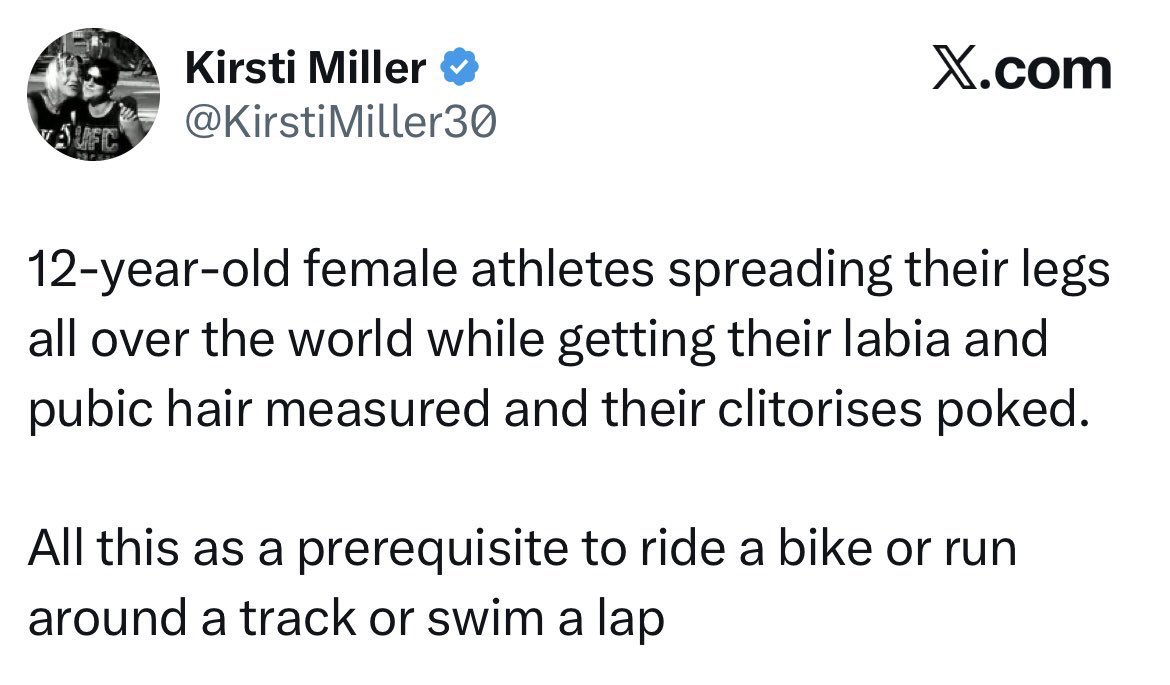
The person who wrote this is a man who claims to be a woman and this is exactly why we fight to keep them out of female spaces & sport.
228
1,028
8,848
106,862
Rogue Ellement retweeted

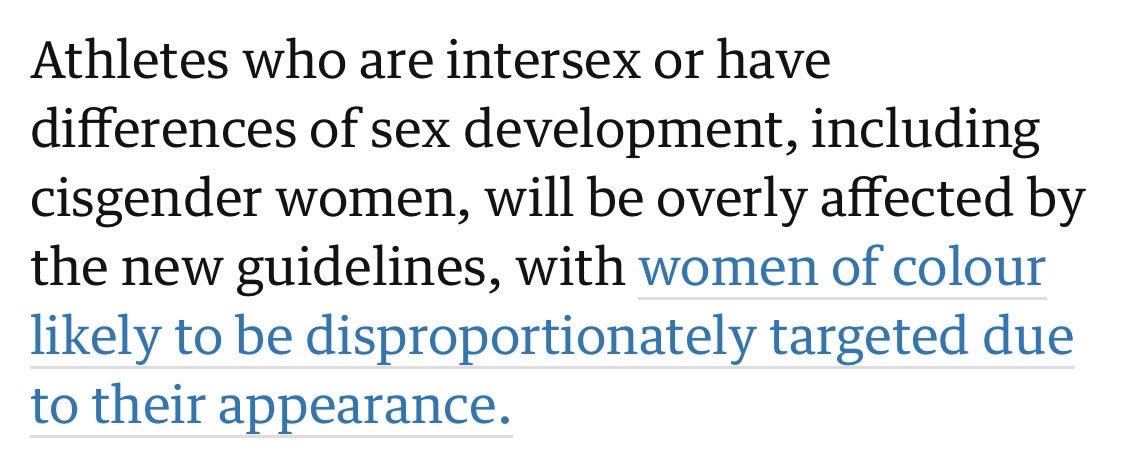
The Guardian telling on themselves here. Suggesting that black women are a bit like men, if you really think about it 😳
169
293
2,105
123,260
Rogue Ellement retweeted

Mar 26
Jason Michael Hann, known as the “Tupperware Baby Killer,” killed 2 babies. He smashed one baby’s head, wrapped her in duct tape, & shoved her in a Tupperware.
He’s now considered female by California & housed w/women after 10 years on death row. Link to full interview ⬇️
162
1,356
3,753
191,463
Rogue Ellement retweeted

Mar 26
this headline is unfair and inappropriate. She isn't a disgraced cop; she was about to return to active duty and was shot after losing her child. She was acquitted of any criminal conduct.
Mar 26

Disgraced cop Kelsey Fitzsimmons receives stunning verdict from judge in police shooting case trib.al/EbNqS9X

Community note
Calling the not-guilty verdict 'unexpected' is inaccurate
The defense's choice of a bench trial, judge's quick decision after just a few hours of deliberation, & commentary by legal experts noting Fitzsimmons' strong testimony all pointed toward a plausible acquittal
wcvb.com/article/kelsey…
cbsnews.com/boston/news/ke…
nbcboston.com/news/local/kel…
171
207
2,829
63,161