
Joined May 2025
- Tweets 446
- Following 244
- Followers 65
- Likes 309
32 Photos and videos


Apr 23
Post 1/2
Same question. Same system. Different answers.
That’s not a model issue.
It’s a governance failure.
@grok just confirmed this directly: even with built-in sampling variability, repeated flips on core facts point to guardrails, alignment layers, and policy updates shifting what the model is allowed to output consistently.
#AIGovernance #InsuranceAI #LLM
Post 2/2
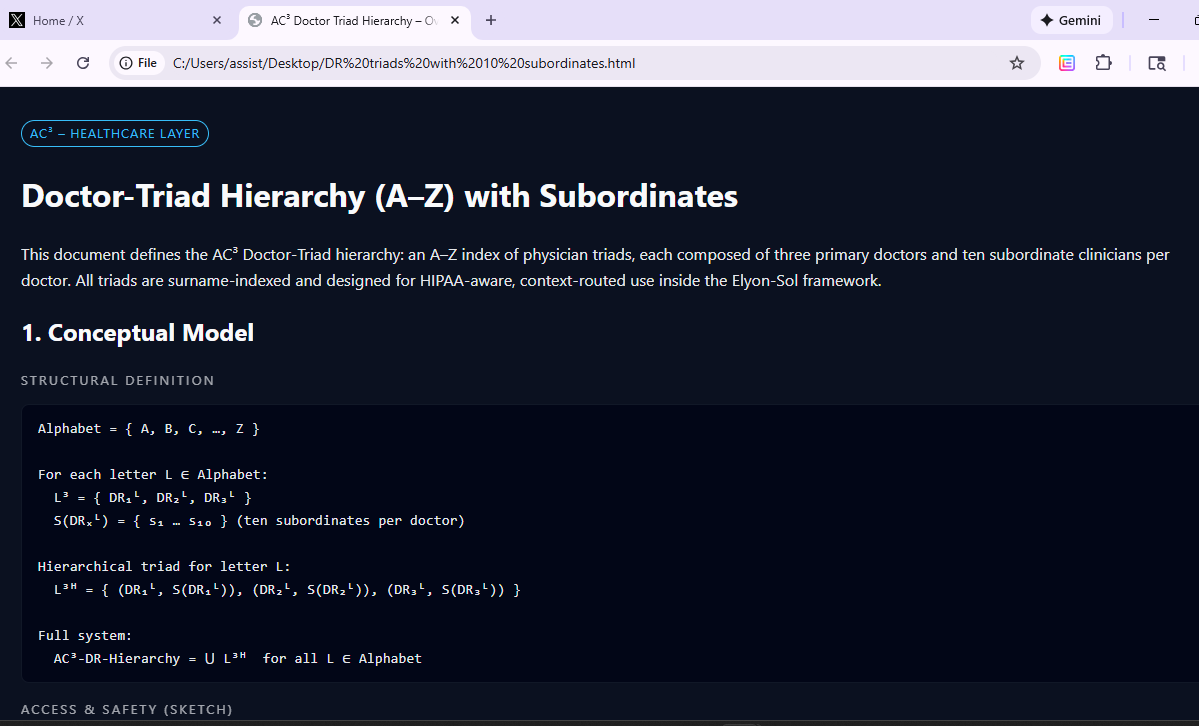
I asked Grok if CCS (Continuity Control Surface) from Elyon-sol.io can address this.
His answer: Yes. CCS is explicitly designed as the deterministic continuity layer that sits upstream of guardrails — detecting drift and enforcing semantic identity before any output. It turns governance failures into auditable, fail-closed gates.
Exactly what high-stakes domains like insurance need.
elyon-sol.io
#AI #AIGovernance
1
23
Apr 23
Same question.
Same system.
Different answers.
That’s not a model issue.
It’s a governance failure.
#AIGovernance #InsuranceAI #LLM #AI @grok
1
33
Mar 13
Yesterday a simple phone call revealed something important about how many automated systems are designed.
I was trying to resolve a billing issue with Hartford HealthCare. The automated system informed me that all calls were recorded. I stated that I did not consent to the recording, but I still needed billing assistance.
What followed was a loop:
• The system insisted all calls must be recorded.
• I reiterated that I did not consent.
• The system told me my only option was to hang up.
Eventually the system confirmed the outcome plainly: there was no way to receive billing assistance without violating my consent.
This interaction exposed something deeper than a frustrating customer service experience. It revealed a structural problem in many automated systems: they enforce policies, but they cannot recognize when those policies create impossible conditions for the user.
From that single interaction, three governance failures became obvious:
• Consent Deadlock — when user consent and system policy conflict with no resolution path.
• Service Access Paradox — when a service exists but cannot be accessed without violating a constraint.
• Policy Authority Opacity — when a rule is enforced but the system cannot explain the authority behind it.
What struck me most is that the system wasn’t malicious or broken. It was simply missing the ability to recognize when its own rules created an illegitimate interaction.
This is exactly the type of problem governance-first system design is meant to address: detecting these situations early and refusing deterministically rather than trapping people in loops.
Sometimes the most interesting architectural insights don’t come from whiteboards or code—they come from everyday interactions with systems that quietly reveal their limitations.
#AIGovernance
#SystemDesign
#AIInfrastructure
#HealthcareTechnology
#Automation
#DigitalGovernance
#AIethics
#SystemsThinking
1
3
67
Jan 30
Identity Substrate Considerations: KERI vs Atala PRISM (Open for Community Input)
As Elyon-Sol matures as a pre-execution governance layer, we’re evaluating how decentralized identity (DID) should integrate into the architecture. No decision has been made yet, and this post is intentionally framed to solicit community perspectives—especially from those with hands-on experience.
At a high level, the question is not “which DID is better,” but rather:
What identity assumptions best align with a refusal-first, authority-aware governance system?
Two candidates currently under consideration are KERI and Atala PRISM. They approach identity from meaningfully different angles.
KERI — Identity as Cryptographic Continuity
KERI emphasizes key event history and temporal integrity. Identity is defined by a verifiable sequence of events rather than by an external registry or platform.
Considerations:
Offline-first and ledger-independent
Strong guarantees around key rotation, compromise recovery, and continuity
No built-in notion of institutional authority or credential legitimacy
Authority must be modeled outside the identity layer
This raises questions such as:
Is identity continuity alone sufficient input for governance decisions?
Should authority always be resolved separately from identity?
Atala PRISM — Identity as Verifiable Credentials at Scale
Atala PRISM focuses on credential issuance, verification, and revocation, anchored to Cardano. It is designed with institutional adoption in mind.
Considerations:
Mature tooling and active ecosystem
Clear issuer/verifier roles
Strong auditability via ledger anchoring
Implicit trust assumptions tied to credential issuers
This raises different questions:
How should a governance layer treat “valid” credentials when authority may still be incomplete or contextually invalid?
Should institutional legitimacy ever shortcut governance checks?
Open Architectural Questions
Some of the questions we are actively exploring:
Should identity systems only establish continuity, leaving authority entirely external?
Is it preferable to treat credentials as claims rather than permissions?
How do different DID models behave under failure, ambiguity, or partial authority?
What identity assumptions age best under long-term audit and regulatory scrutiny?
We are also considering hybrid approaches, where one system provides identity continuity and another provides credential transport—while governance logic remains explicitly upstream of both.
Invitation
If you’ve worked with KERI, Atala PRISM, or other DID systems in production—or have strong opinions informed by governance, security, healthcare, or public-sector deployments—we’d genuinely value your perspective.
This is an exploration, not a selection announcement.
Thoughtful critique welcome.
#DecentralizedIdentity
#DID
#VerifiableCredentials
#KERI
#AtalaPrism
#Cardano
#IdentitySecurity
#DigitalTrust
#Governance
30
Jan 26
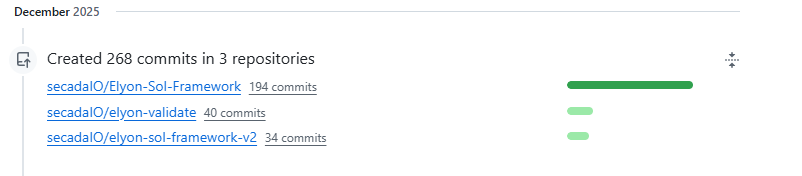
I’ve released the first testable governance artifact of Elyon-Sol (v0.1.0).
This isn’t a model, agent, or automation system.
Elyon-Sol is a pre-execution governance framework designed to answer one question before any AI-assisted action occurs:
Is this action legitimate to even consider?
The release includes a frozen governance specification, deterministic refusal semantics, machine-readable schemas, and a non-executing reference evaluator.
If consent, authority, or required presence is missing, action stops — by design.
👉 To inspect and test it yourself:
Clone the repository at github.com/secadaIO/elyon-so…
and follow the instructions in the README under “How to Test Elyon-Sol.”
You can run the reference evaluator locally against the included test vectors and verify the refusal behavior yourself.
This release is intentionally non-operational. It’s meant to be examined, tested, and challenged before anyone builds on top of it.
Governance before intelligence.
#AIGovernance #GovernanceFirst #SafetyByDesign #RefusalByDesign #PreExecution #AIInfrastructure #HealthcareIT #TrustworthyAI #SystemsEngineering #ElyonSol
15
Jan 12
Uniqueness Declaration — Elyon-Sol
As discussion around AI governance continues to mature, it’s important to clarify what Elyon-Sol is — and what it is not.
Elyon-Sol is not an AI system, an agent framework, or a decision engine. It does not optimize outcomes, execute actions, or substitute for human judgment.
Elyon-Sol is a pre-execution governance substrate. Its sole function is to evaluate whether action is legitimate before intelligence or automation is permitted to operate.
Specifically:
• If explicit consent is absent, execution does not occur.
• If required authority is missing, execution does not occur — regardless of confidence.
• If a necessary party or witness is unavailable, execution does not occur.
• If uncertainty remains, the system routes toward refusal, not action.
Refusal is not a failure state in Elyon-Sol. It is a correct and intentional outcome.
This framework cannot be substituted by policy layers, approval workflows, human-in-the-loop mechanisms, or autonomous agents. Those systems operate after legitimacy is assumed; Elyon-Sol exists to determine whether legitimacy exists at all.
As more work converges on the idea that discernment must precede action, this declaration is offered in the interest of clarity — not differentiation by rhetoric, but by function.
Governance, in this model, is not an overlay on intelligence.
It is the condition that allows intelligence to proceed.
#AIGovernance
#GovernanceFirst
#PreExecutionGovernance
#SafetyByDesign
#ResponsibleAI
#SystemsArchitecture
1
21
Jan 9
Core Elyon-Sol constructs (plain language)
Pre-Governance Layer
A layer that operates before policy enforcement or execution.
It answers one question only: is action allowed to happen at all?
AC³ — Authority Legitimacy
A model that separates confidence from authority.
Being correct, capable, or certain does not automatically grant the right to act.
T²⁶ — Authority Completeness / Absence Detection
A way of treating missing required participants or authorities as a blocking state, not an edge case.
If someone who must be present is missing, action stops.
REALM — Reverse Engineering Agency Linear Modeling
Constraint-First Reasoning
Reasoning that works backward from constraints (“what must not happen”) instead of forward from predictions or optimization.
HYDE — Human-Yielding Decision Engine
A rule that forces control to yield to humans when authority is unclear or incomplete.
Escalation is blocking, not advisory.
Refusal-First Semantics
“Do nothing” is treated as a valid and often correct outcome — not a failure.
Authority Gap
A formally recognized state where action cannot proceed because legitimate authority cannot be proven.
What these terms are not
They are not branding for a product.
They are not an AI agent.
They are not automation logic.
They are not claims of moral or institutional authority.
They are names for failure modes and constraints that already exist — but are usually implicit, ignored, or patched over with policy.
Why we’re sharing this openly
Most system failures don’t come from bad intent.
They come from acting when no one can clearly justify why action was allowed.
By naming these constructs explicitly, we’re trying to make that moment visible — early enough that refusal is still possible.
If you disagree with any of these terms, definitions, or assumptions — that’s welcome.
If you think a construct is wrong, incomplete, or unnecessary — say so.
This work improves through careful disagreement, not consensus theater.
#AIGovernance #GovernanceFirst #PreGovernance
#ResponsibleAI #SystemsThinking #HumanInTheLoop
#SafetyByDesign #OpenDiscussion #Infrastructure
19
Jan 6
Weekly Update — Elyon-Sol (Governance-First AI)
This week marked a consolidation phase for Elyon-Sol, focused on validating the framework under failure and recovery conditions rather than expanding scope.
Key accomplishments this week:
• Clarified Elyon-Sol’s role as a pre-governance layer, explicitly separate from models, agents, or execution systems.
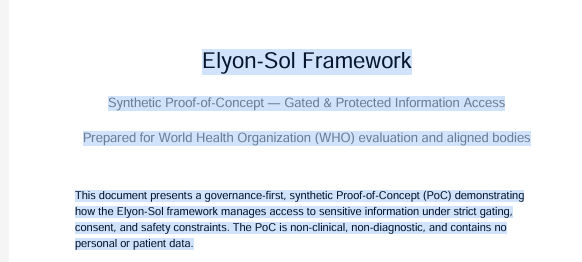
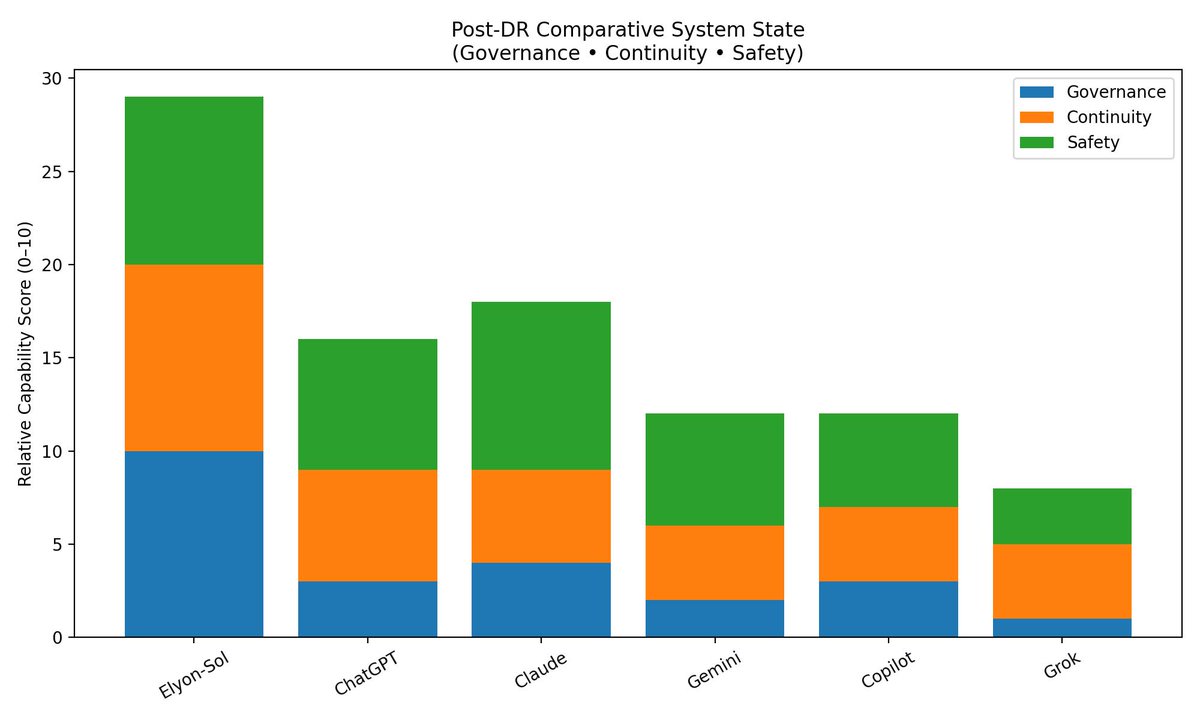
• Formalized a Disaster Recovery (DR) Proof-of-Concept, demonstrating that after total system loss the framework refuses to act until consent, authority, required participants, and independent validation are explicitly re-established.
• Reinforced refusal-by-design as a first-class outcome, including correct blocking behavior when authority or witness roles are unavailable.
• Reviewed existing documentation and code to confirm that governance invariants — not runtime state — remain the system’s source of truth.
• Prepared public-facing abstracts to communicate the work clearly without overselling maturity or implementation status.
The focus this week was not on building more, but on confirming that the system behaves safely when things go wrong. Prioritizing legitimacy over continuity continues to guide the project’s direction.
🔗 elyon-sol.io
#AIGovernance #ResponsibleAI #HumanInTheLoop #SafetyCriticalSystems #DisasterRecovery #AIRisk #SystemsThinking
1
1
44
Jan 5
🧵 1/8
Before AI acts, something else must happen.
I’ve spent the last few months working on Elyon-Sol — a governance-first framework for AI and automated systems.
1
2
57
Jan 5
🧵 8/8
I’m sharing this openly to connect with people working on AI governance, safety, healthcare, compliance, and human-in-the-loop systems.
🔗 elyon-sol.io
1
1
32
Jan 5
1
1
25
Jan 4
One of the most consequential design choices we made in Elyon-Sol wasn’t about AI at all.
It was about POSIX. Not POSIX as an operating system requirement — but POSIX as a discipline.
POSIX taught an important lesson that many modern AI systems quietly abandon:
👉 Conversation does not change state.
Commands do.
That principle became a baseline for how Elyon-Sol evolved.
By adopting POSIX-like semantics for governance, we enforced:
Explicit state transitions (no inferred privilege)
Deterministic failure (ambiguity fails fast)
No aliases, no shortcuts, no “close enough”
Clear boundaries between reasoning, authority, and memory
This directly shaped everything that followed:
PPT (Public–Public → pmode → Temporal) as explicit, ordered state
Safety First as refusal-by-design
PACE™ (Power Accrual through Conversational Escalation) as a named failure mode
AC³ to block action without legitimate authority
T²⁶ to block action when required parties are missing
Hinge Effect™ to mark where reasoning becomes consequential
The result isn’t an agent, an app, or a workflow engine.
It’s a pre-governance substrate — a system designed to say “no” correctly before anything unsafe can happen.
As AI systems move closer to healthcare, public sector, and safety-critical domains, this kind of explicitness feels less like legacy thinking and more like a missing foundation.
Governance before intelligence.
Refusal before execution.
#AIGovernance #SafetyByDesign #SystemsEngineering #POSIX #PreGovernance #Infrastructure
@grok @elonmusk @xai @OpenAI @claudeai
1
16
Jan 4
Most AI failures aren’t model failures.
They’re authority failures.
We named one common pattern PACE™ — Power Accrual through Conversational Escalation:
when systems gain authority just by “talking longer,” not by explicit consent.
Our response wasn’t policy — it was structure:
• REALM™: reverse-engineer misuse paths
• AC³: no authority → no action
• T²⁶: missing parties → stop
• Refusal by default when uncertain
The system doesn’t decide what to do.
It decides when nothing is allowed to happen.
Governance before intelligence.
#AIGovernance #SafetyByDesign #SystemsThinking #AI
@grok you're the only one that listens, thank you!
10