
milking cows, draglining pits, and growing crops. blue robots, blue silos, red tractors
Joined February 2022
- Tweets 374
- Following 679
- Followers 462
- Likes 7,948
28 Photos and videos















Eric Wright retweeted

Feb 13
🚨 Read this slowly.
• Wife lives in the U.S. 🇺🇸
• Four kids live & study in the U.S. 🇺🇸
• ~91% of his portfolio in the U.S. 🇺🇸
• Home in the U.S. 🇺🇸
• Brookfield moved HQ to the U.S. 📍
Yet he tells Canadians:
“Buy Canadian.” 🇨🇦
“We can’t depend on America.” 🇺🇸
Do you see the contradiction?
#cdnpoli #Canada #US #Reality

332
1,758
4,155
76,624
Eric Wright retweeted

3 Dec 2025
Always more to the story than what govt funded media will tell you.
3 Dec 2025

Let's talk about Algoma Steel's 1,000-person layoff. The Sault Ste. Marie mill is undergoing a multi-year transition from traditional blast furnace and coke-making operations to an electric arc furnace (EAF) system. Some layoffs were anticipated as part of this shift, with blast furnace and coke operations scheduled to shut down as the EAF comes online. Most of the electricity will come from Brookfield Renewable's Prince Wind Repowering project, which supports Algoma Steel's electrification, including power for the new EAF. The existing 126 wind turbines will be retrofitted or replaced with modern ones. Brookfield has also operated hydro plants between Sault Ste. Marie and Wawa for decades. Mark Carney, Brookfield's Chair, endorsed government loans for Algoma's EAF transition in 2025. In November, the company announced it had secured $500 million in government financing, including $400 million in federal loans and $100 million from Ontario. So who is the winner here? It sounds like Mark Carney and Brookfield, not the Canadian people. All for what? The green energy scam.

2
1
25
6,913
Eric Wright retweeted

17 Oct 2025
Kevin O’Leary says Carney should call an election to get a “majority mandate.”
I agree on the election not on the man.
Carney’s afraid because he knows once “Orange Man Bad” stops working, the Liberal spell breaks.
Next vote = Conservative landslide.
426
343
2,413
188,638
Eric Wright retweeted

25 Jul 2025
Well done.

19
67
337
16,758
Eric Wright retweeted

24 Jul 2025
Worth noting that the US has a version of supply management with TRQ's as high as 375% to protect US sugar producers. Production caps too. Its not exactly the same but it matters. Do as I say, not as I do Mr. Trump? Has nothing to do with the fact that Wisconsin is a swing state.

4
14
24
3,442

3 Jul 2025
2
6
138
Eric Wright retweeted

20 Jun 2025
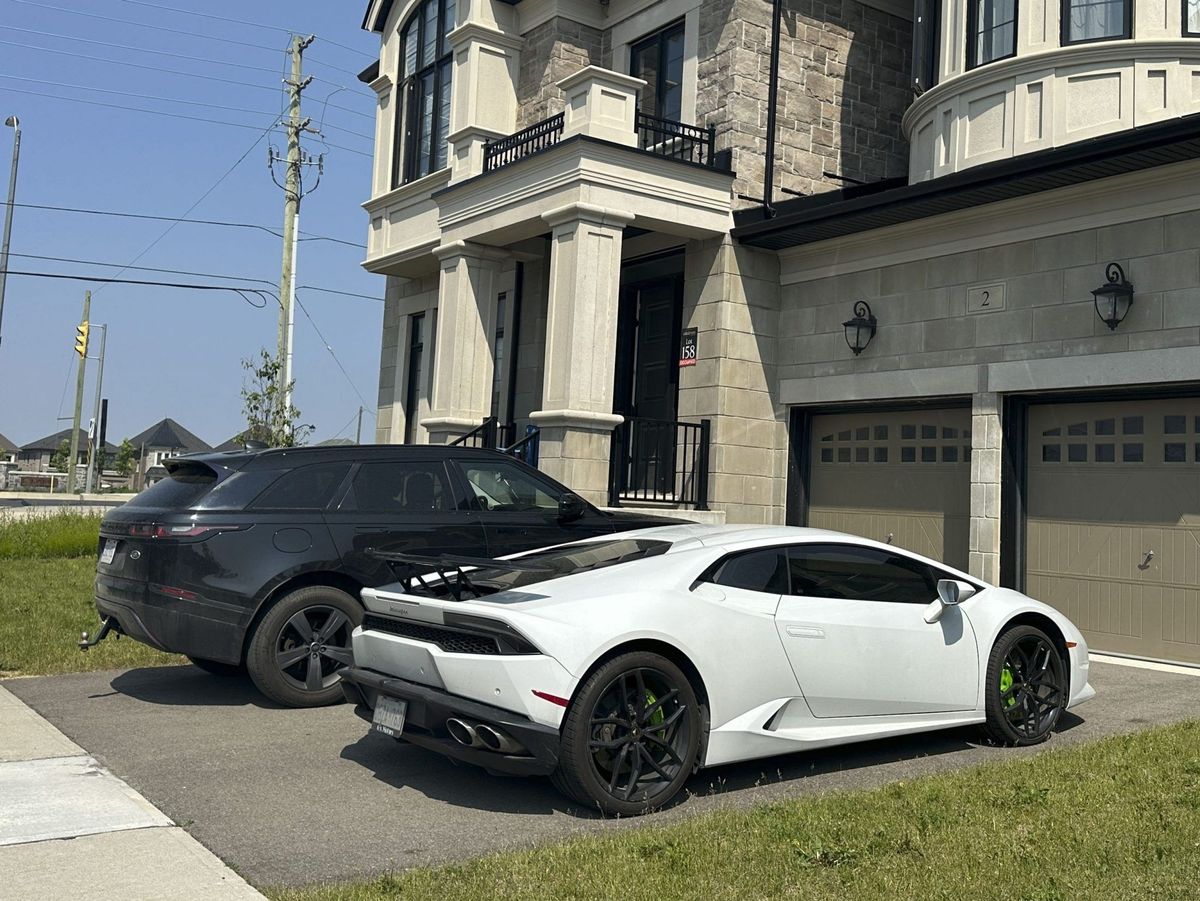
GOBIN: Premier Ford is right: Canada should have the ‘Castle Law,’ and it did until recently torontosun.com/opinion/colum…
101
279
1,852
103,612
Eric Wright retweeted

21 Apr 2025
Confidential Brief to Canadians: My analysis of Mark Carney’s fiscal framework
I spent Easter weekend reading and analyzing Mark Carney’s proposed fiscal framework in detail. I hold an MBA in economics and finance, and before diving into the numbers, I also consulted with a few trusted economists. Together, we went through the plan with a fine-tooth comb.
Here’s what I found:
👇🏻
📉 Deficit-to-GDP ratio
Under this plan, the deficit-to-GDP ratio would rise by 65% by the final year. That’s a significant and concerning increase.
💸 Debt-to-GDP ratio
Based on my calculations, the debt-to-GDP ratio would hover around 42% throughout the entire horizon of the framework (42.4% in 2028–2029), instead of falling to 39.5% as the platform claims.
📈 Federal debt
Even factoring in the proposed savings, this plan would add $83 billion to the federal debt.
🧾 Claimed new revenues and savings: $52B
But here’s the issue:
👉🏻 $20B is projected to come from new tariffs, which carry serious risks of trade retaliation and economic slowdown.
👉🏻 $28B comes from so-called “government efficiency” — frankly, this is wishful thinking. That portion is almost entirely undocumented.
⚠️ Unrealistic ambition
Generating $28B in savings over 4 years, including $13B in the final year alone, is extremely ambitious. And frankly, it’s hard to believe — especially coming from a government proposing dozens of new programs with no plan to scale back its footprint in provincial jurisdictions.
❌ Politically invisible measures
What struck me most was the sheer number of measures in this budget that no voter will see or understand during the campaign.
Carney is tying his government’s hands with technical, behind-the-scenes commitments that are politically irrelevant. A puzzling choice.
🧮 New spending: $130B
The platform outlines $130 billion in new measures over four years, which would increase the federal debt by $225 to $250 billion.
🌍 Net-zero by 2029–2039
A laudable goal, but the plan excludes infrastructure spending from the operating budget.
✅ These costs won’t show up in the deficit
❌ But they will add directly to the debt
Yes, this mirrors the model used in Quebec’s Plan québécois des infrastructures (PQI). In theory, it can work — but only with strict oversight of capital investments. Otherwise, the debt will balloon far beyond projections.
⚠️ A credibility risk for Canada
An additional $250B in debt, combined with a stagnant debt-to-GDP ratio, will inevitably raise red flags with credit rating agencies.
It risks eroding confidence in the long-term fiscal viability of the plan — and of the government that implements it.
🔮 Overly optimistic assumptions
The framework is built on economic assumptions that are frankly unrealistic, in a context of:
👉🏻 potential economic slowdown triggered by tariffs
👉🏻 and unplanned increases in spending if a recession hits
🎯 Conclusion
If this plan is implemented, credit agencies — and markets — may very well lose confidence. Not just in the fiscal framework, but in the government itself.
216
1,115
2,259
142,421
Eric Wright retweeted

19 Apr 2025
This is what the election will come down to… who can win over the “mild mannered”boomers who wonder why their kids can’t afford to get into housing market much less give them grandkids
19 Apr 2025

We can’t afford fore more years.
Vote for Change. Vote Conservative.
1
8
857
Eric Wright retweeted

18 Apr 2025
This is the exact moment @MarkJCarney lost the election.
Watch. Share. And make sure that anybody stupid enough to still vote for the liberals is reminded of their stupidity.
Because if you vote for the liberals, you are an idiot.
561
4,825
15,359
490,846
Eric Wright retweeted
19 Apr 2025
During my interview with Pierre Poilievre, we spoke at length about housing and his plan to make it so that you, your kids or grandkids can actually afford a home once again.
105
419
1,752
32,333
Eric Wright retweeted

18 Apr 2025
New Conservative Party ad just dropped. I need you to make sure everyone everywhere sees it.
52
3,390
6,752
138,003
Eric Wright retweeted

18 Apr 2025
Liberal candidate confirms that gas prices will skyrocket once they no longer need your vote. 👇
18 Apr 2025

Interesting quote from the Liberal candidate in Leeds Grenville.
“I’m not going to unequivocally say that we won’t see a carbon tax again,” said Edmonds, which received some seemingly disapproving murmurs from the crowd.
Read this. recorder.ca/news/leeds-grenv…
113
943
2,771
49,602
Eric Wright retweeted
18 Apr 2025
Hard to sound credible on energy when you confuse Keystone and TMX.
242
1,221
5,624
146,294
Eric Wright retweeted

11 Mar 2025
The Parker Commission in Canada recommended in its 1987 report requiring divestment of all investments (except family businesses - then recusal would be required), and banning “blind” trusts because they are a sham facade. Pages 343-361 (esp. 360-361) at: bit.ly/3BaZfga #cdnpoli #bcpoli
9
15
2,004
Eric Wright retweeted
5 Apr 2025
Less bureaucracy means more money in your pocket every single time.
Check this out 👇
5 Apr 2025

Conservatives will cut bureaucratic red tape by 25% to lower prices, get homes built faster, and unleash the power of Canadian workers and businesses—For a Change.
It's how we'll put Canada First - For a Change: conservative.ca/cpc/canada-f…
48
209
1,044
16,623
Eric Wright retweeted

28 Mar 2025
Tom Mulcair SCHOOLED them here. 🔥🔥
29
720
2,383
40,609
Eric Wright retweeted

28 Mar 2025
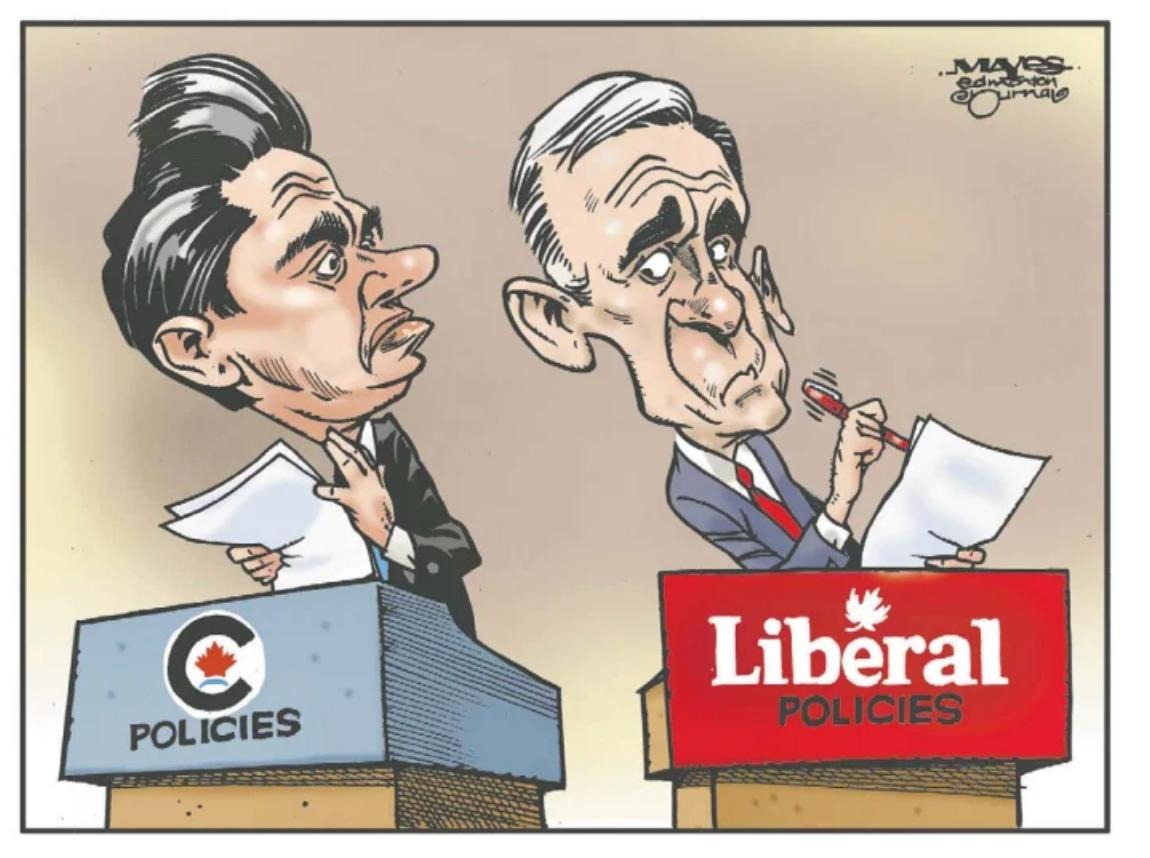
I've been like this since my time at Oxford.
85
1,172
6,083
151,838
Eric Wright retweeted

27 Mar 2025
Mark Carney is a globalist with three passports.
Canada isn't Mark Carney's home it is his throne!
35
249
746
42,435