
L/S. Everything is downstream of rGDP growth. Parody account.
Joined May 2021
- Tweets 1,330
- Following 723
- Followers 814
- Likes 4,857
15 Photos and videos





Fiscal Daddy retweeted

Jun 9
Pedophiles and private equity have ruined America and, more importantly, the New York Knicks home court advantage
198
5,453
72,801
1,165,932
Fiscal Daddy retweeted

Sadly the tickets to Game 3 are so expensive that the majority of attendees will have also visited Epstein’s island
23
721
15,660
211,236

Jun 4
Luddites will get run over.
May 27

Steven Spielberg gives his thoughts on AI usage in filmmaking:
“I don't believe there is any substitute for the soul. I don't think that's an algorithm that is inventible... don't tell me I don't have the right antagonist in this story, don't tell me how to write my dialogue, don't tell me where the camera has to go…
If AI wants to help me find locations, that's great. Saves us some leg work… Use AI as a tool, but do not use AI as the final word on anything creative.”
(Source: youtube.com/watch?v=Orr-EnuJ…)


1
1
276
Jun 4
Others are leaning in.
Jun 2

Martin Scorsese is an advisor to Black Forest Labs.
He's spent six decades shaping how the world sees stories. Now he's helping us shape visual intelligence with human taste and craft at the center.
We sat down with him for a working storyboarding session using FLUX.
220
May 29
Great blog I discovered today via @lhamtil sharing a different article.
May 7

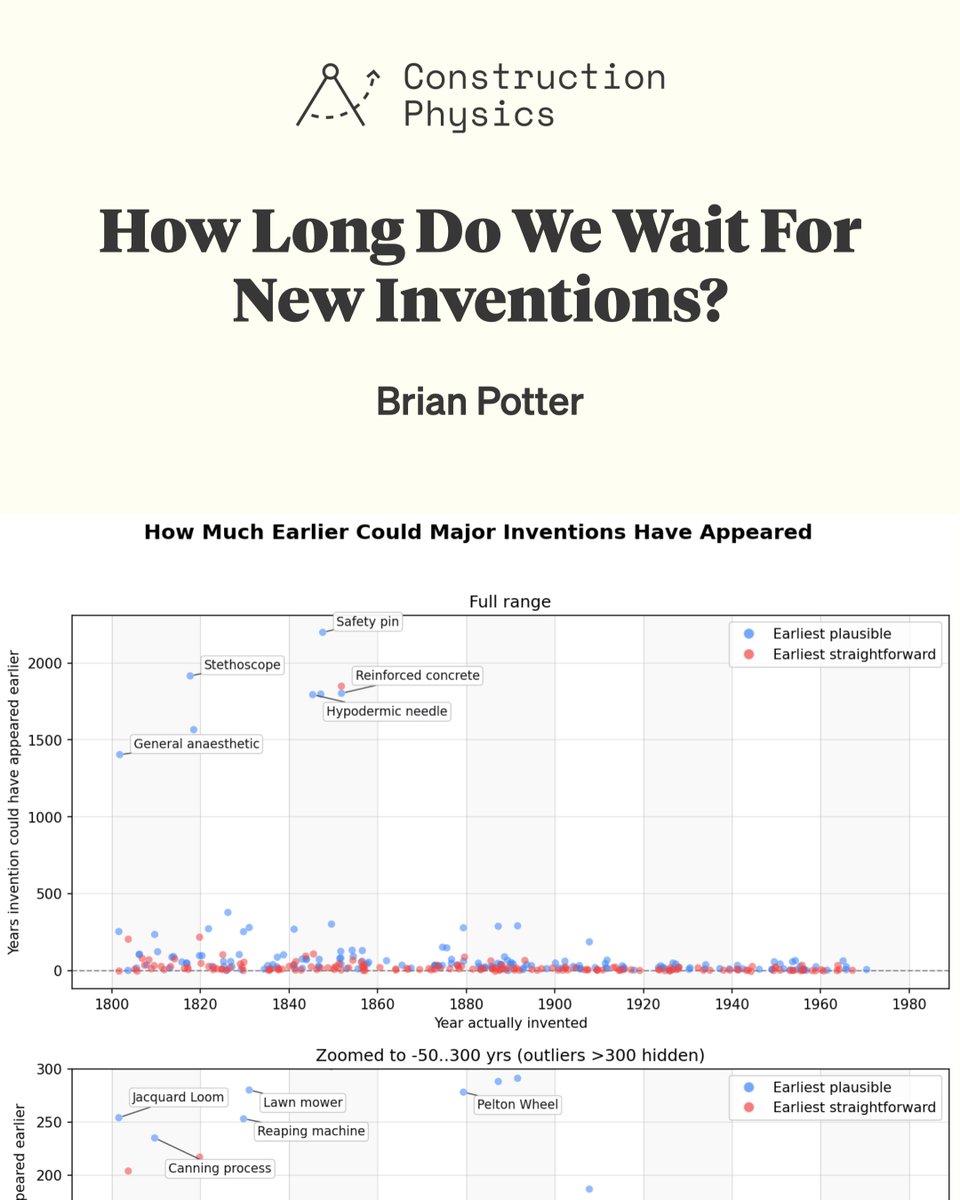
This week on Construction Physics: I wanted to know how long it takes between when an invention becomes technically possible, and when it actually appears.
So I took a list of 190 major inventions, and asked Claude.
construction-physics.com/p/h…
1
160
Fiscal Daddy retweeted

May 26
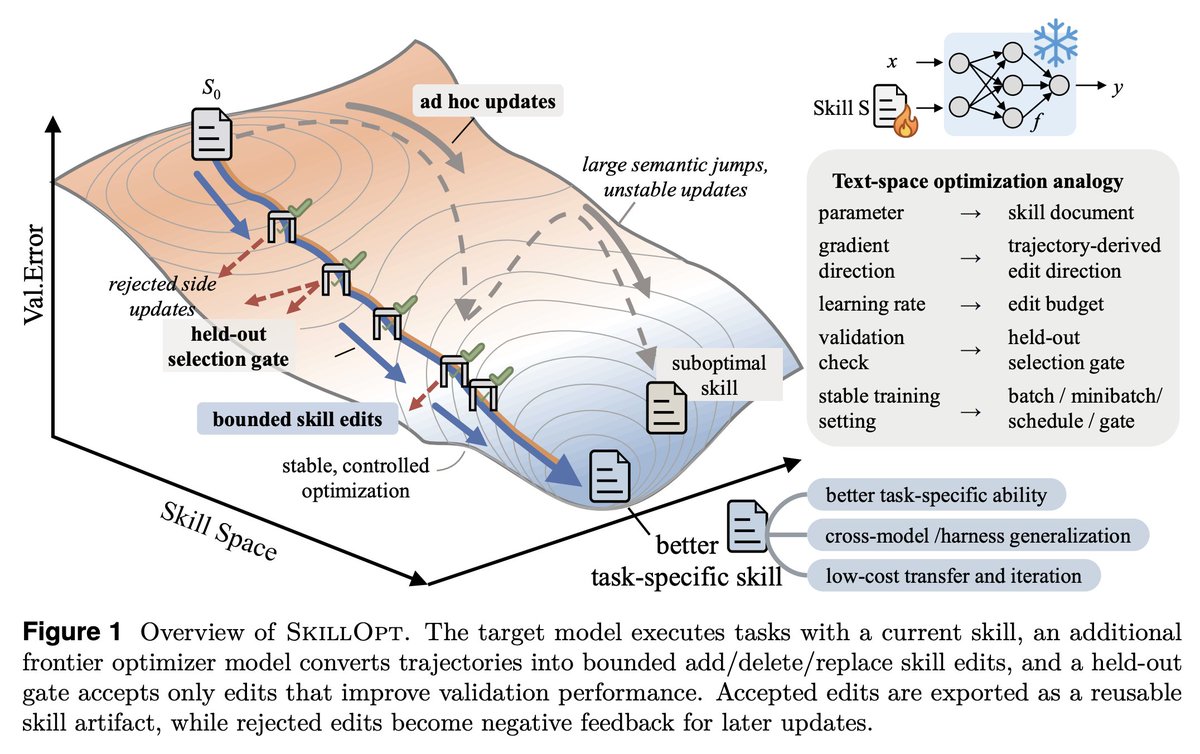
Gradient descent for SKILL.md files sounds interesting, maybe a bit complex but it's becoming a real part of agent harness.
SkillOpt is one of the first papers to treat markdown skill files as trainable parameters and provides a proper optimization framework for them.
A few things I learned that you should consider too.
1. The validation gate is the only thing that matters in a self-editing loop.
Held-out set, strict improvement, ties rejected. End-to-end, their best skills land with 1 to 4 accepted edits total. If your "self-improving agent" is accepting most of what it proposes, you're shipping slop.
2. Bounded edits are better than full rewrites. 4 to 8 edits per step is the sweet spot.
Remove the budget and performance collapses. This is the textual analog of learning rate, and it transfers to any LLM-as-author loop. If you're using an agent to refactor your docs, your prompts, or your skills, cap the diff size.
3. Compactness wins. Median final skill: ~920 tokens.
Skills do not need to be long. They need to be high-signal. Most skill files I see are bloated because length feels like effort. It isn't.
4. The harness is becoming less important; the skill is becoming more important.
A Codex-trained skill ported into Claude Code hit 59.7 points on SpreadsheetBench. Procedural knowledge is more general than the runtime that
produced it.
5. Frozen model trained context is the practical adaptation.
GPT-5.4-nano with a SkillOpt'd skill ≈ frontier behavior on procedural benchmarks. Cheaper, portable, inspectable, zero inference-time cost. This is
the answer to "how do we adapt a frontier model for our domain" for almost everyone who isn't training their own models.
6. Verification is the bottleneck.
Every gate in this paper depends on an auto-grader. That works for benchmarks. It fails for writing, design, and strategy, exactly the open-ended work we want to automate. Whoever builds the verifier for open-ended tasks owns the next stage.
There are also two leassons I learned while shipping v2.3.0 of my Context Engineering Agent Skills repo, measured across composer-2, claude-opus-4-7,
gpt-5.5, and gemini-3.1-pro via the @cursor_ai SDK:
- Description and body are two different surfaces. The router only sees the description. The agent sees the body once activated. They can quietly disagree, and only end-to-end task tests catch it.
- Aggregate accuracy is the wrong unit. When I rewrote three descriptions, the corpus average moved ~1pp. Individual skills moved 23–25pp. Per-skill effect size is where the action is.
Also, in Feb 2026 I shared a piece called Personal Brain OS arguing that the markdown file is a first-class substrate for agent state. SkillOpt is the optimizer-shaped version of that same argument: not "store memory in files" but "treat files as trainable parameters with proper optimization machinery around them." That's the move from static to measured.
The fast/slow split they describe already lives implicitly in the digital-brain-skill repo:
- voice-guide and tone-of-voice.md are slow-state (rarely touched)
- posts.jsonl and bookmarks.jsonl are fast-state
What SkillOpt adds that I didn't have is a protected section invariant, a structural guarantee that fast edits cannot overwrite slow lessons. Removing that mechanism cost them 22 points on SpreadsheetBench. Worth borrowing.
If you're building agents, SkillOpt: Executive Strategy for Self-Evolving Agent Skills is a good paper to read: arxiv.org/pdf/2605.23904
52
243
2,279
771,651
May 27
Most people don’t know how to use Claude skills or CoWork effectively. Adoption is early.

One of the reasons for the current rally is that there are many non-tech-savvy fund and asset managers sitting on trillions of dollars in assets that are slowly realising AI exists.
These people literally learned about Claude or agents in the last few weeks. And maybe even tried them.
And got an awakening.
To understand why that matters, you need to realise that the “average asset manager” in the UK or EU is barely able to turn on his computer. They have an “IT support guy” for that. They couldn’t tell you Windows from MacOS. Yet they manage $ trillions of pension assets on.
These people are always late to every trend. But every trend, they eventually join.
And they only now discovered that AI exists, and what it actually does. That “AI” is not just being an irritating chatbot in their “Windows” on “Outlook” on the big HP desktop in their office.
It’s also genuinely very hard for them to understand the growth rates, the incredibly high GAAP operating margins, and the relatively low P/E valuations in the semiconductor sector (low vs all other growth tech).
You see, in the past, every sector with dramatic growth had terrible, extremely negative margins (see SAAS, e-commerce, renewables, anything in the 2021 SPAC bubble, etc). Profits were always promised to “come later”, and usually, they never actually did.
Meanwhile, we now have a cloud and semiconductor sector that’s incredibly high growth, yet also has extraordinary margins and cash flows not seen anywhere else in the business world, anywhere. Ever.
In financial and economic terms, it’s simply unprecedented.
They’ve never seen numbers like this, so it’s mentally very hard for “the average asset manager” to grasp them.
Now, they’re seeing the use cases. The output. They’re seeing the numbers.
And they’re waking up.
3
744

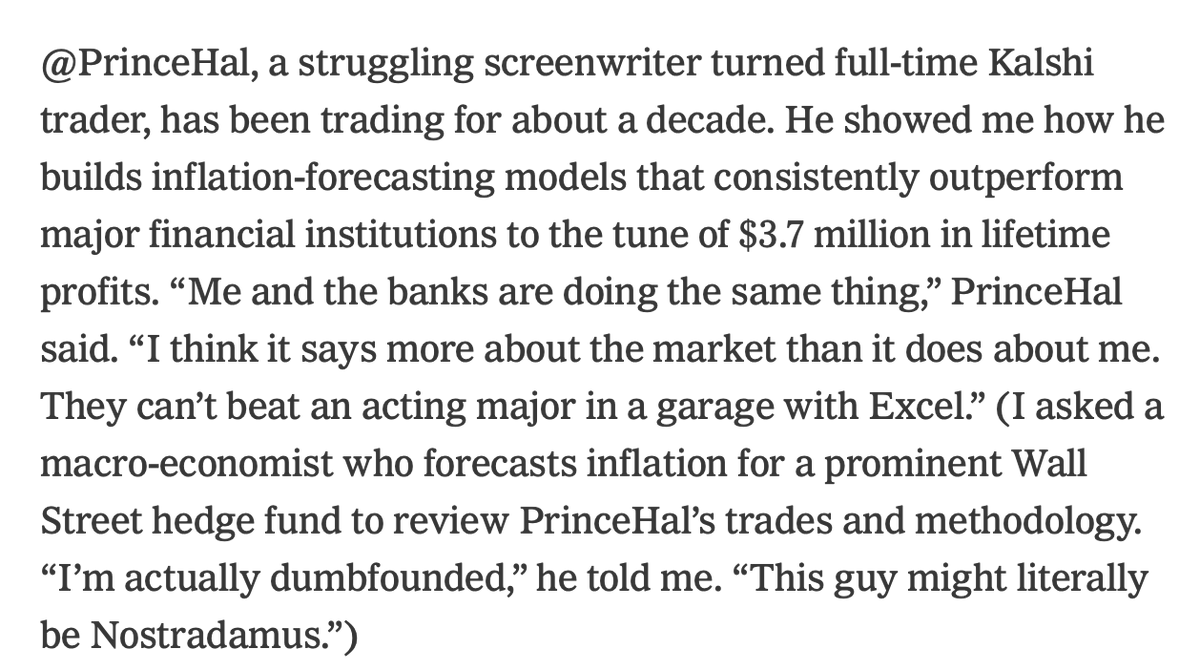
during my time at Kalshi Trading, I was, at times, straight up 1v1'ing this guy in the order books. I don't wish that upon anyone!
May 26

nyt covers prediction markets accurately
what stage of the cycle is this?

10
36
1,443
253,659
May 24
Turns out @dkhos is no different than @jitsegroen. Uber shareholders going to get the same mess that caused EXPE to lag for so many years.
May 24

$UBER is reportedly considering a higher bid for Berlin-based Delivery Hero after its initial €11.5 billion offer, a €38 per share proposal, was rejected.
Delivery Hero previously owned foodpanda’s Southeast Asia business, which was acquired by $GRAB. The company also holds a stake in Deliveroo, making it a strategically important player in the global food delivery market.

2
3
9
7,939
May 26
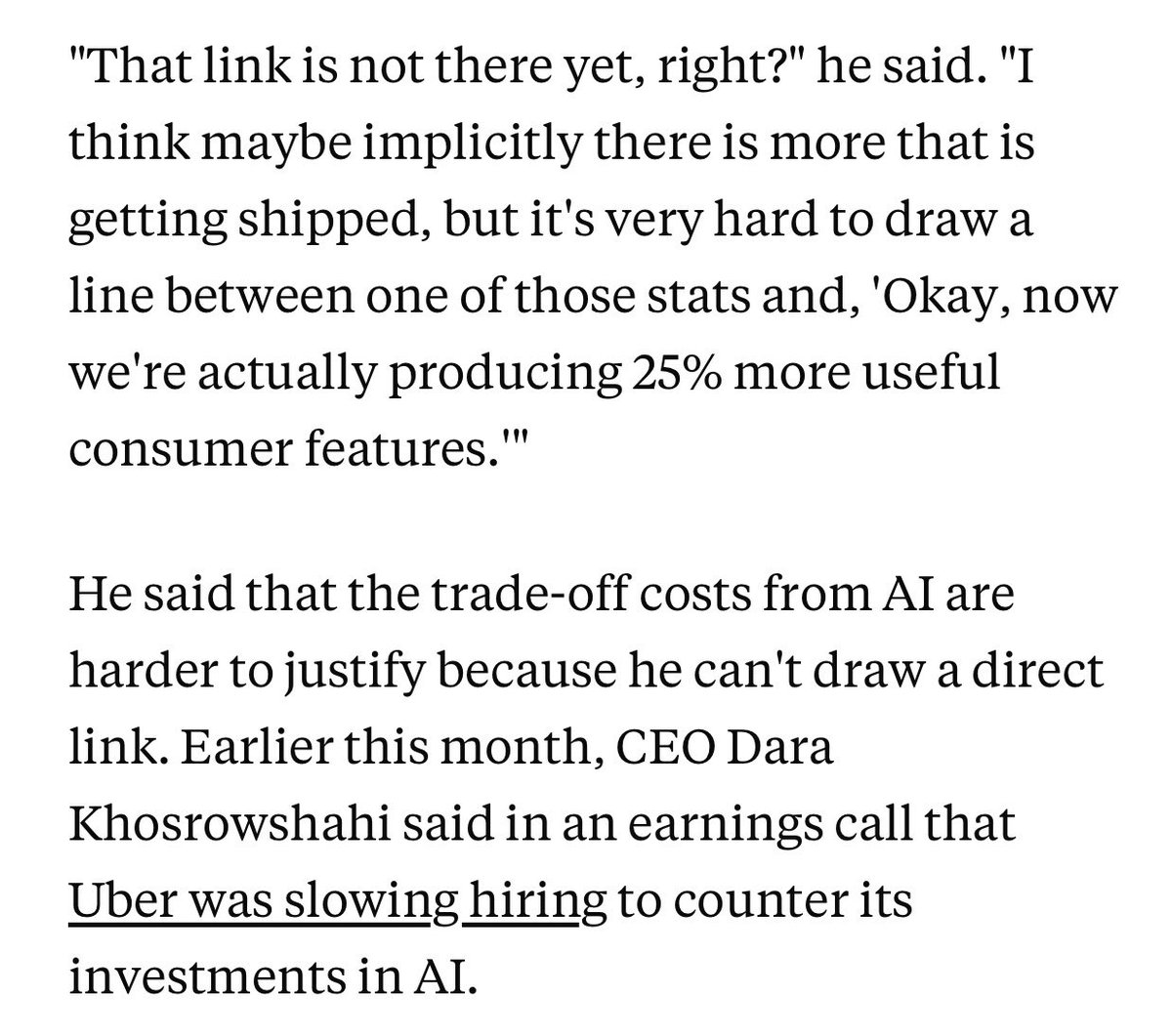
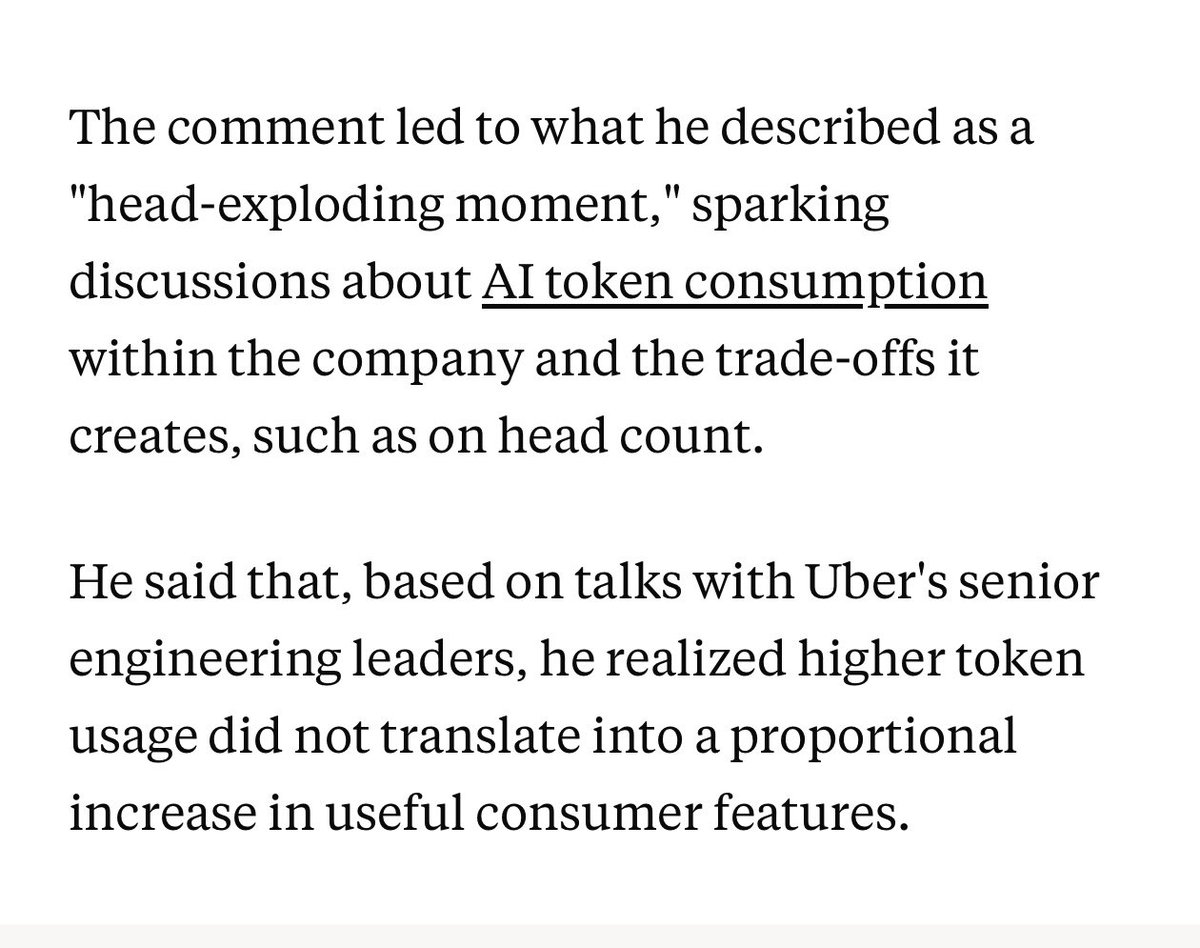
Hard to show ROI if you are losing share at the same time.

Uber’s COO has said that it’s getting “harder to justify” its AI costs because there was no way to show a link between AI spend and any meaningful increase in useful features. This is the first time I’ve seen a company say this directly.
businessinsider.com/uber-coo…
1
116
Fiscal Daddy retweeted

May 24
I think people who are very outwardly “woke” tend to actually be shitty people
496
3,715
49,255
917,687


Fiscal Daddy retweeted

May 18
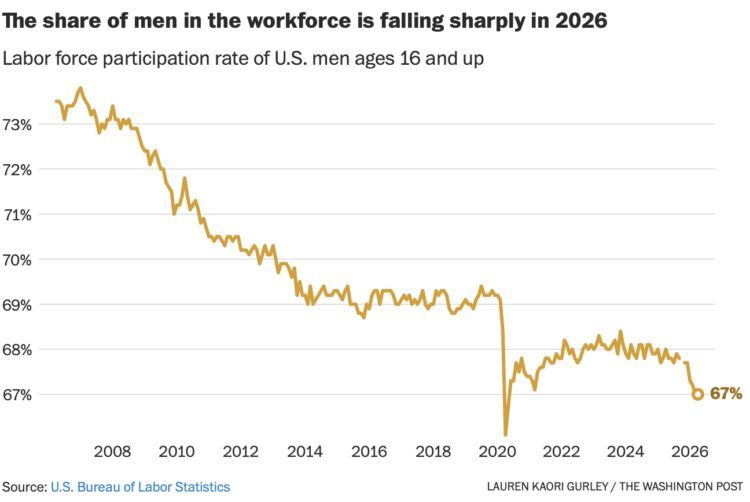
The very recent leg of the trend of men dropping out of the workforce in the US is not driven by prime working-age men at all, who are participating at the highest rates in 15yrs.
It's driven entirely by over-55s, what looks like another leg of the Covid-era retirement wave.
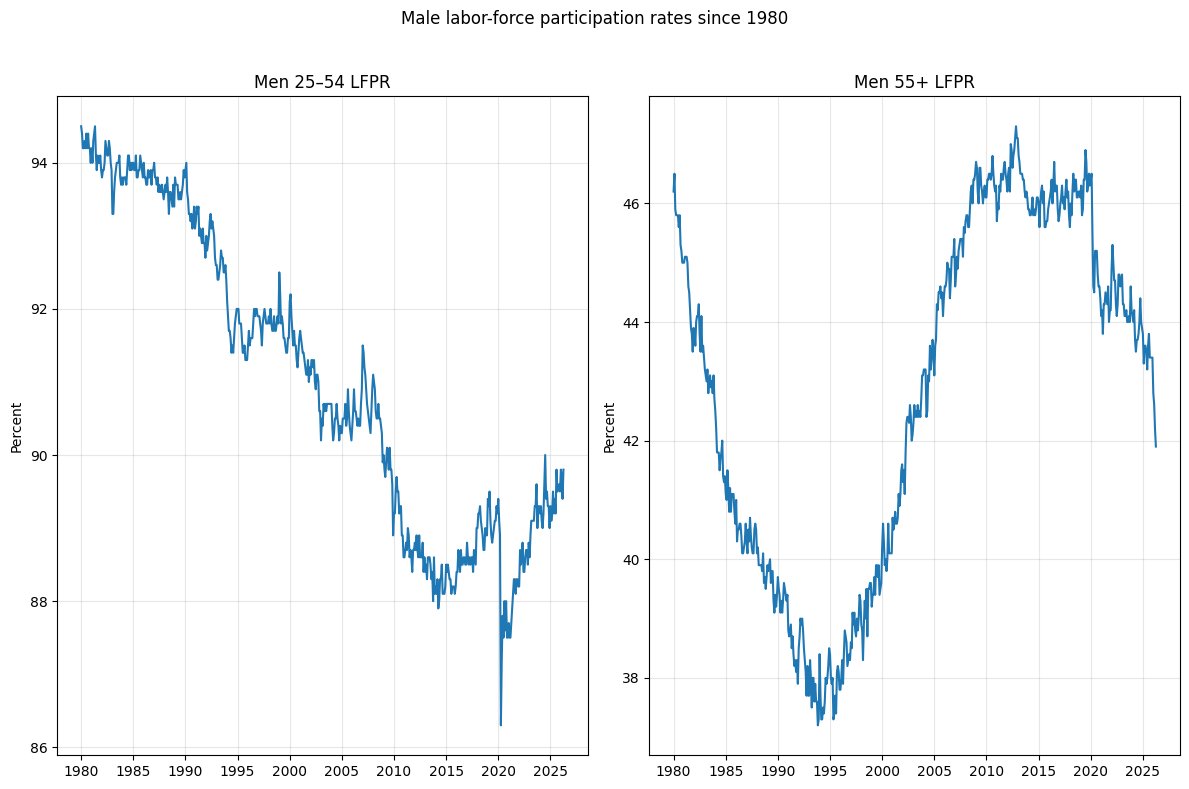

The men that are disappearing from the workforce aren't turning into stay-at-home dads or homemakers, rather they just become completely disengaged. This is an issue of the highest urgency.
Chart source: buff.ly/F5wE6D0
My column on the issue in Australia: buff.ly/EsSZKGI
16
56
314
81,519
Fiscal Daddy retweeted

If we just required farms to pay market rate for the water they use, magically all of the water issues people worry about with data centers would vanish.
53
81
1,725
102,392
May 12
Nothing combats inflation like government spending.

Inflation is at a three-year high. Everything costs more — groceries, gas, healthcare, a plane ticket.
The math is simple. Every American dollar spent overseas on war is a dollar that could’ve been spent here at home to pay for a dignified life. It's time we change the equation.
3
361
Fiscal Daddy retweeted

May 12
It’s time to build.

ALT Screenshot of an article from BetaKit. The headline reads: "Steel, concrete, and code": Feds and Telus announce three Al data centres in BC.
2,497
329
3,530
1,529,844

May 3
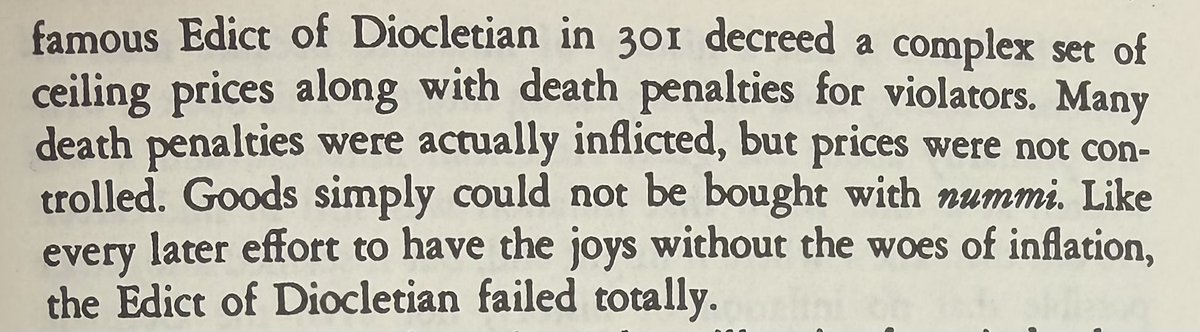
Price controls didn’t work for Diocletian, they won’t work in NYC.
111
May 2
Jensen is correct, the invisible hand always finds a way.
May 1

Nvidia CEO Jensen Huang says don't listen to CEOs with a god complex on AI (lol, Dario) $NVDA
On AI destroying jobs: "these kind of comments are not helpful .. somehow they became CEOs, you adopt a god complex and before you know it, you know everything"
"ground ourselves to talking about the facts" AI will "generate hundreds of thousands of jobs .. trillions of dollars [to the U.S. economy]"
181